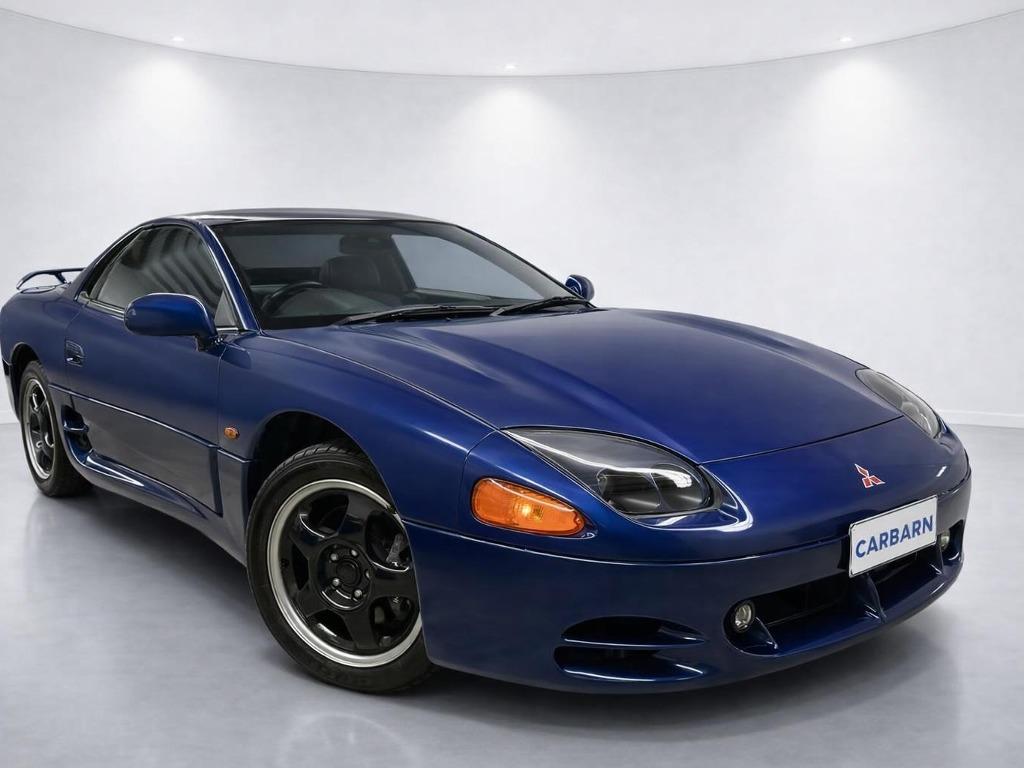
The Mitsubishi GTO (also known worldwide as the Mitsubishi 3000GT) is a legendary 1990s Japanese GT coupe built around the proven 3.0L 6G72 V6. In Australia, buyers typically compare the Mitsubishi GTO V6 (naturally aspirated) against the flagship Mitsubishi 3000GT VR-4 / Mitsubishi GTO VR-4, which adds twin turbos and performance-focused tech. Designed for high-speed stability and long-distance comfort, the GTO delivers a “big, planted grand tourer” feel rather than a lightweight sports car. One reason searches for “Mitsubishi GTO,” “Mitsubishi 3000GT VR-4,” “Mitsubishi GTO V6,” and specific builds like Mitsubishi GTO 1992, 1993, 1998, and 1999 remain strong today especially among buyers comparing specs, trims, and the best examples available especially among buyers comparing specs, trims, and the best examples available.
Model Overview: Mitsubishi GTO vs 3000GT vs VR-4
The Mitsubishi GTO and Mitsubishi 3000GT are the same car, sold under different names depending on the market. In Japan, it’s called the Mitsubishi GTO (domestic-market name), while many export markets used the Mitsubishi 3000GT. The third badge you’ll see is VR-4, the flagship performance and technology grade, most associated with the twin-turbo 3.0L 6G72 V6, AWD, and the model’s “high-tech” identity.
History & What It Was Built For
Launched in the early 1990s during Japan’s golden era of engineering-led performance cars, the GTO/3000GT was designed to prove technology as much as speed. Mitsubishi built it as a grand tourer, a front-engine, transverse-layout coupe focused on high-speed stability and long-distance comfort, which is why it feels more planted and substantial than lighter 90s coupes. That GT brief is also why it remains a sought-after classic today, especially for buyers comparing Mitsubishi GTO V6 models against the iconic Mitsubishi 3000GT VR-4.
Engines & Drivetrains
The Mitsubishi GTO / Mitsubishi 3000GT is built around Mitsubishi’s 3.0L 6G72 V6, offered in multiple tunes across the model run. Depending on year and market, you’ll see: SOHC V6 (entry-level), DOHC 24-valve V6 (naturally aspirated), and the flagship DOHC 24-valve twin-turbo V6 used in VR-4 / Twin Turbo models.
If you’re searching for “Mitsubishi GTO V6”, the main advantage is straightforward: you get the iconic GTO shape and GT cruising feel with less complexity and typically fewer high-tech systems to troubleshoot. If your search is “Mitsubishi 3000GT VR-4” or “Mitsubishi GTO VR-4”, you’re chasing the hero package, twin turbos plus AWD traction (on most VR-4 specs), but the buying rule changes: condition and history matter more than badges, because a neglected VR-4 can cost far more to sort than a clean, well-kept V6.
Mitsubishi GTO Transmission Options
The Mitsubishi GTO / Mitsubishi 3000GT was offered with manual and automatic transmissions, and the exact gearbox depends on the year, trim level, and market. Many buyers specifically search for a Mitsubishi GTO manual, including 6-speed manual versions available on certain variants from the early 1990s onward, while other models came with a 5-speed manual or an automatic. For a model page, the key detail is simple: always confirm the exact transmission in the listing and prioritise cars with clear maintenance history, because driveline condition heavily impacts value and long-term reliability.
Mitsubishi GTO VR-4 Technology Pack
The Mitsubishi GTO VR-4 / Mitsubishi 3000GT VR-4 is famous because it wasn’t just a twin-turbo coupe; it was built as a high-tech flagship with “active” systems that were rare in the 1990s. Depending on spec, VR-4 models may include AWD, Electronically Controlled Suspension (ECS), Active Aero, four-wheel steering (rear steering), and Active Exhaust on some builds. This is why “Mitsubishi 3000GT VR-4” remains a high-intent search today, but it also means smart buyers choose VR-4s based on proof of condition (working systems + documented servicing), not just clean photos and badges.
Mitsubishi GTO Model Years Explained
When people search for Mitsubishi GTO 1992, 1993, 1995, 1998, or 1999, it’s usually a high-intent hunt, not casual browsing. Year-specific searches typically mean the buyer wants a very particular mix of styling (like the early pop-up headlight look), gearbox (5-speed vs later 6-speed), and the right level of VR-4 technology versus day-to-day simplicity.
Because the Mitsubishi GTO (Mitsubishi 3000GT) evolved across three main series, Series 1 (1990–1993), Series 2 (1994–1996), and Series 3 (1997–2000), knowing what changed (and what was later deleted) is crucial to buying the right car, not just the right badge.
1992 Mitsubishi GTO: The Original Pop-Up Headlight Era
A 1992 Mitsubishi GTO sits squarely in Series 1, the era most buyers picture when they think “classic GTO.” The instant giveaway is the pop-up headlights, but the real story is the early VR-4’s “active everything” engineering: Active Aero (auto-adjusting spoilers), Active Exhaust, and (on high-spec cars) systems like full-time AWD and four-wheel steering, with the suspension control hardware visible via the distinctive early bonnet/strut-top details.
1993 Mitsubishi GTO: Last-Call for the Series 1 Look
A 1993 Mitsubishi GTO is still Series 1, which makes it a popular “best of the early look” target, especially for buyers who want pop-up headlights but prefer a later build within that first generation.
Transmission reality check: manuals vary by year/market, but the important buyer takeaway is to confirm what’s fitted, not what’s claimed. Early VR-4s are commonly associated with a 5-speed Getrag, while later cars moved to the 6-speed setup (most strongly tied to the later updates). If a listing highlights “6-speed,” confirm it’s correct for that car and whether it’s factory-fit.
1995 Mitsubishi GTO: Series 2 Sweet Spot
By 1995, you’re in Series 2, where the car’s shape looks more modern thanks to the facelift: a revised front bumper designed for projector headlights (goodbye pop-ups) and broader updates that made these mid-era cars feel more “finished.”
This is also the era where the flagship VR-4 is strongly tied to the 6-speed Getrag manual, and Mitsubishi began discontinuing some of the earlier “active” features over time (for cost/weight reasons), with Active Exhaust phased out after 1994, ECS after 1995, and Active Aero after 1996. In other words, 1995 can be a great balance of the VR-4 experience without all the earliest complexity, depending on the spec.
1998 Mitsubishi GTO: Late-Run Rarity Appeal
A 1998 Mitsubishi GTO falls into the late run (Series 3 era), where buyers often chase a newer-feeling example and end-of-production desirability. If you’re specifically searching “Mitsubishi 3000GT VR-4 1998”, the collector angle is real: VR-4 production numbers in the late years are often cited as very low (market-dependent), which is why clean cars command attention.
Buy like an engineer, not a fan: rarity doesn’t protect you from expensive catch-up maintenance. Focus on evidence of consistent servicing, sensible modifications (if any), and a drivetrain that feels tight, especially in manuals.
1999 Mitsubishi GTO: Final-Facelift Look + “Combat Wing” (VR-4)
For many buyers, 1999 Mitsubishi GTO searches are about the final look. In the 1999 update, the car received its last exterior facelift in some markets, most notably a more aggressive front-end treatment, and VR-4 models are associated with the distinctive inverted airfoil rear spoiler commonly nicknamed the “Combat Wing.”
Common pitfall: conversions. It’s not unusual to see earlier cars wearing late-style bumpers and wings. If you’re paying “1999 money,” confirm it’s a true late-run car by build details and spec, not just cosmetics.
The Golden Rule for Every Mitsubishi GTO Year
No matter which year you’re chasing, 1992, 1993, 1995, 1998, or 1999, the rule is the same: condition beats calendar. These are complex GT coupes, and the most expensive GTO is the one that looks good in photos but has neglected systems underneath. Prioritise documented maintenance, check for smooth shifting (manual synchro feel matters), and confirm the key VR-4 tech functions where equipped.
Why Choose Carbarn Australia for Mitsubishi GTO
If you’re looking for a Mitsubishi GTO for sale in Australia, whether it’s a simpler Mitsubishi GTO V6 or the flagship Mitsubishi 3000GT VR-4, Carbarn Australia makes the buying decision easier by prioritising accurate specs, verified condition, and clear, practical guidance. We highlight the details GTO buyers actually care about (drivetrain, transmission, trim, and real condition notes) so you can compare cars with confidence, not guesswork, and we back it with responsive support and Australia-wide delivery to help you secure the right GTO smoothly.