

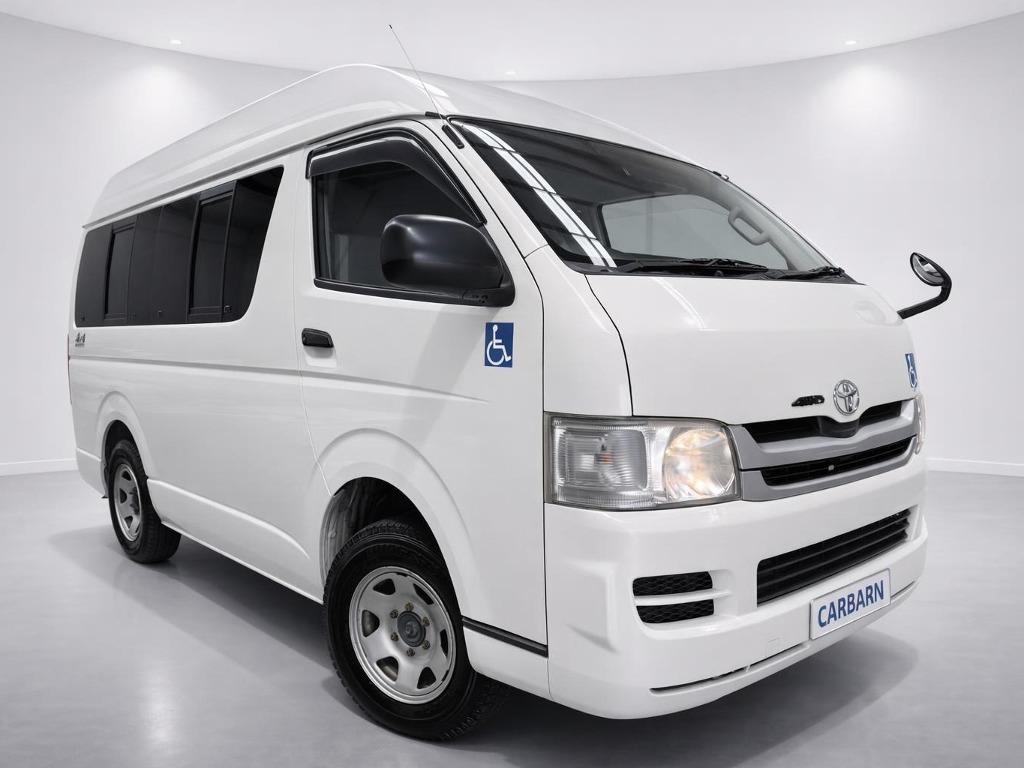
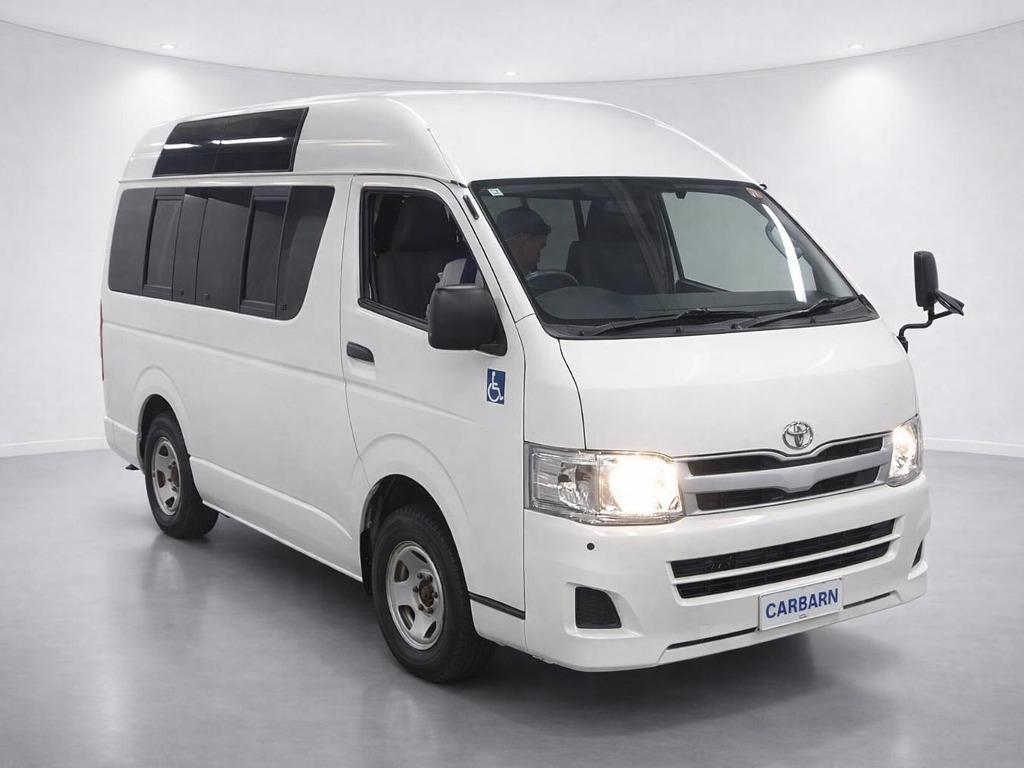
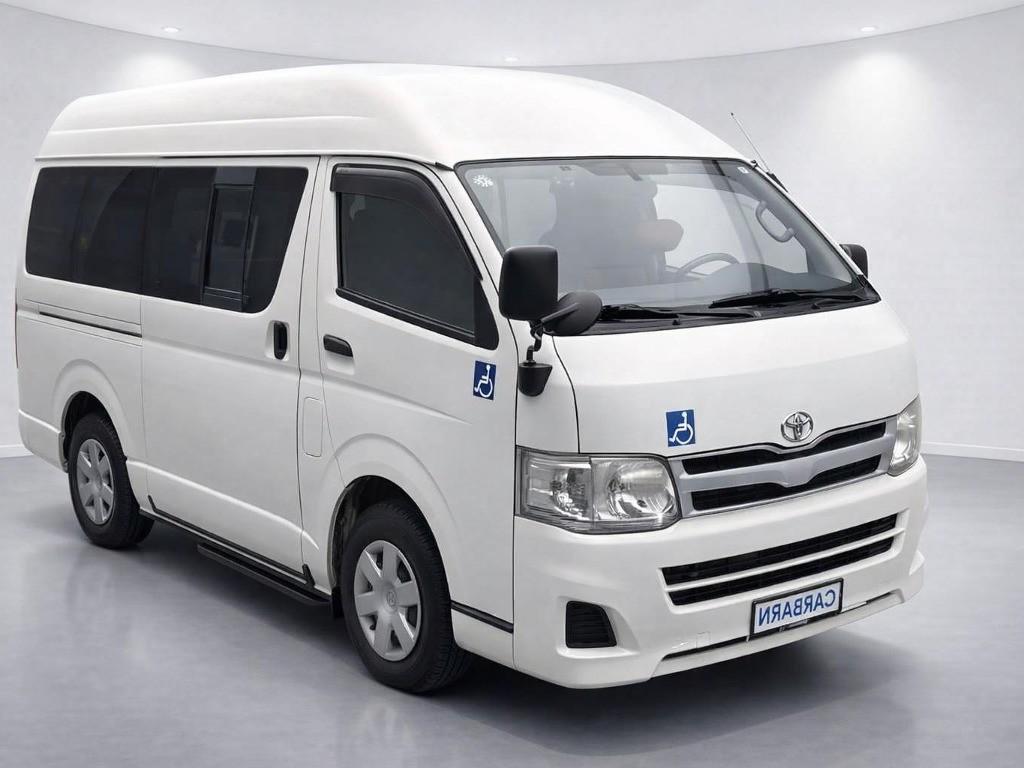
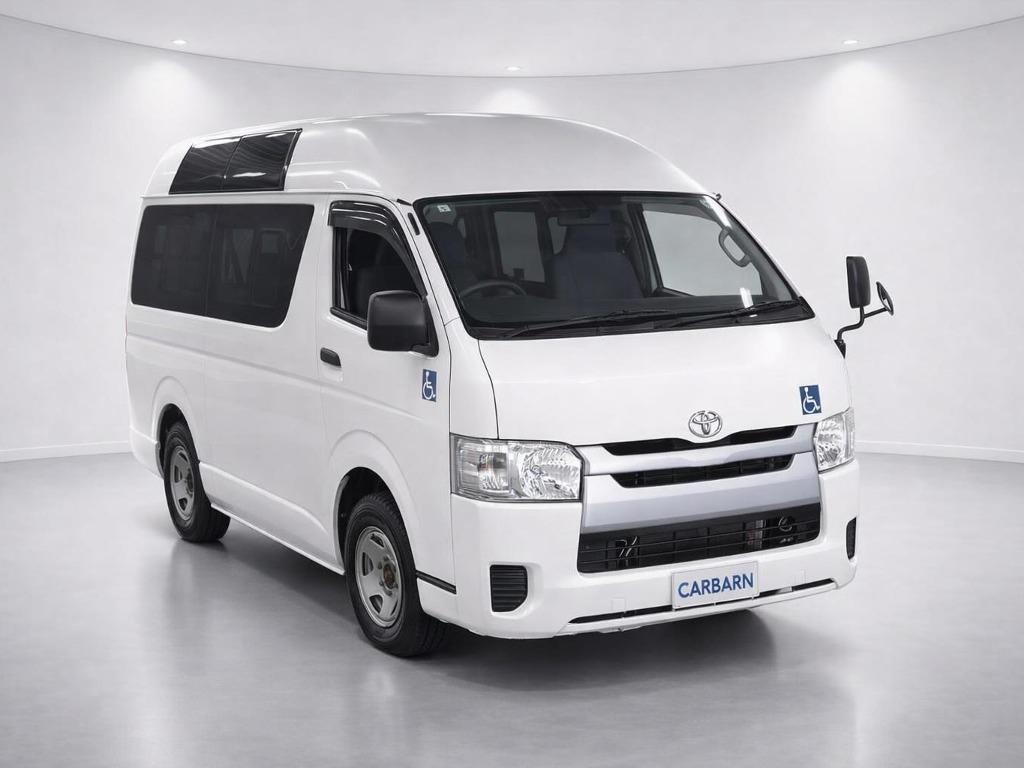
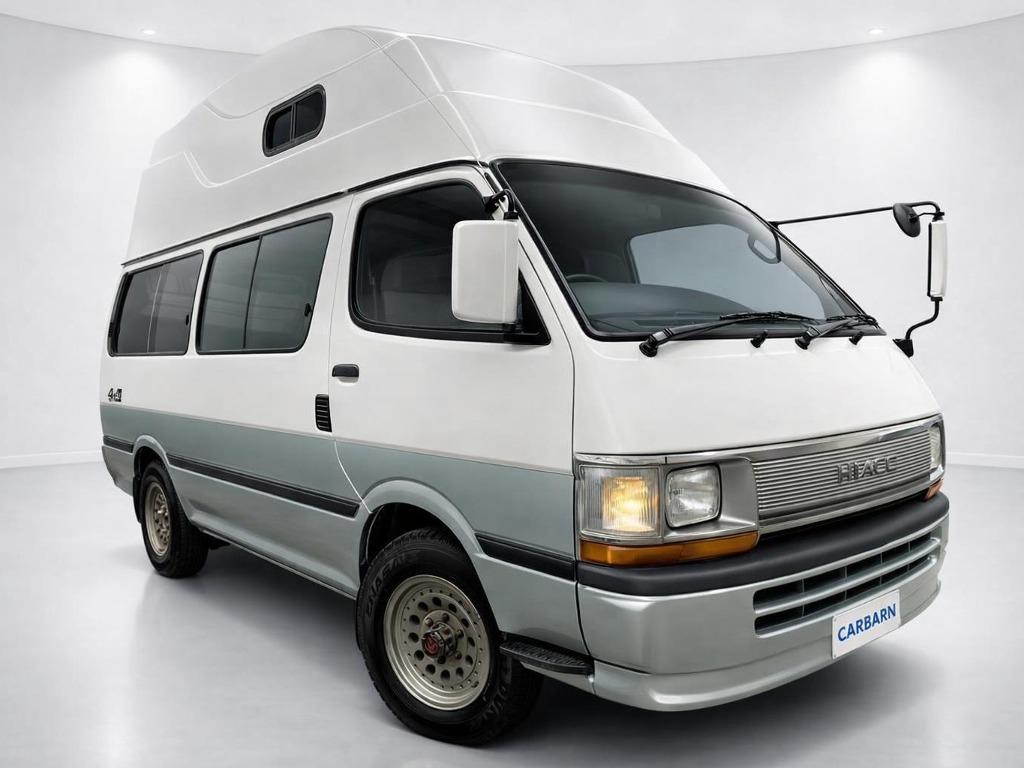
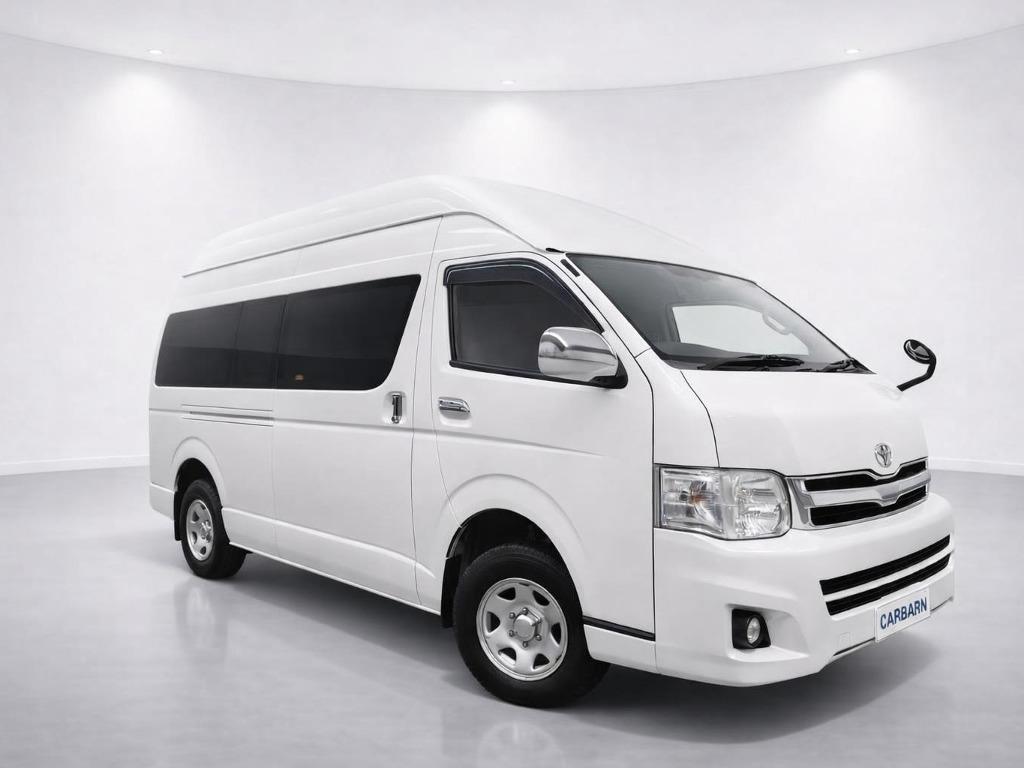
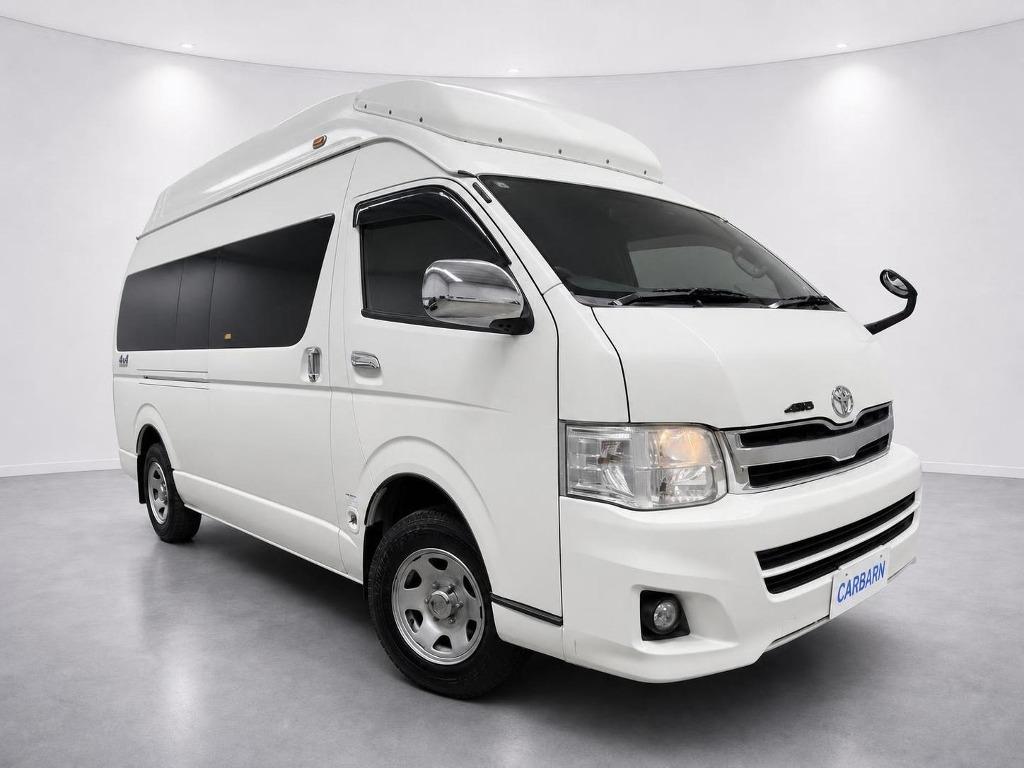
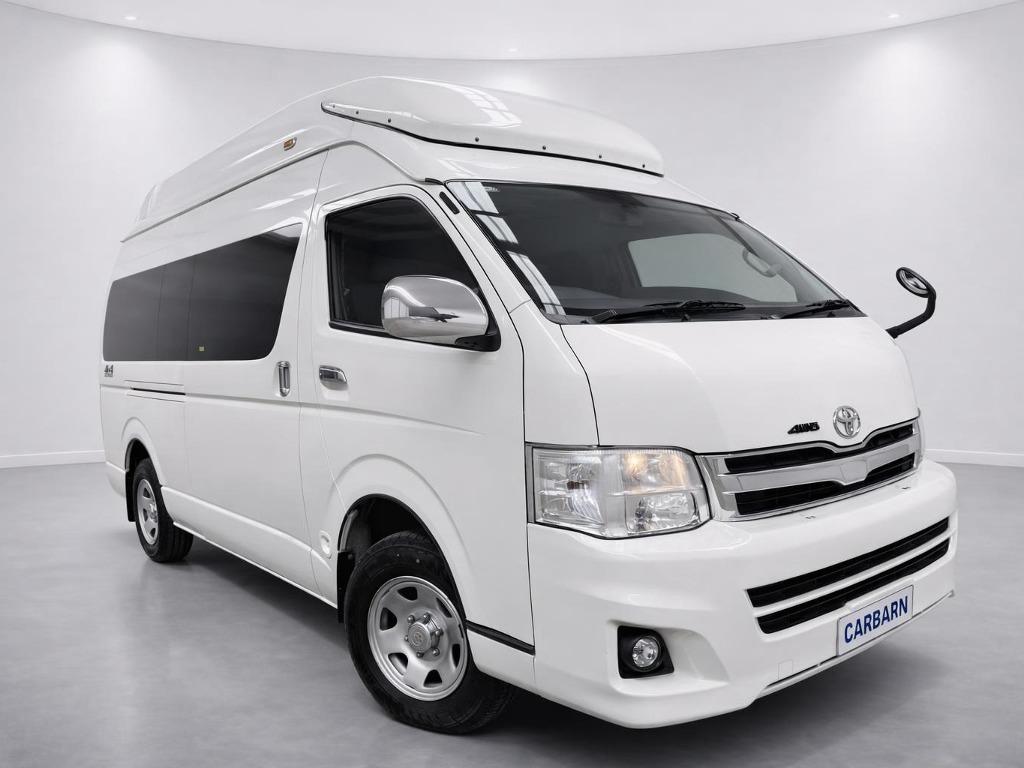
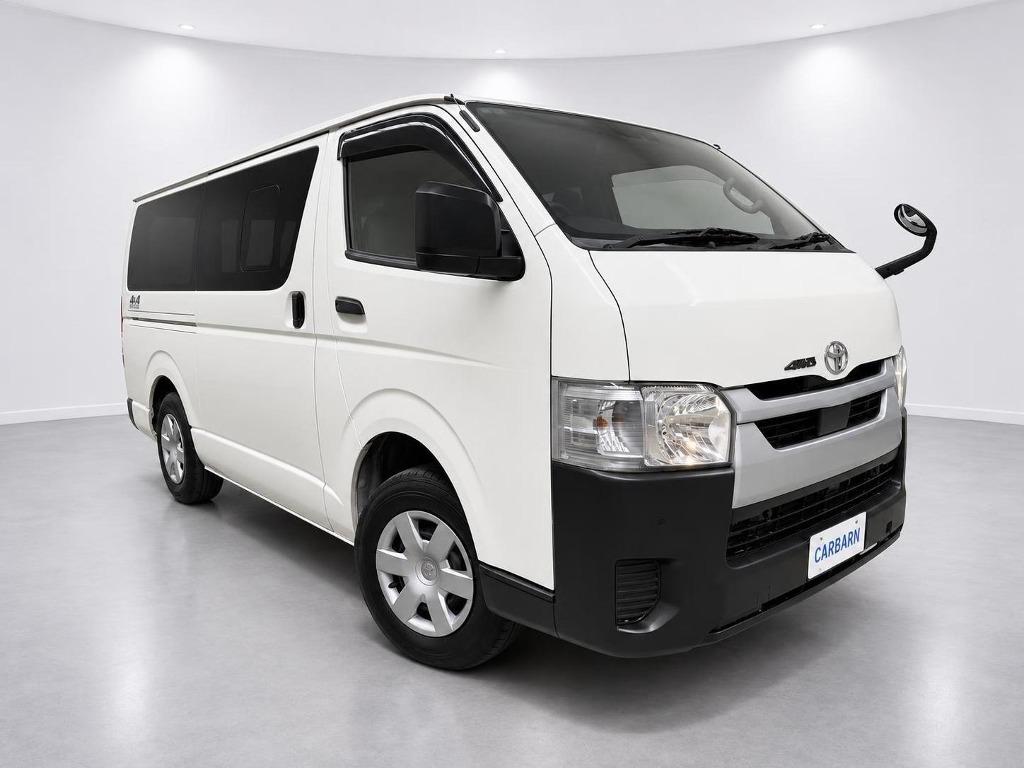
Why a 4WD Hiace is different.
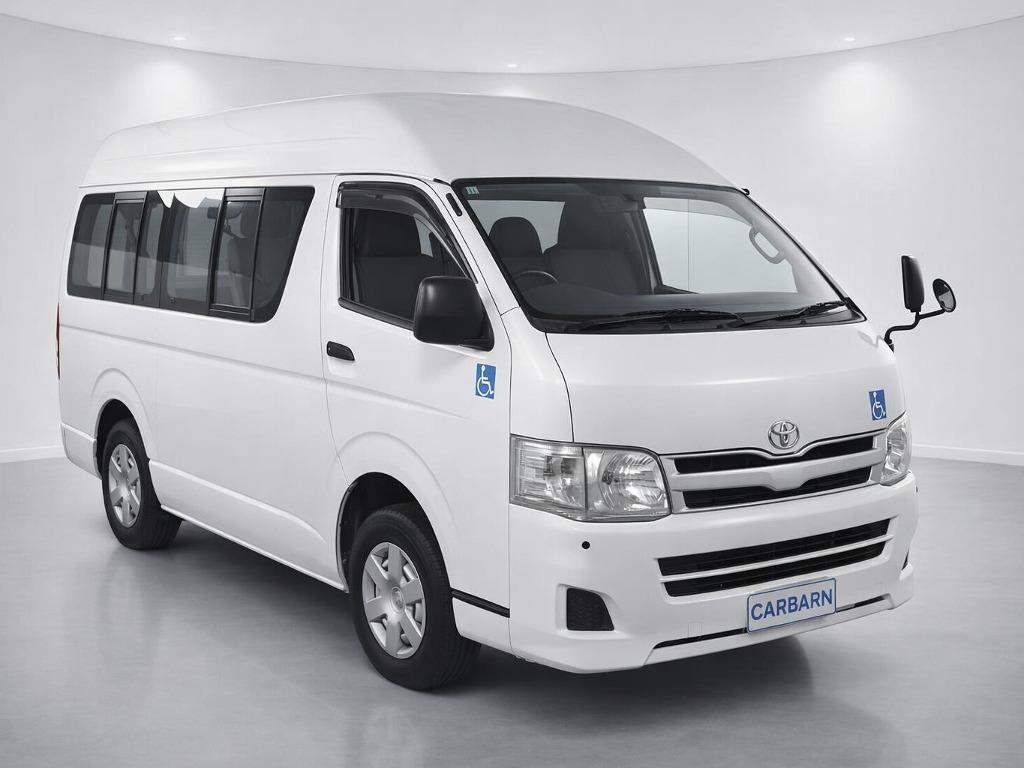
The Toyota Hiace is one of the most familiar vans on Australian roads. A four-wheel-drive version adds extra traction for buyers who travel beyond sealed streets, subject to tyres, conditions and vehicle setup. It combines van practicality with a drivetrain that may suit gravel roads, wet access tracks and touring use.
Who it may suit.
A 4WD Hiace may suit trades and businesses working beyond sealed roads, travellers planning a camper fit-out, families needing a large multi-purpose vehicle, and buyers who want one van to cover both work and weekends.
What to compare.
Wheelbase and roof height can change a van more than the badge does. A long-wheelbase, high-roof vehicle is a different proposition from a shorter, standard-roof van in load space, clearance and daily driving. Transmission, seat configuration and any existing fit-out also matter. Compare the recorded specifications of each listing rather than assuming two Hiace vans are configured the same way.
Carbarn comparison note.
At Carbarn, the comparison starts with the recorded configuration rather than the Hiace badge alone. Model code, drivetrain, transmission, wheelbase and roof type are shown when supported, so buyers can separate materially different vans without filling missing details from another Hiace.
Condition beats age
Age is the least reliable thing a listing tells you. What actually separates two used cars is the record: how they were serviced, what they were used for, and what the inspection found. That is why the recorded details sit beside every listing here — odometer, drivetrain, the model code naming the exact build. Start from the job the car has to do, let the records shortlist the candidates, and treat the year as one fact among many rather than the headline.
What to check on a used van
Configuration is the van decision. Load length, roof height and drivetrain decide the jobs a van can do, and every listing records all three — which matters because vans sharing one badge often share little else. After configuration, read the working life: the load area and underbody say how a van earned its keep more honestly than the paint does, and a documented service history is worth more on a van than on almost anything else you can buy used.
What 4WD adds — and costs
The value of four-wheel drive depends entirely on where the vehicle goes. Touring, sites, beaches and winter access justify the premium 4WD versions carry over their two-wheel-drive twins; sealed-road commuting does not. When comparing listings, trust the recorded drivetrain field over the name — the same model was routinely sold both ways — and expect the 4WD example of the same age to cost more, because the next buyer wants it too.
Vehicles that earn their keep
Buying for work means the job writes the spec: what must fit, what must tow, where it must go. Configuration beats badge — wheelbase, roof and drivetrain are recorded on each listing and they decide what the vehicle can actually do. A serviced high-kilometre workhorse with records is a safer buy than a shiny gap in the logbook. Check the load area for the life it led, and price against condition rather than year.
Built for the long way round
Distance changes what matters. Touring vehicles need range, mechanical reliability a long way from help, and a configuration that carries the trip — which is why diesels, 4WDs and fitted vans dominate the class. Check drivetrain and configuration on the listing's recorded details, then weight the service history more heavily than usual: remote roads are where skipped maintenance presents its bill. Well-sorted touring builds hold value, because every next buyer wants the same thing.