Ready to Hit the Road in Style?
Save money and reduce emissions with vehicles designed to deliver exceptional mileage. Visit our inventory and find a car that fits your lifestyle.
Ready to Hit the Road in Style?
Save money and reduce emissions with vehicles designed to deliver exceptional mileage. Visit our inventory and find a car that fits your lifestyle.
You've found a tidy little hatch, the kilometres look right and the budget works. Then the question lands: can a P-plater actually drive it? In NSW the answer isn't a list of approved badges. It's a set of three legal tests, applied to the exact make, model and year you're looking at.
This guide walks through those tests in plain English, using the wording on the NSW Government's prohibited vehicle definitions page. You'll see how the power-to-weight limit is calculated, which figure counts for a hybrid, why a modified car can fail, and what to do when a car doesn't show up in the official search tool.
Quick Answer
- The rules cover P1 and P2 licence holders only. Learners aren't affected.
- A car is out if it fails any one of three tests: a power-to-tare-mass ratio above 130 kW/tonne, a significant engine modification, or a place on the Transport for NSW list.
- Passing the numbers doesn't clear a car. Check the exact make, model and year in the P1 and P2 vehicle search.
- Rules can change. Re-check the official pages and the tool for your car before you buy.
Who do the P1 and P2 prohibited-vehicle rules apply to?
The restriction applies to every NSW P1 (red P) and P2 (green P) licence holder. The NSW Government's prohibited vehicles page states plainly that the condition does not apply to learner drivers. So a learner can be supervised in a car that the same person won't be allowed to drive once they pass their test.
The legal basis is clause 36(2) of the Road Transport (Driver Licensing) Regulation 2017. It stops provisional drivers from driving what the regulation calls a "high performance vehicle". That phrase has a precise meaning, and the next section sets out the three ways a car can meet it.
The same page adds one line worth remembering if you're planning a road trip: "The high performance vehicle restriction applies to all P1 and P2 NSW licence holders, even if driving interstate." Your licence conditions travel with you.
What are the three "high performance vehicle" tests?
Transport for NSW treats a car as a high performance vehicle if it meets any one of three definitions. The first is a power-to-tare-mass ratio (PMR) greater than 130 kW/tonne. The second is a significant engine modification. The third is a place on the Transport for NSW list titled "Novice Driver - High performance vehicle restrictions".
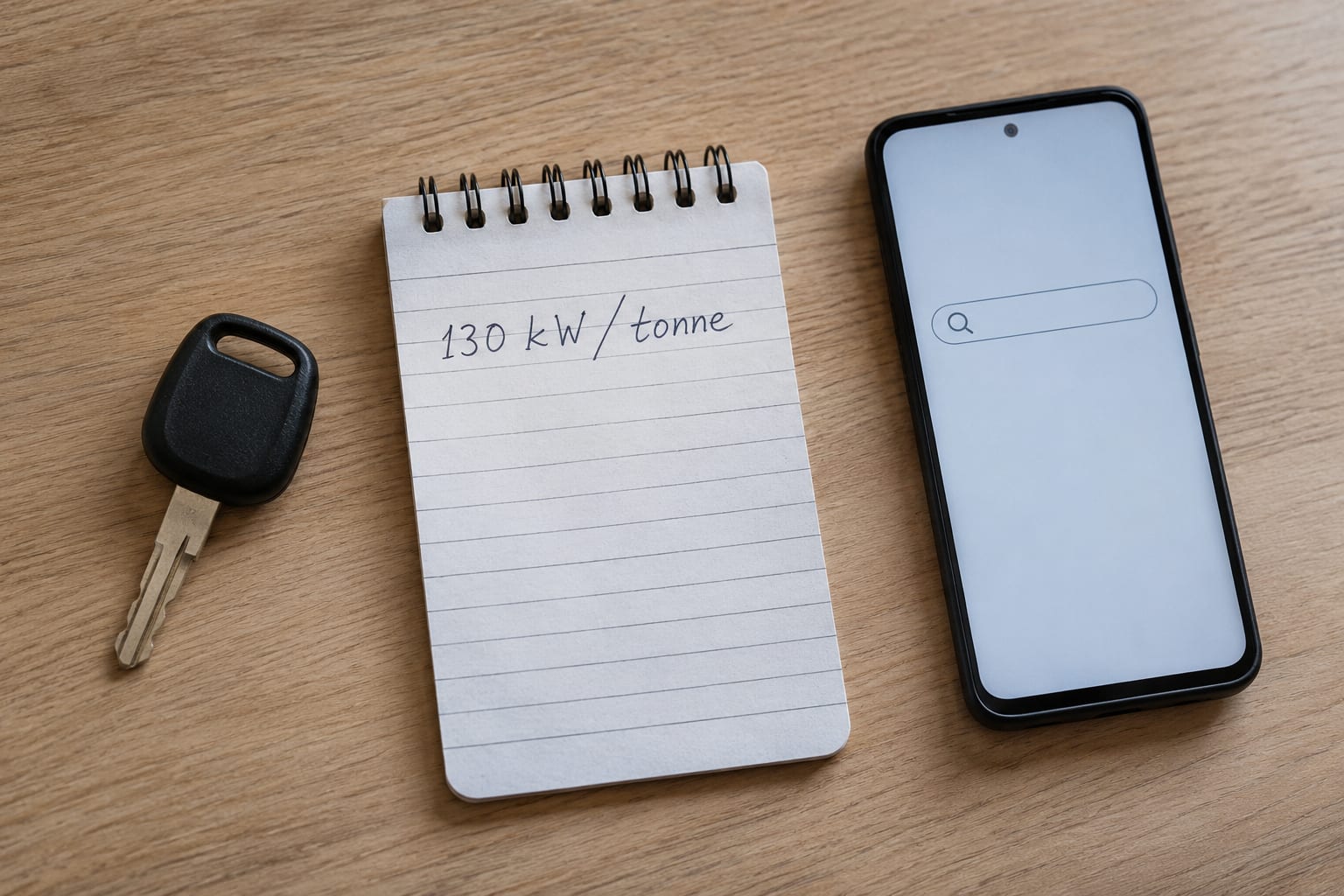 Illustration: Car key, power-to-weight note and a phone with an empty search box.
Test 1: the power-to-weight ratio. This is the one most people have heard of. Divide the car's power in kilowatts by its tare mass in tonnes. If the result is greater than 130, the car is prohibited. The next section shows the exact rounding rules, because they catch people out.
Test 2: a significant engine modification. Under clause 83 of the Road Transport (Vehicle Registration) Regulation 2017, Transport can list engine modifications that affect occupant safety. The definitions page says any car with one of those modifications "is deemed to be a high performance vehicle". The Service NSW check page puts it more simply: engines that "need to be approved by an engineer" are out.
Test 3: the list. Some cars pass the numbers but still present a higher risk to new drivers. The definitions page says these are "typically... vehicles with greater acceleration and performance than their PMR would suggest". The official search page confirms the list sits on top of the ratio test: "These vehicles are prohibited in addition to those that have a power to tare mass ratio of greater than 130 kW per tonne."
The practical point is this. A good number on paper is not clearance. All three tests apply separately, and the official search by make, model and year is the only check that covers all of them at once.
How is the power-to-weight limit calculated?
The power-to-tare-mass ratio is the car's power divided by its tare mass, and the result is never rounded. The NSW Government's definitions page spells out that mass is expressed in tonnes to three decimal places, power is rounded to the nearest whole kilowatt, and the ratio itself is left exactly as calculated.
The formula and rounding
The definitions page gives its own example: "even if a vehicle's PMR is just over 130kW/tonne, for example 130.01 kW/t, it is deemed to be a high performance vehicle." The test in the regulation is "greater than 130". That wording means a result of exactly 130.0 is not over the limit, while 130.01 is.
Three decimal places of tonnes is the same as the nearest kilogram. So a 1 kg difference in tare mass is enough to move the result. That's why you can't rely on a figure that's been rounded for you in a brochure or a news article.
Worked example (illustrative, not a real model)
The figures below are invented to show how the arithmetic behaves near the line. They don't describe any real car.
| Power (whole kW) | Tare mass (tonnes, 3 d.p.) | Ratio (kW/tonne) | Result |
|---|---|---|---|
| 90 | 0.700 | 128.57 | Under the limit |
| 91 | 0.700 | 130.0 | Not greater than 130 |
| 91 | 0.699 | 130.19 | Over the limit |
The takeaway is that one extra kilowatt or one fewer kilogram can flip the answer. The last row is not "about 130" and nobody rounds it down. It's 130.19, and under the official wording that car is prohibited.
A numeric pass only clears the first test. The modification test and the list still apply, which is why the official search is the final word.
Where does the tare mass come from?
Transport for NSW uses the tare mass specified by the vehicle's manufacturer, as defined in the Australian Design Rules. The definitions page explains that manufacturers submit tare mass and power data to the Commonwealth Government during identification plate approval, and this data "is deemed the most reliable and is used whenever possible".
When that figure isn't available, or Transport thinks the manufacturer's data may have changed after plate approval, it turns to "reliable secondary sources, such as vehicle data suppliers". If the figure still can't be found, Transport "may require specific information to be provided so that it can make a determination".
Two things follow from this. First, Transport uses the manufacturer's tare mass, not figures from other sources, so don't run your own calculation from a weight you've been quoted and treat the result as final. Second, aftermarket weight doesn't count, which the modification section covers below.
If you want to check a car's specifications yourself, the NSW Government's prohibited vehicles page suggests three places to look: the owner's manual, the manufacturer or dealer, and a mechanic. Use those to sanity-check a listing, then confirm in the official search.
Hybrids and electric cars: which power figure counts?
For a hybrid, the power figure is the combined maximum output of the petrol engine and every electric motor in the drive system, as specified by the manufacturer. The NSW Government's definitions page is explicit about this, and it means a hybrid badge is no guarantee of a pass.
| Drive type | Power figure Transport for NSW uses |
|---|---|
| Electric only | Power as specified by the manufacturer |
| Hybrid | Combined maximum power of the internal combustion engine and all auxiliary motors, as specified by the manufacturer. The engine's share is Net Engine Power under the ADRs |
| Petrol or diesel only | Net engine power under the ADRs, measured at the engine's flywheel |
Why does this matter? Many small hybrids pair a modest petrol engine with a modest motor, and their combined figure sits comfortably under the line. Larger or more powerful hybrids are a different story. A heavy sedan with a strong combined output can land over 130 kW/tonne even though it's sold as an economy car. Don't assume a hybrid is fine. Run the make, model and year through the official search like any other car.
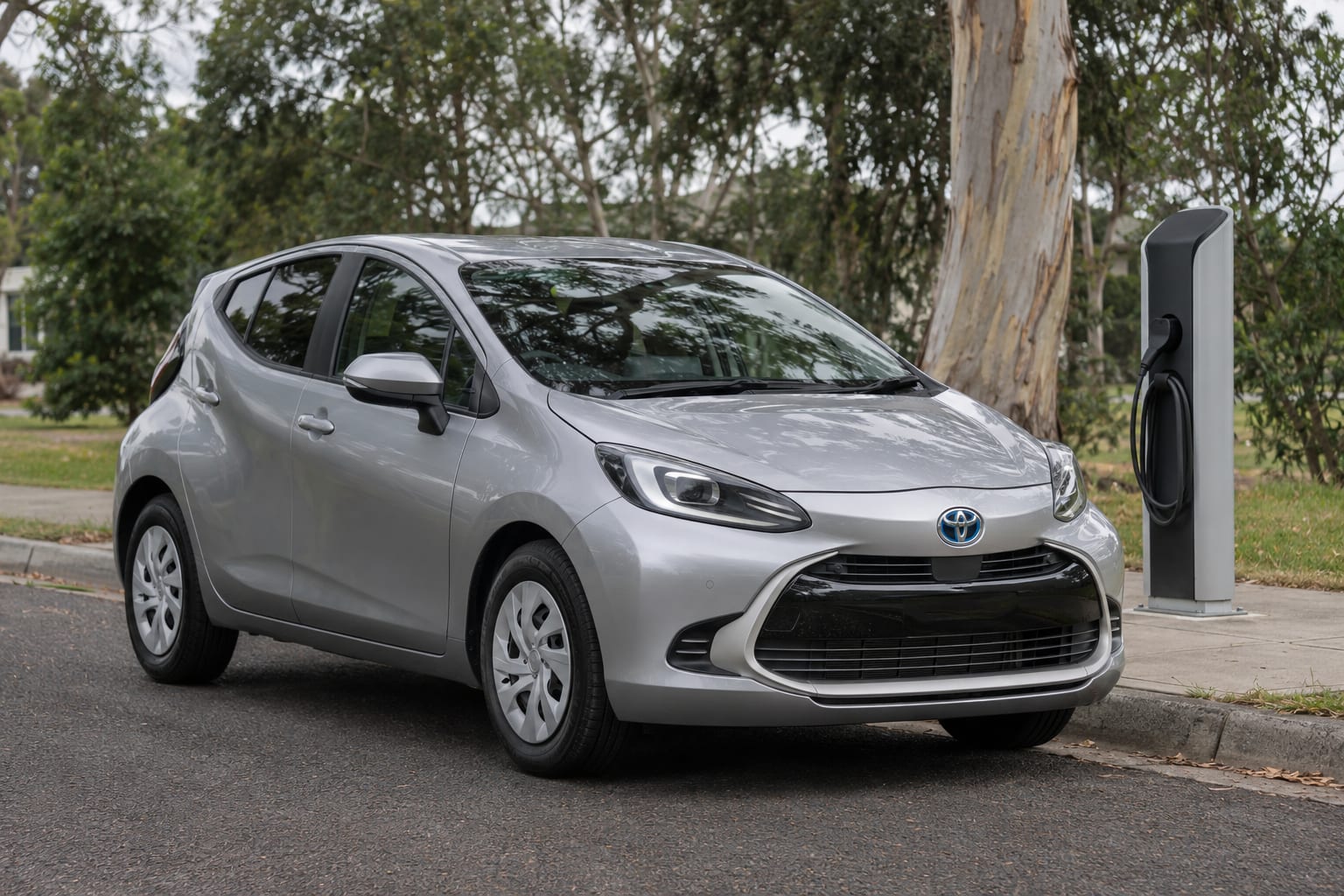 Illustration: Silver second-generation Toyota Aqua parked beside an EV charging post.
If you're new to hybrids, it helps to know which kind you're looking at before you worry about the ratio. A self-charging hybrid, a plug-in hybrid and a full electric car are treated differently in the table above. The used hybrid cars page explains the basics of how a self-charging hybrid works, and the guide to hybrid vs plug-in hybrid vs electric walks through the differences. For a sense of the small end of the market, the roundup of small hybrid cars in Australia is a sensible starting point. None of those pages checks P-plate eligibility. That's still a job for the official tool.
Can a modified car still qualify?
Modifications can only make a car's position worse, never better. The NSW Government's definitions page states that "under no circumstances will a modification to a prohibited vehicle be allowed to increase its Tare Mass or decrease its Power, and to alter its status as a prohibited vehicle." The official search page says the same thing another way: "Vehicles cannot be modified or restricted in order to be reclassified as approved."
Adding weight doesn't help. The definitions page gives the example directly. You can't fit a bull bar or tow bar and then claim a tare mass higher than the manufacturer's figure. For commercial vehicles, Transport may consider a nominal mass for a body or tray, but the page says this is at Transport's discretion.
Detuning doesn't help either. The same page says "it is not allowable to detune an engine and claim a Power less than that supplied by the manufacturer." The manufacturer's figure stands.
Engine modifications can tip a car over. Significant engine modifications must be certified under the Vehicle Safety Compliance Certification Scheme. A car with one of them is deemed a high performance vehicle regardless of its ratio. The specific modifications are listed in Transport's Vehicle Standards Information 6, Light Vehicle Modifications. If a used car has had engine work, ask for the paperwork and check it against that document before you commit.
What if the car isn't in the search tool?
Some cars won't appear in the official search, or will show as "for review". The NSW Government's prohibited vehicles page says this happens because they "may be older, newly released or niche vehicles". In that case you're told to contact Transport for NSW by phoning 13 22 13 or emailing ExemptionEnquiry@rms.nsw.gov.au.
Here's a short sequence that covers all three tests:
- Search by make, model, badge and year. Use the P1 and P2 vehicle search on the Transport for NSW road safety site, or go through the Service NSW check page. Service NSW says you can search using any combination of vehicle details, such as make, model, badge and year of manufacture.
- If the car is missing or marked "for review", call or email. Don't guess from a brochure figure. Get Transport's answer for that exact car.
- Check for modifications. Ask the seller directly, look for engineering certificates, and compare any engine work against VSI 06.
- Confirm where the tare mass figure came from. If you've been quoted a weight, make sure it's the manufacturer's tare mass, because that's the figure Transport uses.
 Illustration: Two people discuss something on a laptop at a kitchen bench.
Rules can change. Check the official pages and the tool for your car, using make, model and year, close to the day you buy.
Are there exemptions, and do the rules apply interstate?
Exemptions exist, but the NSW Government's prohibited vehicles page says they "are only granted in exceptional circumstances". The two grounds listed are that a prohibited vehicle "needs to be driven for genuine work purposes" or that "exceptional circumstances apply". Wanting a particular car isn't one of them, so don't buy on the assumption you'll be approved.
The process has three parts. You complete the P1 and P2 passenger or vehicle exemption form, attend a service centre, and pay the application fee. If an exemption is granted, you must carry the letter Transport for NSW issues while driving that vehicle.
One obligation continues after approval. The page says you "must notify Transport for NSW within 14 days if any circumstances have changed which affect your exemption", including if you no longer need it or the letter needs replacing. A further fee may apply.
On interstate driving, the official wording is clear: the restriction "applies to all P1 and P2 NSW licence holders, even if driving interstate". The reverse case, a P-plater licensed in another state driving in NSW, isn't covered on these pages. If that's your situation, ask Transport for NSW directly rather than relying on a forum answer.
How do you shortlist a P-plate-friendly car?
Start from the method, not from a list of "legal cars". Shortlist small, modestly powered cars that suit how you'll drive, then run every candidate through the official search by make, model and year before you fall for it. A list of approved badges goes stale. The method doesn't.
For the broader buying decision, the guide to used cars for first-time buyers covers reliability and running costs, and the piece on why insurance costs differ between cars is worth a read before you buy. Neither replaces the P-plate check.
| What to check | Why it matters | Official action |
|---|---|---|
| Make and model | The search works by make and model | Search the P1 and P2 vehicle tool |
| Year | The same model can change power or weight across years | Include year of manufacture in the search |
| Badge or grade | Higher grades can carry more power | Search the exact badge, not just the model |
| Modifications | A significant engine modification fails test 2 | Ask for certificates; compare with VSI 06 |
| Tare mass source | Transport uses the manufacturer's tare mass | Confirm any quoted weight is the manufacturer's figure |
| Missing or "for review" | Older, new or niche cars may not appear | Call 13 22 13 or email Transport for NSW |
Small cars worth checking first
The four cars below are the kind of small hatch that often ends up on a P-plater's shortlist. None of them is stated here as P-plate legal. The figures come from each car's stock record, which doesn't include a tare mass, so no ratio has been calculated. Check each make, model and year in the official tool.
2022 Toyota Aqua
The 2022 Toyota Aqua is a city-sized hybrid hatch, and that's exactly why it suits a first car for a lot of families. It's short enough to park easily, it's an automatic, and the hybrid system does its best work in the stop-start suburban driving most new drivers do.
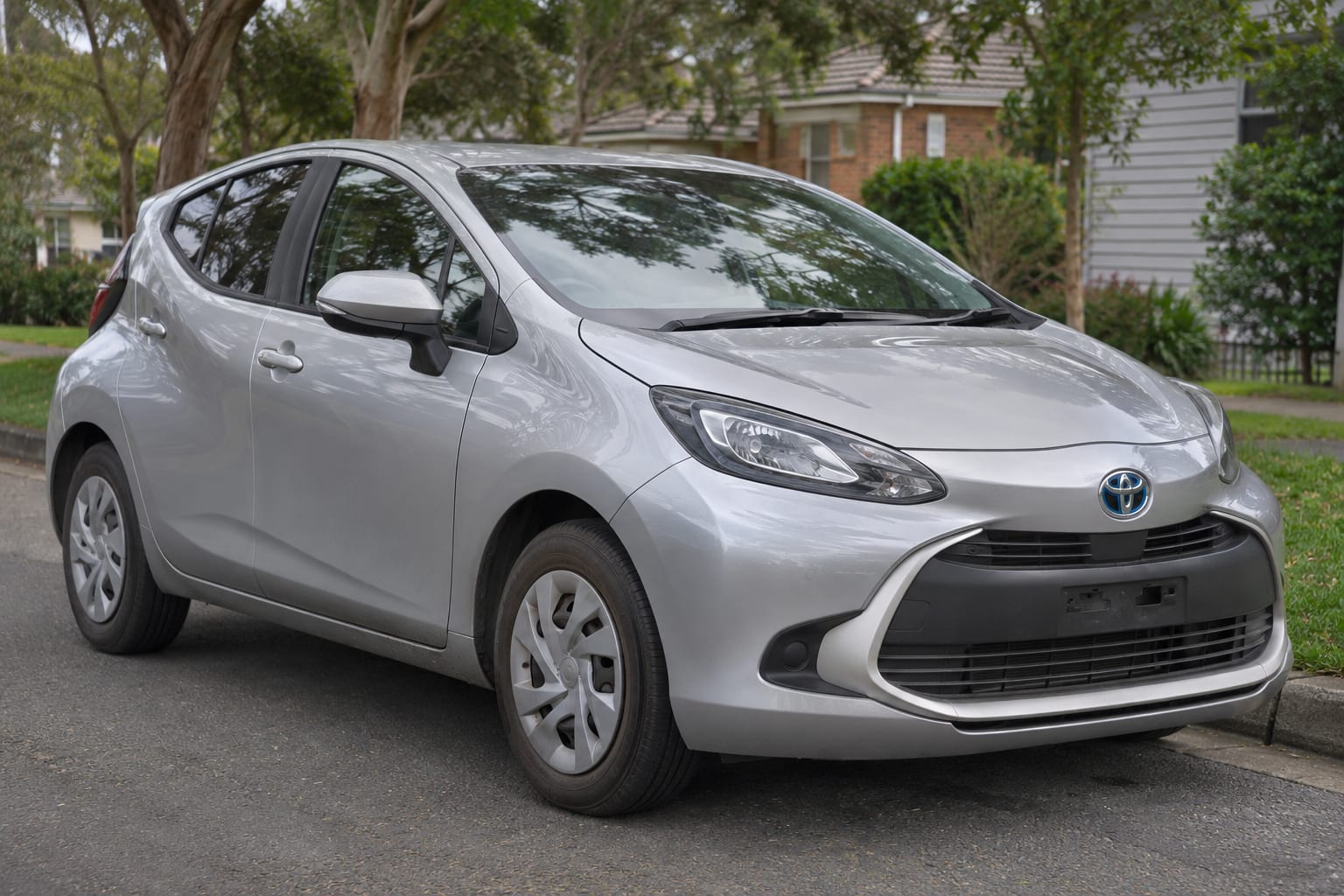 Illustration: Toyota Aqua
The stock record for this model code (MXPK11) lists a 1.5 L, 1,500 cc hybrid with front-wheel drive, five seats and five doors. It measures 4,050 mm long, 1,690 mm wide and 1,480 mm tall, with a 36 L tank, and the listed combined fuel use is 2.9 L/100 km. This article doesn't quote a power figure or tare mass for the car, so check both through the official tool.
Remember the hybrid rule. The figure Transport for NSW uses is the combined engine and motor output, so don't assume a pass. Check this make, model and year in the official tool.
2016 Toyota Prius Alpha
The 2016 Toyota Prius Alpha (also sold as the Prius v) is the biggest car in this group. It's a longer hybrid wagon, which means more boot space and more rear legroom than a city car. It's a different car from the standard Prius, which is shorter and is listed separately in the official search. If the P-plater is also the family's weekend driver, that extra room is useful.
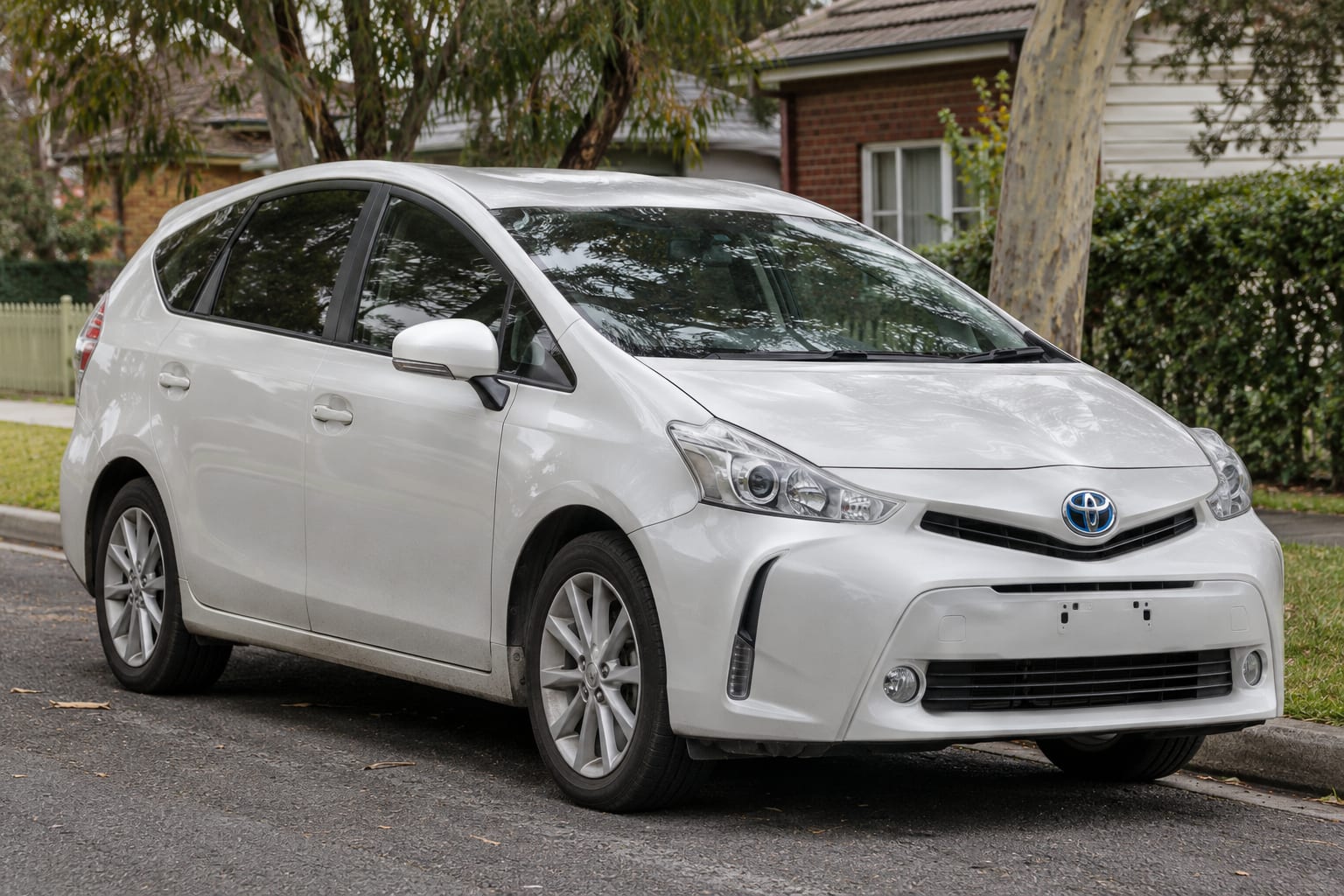 Illustration: Toyota Prius Alpha
The stock record for this ZVW41 model code lists a 1.8 L, 1,800 cc hybrid, automatic, front-wheel drive, with five seats and five doors. It's 4,660 mm long, 1,770 mm wide and 1,570 mm tall, with a 45 L tank and a listed combined fuel use of 4.8 L/100 km.
This article doesn't quote a power figure or tare mass for the car, so the ratio test isn't run here. Check this make, model and year in the official tool.
2021 Honda Fit
The 2021 Honda Fit is Honda's small hybrid hatch, and its party trick is interior packaging. The cabin feels bigger than the footprint suggests, and the rear seats fold in ways that make it handy for a student moving house or a part-time job that involves carting gear.
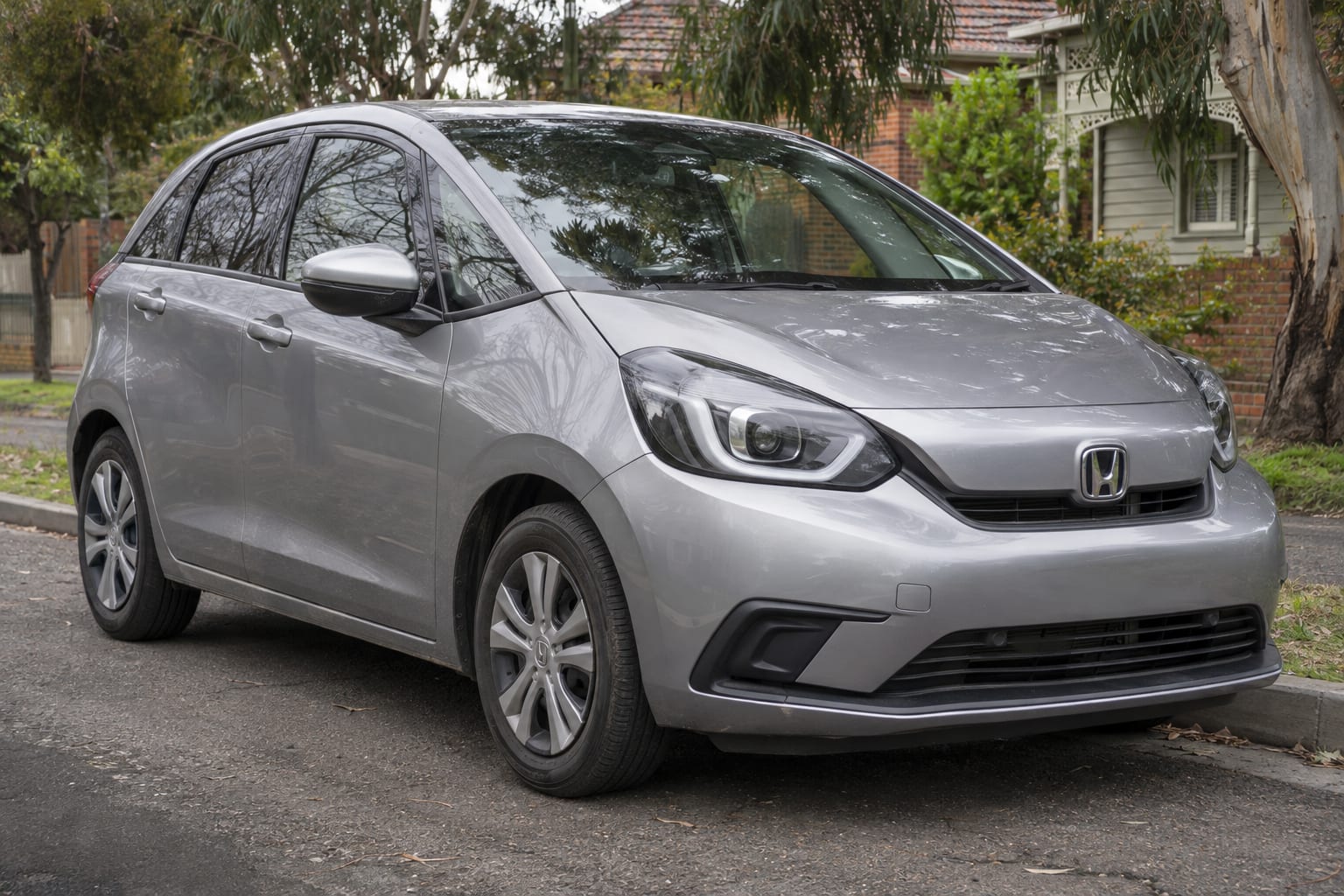 Illustration: Honda Fit
The stock record for this GR3 model code lists a 1.5 L, 1,500 cc hybrid, automatic, front-wheel drive, with five seats and five doors. It's 3,990 mm long, 1,690 mm wide and 1,510 mm tall, with a 40 L tank and a listed combined fuel use of 3.4 L/100 km.
As with the other hybrids here, this article doesn't quote a power figure, and the combined engine and motor output is what counts. Check this make, model and year in the official tool.
2018 Toyota Vitz
The 2018 Toyota Vitz is a plain petrol hatch, which keeps the P-plate question simpler. With a petrol-only car, the power figure Transport uses is net engine power at the flywheel. There's no combined-output calculation to think about.
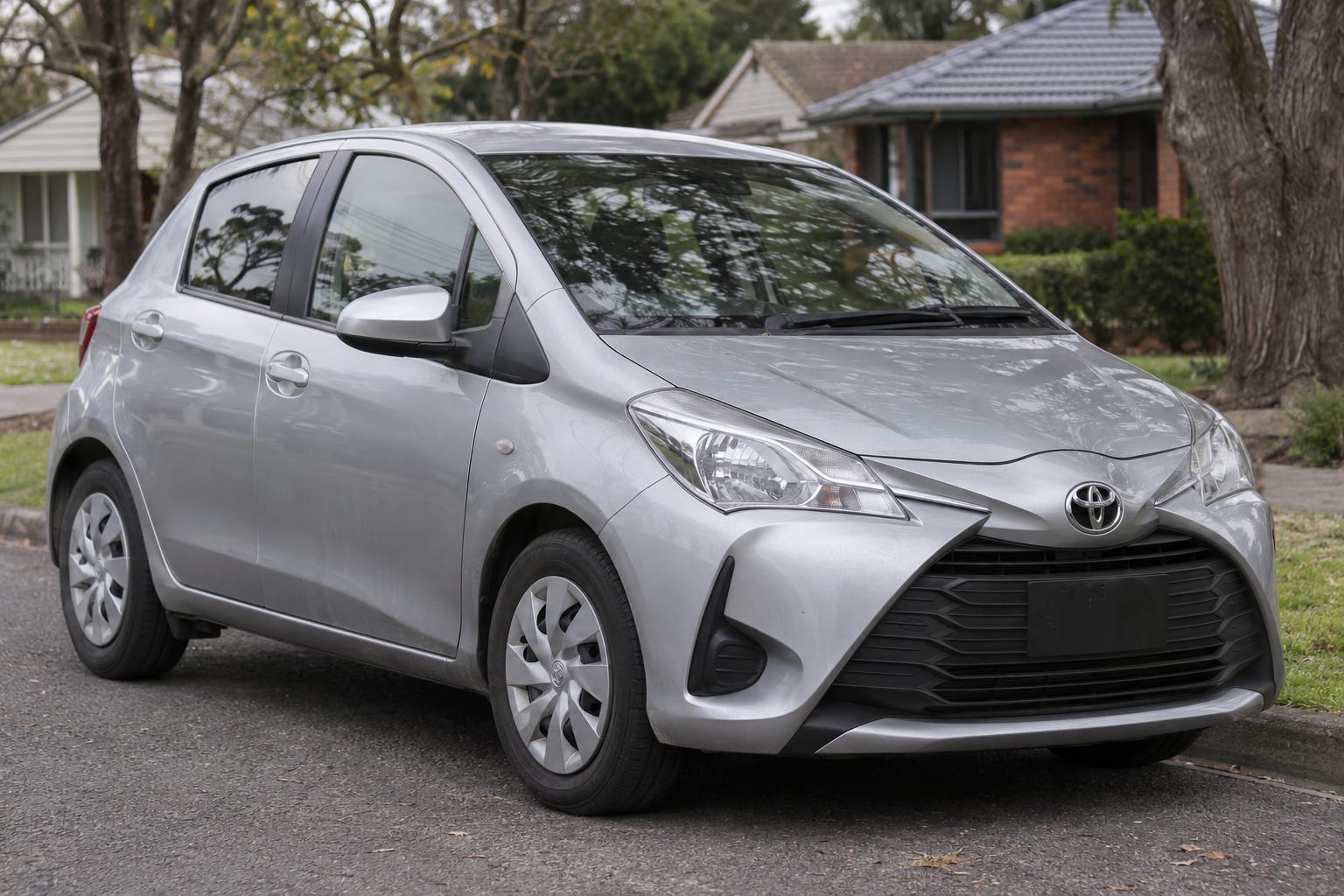 Illustration: Toyota Vitz
The stock record for this KSP130 model code lists a 1.0 L, 1,000 cc petrol engine producing 51 kW and 95 Nm, with an automatic transmission and front-wheel drive. It has five seats and five doors, measures 3,940 mm long, 1,690 mm wide and 1,500 mm tall, carries a 42 L tank, and lists combined fuel use of 4.7 L/100 km.
The Checked Spec Sheet for this car has no tare mass, so no ratio is calculated here. One more tip: Vitz is the Japanese-market name for the car sold in Australia as the Yaris, so search both names in the official tool. The Australian Yaris of that era used different engines from this 1.0 L Vitz, so the power figure for a Yaris listing may differ. The Toyota Yaris page is a sensible place to start comparing. Check this make, model and year in the official tool.
Which one makes sense for you?
If you mostly drive in Sydney traffic and want the lowest fuel bills, a small hybrid like the Aqua or Fit makes a lot of sense, provided the official check comes back clear. If you want the simplest possible P-plate story, a small petrol hatch like the Vitz keeps the power figure straightforward. If the car doubles as a family runabout, the Prius Alpha's extra space is worth a look. Whatever you pick, the official search by make, model and year is the final step, not the brochure.
Where can you look for a used small car?
Carbarn is a licensed NSW motor dealer (AYANUK PTY LTD, Motor Dealer Licence MD056471) based in Lidcombe, Sydney. The used cars listings include small hatches and hybrids of the kind covered above, and each car's page shows its model code and key details so you have the make, model and year you need for the official P-plate search.
If the car you want isn't available locally, Carbarn can source it from Japan through its importing service, with the compliance work handled in-house. The how compliance works page explains that process. It covers import approval and Australian Design Rule compliance, not P-plate eligibility.
Carbarn doesn't certify any car as P-plate legal. Whichever car you're considering, from any seller, check the exact make, model and year in the official Transport for NSW tool before you buy.