


Ready to Hit the Road in Style?
Save money and reduce emissions with vehicles designed to deliver exceptional mileage. Visit our inventory and find a car that fits your lifestyle.
Ready to Hit the Road in Style?
Save money and reduce emissions with vehicles designed to deliver exceptional mileage. Visit our inventory and find a car that fits your lifestyle.
Sydney drivers paid 236.0c/L for regular unleaded on 26 October 2026, according to the NRMA weekly fuel report. The same report has that up 83.8c since 30 June. The NRMA expects it to ease only to the "low/mid 230s" in the following week. If you're wincing every time you pull into the servo, a hybrid, plug-in hybrid or EV starts to look tempting.
The catch is that NSW plans a per-kilometre charge for EVs and plug-in hybrids from 1 July 2027. That could change which one is cheapest to run. This guide shows the cost per km for each type, today and after the charge, with the working laid out so you can rerun it with your own numbers. Every input carries its date, because fuel and power prices move.
Quick Answer
- EV with home charging: cheapest per km today, and still cheaper than petrol after the charge on our working.
- Plug-in hybrid: only as cheap as the share of your driving done on electricity.
- Ordinary hybrid: a clear saving over petrol, and the NSW page doesn't name it in the charge.
- The charge: 3.095c/km for EVs and 2.476c/km for PHEVs at 2026-27 rates. It's indexed to CPI, so the 2027 rates will differ.
How do you work out running cost per kilometre?
Cost per km is what your car uses per 100 km, multiplied by what that energy costs you, divided by 100. That's it. Once you have the two inputs, you can compare a hybrid, a plug-in hybrid and an EV on the same footing, then add the NSW charge on top.
First, the three types in plain terms:
- Hybrid: a petrol engine plus a small battery that charges itself. No plug. Nissan's e-POWER models, like the Serena e-POWER, also sit here: the petrol engine makes electricity, but you never plug them in.
- Plug-in hybrid (PHEV): a bigger battery you charge from the wall, plus a petrol engine for longer trips.
- Electric vehicle (EV): battery only, charged from the wall or a public charger.
The two formulas:
- Petrol cost (c/km) = L/100km × pump price in c/L ÷ 100
- Electricity cost (c/km) = kWh/100km × power price in c/kWh ÷ 100
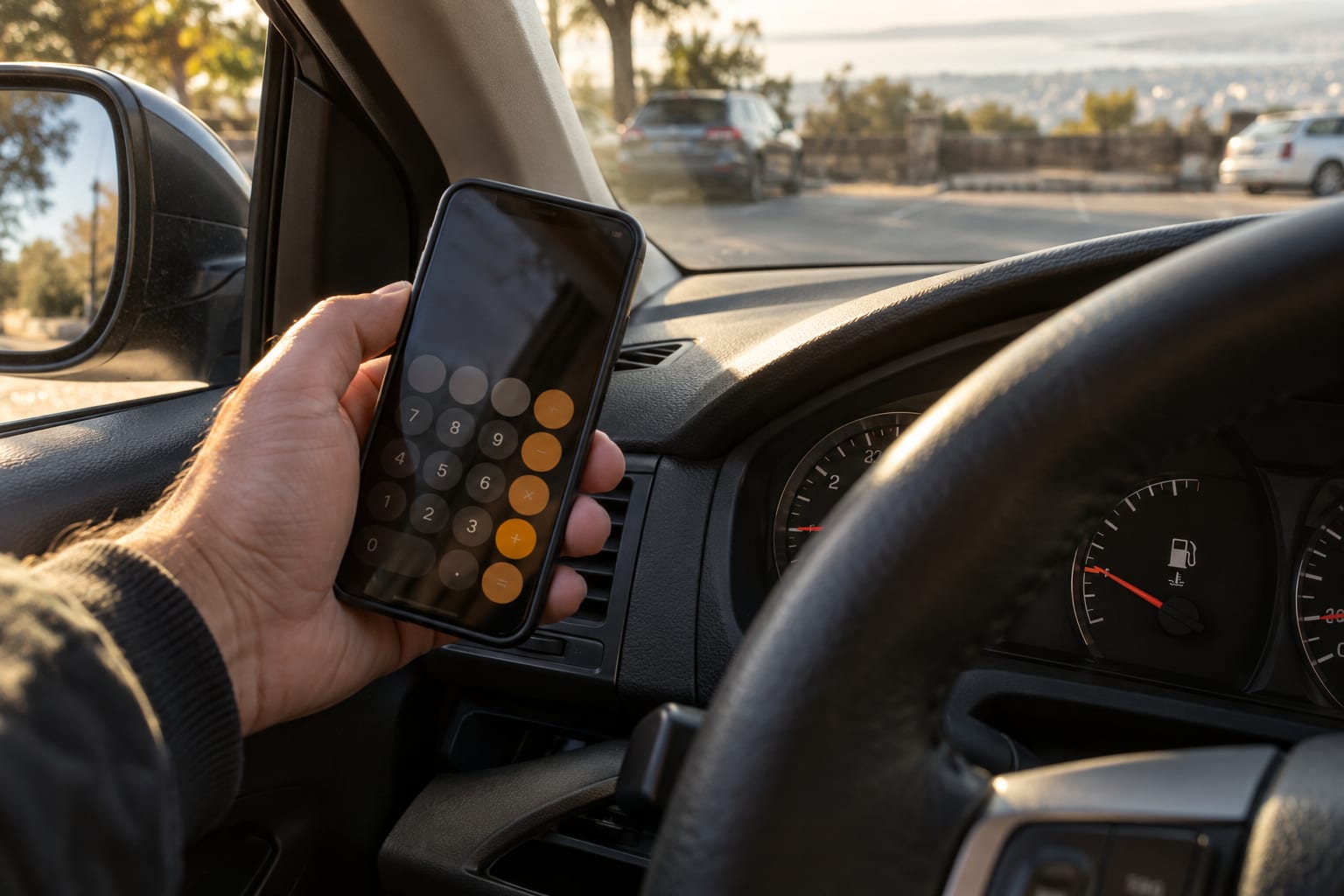 Cost per km takes two inputs: what your car uses and what you pay for that energy.
Which inputs does this guide use?
For petrol, we use the NRMA's Sydney unleaded figure of 236.0c/L from 26 October 2026. For power, we use 33.14c/kWh, the flat usage rate in the Australian Energy Regulator's 2026-27 Default Market Offer for the Ausgrid network. That's a cap on default plans, not what every household pays. Many market offers come in lower.
Consumption figures here are illustrative, not tied to any model: 5.0 L/100km for a petrol car, 4.0 L/100km for a hybrid and 16 kWh/100km for an EV. For a specific car, look up its official label figure on the Green Vehicle Guide and swap it in.
Label figures are lab results, and real-world use is often higher, as our guide to real-world vs claimed fuel economy explains. The NRMA's 2024 EV vs PHEV vs hybrid guide also notes that PHEVs must be plugged in regularly to meet their stated ratings.
What's left out: the daily electricity supply charge (you pay it either way), public charging, servicing, insurance and depreciation. This is an energy-and-charge comparison only.
What do hybrids, plug-in hybrids and EVs cost per km today?
On today's inputs, a home-charged EV costs 5.30c/km on the Ausgrid flat cap, or 3.85c/km on an off-peak rate. A hybrid using 4.0 L/100km costs 9.44c/km. A petrol car using 5.0 L/100km costs 11.80c/km. A plug-in hybrid lands anywhere between those, depending on how much you drive on electricity.
| Car type (illustrative) | Input assumed | Working | Cost per km |
|---|---|---|---|
| Petrol car | 5.0 L/100km at 236.0c/L | 5.0 × 236.0 ÷ 100 | 11.80c |
| Hybrid | 4.0 L/100km at 236.0c/L | 4.0 × 236.0 ÷ 100 | 9.44c |
| EV, flat rate | 16 kWh/100km at 33.14c/kWh | 16 × 33.14 ÷ 100 | 5.30c |
| EV, off-peak | 16 kWh/100km at 24.04c/kWh | 16 × 24.04 ÷ 100 | 3.85c |
Petrol price: NRMA, Sydney unleaded, 26 October 2026. Power prices: AER 2026-27 Default Market Offer caps, Ausgrid, effective 1 July 2026 to 30 June 2027. Consumption figures are illustrative.
If your car takes E10, the NRMA had it at 233.8c/L on the same day. That trims the petrol car to 11.69c/km (5.0 × 233.8 ÷ 100). It's a small gap, but it adds up over a year.
How do you work out a plug-in hybrid's cost?
A PHEV's cost depends on its electric share, which is the percentage of your kilometres driven on battery. We assumed an illustrative 5.0 L/100km in petrol mode (11.80c/km) and 18 kWh/100km in electric mode. At the 33.14c flat cap, that electric mode costs 5.965c/km (18 × 33.14 ÷ 100).
| Share of km on electricity | Working | Cost per km |
|---|---|---|
| 0% (never plugged in) | 1.0 × 11.80 | 11.80c |
| 50% | (0.5 × 11.80) + (0.5 × 5.965) | 8.88c |
| 80% | (0.2 × 11.80) + (0.8 × 5.965) | 7.13c |
A PHEV that's never charged costs the same as the petrol car on these inputs. Plug it in for most of your driving and it beats the hybrid comfortably.
Does your electricity plan change the answer?
Yes, your plan can swing an EV's cost per km from under 4c to nearly 10c. The AER caps for Ausgrid in 2026-27 include a time-of-use plan. It's 24.04c/kWh off-peak and 60.20c/kWh in the 3pm to 9pm peak, which applies only in peak months. Charging in that peak would cost an EV 9.63c/km (16 × 60.20 ÷ 100), more than the hybrid.
The Solar Sharer plan includes free power from 11am to 2pm. If your car sits at home in those hours, your EV energy cost could fall close to zero. Public fast chargers set their own prices, so rerun the formula with the rate shown on the charger.
For a broader look at which used cars keep fuel bills down, see our guide to the best used cars for fuel savings.
What is the NSW road user charge?
The NSW road user charge is a planned per-kilometre fee for battery EVs, hydrogen fuel cell EVs and plug-in hybrids. For 2026-27, the NSW Government has set it at 3.095c/km for battery and hydrogen EVs, and 2.476c/km for plug-in hybrids. The NSW Government says the aim is for all drivers to pay their share of road use, whatever they drive.
Here's what the NSW Government page says, in plain terms:
- Rates for 2026-27: 3.095c/km for a battery EV or hydrogen fuel cell EV, and 2.476c/km for a plug-in hybrid.
- The PHEV discount: plug-in hybrids pay a fixed 80% of the full charge. The arithmetic checks out: 0.8 × 3.095 = 2.476.
- Start date: 1 July 2027, or when EVs make up 30% of all new vehicle sales, whichever comes first.
- Indexation: the rate rises with CPI each financial year, so the 2027-28 rate will be different.
Could the charge start early?
Possibly, because the trigger depends on how EV sales are measured, and the NSW page doesn't say. The AAA's EV Index, as reported by AfMA in August 2026, put battery EVs at 21.03% of new light-vehicle sales in the June 2026 quarter. Monthly shares have run higher, though: the Road Pricing blog reports over 26% in August 2026 alone. The NSW page doesn't specify how it measures the 30% of new vehicle sales, so the trigger date is uncertain.
Is the charge certain to go ahead?
No, it isn't certain to go ahead. The NSW page notes that the High Court's 2023 decision in Vanderstock v State of Victoria found Victoria's similar distance-based charge invalid. The NSW Government says it's assessing what that means for its own scheme.
A NSW Legislative Council committee also published a report on the charge in October 2026, with the government's response due by January 2027, according to a summary on the Road Pricing blog. Treat the 2027 start as the current plan, not a certainty.
Do ordinary hybrids pay the charge?
Ordinary hybrids are not named on the NSW Government page. It lists only battery EVs, hydrogen fuel cell EVs and plug-in hybrids. That suggests a self-charging hybrid, including an e-POWER model, sits outside the charge, but check the final legislation before you rely on it.
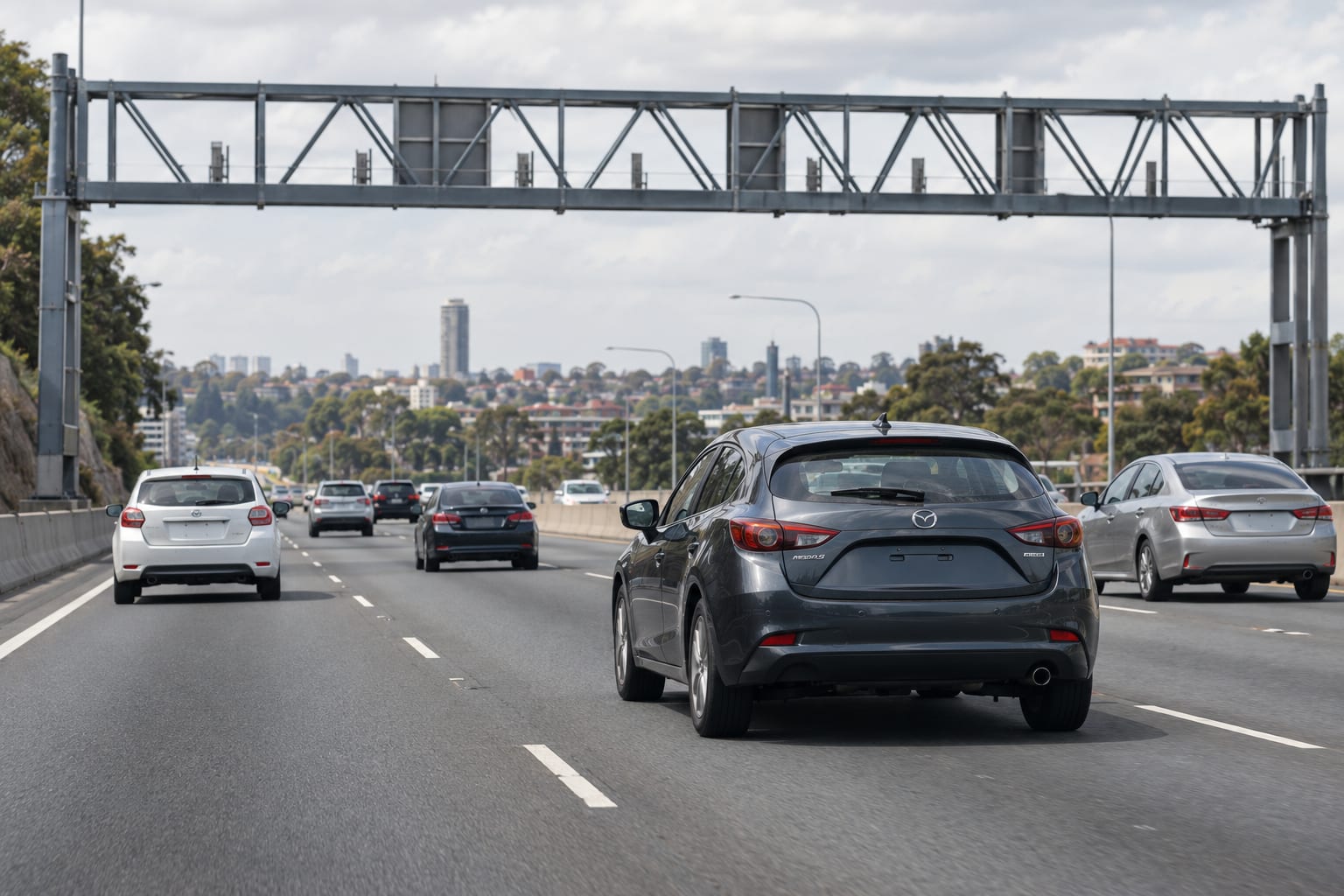 The NSW charge would be levied per kilometre driven, not per litre or kilowatt-hour.
If you're weighing a plug-in for tax reasons, our guide to PHEV FBT rules covers that side. For model choice, see the best plug-in hybrid cars in Australia.
How do the numbers change after 1 July 2027?
At the 2026-27 rates, the charge lifts a flat-rate EV from 5.30c/km to 8.40c/km. That's still cheaper than the 9.44c/km hybrid and the 11.80c/km petrol car on our inputs. Plug-in hybrids take a smaller per-km charge, but a PHEV that's rarely plugged in becomes the dearest option of all.
| Type (illustrative) | Today | Charge, 2026-27 rate | After 1 July 2027 |
|---|---|---|---|
| Petrol car | 11.80c | None | 11.80c |
| Hybrid | 9.44c | Not named | 9.44c |
| EV, flat rate | 5.30c | + 3.095c | 8.40c |
| EV, off-peak | 3.85c | + 3.095c | 6.94c |
| PHEV, 0% electric | 11.80c | + 2.476c | 14.28c |
| PHEV, 50% electric | 8.88c | + 2.476c | 11.36c |
| PHEV, 80% electric | 7.13c | + 2.476c | 9.61c |
Same fuel and power inputs as the first table. Charge applied to every kilometre driven, as the NSW page sets a per-km rate. The 2027-28 rate is not yet known and will be indexed to CPI.
The charge is a rule per kilometre, so the cost depends on how far you drive. To turn it into dollars: your km × rate ÷ 100. At the 2026-27 EV rate, every 10,000 km adds $309.50 (10,000 × 3.095 ÷ 100).
Hybrid vs plug-in hybrid: where does the PHEV pull ahead?
The charge moves the break-even point a long way. On our illustrative inputs, a PHEV beats the hybrid when its electric share is above this figure:
(PHEV petrol c/km + charge − hybrid c/km) ÷ (PHEV petrol c/km − PHEV electric c/km)
- Today, flat rate: (11.80 − 9.44) ÷ (11.80 − 5.965) = about 40% electric.
- After the charge, flat rate: (11.80 + 2.476 − 9.44) ÷ 5.835 = about 83% electric.
- After the charge, off-peak: the electric mode drops to 4.327c/km (18 × 24.04 ÷ 100), so the break-even is 4.836 ÷ 7.473, about 65%.
In other words, a PHEV needs to run on battery for most of your driving to stay ahead of a hybrid once the charge applies.
How does the EV's lead over a hybrid change?
It shrinks sharply. Today, a flat-rate EV saves 4.14c/km over the hybrid. After the charge, the gap is 1.04c/km. Put another way, each $1,000 of extra purchase price takes around 24,000 km to win back today. After the charge, it takes around 96,000 km (100,000c ÷ 1.04c).
Which type suits how you drive?
The right type depends on where you sleep the car and how far you drive. If you can charge at home cheaply, an EV wins per km even after the charge. If you can't plug in, a hybrid makes a lot of sense. A plug-in hybrid only pays off if you'll charge it nearly every night.
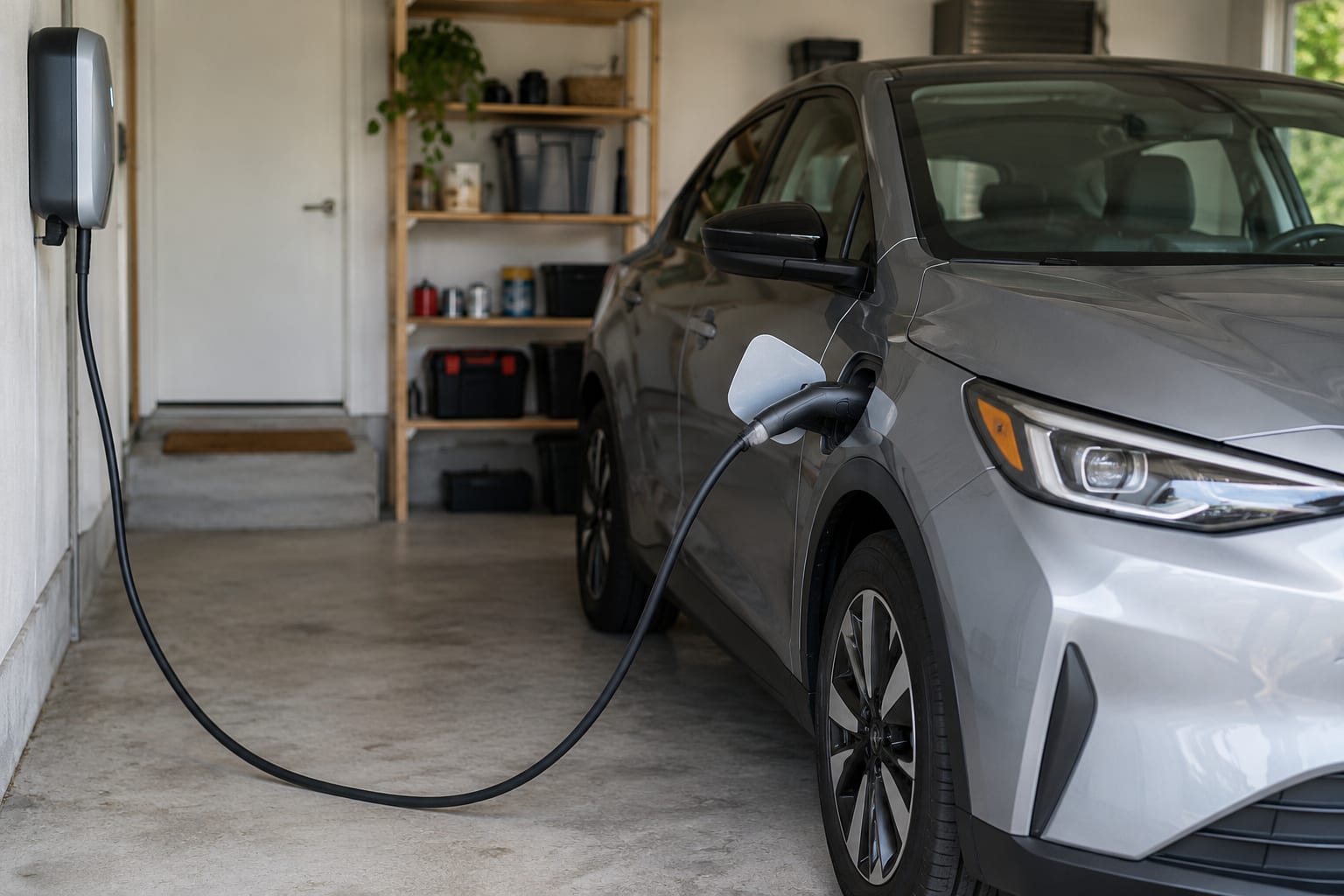 Off-street parking with home charging is what makes the EV and PHEV numbers work.
- If you commute and have off-street parking with home charging: an EV is the cheapest per km on these numbers, especially on an off-peak or Solar Sharer plan.
- If you do short daily trips plus the odd long run, and you'll plug in nightly: a PHEV is worth a look. Keep the electric share above about 83% on a flat rate (or about 65% off-peak), based on the break-evens above, or the charge erodes the saving.
- If you live in an apartment or rely on street parking: a hybrid is probably the best fit. You get a clear saving over petrol with no charging routine.
- If you mostly drive on the motorway and rack up high kilometres: run the formulas with your own figures. Hybrids save most in stop-start traffic, so the gap to petrol narrows at highway speeds.
Who should skip each type?
Skip a hybrid if you drive a lot and can charge at home on a cheap tariff. An EV will probably cost less per km, even with the charge. Skip a PHEV if you know you won't plug it in. You'll carry a heavy battery around and pay the road charge on top.
Skip an EV if you can only charge in the evening peak (in peak months) or at public chargers. On the 60.20c/kWh peak cap, it costs more per km than the hybrid. If you've settled on a hybrid, our Prius vs Corolla Hybrid comparison is a good next read.
Do depreciation and batteries still change the answer?
Yes. Cost per kilometre is only one part of what a car costs you. Purchase price, depreciation and battery condition can outweigh a few cents per km, especially if you drive less than 10,000 km a year. Weigh all of them together before you choose a type.
Depreciation varies by model. It depends on the badge, age, kilometres, condition and how the market feels about a type at the time you sell. We haven't found a reliable primary source that sets one figure for hybrids, PHEVs or EVs, so we don't quote one. Check recent sale results for the exact model you're considering.
Batteries deserve a proper check. A used hybrid's battery health depends on its history, not just its age. Ask for service records and a hybrid system check, and confirm exactly what any warranty covers and for how long. Battery warranties from the original maker may not carry over to a used car, so read the terms for the specific vehicle.
Payback brings it all together. Divide any extra purchase price (in cents) by the per-km saving. That tells you how many kilometres it takes to come out ahead. As the section above showed, the NSW charge can stretch that distance a long way for an EV over a hybrid.
Where can you look at hybrids or Japan-sourced options?
If the numbers point you to a hybrid, Carbarn is a licensed NSW motor dealer in Lidcombe with locally available hybrids. Everything on our used hybrid cars page is a self-charging hybrid. We don't currently list plug-in hybrids or EVs.
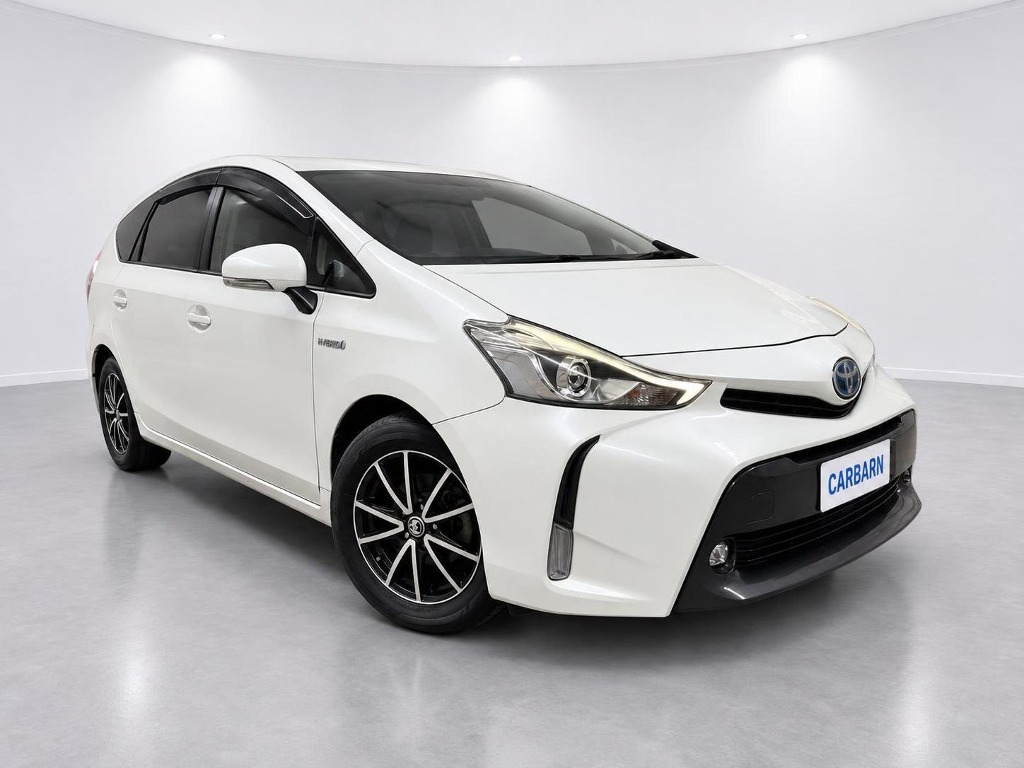 2016 Toyota Prius Alpha S Hybrid, a self-charging hybrid with no plug.
You can browse the Toyota hybrid range or the used Toyota Prius page. This 2016 Toyota Prius Alpha S Hybrid is listed at $19,900 (excludes government charges) at the time of writing. This 2014 Toyota Prius Alpha S Hybrid 7 Seater is listed at $23,900 (excludes government charges) at the time of writing.
Want a specific model that isn't listed? Our Japan sourcing service can look for it. Japan-sourced cars depend on eligibility, compliance and shipping timing, so we'll talk you through each step before you commit.