



Ready to Hit the Road in Style?
Save money and reduce emissions with vehicles designed to deliver exceptional mileage. Visit our inventory and find a car that fits your lifestyle.
Ready to Hit the Road in Style?
Save money and reduce emissions with vehicles designed to deliver exceptional mileage. Visit our inventory and find a car that fits your lifestyle.
If you were pricing a plug-in hybrid through your employer's novated lease, 1 April 2025 moved the goalposts. The Fringe Benefits Tax exemption that made PHEVs genuinely competitive in salary-packaging arrangements is gone, and the financial case that once wrote itself now needs a lot more explaining.
That doesn't mean a PHEV is a bad choice. Instead, it means the right reasons to buy one have changed. This guide breaks down what the FBT change actually involves, who it hits hardest, and how to work out whether a plug-in hybrid still suits your situation.
First, a few terms drive everything that follows. A novated lease is a salary-packaging arrangement where your employer pays for a car out of your pre-tax and post-tax income. Fringe Benefits Tax (FBT) is the tax an employer pays on non-cash perks like that car, and it's the cost the exemption used to waive. A PHEV, or plug-in hybrid electric vehicle, is a car with both a petrol engine and a battery you charge from a wall socket, giving it a short electric-only range before the petrol engine takes over.
Quick Answer
- The PHEV FBT exemption ended 1 April 2025. New PHEV novated leases now attract full FBT, the same as any petrol or diesel car.
- Only full battery electric vehicles (BEVs) and hydrogen fuel-cell vehicles keep the exemption.
- Pre-April 2025 binding leases keep the benefit until the lease ends, but a material change can reset eligibility (ATO, 2025).
- PHEV sales jumped 380% in March 2025 as buyers rushed to lock in the benefit (GoAuto, 2025).
- For most salary-packaged buyers, a BEV now saves thousands more over a five-year lease than an equivalent PHEV.
What Actually Changed on 1 April 2025?
The change is simple to state: from 1 April 2025, a PHEV no longer qualifies for the Fringe Benefits Tax exemption, so it's treated like any petrol car. For context, the zero-emission exemption started in July 2022 and originally covered three vehicle types — battery electric, hydrogen fuel-cell, and, for a transitional period, plug-in hybrids. That transitional window then closed on 31 March 2025 (ATO, 2025). The exemption mattered because it was the main thing making PHEVs cheap through a novated lease. With it gone, an employer providing a plug-in hybrid now owes FBT on it, and the standout financial advantage those arrangements once offered has been removed for new deals. The government's stated reasoning was policy consistency: PHEVs still burn petrol, so supporting them at the same rate as zero-emission cars no longer matched the intent of the scheme.
 From 1 April 2025, a plug-in hybrid is treated like any petrol car for Fringe Benefits Tax.
The Transitional Provisions for Existing Leases
Timing is everything here. If your binding commitment was in place before 1 April 2025 and the car was available for use by that date, the exemption carries through for the life of that specific arrangement. Crucially, the ATO has no discretion to extend the cut-off date.
The catch is that materially changing the lease afterwards can end the exemption from that point. For example, the ATO lists triggers such as optional extensions, a break in the novation, changes to your financial obligations, and a change of employer (ATO, 2025). For anyone starting fresh from April 2025, by contrast, no exemption is available at all.
What's the New Maths for Novated Lease Buyers?
Before April 2025, the FBT benefit could offset much of a PHEV's price premium over a standard hybrid within two or three years. Industry figures put the forgone saving at roughly $12,000 over the term of a sub-threshold lease (GoAuto, 2025). That offset, however, is now gone for new agreements.
A BEV through a novated lease still carries a structural cost advantage. It combines full FBT exemption, running costs packaged pre-tax, and a GST saving through the employer arrangement. For instance, the peak industry body has put the FBT saving on a $50,000 EV at around $4,700 a year (CarExpert, 2024). A new PHEV lease, on the other hand, now sits in the petrol bracket and gets none of that.
The demand spike before the deadline shows how much the benefit was worth. PHEV sales hit 6,932 units in March 2025, up 380% on the 1,444 sold a year earlier, and reached 25,613 for the first half of 2025 (NRMA, 2025). In short, buyers were racing to lock in the exemption while they still could.
Even so, the BEV path has limits. BEVs that sit below the luxury car tax threshold for fuel-efficient vehicles, $91,387 for 2025-26, still qualify for the full exemption (ATO, 2025). For most salary-packaged buyers, then, a battery-electric car with similar utility is now the stronger financial pick. Our hybrid vs plug-in hybrid vs electric buyer guide runs those numbers in more detail.
What's Coming for BEVs in 2027 to 2029?
The BEV advantage is also on a clock, which most coverage misses. The government announced a phase-down on 5 May 2026, so full BEV exemption continues only to 31 March 2027. From April 2027 to April 2029, it then applies just to EVs priced at $75,000 or less (PwC, 2026).
From 1 April 2029, moreover, a 25% FBT discount replaces the full exemption for EVs below the threshold. None of this brings PHEVs back into the scheme. It does mean, though, that timing matters for a BEV lease too, not just the choice between fuel types.
Does a PHEV Still Make Sense if You're Buying Privately?
For private buyers, the FBT change is a non-issue, because you were never using a novated lease in the first place. The real question is whether a PHEV's fuel savings justify its higher purchase price compared with a self-charging hybrid, and recent European data suggests that gap is smaller than the brochure figures imply. The answer turns almost entirely on one thing: how often you can charge. If you plug in nightly and keep trips short, the electric range does most of the work and the sums look strong. If you rarely charge, by contrast, you carry the weight and cost of a battery you barely use. So before comparing sticker prices, it's worth being honest about your charging access and your typical day behind the wheel, because that single habit decides whether a PHEV saves you money or quietly costs you more.
If you have home charging and mostly drive short distances, say a daily round-trip under 70 km, a PHEV can cover most weekday driving on electricity alone. Models like the Mitsubishi Outlander PHEV, rated up to 86 km of electric range on the WLTP cycle for the 2026 model (Mitsubishi Australia, 2026), handle most Australian commutes without waking the petrol engine. Done consistently, that cuts fuel spend a lot.
If you don't have home charging, or most of your driving is highway kilometres, a PHEV runs on petrol most of the time. European on-board data from around a million vehicles found real-world PHEV consumption averaged 5.9 L/100km, around 3.5 times the official WLTP figure of 1.6 to 1.7 L/100km (The Driven, 2026). That's because drivers only covered about 25% of their kilometres on battery alone.
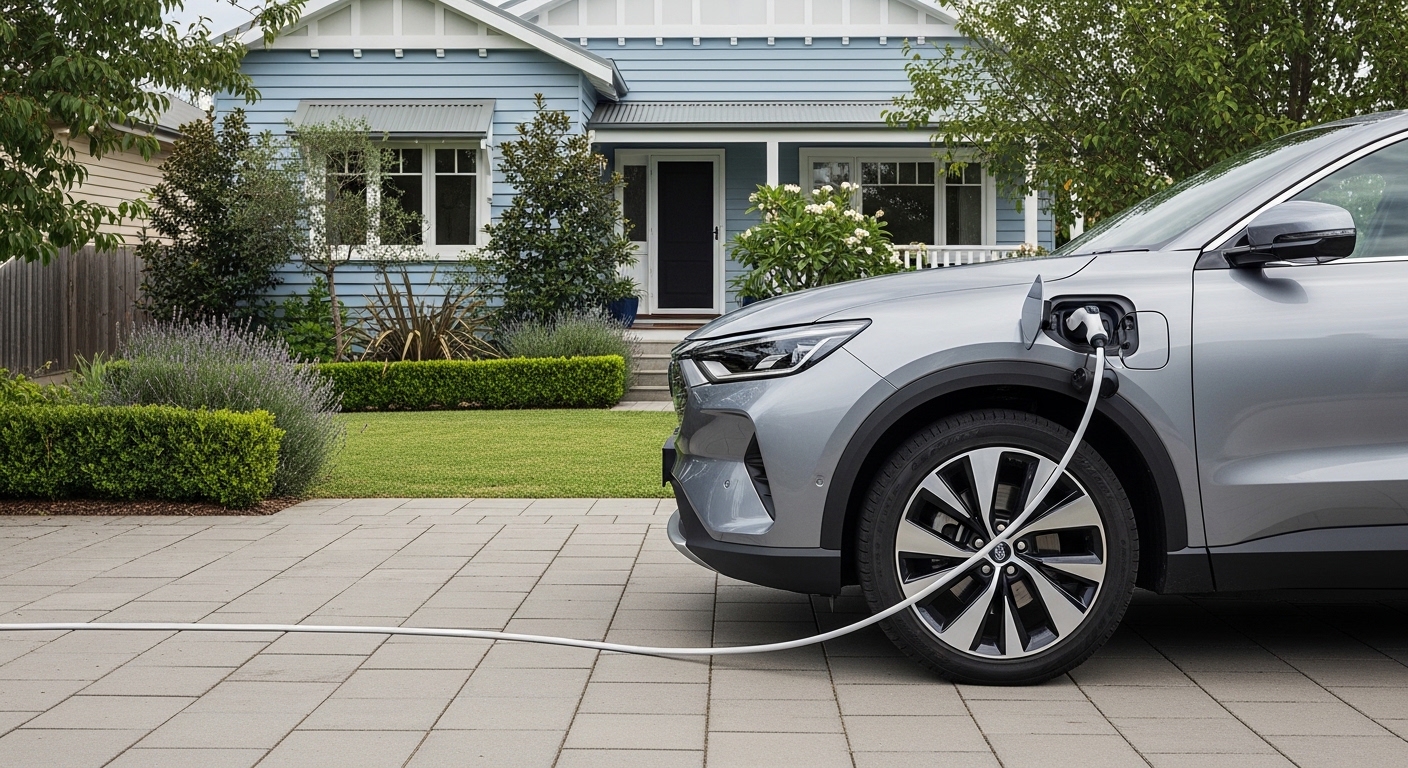 A PHEV only saves fuel if you can charge it regularly at home.
A self-charging hybrid sidesteps that problem. It tops up its small battery through braking and engine operation, so it works the same way no matter your charging access. On top of that, it carries less kerb weight than a PHEV and usually costs less to buy.
PHEV vs Self-Charging Hybrid: A Side-by-Side
Both formats run a petrol engine and an electric motor, yet they suit very different buyers. The table below sums up the practical trade-offs. Read it as general guidance, not fixed figures for any one model.
| Self-charging hybrid | PHEV | |
|---|---|---|
| Home charging needed | No | Strongly recommended |
| Real-world economy (charged) | Consistent, around 5 to 6 L/100km | Low for short trips |
| Real-world economy (uncharged) | Consistent | Can exceed 9 L/100km |
| Purchase price | Lower | Often higher |
| Servicing | Single drivetrain | Dual system, more components |
| EV-only commuting | Not possible | Yes, model-dependent |
| FBT exemption (novated lease) | No | No, from April 2025 |
| Long-distance travel | Unrestricted | Unrestricted via petrol |
For most private buyers who want simplicity and predictable running costs, the self-charging hybrid is the easier call. The PHEV, on the other hand, suits a specific use case, and it works well when the charging habit is already in place.
Who Does a PHEV Still Suit?
A plug-in hybrid still suits three clear groups of buyer, and the FBT change touches none of their reasons to own one. Each profile below shares one trait: regular charging is already realistic.
Short-commute households with home charging
- A daily round-trip under 70 km, charged overnight, runs mostly on electricity.
- The petrol engine still handles weekends and long trips, so there's no range anxiety.
- This is exactly the use case PHEVs were designed for, and it holds up.
Families wanting some EV capability with extra seats
- A handful of seven-seat SUVs pair three rows with meaningful electric range, which is rare.
- The format trims fuel spend on school runs and local errands.
- It only pays off, though, when the overnight charging discipline stays consistent.
 Seven-seat PHEV SUVs suit families who can charge at home and drive short daily distances.
Trade or lifestyle users wanting mobile power
- Some PHEVs offer Vehicle-to-Load (V2L), drawing power from the battery to run tools or gear.
- That saves lugging a separate generator to a worksite or campsite.
- For a tradie or four-wheel driver, it's a genuine practical win with nothing to do with FBT.
Who Should Probably Look Elsewhere?
The same honesty cuts both ways. For three groups, by contrast, a PHEV now adds cost and complexity without paying it back. If you fall into one of them, it's worth a careful look before you commit.
Novated lease buyers
- The retained exemption on battery-electric cars opens a five-year cost gap that fuel savings alone struggle to close.
- Unless you have a specific reason to want the PHEV format, the maths now favour a BEV.
Buyers without home charging
- A PHEV that rarely charges carries two drivetrains and the fuel economy of neither.
- A self-charging hybrid is cleaner, and for lower-mileage drivers a modern petrol SUV can make sense too.
High-kilometre highway drivers
- PHEVs lean on the petrol engine at freeway speeds, and the extra battery weight delivers no economy gain in that pattern.
- If most of your kilometres are long-distance, a self-charging hybrid usually returns better numbers across a year.
Which Choice Makes Sense for You?
It comes down to three questions: how you'll pay, where you'll drive, and whether you can charge. Match those honestly and the right path tends to reveal itself.
If you're salary-packaging and want the lowest total cost, a sub-threshold BEV is now the obvious starting point. If you're buying privately, can charge at home, and mostly drive short trips, then a PHEV earns its keep. If you can't charge easily or you rack up highway kilometres, however, a self-charging hybrid is the calmer, cheaper choice. None of these is wrong; they just fit different lives. Either way, take the time to weigh your own driving before you sign anything.
How Carbarn Fits In
Carbarn sources a range of Japanese-built hybrids for Australian buyers — cars built for the Japanese domestic market that often carry higher specification and lower kilometres than comparable locally delivered models. The range spans options like Toyota hybrids, Honda hybrids, and Subaru hybrids, which make sense if you're stepping away from the plug-in path toward a simpler self-charging setup.
In practice, the buyers our sourcing team speaks with often arrive set on a PHEV for the fuel savings, then realise their charging access tells a different story. Time and again, those without a home wall socket end up happier on a self-charging hybrid that needs no plug at all. That said, the buyers who can charge overnight and want EV-style commuting are usually the ones a plug-in genuinely rewards — which is why we walk through charging habits before anything else.
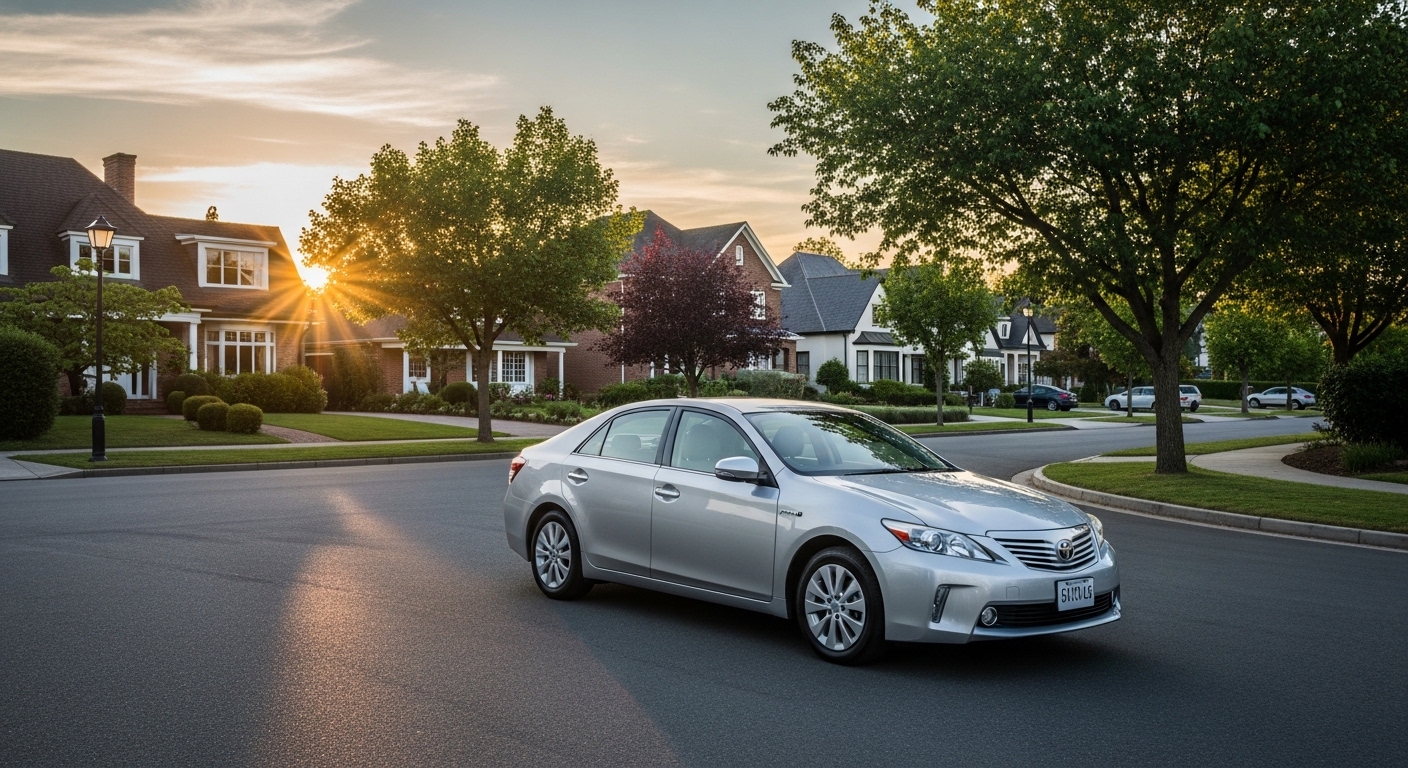 Japan-sourced hybrids often carry higher specification and lower kilometres than locally delivered cars.
If you've decided a plug-in hybrid is right for you, the Mitsubishi Outlander PHEV is among the more available Japanese-sourced PHEVs in the Australian used market, and it can be ordered from Japan on request. Keep one thing in mind, though: a used PHEV bought under a new arrangement from April 2025 won't qualify for the FBT exemption, since the transitional provisions only cover pre-existing binding commitments.
When you're ready, you can browse locally available hybrid stock or enquire about a Japan-sourced import.