



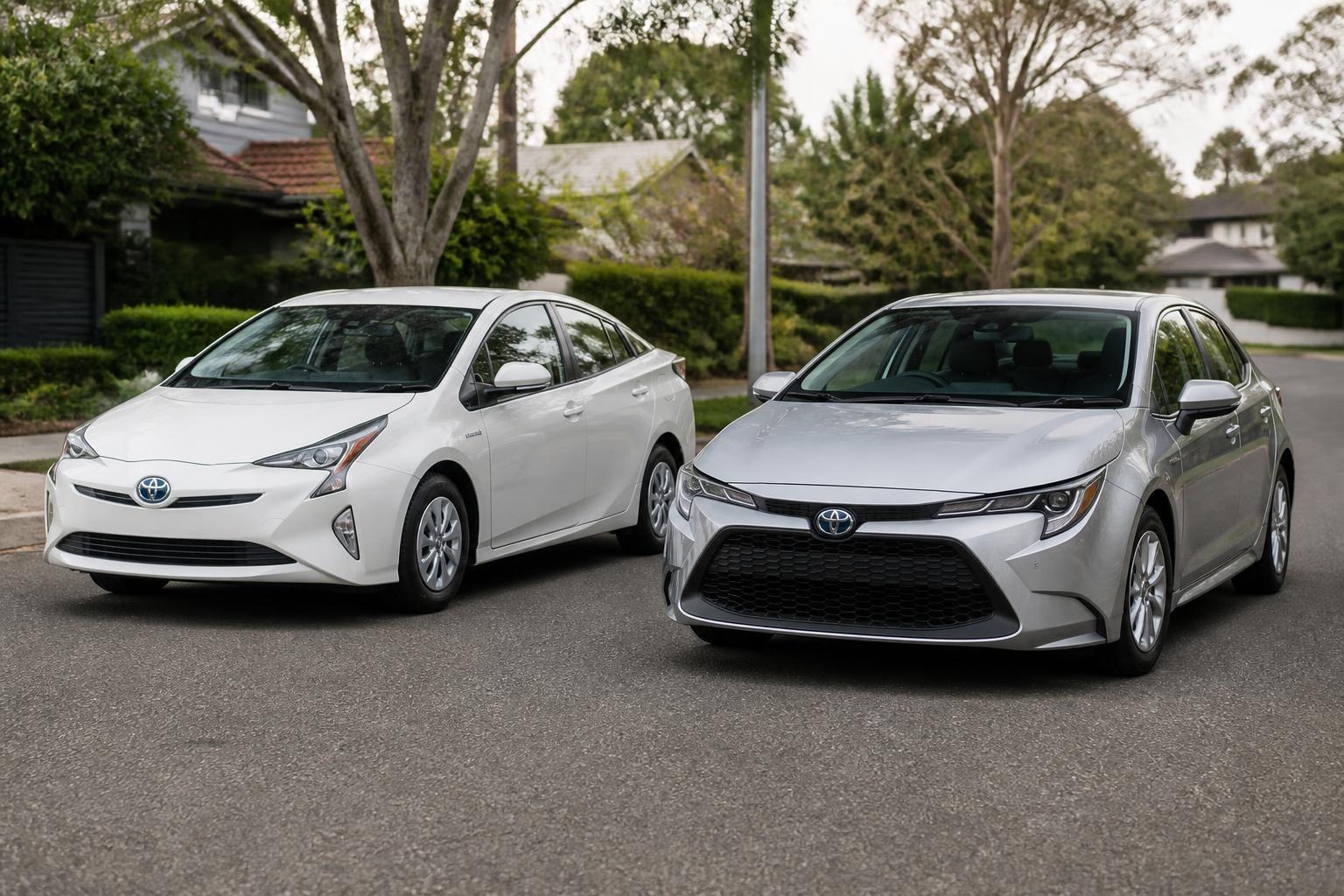
Ready to Hit the Road in Style?
Save money and reduce emissions with vehicles designed to deliver exceptional mileage. Visit our inventory and find a car that fits your lifestyle.
Ready to Hit the Road in Style?
Save money and reduce emissions with vehicles designed to deliver exceptional mileage. Visit our inventory and find a car that fits your lifestyle.
You've decided you want a used Toyota hybrid. Good call. Then you hit the wall every buyer hits: Prius or Corolla Hybrid? Both wear the same badge. Both have reputations that border on boring, in the best possible way. Both turn up on every used-car search you run. So why does picking between them feel harder than it should?
Here's the short version. They solve slightly different problems. Once you see what each car was actually built to do, the choice gets a lot simpler. This guide walks through both, in plain terms, so by the end you'll know which one fits your driving life. If you're still weighing hybrids more broadly, our roundup of the best used hybrids in Australia is a useful companion read.
Quick Answer
- The Prius holds the fuel-economy edge. It was engineered from scratch to sip fuel, and its dedicated shape reflects that.
- The Corolla Hybrid gives you more body-style choice: front-wheel-drive sedan, all-wheel-drive sedan, and a Touring wagon.
- The Corolla Hybrid sedan is rated at 3.9 L/100km combined (Green Vehicle Guide, gov.au, 2022 ADR test).
- Both run Toyota petrol-electric hybrid systems, but the exact engine, drivetrain and build year matter.
- Choose the Prius for the lowest quoted fuel-economy figure and a hatchback profile. Choose the Corolla Hybrid for a conventional look and wider variant choice.
How Do the Prius and Corolla Hybrid Differ?
The gap between these cars isn't quality, it's intent. The Prius was Toyota's blank-sheet hybrid flagship, and Toyota said its fourth-generation petrol engine reached 40% thermal efficiency, the world's highest level for a mass-produced petrol engine at the time of its October 2015 launch (Toyota Global, 2015). Toyota's quoted 40 km/L fuel-efficiency target for this Japanese model was measured under the JC08 cycle, not Australia's ADR combined test. Every design choice, right down to the sloping tail, serves fuel economy.
The Corolla Hybrid starts from the other direction. The earlier cars discussed here use Toyota's 1.8-litre 2ZR-FXE petrol-electric hybrid system in a familiar Corolla body. It looks and drives like a normal Corolla, with an electric motor doing the fuel-saving work in the background.
Neither approach is wrong. The Prius chases the lowest possible running cost and accepts a distinctive silhouette to get there. The Corolla Hybrid keeps things familiar and lets the drivetrain be the clever bit. Knowing which of those priorities matches yours is most of the decision, and the two sections below fill in the detail.
What Do You Get with a Toyota Prius?
The Toyota Prius is the car that made hybrids mainstream, and the used market rewards that with plenty of choice. The fourth-generation Prius range covered 2015 to 2022. In the Japanese specifications discussed here, ZVW51 is the 2WD/front-wheel-drive version, while ZVW55 is the E-Four AWD version with a small rear motor for wet-weather and light-gravel confidence. ZVW52 refers to the PHV plug-in version. Carbarn's import data lists the ZVW55 with the 2ZR-FXE 1.8L engine, automatic transmission and all-wheel drive, eligible for Australian import across 2018 to 2022 builds.
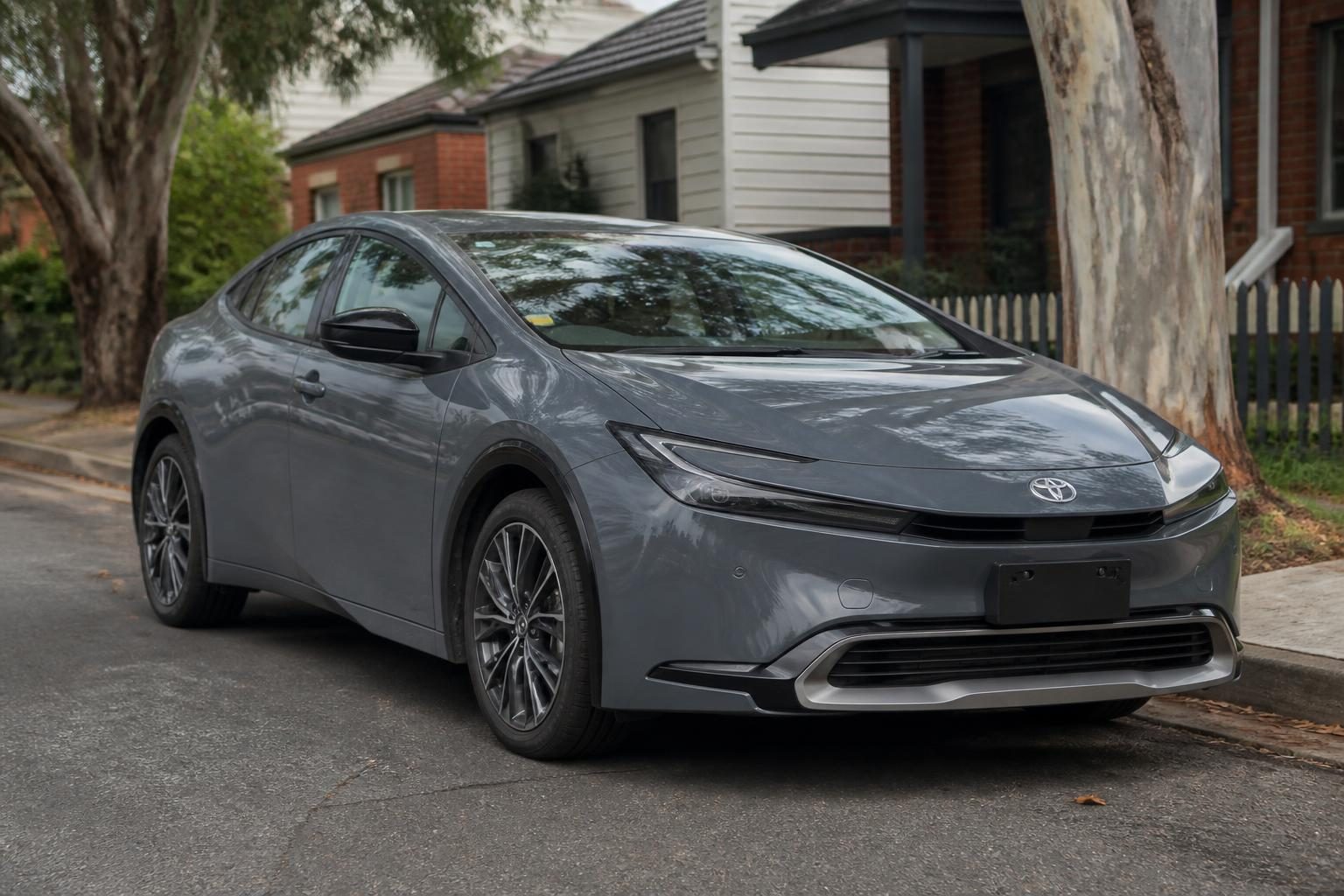 2024 Toyota Prius
Under the bonnet sits a 1.8L Atkinson-cycle petrol engine paired with an electric motor and a CVT. Fuel economy is the headline: CarExpert lists the 2021 Prius at 3.4 L/100km combined under ADR 81/02 (CarExpert). That page compares the Prius with a non-hybrid Corolla, so it supports the Prius figure only, not a direct Prius-versus-Corolla Hybrid comparison. Boot space is useful, helped by the hatchback tailgate, but check the exact specification rather than relying on an unverified capacity figure. The trade-off is the cabin. The low roofline, split rear window and centre-mounted instrument cluster are real quirks: some drivers love them, others find them disorienting on the first drive.
A couple of variants are worth flagging. The ZVW52 is the PHV plug-in version, a different animal with external charging to consider. Toyota Safety Sense became standard across Prius grades in Japan after the December 2018 facelift; earlier cars varied by grade, so check the exact build. Buyers with more budget can look at the current fifth-generation car (MXWH60). Toyota publishes improved fuel-economy figures for that generation, but the result varies by market, powertrain, grade and wheel size; our 5th gen Prius guide covers that one in full. The Prius suits high-kilometre commuters who want the lowest running cost and are happy with a hatchback. It's less ideal if you want a conventional sedan look, or if the quirky interior grated during your test drive.
What Do You Get with a Toyota Corolla Hybrid?
The Corolla Hybrid takes a proven hybrid drivetrain and wraps it in the most recognisable shape on Australian roads. The twelfth-generation cars are the ones to know. ZWE214 and ZWE215 refer to sedan E-Four AWD variants in the relevant approval pathways, while ZWE219 is the later 2WD/front-wheel-drive sedan code. The Touring wagon uses codes such as ZWE211W or ZWE219W, depending on production period and specification. The 1.8L 2ZR-FXE hybrid engine is paired with an electronic CVT.
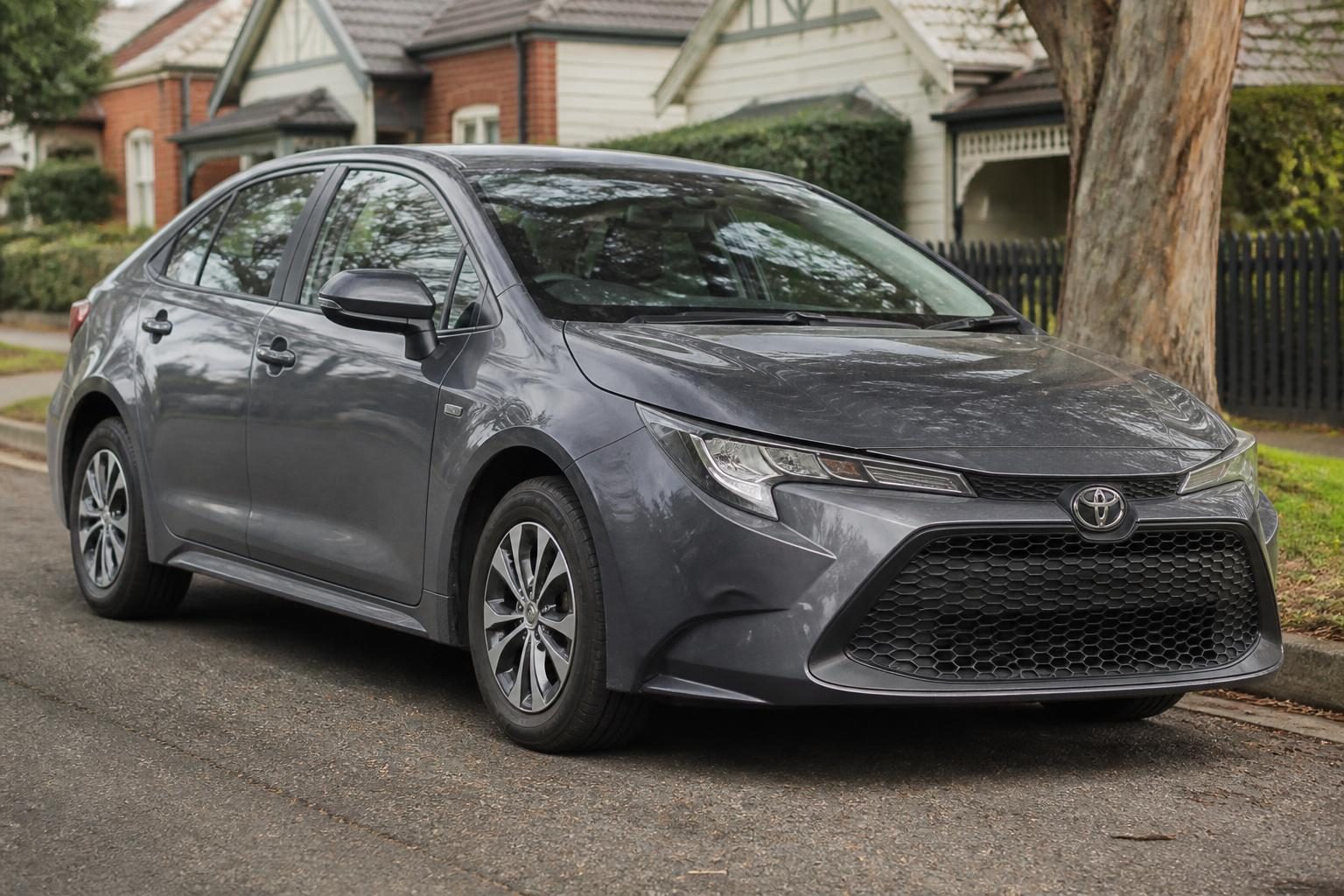 2023 Toyota Corolla
Mechanically, this Corolla shares Toyota's series-parallel hybrid architecture and 1.8-litre 2ZR-FXE engine family with some Prius versions, but it isn't the Prius's fifth-generation system. The sedan is rated at 3.9 L/100km combined (Green Vehicle Guide, gov.au, 2022 ADR test). That government test estimates annual fuel cost at about $1,054 under its stated assumptions, though your real figure moves with how and where you drive. The cabin is the big everyday difference: an upright, conventional layout with better rear headroom than the low-slung Prius. Boot capacity varies by body style and specification, so check the exact vehicle.
Need more room? The Corolla comes as a wagon too. The Corolla Touring wagon (ZWE219W) uses the 1.8-litre 2ZR-FXE hybrid drivetrain in a longer body. Its wagon layout may suit families carrying prams and sports gear, but compare the exact cargo specification for the vehicle you're considering. For the full single-model breakdown, our used Toyota Corolla Hybrid guide goes deeper. This car suits families who want fuel savings in a normal-looking package and a familiar Corolla shape. It's less suited to those chasing the absolute lowest fuel figure, or anyone needing seven seats or SUV ride height.
Head-to-Head: The Numbers That Matter
The Prius holds a real efficiency edge; the Corolla Hybrid wins on body-style choice and broad resale familiarity. Neither margin is huge, and both cars share the same drivetrain family, so the table below is about matching a car to a use case rather than declaring a knockout. Read the fuel figures with their sources in mind. They come from different model years, variants and source listings, so treat them as indicative comparisons rather than a precise real-world gap.
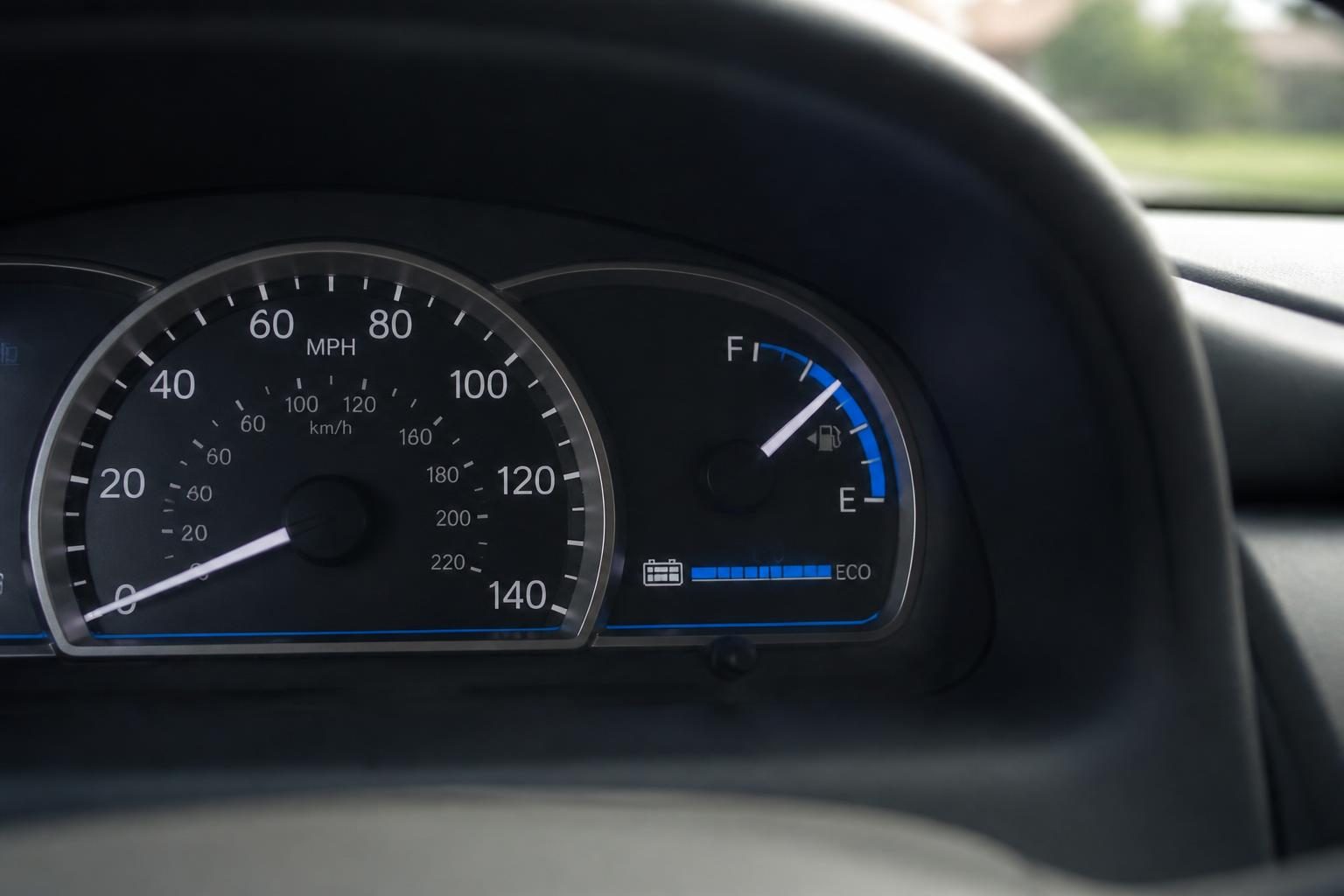 Car dashboard showing speedometer, fuel gauge, and ECO battery indicator
| Prius 4th Gen (ZVW51/ZVW55) | Corolla Hybrid Sedan (ZWE214/ZWE215/ZWE219) | |
|---|---|---|
| Engine | 1.8L Atkinson-cycle + electric | 1.8L 2ZR-FXE + electric |
| Transmission | CVT | CVT |
| Drivetrain | 2WD/FWD (ZVW51) or E-Four AWD (ZVW55) | E-Four AWD (ZWE214/ZWE215) or 2WD/FWD (ZWE219) |
| Fuel economy | 3.4 L/100km (CarExpert, 2021 Prius, ADR 81/02) | 3.9 L/100km (Green Vehicle Guide, 2022 ADR) |
| Body style | 5-door hatchback | Sedan / Touring wagon (ZWE219W) |
| Seats | 5 | 5 |
| Boot space | Hatchback practicality; check the exact specification | Varies by sedan or Touring wagon grade; check the official figure |
| Toyota Safety Sense | Standard across Japanese grades after the December 2018 facelift; verify earlier builds | Verify by grade and build date |
| Where to look | /used-cars/toyota/prius | /used-cars/toyota/hybrid |
On fuel, the Prius sits lower in the cited test figures, but those results come from different test regimes and don't prove the gap will widen in every city-driving situation. Over a year of high kilometres, the difference may add up to a saving. Your result will depend on traffic, temperature, tyres and driving style.
On practicality, the cars make different compromises. The Prius hatch offers flexible access, while the Corolla sedan and Touring wagon have different cargo shapes. Check the official capacity and the exact body style if you regularly carry tall or awkward loads.
Reliability and Running Costs: Is There a Real Difference?
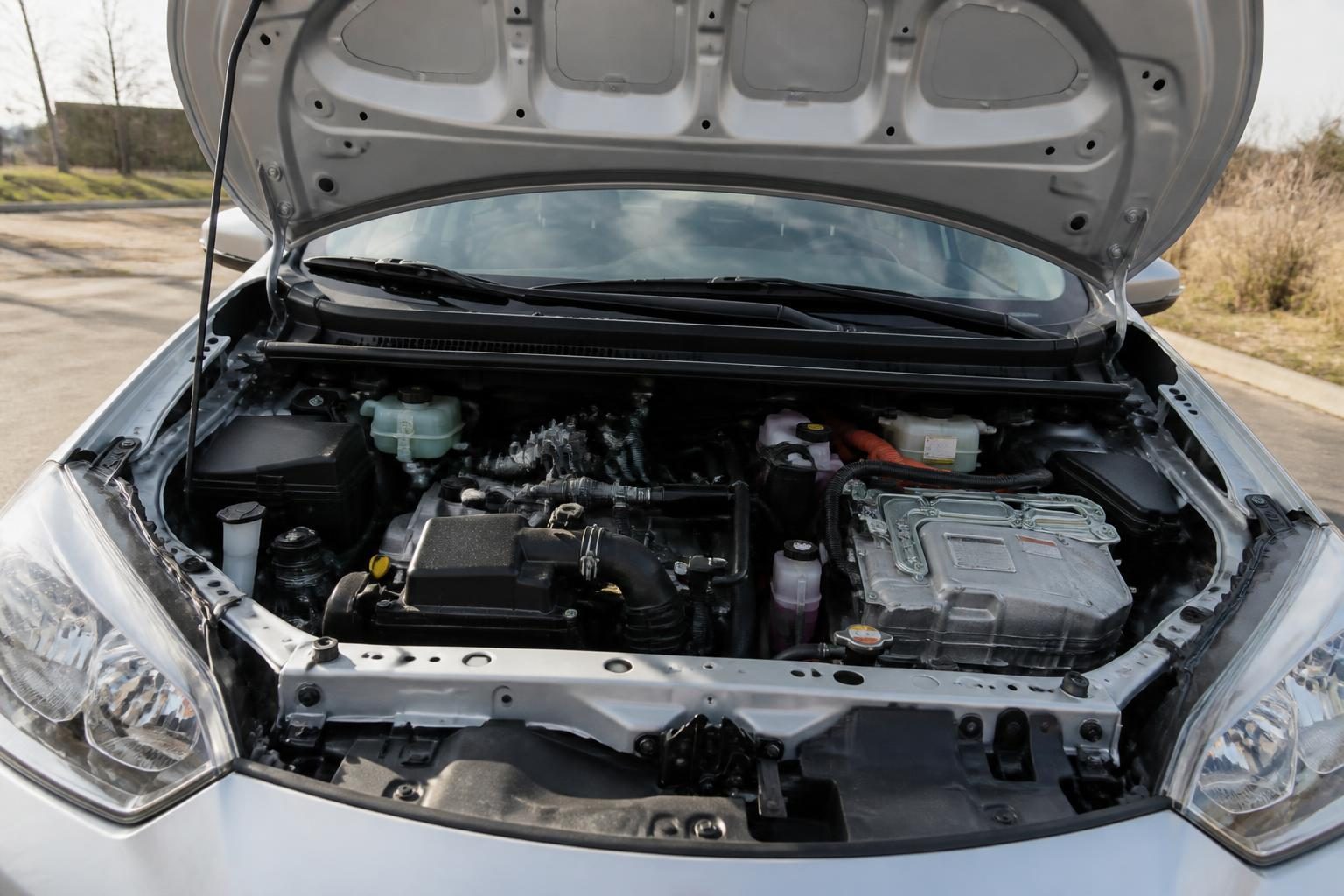
Honestly, not much, and that's the reassuring part. The cars share Toyota hybrid architecture and, in some versions, the 1.8-litre 2ZR-FXE engine family. Standard hybrids don't need external charging, but servicing still depends on the exact model and condition. Battery condition, age, climate, use and service history all matter, so treat exceptional mileage anecdotes as interesting context rather than a buying guarantee.
 Hybrid car engine bay under an open hood with visible electric power components
One historical note: the third-generation Prius (pre-2015, ZVW30) had reported inverter issues affecting some vehicles. That doesn't give the fourth-generation Prius a clean record; recalls have also affected some later cars. Check recalls by VIN and build before buying. For Japan-sourced examples, an extended warranty may be available depending on eligibility, so confirm the exact terms before you commit rather than assuming it's automatic. The takeaway: with either car, condition and service history matter far more than the badge on the boot.
Which One Is Right for You?
Choose the Prius if you drive high kilometres every week and fuel cost is your primary metric. You're comfortable with, or even like, the hatchback profile. You want the most efficiency Toyota's hybrid system can deliver, and broad private-market resale isn't top of your list.
Choose the Corolla Hybrid if you want a conventional car that handles the school run and the highway equally well. The Touring wagon would genuinely change how the car works for your family. You value the Corolla name's pull in the Australian resale market, or the Prius cabin simply felt too unfamiliar when you sat in it.
Neither is automatically the better buy. A well-maintained example with a clear service history can make more sense than a neglected rival, regardless of the badge. The real difference isn't a proven durability ranking; it's what kind of driver you are.
Where to Find Both in Australia
Both models are available through Carbarn's used Toyota hybrid listings. The Prius is offered as a Japan-sourced import through the used Prius pages, while the Corolla Hybrid and wider Toyota hybrid range come via both locally available stock and Japan-sourced options. It's worth checking the live listings for current availability, since variants and condition change over time. For Japan-sourced cars, Carbarn manages the full journey in-house: auction-sheet verification, bidding to your approval, ocean freight, customs and biosecurity clearance, and SEVS compliance at its RAW-certified Sydney workshop, with delivery paperwork ready for state registration. As a licensed NSW motor dealer, Carbarn also offers finance, warranty options, and door-to-door delivery across the country.