



Ready to Hit the Road in Style?
Save money and reduce emissions with vehicles designed to deliver exceptional mileage. Visit our inventory and find a car that fits your lifestyle.
Ready to Hit the Road in Style?
Save money and reduce emissions with vehicles designed to deliver exceptional mileage. Visit our inventory and find a car that fits your lifestyle.
Search "2017 C-HR fuel economy" and you'll get figures anywhere from 4.3 to 6.5 L/100km. That's a huge spread for one model year, and it throws a lot of buyers. Some assume the low numbers are marketing spin. Others buy a C-HR expecting mid-4s and end up seeing high 6s on the trip computer.
Neither figure is wrong. They just describe two completely different cars wearing the same badge. Australia got one of them. Japan got the other. This guide sorts out which is which, what each is like to own, where the 2017 cars have given trouble, and what to look at before you hand over any money.
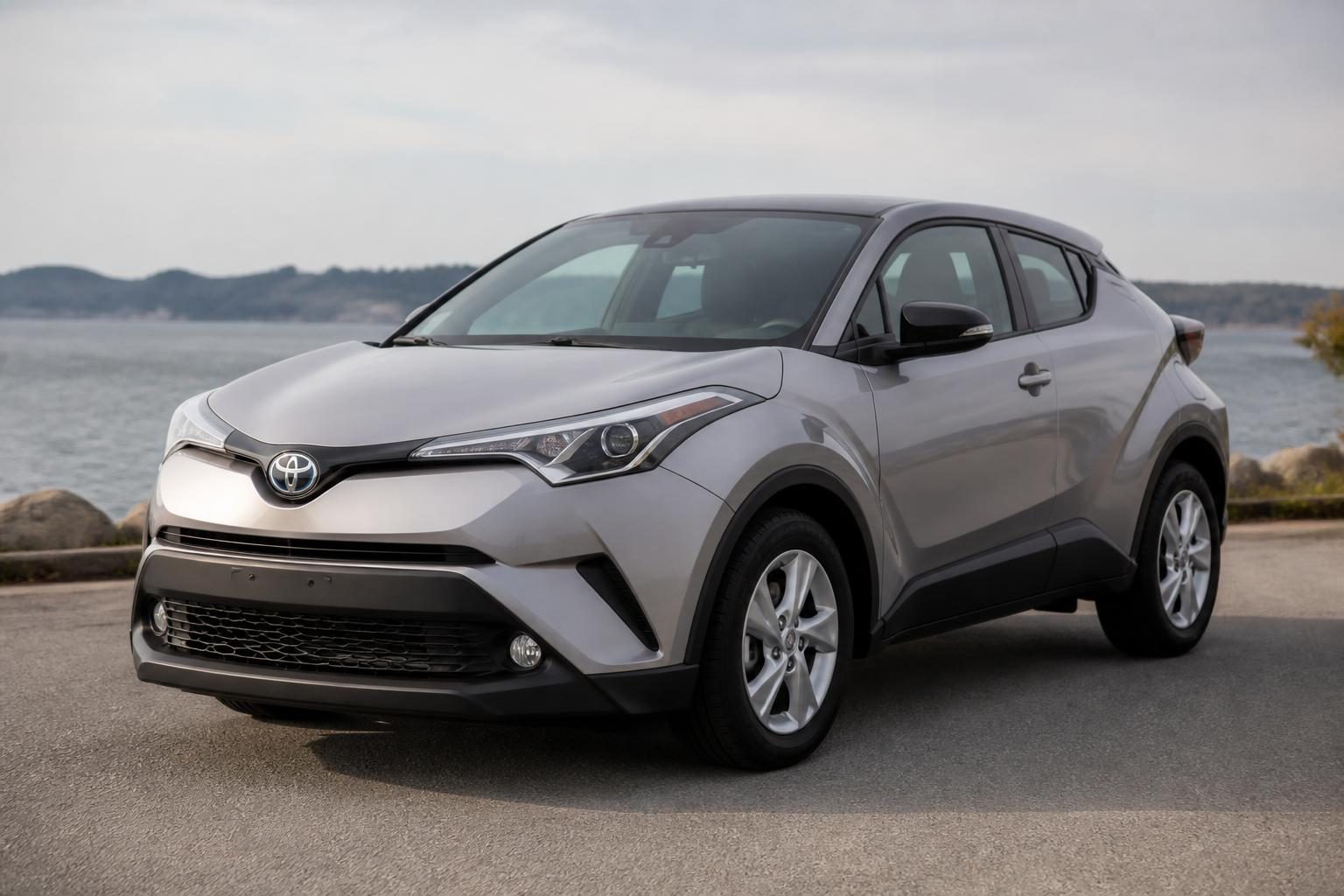 Silver Toyota C-HR parked beside a waterfront.
Quick Answer
- Australian buyers in 2017 got one engine: a 1.2-litre turbo petrol, 85 kW, in front-drive (NGX10) or all-wheel drive (NGX50) form.
- Official combined consumption is 6.3–6.4 L/100km FWD (6.3 for the base, 6.4 for the Koba) and 6.5 L/100km AWD, and 95 RON premium is required (Drive, 2017).
- Toyota Australia recalled 4,886 C-HRs in November 2017 over an electronic park brake fault. The fix was a free ECU software update.
- The 1.8-litre hybrid (ZYX10) was never sold new here. It's a Japanese-market car, and it's the source of every sub-5 L/100km figure you've seen.
- The 2023 fuel-pump recall covers 2019 to 2023 petrol cars only. A 2017 C-HR is not affected by it.
What Did Australia Actually Get in 2017?
Australia received one engine and two drivetrains in 2017: the 1.2-litre turbo petrol with 85 kW, sold as front-drive or all-wheel drive. Toyota launched the local C-HR in base and Koba grades (Toyota Australia, 2017; Drive, 2017). The NGX10 code identifies the front-drive version, while NGX50 identifies the all-wheel drive version.
Front-drive cars carry the NGX10 code and were offered with a six-speed manual or a CVT. All-wheel drive cars are NGX50 and are CVT only. Every Australian car got autonomous emergency braking, a reversing camera, a 6.1-inch touchscreen and LED daytime running lights as standard. ANCAP awarded the C-HR five stars in 2017, with 33.1 out of 38 for adult occupant protection (ANCAP, 2017).
Two Engines, One Badge
The Australian NGX10 and NGX50 are 1.2-litre turbo petrol C-HRs, while the Japanese ZYX10 is a 1.8-litre hybrid. The petrol versions produce 85 kW and use 6.3–6.5 L/100km on the ADR combined test, while the hybrid's quoted 4.3 L/100km figure is a separate real-world estimate (Toyota Australia; Toyota Japan; ReDriven, 2023). They aren't direct test-cycle comparisons.
The 1.2 Turbo Petrol, NGX10 and NGX50
Most Australian cars on the market today are the 1.2-litre turbo petrol C-HR, and it's a genuinely likeable little engine once you understand its character. Peak torque of 185 Nm arrives at just 1,500 rpm, so it feels willing in traffic without needing to be worked. The CVT is smooth around town. The common criticism, and it's fair, is a soft patch just off idle before the turbo comes on song.
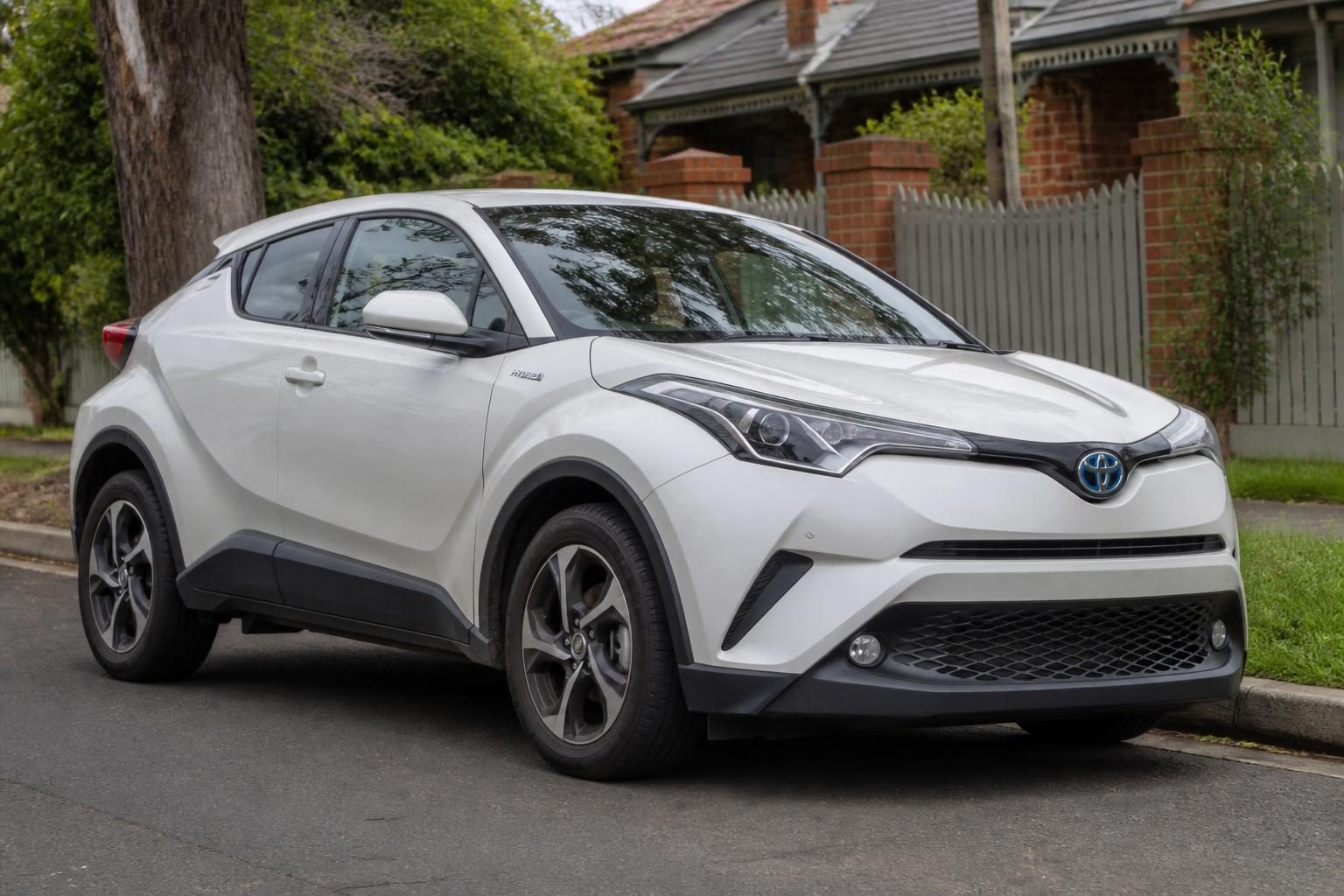 2017 Toyota C-HR
The numbers are 85 kW at 5,600 rpm and 185 Nm from 1,500 rpm. Official combined consumption is 6.3–6.4 L/100km in front-drive form, with 6.3 for the base model and 6.4 for the Koba. The all-wheel drive version uses 6.5 L/100km on the ADR combined test (Toyota Australia; Drive, 2017).
Owner-reported real-world figures sit closer to 6.8 L/100km in mixed driving (ReDriven, 2023). Boot space is 377 litres with the rear seats up, kerb weight ranges from around 1,375 kg for the base FWD manual to 1,440 kg for the Koba FWD CVT, and braked towing is rated at 1,100 kg on the base NGX10 FWD. Koba and AWD variants are rated at 600 kg.
One detail buyers miss: this engine requires 95 RON premium unleaded. Running 91 is off-spec. It won't destroy the car overnight, but it isn't what Toyota specified, and it's worth asking a private seller what they've been filling it with.
The 1.8 Hybrid, ZYX10
The 1.8-litre hybrid C-HR, model code ZYX10, is the version Australia never got new. It uses the 2ZR-FXE Atkinson-cycle petrol engine paired with Toyota's hybrid system, a powertrain family also used in Prius and Corolla hybrids (Toyota Japan). It's front-drive and e-CVT only, with no all-wheel drive option.
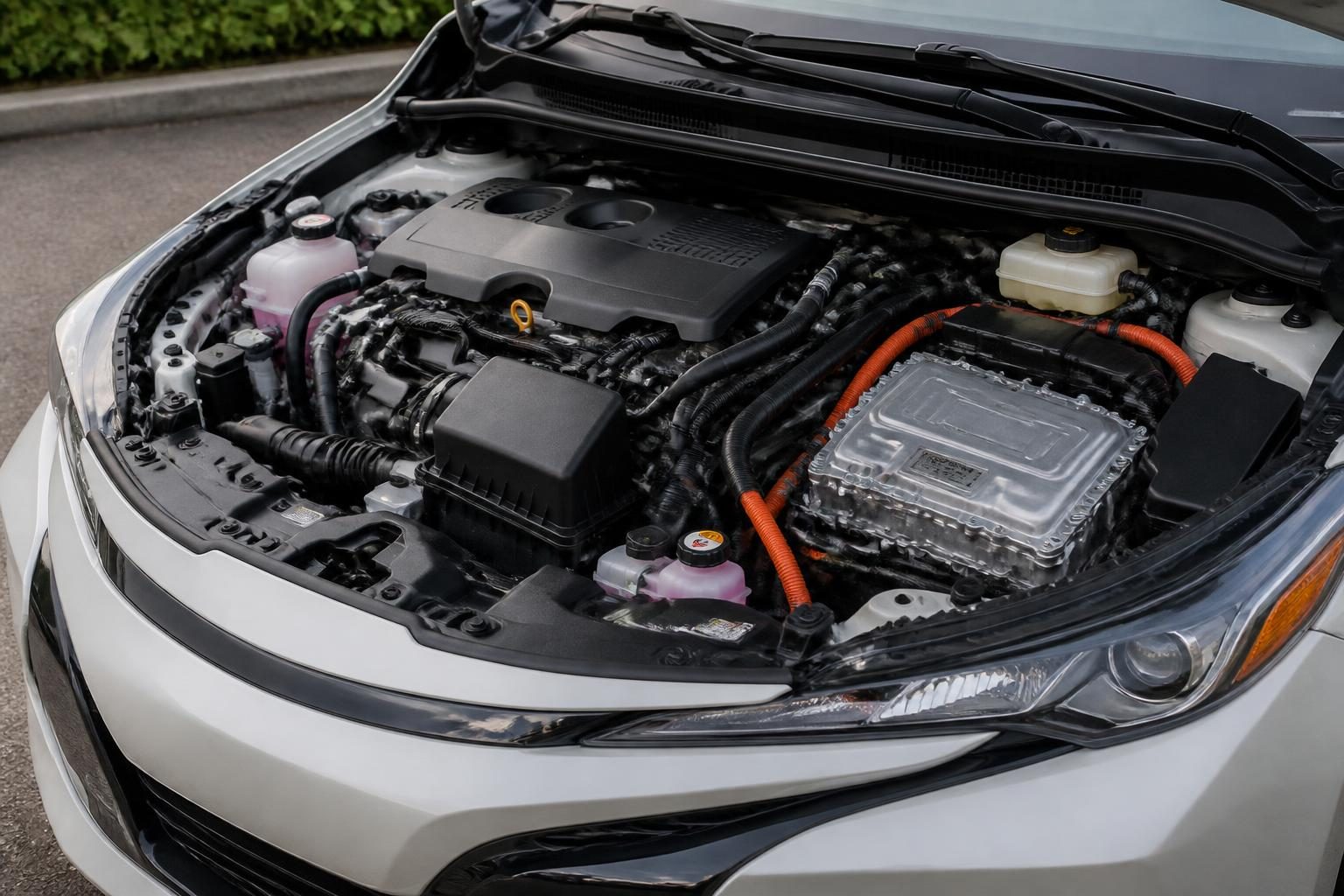 Toyota hybrid powertrain components visible under the open hood.
On fuel, this drivetrain is around 4.3 L/100km in a European real-world estimate (ReDriven, 2023). That isn't an official test-cycle figure, so treat it as an indication rather than a like-for-like comparison with the Australian petrol figures. The advantage should be largest in stop-start city work, where the electric side does more of the driving.
The other thing that matters here is legal, not mechanical. SEVS, the Specialist and Enthusiast Vehicle Scheme, is the Australian pathway used to approve eligible imported vehicles. The ZYX10 is approved under the SEVS environmental criterion, with published approvals on the Australian Government's Rover register covering builds from November 2016 through to September 2019.
Eligibility is build-specific. The exact build date and model code on the compliance plate decide it, not the model year in an advertisement.
| NGX10 (FWD petrol) | NGX50 (AWD petrol) | ZYX10 (Japan hybrid) | |
|---|---|---|---|
| Engine | 1.2L turbo, 8NR-FTS | 1.2L turbo, 8NR-FTS | 1.8L hybrid, 2ZR-FXE |
| Power | 85 kW | 85 kW | 72 kW petrol + 53 kW electric |
| Torque | 185 Nm @ 1,500 rpm | 185 Nm @ 1,500 rpm | 142 Nm petrol |
| Transmission | 6-speed manual or CVT | CVT | e-CVT |
| Combined fuel | 6.3–6.4 L/100km (ADR combined) | 6.5 L/100km (ADR combined) | ~4.3 L/100km (European real-world estimate) |
| Sold new in Australia | Yes | Yes | No |
What Does a 2017 C-HR Cost to Fuel?
Fuel consumption is the useful comparison here, rather than an annual dollar estimate: the NGX10 uses 6.3–6.4 L/100km on the ADR combined test, the NGX50 uses 6.5 L/100km, and the ZYX10 estimate is around 4.3 L/100km in European real-world driving (Toyota Australia; Toyota Japan; ReDriven, 2023). Your result will depend on traffic, tyres, weather and driving style.
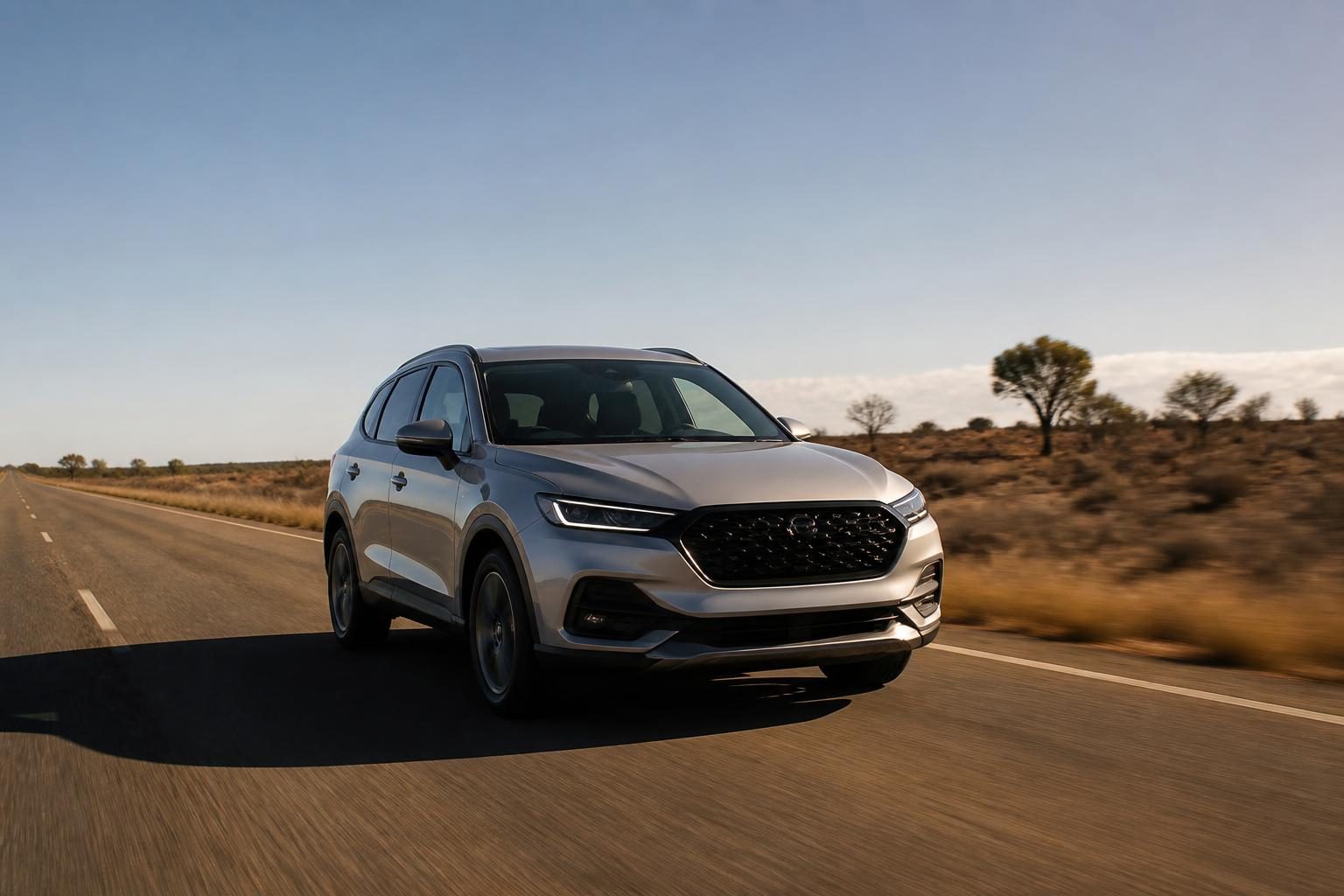 A silver SUV travels along a sunlit outback-style highway.
| Variant | Published fuel figure | What it means |
|---|---|---|
| NGX10 FWD | 6.3–6.4 L/100km (ADR combined) | Lower consumption of the Australian petrol versions |
| NGX50 AWD | 6.5 L/100km (ADR combined) | Slightly higher test-cycle consumption than NGX10 |
| ZYX10 hybrid | ~4.3 L/100km (European real-world estimate) | A separate estimate, not an ADR result |
The petrol rows require 95 RON premium unleaded, so pump choice also affects running costs. Fuel prices change by location and time, which is why this guide does not turn the August 2026 figure from GlobalPetrolPrices into an annual fuel-cost estimate.
Official figures come from a test cycle, so Australian results can differ. If you want a sense of how wide that gap can get on a modern hybrid, our look at the current-generation C-HR hybrid found real-world testing landing at 5.4 against a 4.0 claim.
How Reliable Is the 2017 C-HR?
The 2017 C-HR has one significant safety recall to check, plus several owner-reported issues that deserve a proper inspection. Toyota Australia recalled 4,886 C-HRs built between July 2016 and October 2017 in November 2017 over an electronic park brake fault. The Australian Government vehicle recalls database and Toyota's VIN lookup are the right places to confirm an individual car's status.
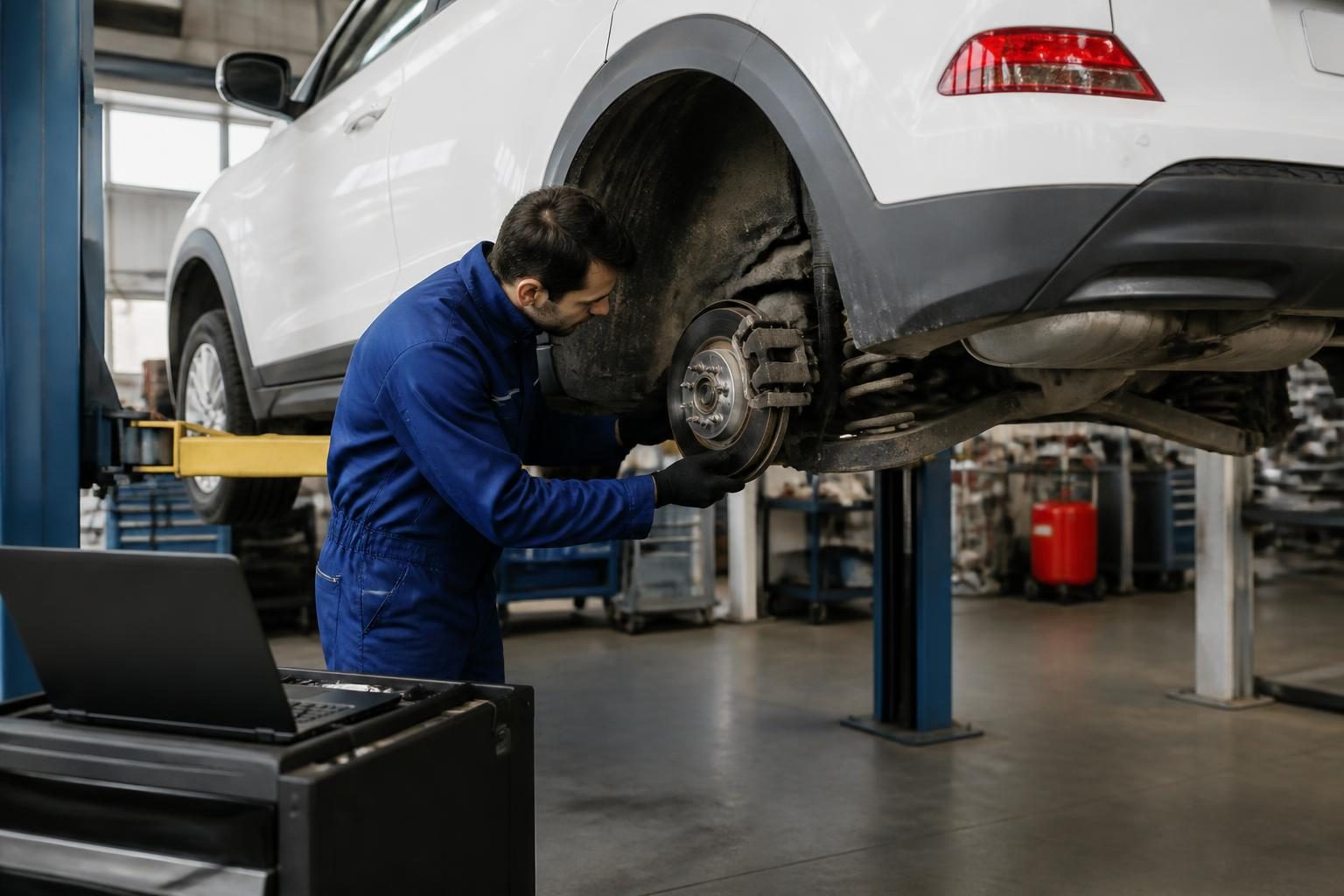 Mechanic checks the rear brake assembly of a lifted white SUV.
The fault could allow the electronic park brake warning light to illuminate and the brake to fail to hold the vehicle, raising the risk of it rolling on an incline. The remedy was a free ECU software update, which took about an hour at a dealer.
Worth being clear about the other recall people run into online. The high-pressure fuel pump campaign announced in October 2023, covering 14,480 vehicles, applies to 2019 to 2023 petrol C-HRs (CarExpert, 2023). A 2017 car is outside that stated model-year coverage, but confirm recall status by VIN.
Beyond the recalls, some owners report the following issues. They aren't proof of a widespread defect, so use them as inspection prompts rather than a prediction of ownership.
- Air conditioning. Some owners report refrigerant leaks and compressor noise. Test it cold and listen for anything rough when the compressor engages.
- Carbon build-up on the 1.2 turbo. Direct-injection engines can collect deposits over the years. Rough idle or hesitation off the line are warning signs. On higher-kilometre cars, look for induction cleaning in the service history.
- Wind noise. Some pre-facelift owners report extra road noise from the door seals at highway speed. Get the test drive up to 100 km/h before deciding whether it bothers you.
- 12-volt battery drain on hybrids. A ZYX10 left sitting for long stretches can flatten its auxiliary battery. Ask how the car has been used and stored.
- Rodent damage to wiring. Inspect Japanese-built cars carefully if they have been stored near bushland. Check under the bonnet and along accessible wiring looms.
What Should You Check Before Buying?
A 2017 C-HR needs a documented service history, a VIN recall check and a variant-appropriate inspection. Toyota's capped-price servicing ran at $195 per visit, at 12-month or 15,000 km intervals, for the first five years, and it transfers to new owners (Drive, 2017). Ask for the service passport rather than relying on a verbal assurance.
The factory warranty was three years or 100,000 km, so every 2017 car is now well outside it. Budget accordingly. Run the VIN through Toyota Australia's recall lookup, or ask any Toyota dealer to scan it, and confirm the park brake update was done.
Check the aircon blows properly cold. Listen for hesitation off idle. Look at the boot lining and interior trim as a proxy for how carefully the car has been treated. If a towbar is fitted, check it's a genuine unit rated for the variant's braked towing limit, 1,100 kg for the base NGX10 FWD and 600 kg for Koba and AWD variants. Our used C-HR buying overview covers the practical side in more detail.
For a ZYX10 hybrid, add a few checks:
- Ask for evidence of hybrid battery health testing, not just a claim that the battery is fine.
- Check for hybrid-system warning lights and scan the vehicle before purchase.
- Confirm the Japanese auction grade, inspection sheet and odometer documentation.
- Inspect the underbody for corrosion, impact damage and poor repairs.
- Check that the instrument display, owner's manuals and translated documents are understandable.
- Confirm that a Toyota specialist near you can service the car and source the parts it needs.
Which Version Makes Sense for You?
The NGX10 front-drive petrol is probably the simplest fit for suburban driving, with 6.3–6.4 L/100km official ADR combined consumption and the broadest local familiarity (Toyota Australia). The NGX50 adds all-wheel drive but uses 6.5 L/100km on the same test. The ZYX10 hybrid offers the lowest quoted consumption, but it needs more careful import and battery checks.
If you're doing school runs and suburban commuting and want the simplest ownership story, the NGX10 front-drive petrol covers it. It's the most common version here, and a well-kept one with a full history is worth waiting for.
If you want all-wheel drive for gravel roads or wet weather confidence, the NGX50 is your only choice in this generation, and it costs you 0.2 L/100km on paper.
If fuel economy is the priority and you mostly drive in town, the ZYX10 hybrid makes a lot of sense. Just go in knowing it means sourcing a car from Japan rather than buying one off a local lot. Whichever way you go, confirm the recall and get the service history.
Sourcing a ZYX10 Hybrid From Japan
The ZYX10 can be sourced through Japan because eligible builds appear on the SEVS approval pathway, but each vehicle still needs an individual eligibility and compliance check. The build date, model code, auction records and compliance outcome matter more than the advertisement's model year. The Rover register is the place to verify the published approval.
If the hybrid specification is what you're after, Carbarn's Japan-sourced C-HR ZYX10 service covers the import pathway from its Lidcombe workshop in Sydney. The process can include shortlisting auction lots to your year, grade and odometer criteria, arranging a pre-bid physical inspection, bidding with your approval, then the VIA application, international freight, customs and biosecurity.
The compliance stage includes the SEVS program, a RAW, or Registered Automotive Workshop, and an AVV, or authorised vehicle verifier. It also includes RAV entry, which means adding the compliant vehicle to the Register of Approved Vehicles. Timing, costs and eligibility depend on the individual vehicle and compliance pathway.
Finance, warranty and nationwide delivery are available on locally held cars. The C-HR ZYX10 import page is the place to check current sourcing options and eligibility detail, and the team can be reached directly on 0423 840 130.