



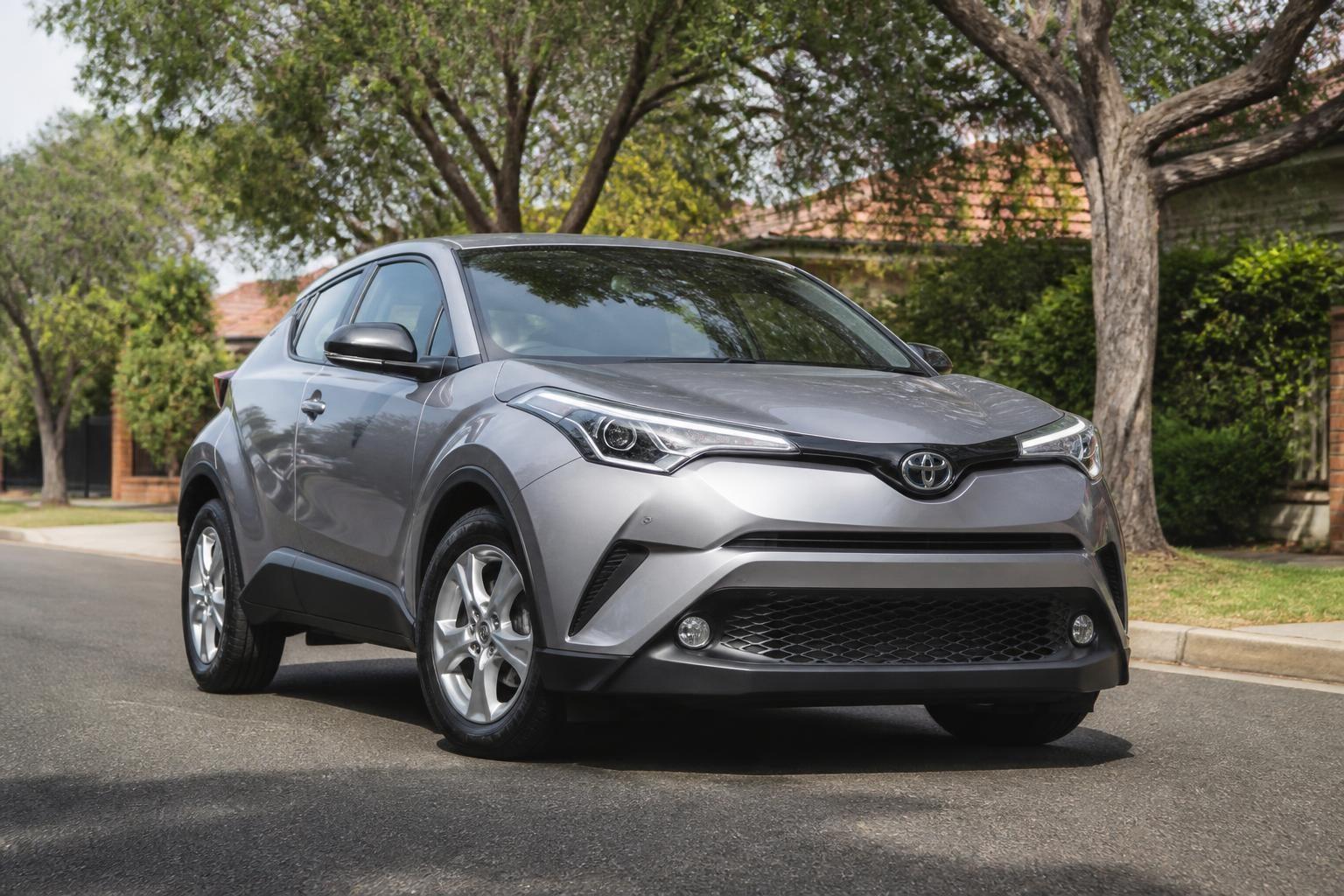
Ready to Hit the Road in Style?
Save money and reduce emissions with vehicles designed to deliver exceptional mileage. Visit our inventory and find a car that fits your lifestyle.
Ready to Hit the Road in Style?
Save money and reduce emissions with vehicles designed to deliver exceptional mileage. Visit our inventory and find a car that fits your lifestyle.
The C-HR is the sharpest-looking small hybrid SUV Toyota builds. That much isn't up for debate. What's changed is the company it keeps. The Corolla Cross and Yaris Cross now do most of the same things, with more room in the back, and Australian buyers have noticed: Chasing Cars reported in October 2025 that the C-HR is outsold roughly three to one by the Yaris Cross and four to one by the Corolla Cross. So is the styling still worth the trade-off? Here's an honest look.
Quick Answer
- Official fuel economy for the current AU-market C-HR is 4.0–4.1 L/100km (WLTC), per CarExpert's 2026 spec data.
- 5-star ANCAP applies to variants built October 2023 onwards, but the GR Sport is specifically unrated (ANCAP, April 2024).
- Capped-price servicing runs 5 visits over 5 years / 75,000 km, at 12-month or 15,000 km intervals.
- The first-generation ZYX10 (2ZR-FXE 1.8L hybrid) is import-eligible under three SEVS approvals.
- Best suited to urban commuters and couples. Rear space is a genuine compromise for families.
What Are the Two Ways to Buy a C-HR in Australia?
There are two separate paths, and they suit different buyers. The current AU-market car is a second-generation model sold new since 2024 with local warranty backing. The first-generation ZYX10 comes from Japan under the SEVS scheme, using the 2ZR-FXE 1.8-litre hybrid drivetrain. One gives you factory support. The other gives you an older, simpler car and a different entry point into the nameplate.
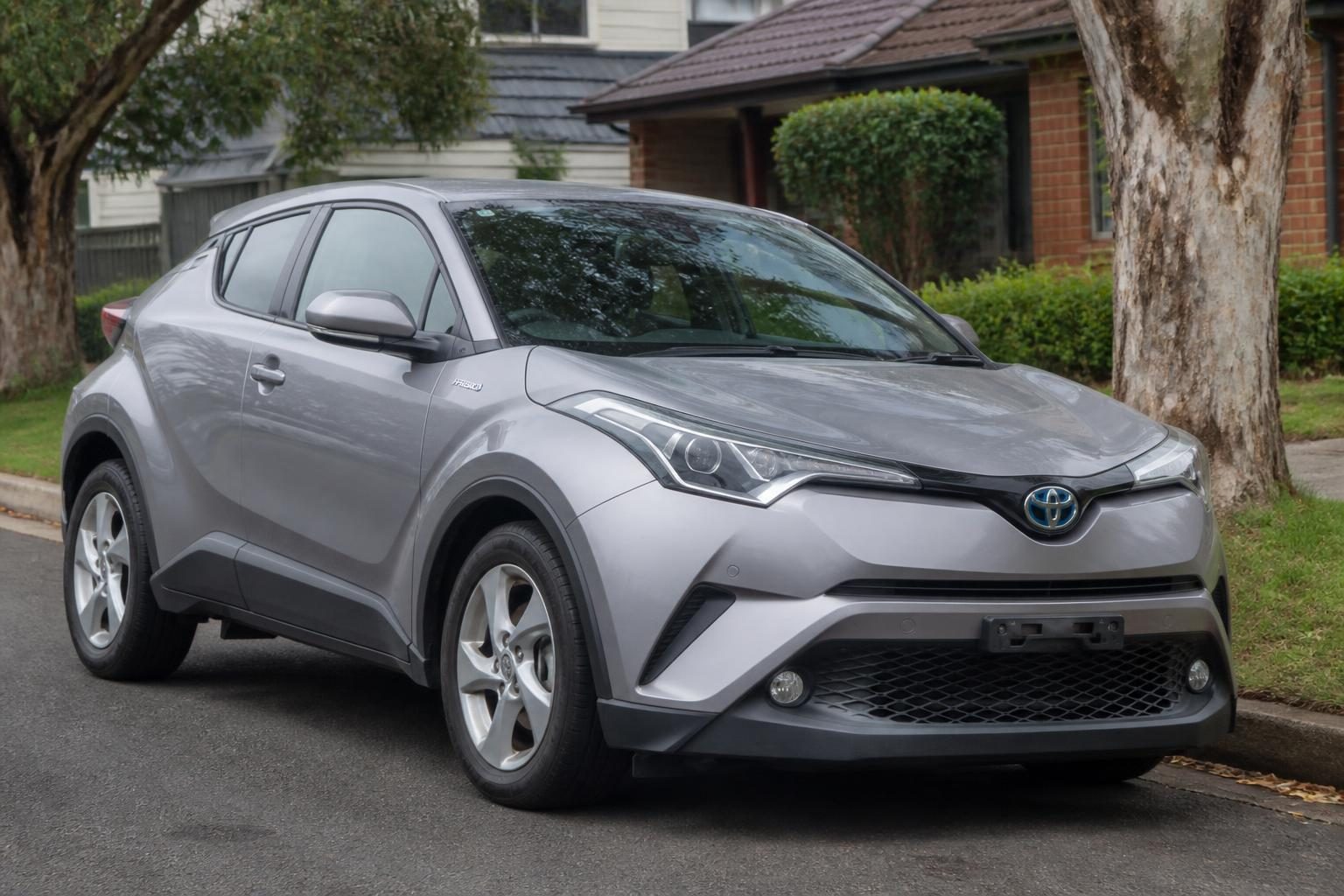 2017 Toyota C-HR
The Current AU-Market C-HR (Second Generation)
Toyota Australia sells the C-HR in three grades: GXL, Koba and GR Sport. The GXL and Koba run a 1.8-litre hybrid making 103 kW. Step up to the 2.0-litre hybrid and you get 148 kW, plus the option of all-wheel drive. Both are self-charging, so there's nothing to plug in.
Fuel economy sits at 4.0 L/100km WLTC for the GXL and Koba, and 4.1 L/100km WLTC for the GR Sport (CarExpert, 2026). Boot space is 388 litres seats-up on GXL and Koba, dropping to 362 litres on the GR Sport, expanding to 1,155 litres with the rear seats folded (Chasing Cars, 2024). Warranty is five years, unlimited kilometres. For current pricing, Toyota Australia's own range page is the only figure worth trusting.
The Japan-Sourced ZYX10 (First Generation)
The Toyota C-HR ZYX10 is the first-generation car, and it's approved for import to Australia under the SEVS Environmental Criterion. Three separate approvals cover it: SEV-000735, SEV-000161 and SEV-000160, spanning builds from November 2016 to September 2019. It's a five-seat wagon body with the 2ZR-FXE 1.8-litre petrol-electric hybrid, a CVT automatic and front-wheel drive only. No AWD option existed on this drivetrain.
One thing to be straight about: there's no verified WLTC fuel figure published for the ZYX10, so we're not going to quote one. Japanese-market cars of this era were tested on the JC08 cycle, which flatters real-world consumption badly and isn't comparable to the WLTC numbers above. Treat the first-generation car as efficient, and judge it on a test drive rather than a spec sheet.
The trade-off is straightforward. The newer car brings more power, an AWD option and local warranty cover. The ZYX10 suits someone comfortable with the import process who wants an earlier, lighter version of the same idea.
What Does a C-HR Hybrid Actually Cost to Run?
Fuel is where hybrids earn their keep, but the label figure isn't what you'll see. Toyota's claim is 4.0 L/100km WLTC on GXL and Koba. Chasing Cars recorded 5.4 L/100km on a mixed loop in their 2024 road test, and 4.9 L/100km in urban running. That gap is normal, not a defect.
 A grey SUV is refuelled with a green nozzle at a petrol station.
Here's the maths at 15,000 km a year, using the national ULP 91 average of $2.05/L from the ACCC weekly fuel price monitoring (21 August 2026):
| Basis | Consumption | Annual fuel |
|---|---|---|
| Toyota claim (WLTC) | 4.0 L/100km | ~$1,230 |
| Chasing Cars urban test | 4.9 L/100km | ~$1,507 |
| Chasing Cars mixed test | 5.4 L/100km | ~$1,661 |
Even the pessimistic column is decent for an SUV. It also runs on 91 RON, so you're not paying a premium-fuel penalty every fill. If the claimed-versus-real gap interests you, we've covered why Australian fuel labels overstate economy in more detail.
Servicing is capped for the first five visits, at 12-month or 15,000 km intervals. Toyota lifted its capped-price rates across the range in 2026, so check the current per-visit figure on Toyota Australia's calculator rather than relying on an older review. As for the hybrid battery, Toyota's record here is about as settled as it gets in the used market. At the kilometres most of these cars carry, battery replacement isn't a realistic worry.
How Does the C-HR Compare to Its Toyota Stablemates?
This is the comparison that actually matters, because the C-HR's toughest rivals wear the same badge. The Corolla Cross is bigger inside. The Yaris Cross is smaller outside and slightly thriftier. The C-HR sits in between on size and ahead on looks.
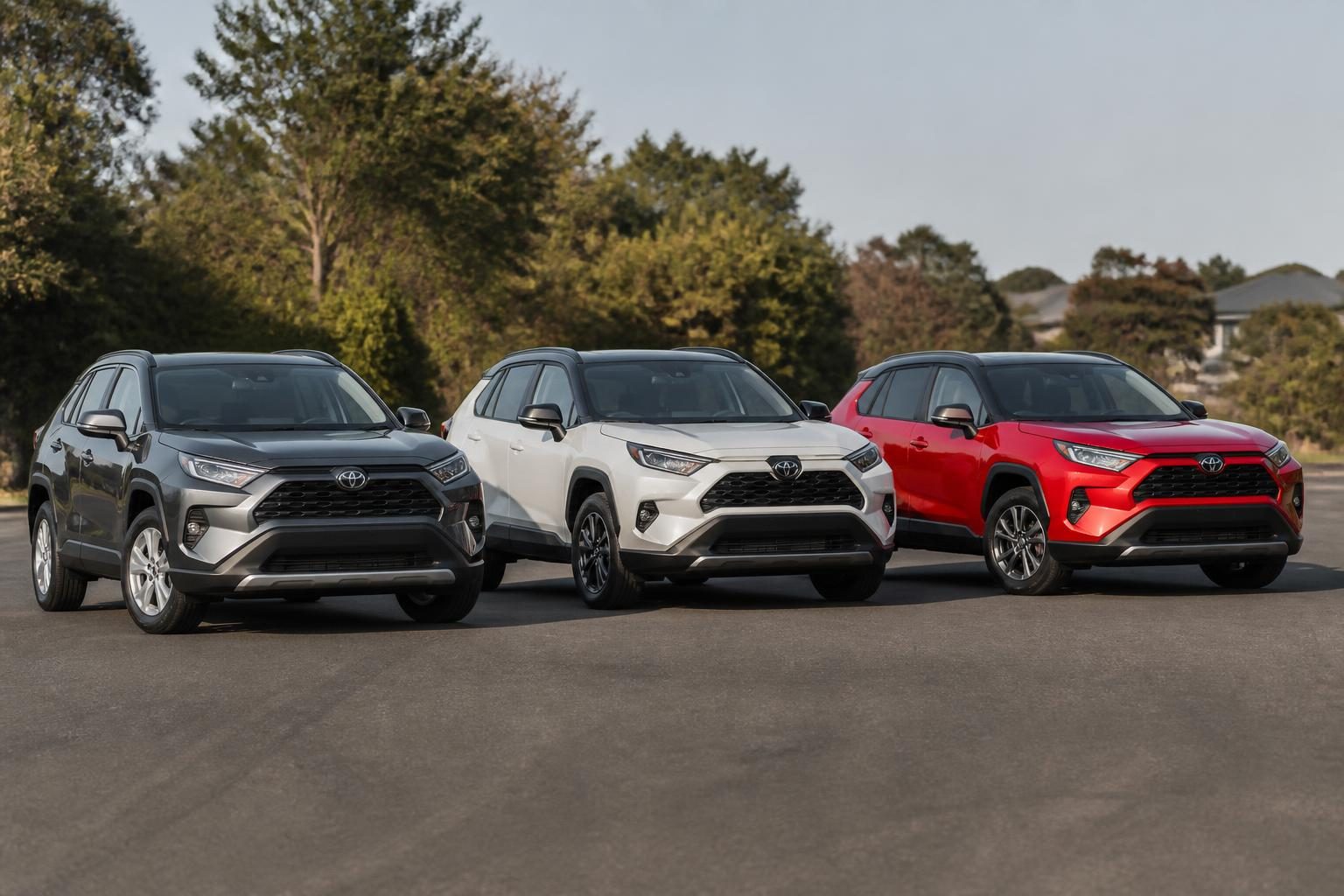 Three Toyota compact SUVs parked side by side outdoors.
| C-HR | Corolla Cross | Yaris Cross | |
|---|---|---|---|
| Length | 4,362 mm | 4,460 mm | 4,180 mm |
| Engine | 1.8L or 2.0L hybrid | 2.0L hybrid | 1.5L hybrid |
| Power | 103 kW / 148 kW | 146 kW | 85 kW |
| AWD available | Yes (2.0L) | Yes | Yes |
| Boot, seats up | 388 L (GXL/Koba) | 425 L (2WD GX/GXL) | 390 L (2WD) |
| Fuel (WLTC) | 4.0–4.1 L/100km | 4.2 L/100km | 3.8 L/100km |
Boot figures: Chasing Cars (C-HR, 2024), CarsGuide (Corolla Cross, Yaris Cross). Fuel and dimensions: CarExpert and Chasing Cars.
Look closely and the C-HR's boot isn't the outlier people assume. At 388 litres it's within two litres of the Yaris Cross. The real gap is the Corolla Cross, which gives you 425 litres and noticeably better rear legroom for the same fuel bill. That's why it outsells the C-HR so heavily.
So the honest call: pick the C-HR if the styling genuinely moves you and cargo room isn't a priority. Pick the Corolla Cross for family duty. Pick the Yaris Cross if you park in tight city spots, though note its AWD version drops to 314 litres. If you're weighing the Corolla Cross against something larger again, our Corolla Cross versus RAV4 comparison covers that step up.
Who Should Buy a C-HR, and Who Shouldn't?
The C-HR rewards a fairly specific driver. It's a strong option for urban commuters travelling solo or with one passenger, where the low driving position, tight turning circle and sub-five-litre city consumption all land well. It also makes a lot of sense for buyers who want a Toyota hybrid that doesn't look like every other Toyota hybrid.
It's the wrong car for a few people, and worth saying plainly. If you regularly carry three adults across the back seat, the rear headroom and legroom will frustrate them. The rising window line makes it feel darker back there too. If you're loading a pram, a large dog crate or camping kit every weekend, 388 litres runs out fast, and the Corolla Cross solves that for similar money. And if you want genuine go-anywhere ability or towing capacity, this isn't the Toyota for you. A RAV4 is.
One more group to flag: anyone who wants AWD without stepping up in price. On the C-HR, all-wheel drive only comes attached to the 2.0-litre drivetrain and the higher grades.
Sourcing a First-Generation C-HR From Japan
 A sedan beside a docked vehicle carrier ship at a port.
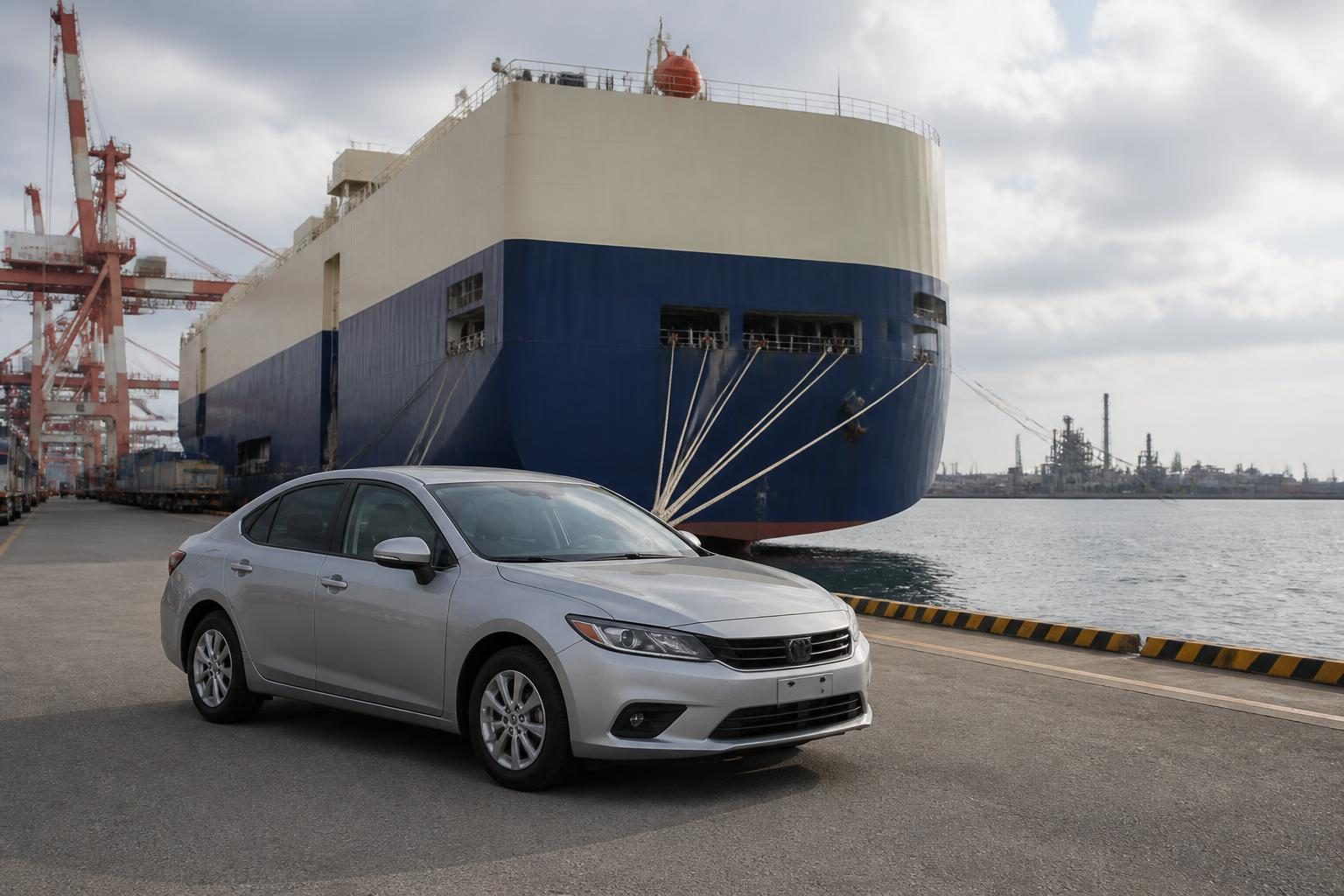
If the import path is something you're weighing up, Carbarn handles the ZYX10 end to end from a Sydney workshop as a RAW-certified, licensed motor dealer (MD 056471). That covers auction sourcing through approved Japanese houses, pre-bid physical inspection with photos and auction sheet notes sent through before any bid, the Vehicle Import Approval application, international freight, customs and biosecurity, the full SEVS compliance program, and paperwork for state registration, plus finance, warranty and nationwide delivery once the car lands. The Toyota C-HR ZYX10 page sets out variant eligibility, the approved build range and how to start an enquiry. If you'd rather not wait on shipping, the Toyota hybrid range lists what's already here, and there's a broader used hybrid guide worth reading first.