



Ready to Hit the Road in Style?
Save money and reduce emissions with vehicles designed to deliver exceptional mileage. Visit our inventory and find a car that fits your lifestyle.
Ready to Hit the Road in Style?
Save money and reduce emissions with vehicles designed to deliver exceptional mileage. Visit our inventory and find a car that fits your lifestyle.
Australians buy more Corollas than almost anything else on four wheels. VFACTS data reported by CarExpert put the Corolla at 18,968 sales in 2025, top of the small-car class. We get the hatch. We get the sedan. We get the Cross.
What we never got is the wagon.
The Corolla Touring has been on sale in Japan since 2019, and it is the body style a lot of Corolla buyers actually need: same drivetrain, same running costs, roughly triple the boot. It is not sold new here and never has been. It is, however, importable. Here is what you get, what the two model codes mean, and who the car genuinely suits.
The Corolla Touring Hybrid at a glance
- A five-door station wagon hybrid sold in Japan, never offered new in Australia
- Two model codes come up at auction: ZWE211W (earlier) and ZWE219W (post-facelift)
- Both run the 1.8L 2ZR-FXE hybrid, 103 kW combined system output, e-CVT, front-wheel drive
- Boot space around 596 litres with the seats up, per ReDriven
- WLTC combined fuel economy of 29.5 km/L, about 3.4 L/100km, per the JPChecker grade guide
- Import-eligible under the SEVS Environmental Criterion
Why Did Australia Never Get the Corolla Wagon?
It was a commercial call, not a technical one. Toyota Australia told Drive it had "no plans to introduce the Corolla Touring" locally, and the sales numbers behind that decision are hard to argue with. Compact wagons had already collapsed here. Drive noted the Holden Astra Sportwagon accounted for only about 12% of Astra sales before it was dropped.
The broader shift is starker. SUVs took 60.7% of all new vehicle sales in Australia in 2025 according to RACV's summary of FCAI figures, and Chasing Cars reported passenger-car deliveries falling from 211,073 in 2024 to 164,847 in 2025.
| Australian new vehicle sales 2025 | Share |
|---|---|
| SUVs | 60.7% |
| Light commercial (utes and vans) | 22.6% |
| Passenger cars | 13.0% |
| Other | 3.7% |
Source: FCAI/VFACTS 2025, via RACV. No wagon-only slice exists because the segment is too small to report separately.
So the only route to one is a Japan import, and that pathway has been open since the car launched.
Toyota Corolla Touring ZWE219W: The Post-Facelift Wagon
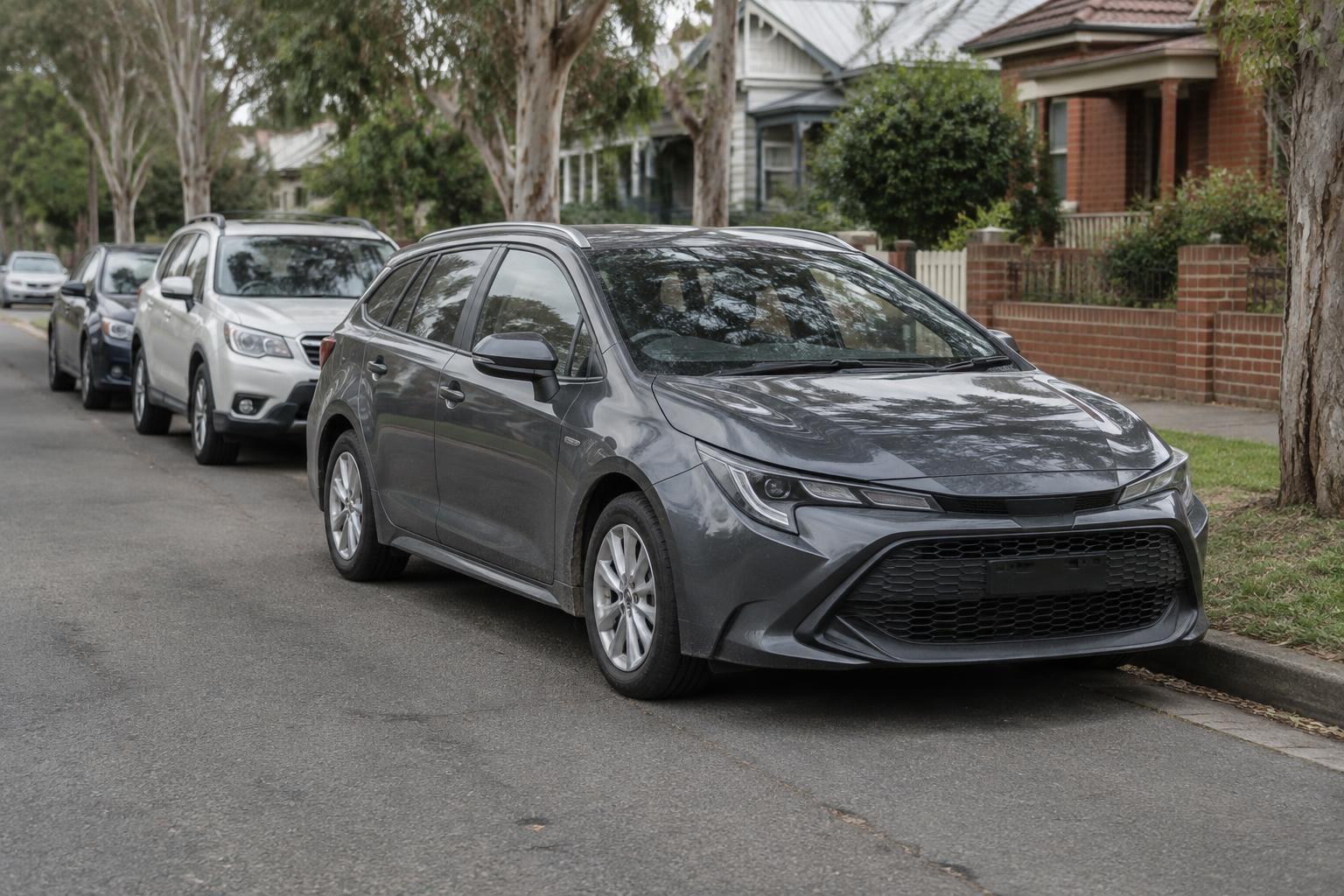
The Toyota Corolla Touring ZWE219W is the later, facelifted version of the wagon, and it is the one most buyers picture when they see a current-shape Corolla with a long roof. Same nose as the Corolla hatch we know, stretched back over a proper cargo bay. Nothing about it is exotic. That is rather the point.
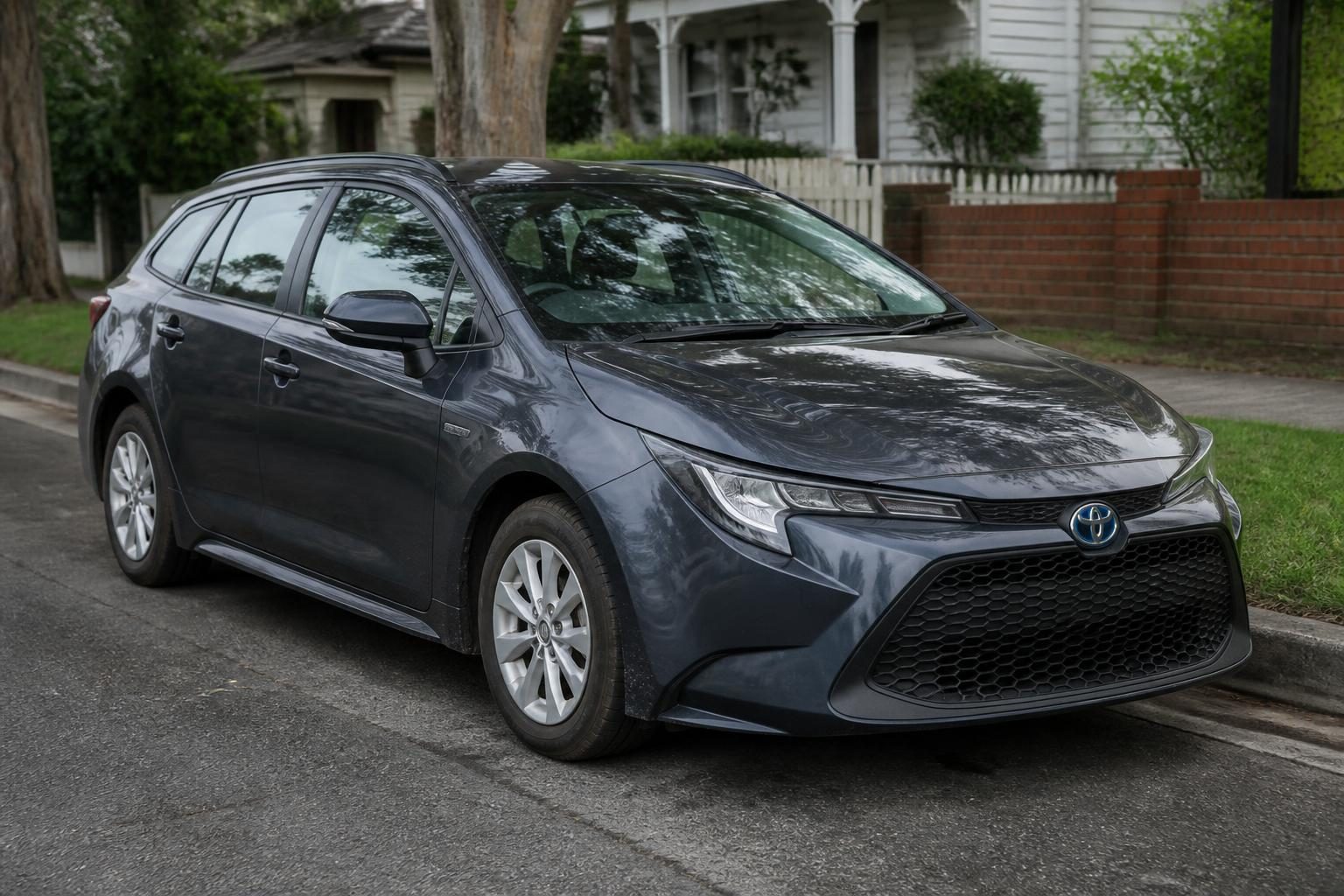 2022 Toyota Corolla Touring
Mechanically it is the drivetrain Australians already buy in huge numbers. The 1.8-litre 2ZR-FXE petrol engine pairs with an electric motor for a combined system output of 103 kW, driving the front wheels through an e-CVT. Body dimensions are 4,653 mm long, 1,790 mm wide and 1,460 mm tall per Dimensions.com, with five seats and a boot in the 596 to 598 litre range depending on which measurement you use. WLTC fuel economy is 29.5 km/L combined, broken down as 28.1 km/L urban, 33.1 km/L suburban and 28.2 km/L highway. Import approval sits under SEVS number SEV-000643 on the Environmental Criterion, covering builds from September 2019 to February 2025.
Grades matter more here than they do on an Australian-delivered car, because the Japanese range splits on mechanical content, not just trim.
| Feature | X | G | WxB |
|---|---|---|---|
| Toyota Safety Sense | Yes | Yes | Yes |
| LED headlamps | Yes | Yes | Yes |
| Rear stabiliser bar | No | Yes | Yes |
| Blind Spot Monitor | No | Yes | Yes |
| 16-inch alloys | No | Yes | Larger fitted |
| 17-inch dark alloys | No | No | Yes |
| 12.3-inch digital cluster | No | No | Yes |
| 10.5-inch connected nav display | No | No | Yes |
| Digital key and dash cameras | No | No | Yes |
Grade content per JPChecker.
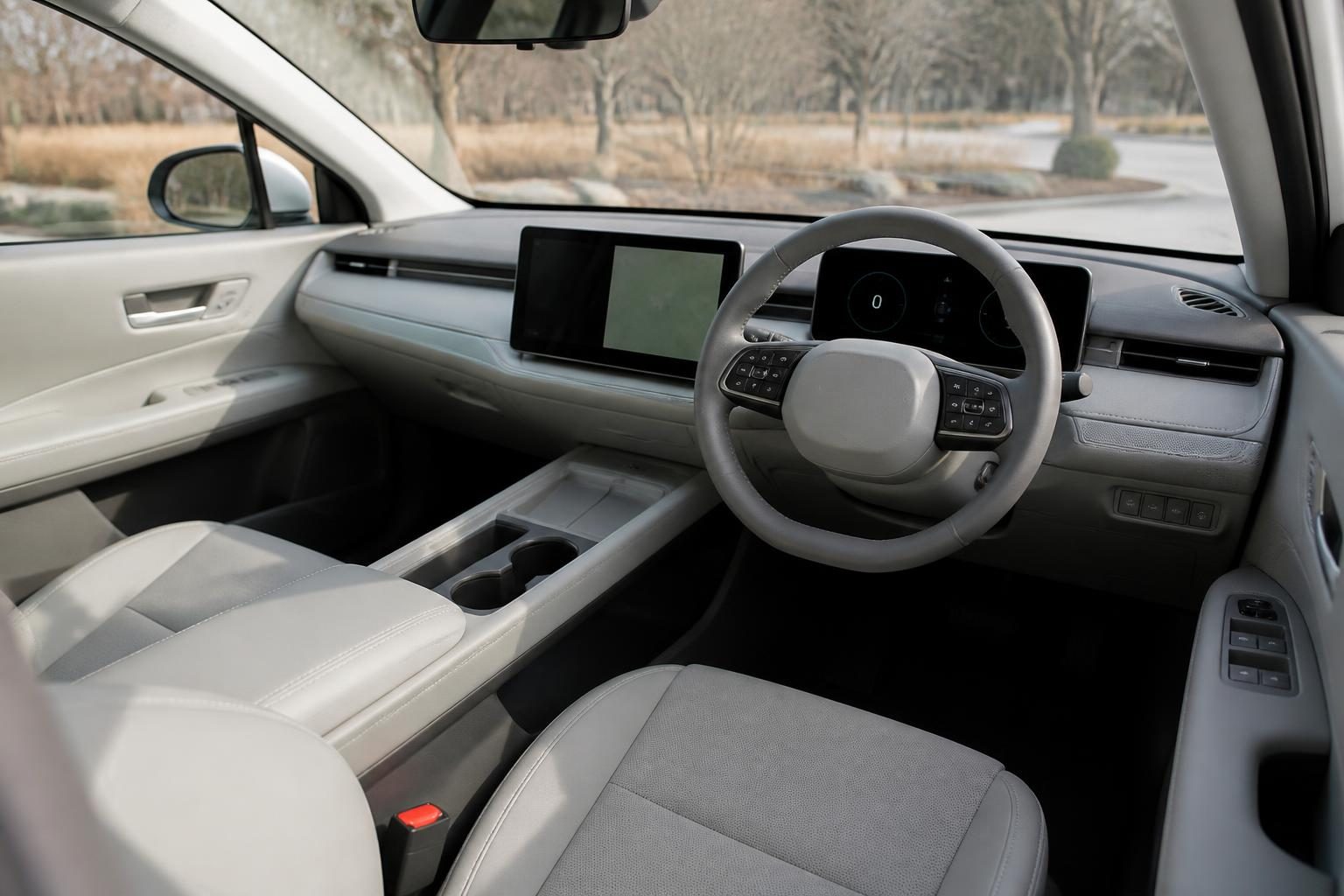 Bright minimalist car dashboard with digital displays and light grey seats.
The rear stabiliser bar is the detail worth knowing. On the X grade it is absent, which is a suspension difference rather than a cosmetic one, and you will feel it in how settled the car is through a loaded corner. G is the sensible middle. WxB is the one to chase if you want the digital cluster and the bigger screen. One sourcing note: from a May 2025 running update the Touring range went hybrid-only, so earlier examples can turn up with the 1.5-litre petrol engine instead. Confirm the powertrain on the auction sheet before bidding.
Toyota Corolla Touring ZWE211W: The Earlier Generation
The Toyota Corolla Touring ZWE211W is the pre-facelift car, and mechanically there is nothing to separate it from the later model. Same 1.8-litre 2ZR-FXE hybrid, same 103 kW combined output, same e-CVT, same front-wheel drive, same platform and the same 596-litre boot. You are choosing between styling and screen size, not between engineering.
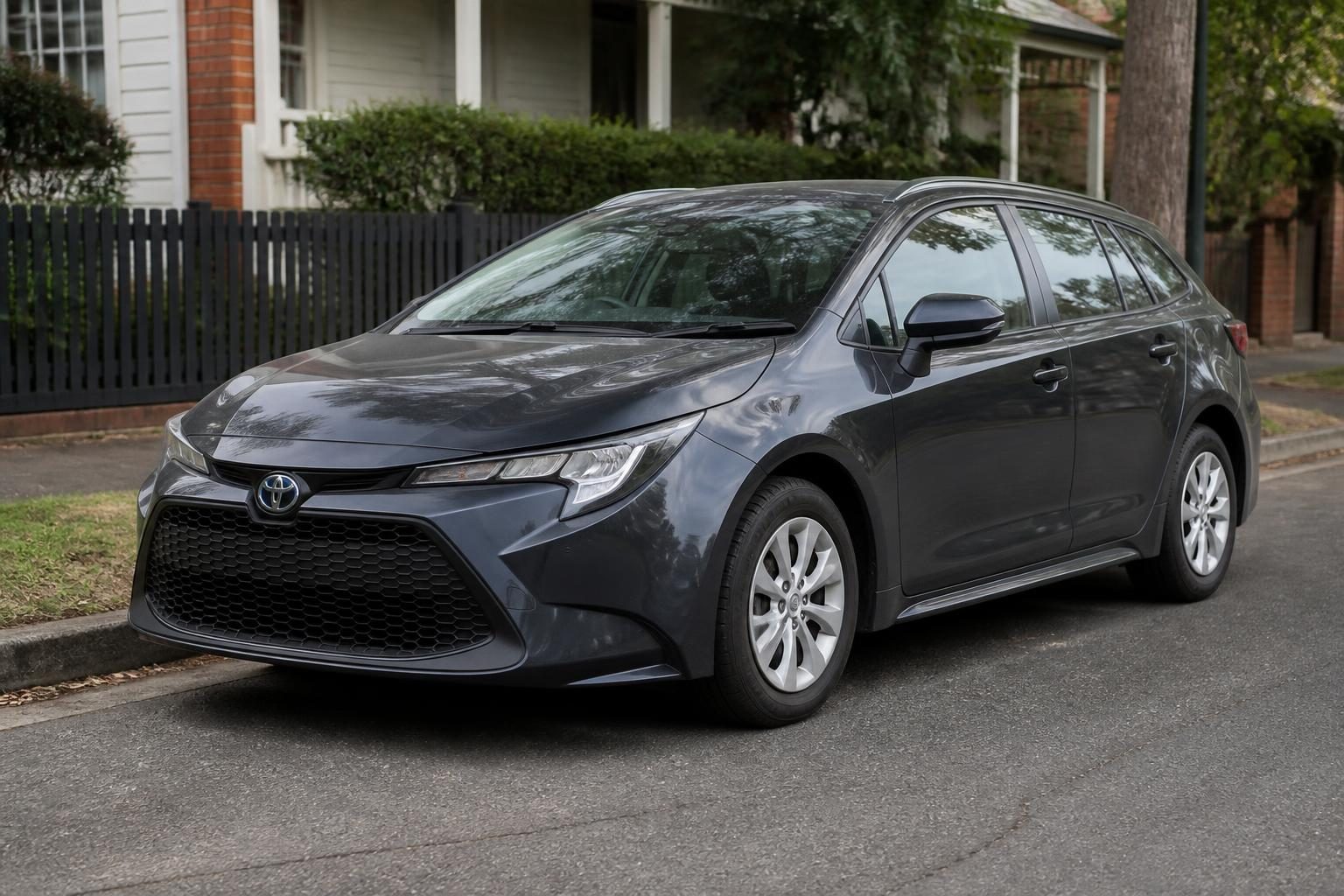 2022 Toyota Corolla Touring
Grade naming follows the earlier Japanese convention: Hybrid G-X, Hybrid S and Hybrid WxB. The exterior wears the original front and rear treatment, and infotainment screens are smaller across most of the range. Import approval is broader, with two SEVS approvals covering this code, SEV-000643 and SEV-000016, both on the Environmental Criterion. Because the car has been on sale since 2019, the auction pool is deeper. That means more choice on colour, grade and odometer, and also more variation in condition, so auction-sheet grading does real work when you are shortlisting.
Reliability is the reassuring part. ReDriven's used-car assessment rates the 2ZR-FXE and e-CVT combination as a well-proven package, with servicing at 10,000 km intervals as the main ongoing requirement. It is the same hardware family covered in our Prius versus Corolla Hybrid comparison, and if you have been looking at the older Corolla Fielder hybrid, the Touring is the larger, newer step up from it.
How Much Boot Space Does It Actually Have?
Around 596 litres with all five seats in place, per ReDriven, or 598 litres by AutomobileDimension's measurement. Either way, it is more than the mid-size SUV most families would cross-shop. The 2024 Toyota RAV4 Hybrid carries about 580 litres with the seats up according to Chasing Cars.
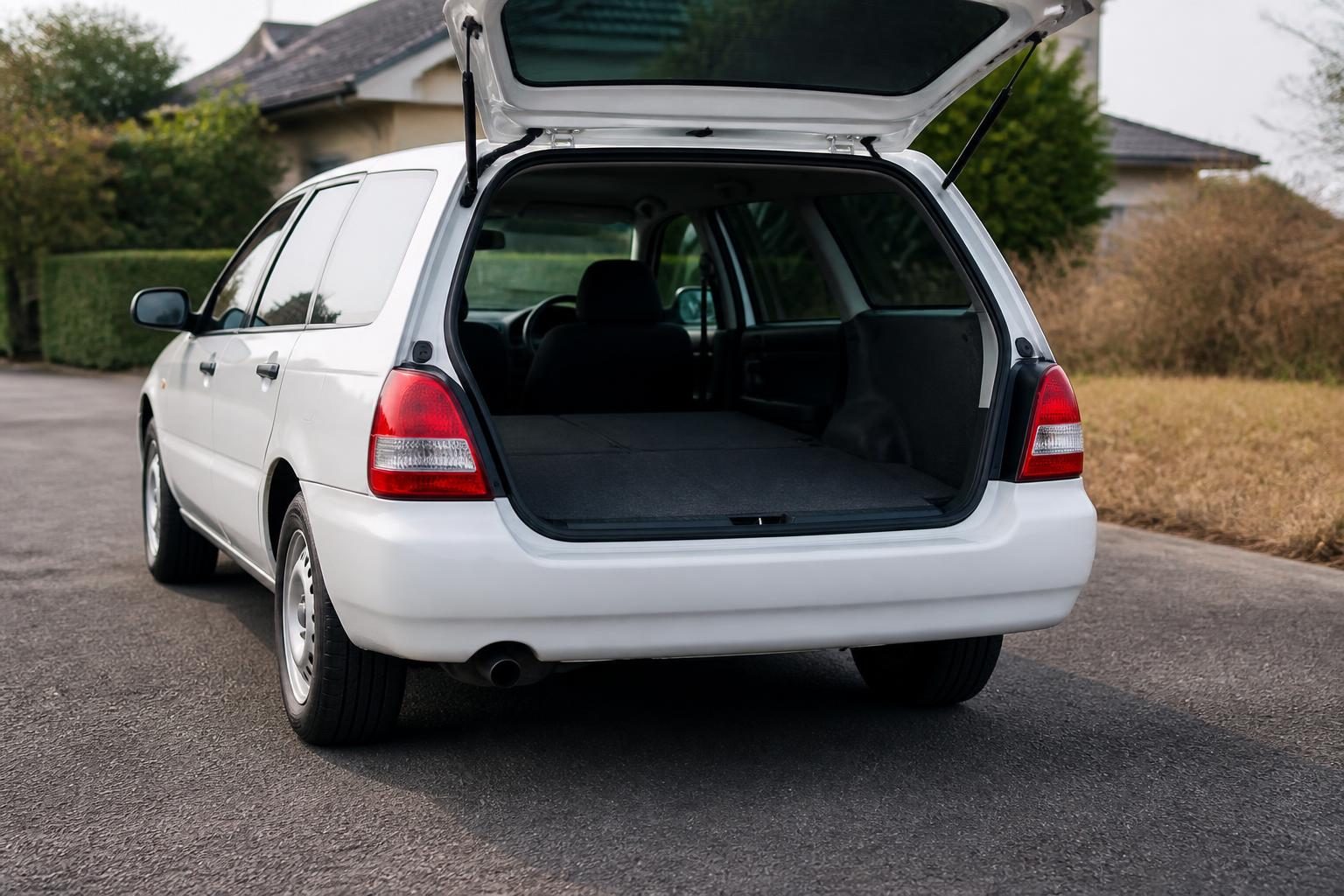 Open hatch of a white station wagon reveals an empty rear cargo space.
| Vehicle | Boot space, seats up |
|---|---|
| Toyota Corolla Touring | ~596 L |
| Toyota RAV4 Hybrid (2024) | ~580 L |
| Toyota Corolla Cross (2024) | 414 to 425 L |
| Toyota Corolla hatch (AU) | ~217 L |
Sources: ReDriven, AutomobileDimension, Chasing Cars, Toyota Australia.
Raw litres only tell part of it. The wagon's load floor sits lower and runs flatter than an SUV's, so heavy boxes slide in rather than getting lifted over a high lip. There is no third row and no off-road pretence. And at 1,460 mm tall, it ducks under the 1,800 mm clearance bar at every shopping centre car park without you thinking about it, which is more useful day to day than it sounds.
Is the Fuel Economy Worth Talking About?
Yes, and the maths is simple. At the WLTC combined figure of 29.5 km/L reported by JPChecker, the Touring uses about 3.4 L/100km. Drive 15,000 km a year and that is roughly 508 litres of fuel. At $2.00 a litre you are looking at a little over $1,000 a year at the bowser.
A comparable petrol wagon returning 8.0 L/100km would burn about 1,200 litres over the same distance, so the difference lands near $1,400 a year. The gap widens if your driving skews urban, because that is where the electric motor does most work.
Two honest caveats. WLTC is a Japanese test cycle, not an Australian one, and real-world consumption will sit above it depending on traffic, load and how you drive. And this is a conventional hybrid, not a plug-in. It charges itself through regenerative braking, so there is no cable, no wallbox and no charging habit to build.
Which Buyer Is This For?
It suits a fairly specific person, and it is worth being straight about that.
A good fit if you:
- Have outgrown a hatch and want real cargo space without moving into an SUV
- Already trust Toyota's hybrid system and want it in a more useful body
- Do mostly suburban and highway kilometres, where this drivetrain is at its best
- Are comfortable waiting out an import timeline of around six to ten weeks
Probably not your car if you:
- Need seven seats or any off-road capability, since this is a front-wheel-drive wagon only
- Need something in the driveway within a fortnight
- Want a full Australian dealer service history from new, which no Touring can have
If the wait is the sticking point, the locally available Toyota Corolla range and the wider Toyota hybrid listings cover the sedan and hatch versions of the same drivetrain.
How Do You Source a Corolla Touring Through Carbarn?
Both model codes are sourced to order from Japanese auctions. Carbarn shortlists candidate lots against your target year range, grade, odometer and budget, arranges a physical inspection before bidding wherever possible, and shares auction-sheet details and inspector notes before any bid goes in. Bidding only happens with your approval and inside your agreed cap, which is also how odometer integrity gets checked rather than assumed.
Both the ZWE219W and ZWE211W sit under the SEVS Environmental Criterion, with eligibility tied to the exact build year, variant and model code named on the published Rover approval. Compliance is completed in-house at the RAW-certified Sydney workshop in Lidcombe, including the Approved Vehicle Verifier inspection and RAV entry, so the car arrives with paperwork ready for state registration. The full run from auction search to delivery typically takes six to ten weeks across three phases.
Beyond sourcing and compliance, Carbarn is a licensed NSW motor dealer (MD 056471) handling Vehicle Import Approval lodgement, ocean freight, customs and biosecurity clearance, in-house compliance and rectification, extended warranty subject to vehicle age and condition, finance, and door delivery around Australia, alongside a compliance-only pathway if you have already secured a vehicle yourself. Enquiries for either wagon start on the ZWE219W import page or the ZWE211W import page.