




Ready to Hit the Road in Style?
Save money and reduce emissions with vehicles designed to deliver exceptional mileage. Visit our inventory and find a car that fits your lifestyle.
Ready to Hit the Road in Style?
Save money and reduce emissions with vehicles designed to deliver exceptional mileage. Visit our inventory and find a car that fits your lifestyle.
Whether Australians should buy a hybrid or an EV right now is a question that has taken on genuine urgency in 2026. Six weeks ago, the average person filling up paid around $1.69 per litre. Today they are paying closer to $2.20, and in some regional areas above $2.50. That is a 50 cent per litre jump in under a month, triggered by the disruption of the Strait of Hormuz following the outbreak of conflict in the Middle East in late February 2026.
For anyone who drives regularly, this is no longer an abstract debate about green vehicles. It is a real cost hitting real budgets every week. And for anyone who has been sitting on a car purchase decision, the question is suddenly sharper: should I buy a fuel-efficient hybrid to protect against prices that may stay high? Or is now the moment to go fully electric and get off petrol altogether?
This guide answers both questions honestly, using current data. It also explains which specific used cars make the most practical sense given what is happening in global fuel markets right now
Should You Buy a Hybrid or Wait for Prices to Drop?
This is the question many buyers are wrestling with right now due to the petrol price surge. Here is the direct answer.
If you need a car in the next three to six months, buying a fuel-efficient hybrid now is a sound decision regardless of whether petrol prices eventually come down. Here is why.
A hybrid car does not stop saving you money when petrol prices fall. It saves you money relative to a petrol equivalent at any price level. If petrol drops back to $1.70 per litre, a Yaris Hybrid at 3.3L/100km still costs around $5.61 per 100km to run, versus a comparable petrol hatchback at 8L/100km costing $13.60. The hybrid still wins. The fuel crisis has simply made the gap larger and more urgent.
If you are asking whether this moment justifies switching to a full EV instead of a hybrid, that depends on your specific situation more than the petrol price. A higher petrol price does strengthen the EV case on running costs, but it does not change the fundamental requirements: home charging access, predominantly urban driving, and comfort with the current charging network. Those practical conditions either apply to your life or they do not, and no fuel crisis changes them.
Hybrid vs EV in 2026: The Real Cost Comparison
Petrol price reference: approximately $2.10 to $2.40 per litre in April 2026, post-excise cut. Before the government relief, national averages exceeded $2.50 per litre in major cities.
A Toyota Yaris Hybrid burning 3.3L/100km at around $2.20 per litre costs roughly $7.26 per 100km. A comparable petrol hatchback at 8L/100km costs around $17.60. A home-charging EV on a standard flat-rate electricity tariff of around 30 cents per kWh costs approximately 5 to 6 cents per 100km, meaning roughly $5 to $6.
The EV wins on running cost against both. But that 5 to 6 cent figure only applies if you are charging at home on a flat tariff. On public DC fast chargers, which charge between 60 and 100 cents per kWh, the per-kilometre cost climbs to 11 to 19 cents, which is similar to or above what a hybrid costs to run on petrol. For buyers who cannot reliably charge at home, the EV's cost advantage largely disappears.
Is Now the Right Time to Switch to an EV?
The honest answer is: only if your daily situation already supports it.
An EV makes strong sense right now if:
You own your home with a garage or dedicated parking that has power access
Your daily driving is under 150km and primarily within a capital city
You can install a home charging wall unit, typically costing $1,000 to $2,000 installed
You are buying new and the higher upfront price fits your budget
In that situation, a home-charging EV does offer meaningful relief from petrol costs. At current prices, the fuel saving versus a petrol car can reach $1,400 to $2,000 per year, and that saving is permanent rather than tied to a three-month government excise cut.
An EV is not the right choice right now if:
You live in an apartment or unit without dedicated parking
You regularly drive regional routes or make long-haul trips
You are shopping in the used car market under $30,000
You want a vehicle that works without infrastructure planning
For most of the buyers Carbarn works with, a quality used Japanese hybrid delivers better immediate value. It cuts fuel costs relative to what they currently spend, requires zero change to how they refuel or plan trips, and costs significantly less upfront than any new EV
Why Hybrid Cars Are the Right Answer for Most Australians in 2026
In the December quarter of 2025, hybrids reached 19.13% of all new light vehicle sales in Australia, their highest quarterly share on record, according to the Australian Automobile Association. That trend almost certainly accelerated through Q1 2026 as petrol prices surged. The market was already moving toward hybrids before the fuel crisis. The crisis has made the financial case even clearer.
Three things make hybrids particularly well-suited to Australian conditions right now.
First, the refuelling situation. There are over 6,500 petrol stations across Australia. Even with the current shortages (NSW reported over 550 stations temporarily without at least one fuel type at the peak of the March crisis), hybrids can still refuel anywhere a petrol car can. An EV cannot fall back on petrol if a charging station is occupied, offline, or too far away. In a genuine supply disruption, the hybrid's flexibility is a material advantage.
Second, the cost protection. A hybrid does not eliminate petrol costs, but it cuts them by 50 to 60% compared to a conventional petrol car. At current prices, that reduction has more dollar value than it did 12 months ago. A Prius driver is spending roughly $3 per 100km less than they were when petrol was $1.70. That same driver saving $3 per 100km over 15,000km per year is banking $450 extra annually compared to what the same efficiency gain was worth six months ago.
Third, the used car market advantage. For buyers shopping in the $14,000 to $25,000 range, there are no credible new EV options available. The quality used Japanese hybrid market, by contrast, is stocked with proven, low-kilometre vehicles in exactly that price bracket. At Carbarn, we source these directly from Japan, where they are maintained under the shaken roadworthy inspection system, one of the strictest in the world. A Japanese-market hybrid with 40,000km on the clock has typically been serviced rigorously and exported with a full verifiable history.
The Best Used Hybrid Cars in Australia Right Now
Given the current fuel environment, these are the models that make the most practical and financial sense. Each one is available through Carbarn's current stock of verified Japanese imports.
Toyota Yaris Hybrid: best value city and commuter hybrid
The Toyota Yaris Hybrid is the most financially compelling entry point in the used hybrid market. Toyota's 1.5L M15A-FXE hybrid system delivers around 3.3L/100km in real-world use. At current petrol prices of around $2.20 per litre, that works out to roughly $7.26 per 100km. A comparable petrol hatchback burning 8L/100km costs around $17.60. The weekly saving for a driver doing 300km per week is around $31, which is over $1,600 per year.
You own your home with a garage or dedicated parking that has power access
Your daily driving is under 150km and primarily within a capital city
You can install a home charging wall unit, typically costing $1,000 to $2,000 installed
You are buying new and the higher upfront price fits your budget
You live in an apartment or unit without dedicated parking
You regularly drive regional routes or make long-haul trips
You are shopping in the used car market under $30,000
You want a vehicle that works without infrastructure planning
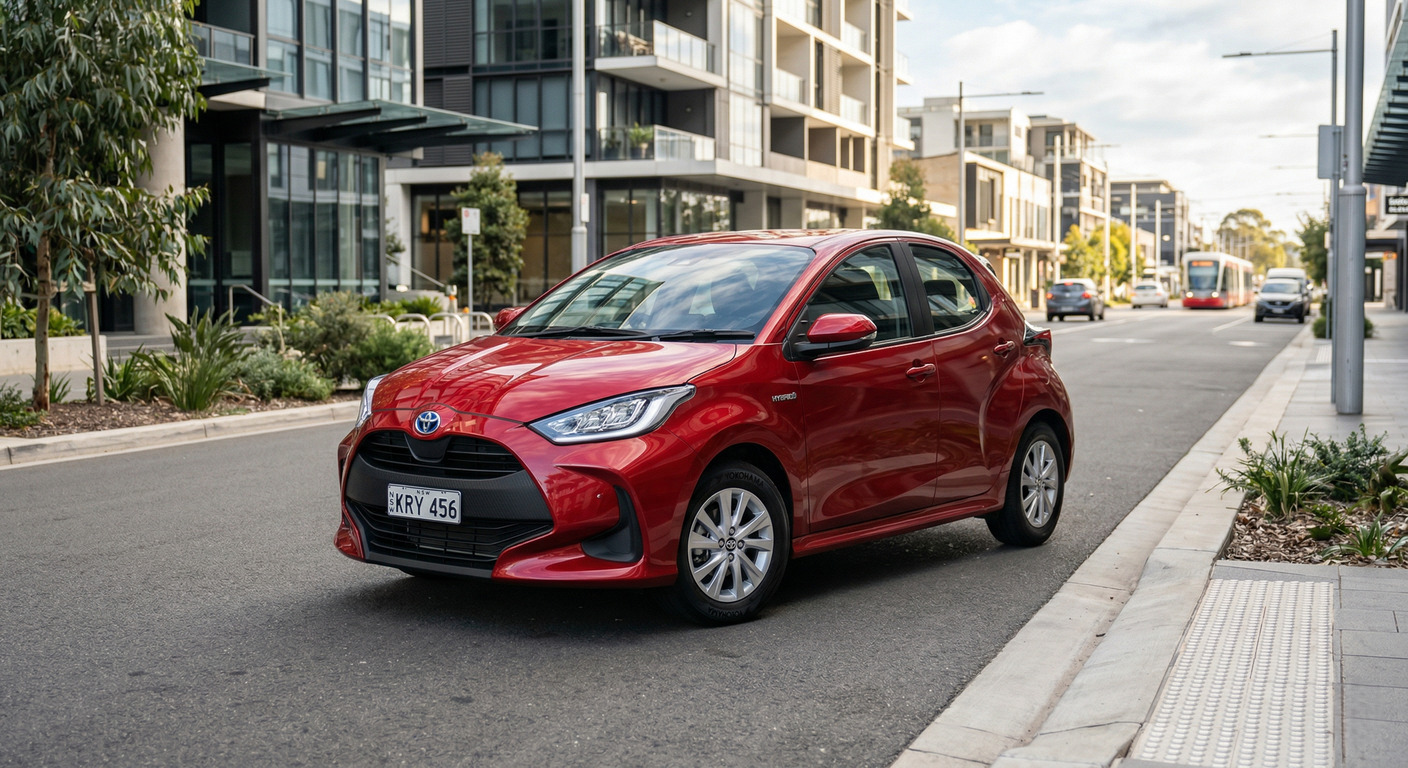
The Yaris Hybrid is particularly relevant right now because it requires no compromise on how you live. You fill up at any servo. There is no app, no charging cable, no route planning. The fuel crisis that is affecting every petrol car on the road costs Yaris Hybrid owners around half what it costs drivers of conventional cars.
Japanese-sourced examples in good condition typically start under $20,000 at Carbarn. The hybrid system has been in production since 2020, and regenerative braking means brake pads typically last twice as long as in a conventional car.
Best for: solo commuters, city-based professionals, students, and first-time hybrid buyers who want meaningful protection from ongoing fuel cost volatility.
Toyota Prius Hybrid: best for high-mileage drivers during the fuel crisis
For anyone driving significant weekly distances, the Toyota Prius Hybrid is the car that makes the fuel crisis most manageable. Newer variants with Toyota's 2.0L M20A-FXS hybrid system push into the low-3s L/100km in real-world mixed driving. At current prices, the annual fuel saving versus a comparable petrol car for a driver covering 20,000km per year is approximately $1,800 to $2,200.
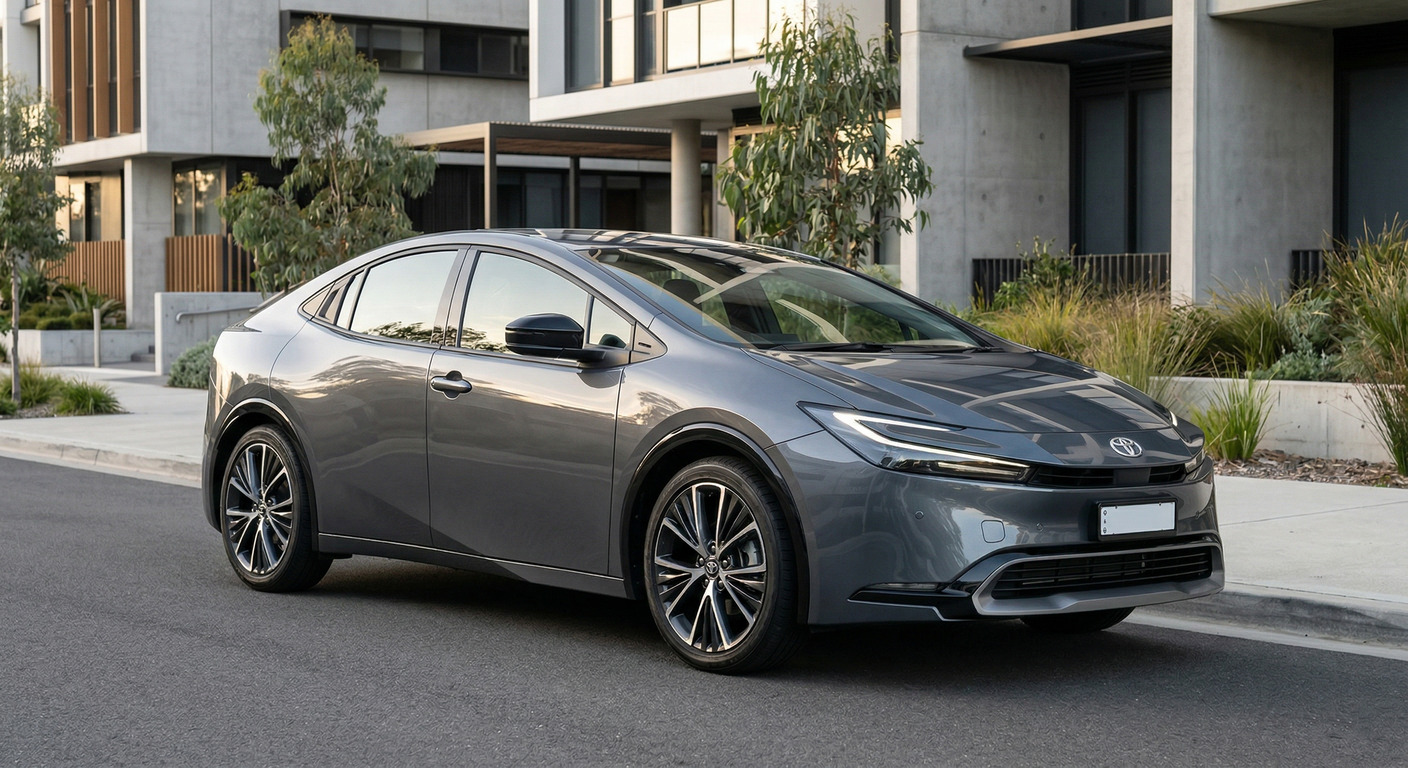
That figure represents more money than most buyers would save in an entire year on a standard home EV charging tariff. For high-mileage commuters without home charging access, the Prius delivers nearly all of the financial benefit of an EV at a fraction of the upfront cost.
Prius examples from Japan also tend to arrive in exceptional mechanical condition. They are heavily used as taxis and rideshare vehicles in Japan, meaning they are serviced rigorously and any issues are addressed before export age. That is a practical reliability advantage that matters when buying used.
Best for: high-mileage commuters, rideshare drivers, regional buyers doing regular long distances who need fuel efficiency without relying on charging infrastructure.
Toyota C-HR Hybrid: best compact SUV choice given current fuel prices
Many buyers want SUV practicality but cannot justify the fuel costs of a petrol crossover, which have become even harder to stomach at current prices. The Toyota C-HR Hybrid resolves that conflict cleanly.
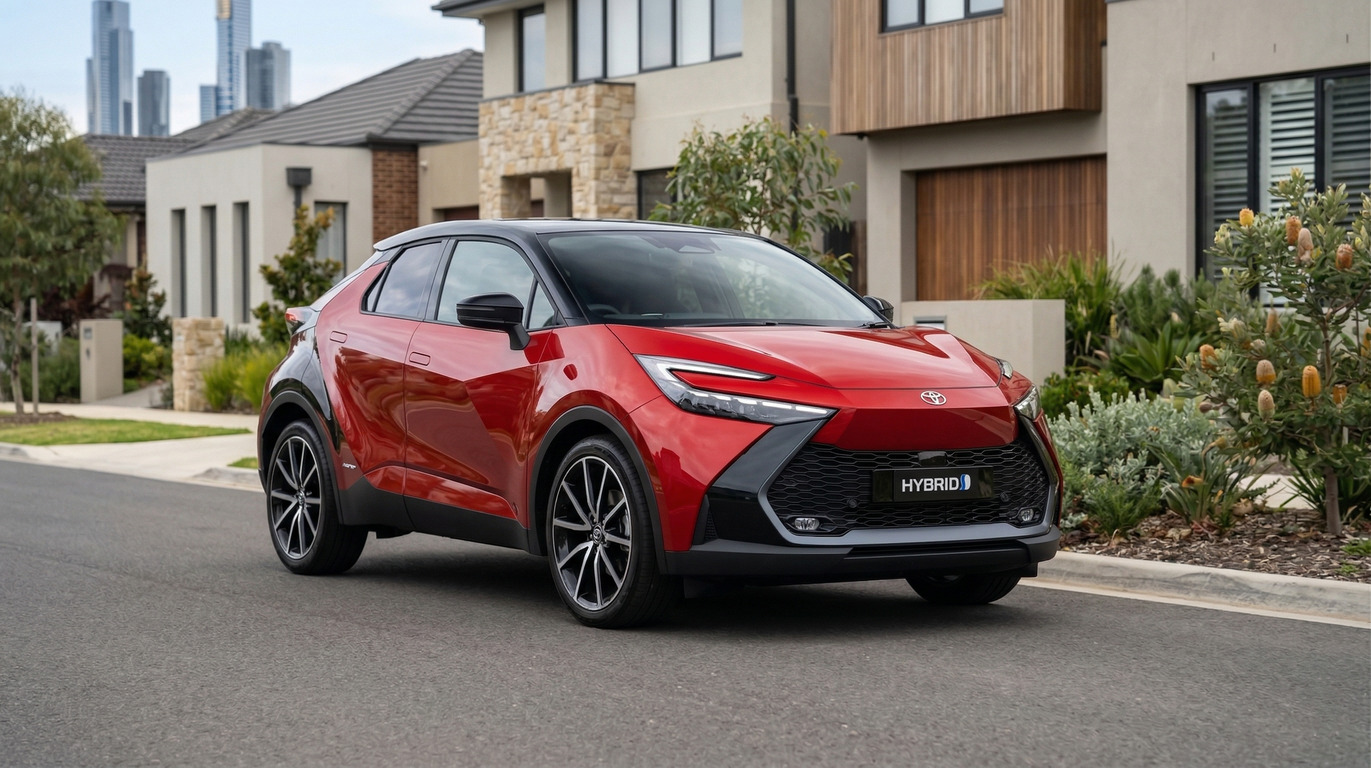
Toyota's 1.8L 2ZR-FXE hybrid system in the C-HR delivers fuel consumption in the low-to-mid 3s L/100km, outstanding for a compact SUV. At current petrol prices, that is roughly $7 to $8 per 100km, compared to $18 to $21 for a petrol SUV burning 8 to 10L/100km. For a family doing 15,000km per year, the fuel saving over a petrol SUV is now close to $1,500 annually.
Higher-spec Japanese variants include lane departure warning, front collision warning, parking sensors, and a reversing camera, so buyers are not sacrificing safety or convenience alongside their fuel savings.
Best for: couples and small families wanting SUV style without the petrol SUV running costs that have become much harder to absorb in 2026.
Nissan Note e-POWER: best option for buyers attracted to EVs but not ready to commit
The Nissan Note e-POWER sits in a category of its own, and the fuel crisis has made it more relevant than ever. Its 1.2L HR12DE petrol engine works purely as a generator. The car is always driven by its electric motor, giving it the smooth, quiet, instant-response character of an EV. But you fill up at any petrol station. There is no charging infrastructure dependency whatsoever.
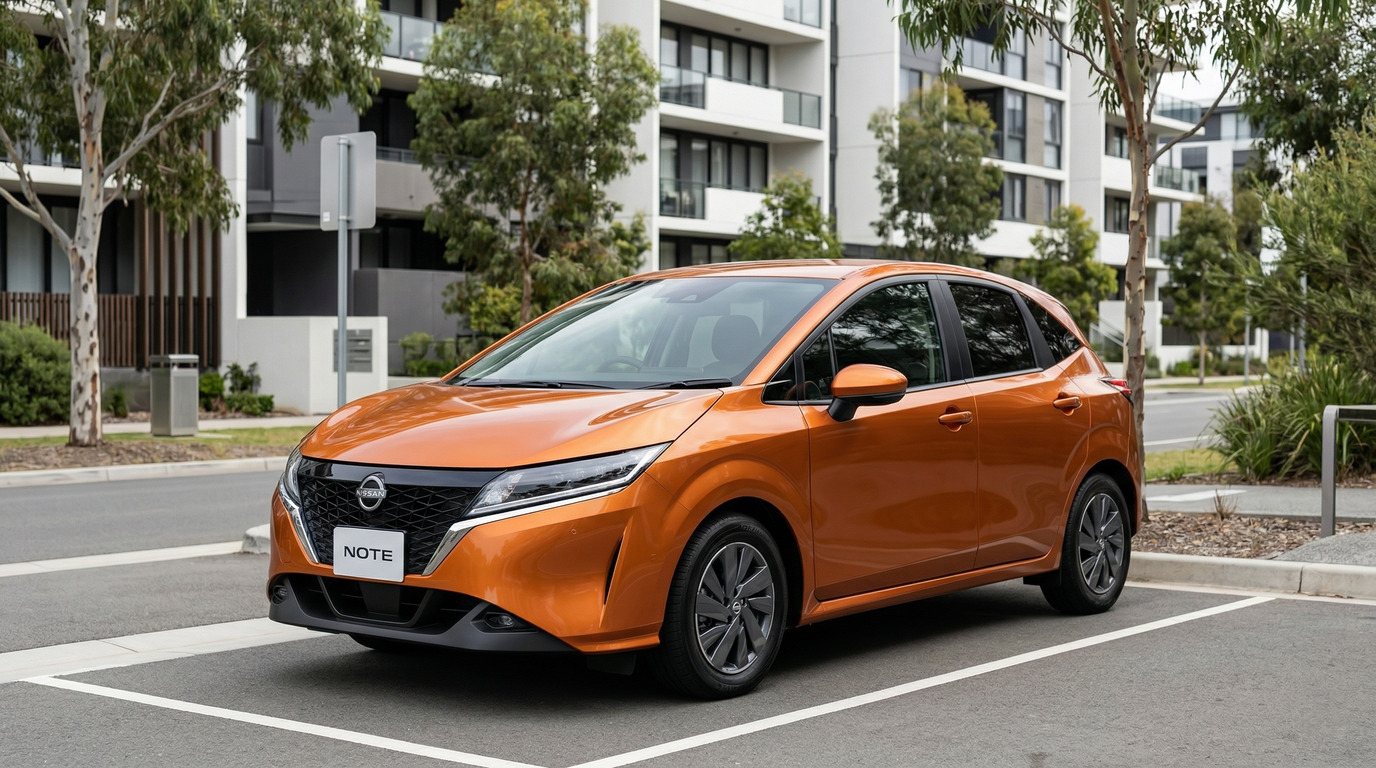
For buyers who look at the current petrol prices and think an EV sounds appealing, but who live in apartments, rent their home, or travel outside metro areas, the Note e-POWER is the most direct practical answer. Real-world fuel consumption sits around mid-3s L/100km. Japanese-spec variants typically include Apple CarPlay, lane departure warning, and front collision warning.
Best for: urban drivers drawn to EV-style driving without the infrastructure commitment; apartment dwellers who want to reduce petrol dependence without home charging.
Honda Vezel Hybrid: best compact SUV for small families
The Honda Vezel Hybrid offers more interior space and ride height than the C-HR, making it the better fit for buyers with children or who need a more versatile vehicle for family duties. Honda's 1.5L LEB hybrid system delivers fuel consumption in the mid-4s L/100km range, still a significant step below what a petrol SUV equivalent would consume.
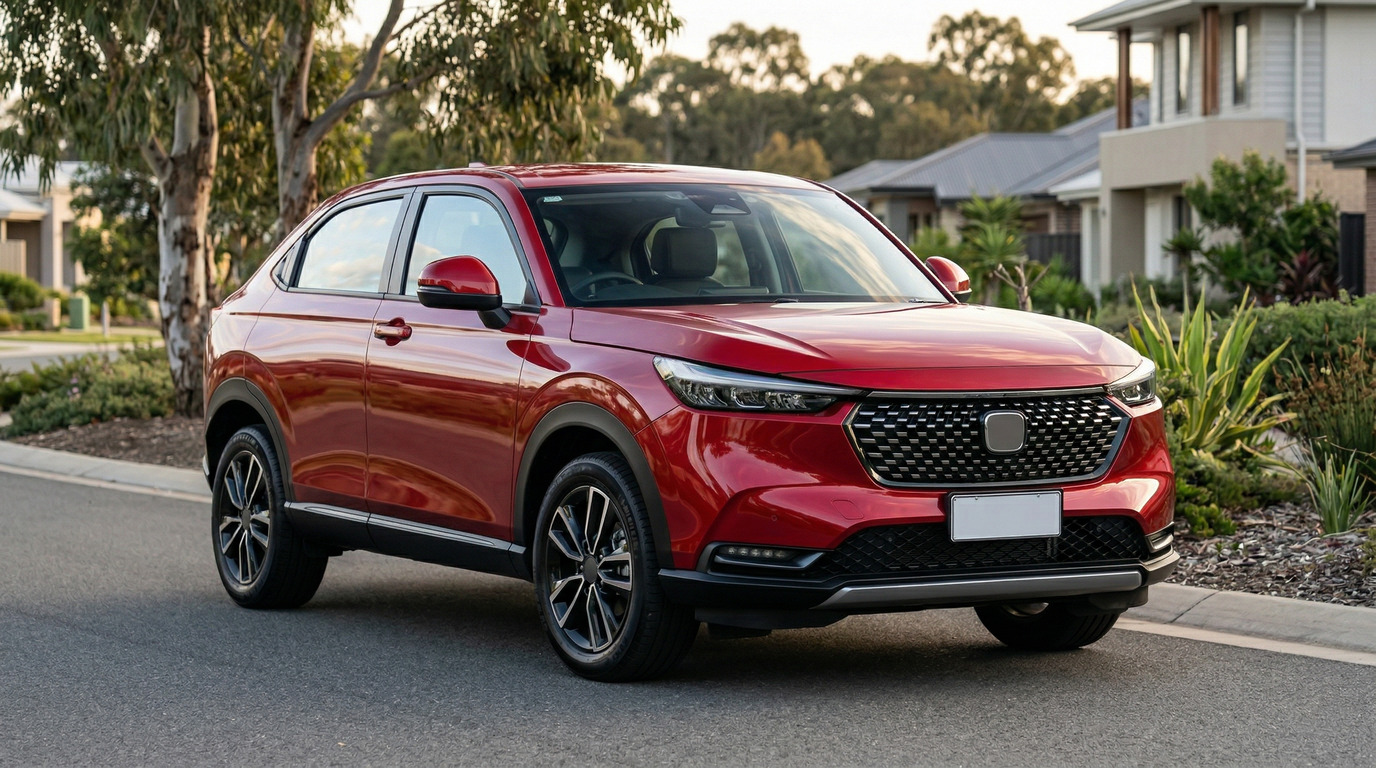
Honda's cabin packaging in this car is genuinely efficient. There is more usable rear seat space and boot room than the exterior dimensions suggest, which matters for families using the car for school runs and weekend activities. Higher-spec Japanese variants include half-leather trim, LED headlights, lane departure warning, and a reversing camera.
Best for: families of two to four needing compact SUV practicality with meaningfully lower fuel costs than a petrol equivalent.
Toyota Noah Hybrid: best people mover for families bearing the full weight of fuel costs
Large families are feeling the fuel crisis hardest. A seven or eight seat petrol people mover burning 10 to 12L/100km at current prices costs around $22 to $26 per 100km to run. The Toyota Noah Hybrid cuts that to around 4.2L/100km, which works out to roughly $9.24 per 100km at current prices. For a family driving 18,000km per year, the annual fuel saving versus a comparable petrol van is now close to $3,000.
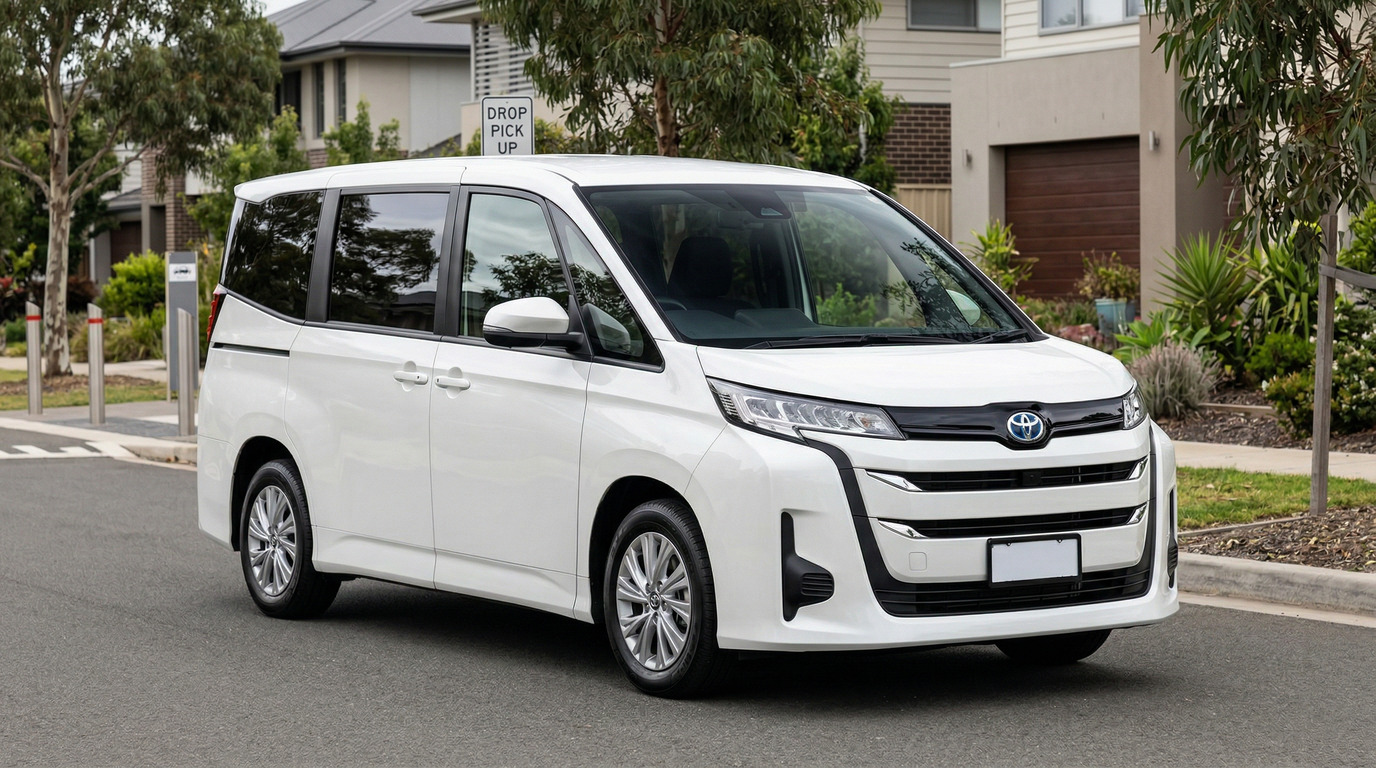
The Noah's Toyota Safety Sense suite, sliding rear doors, low step-in height, and genuine seven or eight seat flexibility make it a complete family solution, not just an efficient one. The ZWR80 series sources from Japan use Toyota's proven 1.8L 2ZR-FXE hybrid architecture. At the price points these trade for as used Japanese imports, no petrol people mover at the same budget can compete on total running cost.
Best for: larger families doing substantial weekly mileage who are currently bearing the highest fuel costs and would benefit most from switching.
The Verdict: Hybrid or EV Given Everything That Is Happening Right Now
Buy a hybrid now if:
Petrol costs are hurting your household budget and you want lasting protection
You do not have reliable home charging access
You drive regional routes or mix urban and long-distance travel
You are shopping used with a budget under $25,000
You want to hedge against ongoing fuel price volatility without changing how you drive
Buy an EV now if:
You have home charging and want to get off petrol costs permanently
Your daily driving is predominantly within a capital city
You are buying new and the higher upfront investment works for your budget
Zero tailpipe emissions is a genuine priority alongside the financial case
For most Australian buyers right now, the used Japanese hybrid is the more practical, more immediately affordable, and lower-stress choice. The fuel crisis has made the hybrid case stronger, not weaker, because the financial benefit of every litre saved is worth more today than it was six months ago.
Browse Carbarn's Current Hybrid Stock
Every hybrid at Carbarn is a verified Japanese import. Each car comes with six months NSW registration, CTP insurance, full servicing, roadworthy certification, verified mileage, optional extended warranty, and door-to-door delivery anywhere in Australia. Finance options are available.