




Ready to Hit the Road in Style?
Save money and reduce emissions with vehicles designed to deliver exceptional mileage. Visit our inventory and find a car that fits your lifestyle.
Ready to Hit the Road in Style?
Save money and reduce emissions with vehicles designed to deliver exceptional mileage. Visit our inventory and find a car that fits your lifestyle.
Buying your first used car in Australia feels simple at the start, especially when you are comparing affordable first cars, fuel-efficient hatchbacks, hybrid models, and practical family vehicles. You scroll listings, compare prices and kilometres, maybe check a few photos, and it all looks straightforward. But real life hits differently. Two months later, you’re paying for tyres that were nearly bald, brakes that should’ve been replaced before sale, insurance that’s higher than expected, and a service bill you didn’t plan for. The biggest trap for first-time buyers isn’t choosing the “wrong brand” , it’s underestimating the true cost of ownership.
The second mistake is buying a car that doesn’t match your real weekly life. A city commuter buying an old 4WD because it “looks tough” often regrets the fuel bills and maintenance. A young family buying a small hatch because it’s cheap quickly realises prams, groceries, and weekend trips don’t fit comfortably. And then there’s skipping the boring checks, history, condition, and a proper test drive. Most ownership pain doesn’t start after delivery; it starts with assumptions. The best first cars aren’t the coolest ones; they’re the ones that quietly fit your lifestyle and stay stress-free to own.
What the Best First Car Really Means in Australia
In Australia, the best first car isn’t defined by badge or popularity; it’s defined by four realities: reliability, running costs, safety, and resale. Reliability means parts are easy to get, servicing is straightforward, and common issues are well known. First-time buyers benefit most from cars that are common enough to be predictable, not something that needs specialist attention every time a warning light appears.
Running costs are where the real ownership experience is decided. Fuel is obvious, but tyres, brakes, and servicing are what usually hurt. A car with oversized wheels or complex systems might look impressive, but those features often mean higher bills. Safety and practicality matter just as much. Good visibility, stable braking in the wet, easy parking, and enough space for your actual lifestyle make everyday driving less stressful. And resale? It’s underrated. Many first-time buyers upgrade within a few years, so choosing a car that others also want makes it easier to move on without losing money.
That’s why the smartest first cars in Australia tend to follow proven formats: efficient small hybrids for commuting, practical family people-movers, sensible compact 4WDs for regional use, or simple work vehicles that actually serve a purpose.
Our Top Picks for First-Time Buyers in Australia
Here are some of the best used cars for first-time buyers in Australia, chosen for reliability, running costs, safety, practicality, and long-term ownership value.
2020 Honda Fit e: HEV (GR3) the Smart All-Rounder Hatch for First-Time Buyers
The fourth-generation Honda Fit (historically known as the Honda Jazz in Australia) is what happens when a small hatchback is designed with big-car thinking. The Fit e: HEV (GR3) is the pick because it brings genuinely advanced hybrid tech into a practical, everyday package , without the “early hybrid science experiment” vibe. It’s the definition of an all-round first car: compact enough for tight inner-city parking, yet refined and confident enough for long motorway runs between states.
Engineering Deep Dive: Honda i-MMD (Intelligent Multi-Mode Drive)
To understand why the Fit feels so effortless, you need to understand i-MMD. Unlike some hybrids that split power between engine and motor through a gear-style system, Honda’s setup behaves more like an electric-drive car most of the time, with the petrol engine often acting as a generator behind the scenes.
EV Drive Mode (low speeds ~0–40km/h): The lithium-ion battery powers the traction motor directly, with the engine off. That’s why it pulls away quietly and smoothly like an EV, perfect for traffic, school zones, and carparks.
Hybrid Drive Mode (acceleration): The 1.5L Atkinson-cycle engine starts, but instead of driving the wheels, it spins a generator that feeds electricity to the traction motor. The advantage is simple: the engine can run at its most efficient RPM regardless of road speed.
Engine Drive Mode (high-speed cruising ~80km/h+): A lock-up clutch connects the engine directly to the front wheels. This is smart engineering. Petrol engines are efficient at steady highway speeds, while electric drive is best for low-speed and stop-start work.
What this means for you: you don’t have to think about any of it. No gears to shift, no modes to manage, just smooth driving, strong efficiency (often around 3.5L/100km in ideal conditions), and surprisingly confident acceleration (roughly 0–100km/h in around 9 seconds), so merging onto Australian freeways feels safer than in many sluggish budget cars.
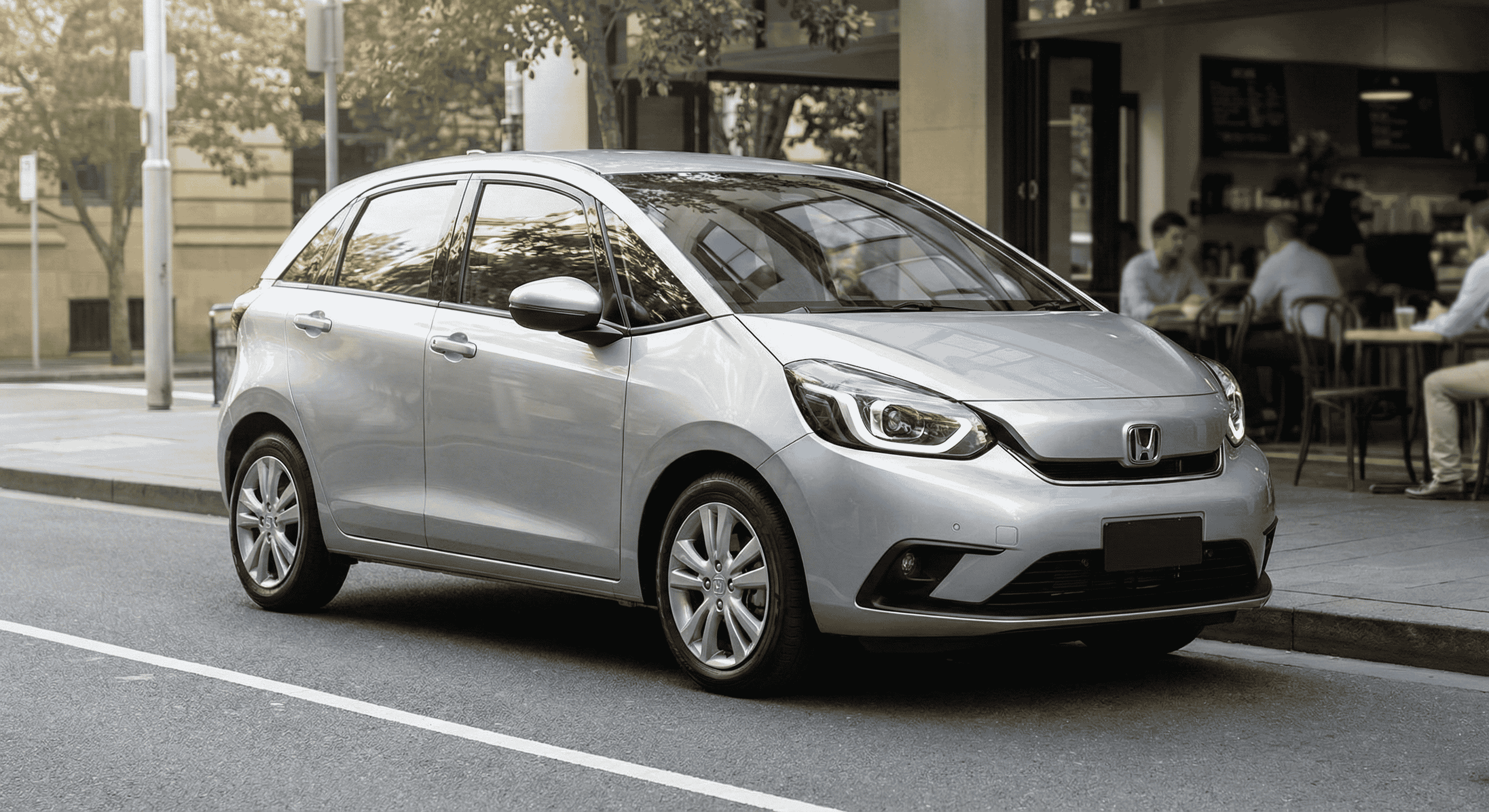
Design & Practicality: The Magic Factor
The Fit’s secret weapon is Honda’s famous “Magic Seats.” Honda positioned the fuel tank under the front seats instead of the rear, which unlocks cargo flexibility you don’t normally get in a small hatch.
Tall Mode: Rear seat bases flip up and lock in place like cinema seats, creating tall, open vertical space behind the front seats. It’s perfect for plants, tall boxes, a lamp, or even standing a small bike upright.
Long Mode: The rear seats fold flat into the floor to create a long, van-like cargo area.
If you’re moving into uni accommodation, shifting into your first apartment, or constantly hauling “life stuff,” this turns the Fit into a mini moving van without the hassle of owning a larger vehicle.
Visibility Architecture: Confidence for New Drivers
The GR3 is also excellent for first-time drivers because Honda’s A-pillar design reduces blind spots. By moving the key structure behind the small quarter window, the front pillar can be slimmer, meaning better visibility at roundabouts, crossings, and tight junctions. For a nervous new driver, that’s a real safety advantage you feel every day.
Who It’s Best For
The Safety-Conscious: Great visibility plus modern driver-assist features (often included on many imports) gives you a strong safety net.
The Urbanite: Compact size (around 4m long) makes city parking and narrow streets easy.
The Pragmatist: Low fuel costs and strong reliability make it a “set and forget” ownership experience.
What to Check Before Buying (Deal-Breakers)
12V Battery Health: Many modern hybrids can fail to “boot up” if the 12V battery is weak, even if the hybrid battery is fine. Check the battery date; if it’s still the original from 2020, budget to replace it soon.
Infotainment Language (JDM imports): Some arrive with Japanese-only menus. Confirm it’s converted to English or upgraded with a CarPlay/Android Auto head unit.
Hybrid Battery Cooling Vents: Usually near the rear seating area. Make sure vents aren’t clogged with lint, dust, or pet hair , blocked airflow can accelerate battery heat stress over time.
Ownership Costs (Real-World)
Fuel Economy: Expect roughly 3.5–4.2L/100km depending on driving and conditions.
Servicing: Plan for 10,000km / 12 months intervals; the efficient engine benefits from quality synthetic oil (commonly 0W-20).
Tyres: 185/60 R15, a common size. A full set of good tyres (like Michelin or Bridgestone) is usually affordable compared to large SUV tyres.
2021 Nissan Note e-Power (E13)
The 2021 Nissan Note e-Power (E13) delivers a driving experience that’s genuinely different from almost anything else in its class, and that’s exactly why it’s such a smart pick for first-time buyers in Australia. It’s designed for the person who wants the smooth, instant response of an electric vehicle, but can’t rely on home charging (apartment living, street parking, no dedicated bay). Nissan’s solution is simple and clever: the engine never drives the wheels. The car moves like an EV quiet take-off, linear acceleration, and that effortless “go” feeling while you refuel normally with petrol.
Engineering Deep Dive: e-Power Series Hybrid
The Nissan Note’s e-Power system is a series hybrid, meaning the petrol engine is basically an onboard generator and the electric motor does the driving.
The Engine (HR12DE 1.2L 3-cylinder): This engine’s job is to generate electricity. It runs at efficient RPM ranges to charge the battery or feed the motor directly. Importantly, it has no physical connection to the wheels, which is why the driving feel stays EV-like.
The Motor (EM47): The electric motor drives the front wheels (and on AWD variants, can assist across both axles). It delivers strong instant torque around 280Nm, which is why the Note feels surprisingly quick and confident in city gaps and freeway merges.
The Battery: A small lithium-ion battery acts as a buffer. Because it cycles within a narrower band (not constantly “full to empty”), it’s often very durable in everyday use, especially for stop-start city driving.
The e-Pedal Step experience: This is the feature that makes the Note addictive in traffic. Lift off the accelerator, and regenerative braking kicks in strongly, slowing the car quickly while recovering energy. In city driving, many owners end up doing most of their driving with one pedal, which reduces fatigue and can reduce brake wear over time.
What this means for a first-time buyer: you get EV smoothness and response without the charging infrastructure stress, perfect for inner-city Australia
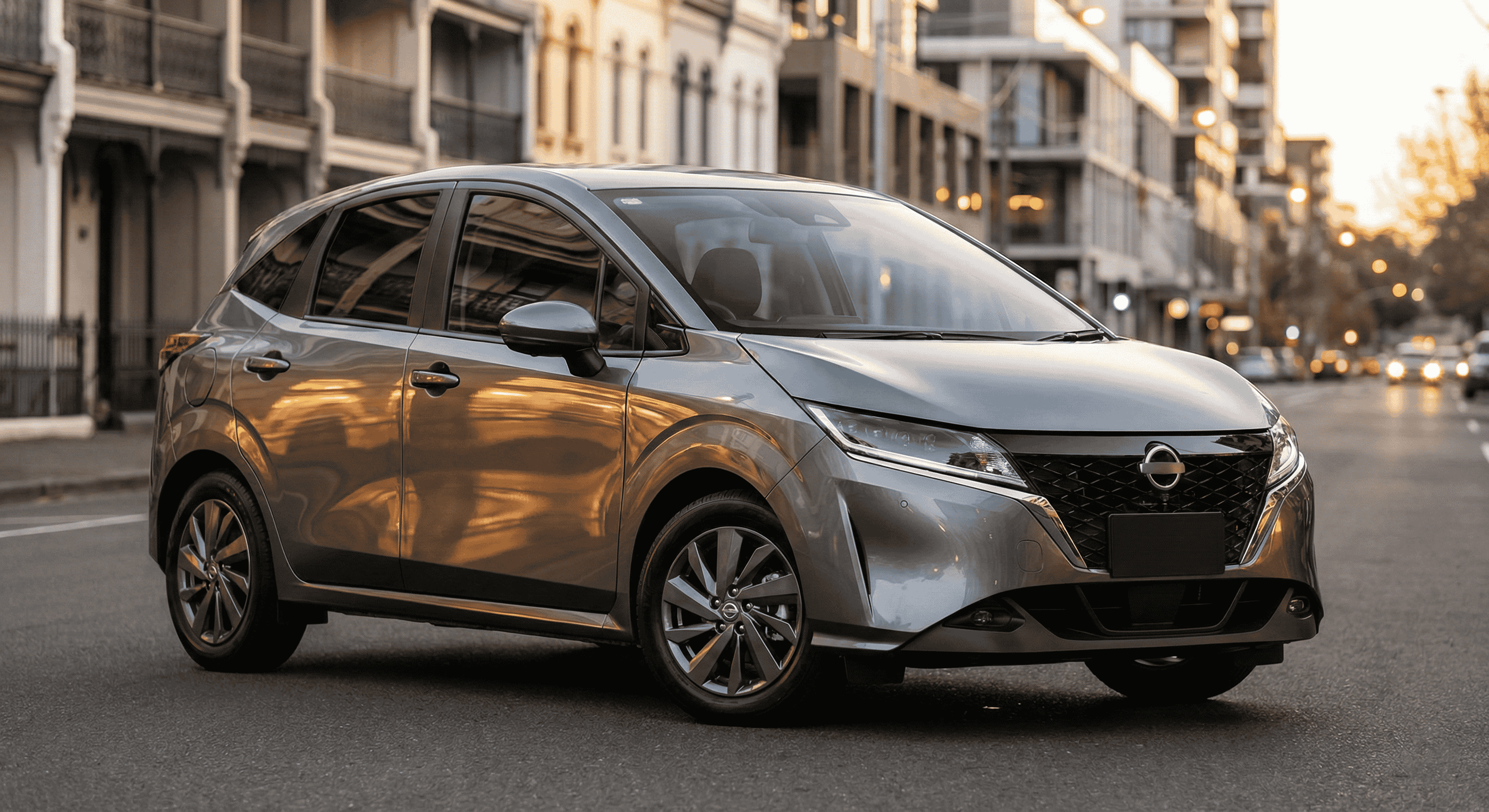
Design & Tech: The “Mini Premium” hatch
The Nissan Note e-Power E13 Note feels like Nissan pushed this model upmarket. Inside, you get a modern layout with a “Monolith” style dual-screen panel (two screens integrated into one clean display area) that gives it a premium vibe. The floating centre console design adds storage underneath, which sounds small until you live with it daily and realise how handy it is for bags, bottles, and everyday clutter.
Common JDM trims you’ll see:
S: Base grade; can miss some driver-assist features.
X: The sweet spot; often includes LED headlights, nicer interior finishes, and commonly ProPILOT driver assistance depending on spec.
Autech: More premium styling and interior upgrades (often leather and extra trim touches).
Who it’s best for
Apartment dwellers: Nissan Note e-Power EV-style driving without needing a charger at home.
Traffic commuters: One-pedal driving makes stop-start commutes feel smoother and less tiring.
Tech enthusiasts: Digital cockpit feel, modern cabin design, and a “future-forward” drivetrain.
Ownership costs (realistic in Australia)
Fuel economy: Typically 3.6–4.5 L/100km depending on driving. It’s outstanding in city conditions, and usually less efficient on constant high-speed highway runs (because the engine must generate electricity continuously).
Tyres: Common sizes like 185/65 R15 (or 16-inch options), so tyre replacement is straightforward.
Insurance: Sometimes slightly higher than a normal hatch because the powertrain is more specialised, but usually manageable, especially when compared to performance cars.
2020 Toyota Voxy Hybrid ZWR80 — The Ultimate Social & Family Hub
If you’re a first-time buyer who needs space, real space, the 2020 Toyota Voxy Hybrid (ZWR80) might be the smartest decision you make. At first glance, recommending a “minivan” as a first car sounds unconventional. But in Australia, the Voxy (along with its siblings the Noah and Esquire) has quietly built a loyal following among young families, creatives, road-trippers, and even rideshare drivers. It’s not just a “mum bus.” It’s a mobile lounge, a surf wagon, a weekend camper, and a daily people-mover all with the running costs of a hybrid hatch.
The ZWR80 generation blends the cavernous space of a van with the efficiency of a Prius. And that’s exactly why it works.
Why It’s a Smart First Car
For many Australians, your first car becomes your only car — the one that does everything. The Voxy solves more lifestyle problems than almost anything else in its price range.
Need space for kids, prams, and groceries? Sorted.
Planning road trips up the coast? Easy.
Sharing one car between multiple adults? Comfortable.
Want something practical but not thirsty like a big SUV? Hybrid efficiency wins.
Instead of upgrading from a small hatch two years later because it no longer fits your life, the Voxy gives you headroom from day one.
Engineering Deep Dive: Toyota Hybrid Synergy Drive
The Voxy Hybrid runs Toyota’s proven 2ZR-FXE 1.8L hybrid system, the same powertrain found in the Toyota Prius and Corolla Hybrid. That’s important because it means reliability isn’t theoretical; it’s proven in hundreds of thousands of vehicles globally.
Why this engine matters:
Uses a timing chain, not a belt.
Electric water pump (no accessory belt-driven drama).
Simplified hybrid system with a long reliability track record.
In taxi use, this engine has been known to go extremely high kilometres when maintained properly. For a private owner in Australia, a well-looked-after example with 100,000–150,000km is often just getting started.
Maintenance advantage: Because the Voxy shares components with mainstream Toyota models, servicing is straightforward. Filters, spark plugs, fluids, these aren’t rare or exotic. You won’t be stuck waiting weeks for basic service parts.
For a first-time buyer, this predictability is everything.
Interior Packaging: The “Box” Philosophy
The Voxy is cleverly packaged. At roughly 4.7m long and 1.7m wide, it maximises internal volume without feeling oversized on Australian roads. It’s big inside, not intimidating outside.
Seating Configuration:
Most 7-seat hybrid models feature second-row Captain’s Chairs. These seats slide on long rails, meaning you can prioritise legroom, cargo space, or access depending on your needs. On long drives, it genuinely feels lounge-like.
Sliding Doors:
Electric sliding doors are one of the most underrated features in everyday life. Tight Westfield car parks? School drop-offs? No door dings into the car next to you. It’s the kind of feature you don’t think about until you own it, then you never want to go back.
Road Trip / Van Life Potential:
Fold the second and third rows flat, and you’ve got space for a mattress. For young Australians who camp, surf, or festival-hop, that’s accommodation savings right there.
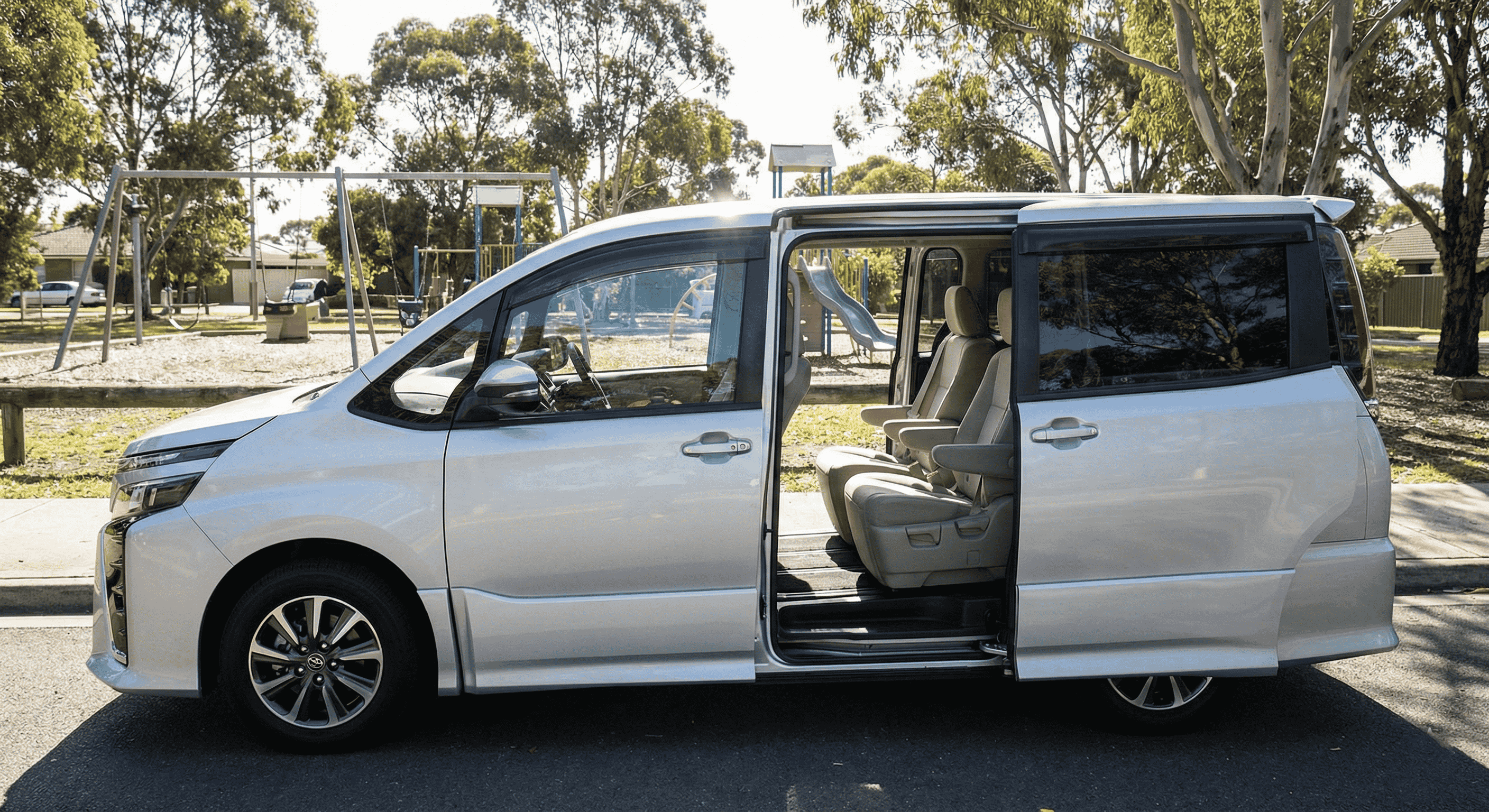
Who It’s Best For
Young Families:
Prams, bags, school gear, weekend sport — the Voxy handles it without compromise.
Musicians & Creatives:
Drum kits, amps, camera gear, event setups — it carries more than most SUVs.
Rideshare Drivers:
In many areas, 7-seaters can qualify for higher-tier rideshare categories, offering greater earning potential than a standard sedan.
It’s the car that works for people whose lives are busy and space-hungry.
What to Check Before Buying (Deal-Breakers)
Even reliable cars need smart inspection. Focus on these areas:
Sliding Door Motors:
Test them multiple times. Hesitation, grinding, or jerky movement can signal cable or motor wear. Repairs aren’t catastrophic but can be labour-intensive.
EGR Circuit (2ZR-FXE engines):
Over time, carbon buildup can clog the EGR valve and cooler. Preventative cleaning around higher kilometre marks is wise. Rough idling or poor smoothness can indicate neglect.
Hybrid Battery Cooling Filter:
Located under the front seats. Ensure the intake mesh is clean. Poor airflow can stress the hybrid battery over time.
Interior Wear:
People-movers work hard. Check seat rails, trim condition, and signs of heavy commercial use.
Ownership Costs in Australia
Fuel Economy: Around 4.2–5.5L/100km in real-world use. For a 7-seater, that’s exceptional.
Insurance: Usually categorised as a people mover, generally manageable compared to performance SUVs.
Resale Value: Strong. Demand for practical 7-seaters remains high in Australia, especially for reliable hybrid options.
Final Takeaway
The Toyota Voxy Hybrid (ZWR80) is the most practical vehicle on this list. It delivers the space of a large SUV or wagon with the fuel economy of a Corolla. If your first car needs to do everything, school runs, road trips, work gear, and daily commuting, the Toyota Voxy is one of the smartest long-term decisions you can make.
2000 Mitsubishi Pajero iO (H76W) the Budget Entry to Real 4WD Life
Prams, bags, school gear, weekend sport — the Voxy handles it without compromise.
Drum kits, amps, camera gear, event setups — it carries more than most SUVs.
In many areas, 7-seaters can qualify for higher-tier rideshare categories, offering greater earning potential than a standard sedan.
Test them multiple times. Hesitation, grinding, or jerky movement can signal cable or motor wear. Repairs aren’t catastrophic but can be labour-intensive.
Over time, carbon buildup can clog the EGR valve and cooler. Preventative cleaning around higher kilometre marks is wise. Rough idling or poor smoothness can indicate neglect.
Located under the front seats. Ensure the intake mesh is clean. Poor airflow can stress the hybrid battery over time.
People-movers work hard. Check seat rails, trim condition, and signs of heavy commercial use.
The 2000 Mitsubishi Pajero iO (H76W) is one of the most underrated compact 4WDs you can buy in Australia. In a market filled with “soft-roaders” SUVs that look tough but are essentially raised hatchbacks, the Pajero iO is the real thing in a smaller package. It’s not pretending. It has genuine 4WD hardware, proper low range, and mechanical toughness that gives it credibility beyond its size.
For a first-time buyer who actually wants to explore Australia’s trails, beaches, and gravel backroads without spending Land Cruiser or Jimny money, the Pajero iO offers legitimate off-road capability at a fraction of the cost.
Engineering Deep Dive: Super Select 4WD-i
The standout feature of the Pajero iO is Mitsubishi’s Super Select 4WD-i system — a proper four-wheel-drive setup rarely seen in small vehicles.
You get multiple drive modes that make the iO far more versatile than most compact SUVs:
2H (2WD High): Rear-wheel drive for everyday highway use and better fuel economy.
4H (4WD High): Engages all-wheel drive via a viscous coupling unit. Unlike many part-time 4WD systems, this mode can be used on sealed roads, which is a big safety advantage in wet Australian conditions.
4HLc (4WD High Locked): Locks the centre differential for a 50/50 torque split, ideal for sand, loose gravel, and muddy tracks.
4LLc (4WD Low Locked): Low-range gearing for steep climbs, rocky terrain, or technical crawling.
The GDI Engine: Strengths and Real-World Reality
Most Pajero iO models come with the 4G93 (1.8L) or 4G94 (2.0L) GDI (Gasoline Direct Injection) engines.
GDI technology was advanced for its time, injecting fuel directly into the combustion chamber for better efficiency. However, it comes with a maintenance reality:
Unlike traditional port-injected engines (where fuel cleans the intake valves), GDI engines leave the intake valves dry. Over time, carbon can build up, especially combined with the EGR system.
Symptoms of carbon buildup:
Rough idle
Hesitation under acceleration
Reduced fuel economy
Black smoke in severe cases
The fix: An intake “decoke” service. This usually involves cleaning the intake valves (often via walnut blasting or chemical treatment). It’s not unusual maintenance for older GDI engines, and it’s wise to budget for periodic cleaning depending on driving habits.
This doesn’t make the engine bad it just means it rewards owners who maintain it properly.
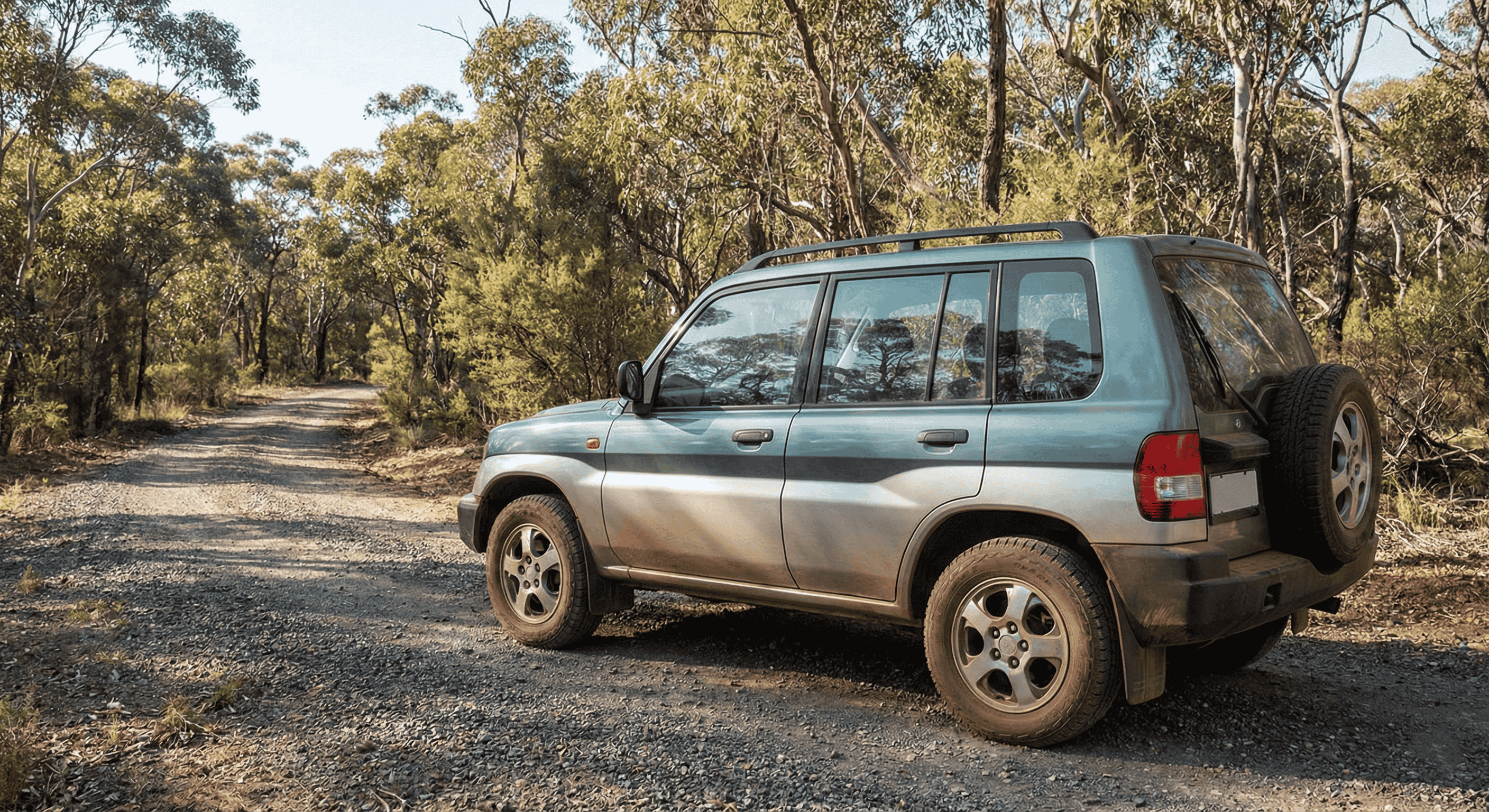
Who It’s Best For
The Adventurer:
Camping trips, beach runs, forest trails, the Pajero iO gives you real off-road ability in a manageable size.
The Regional or Rural Buyer:
If you regularly drive gravel roads, rough backroads, or washouts, this is more durable than many small SUVs.
The P-Plater Who Wants Something Different:
It offers a higher driving position and genuine capability without feeling oversized or intimidating.
What to Check Before Buying (Deal-Breakers)
Because it’s a 2000 model vehicle, condition matters more than anything else.
Timing Belt:
The 4G93 is an interference engine. If the timing belt snaps, serious engine damage can occur. Confirm it has been replaced at the recommended interval (around 100,000km).
4WD Indicator Lights:
The Super Select dash lights should engage properly. Flashing lights can indicate vacuum line or solenoid issues. These aren’t always expensive, but they must be checked before purchase.
Rust Inspection:
Check under the vehicle carefully — especially chassis rails and rear suspension mounting points. Rust is a bigger risk factor than kilometres.
Cooling System Health:
Older 4WDs that overheat can become expensive quickly. Ensure stable temperature during test drives.
Ownership Costs in Australia
Fuel Economy: Expect around 9–11L/100km, depending on driving style and terrain.
Maintenance: Moderate. Budget for preventative maintenance like carbon cleaning and regular servicing.
Parts Availability: Many mechanical components are shared with other Mitsubishi models, like the Lancer and larger Pajeros, making parts relatively accessible.
While it won’t match hybrid running costs, it is often significantly cheaper to purchase upfront, and that lower entry price is part of the appeal.
Final Takeaway
The Mitsubishi Pajero iO (H76W) is the affordable gateway into genuine 4WD ownership. It requires more mechanical awareness than a simple hatchback, but in return, it offers capability that small city cars simply can’t match. If you want a budget-friendly first car that can take you beyond sealed roads and into Australia’s outdoors, the Pajero iO is a compelling and character-filled choice.
Camping trips, beach runs, forest trails, the Pajero iO gives you real off-road ability in a manageable size.
If you regularly drive gravel roads, rough backroads, or washouts, this is more durable than many small SUVs.
It offers a higher driving position and genuine capability without feeling oversized or intimidating.
The 4G93 is an interference engine. If the timing belt snaps, serious engine damage can occur. Confirm it has been replaced at the recommended interval (around 100,000km).
The Super Select dash lights should engage properly. Flashing lights can indicate vacuum line or solenoid issues. These aren’t always expensive, but they must be checked before purchase.
Check under the vehicle carefully — especially chassis rails and rear suspension mounting points. Rust is a bigger risk factor than kilometres.
Older 4WDs that overheat can become expensive quickly. Ensure stable temperature during test drives.
Fuel Economy: Expect around 9–11L/100km, depending on driving style and terrain.
Maintenance: Moderate. Budget for preventative maintenance like carbon cleaning and regular servicing.
Parts Availability: Many mechanical components are shared with other Mitsubishi models, like the Lancer and larger Pajeros, making parts relatively accessible.
Comparison Data & Financial Modeling
Specification Matrix
In Summary
If you want the lowest-regret path as a first-time buyer in Australia, pick the car that matches your weekly reality and buy it with a checklist. The Honda Fit e: HEV (GR3) is the safest all-rounder when you want modern efficiency and easy ownership. The Nissan Note e-Power (E13) is the city specialist: smooth commuting, easy parking, and daily usability that suits new drivers. If you’re building a family life or sharing one car, the Toyota Voxy Hybrid (ZWR80) is the space solution that stops you needing an upgrade too soon. If you want budget 4WD capability, the Mitsubishi Pajero iO (H76W) can be a great value, but only when the underbody and 4WD system are clean and proven.
To make the buying process simpler and safer, platforms like Carbarn can help first-time buyers compare options, browse inspected vehicles, and narrow down cars that fit their budget and lifestyle before they commit. Whatever you choose, do the boring checks: verify history, confirm condition, drive it properly, and budget beyond the sticker price. That’s how you buy once and enjoy your first car.