



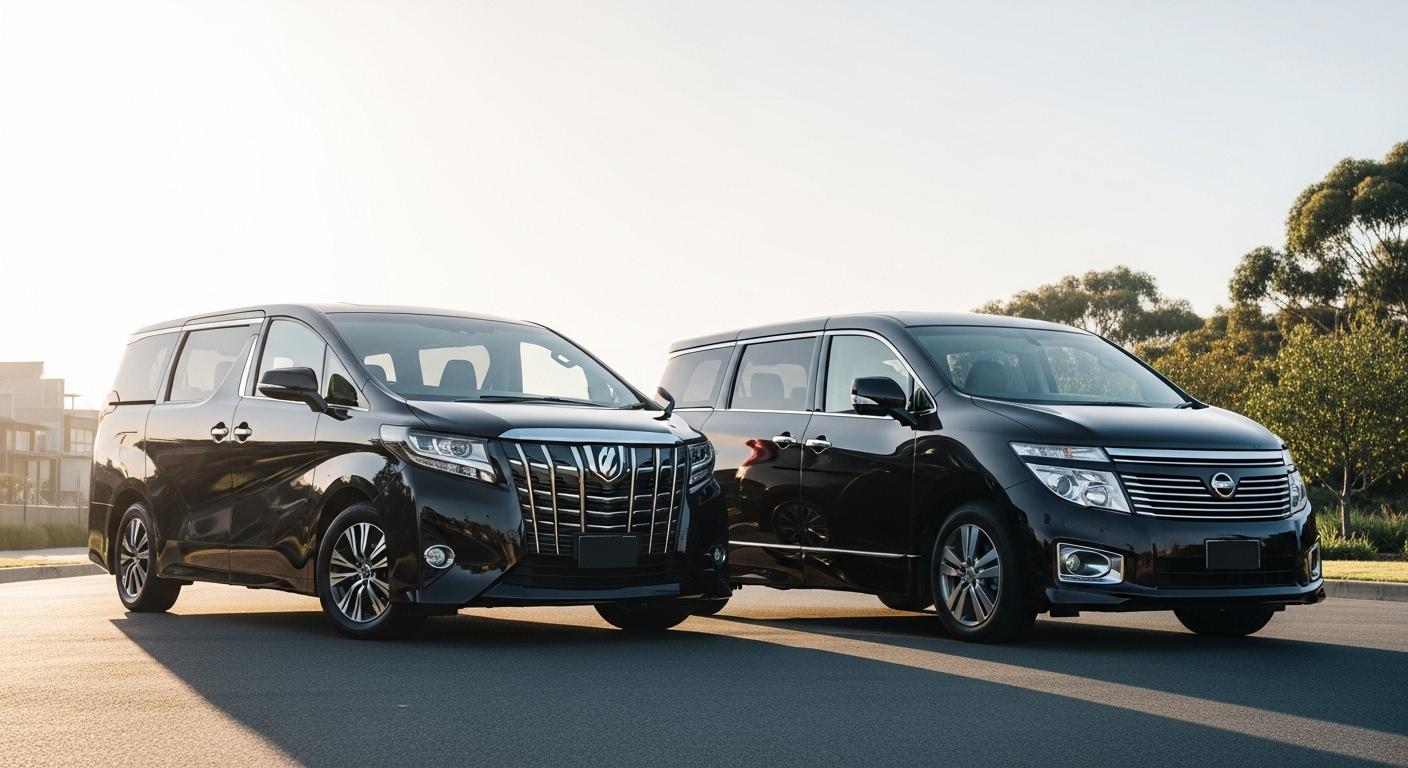
Ready to Hit the Road in Style?
Save money and reduce emissions with vehicles designed to deliver exceptional mileage. Visit our inventory and find a car that fits your lifestyle.
Ready to Hit the Road in Style?
Save money and reduce emissions with vehicles designed to deliver exceptional mileage. Visit our inventory and find a car that fits your lifestyle.
If you have been shopping for a Japanese luxury van, two names keep coming up: the Toyota Alphard and the Nissan Elgrand. They are Japan's people-mover dynasties, and more of them turn up on Australian streets every year through private import. Before you fall for one, here is the catch worth knowing up front. On the SEVS pathway, the Elgrand is eligible for import only as its Lifecare variants (the E51 and E52), while the full Alphard range qualifies.
That single rule shapes the whole decision. So we will explain what Lifecare actually means, then line the two vans up generation by generation using real Australian landed costs, so you can see which one wins your budget.
 Black minivan on a neon-lit Tokyo street at dusk with city traffic
Key Takeaways
- Only Elgrand Lifecare variants, the E51 (2002–2010) and E52 (2010–2021), are SEVS-eligible in Australia. Standard Elgrands cannot be imported.
- Lifecare means a factory-fitted powered swivel or lift-up seat in an otherwise standard 7-seat luxury van. It is not a wheelchair bus.
- The cheapest eligible Elgrand lands at around $11,500, less than any Alphard on the SEVS register (Carbarn import pages, 2026).
- Hybrid drivetrains, the current AH40 generation and 14 Welcab mobility variants all sit on the Alphard side only.
- The winner depends on your budget bracket. Under $15k it is the Elgrand. Past $27k it is the Alphard by default.
What Does "Lifecare" Actually Mean, and Does It Change Much?
Both eligible Elgrand generations carry two SEVS approvals each: the E51 under SEV-000836 and SEV-000477, the E52 under SEV-000804 and SEV-000905 (Carbarn import pages, 2026). Those approvals exist because these are Lifecare cars, and it helps to know exactly what that label covers before it puts you off.
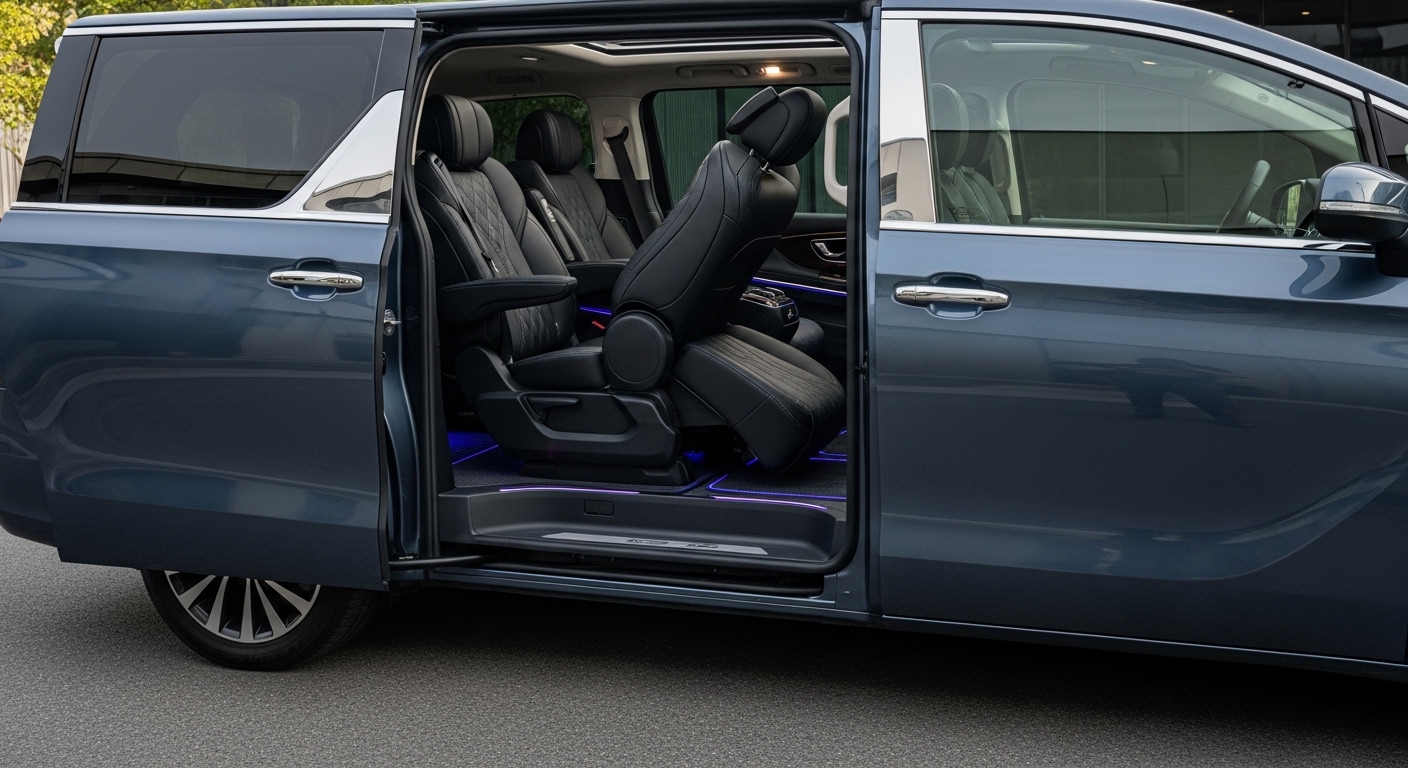
Nissan factory-fitted a powered seat into the second row of specific E51 and E52 vans. It swivels outward and lowers, so a passenger with limited mobility can get in and out more easily. That is the whole change. One seat, one row.
Everything else is the standard van: full luxury trim, leather captain's chairs, powered sliding doors. It is not a wheelchair bus. There is no external ramp, no lowered floor, no stretcher gear.
For a family with an elderly parent or a less-mobile regular passenger, the Lifecare seat is a genuine bonus. For everyone else, it is a seat you will rarely think about. Worth knowing: the standard Elgrand, including the popular Highway Star, is not importable, so Lifecare is the only Elgrand door open to Australian buyers.
 Luxury minivan with side door open and powered swivel seat extended for entry
Under $15k: Is the E51 Lifecare or the Alphard AH10 the Better Buy?
This is the only bracket where the Elgrand wins on price alone. The E51 Lifecare lands at around $11,500 (Carbarn import pages, 2026), which is less than any Alphard on the SEVS register. If your budget tops out near $15k, this era is where the two brands actually meet.
Nissan Elgrand Lifecare E51 (2002–2010), around $11,500 landed
The Nissan Elgrand Lifecare E51 is the cheapest way into a genuine Japanese luxury van, with a landed estimate of around $11,500 (Carbarn import pages, 2026). Treat that as an estimate, not a fixed price: it moves with the auction result and the exchange rate.
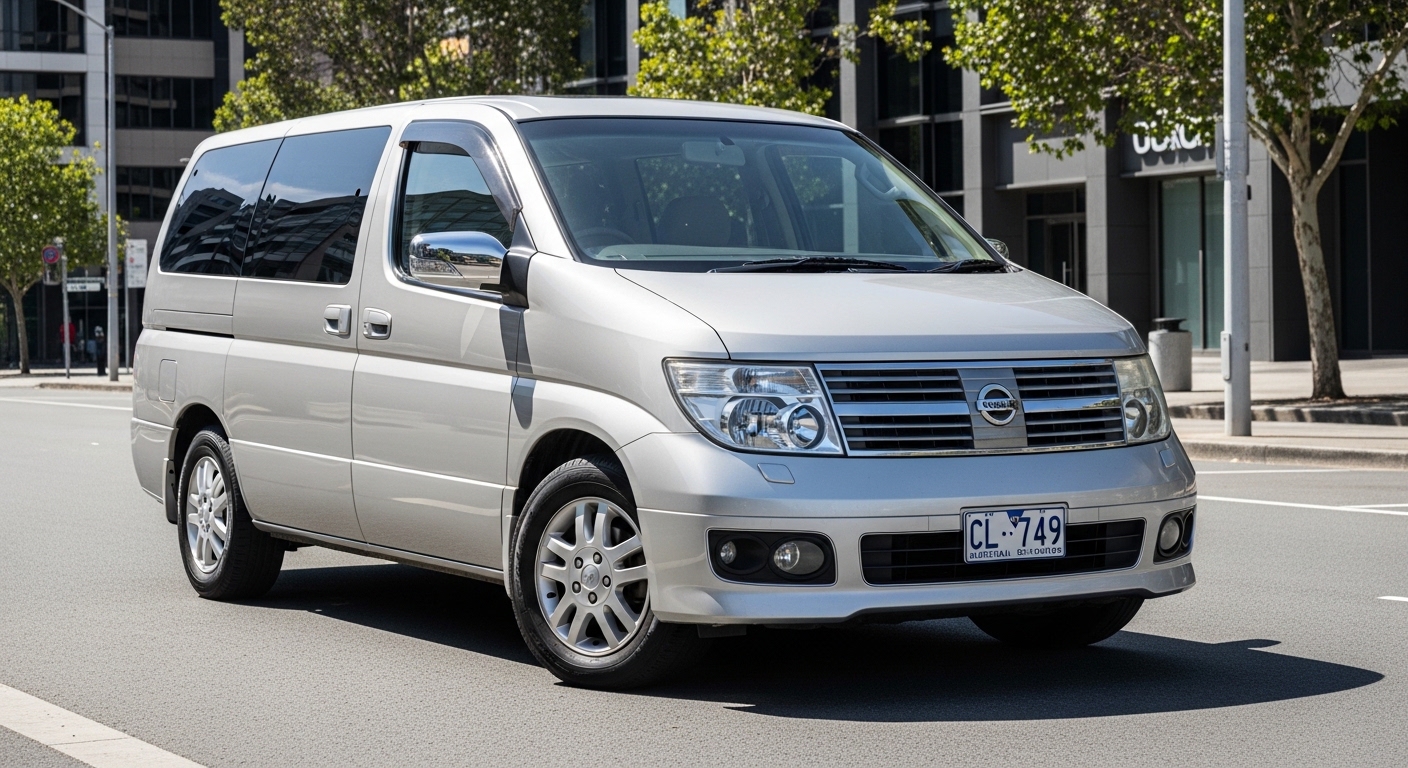 51 Nissan Elgrand Lifecare
Under the bonnet you get petrol power: a VQ25DE 2.5L or a VQ35DE 3.5L V6, in 2WD or 4WD. It seats seven, with the Lifecare swivel seat in the second row, and it imports under the Mobility Criterion (SEV-000836 / SEV-000477). The payoff is character. The E51 has the sharpest driving feel of any eligible van here, the lowest landed cost of the lot, and mechanically simple underpinnings.
The trade-offs are real too. The VQ35DE is thirsty, with real-world figures estimated at 12–14 L/100km (be-forward.jp estimates, not WLTC verified). These cars are now 20 years old or more, so budget for timing-belt and general ageing maintenance. And no eligible Elgrand generation offers a hybrid.
Toyota Alphard AH10 (2002–2008), from around $13k–$18k landed
The first-generation Toyota Alphard is the Toyota answer in this bracket, with a landed estimate of roughly $13k–$18k depending on variant code and auction grade (Carbarn import pages, 2026). Buyers who want to source one to order can also follow the Japan route via the Alphard ANH20W import page.
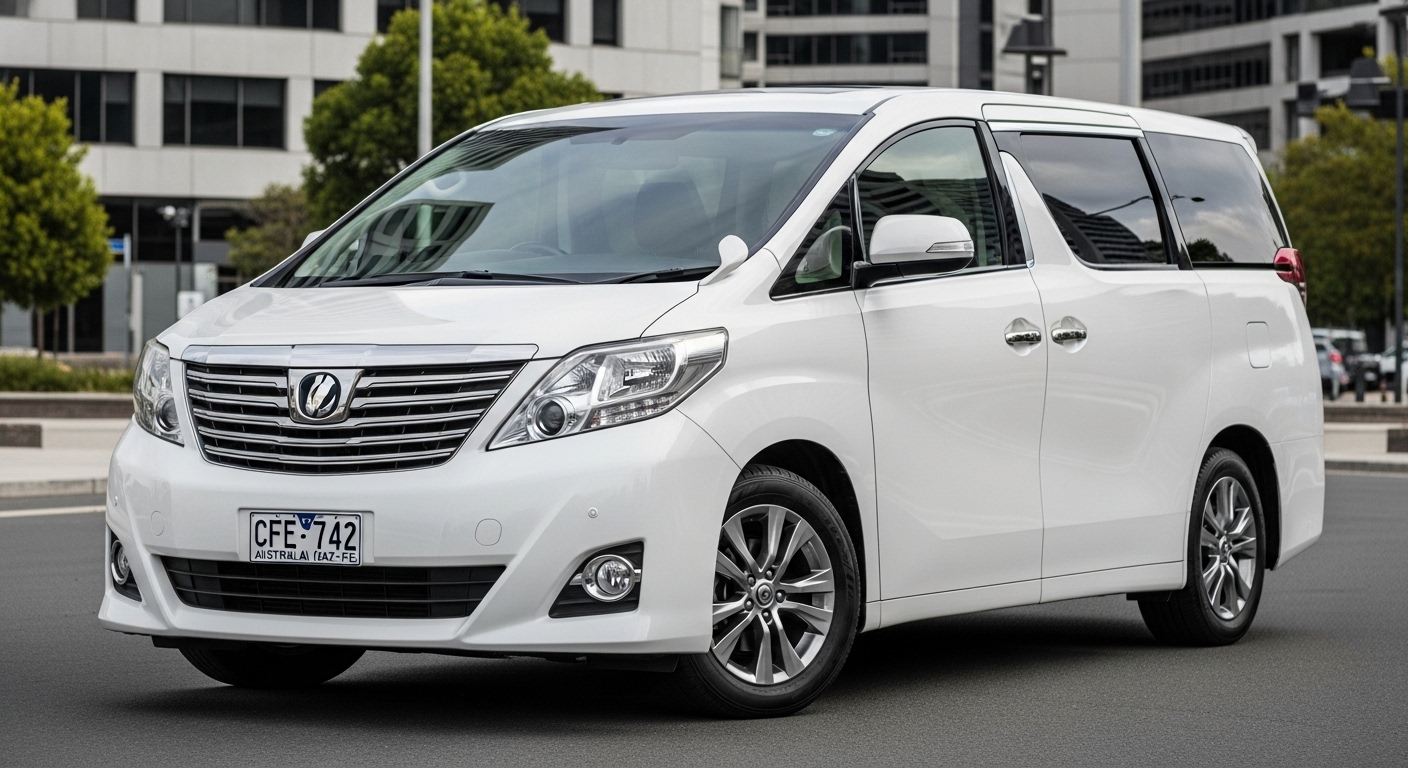 2014 Toyota Alphard (240S, Petrol)
The AH10 runs a 2AZ-FE 2.4L four-cylinder or a 1MZ-FE 3.0L V6, both petrol, in 2WD or AWD. It imports under the Mobility Criterion plus the Campervans and Motorhomes pathway. Its quiet advantage is supply: at a snapshot in time, Japanese auctions listed around 941 Alphard lots against 478 Elgrands (Andrew's Japanese Cars, point-in-time figure), so the model-code choice and aftermarket support run wider on the Toyota side.
The watch-outs mirror the E51. It sits in the same age bracket, so ageing Japanese electrics and general wear are the risk, not the drivetrain itself.
| Nissan Elgrand E51 Lifecare | Toyota Alphard AH10 | |
|---|---|---|
| Years | 2002–2010 | 2002–2008 |
| Engine | VQ25DE 2.5L / VQ35DE 3.5L | 2AZ-FE 2.4L / 1MZ-FE 3.0L V6 |
| Drivetrain | 2WD or 4WD | 2WD or AWD |
| Seats | 7 (Lifecare swivel, row 2) | 7 |
| Landed estimate | ~$11,500 | $13k–$18k |
| Hybrid | No | No |
| SEVS pathway | Mobility Criterion | Mobility + Campervans |
Era 1 winner: E51 Lifecare. Nothing else eligible lands under $12k. If your budget stops at $15k, it is the only serious option.
Between $15k and $27k: E52 Lifecare or Alphard Hybrid — Which Wins?
This is the one bracket where the choice is genuinely hard. The E52 Lifecare lands at around $25,500 to $25,700, while the Alphard AH20 hybrid comes in near $24,400 (Carbarn import pages, 2026). Roughly a thousand dollars separates them, so this is where most buyers agonise.
Nissan Elgrand Lifecare E52 (2010–2021), around $25,500–$25,700 landed
The Nissan Elgrand Lifecare E52 is the refined, later-generation Elgrand, landing at around $25,500 to $25,700 (Carbarn import pages, 2026), with minor variance on the auction day.
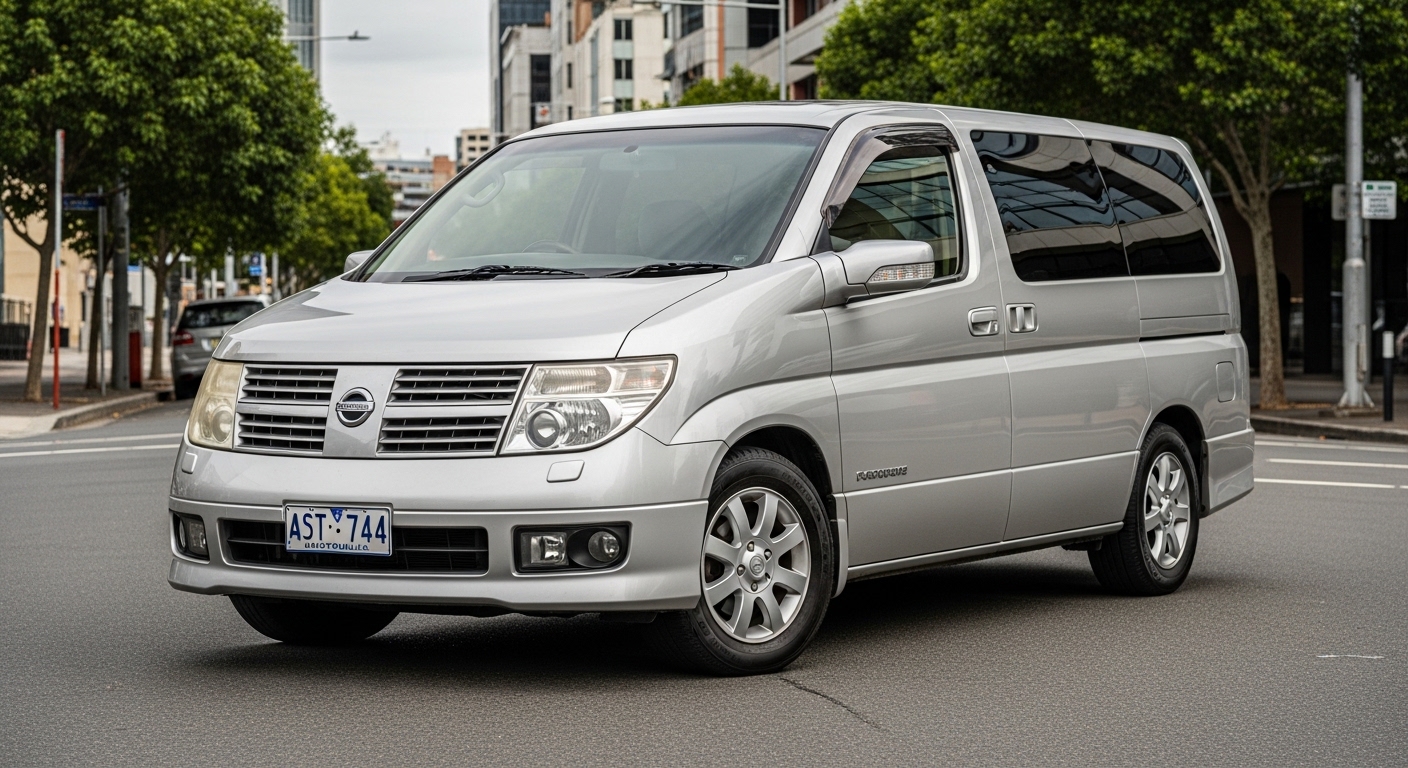 52 Nissan Elgrand Lifecare
It runs a QR25DE 2.5L or VQ35DE 3.5L petrol, in 2WD or 4WD, and imports under SEV-000804 / SEV-000905. One rule matters here: the Lifecare seat must be factory-fitted (a side lift-up seat or a front or second-row swivel-out seat), not an aftermarket conversion. QR25DE cars must also be under 80,000 km. On fuel, the QR25DE is the sensible pick at an estimated 9–10 L/100km, while the VQ35DE runs 11–13 L/100km (be-forward.jp estimates).
Its strengths are steering feel sharper than any Alphard of similar vintage, a more refined cabin than the E51, and lower-mileage units in the pool. The catch stays the same: you must confirm the factory seat, the V6 drinks fuel, and there is no hybrid.
Toyota Alphard AH20 Hybrid ATH20W (2008–2021), around $24,400 landed
The second-generation Toyota Alphard hybrid is the running-cost play in this bracket, landing at around $24,400 (Carbarn import pages, 2026). Buyers sourcing to order can follow the Alphard ATH20W import page.
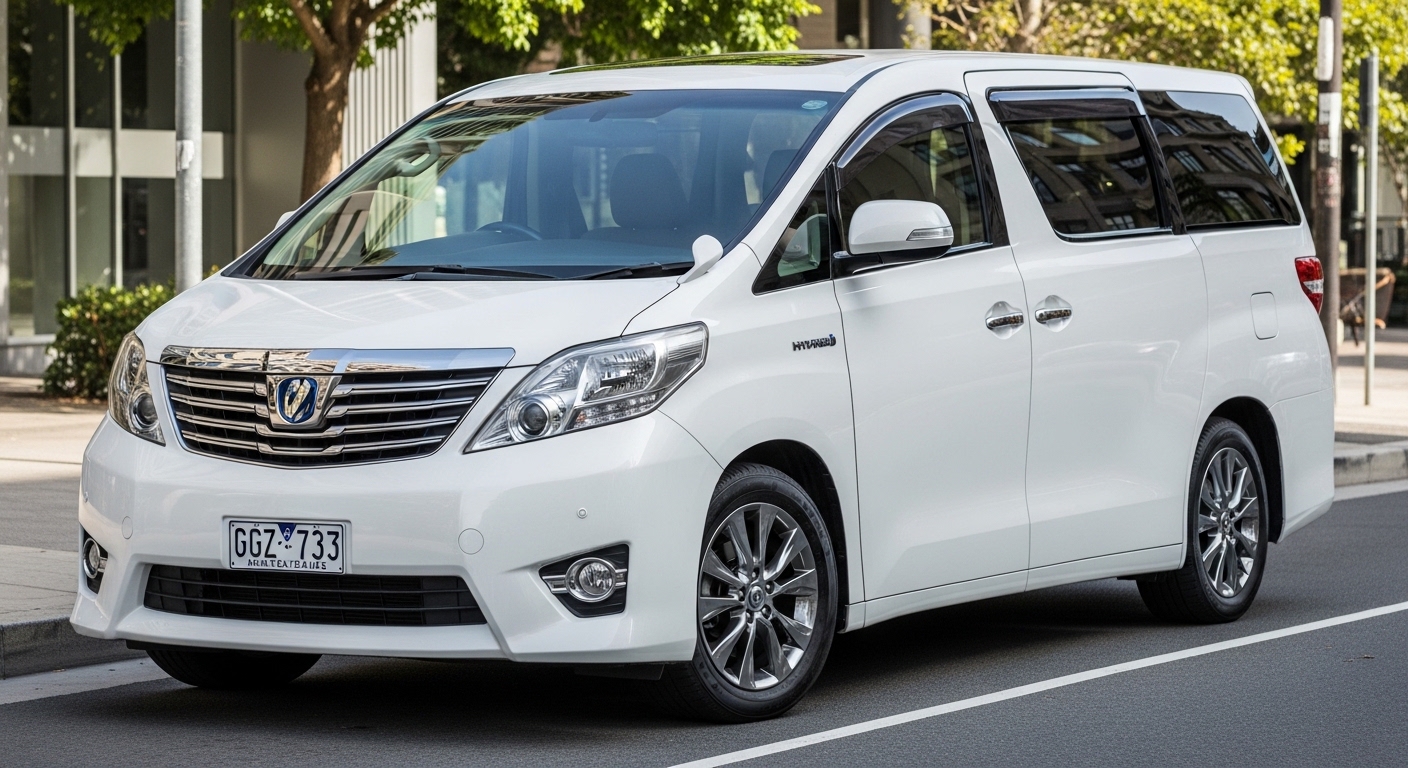 2013 Toyota Alphard (AH20 Hybrid X 4WD)
Its heart is the 2AZ-FXE 2.4L petrol-hybrid, in 2WD or AWD, with an estimated combined figure near 10 L/100km (JC08-derived, not real-world verified). It imports under the Environmental Criterion plus Campervans, with a stated 2008–2021 window. The upside is the lowest running costs of anything in this bracket, plus the security of an AWD option for wet or country roads.
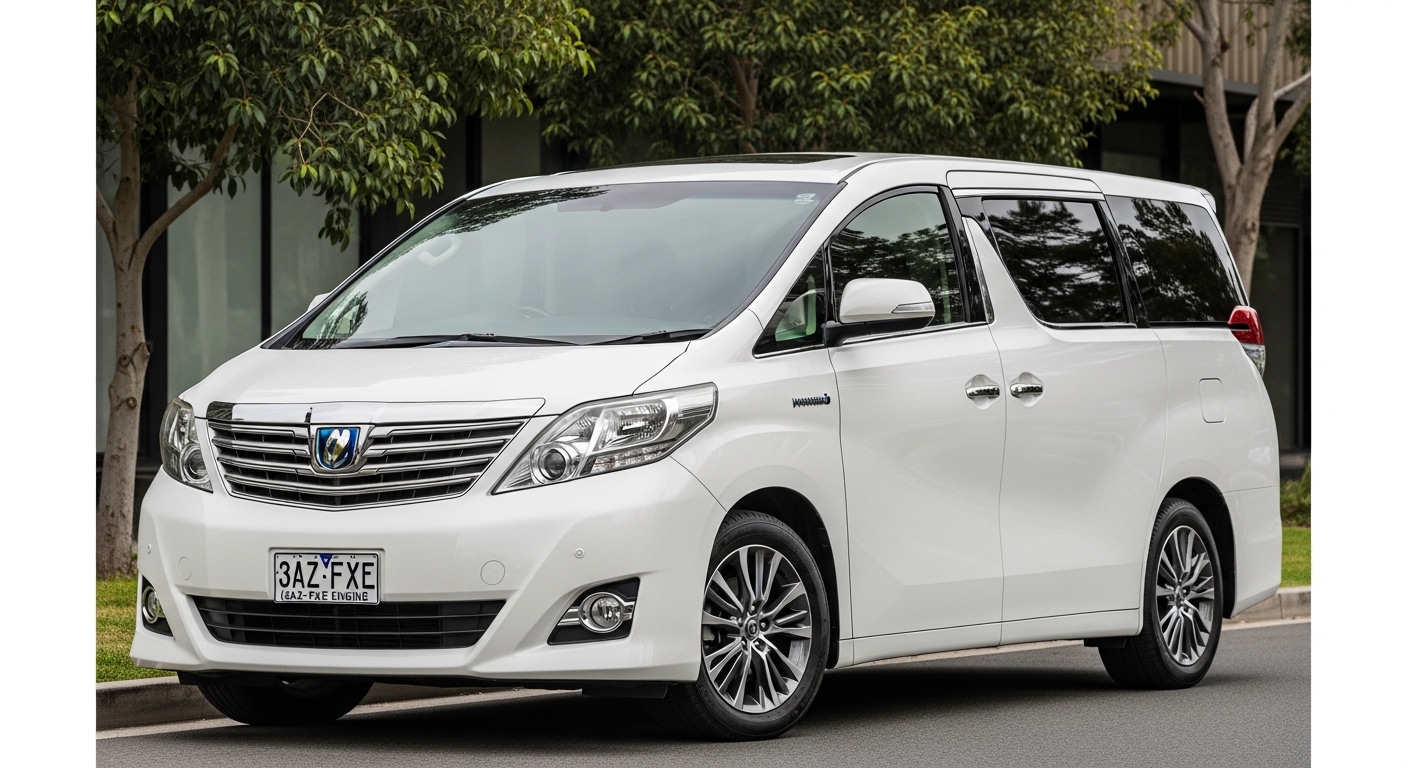 2012 Toyota Alphard (AH20 Hybrid SR 4WD)
The watch-out is age. A hybrid battery in a 10-to-15-year-old van is the main risk, and the entry price sits a touch above the E52. On balance, though, the hybrid is the smarter long-term buy for high-kilometre city drivers.
| Nissan Elgrand E52 Lifecare | Toyota Alphard AH20 Hybrid (ATH20W) | |
|---|---|---|
| Years | 2010–2021 | 2008–2021 |
| Engine | QR25DE 2.5L / VQ35DE 3.5L | 2AZ-FXE hybrid |
| Drivetrain | 2WD or 4WD | 2WD or AWD |
| Seats | 7 (Lifecare swivel) | 7 |
| Landed estimate | ~$25,500–$25,700 | ~$24,400 |
| Hybrid | No | Yes |
| Fuel (est.) | 9–13 L/100km | ~10 L/100km (JC08-derived) |
| SEVS pathway | Mobility Criterion | Environmental + Campervans |
Era 2 call: contested, slight Alphard hybrid edge. For urban drivers covering big weekly distances, the hybrid's fuel saving tips the balance toward the ATH20W. If driving feel and lower-mileage stock matter more to you, the E52 is worth a serious look.
 White luxury people mover parked by the beach at sunset with palm trees in view
Between $28k and $90k: Is the Alphard AH30 Worth the Premium?
Above the mid-$20Ks the contest ends. The E52 Lifecare tops out at 2021 production, and there is no later Elgrand on the SEVS register, so from about $28k upward the Toyota Alphard AH30 is the only eligible Japanese luxury van an Australian buyer can import.
Toyota Alphard AH30 petrol (2015–2021) / hybrid (2015–2025), from around $51,900 petrol or $60,400 hybrid
The third-generation Alphard splits into two eligible codes: the petrol Alphard AGH30W at around $51,900 landed, and the hybrid Alphard AYH30W at around $60,400 landed (Carbarn import pages, 2026). Its approval, SEV-000924, is valid until 11 August 2028, so the import window is confirmed but not open forever.
The mechanicals are a clear step up: 2AR-FE or 2GR-FKS petrol, or the 2AR-FXE hybrid with AWD. Petrol variants must be under 80,000 km; hybrid units sourced under the dedicated AYH30W approval also require under 80,000 km, while some hybrid-engine units sourced under the AGH30W approval may carry a higher ceiling — confirm the specific approval code with Carbarn before bidding. The cabin gains larger screens, quieter highway manners, better noise insulation and an available Executive Lounge trim.
If you are shopping this generation specifically, our AH30 hybrid buyer's guide covers grade-by-grade selection and real-world fuel data in depth, so this article cross-links rather than repeats it. Worth noting here: the AH30 era also brings 14 Alphard Welcab variants, factory mobility cars with powered lift-up seats and wheelchair ramps. They are the Toyota mirror of the Elgrand Lifecare, imported under the Mobility Criterion as separate model codes.
Era 3 call: Alphard AH30 by default. No Elgrand competition exists at this price.
| Model | Landed estimate |
|---|---|
| Nissan Elgrand E51 Lifecare | ~$11,500 |
| Toyota Alphard AH10 (1st gen) | ~$18,000 |
| Toyota Alphard AH20 V6 petrol | ~$19,500 |
| Toyota Alphard AH20 hybrid | ~$24,400 |
| Nissan Elgrand E52 Lifecare | ~$25,600 |
| Toyota Alphard AH30 petrol | ~$51,900 |
| Toyota Alphard AH30 hybrid | ~$60,400 |
| Toyota Alphard AH40 2WD | ~$106,400 |
| Toyota Alphard AH40 AWD | ~$125,100 |
Source: Carbarn import pages, July 2026. Estimates vary by auction result and exchange rate. Note the cliff above $60k, where the Elgrand has no eligible entry at all.
Era 4, $90k and Up: Alphard AH40, the Only Option in the Room
At the top of the market there is one name left. The current Alphard AH40 lands at around $106,400 for the 2WD (AAHH40W) and around $125,100 for the AWD (AAHH45W), per Carbarn import pages, 2026. No Elgrand of any generation competes here.
Toyota Alphard AH40 (2023–2025)
The AH40 runs an A25A-FXS 2.5L series hybrid making 184kW combined, and imports under the Environmental Criterion (SEV-000505) with a minimum auction grade of 3.5 and under 80,000 km. Its official fuel rating sits near 5.7–6.1 L/100km (Toyota WLTC: 2WD ~5.7 L/100km, AWD ~6.1 L/100km), a big drop from the older petrol vans.
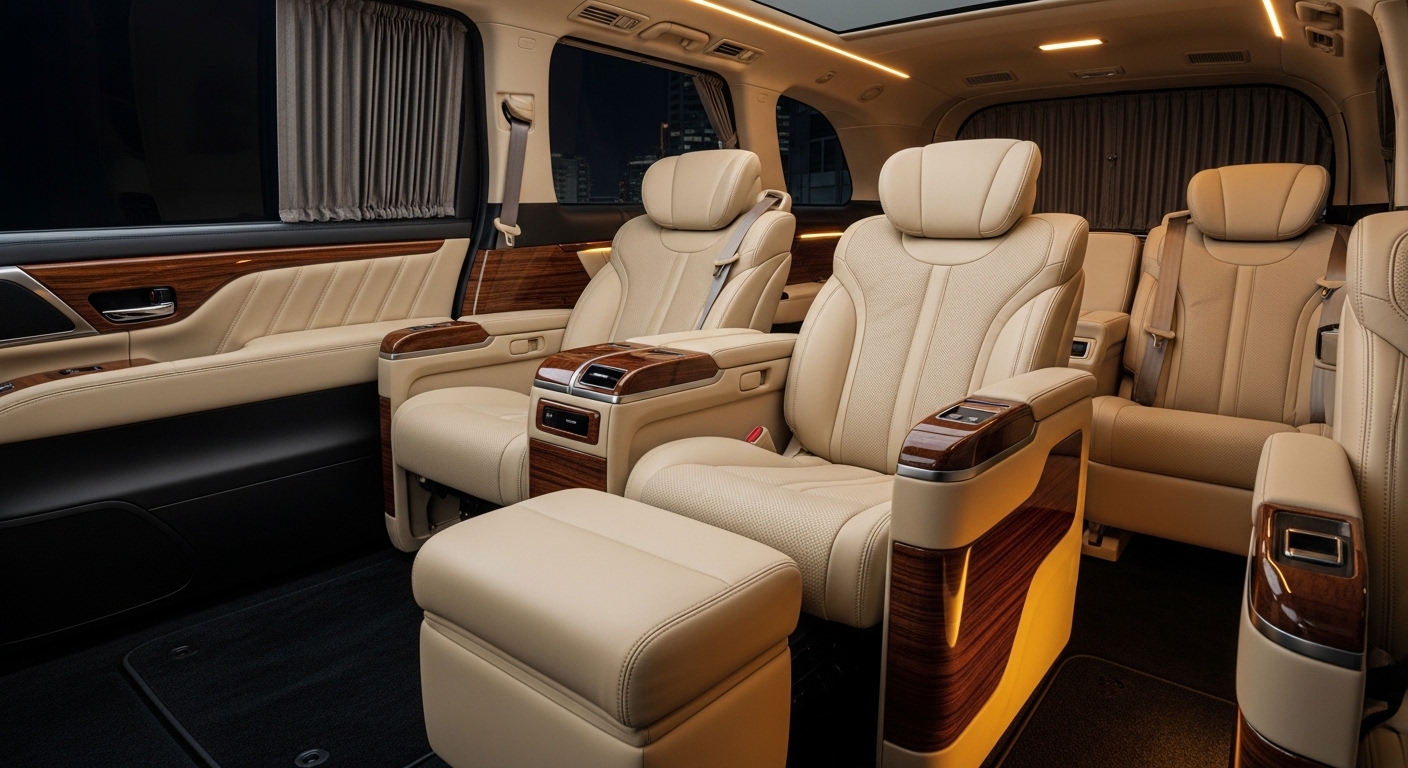 Cream leather luxury van cabin with wood trim, amber lighting, and an extended ottoman
One budgeting note matters at this level. The AH40 sits above the $80,809 standard Luxury Car Tax threshold (ATO, 2026–27) — it does not qualify as fuel-efficient under the post-July 2025 definition of ≤3.5 L/100km — and approximately $3,031 of LCT is already built into the 2WD landed figure, so factor it into your total. For context, 709,100 hybrids were on the Australian register at January 2025, up 46% year on year (BITRE via Carbarn blog, 2026), and grey-imported late-model Alphards typically sell for $75,000 to $130,000 through general importers (Chasing Cars, 2023). The AH40's landed cost sits comfortably inside that band.
As for the brand-new 2026 Elgrand E53, it launched in Japan in July 2026 at about ¥6.90 million, e-Power hybrid only, and has no SEVS pathway (Carscoops, 17 July 2026). The E51 and E52 Lifecare remain the only eligible Elgrands.
Era 4 call: Alphard AH40 only. Unchallenged in this bracket.
What Are the Real Drawbacks of Each Van?
No van here is perfect, and a fair comparison names the flaws on both sides. The Elgrand's biggest limit is structural: every eligible unit is a Lifecare car, so the sourcing pool is narrower than the Alphard's by design.
The Elgrand's drawbacks stack up like this. Eligibility is restricted to factory-fitted Lifecare variants, and each must be confirmed genuine rather than aftermarket. E52 QR25DE cars must be under 80,000 km, which trims the pool again. No eligible Elgrand offers a hybrid, so fuel costs run higher than an Alphard hybrid at the same price. There is no path to a current-generation Elgrand, and the VQ35DE cars are thirsty at an estimated 11–14 L/100km.
The Alphard has its own price to pay, quite literally. The badge commands a premium, and the step from AH20 to AH30 is a jump of roughly $25k–$35k in landed cost. The AH10 and AH20 are now 11 to 22 years old, so ageing electrics and hybrid batteries are a genuine risk. The AH30 approval expires on 11 August 2028, which affects your sourcing timeline. Welcab Alphards are a separate model-code search, not part of a standard enquiry. And the AH40 triggers LCT above the standard threshold (it does not qualify as fuel-efficient under the post-July 2025 definition of ≤3.5 L/100km), so budget for it.
Which Van Wins Your Budget?
Rather than crowning one overall winner, the honest answer is that it depends on your bracket. The table below maps who has an eligible option, and who wins, at each level.
| Budget | Elgrand options | Alphard options | Bracket winner |
|---|---|---|---|
| Under $15k | E51 Lifecare (~$11,500) | None eligible | Elgrand |
| $15k–$27k | E52 Lifecare (~$25,600) | AH20 hybrid (~$24,400) | Contested, Alphard hybrid edge for city use |
| $28k–$65k | None eligible | AH30 petrol ( |
Alphard (default) |
| $65k–$130k | None eligible | AH40 2WD ( |
Alphard (default) |
Source: Carbarn import pages, July 2026.
A few plain reads on that grid. If you mostly drive in city traffic on a mid-$20k budget, the AH20 hybrid makes a lot of sense, because the fuel saving offsets its slightly higher entry price over time. If you want the lowest possible entry cost to a genuine Japanese luxury van, the E51 Lifecare at around $11,500 is worth a look, and nothing eligible gets close. Past $27k, the Alphard is your only eligible choice, and the AH30 hybrid buyer's guide is the next read if that generation is on your list.
How to Source Either Van
Both of these vans are sourced the same way: through Japanese auction, with a physical pre-bid inspection so you know the grade before anyone commits. The typical timeline runs about 6 to 10 weeks from a winning auction bid to keys in your hand, once freight, Australian customs, compliance and registration are all done.
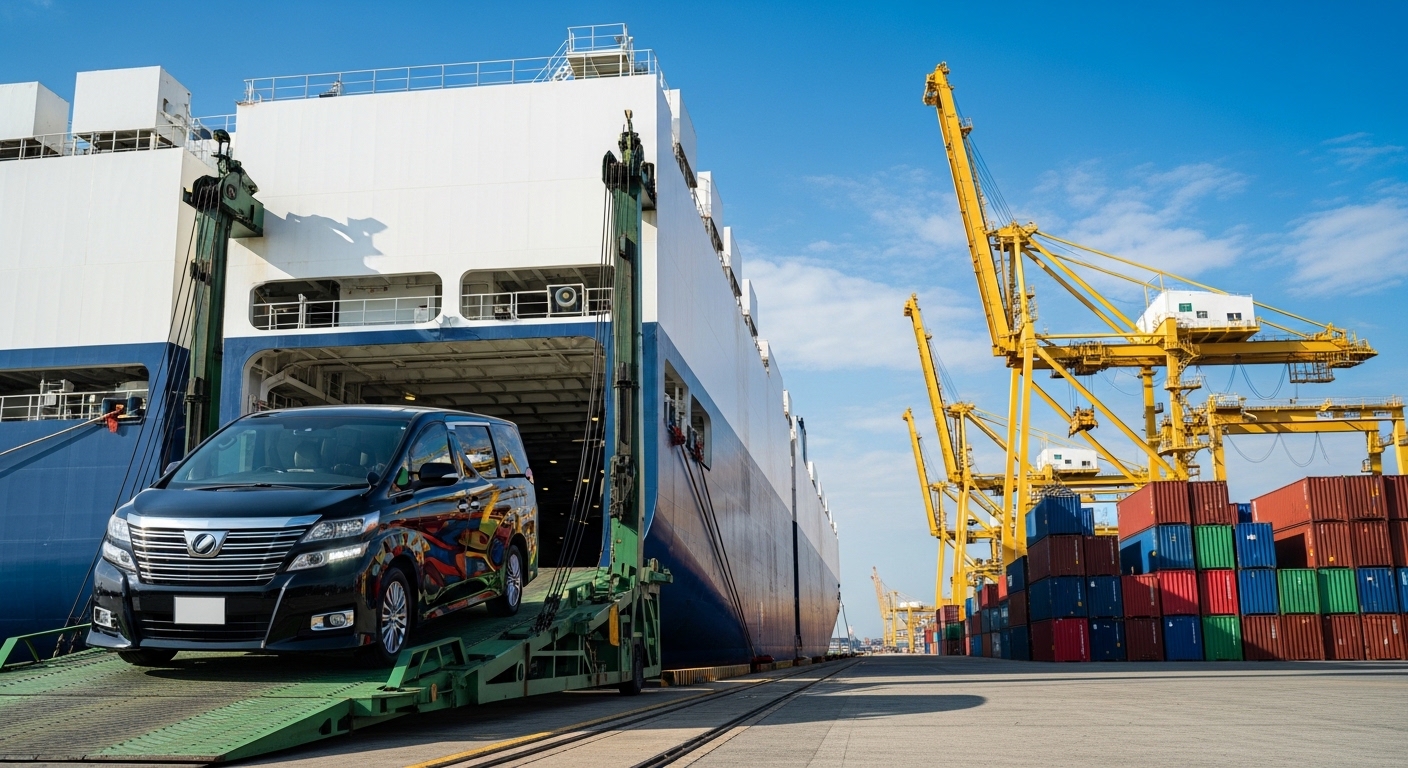 Luxury van being loaded onto a car carrier ship at a container port in daylight
For an Elgrand, start with the eligibility detail on the Nissan Elgrand Lifecare E51 or Nissan Elgrand Lifecare E52 page, where the factory-seat requirement and cost estimates are spelled out. For an Alphard, you can browse the eligible model codes from the AH10 through to the AH40, or describe what you are after through the Japan sourcing enquiry form.
Carbarn handles this end to end: Japanese auction sourcing and bidding, pre-purchase inspection, international freight, Australian customs clearance, SEVS compliance and workshop conversion, roadworthy and registration support, and local warehousing in Lidcombe, Sydney, so you deal with one team from auction floor to driveway.