



Ready to Hit the Road in Style?
Save money and reduce emissions with vehicles designed to deliver exceptional mileage. Visit our inventory and find a car that fits your lifestyle.
Ready to Hit the Road in Style?
Save money and reduce emissions with vehicles designed to deliver exceptional mileage. Visit our inventory and find a car that fits your lifestyle.
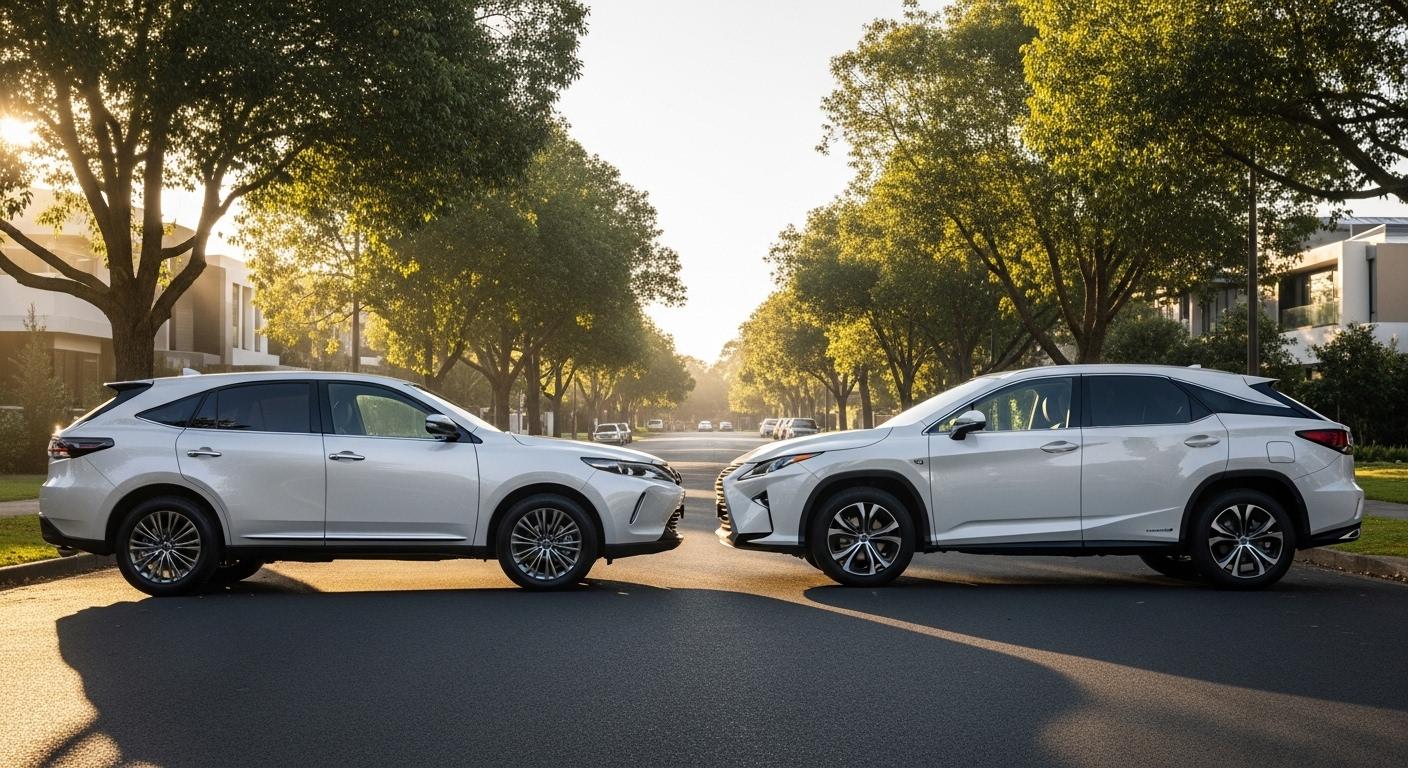
If you've spent any time on the SUV forums, you've probably heard the line: the Toyota Harrier is just a Lexus RX with a cheaper badge. It sounds like a bargain hunter's shortcut. Import the Toyota instead of the Lexus, pocket the difference, drive basically the same car.
It used to be true. Early Harriers, sold from the late 1990s, really were the same vehicle as the Lexus RX300 and RX330. But that is not the car you can bring into Australia today. The Harrier you can legally import now sits on a different mechanical setup to the eligible RX450h, and it runs a smaller, newer engine. They are cousins, not clones.
So the roughly $8,600 you save by choosing the entry Harrier over the RX450h is real. It just doesn't buy you the same car minus an emblem. This guide walks through the eligible variants, what each one actually offers on the road, and which buyer each one suits.
Quick Answer
- The modern importable Harrier (XU80) runs a 2.5L four-cylinder hybrid, while the eligible RX450h (AL20) uses a 3.5L V6. They share heritage, not mechanicals.
- The entry Harrier lands about $8,600 under the RX450h, yet the Harrier PHEV actually costs roughly $5,000 more than the Lexus.
- The Harrier returns up to 22.3 km/L on the WLTC cycle against 15.3 km/L for the RX450h (Toyota Global Newsroom, 2020; MLIT via cars-japan.net).
- The Harrier is eligible in front- and all-wheel drive. The eligible RX450h is 2WD only.
- None of the four variants trigger Luxury Car Tax, all landing well under the $80,809 standard LCT threshold for 2026-27 (ATO, 2026).
Is the Toyota Harrier Really Just a Cheaper Lexus RX?
Not the ones you can import today. The classic "Harrier is the RX" claim is historically accurate, since Toyota sold the first two Harrier generations overseas as the Lexus RX. But none of those older cars are on Australia's eligible import list, so the comparison that matters is the current Harrier against the previous-generation RX450h.
 A silver Toyota SUV moves through evening traffic on a neon-lit Japanese city street.
Here's the split. The importable Harrier is the XU80 generation, built from June 2020, using the A25A-FXS 2.5L four-cylinder hybrid (Toyota Global Newsroom, 2020). The eligible RX450h is the older AL20 generation, running the 2GR-FXS 3.5L V6 petrol hybrid (UltimateSpecs). Same family tree, different engines, different eras.
That matters because it reframes the whole decision. You're not choosing between a badged and de-badged version of one car. You're choosing between a newer, lighter, four-cylinder Toyota and an older, heavier, V6 Lexus. Both are fine SUVs. They just answer different questions, and the price gap reflects genuine differences, not only the letters on the boot.
Toyota Harrier vs Lexus RX450h Import: How Do the Specs Compare?
On paper the Lexus wins on power while the Harrier wins on efficiency and price. The RX450h makes 308 PS (227 kW) from its V6 hybrid (UltimateSpecs), against about 218 hp (162 kW) for the base Harrier (auto-data.net). But the Harrier uses far less fuel and lands thousands cheaper.
Here's how the four eligible variants line up. Landed figures are indicative estimates and shift with auction results and the exchange rate, so treat them as ballpark, not fixed quotes.
| Harrier AXUH80 (FWD) | Harrier AXUH85 (AWD) | Harrier PHEV (AXUP85) | Lexus RX450h (GYL20) | |
|---|---|---|---|---|
| Engine | 2.5L 4-cyl hybrid | 2.5L 4-cyl hybrid | 2.5L 4-cyl plug-in hybrid | 3.5L V6 hybrid |
| System power | ~218 hp (162 kW) | ~222 hp (166 kW) | 306 PS (~225 kW) | ~308 PS (~227 kW) (2WD) |
| WLTC economy | 22.3 km/L | 21.6 km/L | 20.5 km/L | 15.3 km/L |
| Drivetrain | FWD | AWD | AWD | 2WD only |
| Kerb weight | ~1,620–1,690 kg | ~1,720 kg | 1,950 kg | 2,080 kg |
| Landed (approx.) | ~$52,000 | ~$52,900 | ~$65,800 | ~$60,700 |
| Luxury Car Tax | No | No | No | No |
Sources: Toyota Global Newsroom and auto-data.net (Harrier); Paultan (PHEV); UltimateSpecs and MLIT/cars-japan.net (RX450h).
The table tells the story in one glance. Three of the four variants undercut the Lexus, and the base Harrier does it by about $8,600. The odd one out is the plug-in, and we'll get to why shortly.
Toyota Harrier AXUH80: The Efficient Front-Driver
The Toyota Harrier AXUH80 is the entry point to the range, and for a lot of buyers it's the sweet spot. Front-wheel drive keeps weight and cost down, and the styling is the same low, sharp shape whether you pick this or the pricier variants. It's the version that delivers the headline saving over the Lexus.
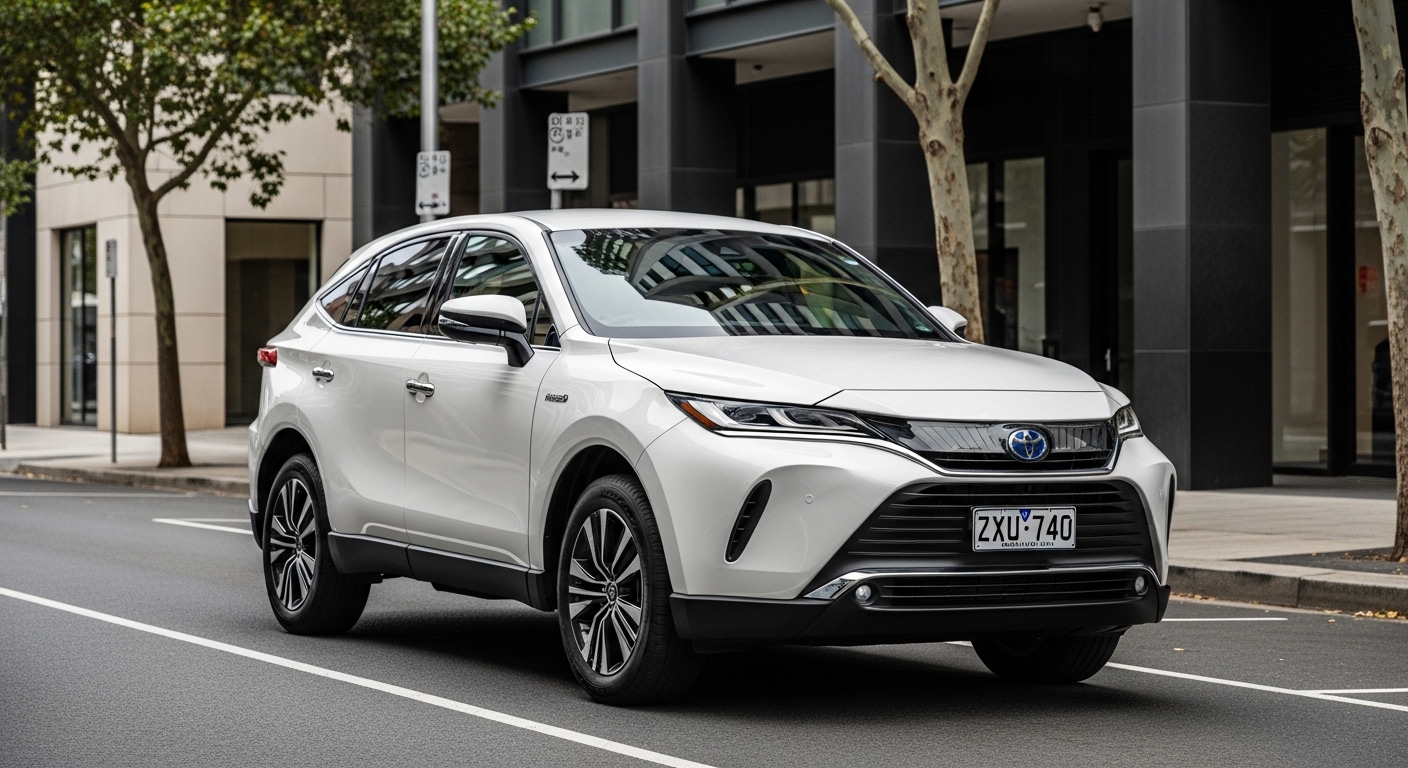 2020 Toyota Harrier (AXUH80 FWD)
Under the bonnet sits the A25A-FXS 2.5L four-cylinder petrol-hybrid, producing a combined 218 hp (162 kW) through an e-CVT (auto-data.net). It's not fast in a straight line, at roughly 8.1 seconds to 100 km/h, but it's smooth and quiet around town. Fuel economy is the standout: 22.3 km/L on the WLTC cycle, or about 4.48 L/100km (Toyota Global Newsroom, 2020).
Practically, it carries five, offers roughly 426 litres of boot space with the seats up (auto-data.net), and tips the scales at a light 1,620 to 1,690 kg. The AXUH80 is eligible across the June 2020 to July 2026 build range and lands in the low-$50K bracket. If you drive mostly on sealed roads in the city and suburbs, this is the value pick of the whole comparison.
Is the Toyota Harrier AXUH85 Worth the AWD Premium?
The Toyota Harrier AXUH85 is the same car with drive sent to all four wheels, and it asks for only a small premium to get it. Toyota's electronic E-Four system adds a rear motor rather than a heavy mechanical driveline, so you get wet-weather and light-gravel security without giving away much economy.
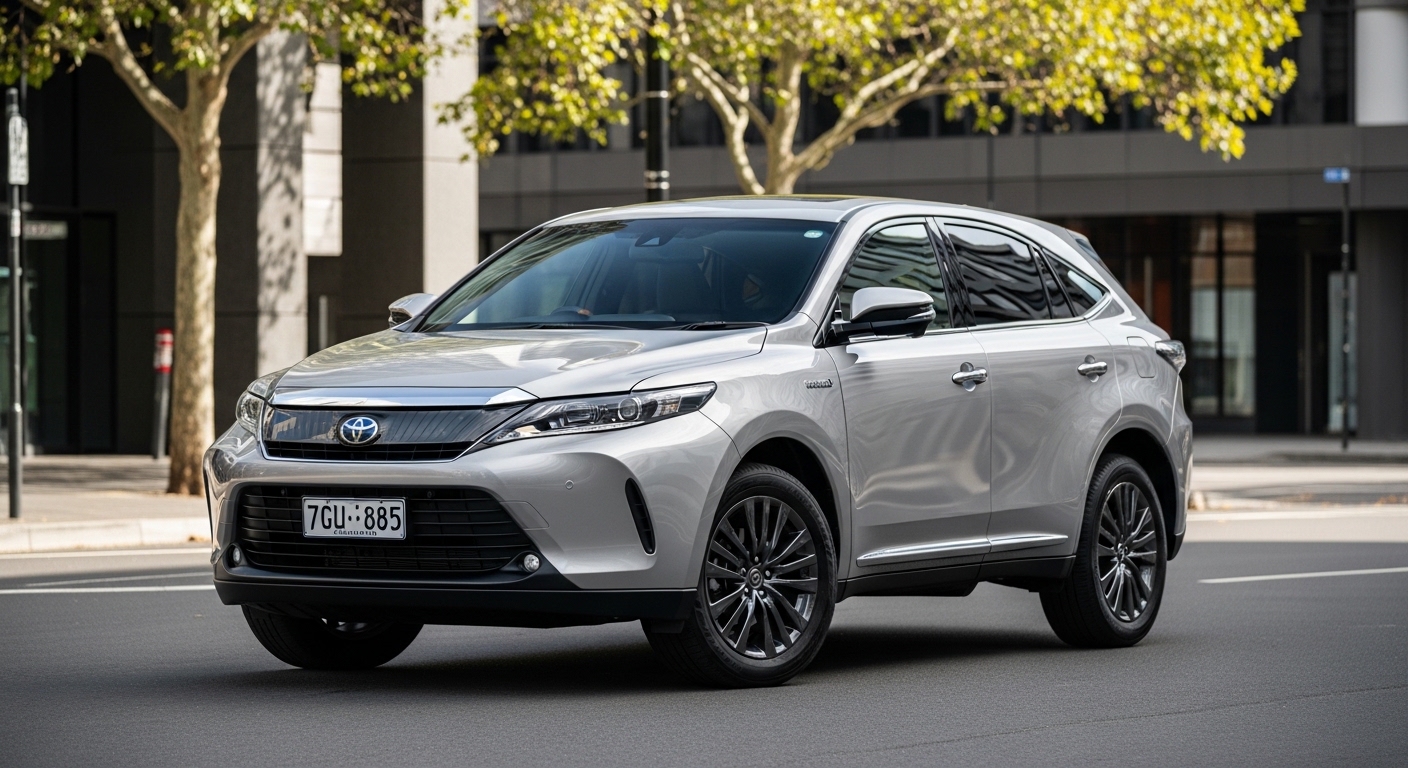 2020 Toyota Harrier (AXUH85 AWD)
Mechanically it mirrors the FWD car: the 2.5L A25A-FXS hybrid, here making a combined 222 hp (166 kW), paired with the e-CVT. WLTC economy slips only slightly to 21.6 km/L, about 4.63 L/100km (Toyota Global Newsroom, 2020). Kerb weight rises to around 1,720 kg, and the extra traction costs roughly a couple of tenths in outright acceleration. In real driving you'd struggle to feel the difference.
The important number is the price. The AXUH85 lands only about $700 above the FWD model, which makes the AWD upgrade one of the easier decisions in this comparison. If you see snow in winter, tow a light trailer, or just want the reassurance of driven rear wheels, the small premium is worth a look. Crucially, this is also traction the eligible RX450h cannot offer at all.
Where Does the Harrier Stop Being the Cheaper Choice?
Right at the top. The Harrier PHEV (AXUP85) lands around $65,800, which is roughly $5,000 more than the RX450h at about $60,700. So the tidy rule that "Toyota is always cheaper than Lexus" simply breaks at the plug-in end of the range. If you assumed the badge saving held across the board, this is where it flips.
The reason is the hardware. The plug-in variant carries an 18.1 kWh battery and delivers up to 93 km of electric-only range on the MLIT test, with a combined 306 PS (Paultan, 2022). That battery adds weight, pushing kerb mass to about 1,950 kg, and it adds a lot of cost. The PHEV is eligible from 2022, and you can check the plug-in pathway on the Harrier hybrid eligibility page.
Is it worth it? Only if you can charge at home and do lots of short trips. A commuter who plugs in nightly might run mostly on electricity and rarely visit a servo. But you're paying a premium over the Lexus for that privilege, so the plug-in makes sense for the electricity, not for the saving. As a pure value play, it's the weakest of the four.
Lexus RX450h GYL20: The V6 With the Badge
The Lexus RX450h GYL20 is the reason this comparison exists, and it earns its price in ways the spec sheet only half-explains. This is the car people want when they want the badge, the showroom polish, and the bigger engine, and there's a real audience for exactly that.
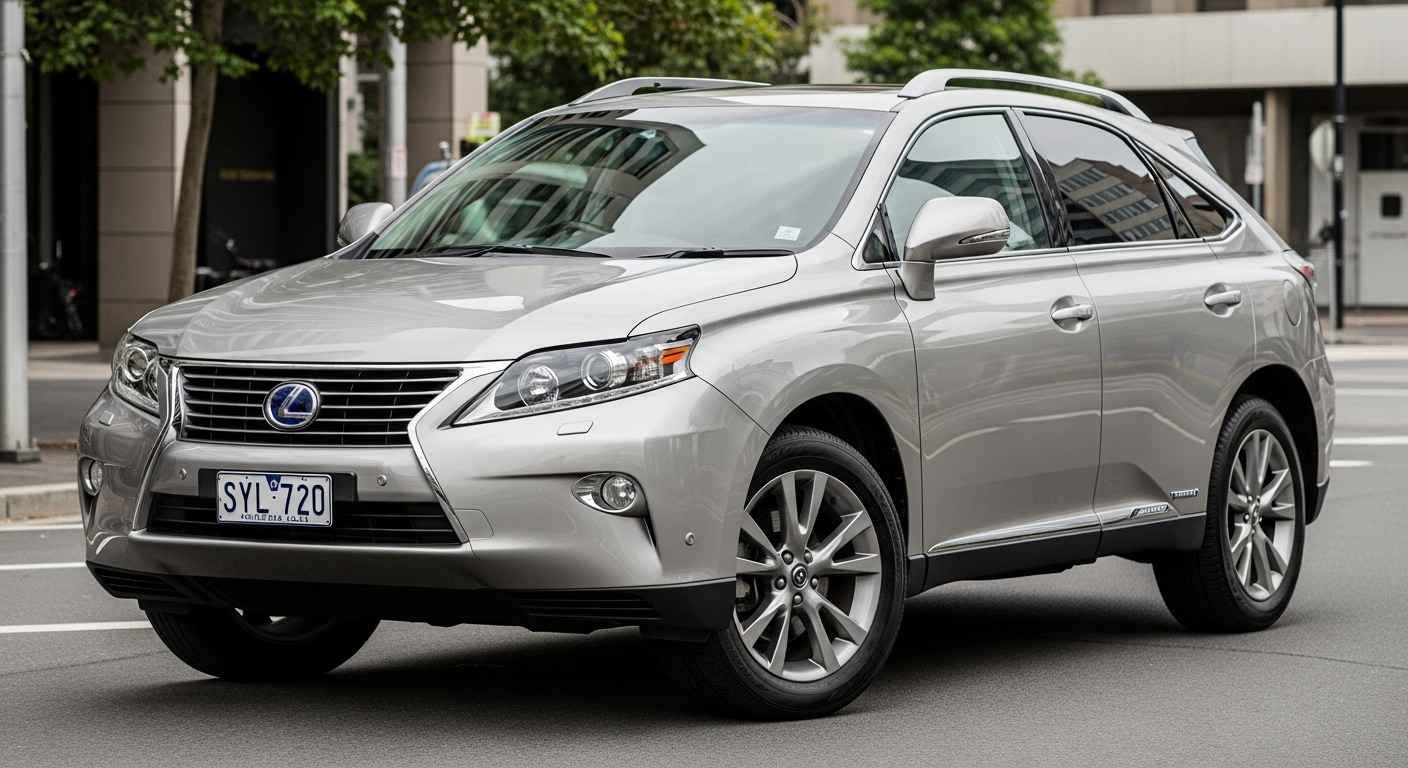 2015 Lexus RX450h (GYL20)
The heart of it is the 2GR-FXS 3.5L V6 petrol hybrid running through a CVT. One thing worth noting: the commonly cited 308 PS and sub-8-second 0–100 km/h figures come from the AWD variant (UltimateSpecs; DrivingElectric). The importable GYL20 is 2WD only with no rear motor, so output is rated at approximately 308 PS (~227 kW) — the same system cap as the AWD, since the THS-II maximum is constrained by the front drivetrain rather than the number of motors — and 0–100 km/h is likely in the 8.5–9.5-second range (estimated; no primary source available for the 2WD time). It's still noticeably stronger and smoother than the four-cylinder Harrier when you press on. The trade-off is thirst, at 15.3 km/L on the WLTC cycle, roughly 6.54 L/100km (MLIT/cars-japan.net).
Two things to keep in mind. First, the eligible GYL20 is 2WD only, so all-wheel drive is off the table for this import. Second, it's the heaviest car here at 2,080 kg, which you feel in the corners even if the V6 hides it on the straights. Boot space is a useful 446 to 454 litres (DrivingElectric). For context, a brand-new 2025 Lexus RX350h starts at around $90,350 before on-road costs in Australia (CarExpert), so importing a tidy used GYL20 near $60,700 undercuts the showroom by an even wider margin.
Which One Actually Uses Less Fuel?
The Harrier, and it isn't close. The base AXUH80 returns 22.3 km/L on the WLTC cycle, while the RX450h manages 15.3 km/L (Toyota Global Newsroom, 2020; MLIT/cars-japan.net). In everyday terms, the four-cylinder Toyota sips where the V6 Lexus gulps, and over a year that gap adds up.
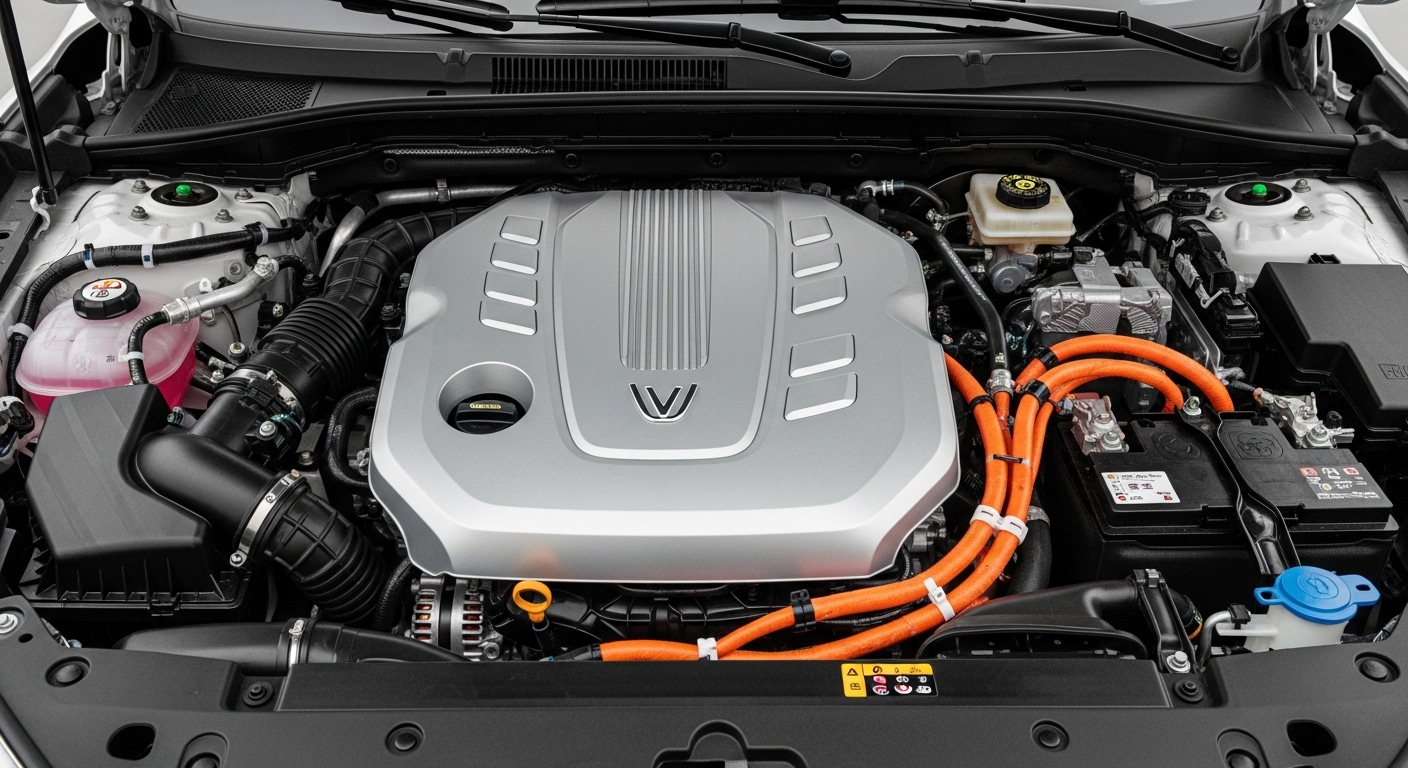 The biggest real-world difference between these two is under the bonnet.
Put rough dollars on it. At 15,000 km a year and about $2 a litre, the Harrier FWD burns roughly $1,340 of fuel, while the RX450h runs closer to $1,960. That's about $600 a year, or near enough to $3,000 over five years, staying in your pocket with the Toyota. It won't decide the purchase on its own, but it's a real ownership saving, not a rounding error.
The reason is simple physics. A 2.5L four in a 1,650 kg body has less to move than a 3.5L V6 in a 2,080 kg body. The V6 rewards you with pace and refinement, and if you value how the Lexus surges away from lights, that's a fair trade. If you mostly commute and want the cheapest week-to-week running costs, the Harrier is the smarter buy.
Does the Drivetrain Difference Matter for You?
For most Australian buyers, honestly, not much. But if it matters to you, it's decisive, because the eligible RX450h is 2WD only while the Harrier is offered in both front- and all-wheel drive. There is no all-wheel-drive version of this generation RX450h you can import, full stop.
That single fact quietly reshapes the shortlist for some people. If you live somewhere with real winters, tow a small camper or boat, or spend weekends on unsealed roads, the Harrier AXUH85 is the only one of these two that can send drive to all four wheels. The Lexus is a road car, and a heavy one, so it leans on its tyres and traction control when the surface turns slippery.
For the buyer who never leaves the bitumen, the point is moot. Front-wheel drive is fine for the school run, the shops, and the highway, and it saves you fuel and money. Just don't buy the RX450h expecting to add all-wheel drive later, and don't assume the Lexus is the more capable car off a smooth road. On grip, the AWD Harrier is the more flexible choice.
How Big Is the Interior and Luxury Gap?
Wider than the platform-twin myth suggests. The RX450h leans into its badge with softer materials, thicker sound deadening, and the polished dealer experience Lexus is known for. The Harrier is genuinely plush for a Toyota, but it plays in a slightly lower register, and side by side you can tell.
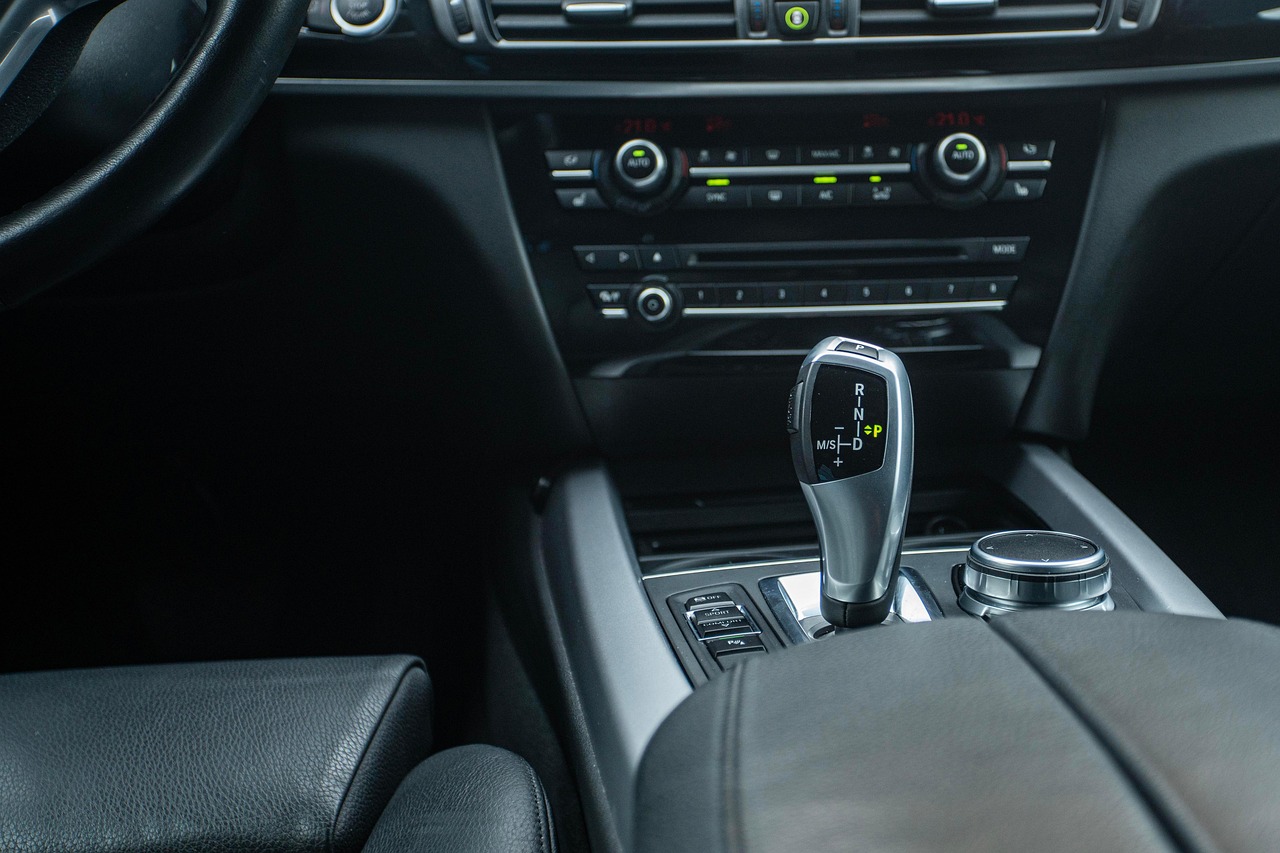 Interior finish is where the Lexus badge asks you to pay extra.
That said, the modern Harrier isn't short on kit. Depending on grade you'll find a large touchscreen, a JBL premium audio option, a digital rear-view mirror, and a dimming panoramic glass roof that switches from clear to frosted at the touch of a button. Because it's the newer design, its cabin tech often feels fresher than the older AL20 Lexus, even if the Lexus materials feel richer to the touch.
So the honest read is this. The Lexus gives you the badge, the quieter cabin, and the sense of occasion. The Harrier gives you newer technology and a cabin that's 90 percent as nice for thousands less. Whether that last 10 percent is worth roughly $8,600 is a personal call, and it's the real question at the centre of this whole comparison.
What Do They Cost to Import, and Will You Pay Luxury Car Tax?
No, none of these four trigger Luxury Car Tax, which is the single most common worry buyers raise. All four land well under the $80,809 standard LCT threshold for 2026-27 (ATO, 2026), so LCT simply doesn't apply. That alone keeps a lot of money on the table.
Worth understanding why. From 1 July 2025, the "fuel-efficient" LCT category tightened to vehicles using 3.5 L/100km or less (NRMA, 2025), which none of these hybrids meet. But it's a non-issue here, because their landed prices sit below the standard threshold anyway. There's no LCT to pay either way.
The rest of the landed cost is straightforward. Japan-built cars attract 0 percent customs duty under the JAEPA trade agreement, GST is 10 percent of the combined value, and roll-on/roll-off freight runs around $2,500 to $3,000 (Garage Apex, 2026). Add compliance work of roughly $1,540 and the agent fees, and you arrive at the landed figures in the table above. The whole process typically takes 6 to 10 weeks from sourcing to delivery.
How Do Resale and Servicing Compare in Australia?
The Toyota is cheaper to keep, and that gap runs the whole way through ownership. Lexus dealer servicing runs noticeably higher than Toyota rates in Australia (ReDriven, 2024), while the Harrier can be serviced through the far larger and generally cheaper Toyota network. Parts and know-how are simply more common.
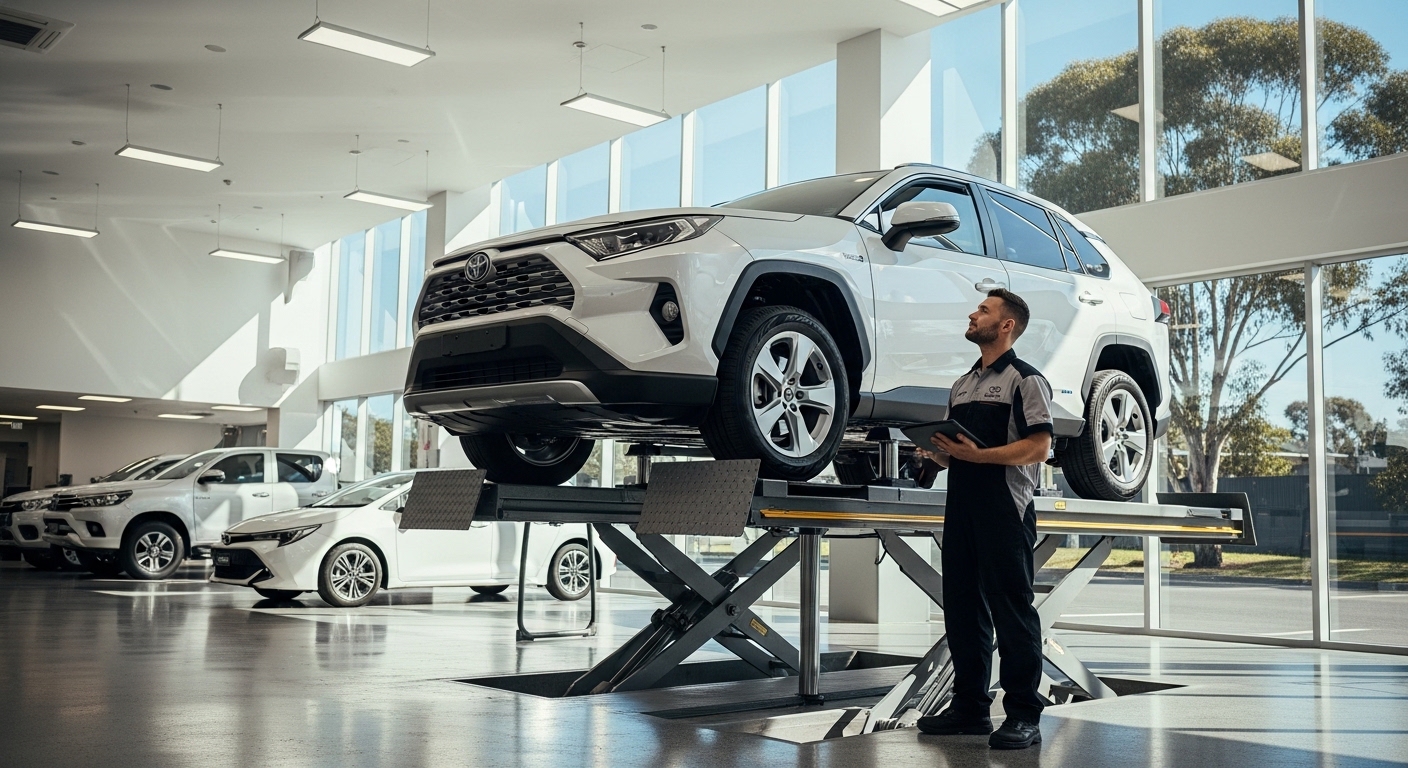 Toyota's servicing network is wider and generally cheaper than Lexus for the same mechanical parts.
There's a known watch-point on the AL20 RX too. The powered tailgate struts can fail with age, and the factory replacement has been quoted around $4,000 (ReDriven). It's not a dealbreaker, and independents can often sort it for less, but it's the kind of luxury-car bill that reminds you a premium badge can carry premium repair costs.
On resale, the Lexus name holds strong value in Australia, which softens the higher entry price when you eventually sell. The Harrier is less of a household name here, but its Toyota mechanicals, low running costs, and hybrid frugality make it an easy car to on-sell. Both hold up well. The Lexus trades on badge, the Toyota on sensible economics.
How Do You Source a Harrier or RX450h From Japan?
This is where it helps to have someone handle the moving parts, and it's the one place we'll mention who "we" are. Carbarn is a Sydney-based used and imported-car business in Lidcombe, NSW, with an in-house RAW-certified compliance workshop, so sourcing, shipping, and compliance all sit under one roof.
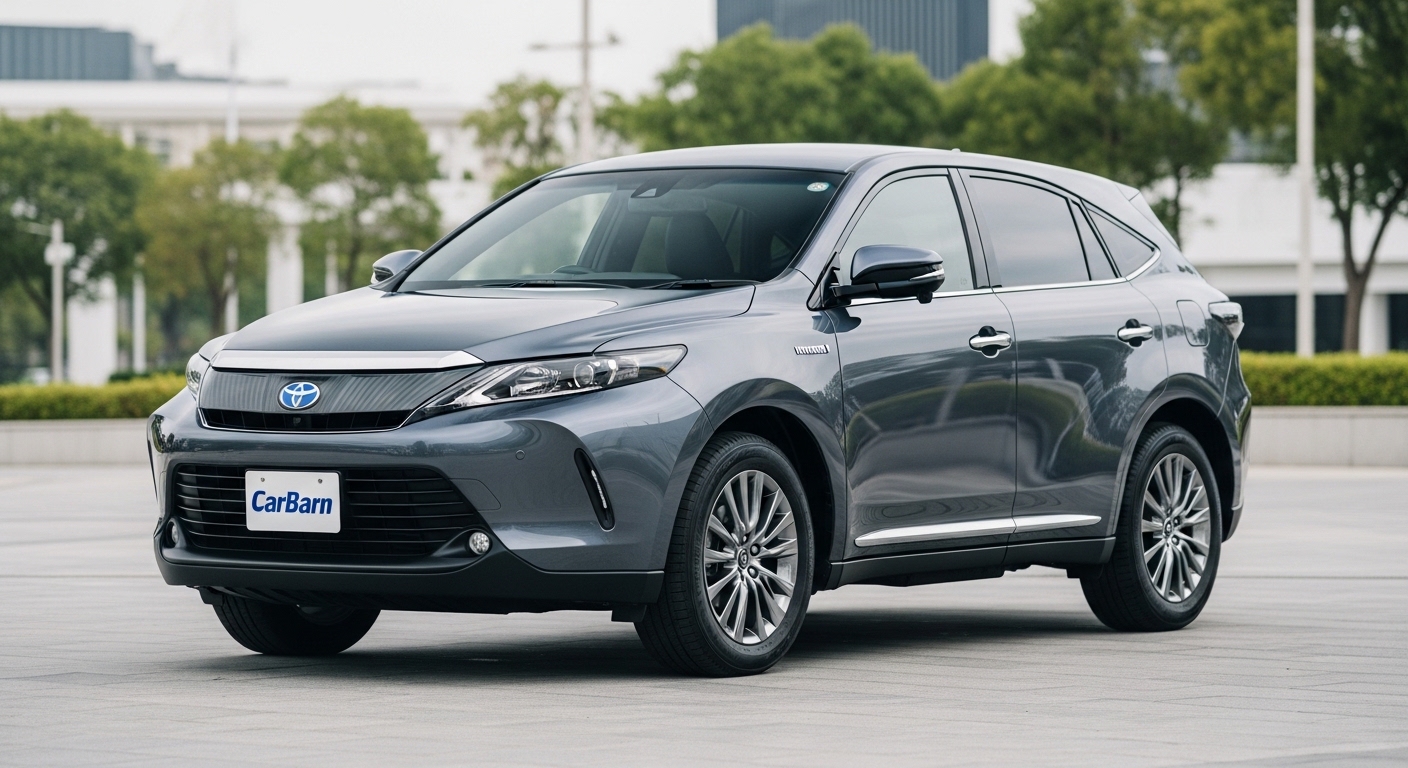 The AWD Harrier is one of the eligible variants Carbarn can source to order.
For a Japan import, the team sources through approved Japanese auctions, arranges a pre-bid physical inspection where the auction format allows, and only bids after you've approved a budget cap in writing. From there it manages VIA approval, roll-on/roll-off freight, customs and biosecurity clearance, workshop compliance to Australian Design Rules, the AVV inspection, and RAV entry, then delivers the car registration-ready. A 5-year extended warranty is available on eligible cars, along with finance and door-to-door delivery Australia-wide. Start with the eligible-model pages for the Harrier AXUH80, the Harrier AXUH85, or the Lexus RX450h GYL20, browse all import-eligible models, or kick off a custom search through the live auction sourcing service. If you'd rather not wait, there's also hybrid stock already in Australia.
Toyota Raize: The Hybrid SUV You Can Drive Now
Not everyone wants to wait 6 to 10 weeks for a Japan import, and if that's you, the Toyota Raize is worth a look as a locally available option you can inspect and drive straight away. It's smaller than the Harrier, but it scratches the same itch: a frugal, easy, Japanese hybrid crossover.
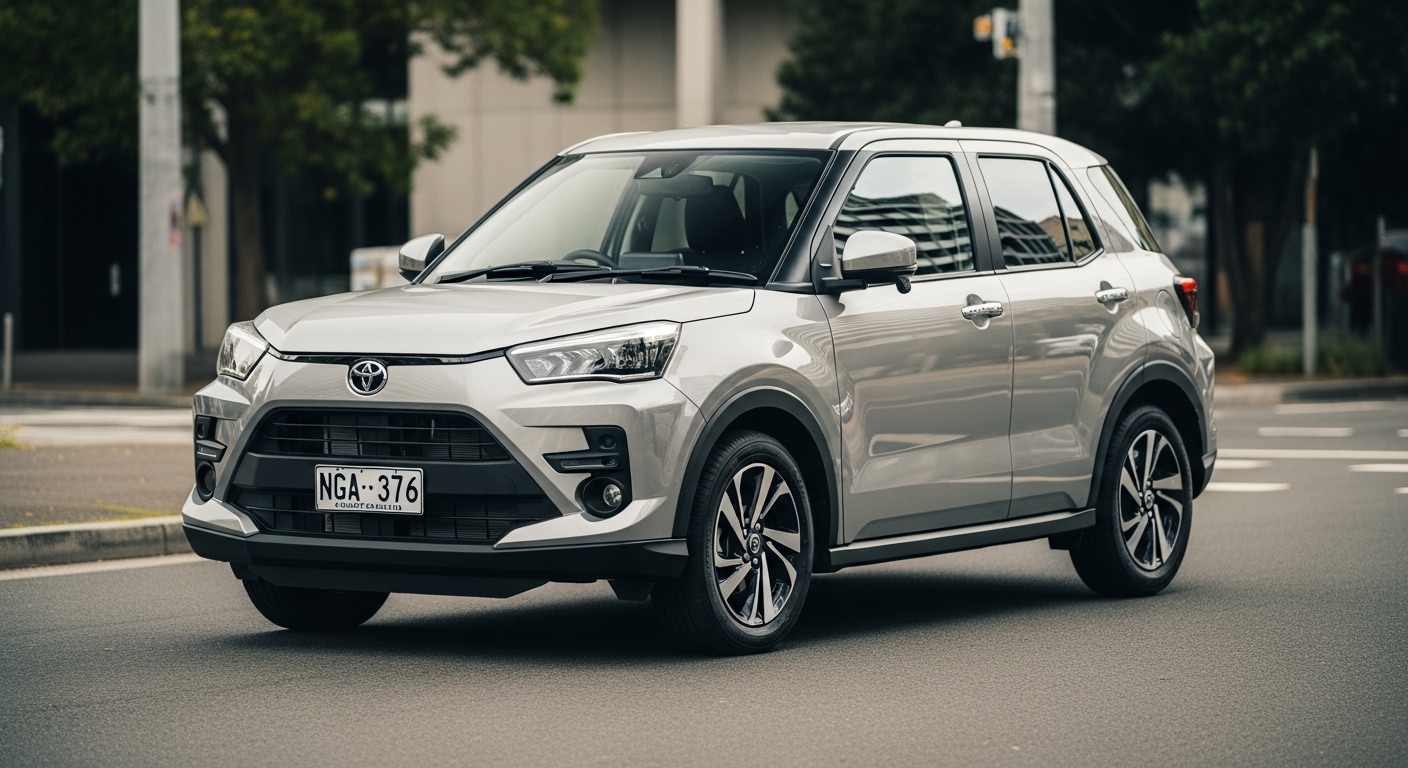 2022 Toyota Raize
The G Hybrid grade pairs a small-capacity turbo-petrol hybrid with a CVT, returning around 4.8 L/100km combined. It seats five, includes Toyota Safety Sense with lane-keeping assist, adaptive cruise, and pre-collision braking, plus Apple CarPlay and Android Auto. This particular car is a 2022 with about 48,700 km on the clock, sitting in the mid-$20K range, so it's a much lighter spend than either import.
It won't match the Harrier for interior room or the RX for outright pace. But as a compact city SUV for a first-time buyer, an urban professional, or a small family, it's a sensible, low-running-cost choice that's ready today. Think of it as the impatient, budget-friendly cousin to the bigger imports rather than a direct rival.
Which One Should You Buy? A Verdict by Buyer Type
There's no single winner here, only the right fit for how you actually drive. All four eligible variants are good SUVs, so the smart move is to match the car to your priorities rather than chase a badge or a headline saving. Here's the quick decision guide.
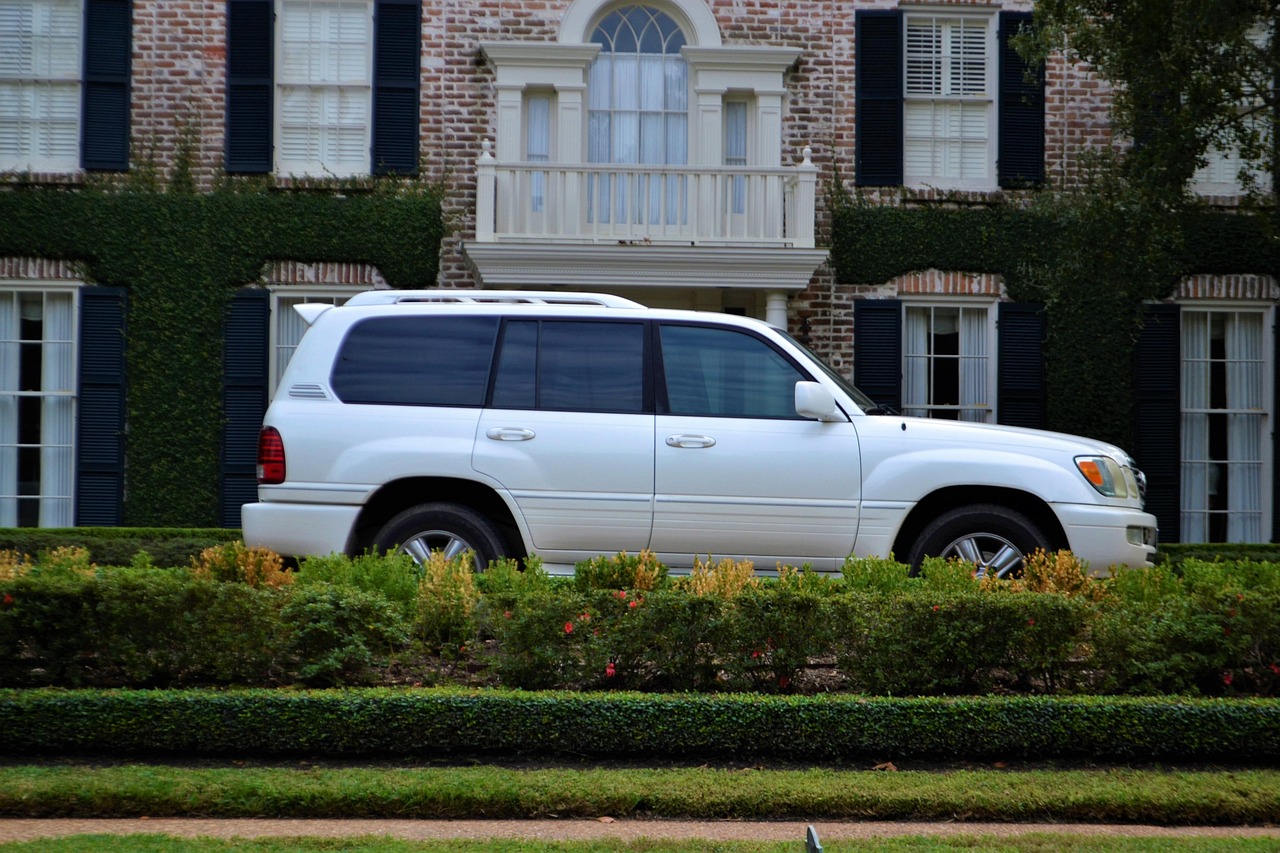 There is no single winner here, only the right fit for how you actually drive.
- Best value: Harrier AXUH80 (FWD). The lowest landed price, the best fuel economy at 22.3 km/L, and 90 percent of the luxury feel. For sealed-road city and suburban driving, this is the clever buy.
- Best for all-wheel drive: Harrier AXUH85 (AWD). Only about $700 more than the FWD car, and the sole option here that drives all four wheels. Right for snow, light towing, or gravel weekends.
- Best drive and best equipped: Lexus RX450h (GYL20). The V6 is stronger and smoother than the four-cylinder, the cabin is richer, and the badge holds value. You pay for it in fuel and servicing, but it feels special.
- Best plug-in: Harrier PHEV (AXUP85). Up to 93 km of electric range if you charge at home. It's the priciest of the four, so buy it for the daily EV commute, not to save money.
- Best right now: Toyota Raize. If waiting isn't for you, a locally available compact hybrid you can drive this week.
Final Word
Strip away the "it's just a cheaper Lexus" myth and the choice gets clearer. The importable Harrier and the eligible RX450h are cousins, not clones, so the roughly $8,600 gap buys you a newer, lighter, more efficient four-cylinder Toyota instead of an older, heavier, more powerful V6 Lexus. Both are honest picks.
Choose the Harrier if running costs, fuel economy, and value drive your decision, and step up to the AWD version if traction matters. Choose the RX450h if the badge, the V6, and the plusher cabin are what you're really buying. And remember the plug-in flips the price logic entirely, costing more than the Lexus, so it only makes sense if you'll genuinely run it on electricity.
Whichever way you lean, decide on how you drive and what you value, not on an old forum line about twins under the skin.