



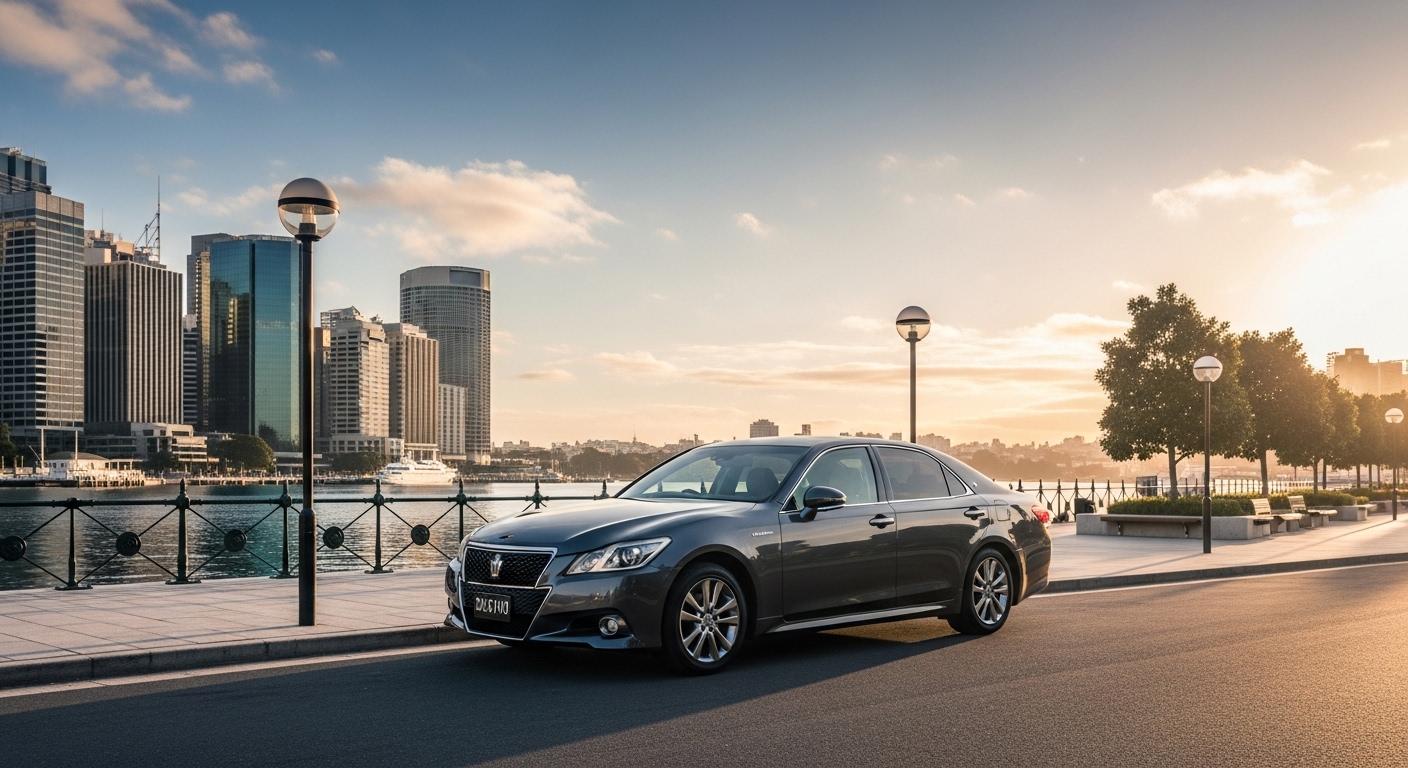
Ready to Hit the Road in Style?
Save money and reduce emissions with vehicles designed to deliver exceptional mileage. Visit our inventory and find a car that fits your lifestyle.
Ready to Hit the Road in Style?
Save money and reduce emissions with vehicles designed to deliver exceptional mileage. Visit our inventory and find a car that fits your lifestyle.
In 2013, Toyota launched the Crown Majesta with a claimed 252kW hybrid system output and 18.2km/L on the JC08 cycle, which was a very serious mix of pace and efficiency for a large rear-drive luxury sedan (Toyota, "TMC Launches New 'Crown Majesta' Sedan in Japan", 2013). If you want a quiet, comfort-first alternative to the usual SUV or ageing European executive sedan, that gets your attention straight away.
The tricky bit is knowing what the GWS214 actually is. Is it just another Crown hybrid with nicer trim, or is it meaningfully different? And if you're buying in Australia, what should you really check before you commit? This guide answers that clearly, with a focus on ownership fit, daily use, luxury, hybrid behaviour and buyer checks, not import-process detail.
Quick Answer
- The GWS214 is the flagship S210 Crown, not just a nicer trim level.
- In 2013, Toyota gave it a 2,925mm wheelbase and 252kW hybrid output (Toyota, 2013).
- It suits buyers who want quiet luxury, rear-seat space and smooth long-distance touring.
- Check battery health, suspension, electronics, rear-seat features and exact year-spec before buying.
- It makes more sense as a comfort car than a sporty sedan.
If you already know the model suits you and want the sourcing or eligibility side, see Import Toyota Crown GWS214 from Japan to Australia.
What is the Toyota Crown Majesta GWS214, and who does it suit?
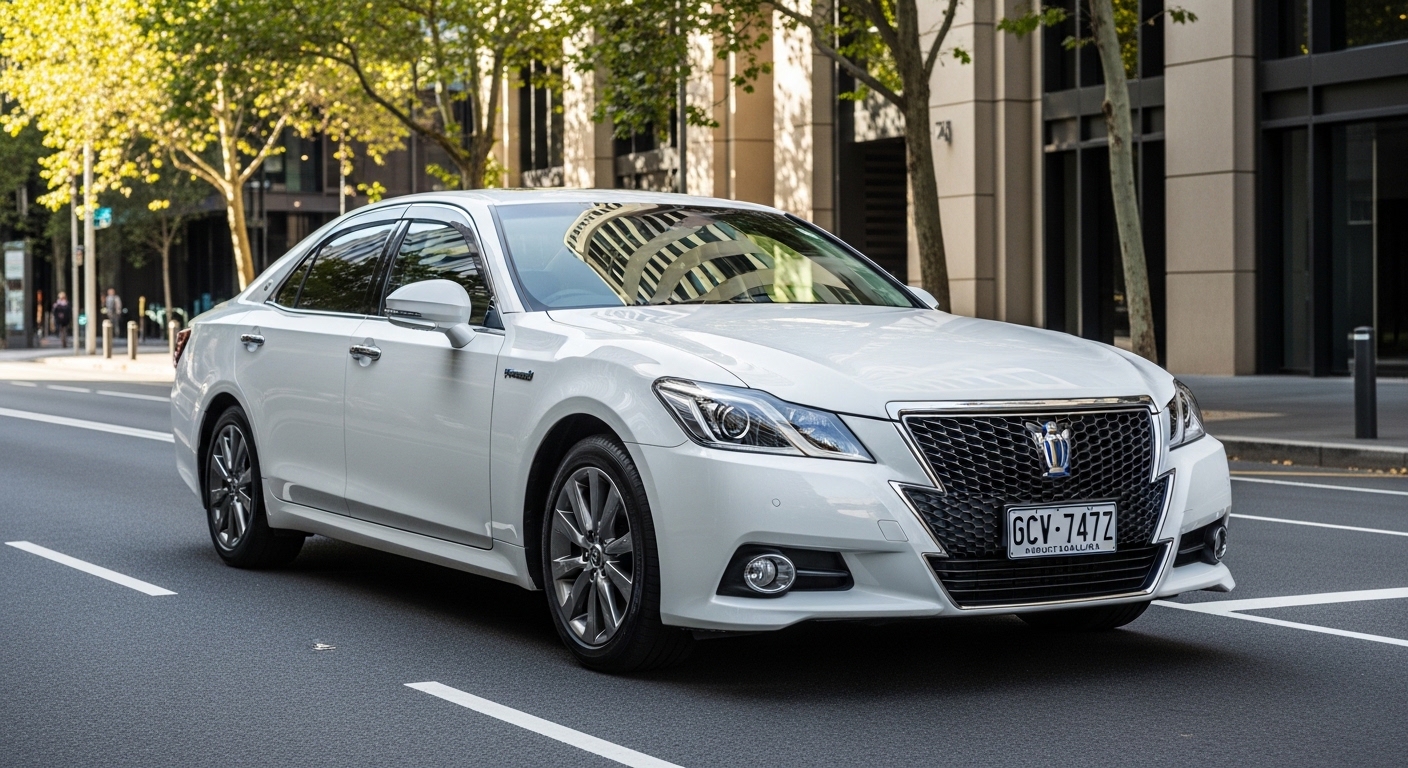
In 2013, Toyota said the Crown Majesta was the highest grade of the Crown series, built to deliver top-end satisfaction with a 2,925mm wheelbase and a luxury-first brief (Toyota, "TMC Launches New 'Crown Majesta' Sedan in Japan", 2013). That tells you what this car is really about: refinement first, not badge drama.
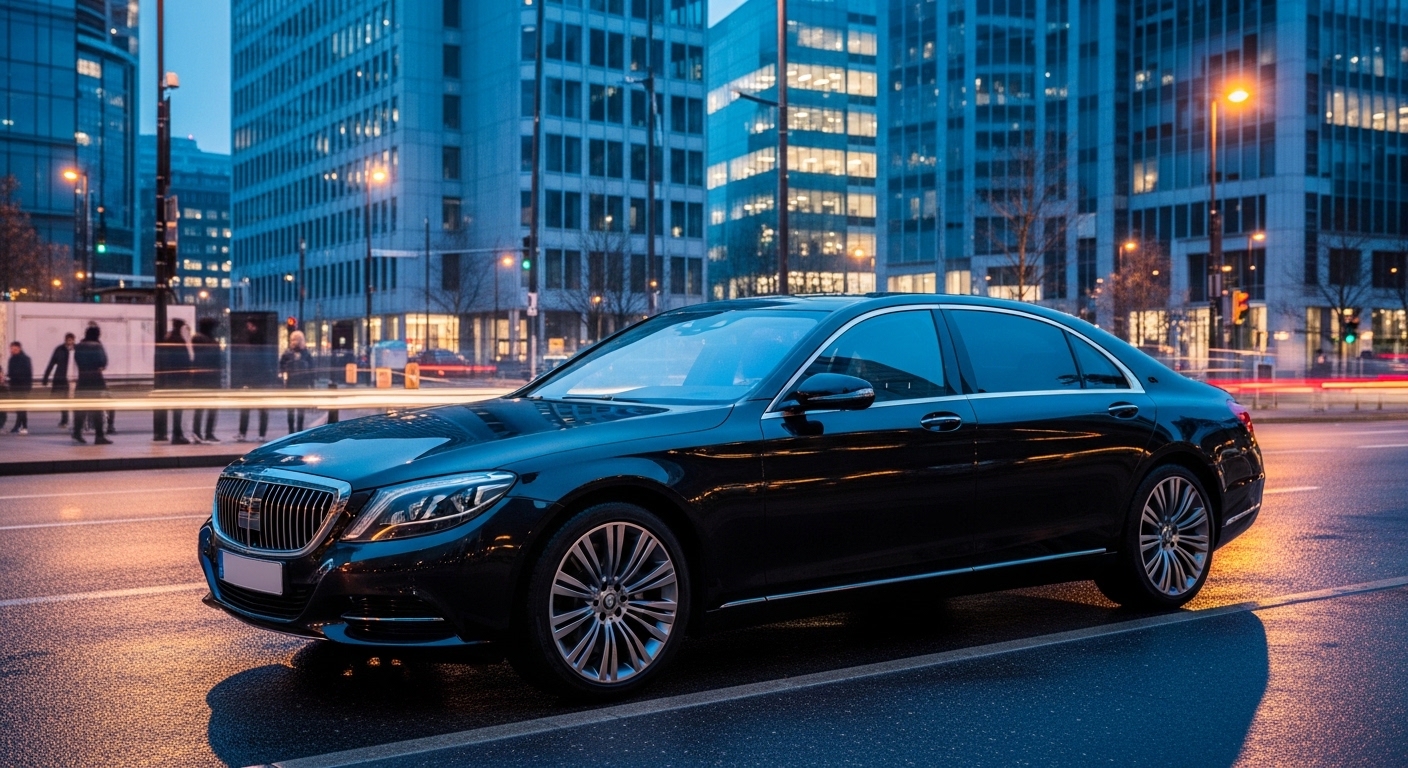 The Majesta suits buyers who want understated executive styling
The GWS214 sits above the regular Crown Royal and Athlete in purpose, not just price or trim. It was designed as the discreet flagship, the car for buyers who care more about quietness, ride quality and rear-seat comfort than aggressive styling. Why does that matter? Because if you're expecting a Lexus GS rival with a Toyota badge, you're only getting half the story.
For Australian buyers, it makes the most sense if you spend plenty of time on motorways, want a proper large sedan, or you're moving out of an older Avalon, Camry V6, Lexus GS or ageing European luxury car. It also suits buyers who like hybrids but don't want a light, economy-first feel. If you want sharp turn-in and a sporty edge, though, this probably isn't your car.
Who is the ideal Australian buyer?
If you mostly drive long suburban or highway distances, the Majesta's calm character makes a lot of sense. If you want rear-seat comfort for family use or chauffeured work trips, it makes even more sense. If you want a loud image car, or the simplest mainstream ownership path possible, you'd probably be better off elsewhere.
| Comparison point | Crown Majesta GWS214 | Regular Crown Royal/Athlete | Local Crown hybrid benchmark |
|---|---|---|---|
| Positioning | Flagship comfort sedan | Executive owner-driver sedan | Familiar local benchmark |
| Wheelbase | 2,925mm | 75mm shorter | Smaller, regular Crown format |
| Main focus | Quietness, rear-seat space, smooth hybrid power | Balance of comfort and driver feel | Everyday Crown-family hybrid ownership |
| Best fit | Luxury sedan buyer who values refinement | Driver who wants a more conventional Crown feel | Buyer wanting a simpler local comparison point |
| Main trade-off | More complexity, more spec variation | Less special in the back seat | Not a Majesta substitute |
Regular Crown wheelbase is derived from Toyota's stated 75mm difference between the Majesta and Crown Royal/Athlete (Toyota, 2013).
Majesta differences from a regular Crown
In 2013, Toyota said the Majesta's 2,925mm wheelbase was 75mm longer than the Royal and Athlete, specifically to add rear leg and knee room and give the car a more graceful side view (Toyota, "TMC Launches New 'Crown Majesta' Sedan in Japan", 2013). That's a structural difference, not a trim-pack difference.
Most pages on this car blur the Majesta into the rest of the Crown range. That's the wrong way to think about it. The GWS214 is closer to a chauffeur-style executive sedan than a regular owner-driver Crown. You feel that in the cabin layout, the way the rear doors and rear seating matter, and the way the whole car is tuned to isolate you from the road.
A regular Crown Royal or Athlete is still a comfortable sedan, but it feels more conventional in its priorities. The Majesta leans harder into silence, rear-passenger comfort and formality. If you're cross-shopping a non-hybrid six-cylinder, the petrol Toyota Crown GRS214 is the cleaner comparison. If you're comparing generations, the older Toyota Crown hybrid alternative and the newer Toyota Crown hybrid alternative show where the GWS214 sits in the middle.
There's also an older Majesta heritage angle here. Compared with an earlier Majesta or an older Majesta heritage, the GWS214 shifts the formula away from old-school V8 luxury and toward a more modern hybrid flagship feel. That's a big part of its appeal.
What is the GWS214 like to drive as a hybrid luxury sedan?
In 2013, Toyota gave the GWS214 a 3,456cc 2GR-FXE V6, 215kW and 354Nm from the engine, 147kW and 275Nm from the motor, and 252kW combined system output (Toyota, "TMC Launches New 'Crown Majesta' Sedan in Japan", 2013). So no, this isn't just an economy play dressed up as luxury.
What do those numbers feel like on the road? Smooth, quiet and effortless. The Majesta doesn't lunge at you like a sports sedan. Instead, it builds speed with the sort of low-stress shove that suits a big luxury car. Around town, the hybrid system helps it step away neatly in traffic. On the motorway, it has the easy overtaking reserve you'd want from a serious executive sedan.
Toyota also made a point of the rear-drive hybrid layout and two-stage motor-speed reduction device in its 2013 launch material. That matters because it helps explain why the Majesta feels more substantial than many older hybrids. The power delivery is calmer and fuller than you might expect, especially if you're coming from smaller Toyota hybrids.
Powertrain snapshot
| Component | Figure |
|---|---|
| Engine code | 2GR-FXE |
| Displacement | 3,456cc |
| Engine output | 215kW |
| Engine torque | 354Nm |
| Motor output | 147kW |
| Motor torque | 275Nm |
| Combined system output | 252kW |
If you're chasing outright sporty handling, a regular Athlete-shaped Crown may fit better. But if you want strong, quiet progress, this is the point of the GWS214. Isn't that what a big luxury sedan should do well?
How comfortable and practical is the cabin?
In 2013, Toyota sized the Majesta at 4,970mm long, 1,800mm wide and 1,460mm high, while also claiming boot space for up to four golf bags thanks to its battery packaging strategy (Toyota, "TMC Launches New 'Crown Majesta' Sedan in Japan", 2013). That's proper executive-sedan packaging, not just marketing fluff.
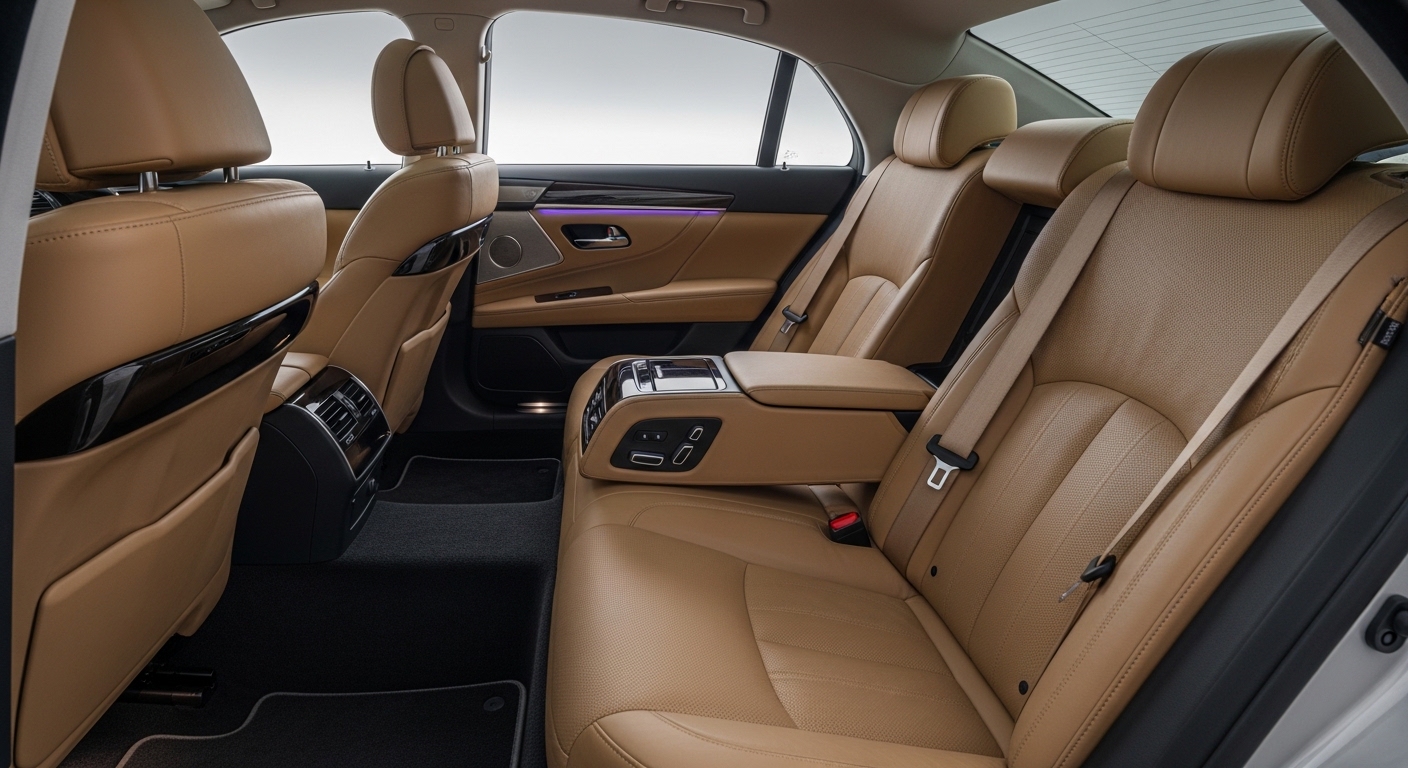 Rear-seat comfort is a big part of the Majesta appeal
The rear-seat story is the big one. Toyota's longer-wheelbase design gives the Majesta a roomier, more relaxed back seat than a regular Crown. Entry and exit tend to feel easier, and the whole car has a more formal posture. If you're using it for long family trips or executive commuting, that's a real advantage.
The key thing many buyers miss is that the Majesta's luxury isn't only about leather or wood trim. It's about how the cabin uses space and calmness. In our view, that's why the car still feels special years later. The boot also matters more than people expect. Toyota said the hybrid battery sat at the front of the boot, with the secondary battery under the floor, to preserve a flat deck and useful luggage space.
Depending on year, grade and individual vehicle, the F version can push the rear-seat experience further. But even a standard Majesta should feel like a genuine step up in rear-passenger emphasis from a regular Crown.
What technology and safety features should buyers confirm on the exact car?
In 2013, Toyota said Blind Spot Monitor and Adaptive High Beam were standard, while the Pre-collision System and Intelligent Clearance Sonar were package-dependent or grade-dependent features, not blanket guarantees across every car (Toyota, "TMC Launches New 'Crown Majesta' Sedan in Japan", 2013). That means spec-sheet assumptions can trip buyers up.
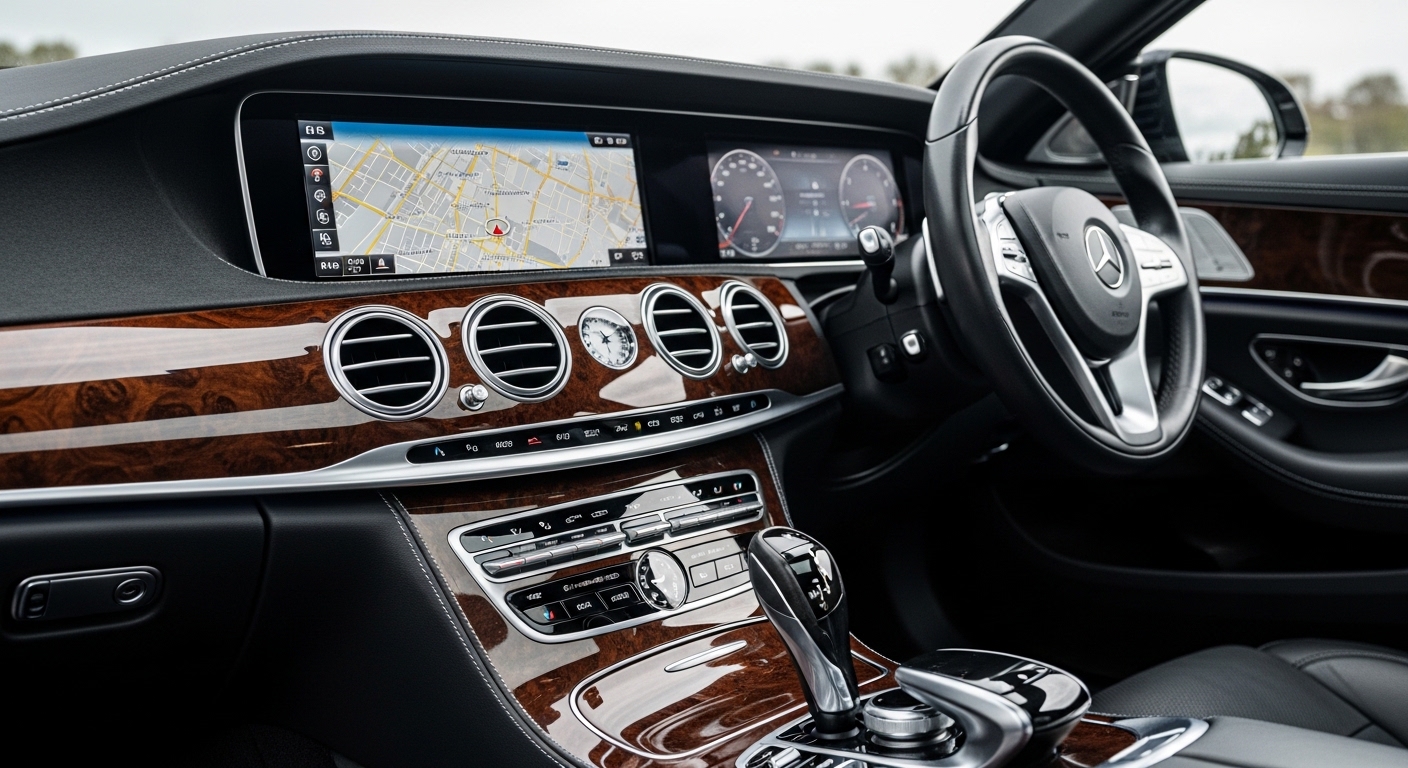 Technology and switchgear should be tested on the exact car
In 2015, Toyota added ITS Connect availability and noted partial Majesta updates including reinforced body-junction rigidity and optimised front and rear suspension (Toyota, "Toyota Gives the Crown a New Shine at Sixty", 2015). So if you're shopping across multiple build years, you really do need to slow down and confirm the exact car.
The F version is especially worth checking closely. Toyota said it added independently controlled climate settings for driver, front passenger and rear seats, plus heated 40/20/40 split rear power seats (Toyota, "TMC Launches New 'Crown Majesta' Sedan in Japan", 2013). Those are strong luxury features, but only where fitted.
Imported infotainment is another practical point. Navigation language, radio band behaviour, reversing cameras, parking sensors and rear-seat controls all deserve a proper hands-on test. If a seller can't clearly confirm what works, treat that as a buyer-check issue, not a minor detail.
What should buyers know about reliability, maintenance and hybrid ownership?
In 2013, Toyota listed the GWS214's hybrid battery as nickel-metal hydride, and in 2026 Toyota Australia says eligible local HEVs can extend traction-battery cover to 10 years with annual health checks (Toyota, "TMC Launches New 'Crown Majesta' Sedan in Japan", 2013; Toyota Australia, "Toyota Warranty Advantage", 2026). That doesn't mean an imported Majesta gets local warranty cover automatically, but it does show battery assessment is normal, sensible ownership practice.
Toyota hybrid fundamentals are a genuine strength here. The drivetrain architecture is well understood, and that matters when you're looking at an older luxury hybrid. But don't let Toyota's reputation make you lazy. A used flagship sedan still has suspension components, cabin electronics, climate-control systems, switchgear and trim pieces that age differently from a simpler car.
The smartest way to think about Majesta reliability is this: the hybrid system may be the least scary part of the car, while neglected luxury equipment may be the bigger ownership annoyance. That's the opposite of what many buyers assume. So what should get your attention first? Service evidence, battery condition, suspension behaviour, tyres, brakes, air-conditioning performance and every seat, screen and switch you can test.
| Check area | Why it matters | Priority |
|---|---|---|
| Hybrid battery health | Expensive if ignored, normal to assess on older hybrids | High |
| Service history | Shows whether the car was maintained properly | High |
| Suspension and steering | Ride quality is central to the Majesta brief | High |
| Tyres and brakes | Heavy luxury sedans expose neglect quickly | High |
| Front electronics | Screens, cameras and controls can be annoying to fix | Medium |
| Rear-seat functions | Important on higher grades and F-version cars | Medium |
| Air-conditioning | A luxury sedan should get this right | Medium |
| Odometer and history records | Confirms the car matches the story | High |
Running costs and daily usability in Australia
In 2013, Toyota quoted 18.2km/L on the JC08 cycle for the Majesta, which converts to about 5.5L/100km on paper, and Toyota also listed a 5.3m minimum turning radius in its launch material (Toyota, "TMC Launches New 'Crown Majesta' Sedan in Japan", 2013). For a large V6 luxury sedan, that's a very handy starting point.
The usual caution applies here. JC08 is not WLTC, and it isn't real-world Australian driving. Your actual fuel use will depend on trip length, traffic, tyres, fuel quality and how often you ask for full performance. Still, even allowing for a gap to reality, the Majesta has a clear paper advantage over many old-school petrol luxury sedans.
The 5.3m turning radius also matters more than you'd think. A 4,970mm sedan will never feel tiny, but the Majesta shouldn't feel clumsy either. Around town, that helps. On the open road, the relaxed hybrid character helps even more.
Fuel-volume guide using Toyota's official 18.2km/L claim
| Annual distance | Approx. fuel volume |
|---|---|
| 10,000km | 549.5L |
| 15,000km | 824.2L |
| 20,000km | 1,098.9L |
If you want a simpler local comparison point for hybrid ownership, it's also worth browsing Toyota hybrid cars available in Australia.
What should Australians check before buying, and how does a local Crown benchmark compare?
As of July 2026, the dedicated Toyota Crown GWS214 import eligibility page points buyers to the model, which is why exact build date, model code and specification matter before anything else. The smartest buy is the best-documented example, not the cheapest example.
Start with the basics and don't rush them. Check the service history, hybrid battery condition, engine and transmission behaviour, accident history, odometer records, tyres, brakes and suspension. Then move to the luxury-specific items: rear-seat controls, seat motors, air-conditioning output, cameras, sensors, infotainment behaviour and every electrical function you can test. Depending on year, grade and individual vehicle, even two similar-looking cars can differ in useful ways.
Used-buyer checklist
- Confirm exact build year, grade and model code
- Check service records and any auction-grade paperwork where relevant
- Ask for battery-health context, not vague reassurance
- Drive it over rougher roads to feel for suspension wear
- Test every seat motor, climate button and rear-seat feature
- Check screen language, camera operation and parking sensors
- Inspect tyre age and condition, not just tread depth
- Make sure the car's compliance suitability and paperwork story are clear
Local benchmark: Toyota Crown Royal Saloon 2015
The Toyota Crown Royal Saloon is the closest local benchmark because it shows how a Crown-family hybrid sedan can fit Australian daily use without the Majesta's stronger rear-seat focus.
 2015 Toyota Crown Royal Saloon
A current 2015 Royal Saloon listing shows AWS210 model code, hybrid power, automatic transmission, 2WD, five seats and 115,800km, which makes it a useful reference point for buyers deciding whether they want a regular Crown experience or the extra Majesta step-up (current vehicle listing, "2015 Toyota Crown Hybrid Royal Saloon", 2026). It gives you the Crown family's comfort and hybrid smoothness in a more familiar ownership package.
Toyota's official 2015 Royal Saloon hybrid specs list a 2AR-FSE 2.493-litre engine with 131kW, 221Nm, 23.2km/L JC08 fuel economy, and dimensions of 4,895mm by 1,800mm by 1,460mm, while the live listing remains a time-sensitive example rather than a spec source (Toyota official specs, 2015; current vehicle listing, "2015 Toyota Crown Hybrid Royal Saloon", 2026). So it isn't a Majesta substitute. But it is a handy reminder of what a simpler Crown-family hybrid feels like if the GWS214 seems a bit too specialised.
Who should buy one, and who should skip it?
Buy a GWS214 if you want discreet luxury, strong hybrid performance, long-distance comfort and a more unusual Japanese alternative to an older European executive sedan. Skip it if you want the simplest possible used-car ownership path, care most about sporty handling, or don't want to spend time verifying year, grade and individual-car spec. That's the honest split.
If you want help comparing locally available Toyota hybrids with Japan-sourced options, Carbarn's used-car and import team can help with used-car selection, sourcing, inspection guidance, finance, warranty options, in-house compliance support, NSW dealer assistance and nationwide delivery. For model-specific sourcing, see the Toyota Crown GWS214 import eligibility page.