



Ready to Hit the Road in Style?
Save money and reduce emissions with vehicles designed to deliver exceptional mileage. Visit our inventory and find a car that fits your lifestyle.
Ready to Hit the Road in Style?
Save money and reduce emissions with vehicles designed to deliver exceptional mileage. Visit our inventory and find a car that fits your lifestyle.
Eight seats sounds like a simple thing to shop for. It isn't. Search "8 seater" in Australia and you'll get seven-seaters with an optional bench, luxury vans priced like a European SUV, and older V6 barges that drink fuel on the school run. Most families end up choosing between space they need and running costs they can live with.
This guide compares four used Japanese people movers on one axis only: value. Not luxury, not badge appeal. What you pay, what you get, and what it costs you every week after that.
The Bottom Line
- The Nissan Serena's S-Hybrid Highway Star grades are genuine eight-seaters. e-POWER models fitted with second-row captain's chairs are seven-seat, so the badge alone won't tell you.
- Honda's Odyssey Hybrid is the efficiency leader, quoted at 5.2 to 5.8L/100km by Carbarn's own model page, but it sits lower and rides more like a wagon.
- The Toyota Alphard is a luxury van first. You're buying leather and presence, not cheaper motoring.
- The Nissan Elgrand isn't sold as local stock in Australia. It arrives via the SEVS import pathway, which is a different buying process entirely.
- No Serena has an ANCAP rating on file (ANCAP), which matters if a star count is part of your decision.
What Does "Value" Actually Mean in an 8-Seater?
Value in this segment comes down to three numbers, not one. Purchase price, fuel burn over 15,000km a year, and how much of the car you actually use. A van with eight seats you never fill is worse value than a seven-seater you fill weekly. That's the framing for everything below.
Here's the honest trade-off nobody spells out. The people movers with the best interiors are the ones with the worst value-per-dollar, because you're paying for materials rather than capability. The Alphard proves this neatly: it seats the same number of people as a Serena while sitting in a far wider price band.
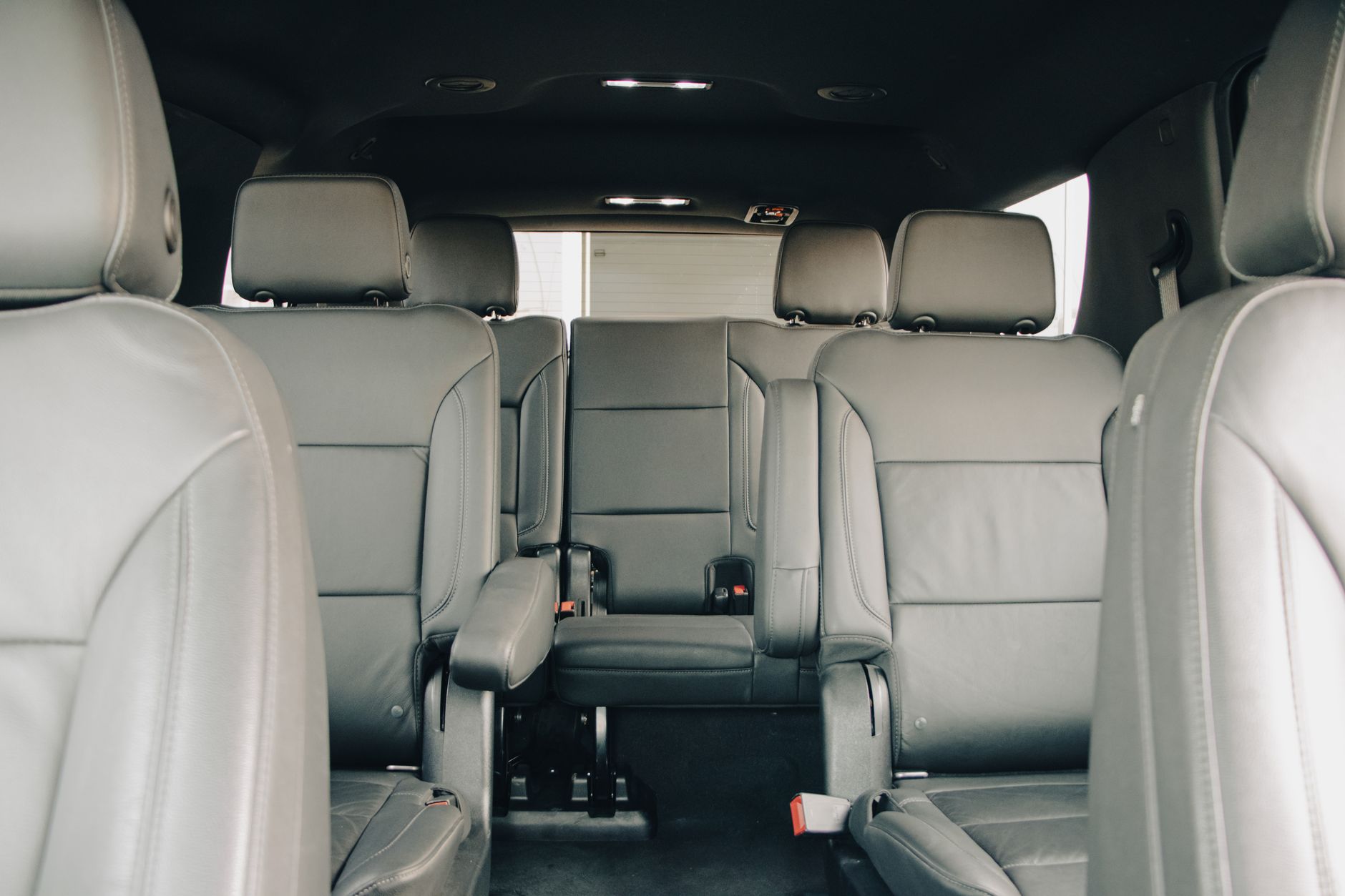
Seat count deserves a closer look too. Second-row captain's chairs, the ones that make a cabin feel premium, are exactly what drops a van from eight seats to seven. A bench is less comfortable and more useful. If you're routinely carrying a full load, that's a feature, not a compromise.
 Gray multi-row people mover cabin with second and third-row seating
How Do the Four Compare Side by Side?
| Model | Seats | Powertrain | Doors | How you buy it in Australia | Used market band |
|---|---|---|---|---|---|
| Nissan Serena (GFC27) | 8 | 2.0L S-Hybrid + CVT | Dual power sliding | Locally available | Mid-to-high $20K range |
| Honda Odyssey (RC4) | 7 or 8 | 2.0L i-MMD hybrid | Dual power sliding | Locally available | Mid-to-high $20K range |
| Toyota Alphard | 7 or 8 | Hybrid Synergy Drive | Dual power sliding | Locally available | Wide, mid-$20K to well past $40K |
| Nissan Elgrand (E51 Lifecare) | 7 | 2.5L or 3.5L V6 petrol | Sliding | Japan-sourced, SEVS pathway | Import cost components, not a lot price |
One line worth adding before the detail: a 2021 Toyota Noah in X package eight-seat form also turns up in locally available petrol stock, and it's a fair alternative if hybrid isn't a priority for you.
Why Is the Nissan Serena the Value Pick?
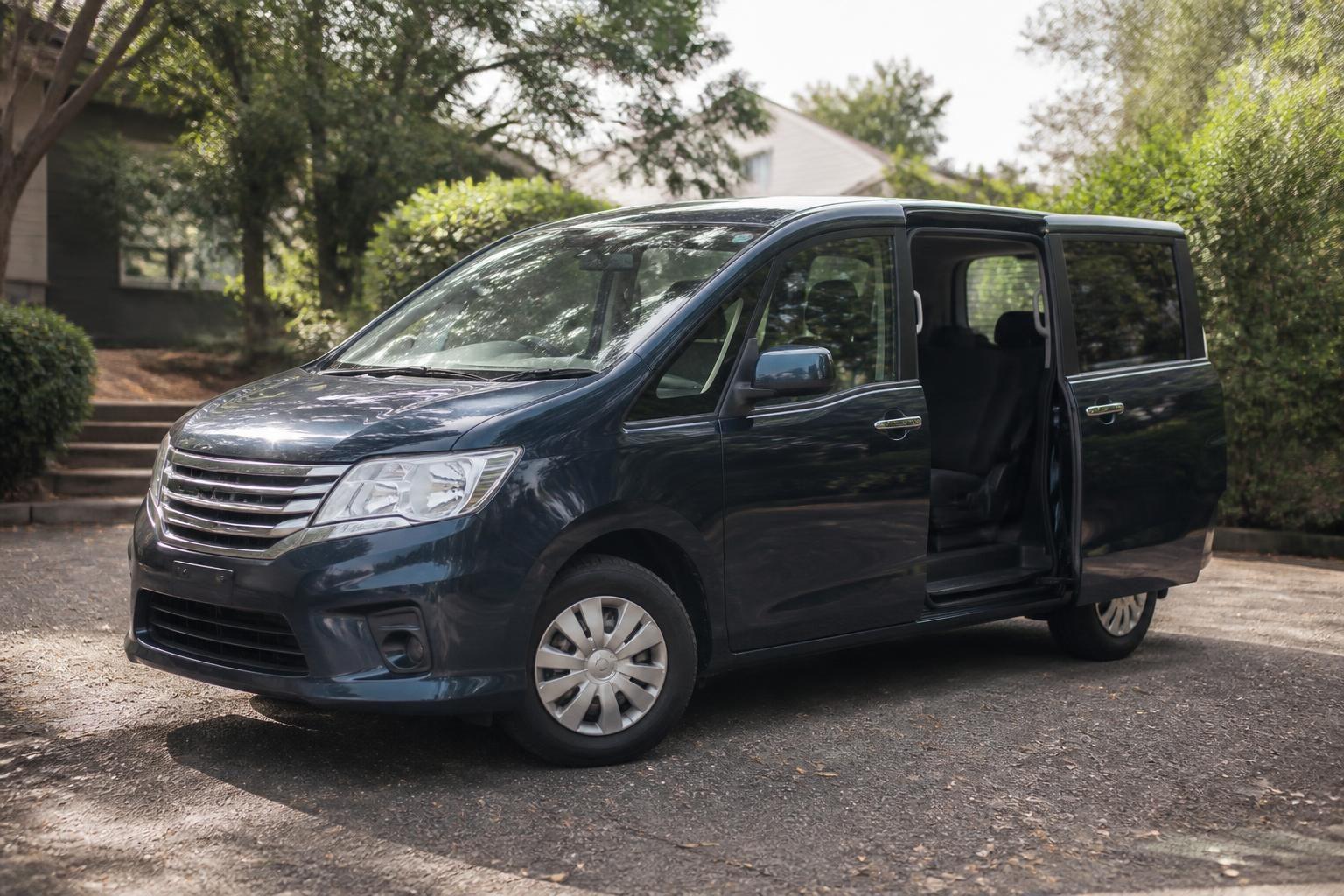
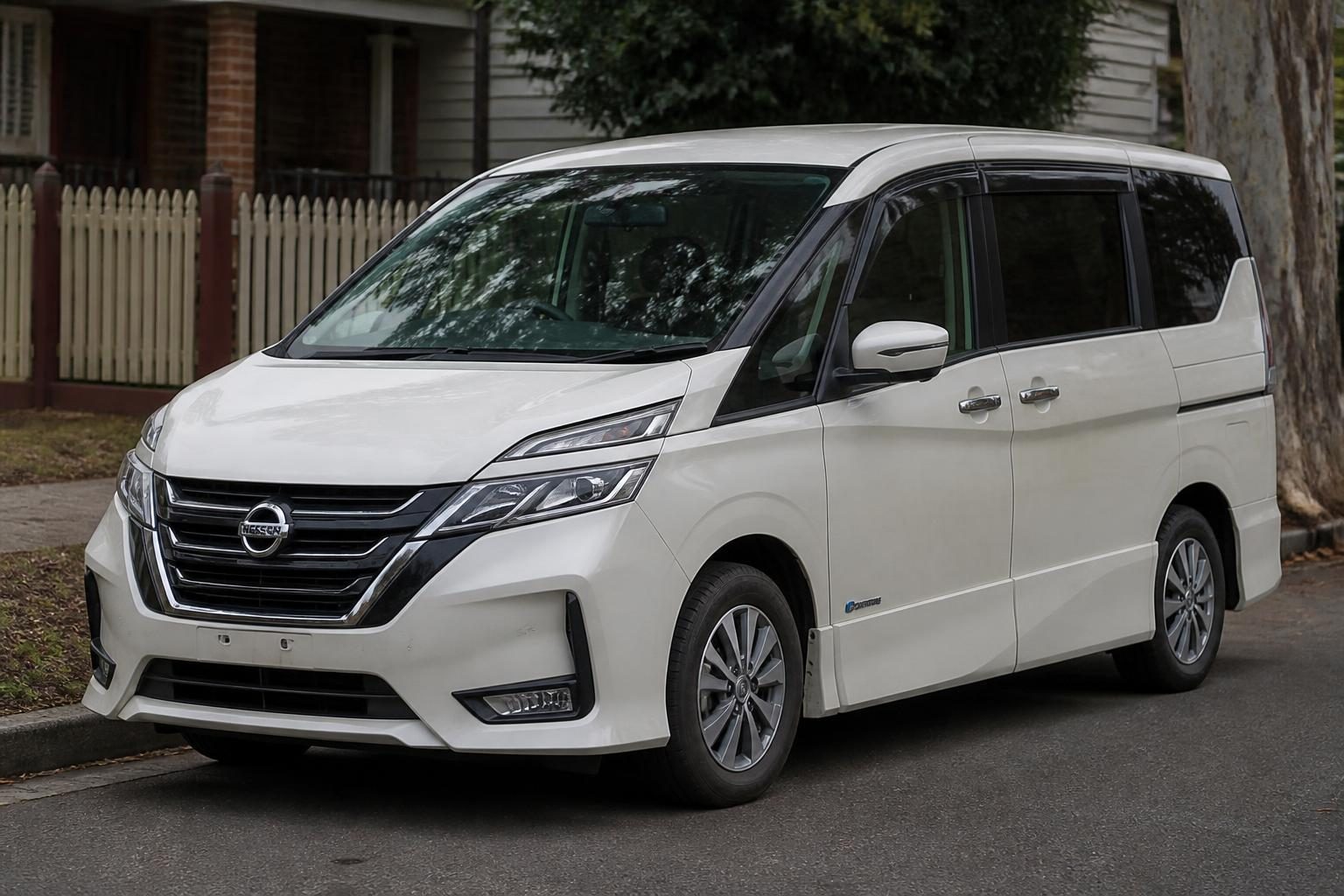
The Nissan Serena in Highway Star V trim is the reason this article exists. It's a tall, boxy van built around the assumption that all eight seats get used, with dual electric sliding doors and a roof height around 1,860-1,865mm that makes the third row genuinely liveable for adults. The locally available cars are consistently 2021 builds under 76,000km, all hybrid, all automatic, with eight-seat configurations depending on variant. That's an unusually tight cluster for used stock.
 2021 Nissan Serena
The mechanical picture is straightforward. The GFC27 pairs Nissan's 2.0-litre MR20DD petrol four with an XTRONIC CVT and the S-Hybrid system, which uses an enlarged ECO motor in place of the alternator. That motor adds a small assist torque off the line and recovers energy under braking. It drives like a normal petrol car, because mechanically it is one. Nissan's claimed economy for the S-Hybrid system sits around 6.5 to 7.0L/100km, though that claim was published for the earlier C26 generation, so treat it as indicative rather than a promise for a 2021 car.
Worth knowing before you shop: this is not the same car as the e-POWER Serena, which uses a 1.2-litre petrol engine purely as a generator and drives the wheels with an electric motor only. e-POWER models fitted with second-row captain's chairs are seven-seat, though an eight-seat centre-bench e-POWER configuration also exists, so check the individual car. Higher grades also carry ProPILOT, Nissan's single-lane driver assistance. If eight seats is the non-negotiable, the S-Hybrid Highway Star is the variant to search for. For the full generation-by-generation breakdown, our Serena hybrid evolution guide goes deeper than we can here.
Why Choose the Honda Odyssey Hybrid?
The Honda Odyssey Hybrid is the efficiency answer to the same question, and on paper it's the strongest of the four. Honda quotes fuel economy of 5.2 to 5.8L/100km depending on load and conditions, which is materially better than anything else here. Over 15,000km a year at current pump prices, that difference against a mid-7L van works out to roughly $450 to $500 annually. Real money, though not enough on its own to decide a purchase.
 Silver people mover parked outside a brick home with its sliding door open.
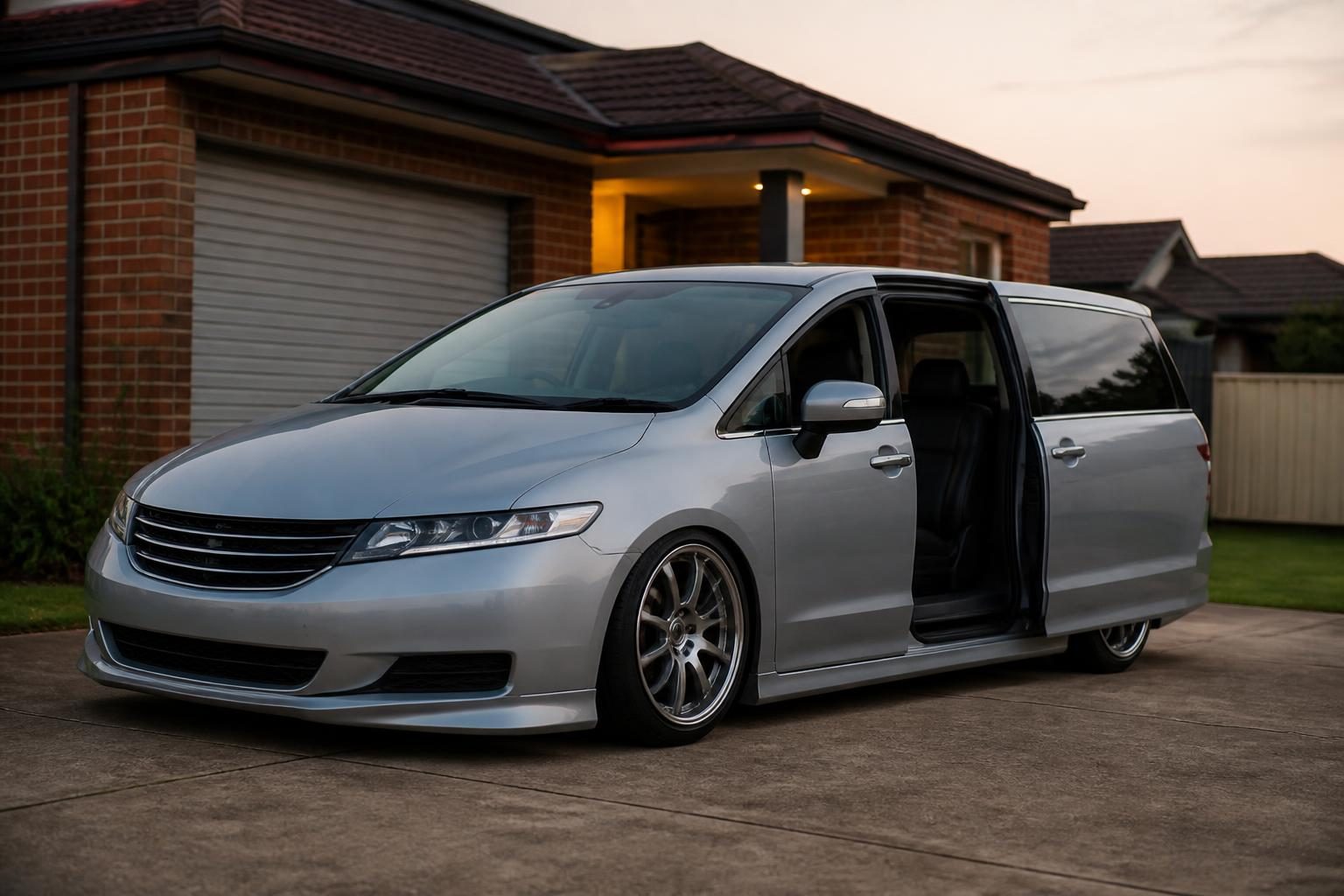
The RC4 runs a 2.0-litre Atkinson-cycle petrol engine with dual electric motors in Honda's i-MMD setup. Most of the time the wheels are turned by the electric motor with the engine acting as a generator, which is why it feels quiet and pulls smoothly from a standstill. Regenerative braking does the heavy lifting in stop-start traffic. Newer cars carry Honda Sensing, bundling collision mitigation braking, lane keep assist and adaptive cruise.
The catch is body shape. The Odyssey sits lower than the Serena, closer to a tall wagon than a van, which improves how it drives and handles crosswinds but costs you third-row headroom and cargo height. Seating splits across seven and eight-seat variants depending on trim, so check the specific car. Odyssey stock also moves quickly, so it's worth checking what's currently listed rather than assuming.
Toyota Alphard
The Toyota Alphard is the car people picture when they imagine a premium people mover, and it earns that reputation. Leather, woodgrain trim, twin moonroofs, tri-zone climate control, power-reclining captain's chairs on the upper grades. It's the van hotels and chauffeur operators buy, which tells you where its strengths sit.
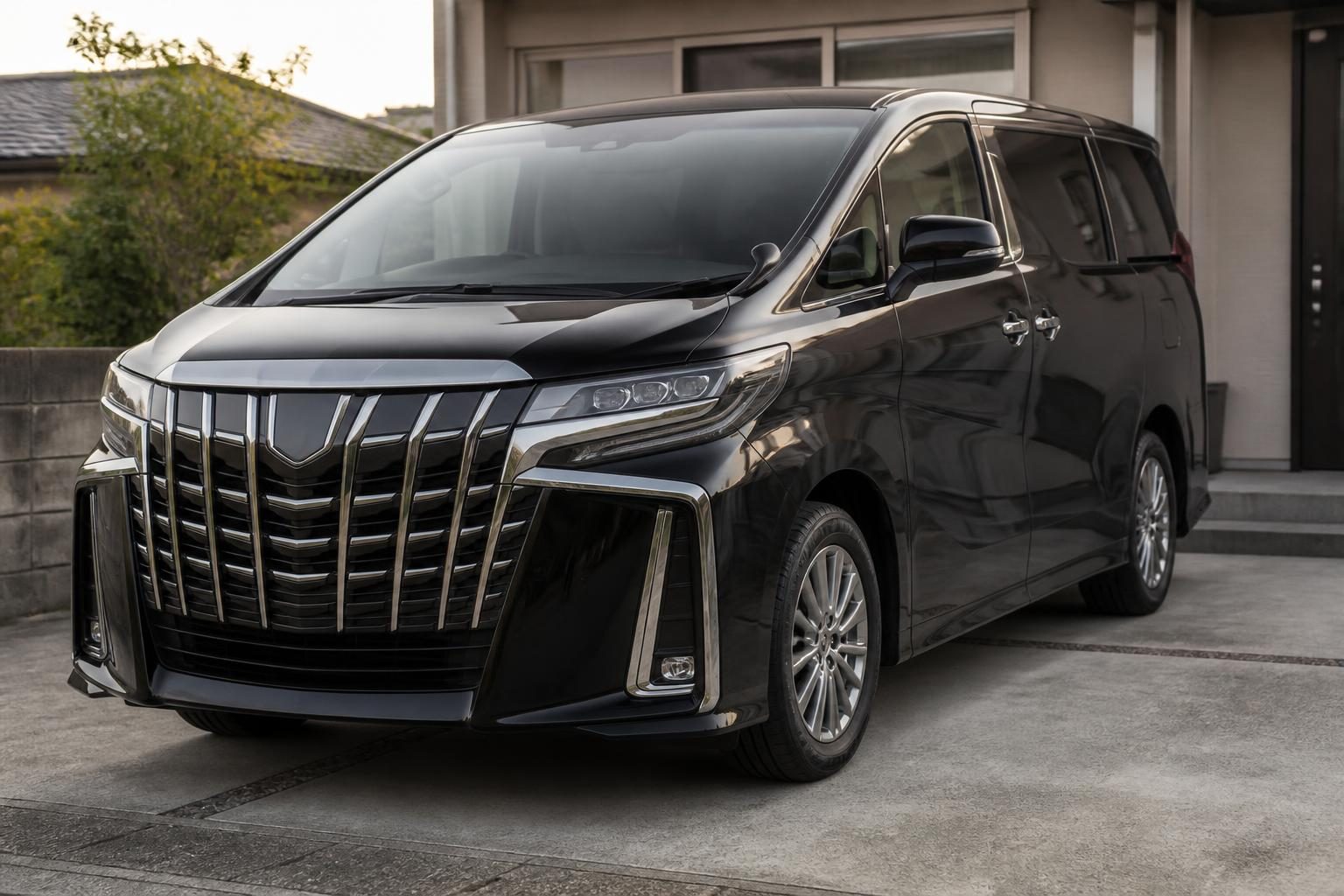 Pearl-black luxury minivan parked outside a residence.
Mechanically the hybrid Alphards use Toyota's Hybrid Synergy Drive, a full parallel hybrid that can move the car on electric alone at low speed. Many are AWD, which is genuinely useful on wet Sydney roads and worth having on a heavy vehicle. Safety equipment is strong for the segment: Pre-Collision System, adaptive cruise, lane departure alert, blind spot monitoring and seven airbags. Seating comes in seven and eight-seat layouts, with high-roof and standard variants.
So why isn't it the value pick? Because the price band is wide and moves upward fast with year and trim. An older, higher-kilometre Alphard can land close to Serena money, but the well-presented low-kilometre cars sit far above it. You can also find yourself paying for Executive Lounge appointments on a school-run vehicle. If comfort is what you're buying, the Alphard makes a lot of sense. If cost-per-seat is the metric, it doesn't. Our Alphard versus Elgrand comparison covers that side-by-side in more detail.
Which One Suits You?
Pick the Serena if eight usable seats and a low weekly fuel bill are both non-negotiable, and you'd rather spend money on capability than trim. It's the most tightly focused value proposition of the four.
Pick the Odyssey if you spend most of your time in traffic, want the lowest fuel consumption available, and can live with a lower roof. It drives better than the tall vans and that counts on long trips.
Pick the Alphard if the interior matters as much as the seat count, or if you're carrying clients rather than kids. It's a comfort purchase and there's nothing wrong with that, provided you know that's the decision you're making.
Consider the Elgrand if you want an older large V6 van, you're comfortable with a longer timeline, and the SEVS mobility pathway matches what you need. It's the specialist choice here.
One last thing on safety. ANCAP holds no rating for the Nissan Serena, and imported Japanese-market people movers frequently sit outside the ANCAP database entirely. That doesn't mean a car is unsafe. It means you can't compare star ratings across this group, so judge on equipment instead: airbag count, collision mitigation braking, lane keeping and blind spot monitoring.
How Do You Get One Sorted in Sydney?
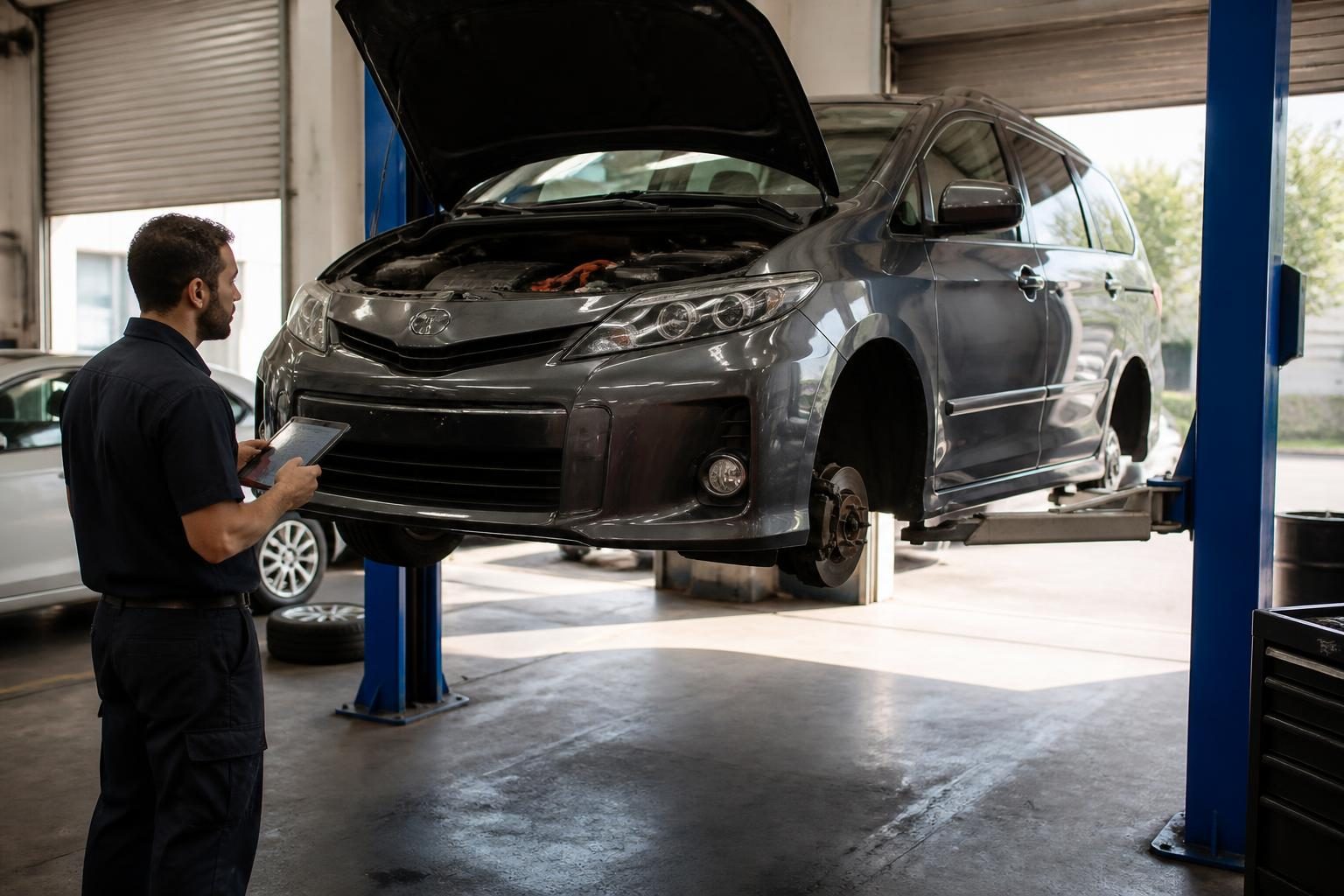 A mechanic inspects a raised grey people mover in a bright workshop.
Whichever way you lean, the two checks that matter most on a used Japanese hybrid van are battery health and transmission condition. Mild-hybrid CVTs and the hybrid motor assembly are the known weak points, and a proper diagnostic is cheaper than finding out later.
Carbarn works from a Lidcombe base in Sydney and handles both sides of this market. Locally available cars are inspected, hybrid systems tested and battery health checked before delivery, with finance, extended warranty options and door-to-door delivery to every state. For Japan-sourced vehicles, the team sources through approved auction houses, verifies auction and condition sheets before bidding, arranges pre-bid physical inspection where the format allows, handles freight, customs and biosecurity, then completes SEVS compliance, AVV inspection and RAV entry at its own RAW-certified Sydney workshop, with paperwork ready for state registration. You can browse what's available in Australia now.