



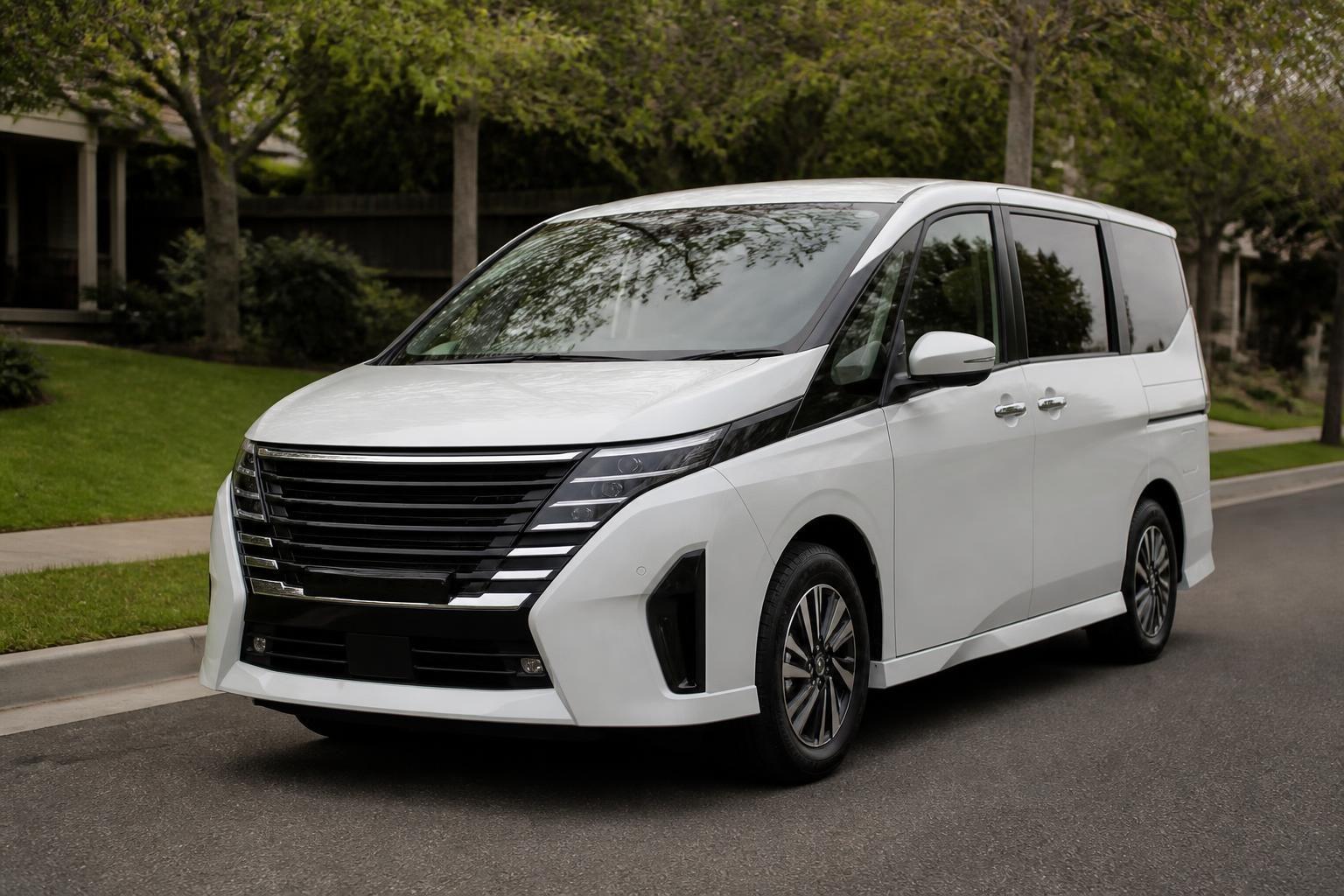
Ready to Hit the Road in Style?
Save money and reduce emissions with vehicles designed to deliver exceptional mileage. Visit our inventory and find a car that fits your lifestyle.
Ready to Hit the Road in Style?
Save money and reduce emissions with vehicles designed to deliver exceptional mileage. Visit our inventory and find a car that fits your lifestyle.
Spend ten minutes scrolling Nissan Serena listings and you'll hit the same wall. One car wears an S-Hybrid badge. The next says e-POWER. A third says e-POWER on a completely different body shape. Every one of them is described in the ad as simply "hybrid".
That single word covers two very different pieces of engineering. One is a mild-hybrid that helps a petrol engine along. The other is a series hybrid where the petrol engine never touches the wheels at all. The gap between them shows up in your fuel bill and in how the car feels in traffic.
This guide maps the Nissan Serena hybrid generations, explains what each system actually does, and shows you how to tell which one you're looking at.
Quick Answer
- The Serena's first hybrid was the S-Hybrid, launched with the C26 in August 2012. It's a mild-hybrid: the petrol engine always drives the wheels (Wikipedia, Nissan Serena).
- e-POWER arrived in March 2018 as a C27 update. It's a series hybrid, so the petrol engine works only as a generator and an electric motor does all the driving.
- The C28 (from November 2022) moved e-POWER to a 1.4-litre generator and a 163 PS motor, with WLTC mixed economy of 20.6 km/L (paultan.org, Japan launch, November 2022).
- For Australian buyers the C27 is the accessible generation, with SEVS approvals covering both S-Hybrid and e-POWER model codes.
- Fastest way to identify the system: look for an "F" in the model code. GFC27 and HFC27 are e-POWER. GC27 and HC27 are S-Hybrid.
What Does "Hybrid" Actually Mean on a Serena Badge?
Two systems have worn hybrid badging on the Serena, and they work in opposite ways.
S-Hybrid is Nissan's mild-hybrid system: the petrol engine always drives the wheels, and a small electric motor adds light assistance when pulling away. e-POWER is a series hybrid, where the petrol engine runs only as a generator and an electric motor drives the wheels at all times — engine speed and road speed are completely independent (Nissan, e-POWER technology overview).
That architectural difference is the whole story, so it's worth seeing side by side before we walk the timeline.
| Feature | S-Hybrid | e-POWER |
|---|---|---|
| Petrol engine drives the wheels? | Yes, always | No, generator only |
| Electric motor drives the wheels? | Assist only | Always |
| Low-speed electric running? | No | Yes |
| Regenerative braking | Light | Strong, with B mode and e-Pedal |
| Needs plugging in? | No | No |
| How it feels | Conventional petrol | EV-like |
Neither system plugs in. Both take regular unleaded. The one that changes your running costs meaningfully is e-POWER.
The Nissan Serena S-Hybrid Era: C26 and C27
S-Hybrid was Nissan's cautious first step, and the numbers reflect that. The C26 posted 15.2 km/L (6.6 L/100 km) on the JC08 test cycle — a real but modest improvement over the plain petrol variant (MLIT fuel economy database, fueleconomy.go.jp). The engine is doing the work; the motor is just helping.
The Nissan Serena in S-Hybrid form uses the 2.0-litre MR20DD petrol engine paired with a small SM24 starter-generator rated at 1.9 kW and 48 Nm. That sub-motor smooths out stop-start restarts, adds a light shove off the line, and recovers a little braking energy. No EV-only mode exists, and there's no charge port. If you were expecting Prius behaviour, this isn't it.
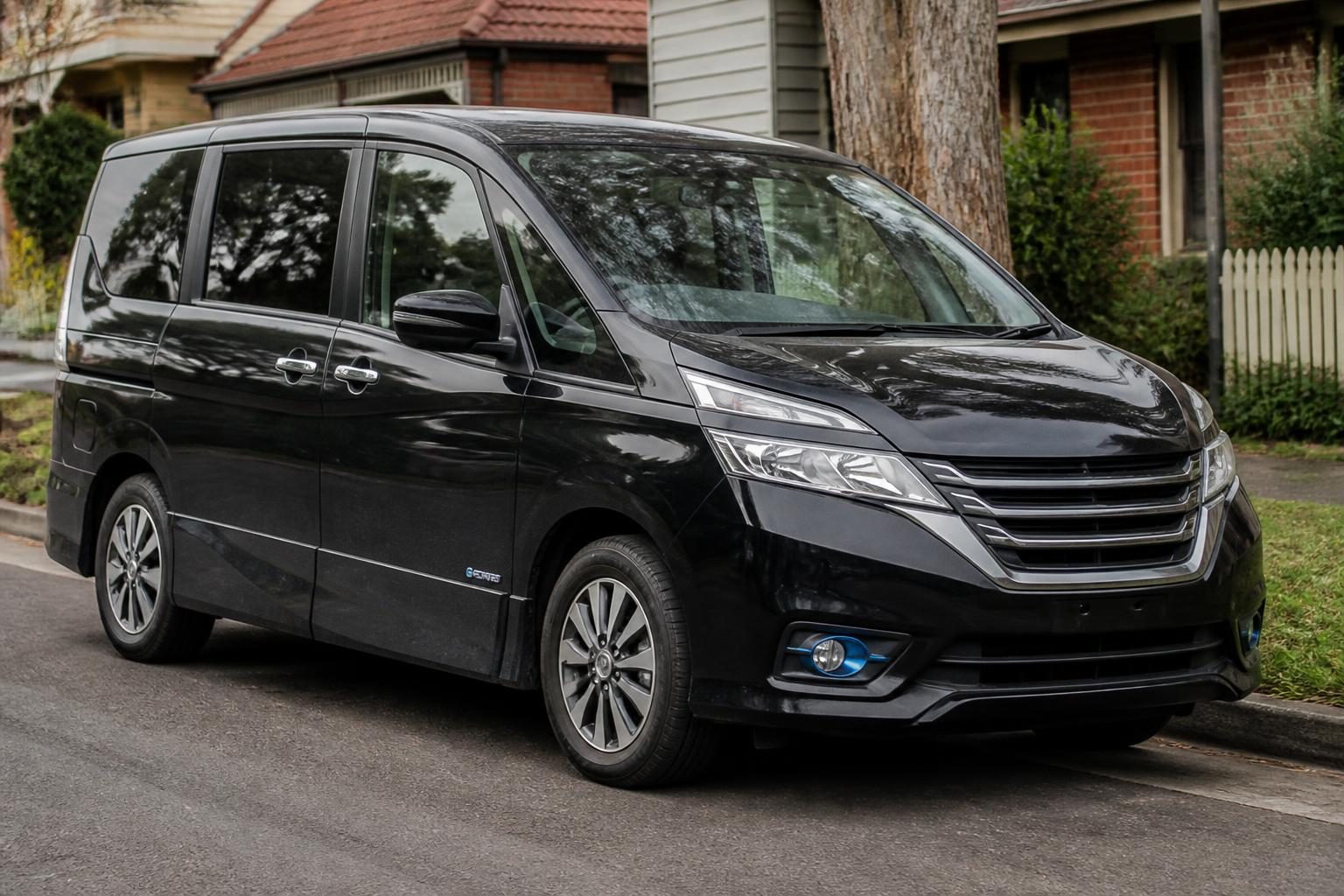 2016 Nissan Serena (Early C27 S-Hybrid)
S-Hybrid ran from the C26 in 2012 and carried into early C27 production from 2016. On the C27 the relevant codes are GC27 (8-seat standard) and HC27 (7-seat Highway Star). Both are SEVS-approved for 2016 to 2021 builds under the Environmental and Mobility criteria, with a sub-80,000 km odometer requirement.
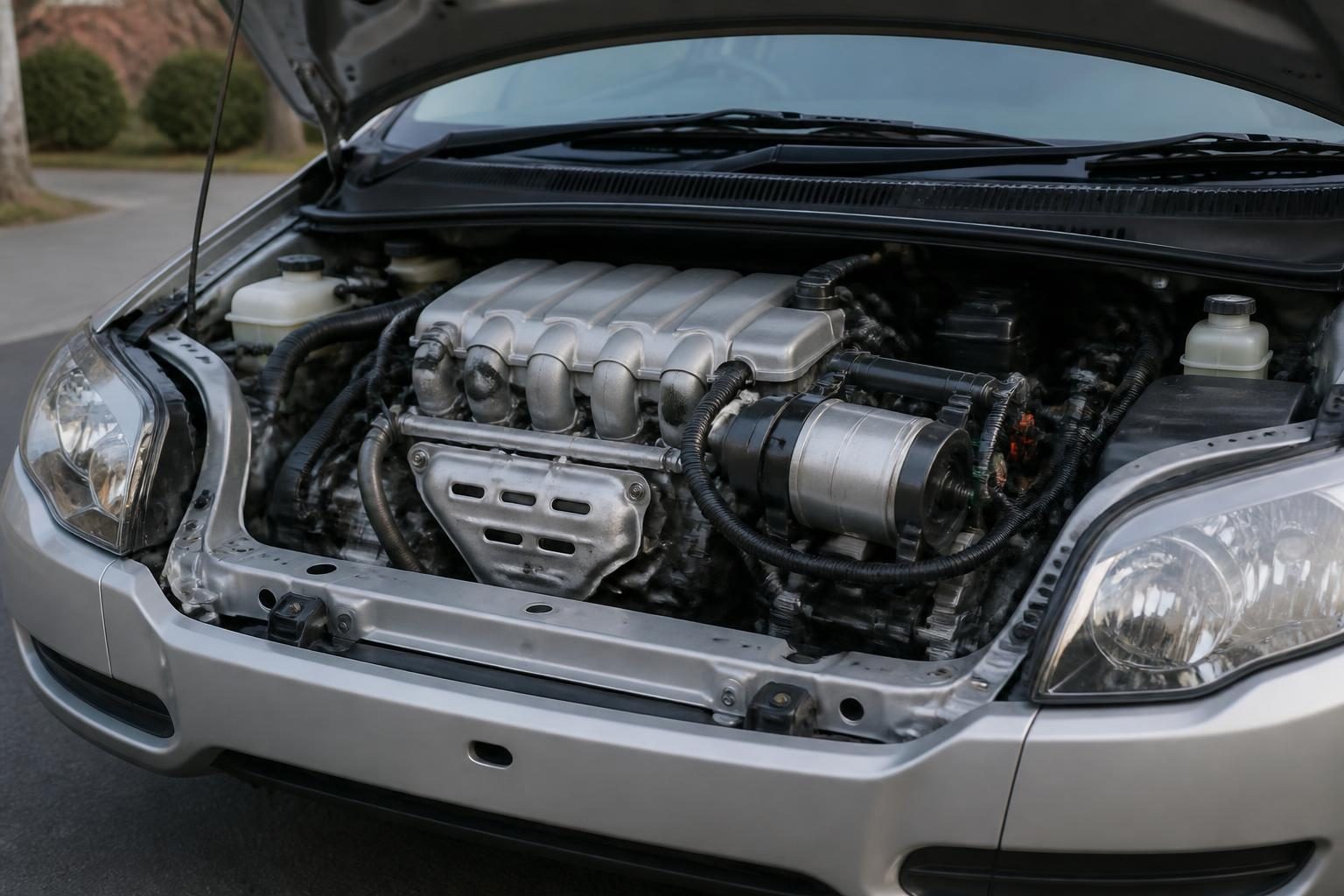 S-Hybrid adds a small starter-generator alongside the petrol engine rather than a second drive system.
Later C27 S-Hybrid cars are the same mechanical package with a few more years of build quality behind them. The cabin is where the real appeal sits: eight seats, sliding doors, a 1,865 mm height that still clears most suburban garages, and second-row seats that slide a long way for pram access.
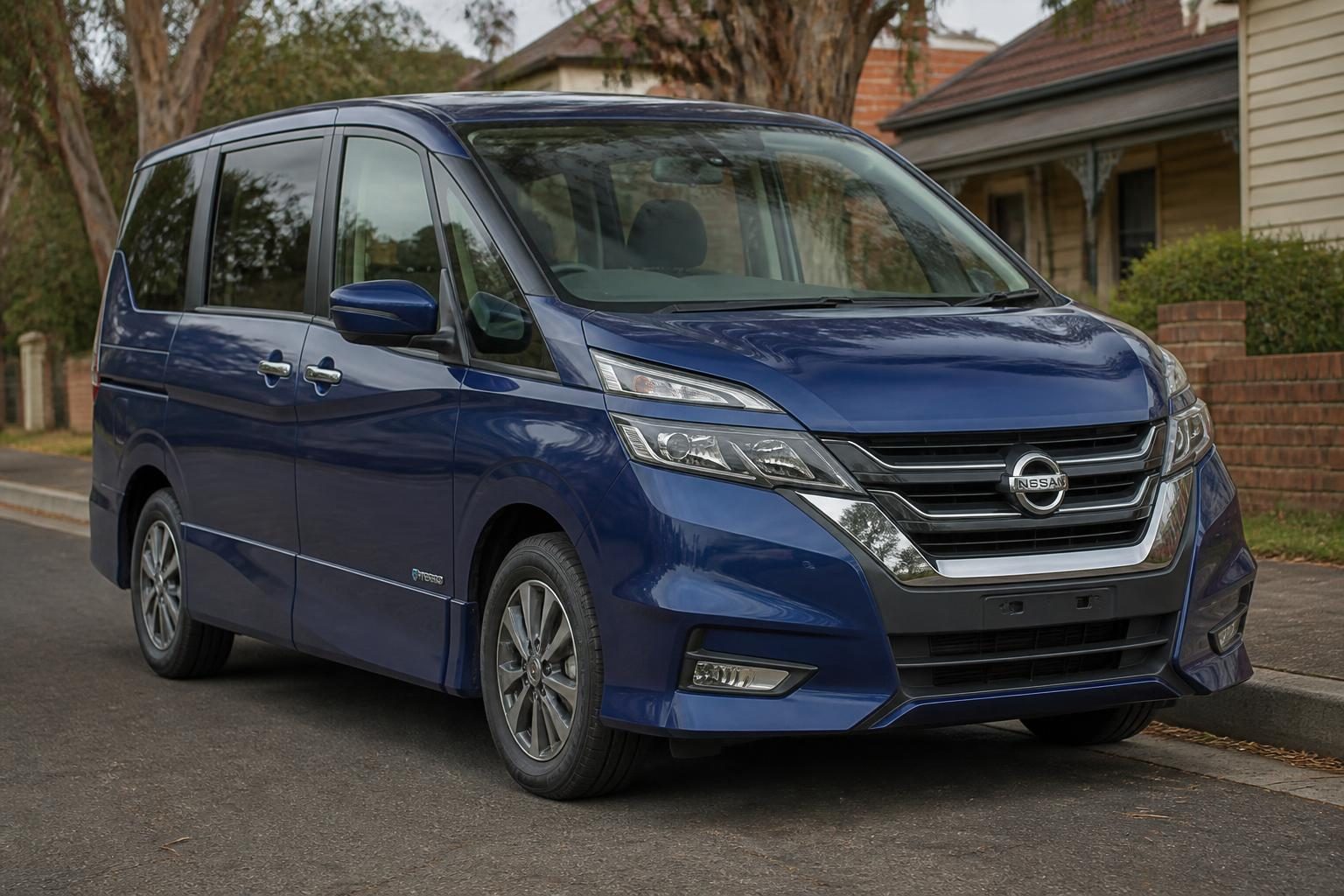 2017 Nissan Serena (C27 S-Hybrid Selection Variant)
Who it suits: buyers who want eight seats and a low entry price and are happy with conventional petrol running costs. The efficiency gain is real but not dramatic, so buy it for the cabin, not the fuel savings.
What Changed When e-POWER Arrived on the C27 in 2018?
March 2018 is the date that matters. The C27 e-POWER dropped the 2.0-litre engine for a 1.2-litre HR12DE three-cylinder that never drives the wheels, and handed all propulsion to an EM57 electric motor making 100 kW (136 PS) and 320 Nm (auto-data.net, C27 Highway Star e-POWER).
The C27 e-POWER drives like an EV because, mechanically, it is one. All 320 Nm is there from a standstill, which is a different experience in a 1.7-tonne people mover than any petrol Serena offers. A small lithium-ion pack sits under the floor and the generator tops it up as needed, so there's no range anxiety and no plug.
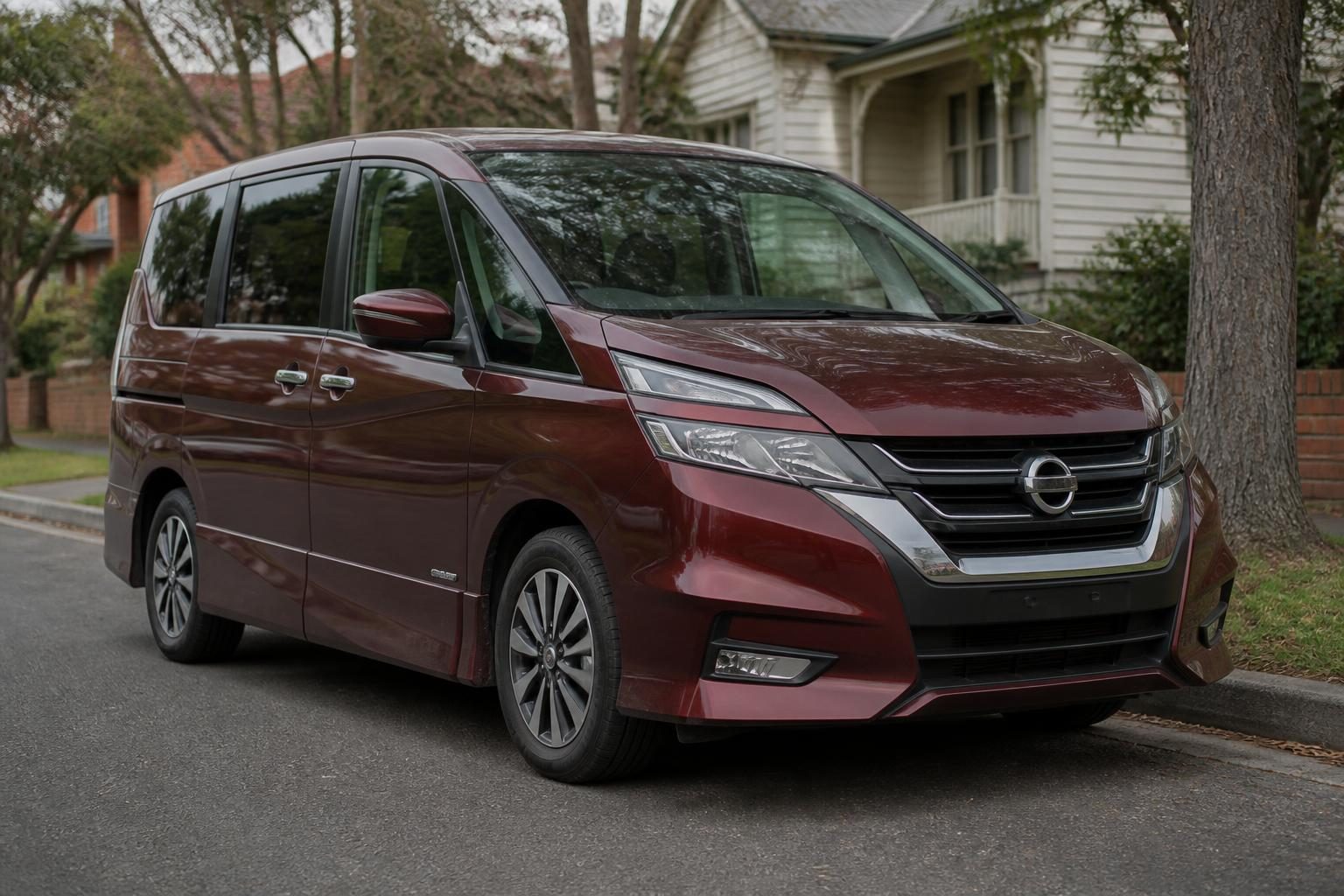 2018 Nissan Serena (C27 e-POWER Highway Star V)
On the economy figure, be careful with what you read online. The number quoted almost everywhere for C27 e-POWER, around 26.2 km/L or 3.8 L/100 km, is a JC08 cycle result, not WLTC (MLIT fuel economy database, fueleconomy.go.jp). JC08 is the older and more optimistic Japanese test, so it isn't comparable with the WLTC figures quoted for newer cars. Treat it as a ranking tool between C27 variants rather than a prediction of your own fuel bill.
ProPILOT, Nissan's single-lane highway assist, had been available on the C27 since its 2016 launch — the first Japanese minivan to offer the technology, operating between roughly 30 and 100 km/h (Wikipedia, Nissan Serena) — and the e-POWER carried it forward. e-POWER codes are GFC27 (2WD), GFNC27 (four-wheel drive) and HFC27 (Highway Star). The SEVS register records four approvals for the standard GFC27 including SEV-000975, SEV-000974 and SEV-000802. e-POWER cars also carry a 6AA chassis code, which distinguishes them from the 5AA of S-Hybrid variants.
By the last years of C27 production the system had settled down. The 2019 to 2022 cars are the same powertrain with better infotainment, and Highway Star V trims commonly pair the dual-screen entertainment setup with ProPILOT.
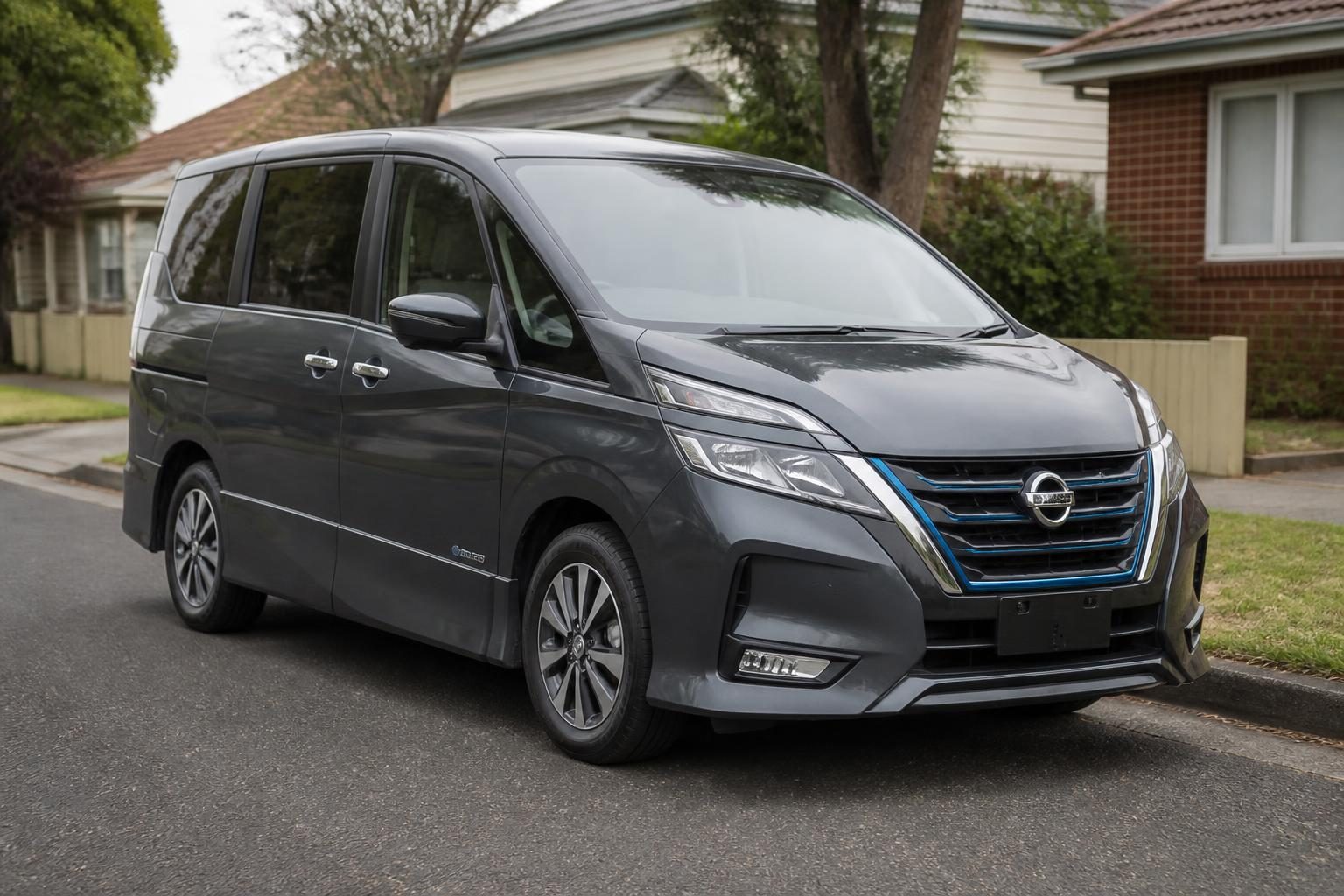 2021 Nissan Serena (C27 e-POWER Highway Star V — Late Generation)
Who it suits: most Australian buyers looking at a Serena hybrid. The EV-like refinement genuinely helps in Sydney stop-start traffic, the eight-seat cabin is unchanged, and this is the generation with the clearest import pathway.
The C28 e-POWER: What Changed in 2022?
The C28 landed in Japan in November 2022 and refined e-POWER rather than reinventing it. The generator grew from 1.2 to 1.4 litres (HR14DDe, 98 PS and 123 Nm), while the EM57 motor was retuned to 120 kW / 163 PS and 315 Nm — a 20 kW power gain over the C27 system (paultan.org, Malaysian specs, January 2026).
Read those numbers honestly. Power is up meaningfully, but peak torque is 315 Nm against the C27's 320 Nm, so this is a smoother and stronger car overall, with Nissan prioritising refinement over peak torque. The battery grew to 1.77 kWh, and WLTC economy was confirmed at Japan launch as 21.3 km/L urban, 20.6 km/L mixed (4.85 L/100 km) and 19.2 km/L highway (paultan.org, November 2022).
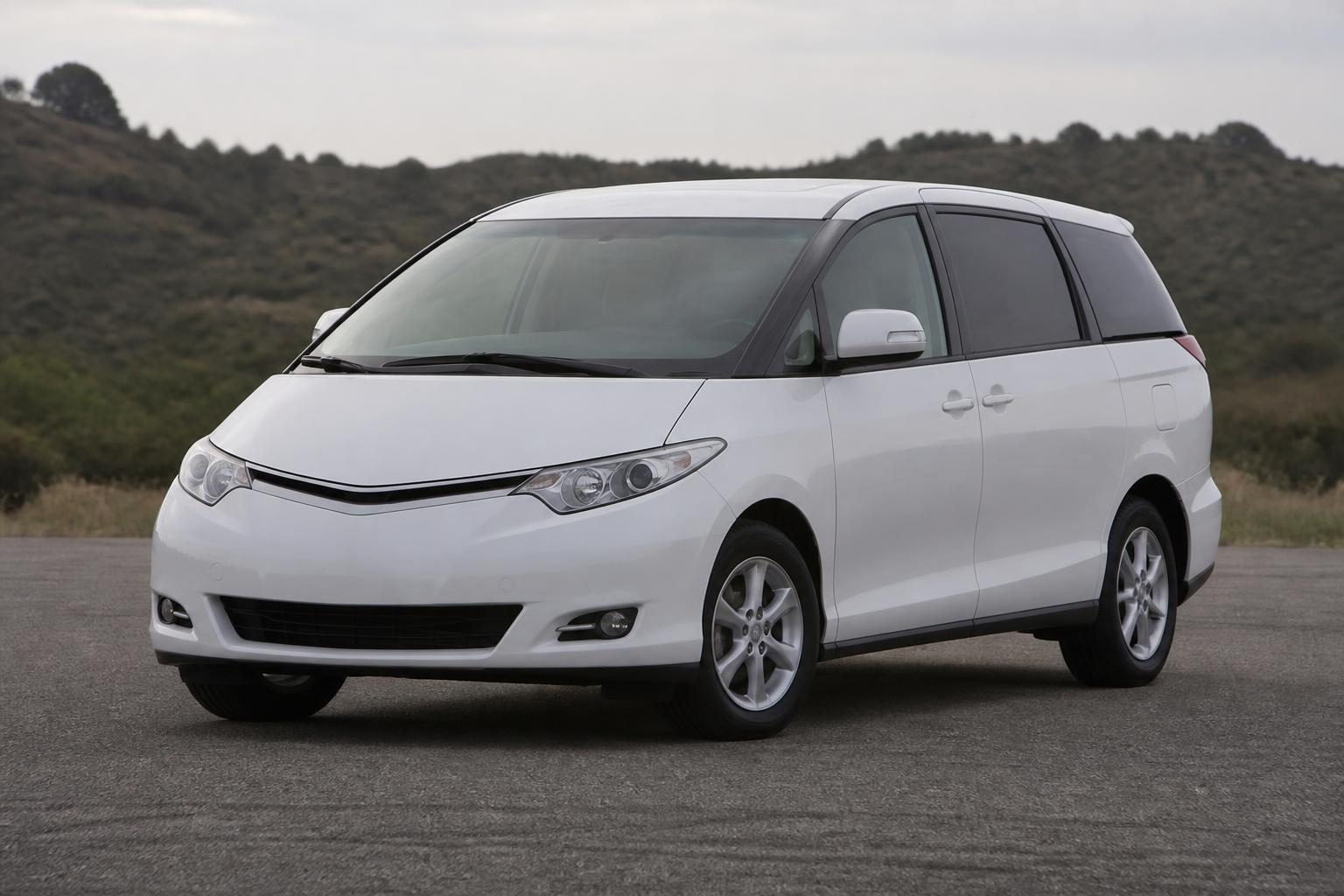 The C28 arrived in Japan in late 2022 with a larger generator engine and updated driver assistance.
Inside, the dashboard was redesigned around a larger touchscreen, and the flagship Luxion grade added ProPILOT 2.0 with hands-off highway capability — an upgrade from the C27's ProPILOT 1.0, which requires hands on the wheel at all times. A December 2025 facelift brought a V-theme front end and memory e-Pedal, with no reported change to powertrain figures (paultan.org, December 2025).
One caveat worth stating plainly: C28 e-POWER SEVS eligibility could not be confirmed in any publicly available source as of September 2026. Don't assume a C28 can be brought in. Check the Department of Infrastructure's SEVS register or ask an importer to verify the exact build and model code before you commit to anything.
How Do You Identify Which System a Serena Has?
The model code settles it in seconds, and it's stamped on the compliance plate rather than buried in a brochure. An "F" in the code means e-POWER. No "F" means S-Hybrid or plain petrol. The chassis code nearby adds a second check: e-POWER cars carry 6AA, S-Hybrid cars show 5AA.
| Model code | Trim | System | Seats |
|---|---|---|---|
| GC27 | Standard | S-Hybrid | 8 |
| HC27 | Highway Star | S-Hybrid | 7 |
| GFC27 | Standard (2WD) | e-POWER | 8 |
| GFNC27 | Standard (4WD) | e-POWER | 7 |
| HFC27 | Highway Star | e-POWER | 7 |
Three more checks if you're standing in front of the car. First, the drive feel: in an e-POWER the engine revs independently of road speed, because it's charging rather than driving, and at low speed the cabin goes quiet. Second, the instrument display.
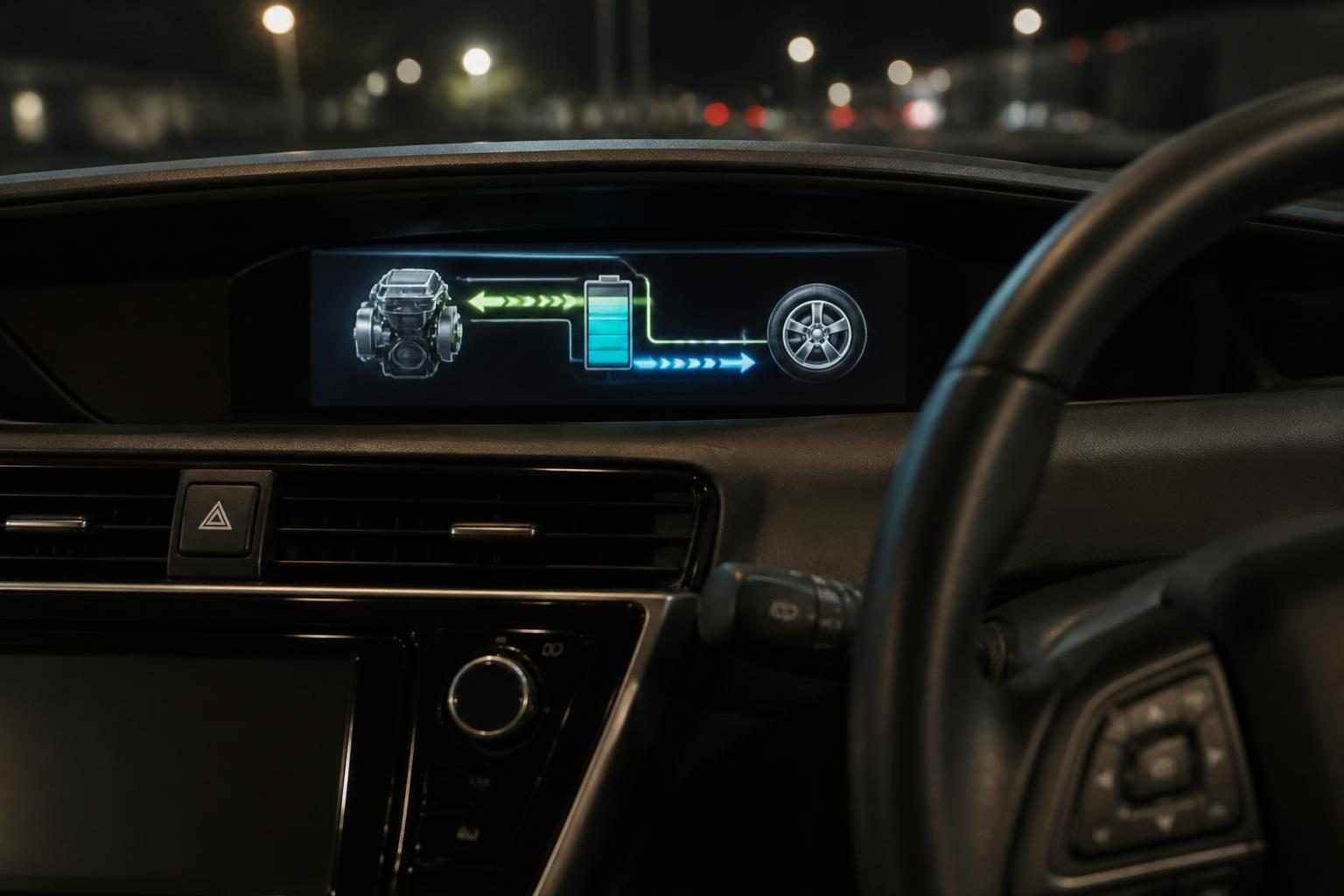 The power-flow display is an e-POWER giveaway, S-Hybrid cars show a simpler eco gauge instead.
Third, the fuel filler. Both systems are petrol-only and neither has a charge port. If a listing claims a Serena hybrid plugs in, the listing is wrong.
Which Serena Hybrid Makes Sense for You?
The right Serena hybrid comes down to two things: how many seats you need and how much running costs matter relative to entry price. Here's how each model code maps to each buyer situation.
| Your situation | Best fit |
|---|---|
| Eight seats on the smallest budget, happy with petrol feel | C27 S-Hybrid (GC27) |
| Want genuine hybrid running costs and an EV-like drive | C27 e-POWER (GFC27) |
| Want ProPILOT and the premium seven-seat cabin | C27 e-POWER Highway Star (HFC27) |
| Need four-wheel drive with e-POWER | C27 e-POWER 4WD (GFNC27) |
| Want the newest system and can wait on eligibility | C28 e-POWER, verify SEVS status first |
For a wider value comparison against the Odyssey, Alphard and Elgrand, our Nissan Serena used 8-seater guide does that work. If you're weighing one up as a second vehicle, see Serena as a family second car.
Sourcing a Nissan Serena e-POWER From Japan
The C27 remains the practical choice for Australian buyers, and Carbarn sources these variants directly through approved Japanese auctions. That covers both the standard e-POWER C27 and the Highway Star e-POWER C27, along with the four-wheel-drive GFNC27 if you want e-POWER with AWD.
The process runs end to end: candidate vehicles shortlisted to your year, budget and grade, physical inspection before bidding where the auction format allows, auction sheets and inspector notes shared with you, and bidding only after your approval and within your cap. Freight, customs entry, biosecurity and the full SEVS compliance program are handled from there. Compliance is completed at the RAW-certified Sydney workshop in Lidcombe, and paperwork is prepared for state registration. Carbarn also offers a compliance-only pathway, finance, extended warranty on eligible vehicles, interstate door delivery, and a Lidcombe showroom for inspecting local vehicles.
Once you've settled on a generation and model code, the importing pages set out timelines, payment stages and what each figure in the landed cost is made of. You can also browse the current Serena range or read the Serena model overview for background.