



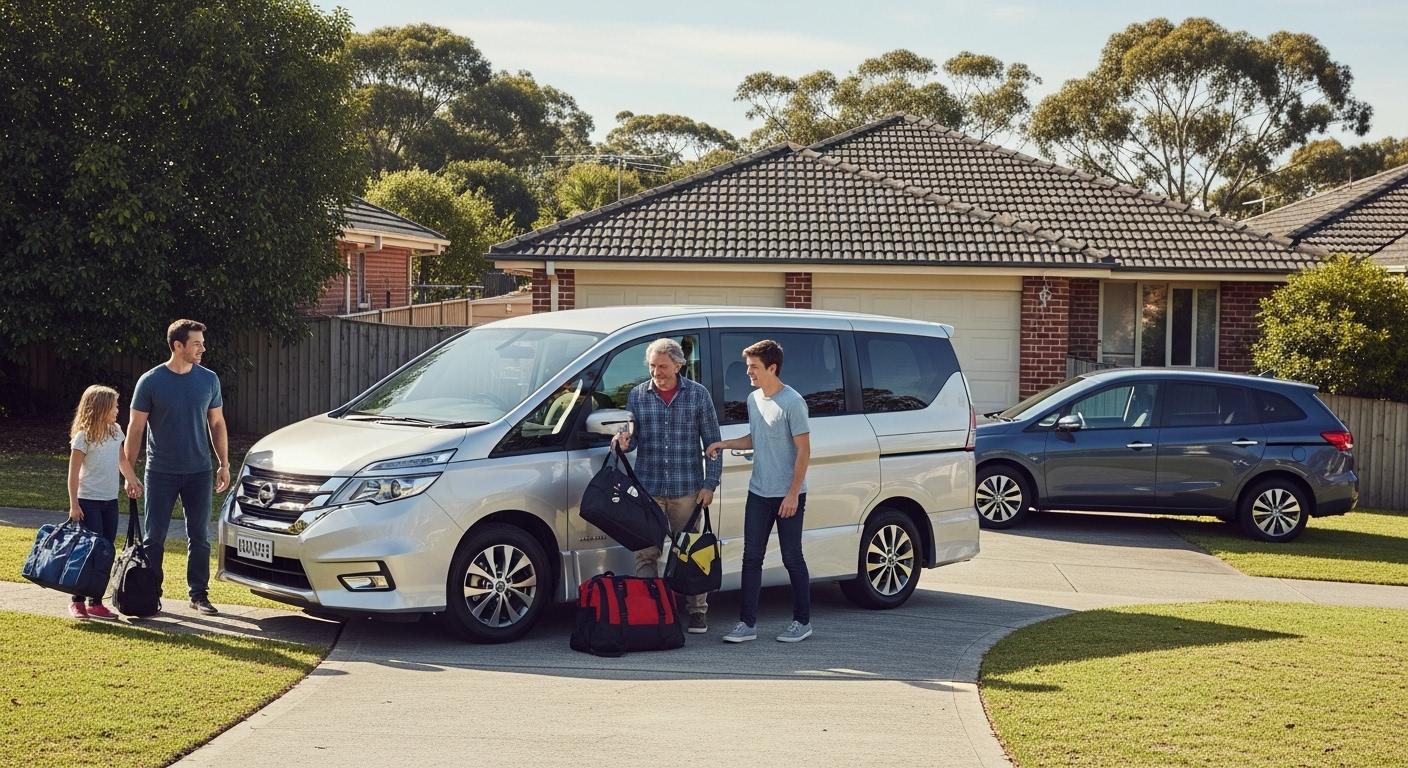
Ready to Hit the Road in Style?
Save money and reduce emissions with vehicles designed to deliver exceptional mileage. Visit our inventory and find a car that fits your lifestyle.
Ready to Hit the Road in Style?
Save money and reduce emissions with vehicles designed to deliver exceptional mileage. Visit our inventory and find a car that fits your lifestyle.
Most families don't sit down and plan their second car. It just happens. One car handles the commute, and then school pickups, weekend sport, and grandparent visits start piling up on the other, whatever it happens to be.
If that "whatever it happens to be" is starting to strain under three kids' worth of bags, bikes, and mates, a people mover like the Nissan Serena tends to come up in conversation. It's roomy, it has sliding doors, and it's noticeably cheaper used than most seven-seat SUVs. But does it actually work as the family's second vehicle, or is it overkill for a car that mostly does the school run?
This guide walks through where the Serena earns its keep as a second car, what it costs to run day to day, and where a hatch or SUV is honestly the better call.
Quick Answer
- About 53% of Australian households already run two or more vehicles, so the "second car" question is a mainstream one, not a niche one (profile.id.com.au, 2021 Census).
- A used Nissan Serena S-Hybrid sits in the mid-to-high $20K range and runs on an official WLTC-rated 7.5–7.7 L/100km, cheaper to run than a mid-size SUV but thirstier than a compact hatch at typical second-car mileage.
- Sliding rear doors and 7- or 8-seat layouts are the Serena's real advantage over a hatch. Fuel savings alone don't make the case.
- It carries no ANCAP safety rating, which matters if the second car is also the one doing school runs with kids aboard.
- It's not the right pick if the second car needs to tow, handle regular long highway hauls, or fit in a tight single garage.
Why Is the "Second Car" Question Different From "Best Family Car"?
A second car doesn't need to do everything. It needs to reliably cover a narrower, repetitive job, usually short trips, school logistics, or filling gaps when the main car is unavailable. That changes which features actually matter.
Most Australian households are already set up for this kind of two-car life. Around 53% have access to two or more vehicles, with 34.6% running exactly two and 17.9% running three or more (profile.id.com.au, 2021 Census). The average passenger vehicle in Australia covers about 11,100 km a year, or roughly 213 km a week (ABS Survey of Motor Vehicle Use, 2020, the survey's final release before it was discontinued).
That low weekly mileage is the whole reason this comparison is worth doing properly. A car that looks expensive to run on paper can be perfectly affordable once you apply realistic second-car kilometres, and a car that looks cheap can lose its edge for the same reason.
How Does the Serena Compare to a Second SUV and a Second Hatch?
Here's how the three most common second-car choices stack up, using typical used-market pricing bands and manufacturer-claimed fuel figures rather than one-off deals.
| Criteria | Nissan Serena (S-Hybrid) | Mid-size petrol SUV | Compact hatch |
|---|---|---|---|
| Typical used price band | Mid-to-high $20K range | Mid-$20K to low-$30K range | Low-to-mid $20K range |
| Seating | 7 or 8 seats | 5 seats | 5 seats |
| Rear door type | Two sliding doors | Two hinged doors | Two hinged doors |
| Claimed fuel economy | 7.5–7.7 L/100km (official WLTC combined figure) | ~7.4–9.0 L/100km (typical for class) | ~6.0–6.5 L/100km (typical for class) |
| Estimated annual fuel cost* | ~$1,630 | ~$1,826 | ~$1,394 |
| ANCAP rating | None on file | Usually rated | Usually rated |
| Best suited to | Multi-kid logistics, gear-heavy weekends | Occasional towing, longer trips | Simple commuting, tight parking |
*Based on 213 km/week average driving (ABS, 2020) and a national average unleaded price of 193.6 cents per litre (ACCC Weekly Fuel Price Monitoring, week ending 29 July 2026). Fuel prices move weekly, so treat these as a comparison, not a fixed budget.
Nissan Serena (Highway Star V, GFC27)
The Nissan Serena Highway Star V is a Japanese-market people mover built around one job: moving a full family and their gear without a fuss. It runs Nissan's S-Hybrid mild-hybrid system, pairing a 2.0-litre MR20DD petrol engine with an XTRONIC CVT and a starter-generator "ECO motor" that assists off the line and recharges under braking. It's not a plug-in and it doesn't drive like an EV. It drives like a well-sorted petrol van with a bit of extra shove at low speed, which is exactly what most second-car buyers actually want: predictable, not complicated.
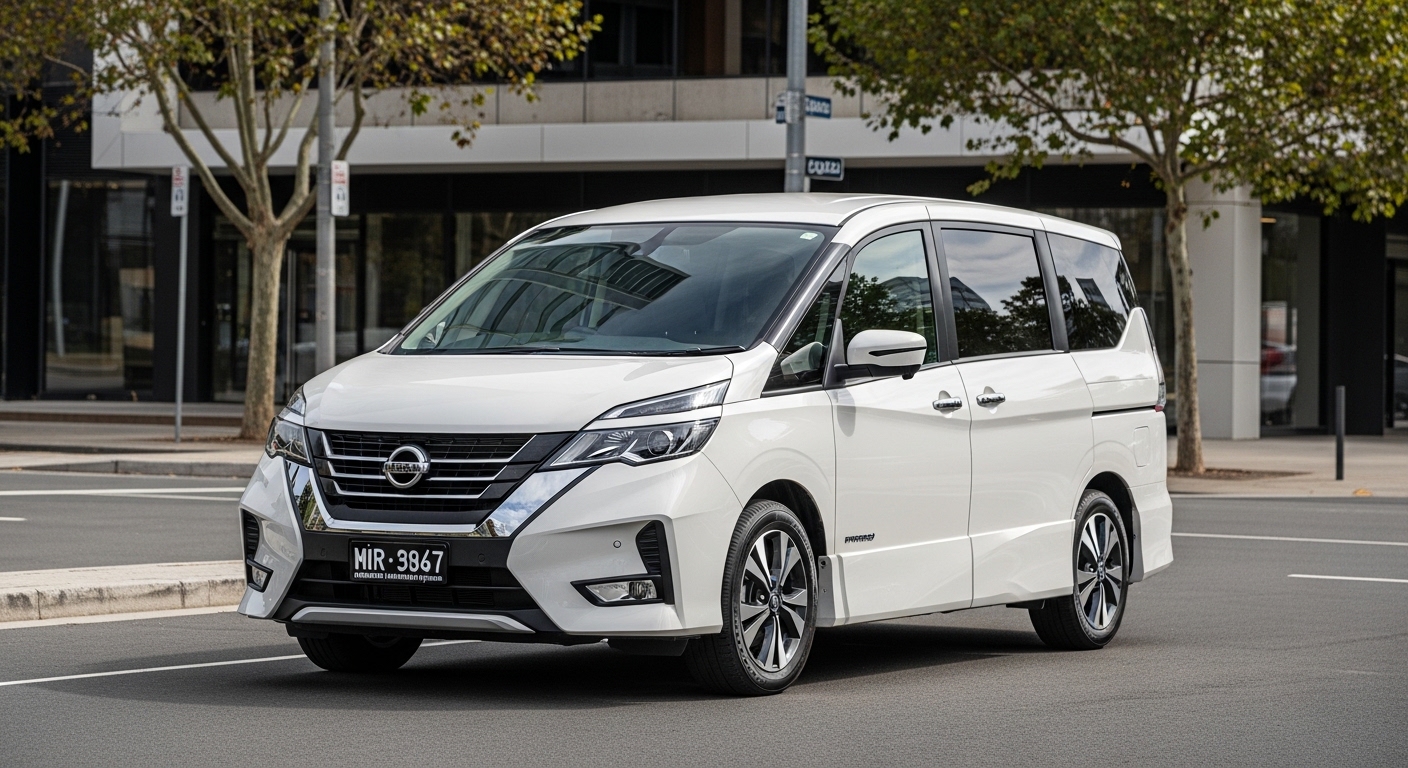 2021 Nissan Serena (Highway Star V, GFC27)
Where it earns its second-car status is the layout. GFC27-generation Highway Star V models seat 7 or 8 depending on the variant, with dual power sliding rear doors that open wide in tight driveways and shopping centre car parks, no swinging a door into the car next to you. Nissan's official WLTC combined-cycle fuel economy figure for this S-Hybrid system sits at 7.5–7.7 L/100km for the GFC27-generation 2WD Highway Star V, noticeably higher than the older JC08-cycle figures sometimes quoted for the previous-generation S-Hybrid. Boot space behind the third row is generous enough for a shopping run or sports gear without folding seats down.
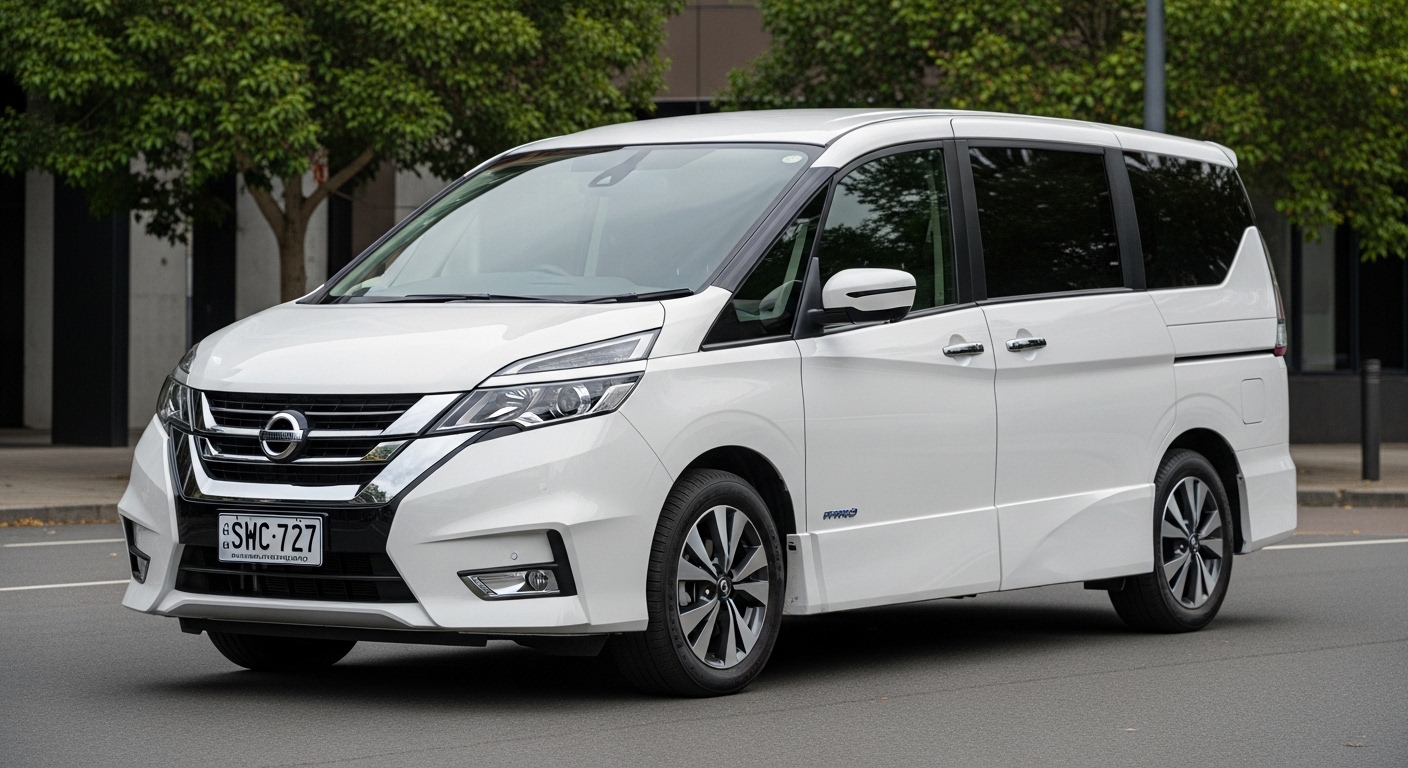 2021 Nissan Serena (Highway Star V, GFC27)
On the used market, GFC27 Highway Star V examples typically sit in the mid-to-high $20K range with automatic transmissions and odometers commonly in the 45,000–75,000 km bracket for late-model stock. [UNIQUE INSIGHT] Because these are Japanese-market imports rather than Australian-delivery vehicles, spec and equipment can vary between individual cars even within the same trim name, so it's worth checking the exact seat count, ProPILOT driver-assist availability, and service history on any specific vehicle before buying rather than assuming one listing matches another.
Will the Serena Fit Your Driveway and Garage?
A people mover that doesn't fit the driveway isn't a second car, it's a parking problem. The Serena's compact-for-its-class footprint and sliding doors are designed around exactly this constraint, which is common in Japan's tight residential streets and translates well to Australian suburbs.
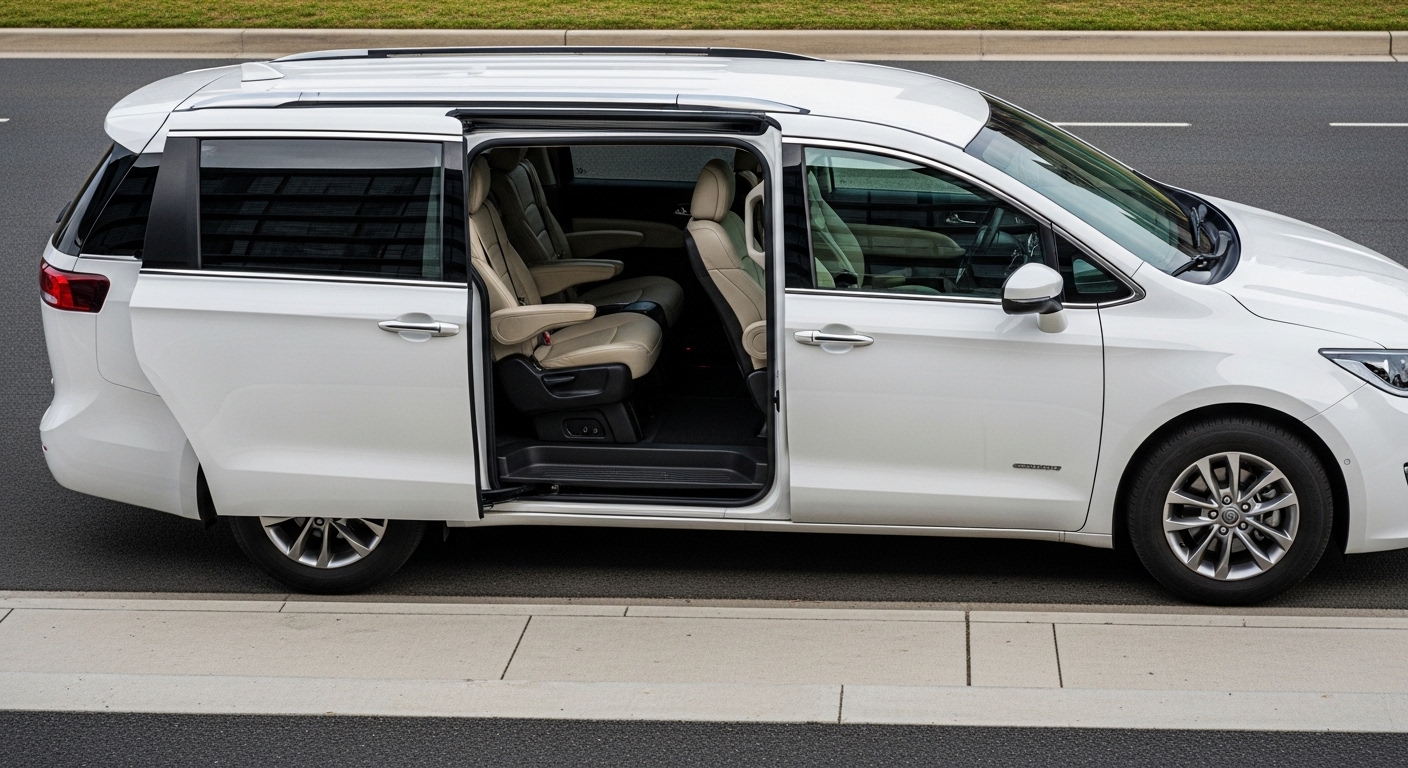 White people mover at the kerb with the sliding side door open
The sliding doors matter more than they sound. [PERSONAL EXPERIENCE] Anyone who's wrestled a hinged rear door open in a narrow driveway with a toddler on one hip knows the difference a sliding door makes: it opens parallel to the body, so there's no swing arc to worry about against a fence, a bin, or the car parked beside it. That's a genuine daily-use advantage over both the SUV and the hatch in the comparison table above, not a marketing point.
Where it's less forgiving is single-car garages built for a sedan. The Serena's height and length mean it suits a driveway, carport, or double garage better than a tight single-car space. Measure before assuming.
What Does the Serena Cost to Run as a Second Car?
Fuel cost is where a lot of people-mover comparisons oversell the hybrid badge, so it's worth being precise. At realistic second-car mileage, the Serena's official WLTC-rated 7.5–7.7 L/100km puts its annual fuel cost at roughly $1,630, based on 213 km/week and 193.6 cents per litre unleaded (ABS, 2020; ACCC, week ending 29 July 2026).
| Vehicle type | Annual fuel cost* | Weekly fuel cost* |
|---|---|---|
| Nissan Serena (S-Hybrid) | ~$1,630 | ~$31.35 |
| Mid-size petrol SUV | ~$1,826 | ~$35.10 |
| Compact hatch | ~$1,394 | ~$26.80 |
*Assumes 213 km/week, 193.6 cpl unleaded.
Here's the honest part: against a mid-size SUV, the Serena saves around $196 a year in fuel at typical second-car mileage, a real but modest gap. Against a compact hatch, though, it actually costs about $236 a year more. The Serena's case as a second car isn't really about fuel savings. It's about seats and door access. If fuel economy is the only reason on your list, a hatch does the job for less.
When Isn't the Serena the Right Second Car?
No car fits every household, and a people mover is a genuine mismatch for some. Two things are worth stating plainly rather than glossing over.
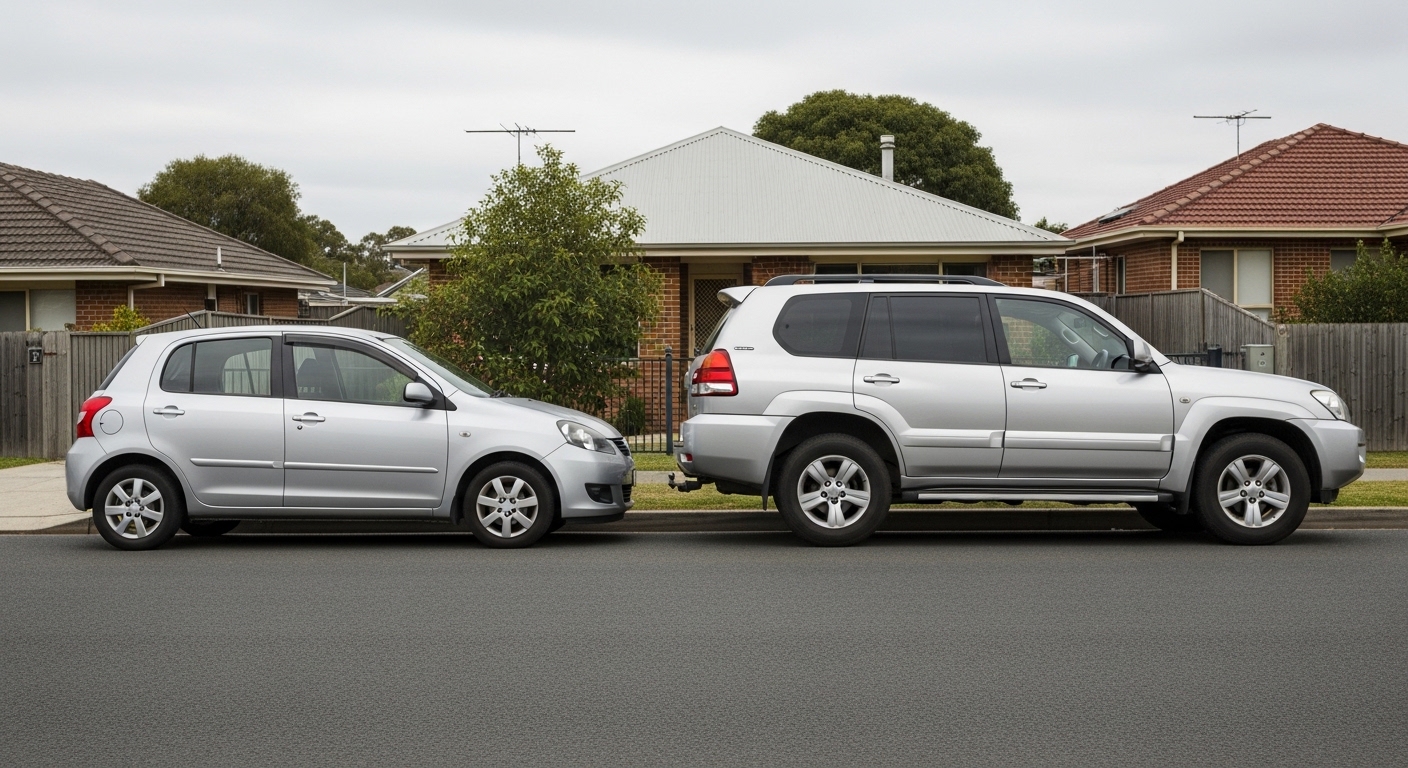 A small silver hatchback and larger silver SUV parked side-on on a suburban street.
First, the Serena carries no ANCAP safety rating on file (ANCAP Safety Ratings, Nissan search). That's common for Japanese-market imports that were never crash-tested under Australian protocols, but it's a real trade-off if the second car is the one regularly carrying kids to school and sport. If a documented ANCAP score is a non-negotiable for your household, this isn't the car.
Second, if the second car needs to tow a trailer, boat, or camper regularly, or rack up long highway stints, a mid-size SUV built for that job will hold up better over time. And if your household genuinely only needs five seats and mostly does short commuting trips, a compact hatch is simpler to park, similarly cheap to run, and doesn't carry the extra length and height of a van.
Which One Makes Sense for You?
If your household regularly moves more than five people, wrangles school-aged kids and their gear on a daily basis, or values not swinging doors in tight car parks, the Serena's layout genuinely solves a problem the other two don't. It's a strong option specifically for that logistics-heavy second-car role.
If your second car mostly does solo or two-person commuting, occasional towing, or long highway trips, a mid-size SUV or compact hatch will probably suit you better and cost less to buy outright. The Serena isn't a universal answer. It's a good fit for a specific, common household shape: bigger families juggling short, frequent trips.
Buying a Used Serena for This Role
If the case above stacks up for your household, Carbarn currently lists several 2021 Highway Star V examples on its Nissan Serena stock page, giving you a real starting point rather than a hypothetical. Every vehicle listed goes through inspection before sale, including a specific check of the hybrid battery and S-Hybrid system, which matters given the CVT and starter-motor wear points noted earlier in this generation's history.
Carbarn also handles the parts of buying a Japanese-market vehicle that trip up first-time importers: transparent vehicle history and auction grading, warranty options, car finance, and nationwide delivery across Australian states, so the car turns up ready to drive rather than requiring separate compliance chasing. If you want the full generational history and spec breakdown of the Serena lineup rather than the second-car angle covered here, that's laid out in Carbarn's Nissan Serena model guide and its Serena hybrid evolution history. For browsing beyond the Serena, the broader hybrid stock range and used car listings are worth a look too.
The Bottom Line
A Nissan Serena makes a lot of sense as a second car for households juggling multiple kids, sport runs, and gear-heavy weekends, where sliding doors and extra seats solve a daily problem. It makes less sense if towing, long highway trips, or a documented ANCAP rating are must-haves.
Weigh the driveway fit, the realistic running costs at your actual weekly kilometres, and who's riding in the back before deciding. That's a more useful test than fuel figures alone.