



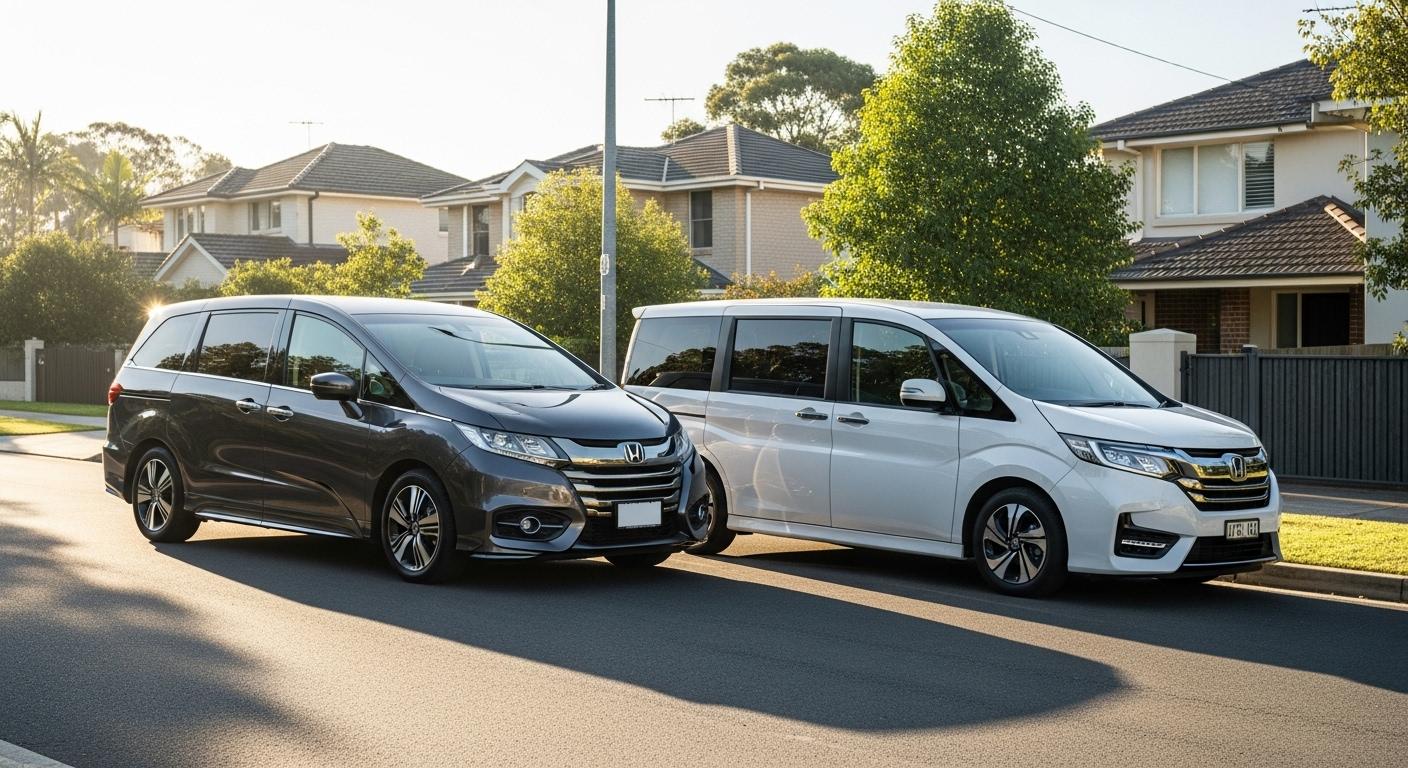
Ready to Hit the Road in Style?
Save money and reduce emissions with vehicles designed to deliver exceptional mileage. Visit our inventory and find a car that fits your lifestyle.
Ready to Hit the Road in Style?
Save money and reduce emissions with vehicles designed to deliver exceptional mileage. Visit our inventory and find a car that fits your lifestyle.
You want one vehicle that swallows the kids, the pram, the weekend bags and the odd airport run, and you keep landing on two Hondas. The Honda Odyssey looks like a low, sleek wagon. The Honda Stepwgn RP8 looks like a tall, square box. Both seat seven or eight. Both are hybrids. So which one actually suits your family and your driveway?
This guide compares them the way an Australian buyer would: space, seating, hybrid tech, fuel use, driving feel, safety and long-term ownership. No hype, just the trade-offs.
Quick Verdict
The Honda Odyssey is the lower, more car-like and premium-feeling choice, better for refined highway driving and second-row comfort. The Honda Stepwgn RP8 is the taller, newer e:HEV that prioritises headroom, easy access and everyday family practicality. Neither is universally better. It comes down to whether you value car-like refinement or maximum cabin space.
Key Takeaways
- The Odyssey sits lower and wider; the Stepwgn RP8 is taller, giving noticeably more headroom.
- Both use a 2.0L petrol-electric hybrid with front-wheel drive and dual power sliding doors.
- Official WLTC economy is close: RC4 Odyssey around 20.8 km/L, RP8 around 19.6 km/L (Honda Odyssey RC4 fuel economy, Spec Tank, 2019).
- Australian hybrid sales jumped 76% to 172,696 units in 2024, so used hybrid people movers are in strong demand (NRMA / FCAI, 2025).
- Seating (7 vs 8) and Honda Sensing safety kit both vary by grade and year, so check the exact build.
What Is the Main Difference Between the Honda Odyssey and Stepwgn RP8?
The main difference is shape and purpose. The Odyssey is a low-roof people mover that drives like a large car, so it feels refined and settled on the highway. The Stepwgn RP8 is a taller, boxier van built around cabin space and easy access, which makes it more practical for growing families day to day.
Everything else follows from that one design decision. The Odyssey trades a little headroom for a lower centre of gravity and a more premium, car-like cabin. The Stepwgn RP8 trades some road polish for upright seating, better visibility and a genuinely roomier interior. Here is how they line up on the specs that matter.
Honda Odyssey vs Stepwgn RP8 Comparison
| Feature | Honda Odyssey (RC-series) | Honda Stepwgn RP8 |
|---|---|---|
| Model codes | RC1, RC2 (petrol), RC4 and RC5 (hybrid) | RP8 |
| Vehicle type | Low-roof MPV, car-like | Tall-body people mover |
| Production generation | 5th-gen; RC4 hybrid 2016–2025, RC5 2023–2025 | 6th-gen, 2022–2026 |
| Petrol / hybrid | RC1/RC2 petrol, RC4/RC5 hybrid | Petrol and e:HEV hybrid |
| Hybrid system | Sport Hybrid i-MMD (2.0L Atkinson + electric motors) | e:HEV (2.0L + electric motors) |
| Engine | 2.0L hybrid (RC4 LFA, RC5 i-VTEC), 2.4L petrol (RC1/RC2) | 2.0L, around 145 PS (hybrid) |
| Transmission / drive | Automatic (hybrid E-CVT), front-wheel drive | Automatic (e-CVT), front-wheel drive |
| Seating capacity | 7 or 8 | 7 or 8 (grade dependent) |
| Exterior L×W×H | 4,830 × 1,820 × 1,695 mm (RC4) | 4,830 × 1,750 × 1,840 mm |
| Usable cabin (L×W×H) | Not published, lower roofline | 2,845 × 1,545 × 1,410 mm |
| Second row | Captain's chairs or bench | Captain's chairs or bench |
| Third row | Usable, lower headroom | Roomier, taller headroom |
| Luggage flexibility | Fold-flat rear seats | Flexible, tall cargo area |
| Sliding doors | Dual power sliding | Dual power sliding |
| Fuel economy (WLTC) | RC4 ~20.8 km/L, RC5 ~19.6–20.8 km/L | ~19.6 km/L |
| Safety tech | Honda Sensing (grade/year dependent) | Honda Sensing (grade/year dependent) |
| Driving character | Lower, car-like, refined | Upright, tall, city-friendly |
| Best suited buyer | Premium cabin, highway comfort | Space, access, family practicality |
Honda Odyssey vs Stepwgn RP8: Which Is Bigger?
Neither is simply "bigger", it depends on the dimension. Both measure 4,830 mm long, so they take up the same length in your driveway. The Odyssey RC4 is wider at 1,820 mm versus 1,750 mm, while the Stepwgn RP8 is far taller at 1,840 mm versus 1,695 mm, a 145 mm height gap you feel inside and out.
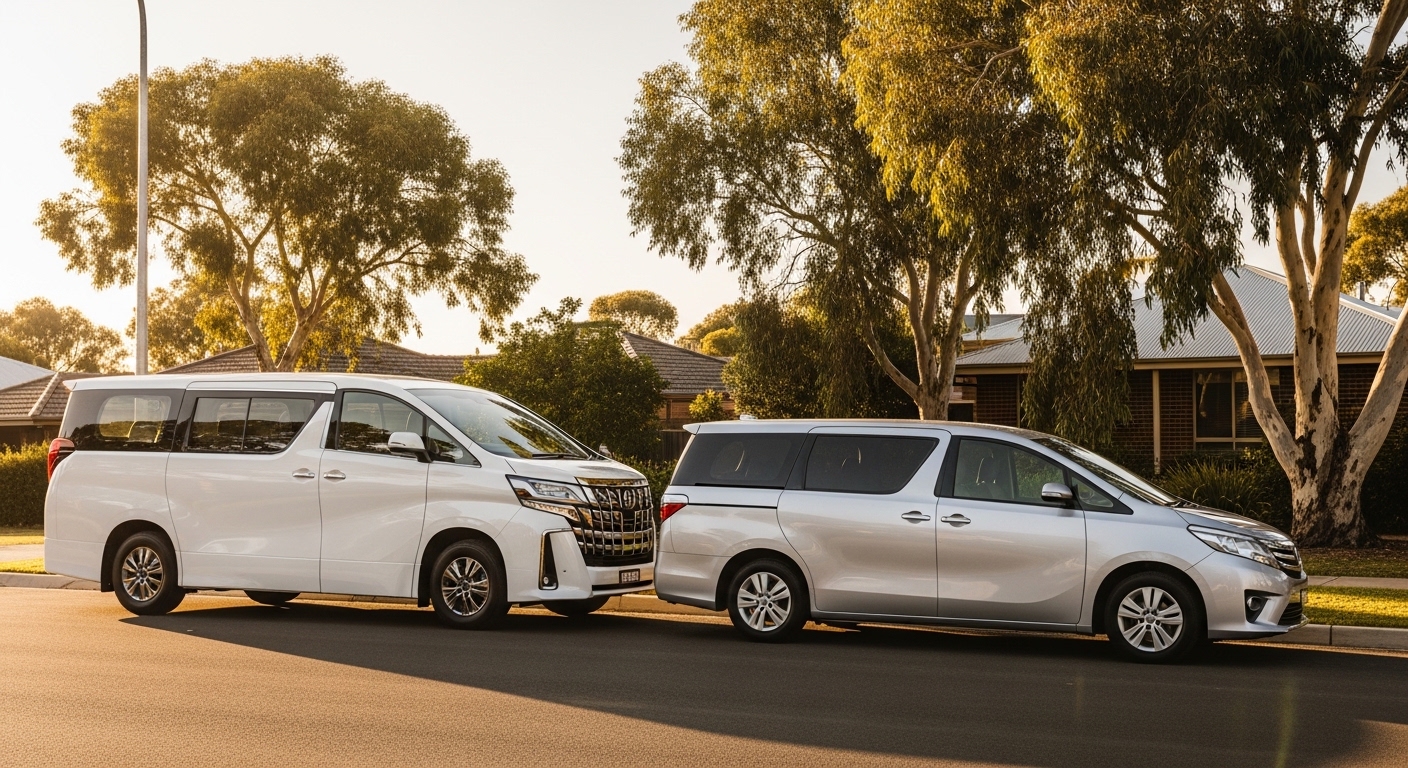 Two very different shapes: the tall, boxy people mover versus the lower, car-like one.
That height gap has a real Sydney catch. Many older underground and shopping-centre car parks post clearance limits around 1,800 mm to 2,000 mm. At 1,840 mm the Stepwgn RP8 clears most, but it is close enough that you should check the sign before you commit to a tight CBD or Westfield basement. The lower Odyssey rarely has that worry.
Which Has More Interior Space?
The Stepwgn RP8 has more usable interior space, especially headroom. Its cabin measures roughly 2,845 mm long, 1,545 mm wide and 1,410 mm tall (Honda Stepwgn RP8 cabin dimensions, Greeco-Channel, 2024). That tall, square roofline turns the extra exterior height into genuine room for heads, child seats and cargo stacked upright.
Headroom, legroom and cabin height
The Stepwgn's upright shape wins on headroom in all three rows, and taller passengers notice it immediately. The Odyssey counters with a wider body, so shoulder room across the second row is generous and the cabin feels broad rather than tall. For legroom, both ride on long wheelbases, so adults fit comfortably in the first two rows.
Third-row usability and cargo
The Stepwgn RP8's boxier tail makes the third row easier for adults and simpler to load behind. The Odyssey's third row is usable but sits lower, so it suits children and teenagers better than full-size adults on long trips. Both offer fold-flat rear seats, though the taller Stepwgn lets you stack prams and boxes vertically.
Which Has Better Second-Row Seats?
Both offer captain's chairs or a bench in the second row, depending on grade, so comfort is close. The Odyssey leans premium: its wider body and lower floor give a lounge-like feel with plenty of shoulder room. The Stepwgn RP8 leans practical, with taller seating, easier child-seat access and a more upright, van-like walk-through.
If you regularly move between rows to buckle kids, the Stepwgn's height and squared door aperture make the job easier. If second-row adults are your priority on longer drives, the Odyssey's broader, lower cabin feels a touch more relaxing. Seat sliding and reclining exist on both, again varying by grade.
Which Has the Better Third Row?
The Stepwgn RP8 has the better third row for regular use. Its extra height means headroom for teenagers and shorter adults, not just kids, and boarding is easier through the tall sliding doors. The Odyssey's third row is fine for children and occasional adult use, but the lower roofline makes it tighter over long distances.
Put simply: if the back row carries people most weeks, the Stepwgn is the safer pick. If it folds away most of the time and only appears for the occasional extra passenger, the Odyssey's lower, sleeker packaging is no real handicap.
Which Is Better for Families?
The Stepwgn RP8 is generally the stronger family choice, because upright access, tall doors and easy child-seat fitting matter more on the school run than outright polish. People mover demand backs this up: Australian sales hit 7,087 units in the first half of 2025, up almost 13% year on year (WhichCar, 2025).
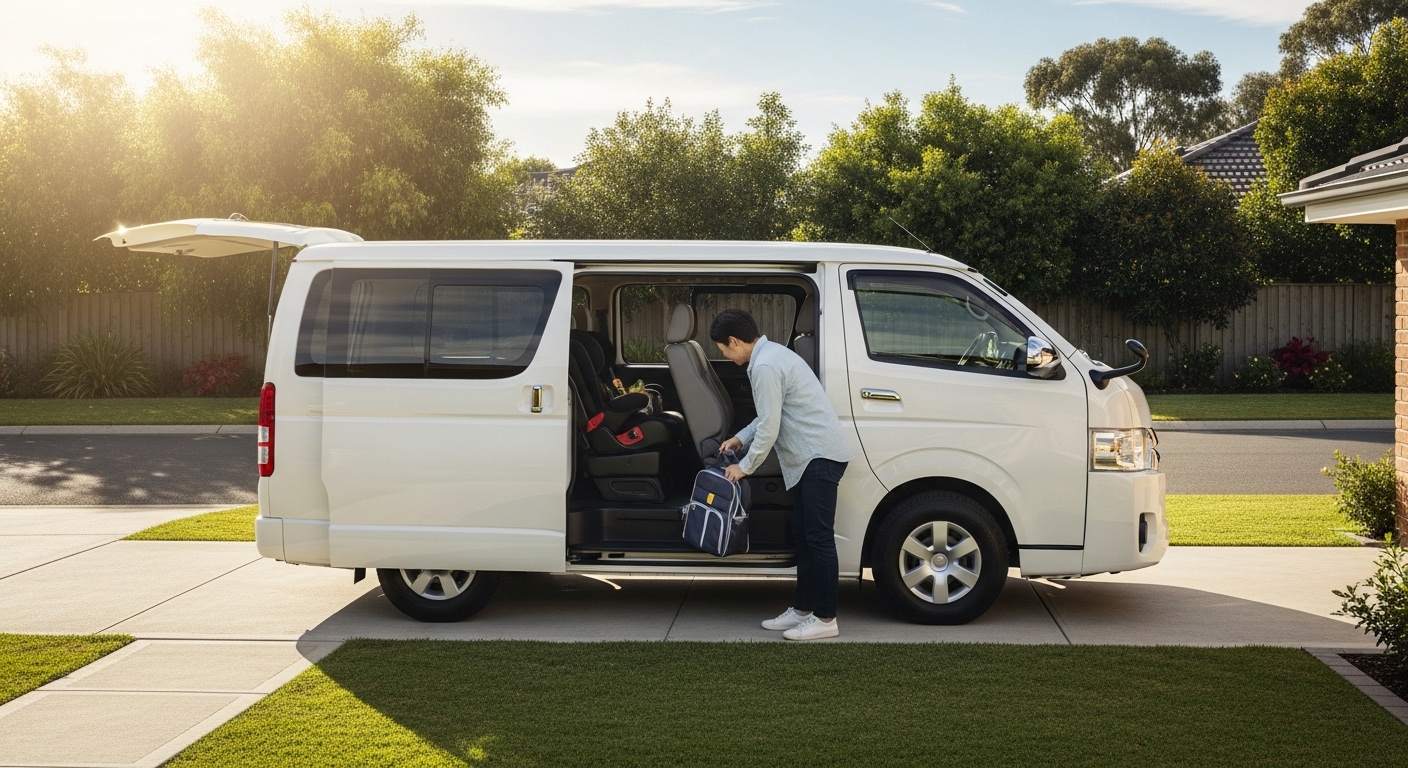 Sliding doors and a tall, square cabin make family loading far easier on the school run.
For young children and multiple child seats, the Stepwgn's height and square door opening make daily buckling less of a battle. For airport trips and weekend travel with a full car, its vertical cargo space helps. The Odyssey still handles all of this well, and multi-generational families who value a plush, car-like ride may prefer it. Both have dual power sliding doors, a big plus in tight Australian car parks.
Honda Odyssey vs Stepwgn RP8 Fuel Economy
Official figures are close, and both are efficient for their size. The Odyssey RC4 hybrid is rated at 20.8 km/L combined on the WLTC cycle, or about 4.8 L/100km (Honda Odyssey RC4 fuel economy, Spec Tank, 2019). The Stepwgn RP8 e:HEV is rated around 19.6 km/L WLTC (Honda Stepwgn RP8 fuel economy, Greeco-Channel, 2024).
A quick note on numbers, because it trips buyers up. Older Japanese ads often quote JC08 figures, which are more optimistic. The same RC4 shows 26.0 km/L on JC08 versus 20.8 km/L on the newer WLTC test (Honda Odyssey RC4 fuel economy, Spec Tank, 2019). WLTC is closer to reality, but neither is a promise. In Australian traffic, expect a real-world figure nearer 5.2 to 5.8 L/100km depending on load, aircon and how much of your driving is stop-start.
The takeaway: fuel economy should not decide this comparison. The gap between the two is small, and both will cost far less to run than an old V6 petrol van.
How Does the Stepwgn RP8 e:HEV System Work?
Honda's e:HEV works mostly like an electric car. A 2.0L petrol engine and two electric motors combine, but for everyday driving the wheels are usually driven by the electric motor, not the engine directly. The petrol engine mainly acts as a generator, feeding electricity to the motor and topping up the battery.
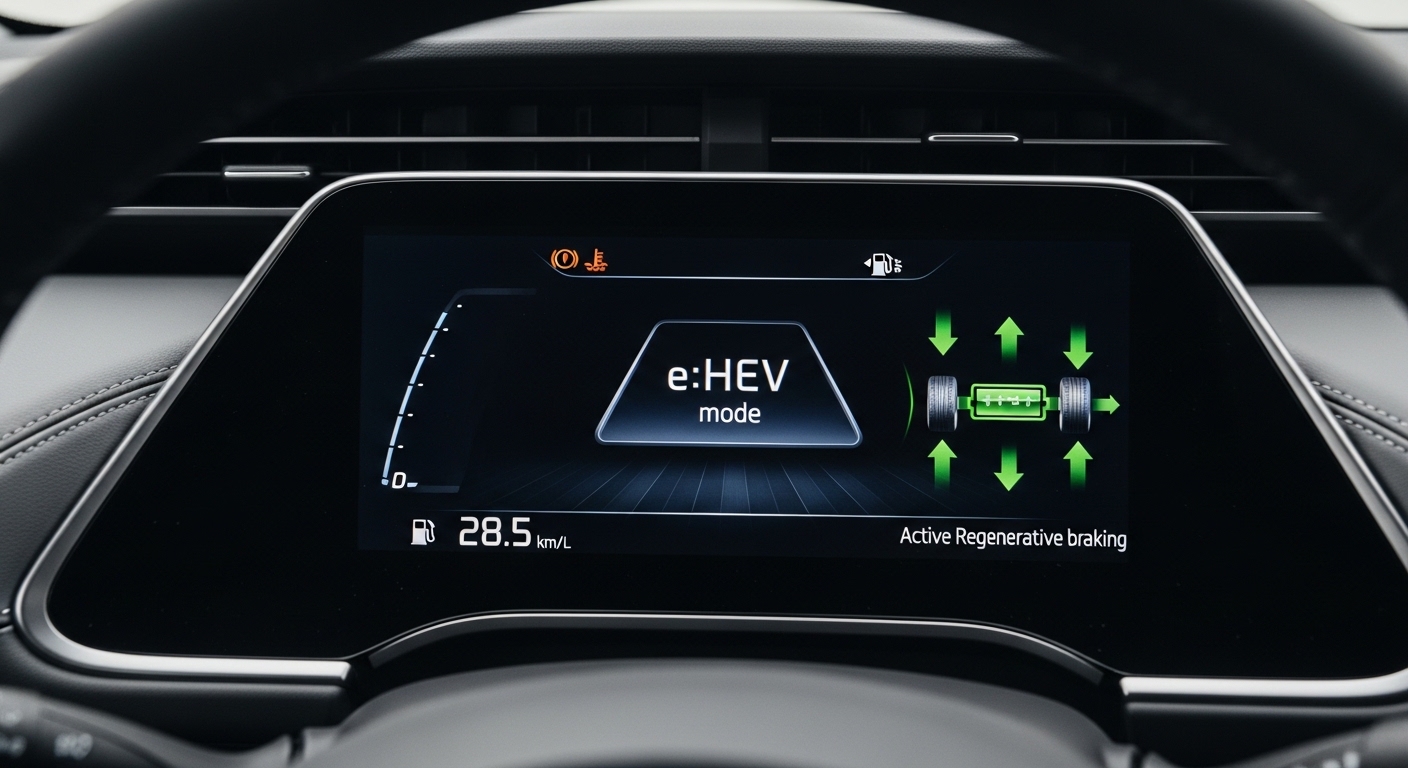 Honda's e:HEV system runs as an electric car most of the time, with the petrol engine feeding the motors.
At higher, steady speeds the engine can lock in and drive the wheels for efficiency. Around town it stays off more often, running on electric drive, which is why the system suits Sydney's stop-start traffic. Regenerative braking captures energy every time you slow down and stores it in the hybrid battery, so you rarely need to think about charging. You just fuel it like any petrol car.
How Does the Odyssey Hybrid Compare?
The Odyssey hybrid uses Honda's earlier Sport Hybrid i-MMD system, built around a 2.0L Atkinson-cycle petrol engine and dual electric motors. The principle is the same: electric drive most of the time, petrol engine as generator, engine assist at speed. The RC5 update runs a 2.0L i-VTEC hybrid. In practice both Odyssey and Stepwgn feel smooth and quiet, with a similar relaxed, seamless step-off.
Which Is Better to Drive?
The Odyssey is the more satisfying vehicle to drive, thanks to its lower centre of gravity and car-like seating position. It feels planted and refined on the motorway, with less body lean through corners and a settled ride at highway speed. The Stepwgn RP8 sits taller, so it leans a little more, but rewards you with commanding visibility.
For most family driving, the differences are modest. The Odyssey suits buyers who spend real time on freeways or want a people mover that drives like a big passenger car. The Stepwgn suits buyers who mainly potter around town and value the tall, upright view of the road.
Which Is Easier to Park in Sydney?
Around town, the Stepwgn RP8 is easier to place. Its upright body and big glass give excellent visibility, and the shorter, boxier shape helps in tight spots despite the identical length. The one caveat is height: check basement clearance signs. The Odyssey is lower and easier under a barrier, but its width and lower seating make judging kerbs a little harder. Reversing cameras and parking sensors help on both, though the exact kit depends on the grade and year, so confirm what a given car actually has.
Which Is Better for Long Australian Trips?
For long highway hauls, the Odyssey has a slight edge on driver comfort and refinement. Its lower body cuts wind noise and feels more stable at 110 km/h on the Hume or the Pacific. Second-row passengers enjoy a wide, lounge-like cabin, and fuel use stays low on a steady cruise.
The Stepwgn RP8 fights back on passenger and cargo space. If you are carrying a full load of people plus luggage to the coast, its tall cabin means nobody rides with bags on their lap. Third-row adults are more comfortable over distance too. Both sip fuel on the highway, so the choice again comes down to refinement versus outright room.
Honda Stepwgn RP8: What Australian Buyers Should Know
The Honda Stepwgn RP8 is the newest-generation Stepwgn, built from 2022 to 2026, and it is the boxy, space-first people mover in this comparison. It pairs a clean, upright design with Honda's e:HEV hybrid driveline, dual power sliding doors and a genuinely flexible cabin, which is why it appeals to families who put practicality first.
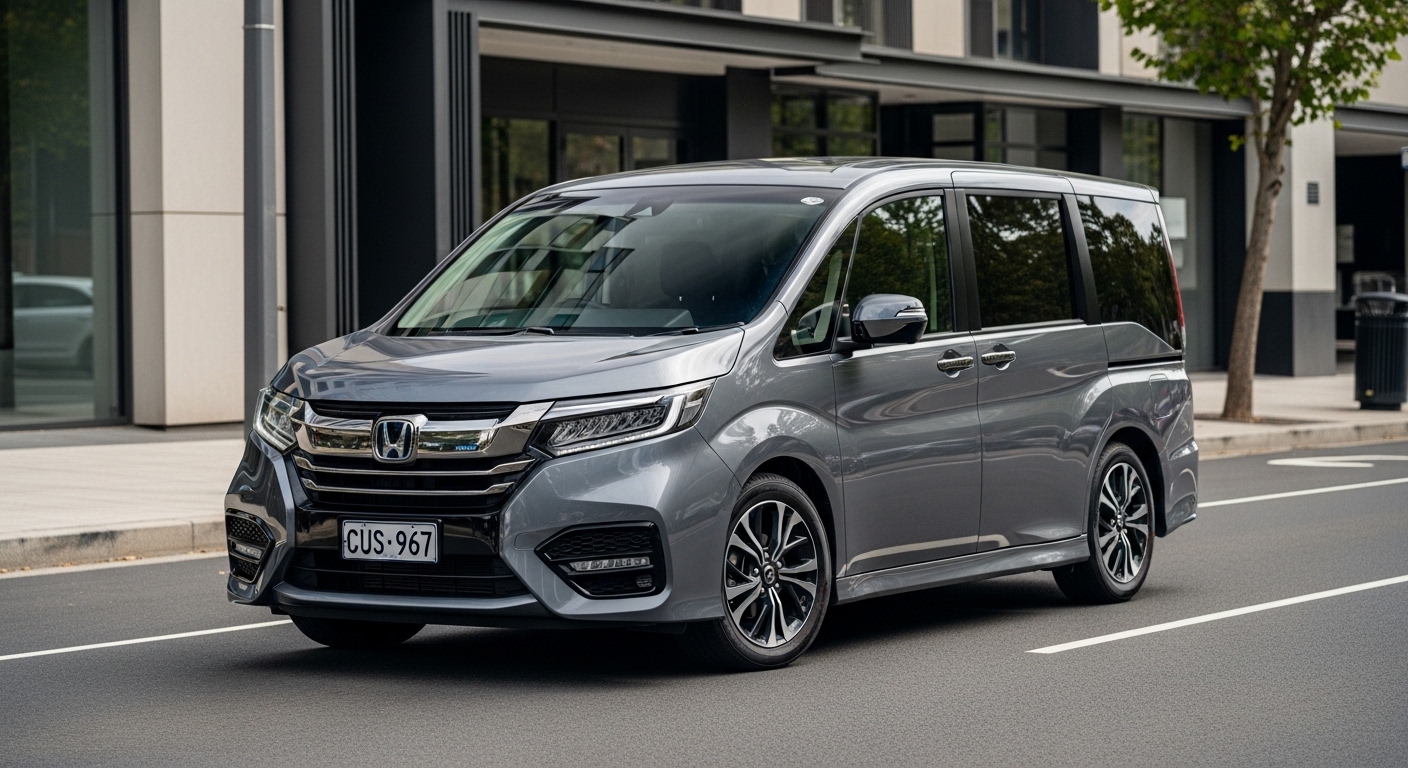 2023 Honda Stepwgn RP8
On the numbers, the RP8 measures 4,830 × 1,750 × 1,840 mm with a tall cabin of roughly 2,845 × 1,545 × 1,410 mm. The hybrid grade runs a 2.0L e:HEV producing around 145 PS through an automatic, front-wheel-drive setup, with WLTC economy near 19.6 km/L. Japanese-market grades bring different equipment and seating, and the popular Spada trim adds a sportier look. It is approved for import to Australia under the SEVS Environmental Criterion, with build eligibility tied to the exact model code, year and variant.
Because it is a Japanese-market vehicle, exact specification depends on the individual build. Some grades carry the full Honda Sensing safety suite; others are more basic. Seating can be seven or eight depending on the grade, so always confirm the configuration and equipment on the specific car before you commit.
Honda Odyssey: What Australian Buyers Should Know
The Honda Odyssey is the lower, more car-like people mover, and it is the one Australians see most on the used market. Early RC1 and RC2 examples use a 2.4L petrol engine, while the hybrids most buyers want are the RC4 and the newer RC5. All are front-wheel drive with automatic transmissions, dual sliding doors and a refined, comfortable cabin.
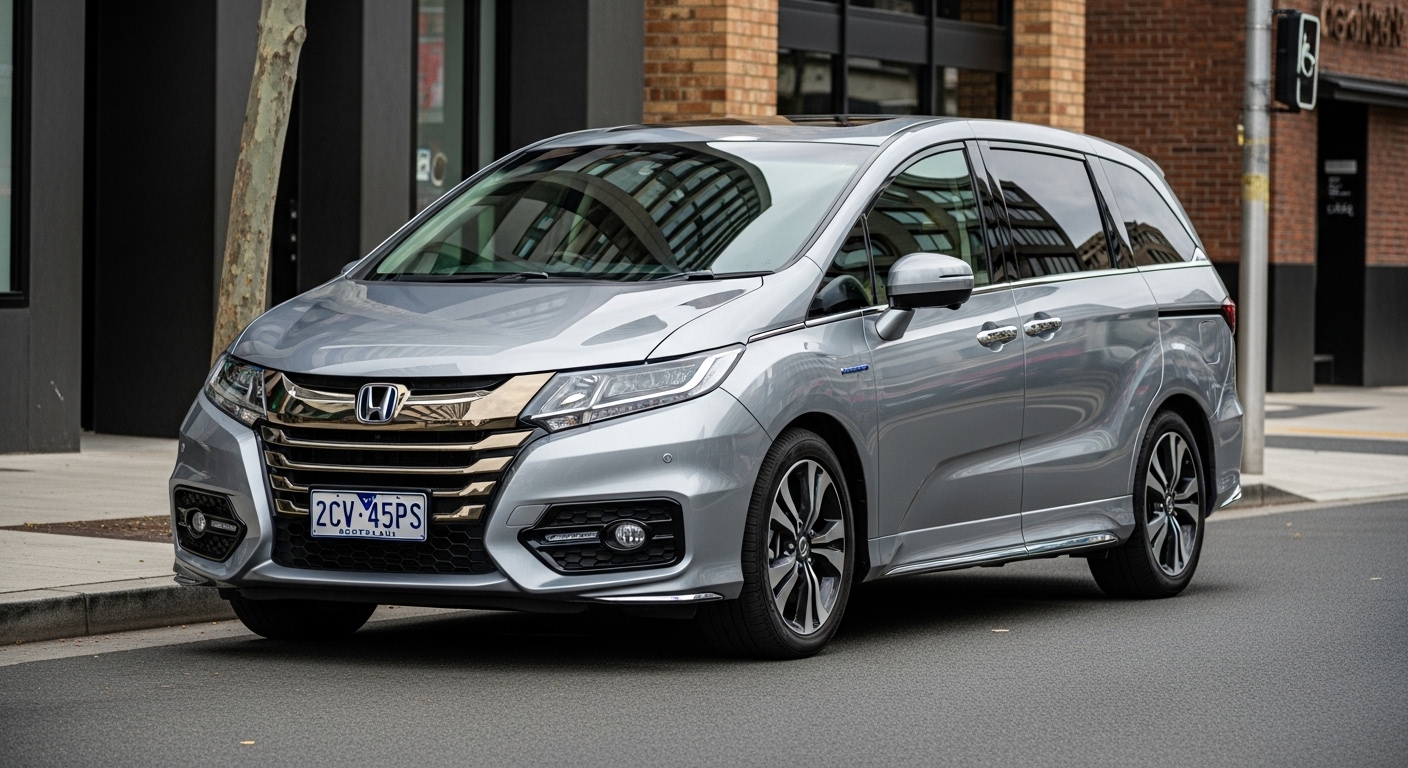 2017 Honda Odyssey RC4 Hybrid
The RC4 hybrid pairs a 2.0L LFA petrol engine with Honda's Sport Hybrid i-MMD system, offers seven or eight seats, and is eligible for import across a broad 2016 to 2025 build range. The measured RC4 is 4,830 × 1,820 × 1,695 mm on a long 2,900 mm wheelbase, and returns around 20.8 km/L WLTC. The later Honda Odyssey RC5 uses a 2.0L i-VTEC hybrid, seats seven, and covers a 2023 to 2025 build range.
Petrol RC1 and RC2 models are cheaper to buy but thirstier and lack the hybrid's smoothness, so most family buyers gravitate to the hybrids. As with any used Honda hybrid, condition and service history matter more than model year alone. Honda Sensing appears on newer grades, but not every car has it, so verify per vehicle.
Honda Odyssey vs Stepwgn RP8 Reliability
Both are dependable when maintained, but neither is bulletproof, so buy on condition rather than reputation. The key on any imported Honda hybrid is a documented service history and a healthy hybrid system. A pre-purchase inspection that includes a hybrid battery health check is the single most useful thing you can do.
Beyond the battery, check the cooling system, suspension, brakes and tyres for wear, and confirm the air-conditioning cools properly. Test both power sliding doors through a full cycle, since the electric door motors can be costly to repair. Scan for warning lights, check every camera and sensor works, and verify the interior electronics respond as they should. Finally, confirm the odometer reading against service records and auction documentation.
Which Has the Better Safety Technology?
Both can be fitted with Honda Sensing, Honda's driver-assist suite, but coverage varies heavily by grade and year, so never assume. Where fitted, Honda Sensing can include autonomous emergency braking, adaptive cruise control and lane-keeping assistance. Higher grades may add blind-spot monitoring, parking sensors and multi-view cameras, and all carry multiple airbags. Always confirm the exact safety kit on the individual vehicle rather than trusting the model name.
Are Honda Odyssey and Stepwgn Parts Available in Australia?
Routine servicing and consumable parts, filters, brakes, fluids and tyres, are widely available, and plenty of independent Honda-competent workshops can look after both. The nuance is with model-specific body panels, trim and some Japanese-market electronic components, which may need to be ordered from Japan with a lead time. Not every Honda dealer will support every JDM part, so it is worth confirming parts and workshop support before you buy, especially for the newer Stepwgn RP8.
7-Seater vs 8-Seater: Which Configuration Should You Choose?
Choose seven seats for comfort and eight for capacity. Seven-seat grades use two captain's chairs in the second row, which gives each passenger more space, a more premium feel and a handy walk-through to the third row, ideal for buckling children. Eight-seat grades swap in a second-row bench, adding an extra seat for larger families or car-pooling duty.
Both the Odyssey and Stepwgn RP8 are offered in seven and eight-seat forms depending on grade and market, though not every build is available both ways. If you rarely fill every seat, the seven-seat captain's-chair layout is the nicer place to spend time. If you genuinely need eight belts, prioritise finding a bench-equipped car.
Which Should You Buy?
There is no single winner, so match the vehicle to how you actually drive. Both are efficient hybrids that will serve an Australian family well for years, so buy the one whose shape fits your life.
Choose the Honda Odyssey if you:
- Want a more premium, car-like cabin
- Prefer a lower driving position
- Prioritise second-row comfort
- Do plenty of motorway driving
- Want a people mover that feels like a passenger car
Choose the Honda Stepwgn RP8 if you:
- Need maximum cabin practicality and headroom
- Frequently use all three rows
- Have several children and multiple child seats
- Value easy access through tall sliding doors
- Want the newest-generation Honda people mover
- Prioritise city-friendly hybrid operation and carrying passengers plus luggage together
Buying and Importing With Carbarn
If you have decided which suits you, Carbarn can help you get either one on the road in Australia. Carbarn is a Sydney-based specialist in Japanese hybrid vehicles, based in Lidcombe, NSW, with locally available used stock plus a full Japan import and compliance service. The team handles auction sourcing and pre-bid inspection, bidding to your approved budget, ocean freight, customs and biosecurity clearance, and SEVS-compliant work at its in-house RAW-certified Sydney workshop. You also get hybrid battery health checks, finance options, extended warranty on eligible cars, and nationwide door delivery, so you can compare an Odyssey already in Australia against a Stepwgn RP8 sourced from Japan with the paperwork sorted for you.
Take your time, inspect the individual car, and pick the body shape that fits your family and your driveway. Both of these Hondas are strong, sensible choices.