



Ready to Hit the Road in Style?
Save money and reduce emissions with vehicles designed to deliver exceptional mileage. Visit our inventory and find a car that fits your lifestyle.
Ready to Hit the Road in Style?
Save money and reduce emissions with vehicles designed to deliver exceptional mileage. Visit our inventory and find a car that fits your lifestyle.
You've settled on a Serena. Then you start looking at listings and the specs read like a password: GFC27, HFC27, DAA-GNC27, 6AA-GFNC27. Nobody explains what any of it means, and the seat count changes depending on which one you're looking at. That's a problem when you're buying a people mover specifically because you need the seats. This guide decodes every C27 variant so you know exactly what's in front of you.
Quick Answer
- The letters in a Serena model code aren't random. Each position tells you the powertrain, the trim and the drivetrain.
- The G variants (GC27, GFC27) use the S-Hybrid petrol system and are sold as eight-seaters. The HFC27 e-POWER is a seven-seater, confirmed on Carbarn's HFC27 import page.
- Carbarn's variant pages list the importable C27 window as 2016 to 2021 builds with under 80,000 km on the odometer.
- The newer C28 family minivan isn't currently offered on Carbarn's import pages, so the C27 is the generation to focus on.
What Does a Nissan Serena Model Code Actually Tell You?
The C27 Serena sold in six main code variations across its 2016 to 2022 run, and each letter position carries specific information. Read left to right and you can work out the engine, the trim grade and whether it drives two wheels or four, before you've even opened the listing photos.
Start with the bit before the hyphen. That prefix is a Japanese emissions and classification code, not part of the model name. Earlier builds carry a DAA prefix; later ones carry 6AA or 5AA. It matters practically, because Carbarn's own eligibility notes for the S-Hybrid and e-POWER variants call for a 6AA or 5AA chassis code.
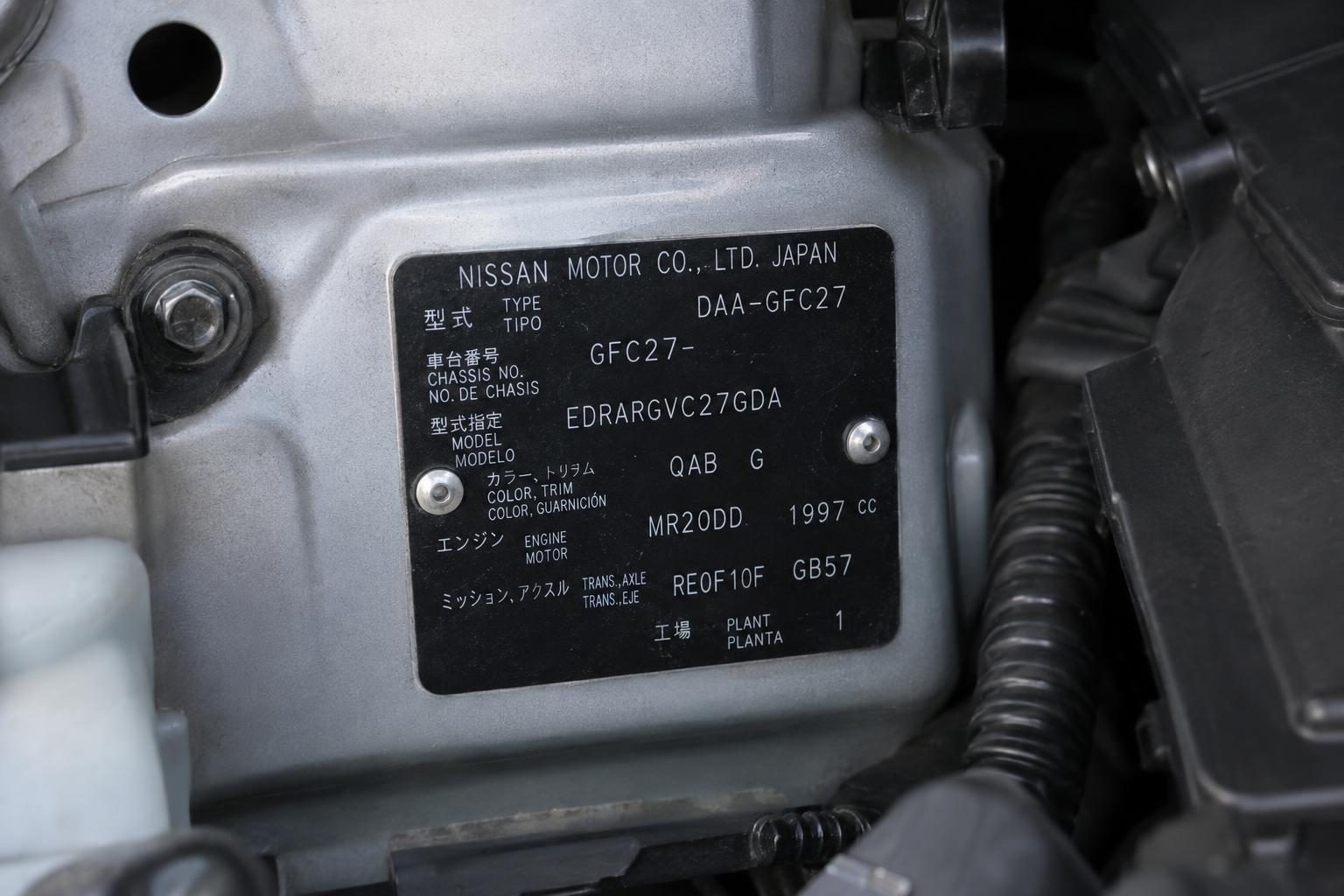 The ID plate in the engine bay is the fastest way to confirm exactly which Serena you're looking at.
Then the variant code itself:
| Letter or prefix | What it means |
|---|---|
| DAA- / 6AA- / 5AA- | Japanese classification prefix. DAA appears on earlier builds, 6AA and 5AA on later ones |
| G (first letter) | S-Hybrid or plain petrol, using the MR20DD 2.0L engine |
| H (first letter) | e-POWER series hybrid, using the HR12DE 1.2L engine as a generator |
| F (second letter) | Highway Star trim: LED lighting, larger screen, upgraded sliding door features |
| (no second letter) | Base grade, usually badged C or XV |
| N (third letter) | Four-wheel drive |
| (no third letter) | Front-wheel drive |
| C27 | Fifth-generation Serena platform |
So GFNC27 reads as: S-Hybrid, Highway Star, four-wheel drive, C27 platform. Once that clicks, Japanese auction sheets stop being a wall of noise.
S-Hybrid or e-POWER: Which System Are You Buying?
Both get called "hybrid" in listings, but they work nothing alike. S-Hybrid is a mild assist system. e-POWER is a series hybrid where the petrol engine never drives the wheels at all. Buyers regularly assume they're getting the second and end up with the first.
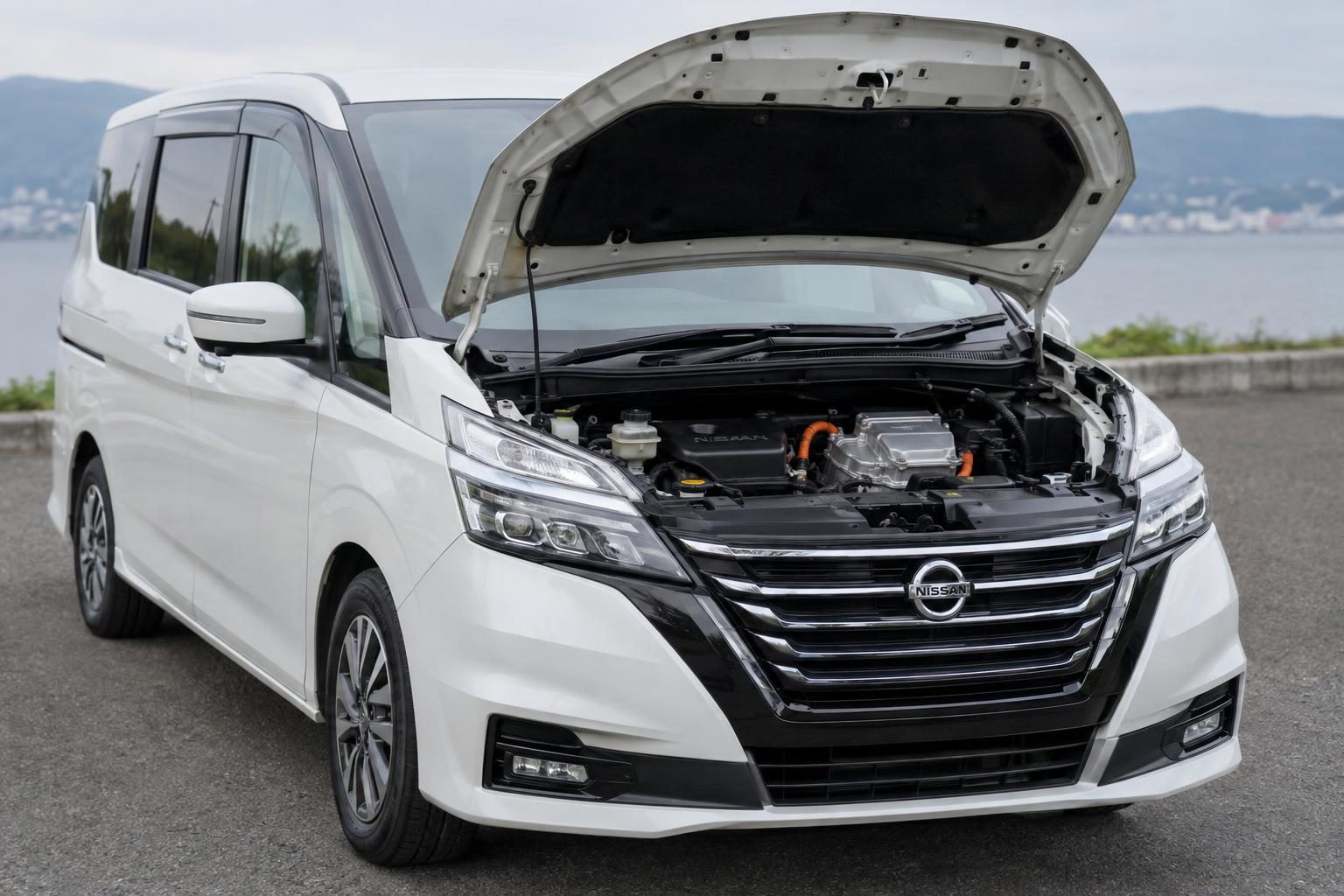 S-Hybrid keeps a conventional petrol engine driving the wheels, with a small motor helping off the line.
S-Hybrid (the G variants). The MR20DD 2.0L four-cylinder does the driving, producing 110 kW and 200 Nm at 4,400 rpm. A compact motor generator adds a short burst of assist under acceleration and recovers a little energy under braking. Nissan's August 2016 launch press release (Nissan Newsroom, August 2016) cited 17.2 km/L as the class-best JC08 figure for the C27 S-Hybrid — that headline applies to the lighter base variants. The heavier GFC27 Highway Star grade comes in at approximately 16.7 km/L (around 6 L/100km) per secondary specifications. Observed figures from Australian-delivered examples run around 6.6 L/100km — roughly 10% above the test-cycle number, which is a normal gap for mild-hybrid systems in real traffic.
e-POWER (the H variants). The HR12DE 1.2L three-cylinder runs purely as a generator, feeding an EM57 electric motor that turns the front wheels. It drives like an EV in traffic, with instant response and no gear hunting. Nissan quoted 26.2 km/L on JC08 (Nissan Newsroom, February 2018), which is 3.81 L/100km. Treat that number with caution. JC08 is a Japan-only lab cycle and it flatters the e-POWER badly. Real-world observations in Australia land nearer 5.6 to 5.8 L/100km (Roundabout Australia, 2025).
| GFC27 / GC27 (S-Hybrid) | HFC27 (e-POWER) | |
|---|---|---|
| Engine | MR20DD 2.0L petrol, 110 kW / 200 Nm | HR12DE 1.2L three-cylinder generator |
| Drives the wheels | Petrol engine | EM57 electric motor |
| JC08 official | ~16.7 km/L (~6 L/100km) for GFC27 Highway Star; lighter GC27 variants higher | 26.2 km/L (3.81 L/100km) |
| Observed real-world | around 6.6 L/100km | 5.6 to 5.8 L/100km |
| Seats | 8 | 7 |
Short version: S-Hybrid suits buyers who want straightforward ownership and eight seats. e-POWER suits buyers who do a lot of slow urban driving and are fine with seven.
Do You Get Seven Seats or Eight?
This is the detail that catches people out, and it's worth being blunt about. Not every C27 Serena is an eight-seater. The seat count follows the second-row layout, and the second-row layout follows the variant.
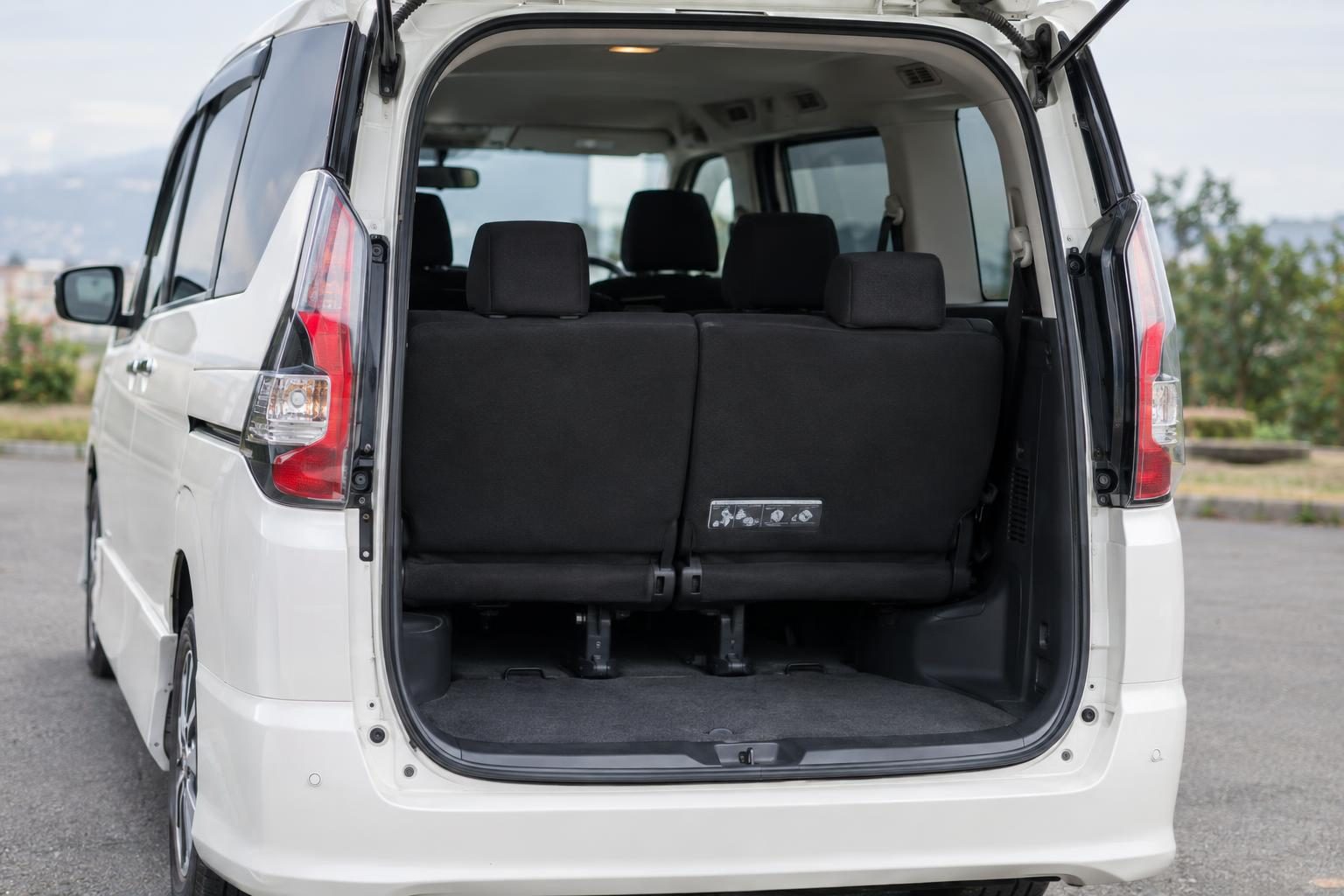 A bench second row is what turns a seven-seat people mover into a genuine eight-seater.
The GC27 and GFC27 run a bench in the second row, giving eight seats. Every GC27 and GFC27 in the current Australian listings is badged as an 8 Seater. The HFC27 e-POWER runs captain's chairs in the second row instead, and Carbarn's import page for that code states seven seats plainly.
For the GNC27, GFNC27 and HC27, the import pages don't publish a seat count, so don't assume one. Check the individual listing or the auction sheet before you commit. Anyone telling you a GFNC27 is definitely an eight-seater is guessing.
One practical note on the bench layout: the middle position is narrower than the two beside it. Fine for kids on the school run, tighter for three adults on a long drive to the coast.
The 2021 GFC27 Highway Star V as a Reference Point
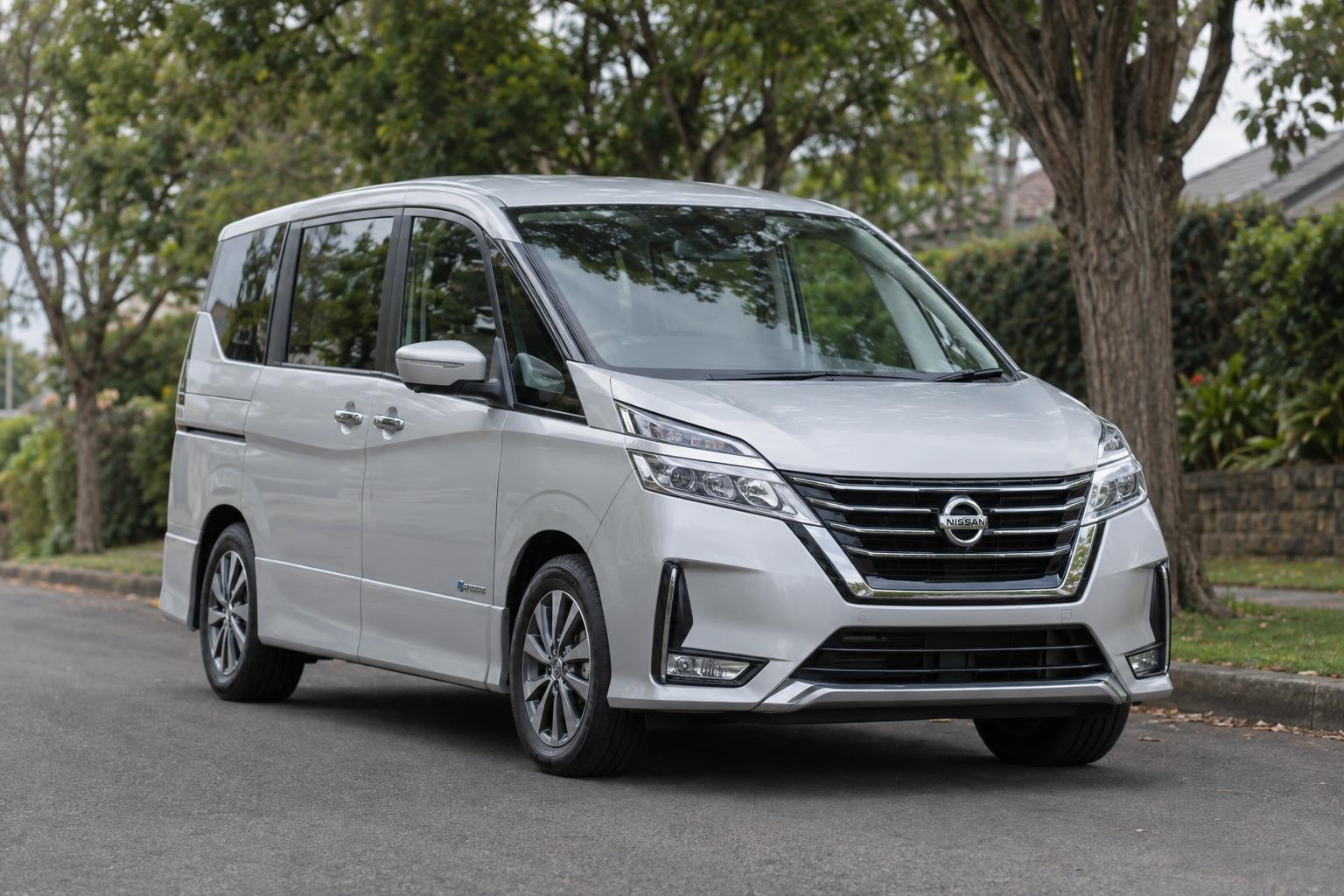
It helps to put a real car against the code. The Nissan Serena listings include a 2021 Highway Star V Pro Pilot in pearl white with 46,656 km showing, and it's a clean illustration of what GFC27 actually delivers on the road.
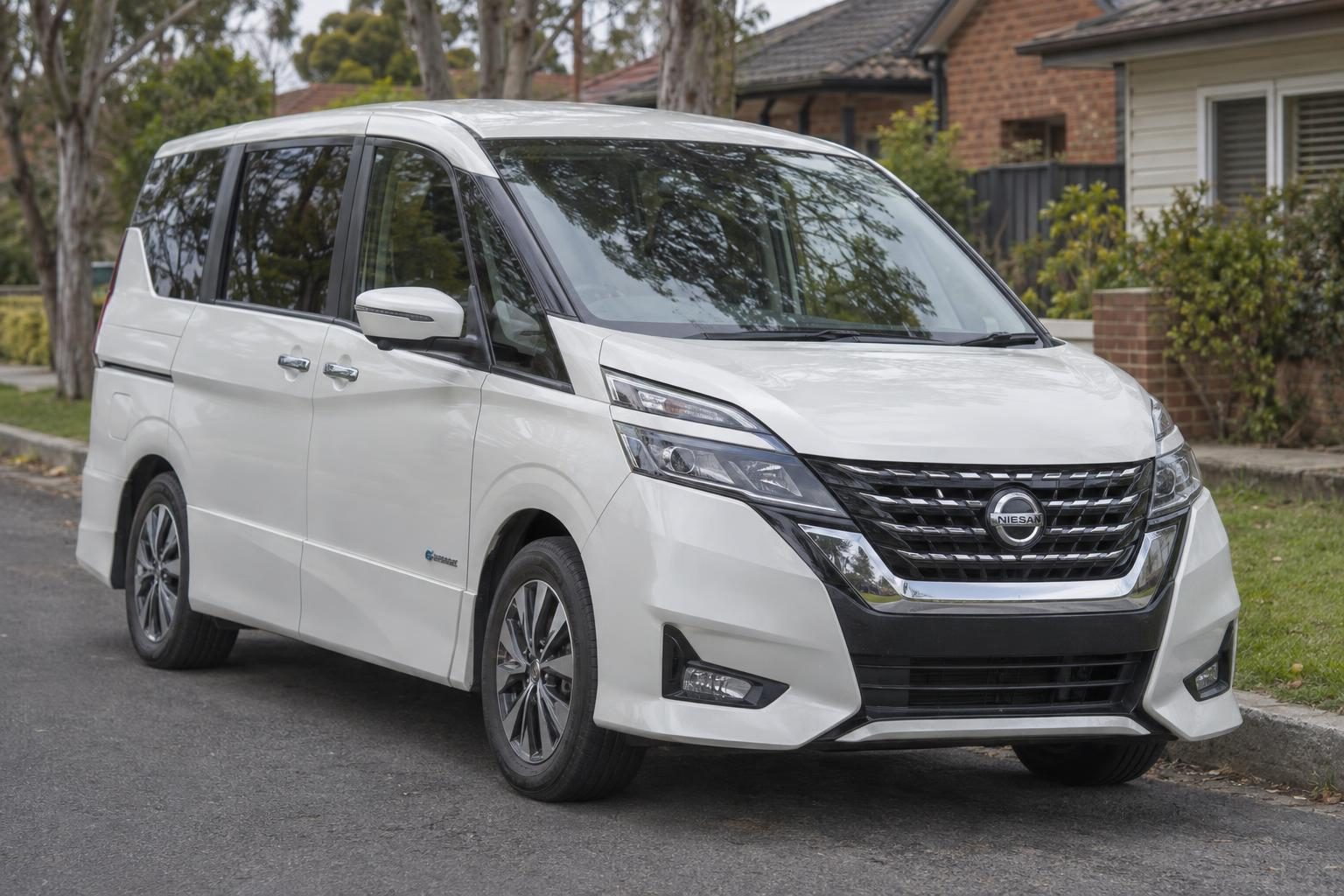 2021 Nissan Serena Highway Star V,
Under the bonnet sits the MR20DD 2.0L direct-injection four-cylinder with S-Hybrid assist, rated at 110 kW and 200 Nm at 4,400 rpm, driving the front wheels through a CVT automatic. The body is a five-door people mover with eight seats across three rows and the dual sliding doors that make kerbside loading in a tight Sydney car park genuinely easier. The GFC27 Highway Star's JC08 rating is approximately 16.7 km/L (around 6 L/100km), and Australian owners typically see around 6.6 L/100km in real-world driving.
The Pro Pilot designation is the part worth paying attention to. It adds Nissan's adaptive cruise control with lane centring, which does real work on the M4 and M7. Highway Star V trim also brings the LED headlights and larger infotainment screen that the base XV grade goes without. Worth knowing before you buy: the Serena has never been ANCAP tested, so there's no local star rating to point at. Listings for these 2021 GFC27 cars sit in the mid-$20K range, though the live listings page is the only place to see current pricing.
Which Build Year Should You Target?
Carbarn's variant pages list the importable range as 2016 to 2021 builds, with the odometer under 80,000 km. That km ceiling matters more than most buyers expect, because it quietly rules out a lot of otherwise tidy cars.
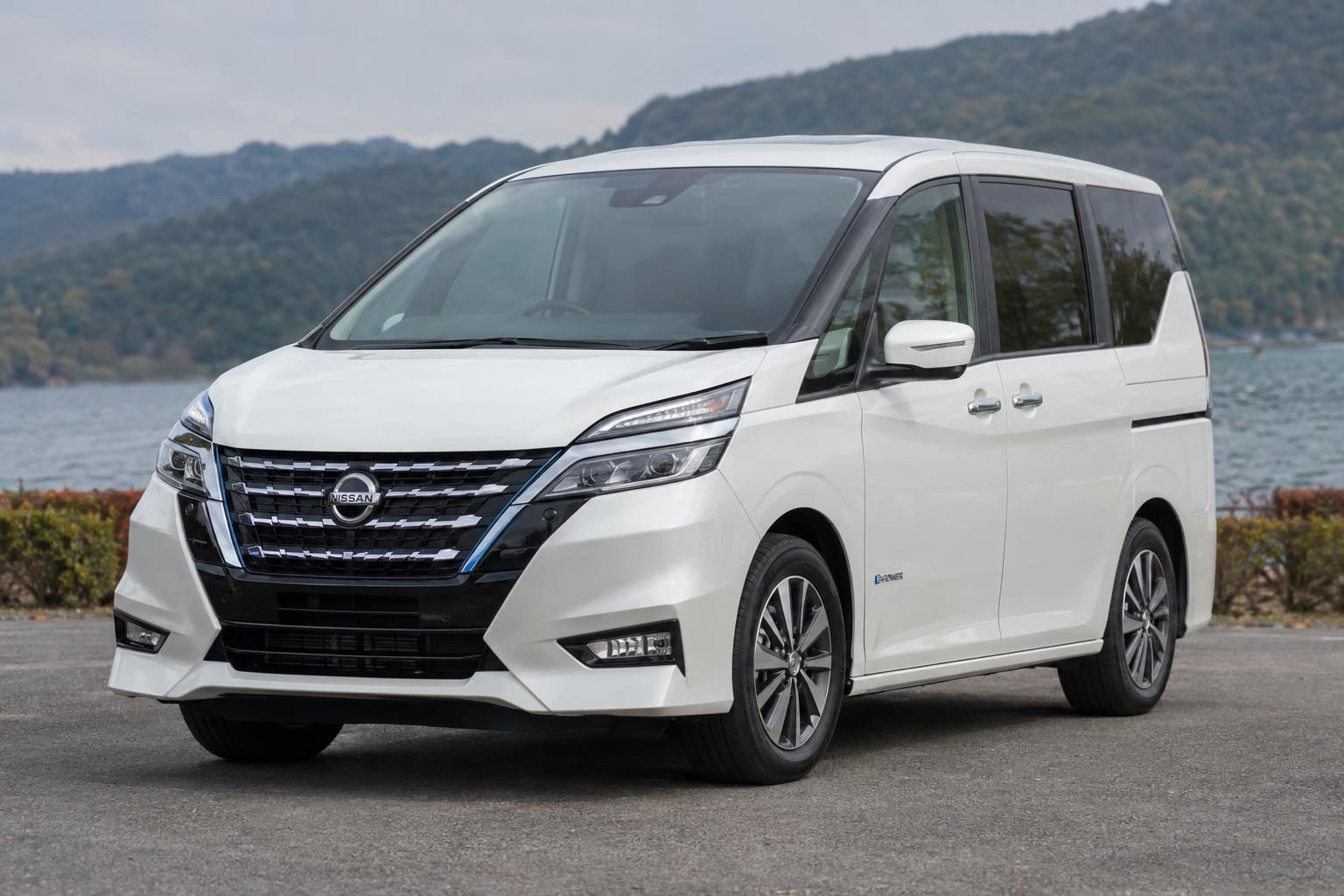 Build year decides more than trim does once the odometer limit comes into play.
Here's how the generation played out:
| When | What happened |
|---|---|
| August 2016 | C27 launches in Japan with petrol and S-Hybrid |
| March 2018 | e-POWER arrives, creating the HFC27 and HC27 codes |
| August 2019 | Facelift: revised grille, new bumpers, updated safety gear |
| 2021 | Last build year in the importable window |
| 2022 | C28 replaces it in Japan and S-Hybrid is dropped |
Two things follow from that. Any e-POWER Serena you find is a 2018 build or later, which matches the auction data on the HFC27 and HC27 import pages covering 2018 to 2021 cars. And a 2019 to 2021 facelift car with under 60,000 km gives you the most driving runway before the 80,000 km limit becomes an issue for the next buyer down the line.
Do You Actually Need a 4WD Serena?
Only two C27 variants have it: the GNC27 base grade and the GFNC27 Highway Star. Both are confirmed as four-wheel drive on their import pages. Whether you need it is a different question, and for most buyers the honest answer is no.
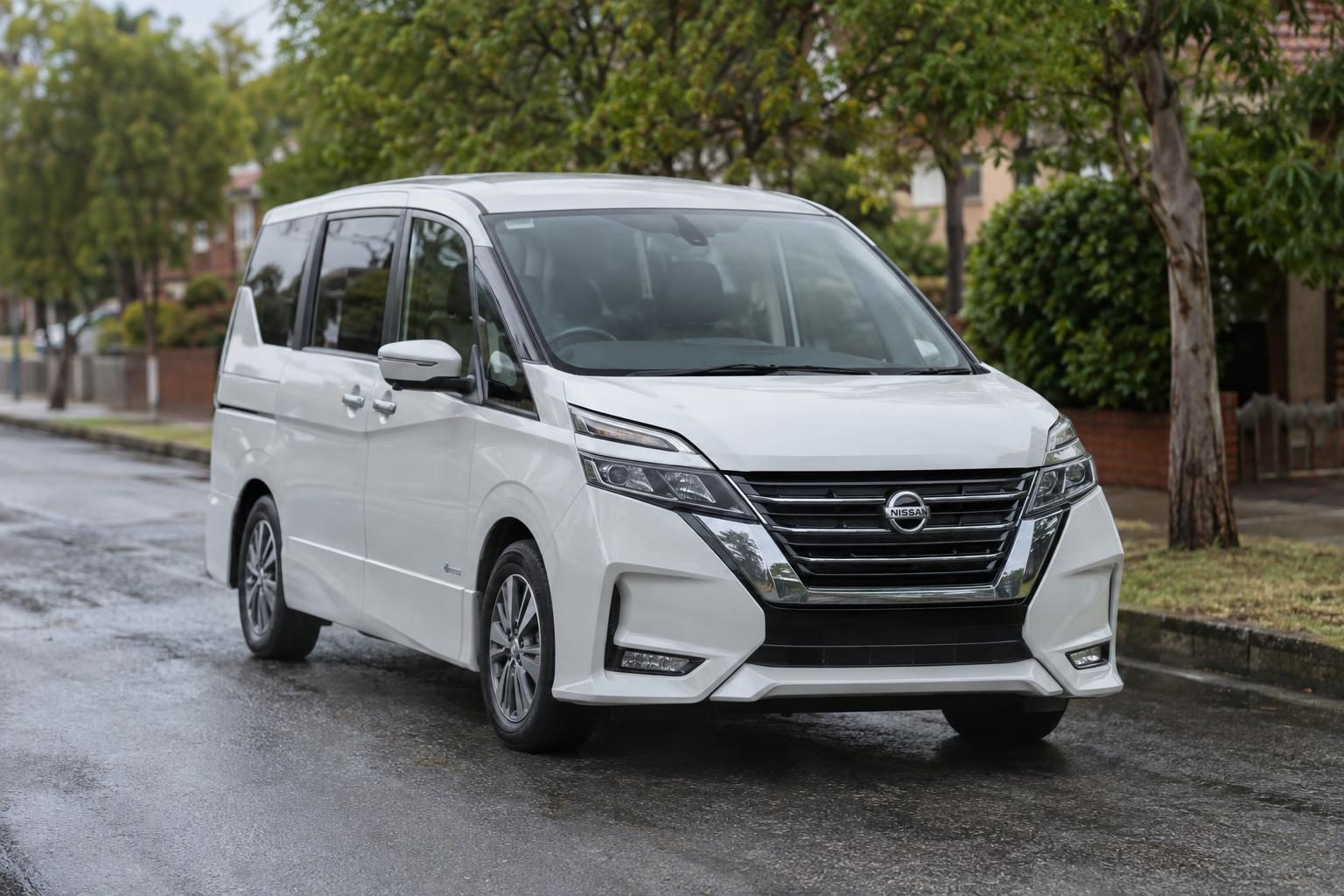 Four-wheel drive earns its keep on wet regional roads, not on the school run in Strathfield.
It makes sense if you're regularly on wet or unsealed roads: the Blue Mountains, the Southern Highlands, the Snowy region in winter, or a property with a long gravel driveway. It's a comfort thing more than a capability thing. This is a people mover, not a tourer.
If you're doing school runs and shopping centre car parks in metro Sydney, skip it. A 2WD GFC27 is lighter, marginally better on fuel and has one less system to maintain. There's also no published reliability data specific to the Serena 4WD driveline, so nobody should be selling you on it as a durability upgrade.
What About the C28?
The C28 arrived in Japan in 2022 and dropped S-Hybrid entirely, moving to e-POWER across the range with a newer HR14DDe 1.4L generator engine. A facelift debuted in Japan in December 2025 (paultan.org, December 2025).
Its WLTC figure is 4.85 L/100km (20.6 km/L), but that number belongs to the C28 alone. Different engine, different test cycle, and it tells you nothing useful about a C27. Don't let a seller quote it at you on a 2019 car.
More to the point for Australian buyers: the standard C28 family minivan isn't currently listed on Carbarn's import pages, and the variant pages for it return nothing. So if you want a Serena you can realistically import and comply now, the C27 is the generation that's actually available.
Which Variant Fits You?
Three profiles cover most people who end up on this page.
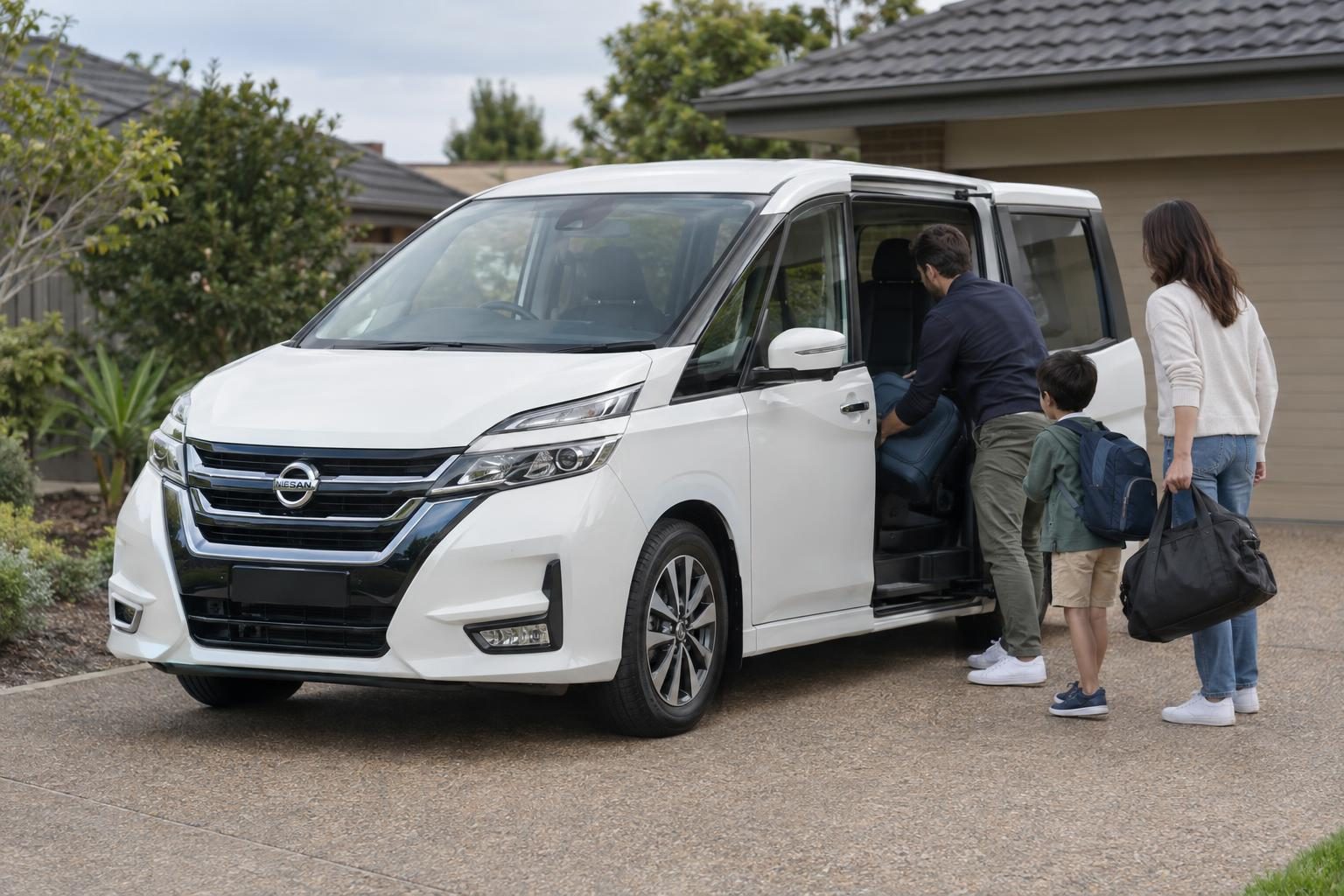 Most of the decision comes down to how many people you need to seat, and how often.
You need eight seats, properly. The GFC27 Highway Star is the practical answer, with the GC27 as the leaner option if you'd rather not pay for the trim. Both use the bench second row. The GFC27 adds LED headlights, the bigger screen and, on Pro Pilot cars, adaptive cruise.
You do mostly city kilometres and seven seats is plenty. Go HFC27 e-POWER. Stop-start traffic is exactly where a series hybrid shines, real-world consumption lands around 5.6 to 5.8 L/100km, and the captain's chairs are more comfortable for the two middle-row passengers than a bench ever is.
You're outside metro Sydney and see wet roads often. Look at the GNC27 or GFNC27. Just confirm the seat count on the specific car first, because it isn't published for those codes.
Importing a Serena C27 Through Carbarn
If you want to see what these codes look like as actual cars, Carbarn's used car listings include GC27 and GFC27 Serenas on the used Nissan Serena page, where specs, odometer readings and pricing are all shown per vehicle.
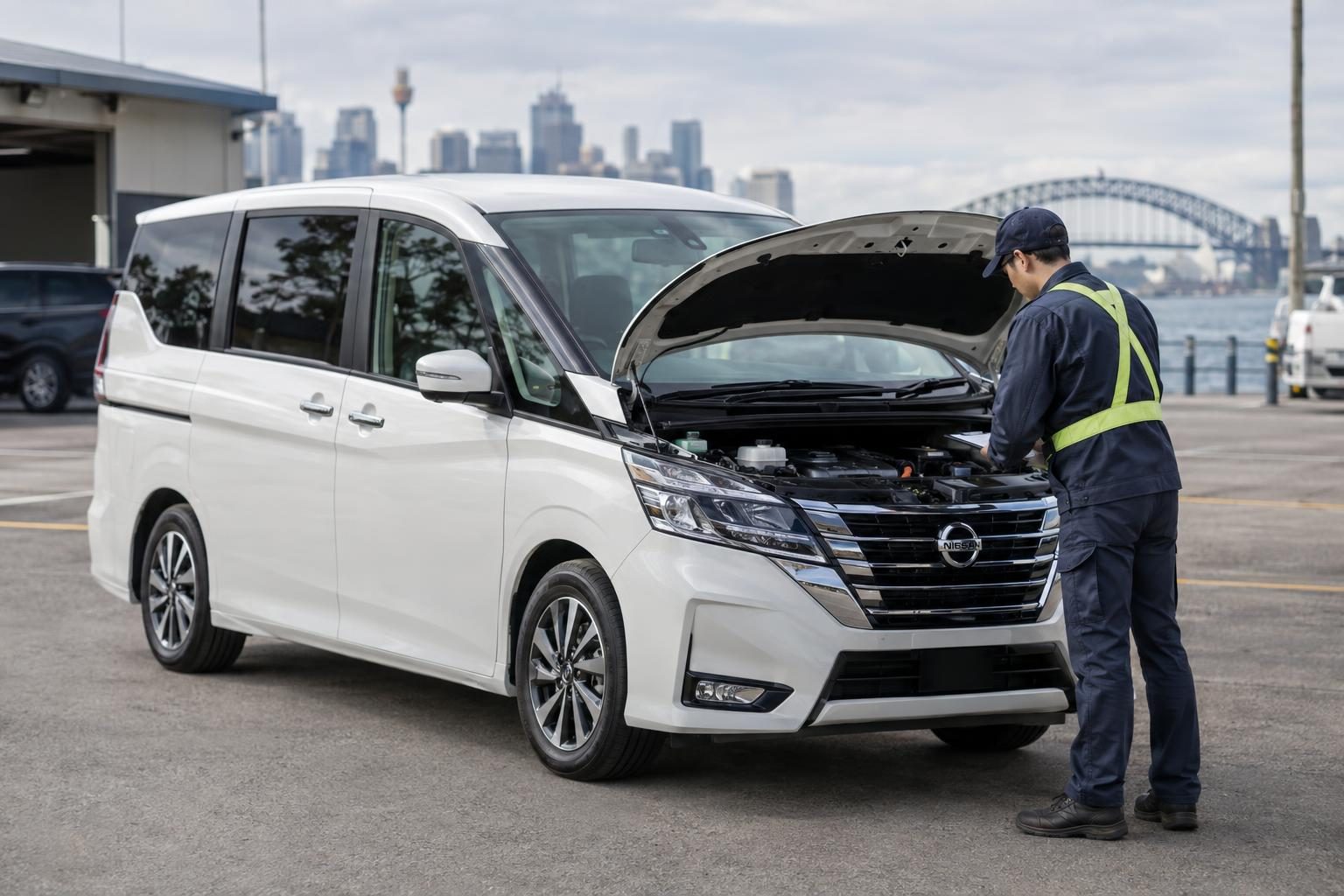 Compliance and preparation happen in Sydney before an imported people mover is road-registered.
All six C27 codes can be sourced from Japan through Carbarn's Japan import service, with SEVS approvals already verified on the Rover register for each one. As a licensed NSW motor dealer (MD056471) based at Lidcombe, Carbarn handles Japanese auction sourcing and pre-bid physical inspection, bidding with your approval, shipping and import approval, RAW-certified compliance in its own Sydney workshop, finance, a five-year extended warranty available on eligible vehicles for auction-sourced imports, and door delivery across NSW, Queensland and beyond.
The Short Version
Learn the code and the Japanese used market becomes a lot easier to read. G means S-Hybrid and eight seats. H means e-POWER and seven. F means Highway Star. N means four-wheel drive. The prefix before the hyphen tells you roughly where in the generation the car sits.
For most Australian families needing all eight seats, the GFC27 is the sensible landing spot. For city drivers who can live with seven, the e-POWER is the nicer thing to drive. Either way, check the seat count on the individual car before you commit.