



Ready to Hit the Road in Style?
Save money and reduce emissions with vehicles designed to deliver exceptional mileage. Visit our inventory and find a car that fits your lifestyle.
Ready to Hit the Road in Style?
Save money and reduce emissions with vehicles designed to deliver exceptional mileage. Visit our inventory and find a car that fits your lifestyle.
You've narrowed it down to two Japanese electric hatches. Both are right-hand drive from the factory. Both charge through the same DC plug. Both were built for city driving, not highway hauls. And yet the Honda e and the Nissan Leaf ZE1 sit in completely different parts of the used import market, with the Honda commanding a notably higher price point because so few were ever made.
That gap is where buyers get stuck. Pick the Honda for how it looks and you might spend two years apologising for the boot. Pick the Leaf for the sensible specs and you might spend two years wishing you'd bought the interesting one. Neither is a small regret when you've waited three months for a car to arrive from Japan.
Here's the honest comparison, spec by spec, plus the charging issue almost nobody mentions.
TL;DR: Honda e vs Nissan Leaf ZE1
- Honda e: 35.5 kWh battery, 283 km WLTC range (Japan spec, per the CHAdeMO Association Honda e spec), 4 seats, 171 L boot, rear-wheel drive. Built October 2020 to January 2024.
- Nissan Leaf ZE1: 40 kWh battery (39 kWh usable), 270 km WLTP, 110 kW, 5 seats, 435 L boot. SEVS-eligible builds: September 2017 to November 2020.
- Both use CHAdeMO for DC fast charging. The NRMA began removing CHAdeMO plugs from its busiest sites in May 2026, calling them "severely under-utilised" (NRMA, 18 May 2026).
- Both are SEVS-eligible and sourced to order from Japan.
- Honda e suits design-first drivers doing under 60 km a day. Leaf ZE1 suits anyone who carries people or luggage.
Why Are These Two Cars Constantly Shortlisted Together?
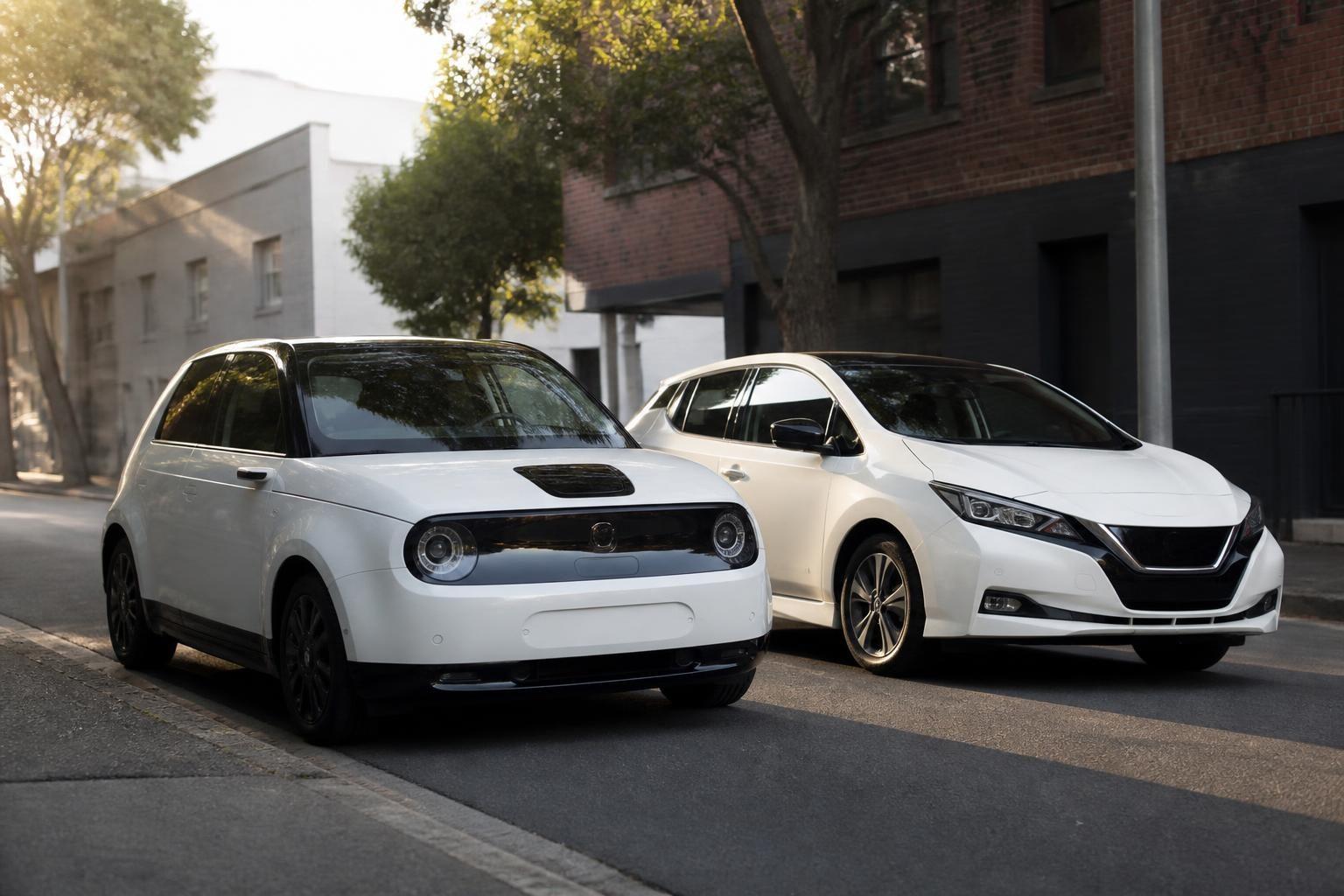
They land in the same shortlist because they solve the same problem from opposite directions. Both are compact Japanese EVs with city-scale batteries, both come through the SEVS pathway rather than local dealer stock, and both target the same driver: an urban commuter with a power point in the garage.
What buyers usually miss is that the ownership experience isn't remotely similar. Honda ended production in January 2024 after roughly 12,500 cars globally, so the used pool in Japan is finite and won't be topped up. The Leaf sold in enormous numbers over the same period, which changes everything about choice and condition.
Honda e vs Nissan Leaf ZE1: How Do the Specs Compare?
The headline numbers favour the Leaf on every practical measure, and the Honda on none of them. That's not a criticism, it's the design brief. Honda built a small, rear-drive city car with a wide dashboard screen and four seats. Nissan built a five-seat hatch with a 435 L boot.
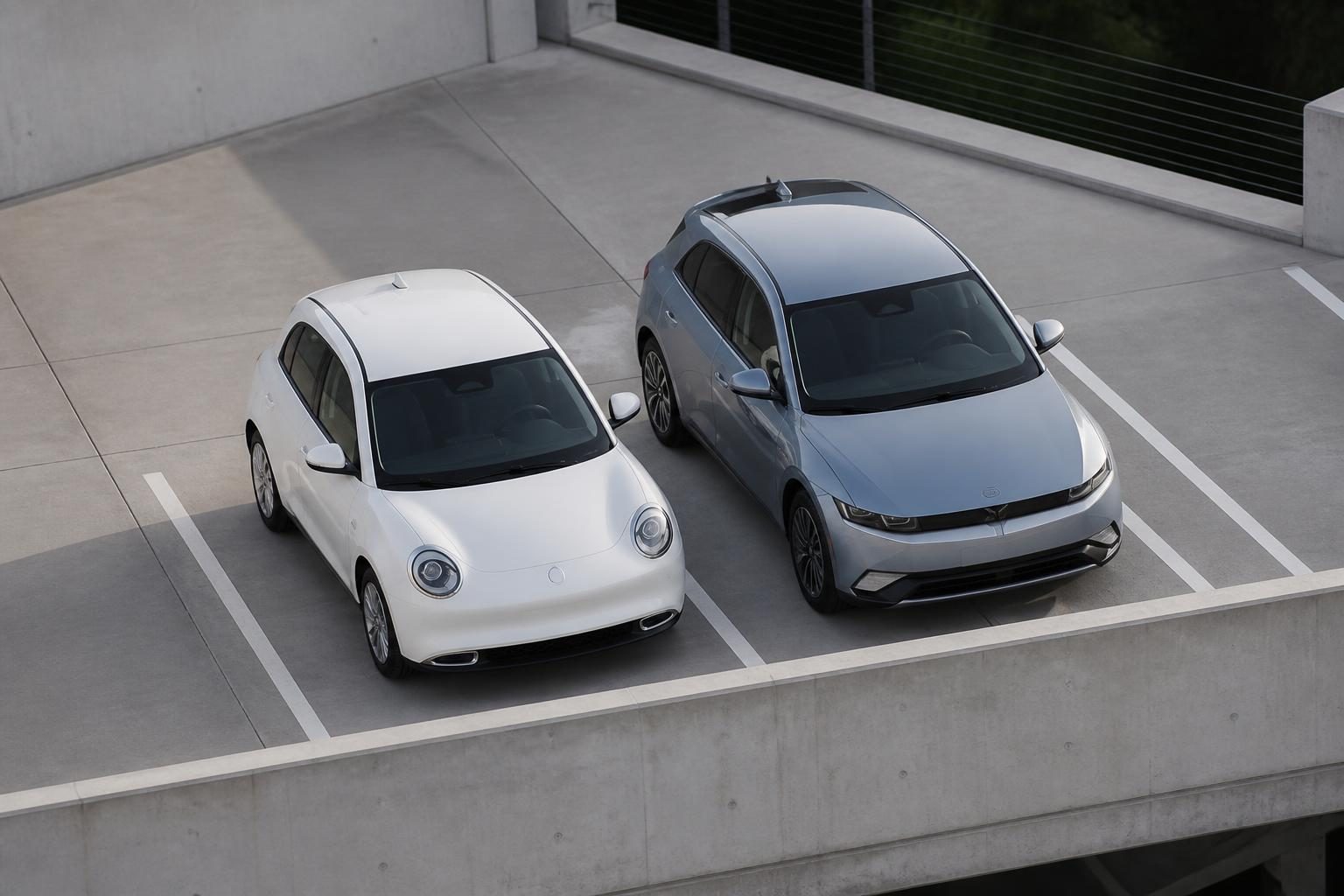 Size and footprint tell most of the story before you read a single spec
| Spec | Honda e (ZAA / ZC7) | Nissan Leaf ZE1 |
|---|---|---|
| Battery | 35.5 kWh | 40 kWh (39 kWh usable) |
| Quoted range | 283 km (WLTC, Japan spec) | 270 km (WLTP) |
| Real-world urban range | 160 to 190 km | 200 to 240 km |
| Motor output | 100 kW (ZAA) / 113 kW (ZC7) | 110 kW |
| Torque | 315 Nm | 320 Nm |
| Drive | Rear-wheel drive | Front-wheel drive |
| Seats | 4 | 5 |
| Boot | 171 L | 435 L (1,176 L folded) |
| DC fast charging | CHAdeMO, 30 min to 80% | CHAdeMO, 50 kW max |
| AC charging | Type 1 | Type 1, 6.6 kW |
| SEVS builds covered | Jul 2020 to Jul 2024 | Sep 2017 to Nov 2020 |
Range figures come from the CHAdeMO Association (Honda e, WLTC) and EV Database (Leaf, WLTP). The two test cycles aren't interchangeable, so treat the 13 km gap as noise rather than a result. Real-world urban figures are from Carbarn internal testing, June 2026.
What Makes the Honda e a Design Icon?
The Honda e runs a 35.5 kWh battery for 283 km of WLTC range, seats four, and offers 171 litres of boot space. It's rear-wheel drive with 315 Nm of torque, which makes it genuinely fun in traffic. It is also the least practical car in this comparison by a wide margin, and that's the whole point.
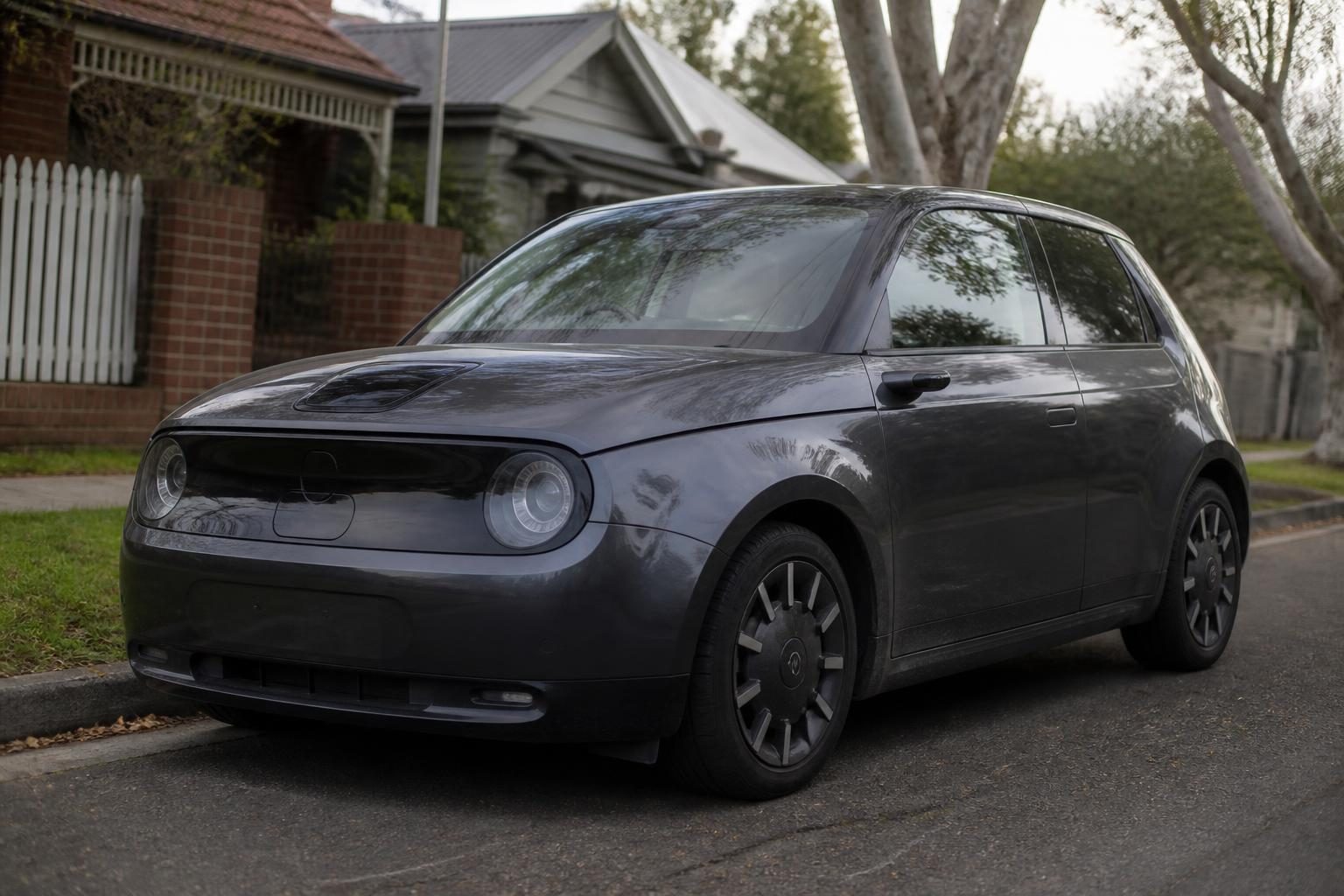 7 Honda e
Inside, screens run the full width of the dashboard, and the door mirrors are cameras feeding displays at each end of that screen. Most drivers adapt within a week. Some never do, so try it before you commit. The Honda e came in two grades that share the same battery: the standard car makes 100 kW, while the Honda e Advance lifts that to 113 kW. Power output is the only meaningful difference between them.
Be realistic about range. That 283 km is a Japanese test-cycle figure measured under ideal conditions. In actual Australian urban driving, with the air-con running and hills involved, expect something closer to 160 to 190 km. For a 40 km round-trip commute that's still four days between charges. For a weekend run to the Hunter, it isn't enough.
Two things to check before you buy. First, battery State of Health, which any decent importer will pull from the vehicle before bidding. Second, build date: SEVS approval SEV-000655 covers July 2020 to July 2024 builds and runs until 26 September 2027. Since production stopped in January 2024, the pool of eligible cars is fixed and shrinking.
Nissan Leaf ZE1: The Practical Pick
The Leaf ZE1 pairs a 40 kWh battery (39 kWh usable) with 110 kW and 320 Nm, five seats, and a 435 L boot that opens to 1,176 L with the rear seats down. EV Database rates it at 270 km WLTP. In Australian city and suburban use, 200 to 240 km is the realistic working figure.
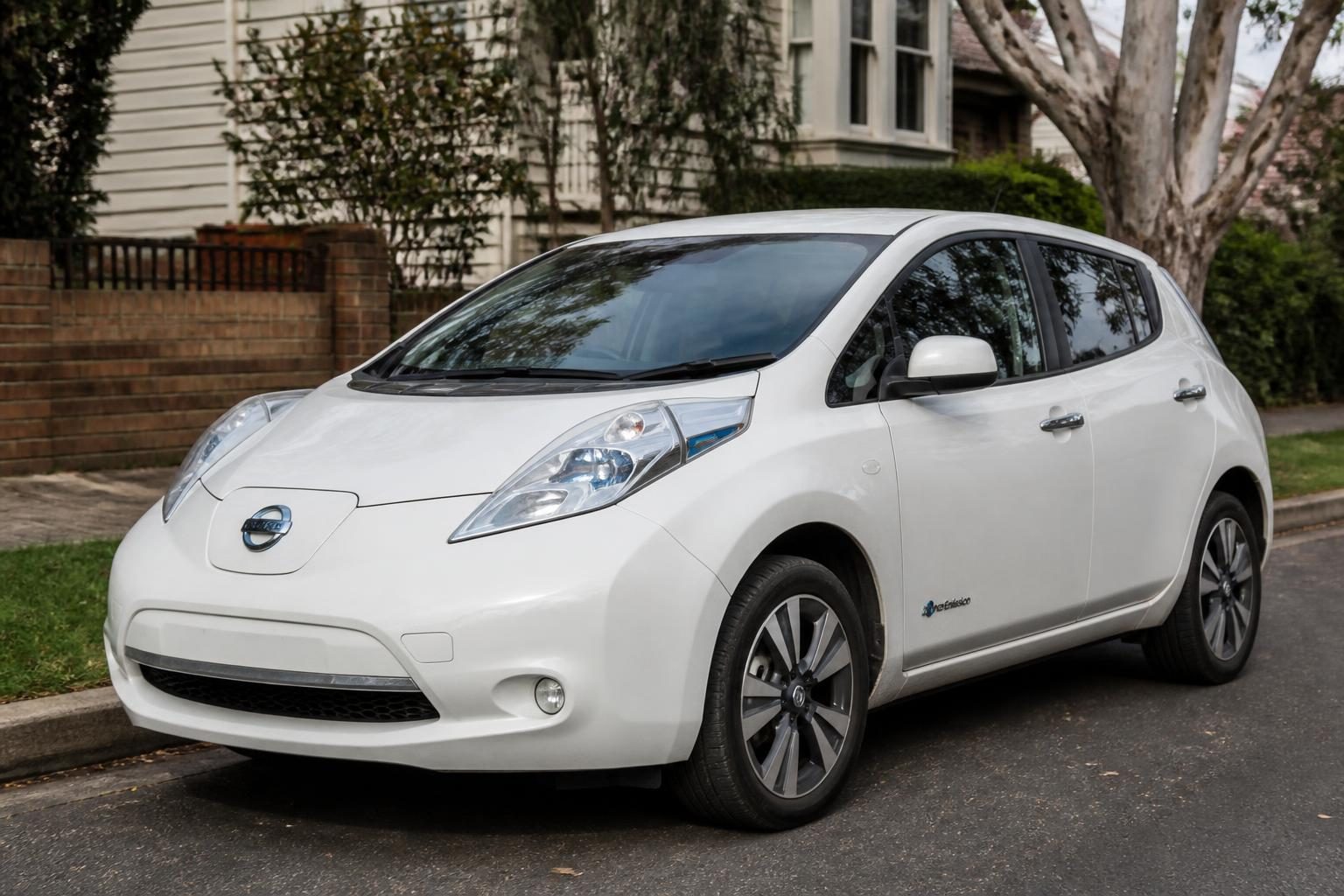 2018 Nissan Leaf ZE1
That extra buffer is the real argument for the Nissan Leaf ZE1. It covers a week of Sydney or Melbourne commuting on overnight home charging without any planning, and it takes the school run, the dog, and a flat-pack. Nissan built these in volume, so there's genuine choice in mileage, auction grade and condition rather than taking whatever surfaces.
The interior is functional, not exciting. Sensible plastics, a conventional dash, a boot shape that actually works. If you want a car that makes you smile in the driveway, this isn't it.
Two Australian-specific details matter here. The Japanese-market ZE1 uses a Type 1 AC socket, while most Australian public AC chargers are Type 2, so you'll want a Type 1 to Type 2 adaptor for public top-ups. Home charging is unaffected. Also worth knowing: SEVS covers September 2017 to November 2020 builds under four separate approvals, and the 60 kWh Leaf e+ is a different car with its own eligibility, limited to 2019 and 2020 builds.
What Does CHAdeMO Charging Actually Mean in Australia?
This is the part most comparisons skip. Both cars use CHAdeMO for DC fast charging, and CHAdeMO is on the way out here. The NRMA announced on 18 May 2026 that it would phase the plugs out at selected sites, describing them as "severely under-utilised" because so few Australian EVs still use the standard. Government funding rules that once required both plug types have also shifted.
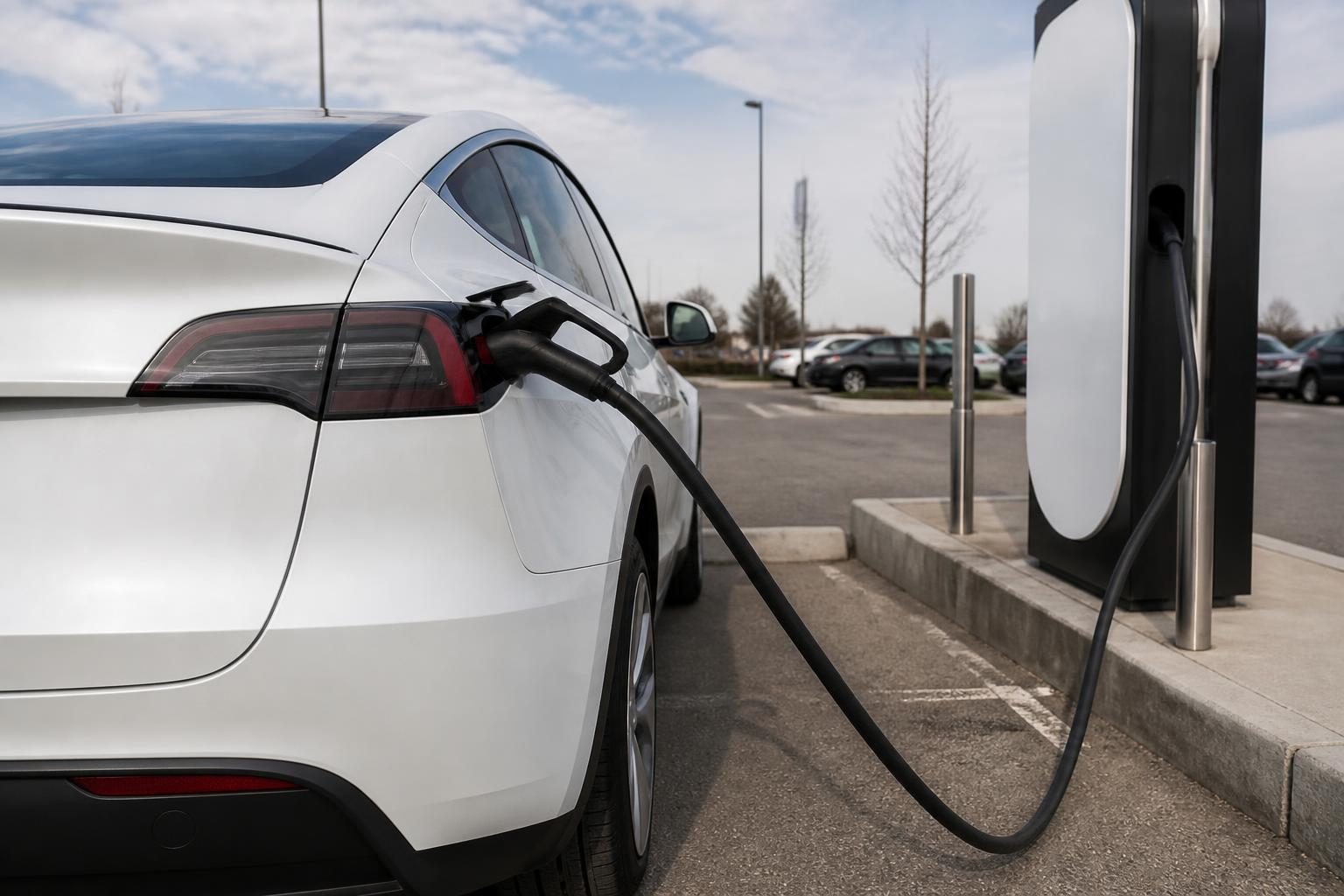 Which plug your car uses matters more in Australia than it did five years ago
Read the detail before you panic. The NRMA is starting with its highest-demand sites that see the least CHAdeMO use, not switching the standard off overnight. The exposure is on busy highway corridors during peak travel, exactly where neither of these cars belongs anyway.
For a city owner charging overnight at home, this is manageable. DC fast charging becomes an occasional convenience, not the backbone of your week. CCS2 to CHAdeMO adaptors exist, but compatibility varies by charger and vehicle, so don't build your ownership plan around one. Neither car has an advantage here. They share the same plug and the same risk.
Which One Is Right for You?
Choose the Honda e if you drive under 60 km on a typical day, charge at home every night, and rarely carry more than one passenger. You care how the car looks and feels, and you're comfortable paying more for something almost nobody else has. The rear-wheel drive and tight turning circle make it a genuine pleasure in city traffic.
Choose the Nissan Leaf ZE1 if you want range buffer, carry passengers or luggage regularly, or simply want the most understood used EV ownership experience coming out of Japan. Less character, considerably more usefulness, and a much wider pool to choose from.
Neither car suits you if you regularly drive 200 km or more in a day, or you don't have reliable overnight charging at home. In that case the CHAdeMO issue turns from a footnote into a daily problem, and you're better off looking at the best small EVs in Australia with CCS2 charging instead.
Importing Either Car Through Carbarn
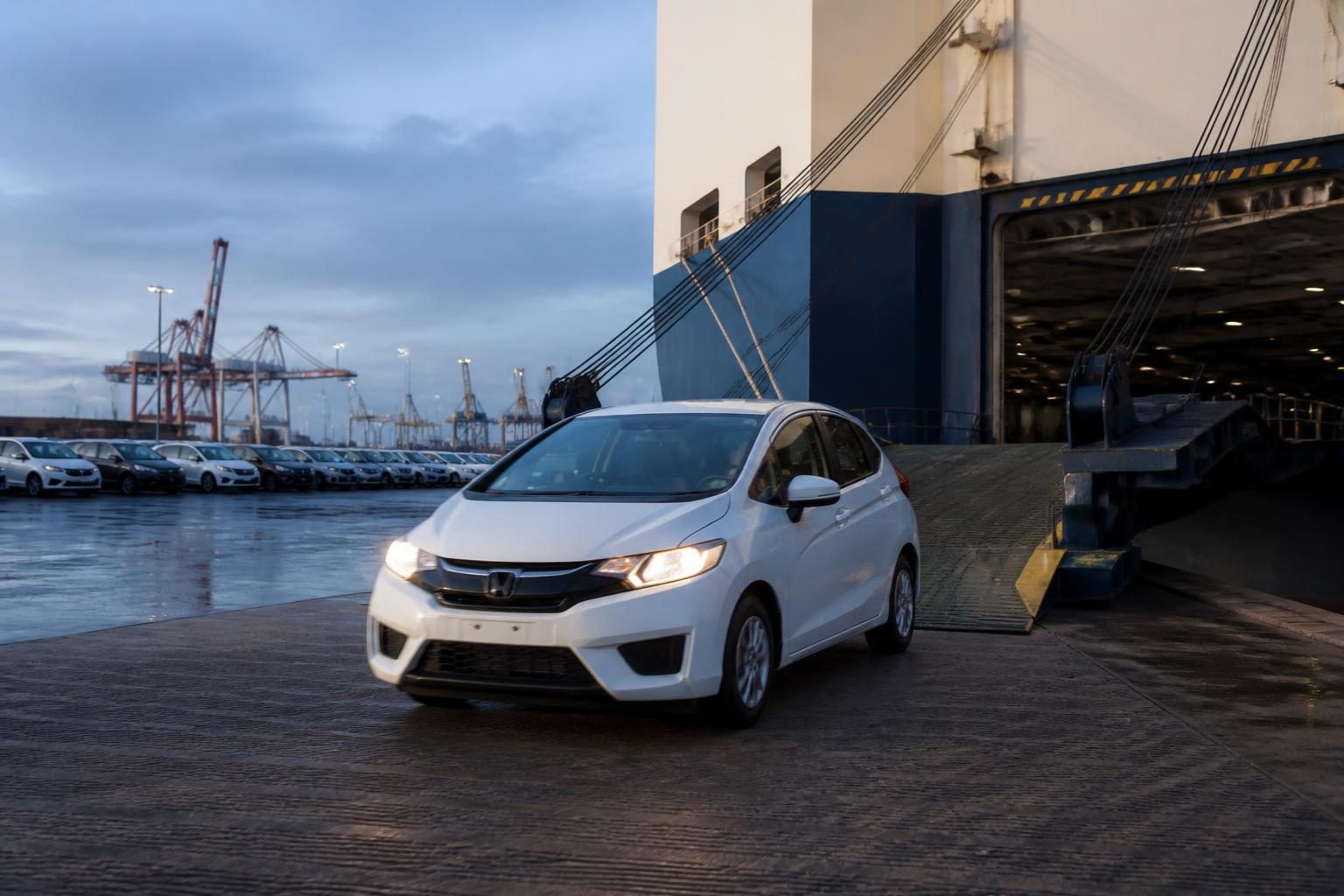 Every Japan-sourced car passes through customs, biosecurity and compliance before it can be registered
Both models are Japan-sourced vehicles available to order rather than cars sitting on a lot, so the process starts with a conversation about your budget, target build year and condition preferences. From there it's auction-sheet verification, pre-bid inspection where the format allows, then bidding only with your written approval and inside your agreed cap. Our step-by-step guide to importing a vehicle from Japan walks through the full sequence.
Carbarn handles every stage from our Lidcombe base in Sydney: sourcing through approved Japanese auction houses, Vehicle Import Approval lodgement, ocean freight, customs and biosecurity clearance, SEVS compliance work at our RAW-certified in-house workshop, Approved Vehicle Verifier inspection and RAV entry, then handover with paperwork ready for state registration. We also offer battery health reporting on EVs, warranty options, finance, and nationwide door delivery. Start with the import pages for the Honda e standard, the Honda e Advance or the Nissan Leaf ZE1, or browse locally available stock if you'd rather not wait.