



Ready to Hit the Road in Style?
Save money and reduce emissions with vehicles designed to deliver exceptional mileage. Visit our inventory and find a car that fits your lifestyle.
Ready to Hit the Road in Style?
Save money and reduce emissions with vehicles designed to deliver exceptional mileage. Visit our inventory and find a car that fits your lifestyle.
Importing from Japan can look simple from the outside. Find a car, win a bid, book shipping, wait for arrival. The reality is stricter than that. Australia’s own guidance frames it as an 8-step process involving multiple government agencies, and the Department says some import approval assessments can take up to 60 business days (Department of Infrastructure, 2026; Department of Infrastructure, 2026).
That’s why first-time buyers often get tangled up in SEVS, Vehicle Import Approval, customs, biosecurity, AVV, RAV, and registration. This guide puts the steps in the right order, from choosing the car to registration-ready handover. If you want a separate process explainer as well, see how the Japan auction sourcing process works.
Quick Answer
- Check eligibility before you buy.
- SEVS listing is not the same as approval.
- Approval can take up to 60 business days (Department of Infrastructure, 2026).
- Customs, biosecurity, compliance, AVV and RAV are separate steps.
Why do Australians import cars from Japan?
Importing can make a lot of sense when local supply does not match the model, spec, or value you want, but it only works when the order is right. Australia’s official framework treats it as an 8-step process across multiple agencies, which tells buyers straight away that this is not a casual buy-and-ship purchase (Department of Infrastructure, 2026).
Some buyers want a specific model or trim. Others want better value, a niche body style, or a Japanese-market vehicle that is hard to find locally. So who does importing suit? Usually, it suits patient buyers who are comfortable with paperwork, timelines, and a few moving parts.
It suits buyers who want choice more than speed. It may not suit you if you need a car next week, hate uncertainty, or want the simplest possible handover. In that case, a locally available option often makes more sense.
| Stage | What happens | Main risk | Typical timing |
|---|---|---|---|
| Research and approval | Vehicle choice, pathway check, import approval work | Buying before eligibility is clear | Approval can take up to 60 business days |
| Shipping and border | Freight, customs, taxes, biosecurity | Delays, contamination, extra border costs | Shipping often runs 4-6 weeks |
| Post-arrival compliance | Workshop work, AVV, RAV, registration prep | Assuming arrival means road-ready | Post-arrival compliance is typically 2-12 working days |
Choosing the right vehicle and checking eligibility
The right car on paper can still be the wrong import if the approval pathway is unclear, the model code is wrong, or the year range misses the rule. The Department says some approvals can take up to 60 business days, and the older-vehicle pathway only applies when the relevant build date is at least 25 years old (Department of Infrastructure, 2026; Department of Infrastructure, 2026).
Step 1: Choose the right vehicle
Start with use case, not auction temptation. Think about budget, parts support, fuel costs, and how easily the vehicle can be complied here. A cheap hammer price can still be the wrong buy if the model is awkward to approve, hard to support, or expensive to sort after arrival.
Step 2: Check import eligibility before buying
Approval needs to be checked before money goes down, and definitely before shipping. The Australian Border Force says a road vehicle will not be cleared from customs control until a valid import approval is provided, along with duty, GST, LCT, and other charges where applicable (ABF, 2026).
Step 3: Understand SEVS, model codes and eligible year ranges
SEVS is one of the biggest confusion points. A vehicle being on the SEVS Register is only the first step. The Department says you still need a concessional RAV entry approval before import, and that approval is also taken to be the import approval for that vehicle (Department of Infrastructure, 2026; Department of Infrastructure, concessional RAV entry approvals, 2026).
Sequence risk matters more than bargain risk. A buyer can recover from a car that sells slightly above estimate. Recovering from the wrong model code, the wrong build date, or a car shipped before approval is much harder, and usually much dearer.
What should you review before bidding at Japanese auction?
Japanese auction vehicles generally cannot be test driven before purchase, so the paperwork carries more weight, not less. A published importing workflow says pre-bid physical inspection is arranged where possible, with extra photos and notes shared before any approved bid is placed (2026).
 Auction sheets, photos and condition notes matter because most Japanese auction cars cannot be test driven before purchase.
Step 4: Review auction sheet, photos and inspection notes
Look at the auction grade, written notes, repair codes, odometer plausibility, interior wear, and any clues around rust or previous bodywork. Underbody photos matter. Panel gaps matter. So does whether the written notes actually match the photos. Sounds like a small detail, doesn’t it? It often isn’t.
Where possible, get a pre-bid physical inspection. That extra layer can catch issues a glossy photo set misses. For a deeper look at the sheet itself, read the Japanese auction grading system.
The risky cars are not always the obviously rough ones. The harder cases are the cars that photograph well but have notes, codes, or inconsistencies that suggest hidden cost later.
Budget, deposit and payment stages
The hammer price is only the start, and the money side works best when each spending gate happens in the right order. GST on imported goods is 10% of the value of the taxable importation, Luxury Car Tax is 33% of the amount above the threshold, and published auction deposit bands run from ¥150,000 up to 20% of estimated auction value (ABF, 2026; ATO, 2025).
Step 5: Set budget and understand estimated landed cost
Budget in layers. Japan-side cost covers the vehicle, auction or seller fees, and export-side handling. Landed cost adds freight, insurance, taxes, import processing, biosecurity charges, port and local charges. On-road cost comes later again, once compliance, repairs if needed, tyres, registration, and state-based items are added.
Where do buyers usually get caught out? They compare hammer price with a local drive-away number. That is the wrong comparison. For 2025-26, the LCT thresholds are $80,567 for most vehicles and $91,387 for fuel-efficient vehicles, and those figures should be re-checked after 1 July 2026 (ATO, 2025).
Landed cost is an estimate, not a promise. It can still move with the auction result, exchange rate, shipping, taxes, condition, parts, compliance requirements, and government or port charges.
Step 6: Pay refundable auction deposit
The published deposit bands are clear: ¥150,000 up to ¥1,500,000 estimated value, ¥300,000 up to ¥3,000,000, ¥500,000 up to ¥5,000,000, then 15% up to ¥8,000,000 and 20% above that (published auction-sourcing workflow, 2026). The deposit is refundable if no vehicle is secured, and refundable if the buyer stops before any bid is placed.
Step 7: Approve bidding before any bid is placed
This is a buyer-protection step, not just admin. The published process says bids are only placed after customer approval and within the agreed budget cap, and the limit is not exceeded if the vehicle cannot be secured in that range (published auction-sourcing workflow, 2026).
Step 8: Purchase confirmation and payment stages
Once a bid succeeds, the Japan-side invoice is due quickly. Later in the process, separate shipping and compliance invoices follow, and the full process usually takes about 6-10 weeks overall (published auction-sourcing workflow, 2026).
| Stage | What you pay | Timing |
|---|---|---|
| Before bidding | Refundable auction deposit | Before any auction activity |
| After successful bid | Vehicle price, Japan Agent Fee, Service Fee | Within 48 hours |
| Later in process | Shipping invoice | Usually after arrival window opens |
| Compliance stage | Compliance invoice and extra items if required | Before release or delivery |
What happens with approval, shipping and biosecurity?
Approval comes before shipping, not after. The Department says assessment may take up to 60 business days, and ABF says a vehicle will not be released from customs control without valid approval, which is why shipping first can create avoidable storage costs and bigger problems later (Department of Infrastructure, 2026; ABF, 2026).
Step 9: Apply for Vehicle Import Approval
Most buyers say "VIA approval". Officially, the system talks about import approvals, including concessional RAV entry approvals, non-RAV entry import approvals, and reimportation approvals. In plain English, the job is the same: get the right approval in place before the vehicle is imported. For the non-RAV pathway, the Department says approval may take up to 30 business days (Department of Infrastructure, 2026).
Step 10: Shipping, Customs and Biosecurity — How Shipping Cost Is Calculated by Cubic Metre
Once the correct import approval is in place, the vehicle can move into the shipping and border-clearance stage. This is where many first-time import buyers misunderstand the cost.
Shipping is not always one flat price for every car. For many Roll-on/Roll-off vehicle shipments, freight is calculated by the amount of space the vehicle takes on the vessel. This is measured in cubic metres, also called CBM.
The basic formula is:
Length × Width × Height = Vehicle CBM
Then:
Vehicle CBM × shipping rate per CBM = estimated freight cost
For example:
A small hatchback may be around 10–12 CBM.
A sedan or sports coupe may be around 12–14 CBM.
A people mover may be around 16–20 CBM.
A high-roof van may be 22–30+ CBM.
That is why a small hatchback, a people mover and a Toyota Hiace high-roof van will not have the same shipping estimate. The larger the vehicle, the more shipping space it uses.
Public Shipping Cost Guide: Japan to Australia
As a broad public guide, vehicle shipping from Japan to Australia is often quoted around $2,500 to $3,000 AUD for many cars under 20 CBM, depending on route, port, shipping method and service package.
Using that public guide:
$2,500 ÷ 20 CBM = $125 per CBM
$3,000 ÷ 20 CBM = $150 per CBM
So, for simple planning, buyers can use $125–$150 per CBM as a rough freight reference for many standard-sized cars.
Important: this is a general guide only. It is not a fixed quote, and it does not include every import cost.
Example Shipping Estimate by Vehicle Size
| Vehicle type | Approx. CBM | Estimate at $125/CBM | Estimate at $150/CBM |
|---|---|---|---|
| Small hatchback | 10–12 CBM | $1,250–$1,500 | $1,500–$1,800 |
| Compact sedan / coupe | 12–14 CBM | $1,500–$1,750 | $1,800–$2,100 |
| Small SUV | 13–15 CBM | $1,625–$1,875 | $1,950–$2,250 |
| Medium SUV | 15–18 CBM | $1,875–$2,250 | $2,250–$2,700 |
| People mover | 16–20 CBM | $2,000–$2,500 | $2,400–$3,000 |
| Standard van | 20–24 CBM | $2,500–$3,000 | $3,000–$3,600 |
| High-roof van / camper base | 24–30+ CBM | $3,000–$3,750+ | $3,600–$4,500+ |
This table is useful for understanding why two vehicles with similar auction prices can have different landed costs. A compact hybrid hatchback may be cheaper to ship than a large people mover or high-roof van because it takes less space on the vessel.
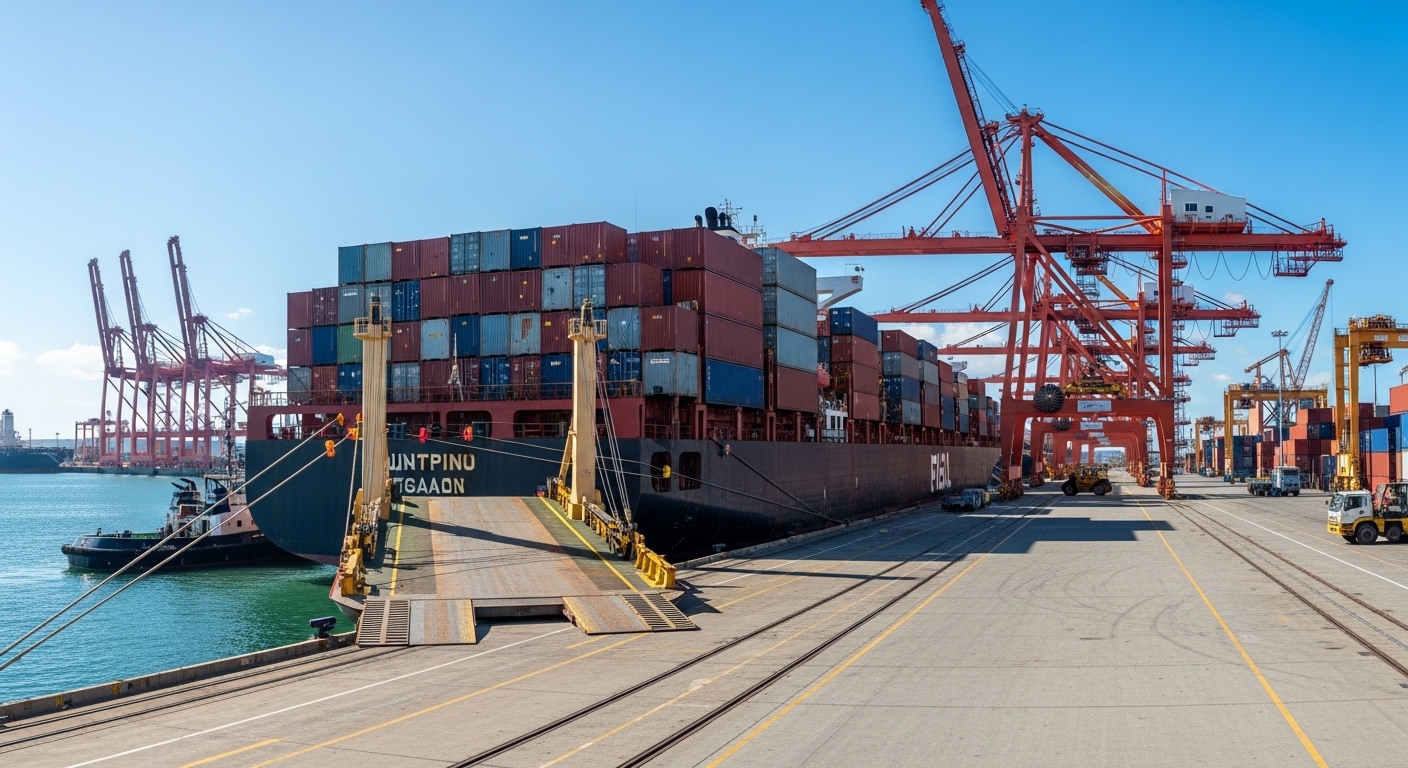 Shipping is only one stage of the process. Customs, biosecurity and paperwork still sit between arrival and release.
What happens after the car arrives in Australia?
Arrival is not the finish line. A published compliance process says post-arrival work is typically 2-12 working days, with compliance work, AVV inspection, and RAV entry each sitting as separate milestones before registration-ready handover (2026).
Step 11: Compliance work in Australia
Workshop compliance can include checks, documentation, ADR-related work, and modifications if required. Extra items such as tyres, parts, repairs, or other roadworthiness issues can still appear at this stage, which is why landed cost and on-road cost should never be treated as the same number.
Step 12: AVV inspection and RAV entry
AVV stands for Authorised Vehicle Verifier. The verifier checks the vehicle under the applicable pathway before the next stage can move ahead (Department of Infrastructure, 2026). RAV entry is the Register of Approved Vehicles step that sits before legal road use can continue toward registration.
Step 13: Registration preparation and delivery
The published timing is useful here: compliance work usually takes 1-7 days, AVV 0.5-1 day, and RAV entry another 0.5-1 day, with road-ready status the same day after completion in that workflow (published compliance workflow, 2026). State registration rules still apply after that, so federal approval and workshop completion do not make state requirements disappear.
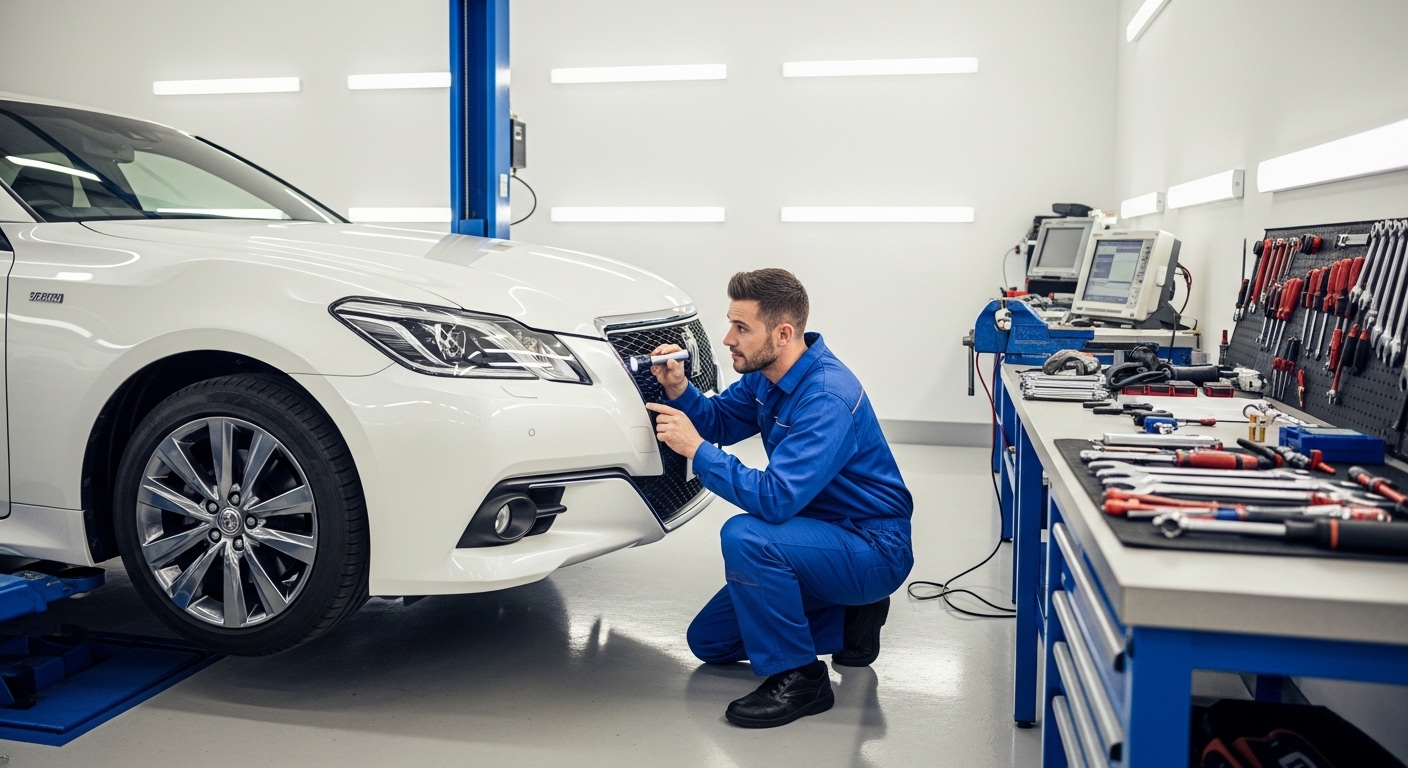 Arrival is not the finish line. Compliance, verification and RAV entry still need to happen before registration-ready handover.
Import + Compliance or Compliance Only
Both paths can make sense, depending on where you are in the process. Carbarn publicly offers import options from Japan and compliance-only support, while its published workflows list a typical 6-10 week full import journey and 2-12 working days for post-arrival compliance (2026).
If you have not bought yet, full import and compliance support usually makes the most sense. That path covers sourcing, bidding, approval, shipping, compliance, AVV, RAV, and delivery prep. If you already bought the vehicle, compliance-only support is the more relevant conversation, provided the vehicle and document set are still suitable.
Auction-sourced vehicles do not include the standard 3-month NSW dealer warranty in the published terms, although a 5-year extended warranty may be available for eligible vehicles (published auction-sourcing workflow, 2026). If speed matters more than import flexibility, browse ready-to-drive used cars in Australia.
What mistakes should buyers avoid?
The costly mistakes are usually sequence mistakes, not bargain-hunting mistakes. The Department’s own approval guidance and SEVS pages show why buyers get caught out: approval is separate from SEVS listing, approval can take up to 60 business days, and the wrong order can trigger storage, rework, or border trouble (Department of Infrastructure, 2026; Department of Infrastructure, 2026).
Common errors include buying before eligibility is checked, assuming SEVS equals approval, missing model code or build-date detail, skimming the auction sheet, budgeting from hammer price only, and shipping before approval. Buyers also underestimate biosecurity cleaning, port charges, and post-arrival compliance items.
If you are unsure where your vehicle sits, get the eligibility and document path checked before buying or shipping. That is the point where a quick review can save the biggest headache.