



Ready to Hit the Road in Style?
Save money and reduce emissions with vehicles designed to deliver exceptional mileage. Visit our inventory and find a car that fits your lifestyle.
Ready to Hit the Road in Style?
Save money and reduce emissions with vehicles designed to deliver exceptional mileage. Visit our inventory and find a car that fits your lifestyle.
You're scrolling through Japanese listings and the numbers stop you. A 2018 wagon showing 28,000 km. A 2020 van with 19,000 km. Clean panels, tidy interiors, and a reading that looks too good for the age. If you've bought a used car in Australia, your instinct is probably suspicion. Is this legitimate, or is something off?
It's a fair question, and it deserves a straight answer. Japan produces genuinely low-kilometre cars for reasons that simply don't exist here: short ownership cycles driven by the Shaken inspection system, dense cities with strong public transport, and a cultural preference for newer vehicles. Those figures are often real, not doctored.
This guide explains why the low readings are usually genuine, how to verify them through Japan's documented inspection chain, and what the full import process looks like end to end. If you want the broader mechanics first, our 13-step import guide covers the wider process. Here, the focus is the trust question and the numbers behind it.
Key Takeaways
- Japan's compulsory Shaken inspection has recorded odometer readings since 2004, giving buyers a documented trail of four to five km checkpoints on any vehicle over 10 years old (ProvideCars, 2025).
- Japanese private car owners drive roughly 6,970 km a year, about half the 12,100 km Australians averaged in the last national survey (Statista, 2024; ABS, 2020).
- Vehicles built before August 2001 qualify for the 25-year concessional pathway; newer models need SEVS registration and a Vehicle Import Approval.
- The full import journey typically takes 6 to 10 weeks (Carbarn, 2026).
- Import duty is 0% for most JDM vehicles under JAEPA; GST applies at 10% on the CIF value.
Why Does Japan Produce Genuinely Low-Kilometre Cars?
Japan's annual driving distance per vehicle sits at roughly 6,970 km, about half the 12,100 km Australians averaged each year in the last national count (Sony Assurance survey via Statista, 2024; ABS Survey of Motor Vehicle Use, 2020). The gap is structural, not a quirk, and it shapes the entire supply of low-km export cars.
[CHART: Horizontal bar chart - Annual kilometres driven per vehicle: Japan ~6,970 km (Statista, 2024) | Australia 12,100 km (ABS, 2020, final release of the discontinued survey series) | Europe/USA ~15,000-25,000 km (indicative) - Source: Statista 2024 / ABS 2020]
Japanese vehicles accumulate roughly half the annual kilometres of Australian equivalents, a gap driven by urban density and the economics of the Shaken inspection system.
 Heavy traffic moves along a rain-soaked Japanese city street at dusk.
Note that the ABS figure comes from the 2020 survey, the final release before that series was discontinued. Treat it as the best available benchmark rather than a live number. The direction of the gap, though, is not in dispute.
Urban Density and Public Transport
Tokyo, Osaka, and Nagoya run some of the busiest metro systems in the world. For many households, the car is a weekend and regional-trip tool, not a daily commuter. That single habit suppresses odometer accumulation year after year. A family car that only moves on Saturdays simply doesn't rack up kilometres the way an Australian commuter's does.
The Shaken Economic Lever
[UNIQUE INSIGHT] The real driver is money, not sentiment. Japan's compulsory Shaken inspection costs roughly ¥60,000 to ¥200,000 per two-year cycle — budget specialty shops at the low end, franchised dealers at the top — and the bill climbs as a vehicle ages and needs more work to pass (Japan Automobile Inspection Association; multiple Japan consumer sources, 2025). Faced with that recurring cost, many owners replace the car every three to five years, well before high kilometres build up. The result is a steady stream of young, lightly used vehicles entering the export pool.
In the domestic market, 10,000 km a year is treated as the standard rate. Anything above that reads as high mileage to Japanese buyers, and cars past 100,000 km are less common and command significantly lower prices at auction, as Japanese buyers strongly prefer sub-100,000 km vehicles (ProvideCars, 2025). So a 2018 car showing under 40,000 km isn't an anomaly. It's the norm for a vehicle that was driven a few thousand kilometres a year and retired early. Not hidden, just not driven much.
Can You Trust the Odometer? How Japan's Inspection Chain Protects Buyers
Odometer tampering is a real concern in any used-car market, so the honest question is whether Japan's formal system leaves enough of a paper trail to catch it. For vehicles over three years old, the answer is generally yes. Since 2004, Shaken inspections have recorded odometer readings, building a chain of checkpoints that must stay internally consistent (ProvideCars, 2025).
[CHART: Milestone timeline - Shaken odometer record trail, example vehicle registered January 2014: Registration Jan 2014 → First Shaken Jan 2017 (3-yr) → 2019 → 2021 → 2023 → 2025 = 5 documented odometer readings across 11 years. Each checkpoint must show a plausible km increment from the last. Source: ProvideCars 2025]
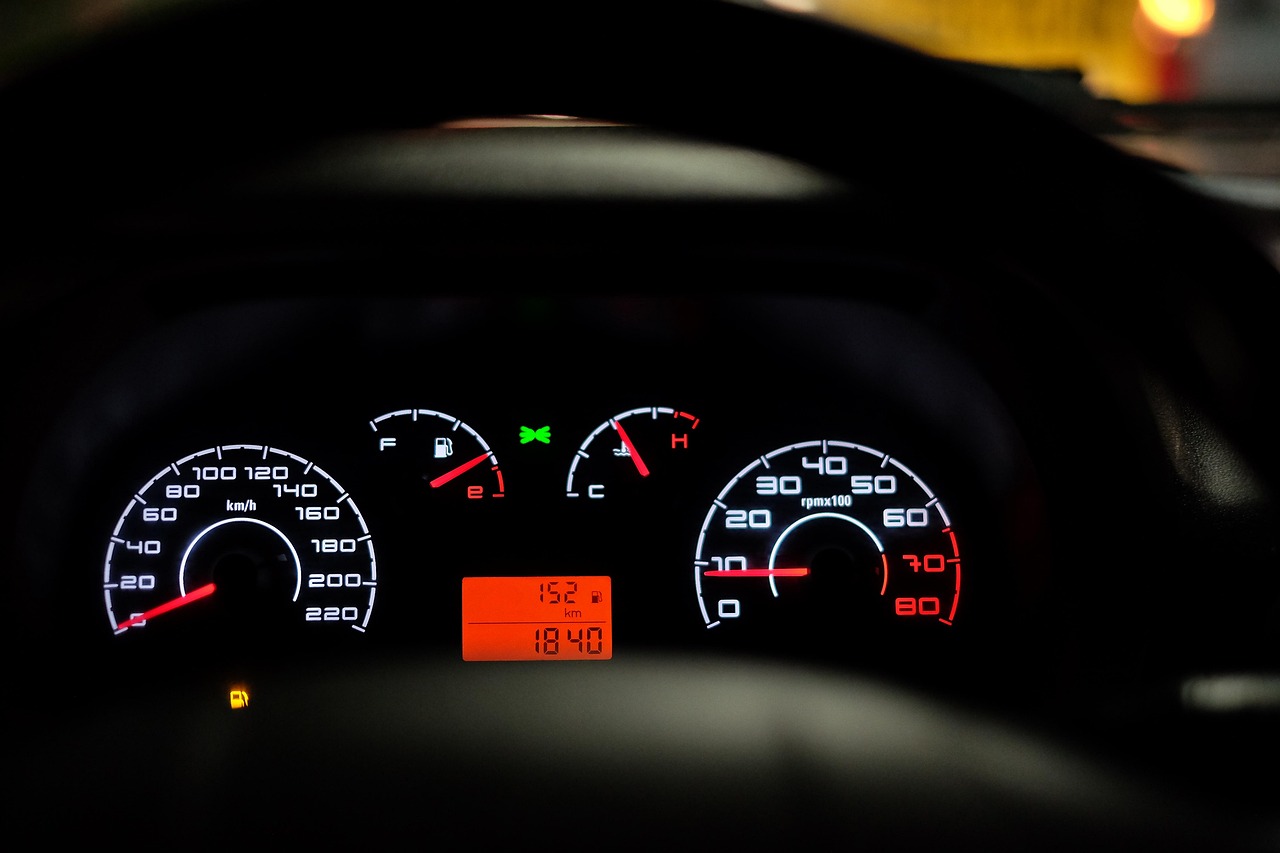 A low reading on the dashboard is only the starting point. The figure has to hold up against Japan's documented inspection chain.
Why does this matter more than a single reading? Because one number is easy to fake. A chain of five timestamped numbers, each of which has to make sense against the one before it, is much harder. That's the difference between a market you have to guess in and one you can audit.
What the Shaken Record Chain Tells You
Shaken has officially recorded odometer readings since 2004, and each two-year inspection adds a timestamped entry to the vehicle's history (ProvideCars, 2025). A car over 10 years old therefore carries four to five checkpoints, and each one must show a plausible increase from the last. A reading that suddenly drops between inspections is an immediate red flag.
[UNIQUE INSIGHT] There's a fresh layer worth knowing about that most import guides haven't caught up on. Japan's Shaken system added on-board diagnostics (OBD) testing from October 2024 for new domestic vehicles, extending to imported vehicles from October 2025 (ProvideCars, 2025). Electronic fault and sensor data are now checked at each inspection — and while the primary focus is emissions and engine health, broader ECU data access may make odometer discrepancies harder to conceal over time.
Auction Grade, Inspection Sheets, and ECU Cross-Check
The Shaken chain is the backbone, but it isn't the only record. Several independent layers corroborate a vehicle's mileage:
- Auction sheet grade. Japan's major auction houses assign independent condition grades on a scale that runs from R (repaired) and 1 (poor) at the low end up to 5, 6, and S (near-new) at the top. Inspectors record the odometer reading and note anomalies on the sheet. Our guide to the Japanese auction grading system explains how to read one.
- Auction digital records. Kilometres are logged digitally at each point of sale, a second verification chain running alongside Shaken. Tampering detected at auction brings membership revocation, fines, and potential prosecution, which is a strong commercial deterrent (ProvideCars, 2025).
- ECU cross-check. Rolling back a dashboard odometer does not reset the engine control unit. A qualified inspector can compare the two figures, and a discrepancy between the dashboard and the ECU is a clear warning sign.
- Service history stamps. Japanese dealership service records log the odometer at each visit, a third corroboration layer.
No single record is bulletproof, but four independent trails that all have to agree make sustained fraud both difficult and commercially risky. For a deeper look at the tactics and the warning signs, our odometer fraud guide is worth a read.
Pre-Bid Physical Inspection
If you want the strongest possible confidence, a pre-bid physical inspection by a Japan-based inspector is the most direct tool available. The inspector reviews the car in person, cross-checks the odometer against the ECU, and shares photos and notes before any bid is placed. It isn't always possible, since some auction lots only surface on the day, but where the timeline allows, it's the single best protection you can arrange.
Import Eligibility: Which JDM Cars Can Actually Come In?
Not every JDM vehicle can be imported to Australia. Two main pathways exist: the 25-year concessional rule for older vehicles, and SEVS (the Specialist and Enthusiast Vehicle Scheme) for newer models. Each carries different compliance demands and eligibility filters, so working out which one applies to your target vehicle is the first real step in any import decision.
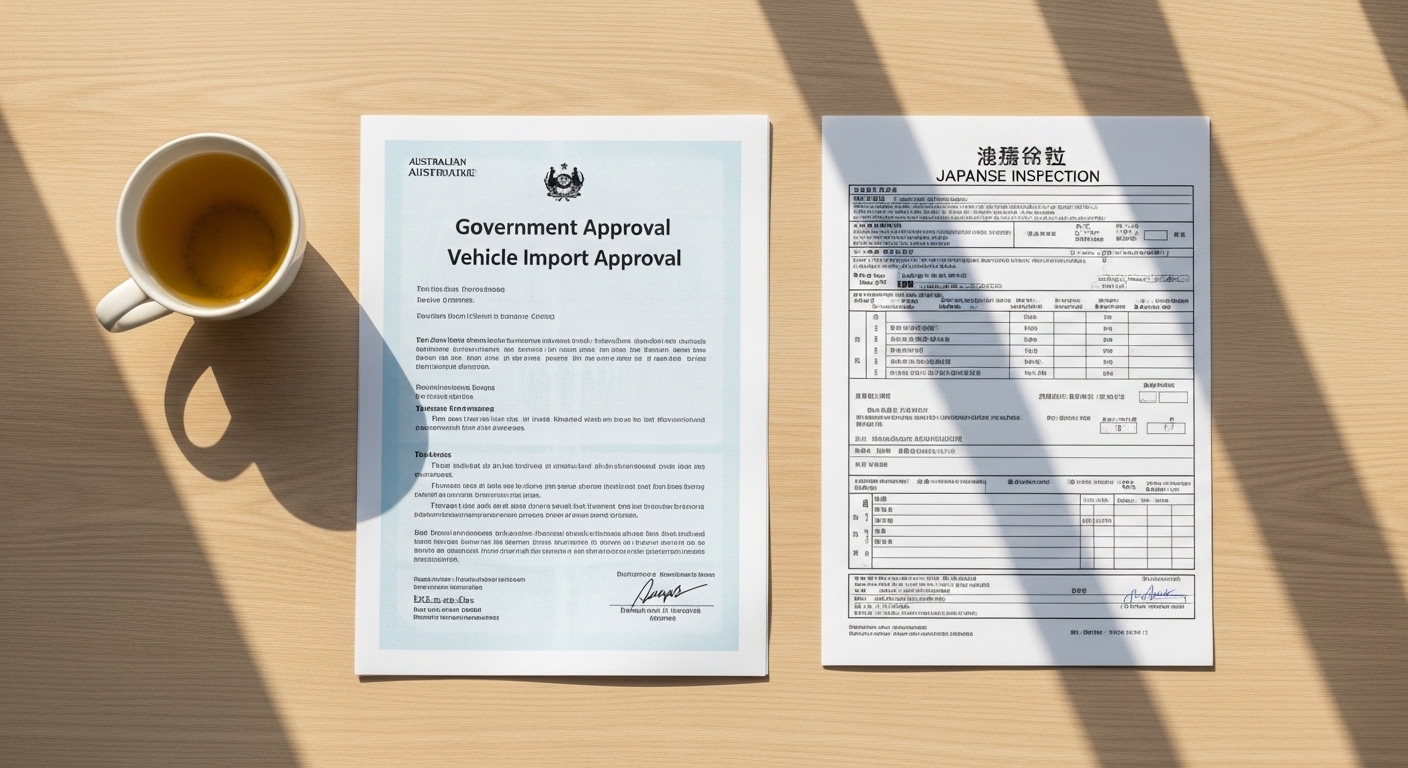 Both the 25-year rule and SEVS require a Vehicle Import Approval lodged before the car is shipped.
| 25-Year Rule | SEVS | |
|---|---|---|
| Age threshold | Manufactured before August 2001 (as of Aug 2026) | No age minimum; must be on the SEVS register |
| Compliance complexity | Concessional, simplified RAV entry | Full ADR compliance via a Registered Automotive Workshop (RAW) |
| ADR 85 side-impact standard | Not required | Required, excludes some smaller JDM models |
| Typical vehicle types | Late 1990s/early 2000s JDM wagons, kei vans, sports models | Newer JDM models listed on the government SEVS register |
| VIA approval required? | Yes, via ROVER system | Yes, via ROVER system |
| SEVS register required? | No | Yes, must be valid at decision date, not just lodgement (clarified Feb 2025) |
The 25-Year Rule
As of August 2026, vehicles manufactured before August 2001 qualify under this concessional pathway. The compliance requirements are simplified, and a concessional RAV entry applies rather than full workshop compliance.
There's one step you cannot skip. A Vehicle Import Approval still has to be lodged via the ROVER system (rover.infrastructure.gov.au), administered by the Department of Infrastructure, before the car ships. A vehicle that arrives without prior approval is a costly and stressful error to unwind.
Cars that commonly enter under this rule include late-1990s JDM wagons, kei commercial vehicles, and certain sports models that have now crossed the 25-year line. These are categories, not a shopping list, so always confirm the individual vehicle's build date.
SEVS: Newer Vehicles
SEVS covers newer vehicles listed on the government's approved register, and not every JDM model makes the cut. Compliance must be completed by a Registered Automotive Workshop (RAW) before the car can be registered for the road in Australia.
ADR 85, the side-impact standard, now applies under this pathway and has excluded some smaller JDM models that used to be eligible. Check the current register before assuming a specific vehicle qualifies.
[PERSONAL EXPERIENCE] One timing rule catches people out. Since February 2025, the SEVS register entry must be valid when the Department makes its approval decision, not merely when the application was lodged (JDMBUYSELL, 2025). If a model's entry lapses while your application is in the queue, it won't proceed. For eligibility checks, the ROVER system at rover.infrastructure.gov.au is the authoritative reference, and our 13-step import guide walks through the process in detail.
The Import Process: What Happens After You Find a Car?
Once you've found a low-km vehicle that clears eligibility, the journey follows a defined sequence: source and bid in Japan, lodge VIA approval, ship to Sydney, comply, and deliver. The full process typically takes 6 to 10 weeks, though auction timing, VIA processing, vessel schedules, and compliance workload can all push that out (Carbarn, 2026).
[CHART: Gantt / phase timeline - The Japan-to-Australia import journey: Phase 1 Source & Approve (Japan) 1-6 weeks | Phase 2 Ship (Japan to Australia) 4-6 weeks | Phase 3 Comply & Deliver (Australia) 2-3 weeks | Total 6-10 weeks. Source: carbarn.com.au/how-importing-works, 2026]
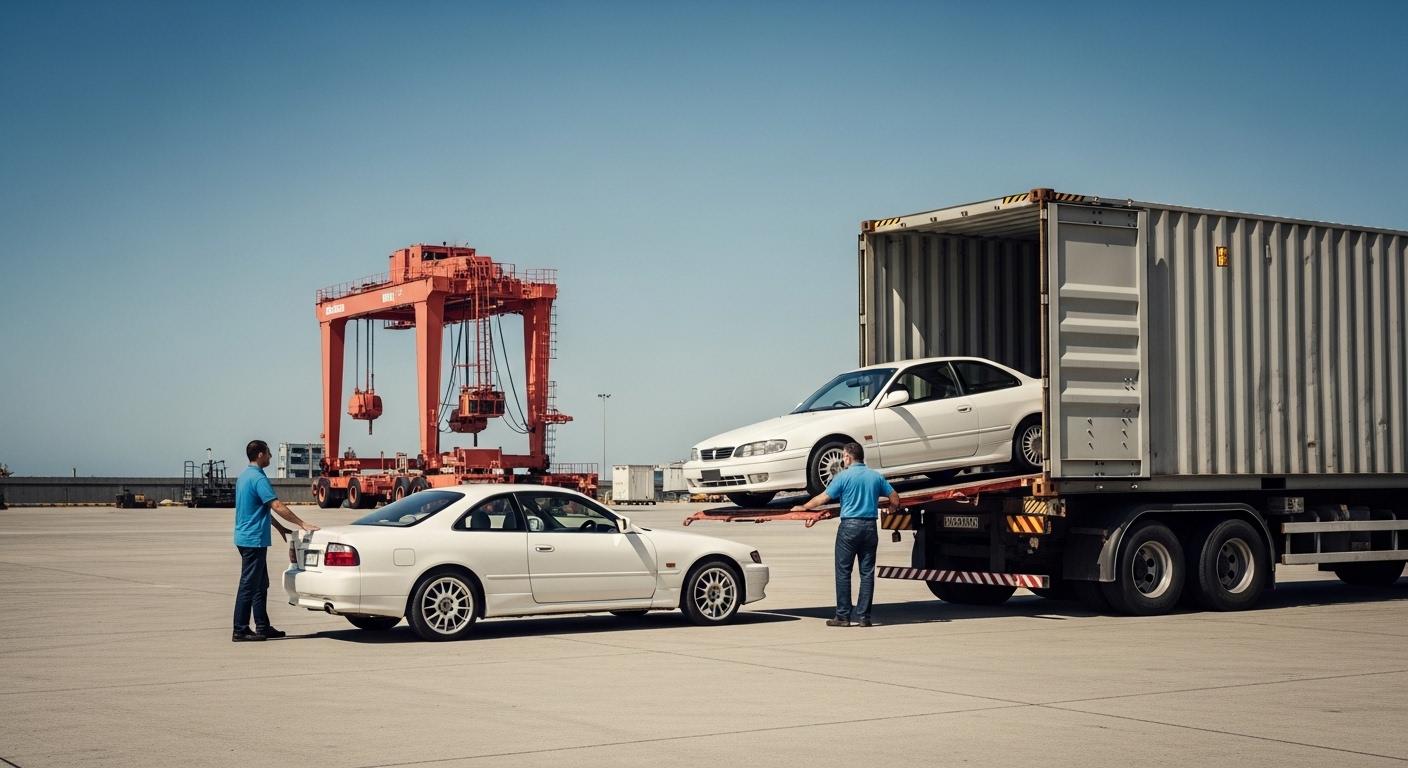
 International freight typically takes four to six weeks from a Japanese port to Sydney.
From a buyer's seat, the sequence looks like this:
- Shortlist and pre-bid inspection. You narrow the target model, year, grade, and mileage. A physical inspection is arranged where possible, and the auction sheet plus inspector notes are shared before any bid.
- Set your bid cap and authorise the bid. You set the maximum bid, and bidding only ever happens within that agreed cap. A refundable deposit is required before bidding starts.
- Vehicle secured. Once your approved bid succeeds, the vehicle price, Japan Agent Fee, and service fee are payable within 48 hours, and the Japan-side invoice is shared.
- VIA approval lodged. This federal requirement goes through the ROVER system, with processing usually taking one to four weeks. It must be lodged before shipping.
- Shipping. International freight carries the car to Sydney. The shipping invoice is issued on arrival and may include freight, GST, import duty, LCT where applicable, and port charges.
- Compliance. AVV inspection, RAW compliance work, and RAV entry happen here. Any additional ADR-related items are quoted separately before work proceeds.
- Delivery. You receive a registration-ready vehicle. Blue Slip and NSW registration are available on request, and door-to-door delivery can be arranged Australia-wide.
For the full breakdown of each stage, how the import process works lays out the payments and timelines in one place.
What Does It Cost to Land a Low-Km JDM Car?
The landed cost of a JDM import breaks down into calculable components: duty, GST, and possibly Luxury Car Tax. These apply as rules, not estimates. The actual total depends on the vehicle's purchase price, the shipping cost, and any ADR-related compliance work, so no single figure fits every import.
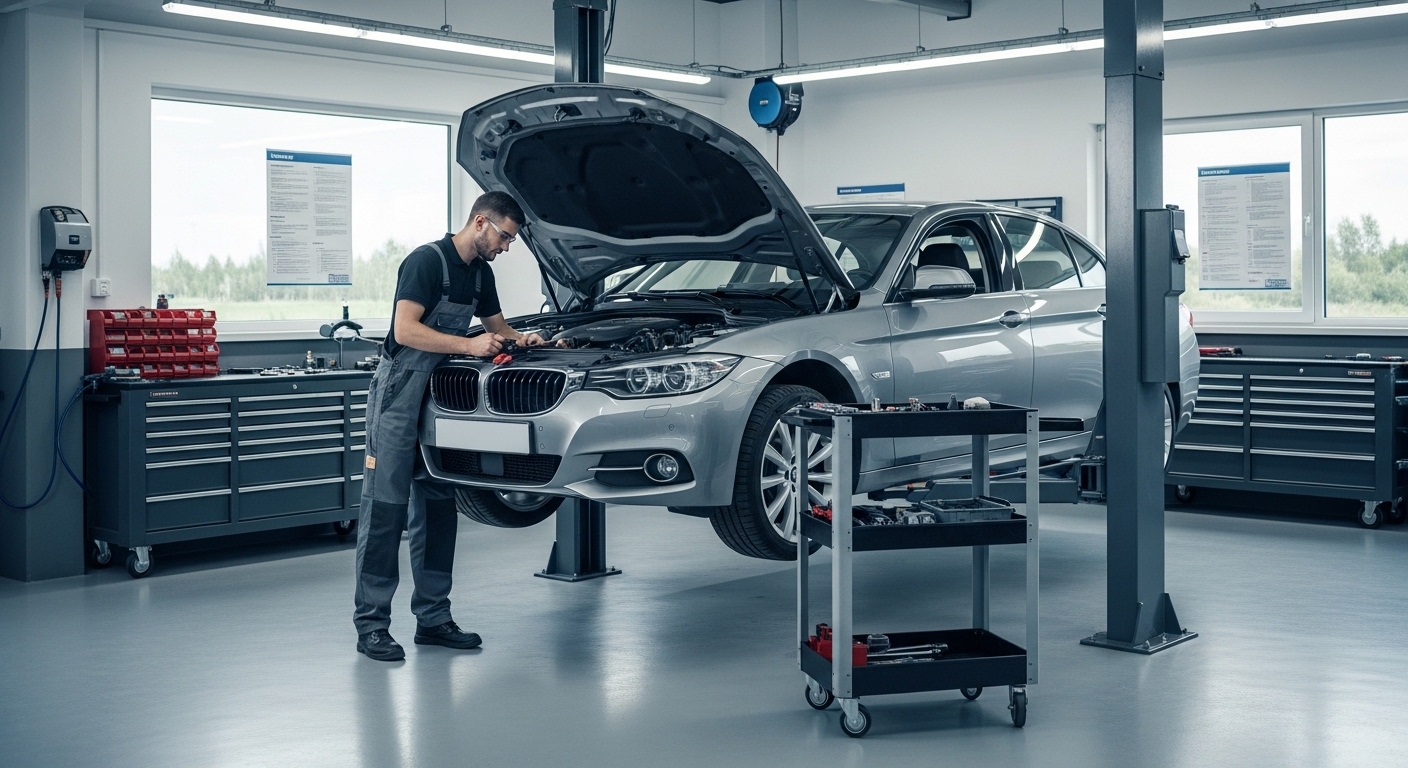 Compliance work at a Registered Automotive Workshop is quoted separately before any work proceeds.
| Component | Rule | Notes |
|---|---|---|
| Import duty | 0% under JAEPA | Requires a Statement on Origin or JAEPA Certificate of Origin; the standard MFN rate is 5% (DFAT, 2026) |
| GST | 10% on the CIF value | CIF = vehicle price + international shipping + insurance |
| LCT (standard) | 33% on the amount above $80,567 (FY2025-26) | Applies only if the landed value exceeds the threshold |
| LCT (fuel-efficient) | 33% on the amount above $91,387 (FY2025-26) | ≤3.5 L/100 km, criteria tightened from ≤7 L/100 km on 1 July 2025 |
| Compliance cost | Quoted separately at the compliance stage | Depends on vehicle condition, ADR-related work, and tyres |
| Warranty | 3-month NSW dealer warranty; 5-year extended warranty included in price for Stock in Japan and Australia Stock; available for eligible auction-sourced vehicles (~$1,500) | Auction-sourced vehicles do not include the 3-month dealer warranty |
A few things are worth pulling out. Import duty is genuinely 0% for most Japanese-origin vehicles under JAEPA, provided the proof-of-origin paperwork is in order. You'll see 5% quoted elsewhere, but that's the standard rate that applies without the agreement.
Many practical JDM imports also fall well below the standard LCT threshold, so Luxury Car Tax is not a universal cost. And watch the fuel-efficient threshold closely: the criteria tightened from ≤7 L/100 km to ≤3.5 L/100 km on 1 July 2025, so buyers of small hybrids should verify current eligibility rather than assuming the higher threshold applies.
For a specific vehicle, the cost only firms up once the purchase price and shipping are known. Our Japan car imports cost and compliance guide goes deeper on the on-road figure, and the importing options page is the place to start a real quote.
Is a Low-Km JDM Import Worth It? A Practical Buyer-Fit Guide
Low-km JDM vehicles offer real appeal: less accumulated wear, a stronger service-history paper trail, and access to models that rarely surface locally. Whether the import process suits you, though, depends less on the car and more on your timeline, your flexibility, and the exact model you're chasing.
| Worth considering if… | Less suited if… |
|---|---|
| You want a vehicle retired early from a Japanese household, not driven hard | You need a car within the next few weeks; local stock is a better fit |
| Your target model is on the SEVS register or qualifies under the 25-year rule | Your preferred model is neither on the SEVS register nor 25 years old |
| You're comfortable with the 6 to 10 week import timeline | Significant ADR compliance work is required, adding cost and time |
| You value a documented Shaken odometer history | The vehicle is under three years old, so the record chain is shorter |
| You want a service-history paper trail from dealership stamps | You're on a tight budget where compliance costs would be hard to absorb |
Be honest with yourself on both columns. The right-hand side is not filler. If you need a car this month, or your budget has no room for compliance surprises, or the model you want doesn't qualify under either pathway, importing is the wrong tool and there's no shame in saying so.
One more factor to weigh: low-km JDM vehicles typically command higher auction prices in Japan. Whether that premium translates into value for you depends on the model, the condition grade, and Australian demand. That's a judgement call specific to the vehicle, not a rule you can apply in advance.
Where Does Carbarn Fit In?
If you decide an import makes sense, this is where a licensed guide earns its keep. Carbarn is a Sydney-based licensed motor dealer (MD056471) that manages the full Japan import journey: sourcing, pre-bid inspection, VIA approval, shipping, RAW compliance, and delivery.
There are four ways to buy. Import Eligible Model is the bid-based sourcing route where Carbarn identifies and bids on a vehicle matching your brief. Live Auction lets you browse open auction lots and request a bid on a specific car. Stock in Japan offers fixed-price vehicles already selected and ready to ship, usually 6 to 8 weeks. And Australia Stock covers cars available now from the Lidcombe yard. The full comparison sits on the importing options page.
For buyers focused specifically on low-km imports, Carbarn sources through Japan's auction network, arranges pre-bid physical inspection where the timing allows, and delivers the vehicle registration-ready. Every stage is monitored, and you're kept updated whenever the timing shifts.
- See the SEVS-eligible models Carbarn can source from Japan.
- Read how Carbarn's import process works, step by step.
- Or call the team on 0423 840 130.