



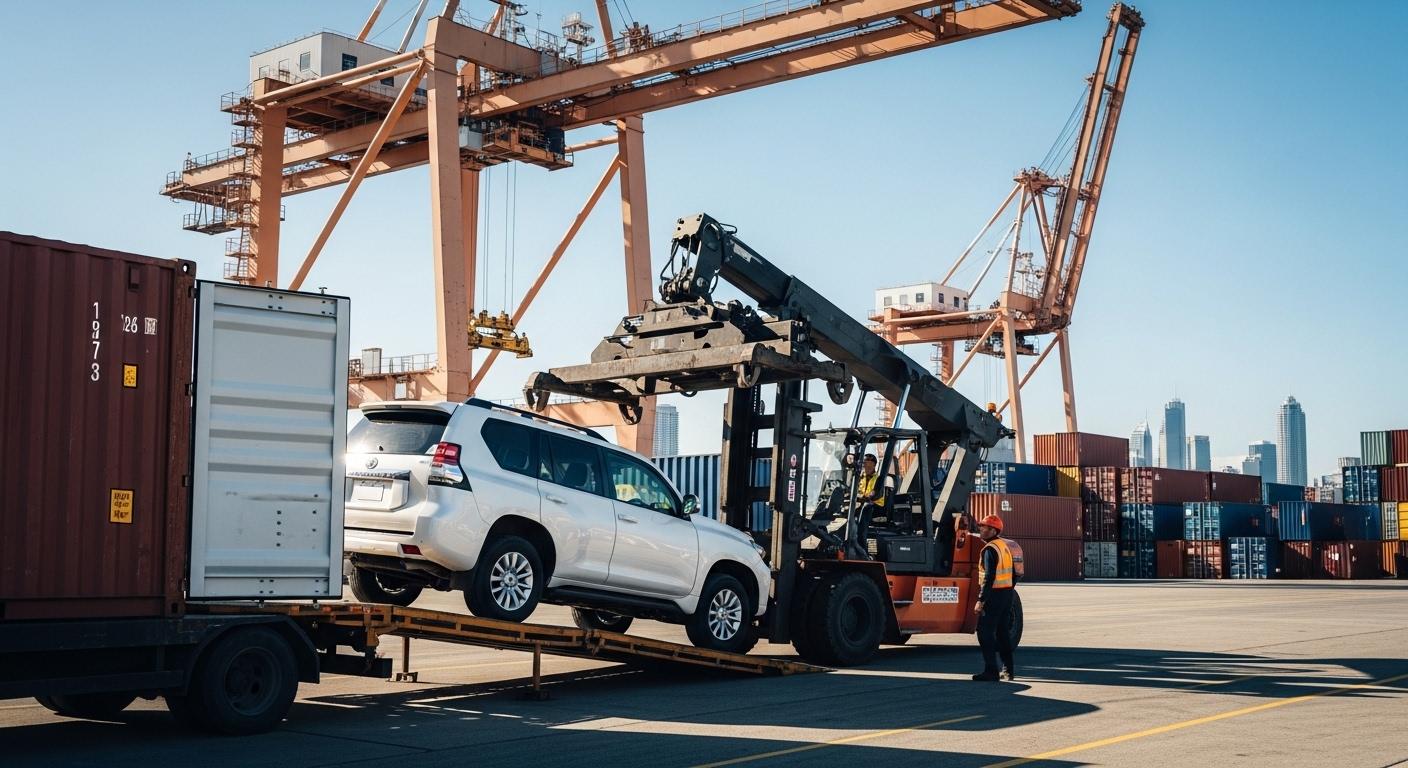
Ready to Hit the Road in Style?
Save money and reduce emissions with vehicles designed to deliver exceptional mileage. Visit our inventory and find a car that fits your lifestyle.
Ready to Hit the Road in Style?
Save money and reduce emissions with vehicles designed to deliver exceptional mileage. Visit our inventory and find a car that fits your lifestyle.
Shopping locally can feel like a compromise. Australia had 22.31 million registered motor vehicles at 31 January 2025, and the average passenger vehicle was 11.3 years old (BITRE, 2025). That helps explain why Japanese imports keep attracting buyers who want newer tech, different trims, or a better fit.
The catch is simple. The Japan-side price is only the start. Approval, freight, GST, biosecurity, compliance and rego can reshape the budget fast. So how do you avoid a nasty surprise? This guide explains the legal path, the real cost stack, and the NSW registration steps in plain English.
Key Takeaways
- You need the right import approval before shipping.
- Complete applications are generally assessed within 30 working days (ABF, 2026).
- Landed cost still excludes rego, insurance, and some compliance work.
- NSW rego is a separate step after compliance.
Before the detail, keep three prices separate. Most confusion starts here. If you want a service-led process summary as well, see how importing from Japan works.
| Price layer | What it includes | What it usually excludes |
|---|---|---|
| Japan-side purchase price | Vehicle price, seller or auction fees, Japan-side transport, export handling | Freight to Australia, GST, local compliance |
| Landed cost | Japan-side cost plus freight, insurance, taxes, port, biosecurity, local transport | Rego, CTP, plates, some state inspection costs |
| On-road cost | Landed cost plus compliance, inspections, CTP, rego, plates, vehicle tax | Ongoing ownership costs |
Why are Australians still interested in Japanese imports?
Japanese imports still appeal because buyers want more choice, better specification, and strong hybrid options. BITRE counted 709,100 hybrids on register at 31 January 2025, up about 46.0% year on year, while FCAI says 199,133 hybrids sold in 2025, up 15.3% (BITRE, 2025; FCAI, 2026).
 Reviewing the paperwork early can save a lot of trouble later.
Japanese imports are no longer just an enthusiast thing. Many buyers are chasing practical upsides. They want right-hand-drive vehicles, stronger trim levels, cleaner-condition examples, or body styles that can be thin on the local used market. That often includes hybrids, people movers, vans, and niche family cars.
Why does that matter? Because Australian demand has shifted. FCAI says 53,484 plug-in hybrids sold in 2025, up 130.9%, while battery electric sales reached 103,269, or 8.3% of the market (FCAI, 2026). Buyers clearly want efficient drivetrains, but they don’t all want the same vehicle shape or budget.
There is also a local market context. When the average passenger vehicle is already 11.3 years old, a well-bought Japanese import can make sense for buyers who want newer features without jumping straight to a brand-new car (BITRE, 2025). That doesn’t mean every import is a bargain. It means the search pool is wider.
Australia’s import interest is not just enthusiast-driven. BITRE says the passenger fleet averages 11.3 years old, while 709,100 hybrids were on register by January 2025. FCAI then recorded 199,133 hybrid sales in 2025, which shows mainstream demand for efficient vehicles, not a niche fad (BITRE, 2025; FCAI, 2026).
If you’re comparing an import against something already here, browsing used hybrid cars in Australia can give you a live local benchmark.
Can you import any car from Japan to Australia?
No. You can’t simply buy any car in Japan and ship it here. ABF says one of the required approvals must be issued before transport, and importing without approval is an offence. The department also notes some applications can cover up to 30 identical vehicles, though private buyers still follow a single-vehicle path (ABF, 2026; Department of Infrastructure, 2026).
The first check is pathway eligibility. Australia uses the federal road vehicle scheme, and the application is managed through ROVER. Depending on the vehicle and your circumstances, the relevant path may be a vehicle type approval, concessional RAV entry approval, non-RAV entry import approval, or reimportation approval (ABF, 2026).
Some buyers also run into the SEVS question. SEVS stands for Specialist and Enthusiast Vehicles. In plain English, it is part of the framework used for eligible specialist imports under the national scheme. A car being rare or interesting doesn’t make it automatically eligible. It still needs to fit the right legal path.
Sounds simple enough, right? This is where many buyers get tripped up. Approval to import is not the same as ready to register. ABF says state and territory authorities may refuse registration even when a valid import approval exists, because registration and insurance rules sit with each state and territory, not Canberra (ABF, 2026).
The cleanest way to think about it is this: import approval gives you permission to bring the vehicle in. Compliance and state registration are what move it toward legal road use. Those are separate gates. Treating them as one step is where plenty of import plans go off track.
You can’t simply buy a car in Japan and book shipping. ABF says a vehicle type approval, concessional RAV entry approval, non-RAV entry import approval, or reimportation approval must be issued before transport, and importing without approval is an offence (ABF, 2026).
A directory of eligible models for import can help you sense-check a model family. Just remember that eligible models are not the same thing as live inventory.
What does the real landed cost actually include?
The real landed cost is always bigger than the Japan-side price. ABF says buyers must allow for freight, insurance, duty, GST, LCT where relevant, storage, wharf, transport, and registration-related costs. For 2025–26, the LCT threshold is $80,567, or $91,387 for fuel-efficient vehicles (ABF, 2025).
The safest way to budget is to split the bill into three layers: Japan-side price, landed cost, and on-road cost. Many guides blur those together. That’s exactly where buyers start comparing the wrong numbers and end up thinking an import is cheaper than it really is.
On the Japan side, you may have the vehicle price, seller or auction fees, inland transport, and export handling. Then Australia adds its own stack. ABF says GST is 10% of the value of the taxable importation, which includes customs value, duty, and transport and insurance to Australia (ABF, 2025).
There are also processing charges. ABF’s current table lists an electronic import processing charge of $50 for consignments over $1,000 and under $10,000, or $152 for consignments of $10,000 or more (ABF, 2025). Biosecurity declaration charges also apply, with current examples of $46 for air and $68 for sea declarations.
Where do buyers usually get caught out? Condition and cleanliness. DAFF says used vehicles are inspected on arrival and may need treatment, re-cleaning, export, or even destruction at the owner’s expense if contamination is serious enough (2025). A car that looked cheap on paper can stop looking cheap very quickly.
Then there is the on-road part. Landed cost does not automatically include compliance work, inspections, CTP, number plates, vehicle tax, or registration fees. Those come later, and they vary by state. That’s why a “cheap landed number” can still be the wrong budgeting number.
The safest way to budget is to split the bill into Japan-side price, landed cost, and on-road cost. ABF sets GST at 10% of the value of the taxable importation, the 2025–26 LCT threshold at $80,567, and electronic import processing charges at $50 or $152 depending on consignment value (ABF, 2025).
Before you commit funds, it’s worth reading how import compliance works in Australia so the post-arrival costs don’t sneak up on you.
Steps to import a car from Japan to Australia
The process runs in stages, not in one smooth payment. ABF says a complete import approval application will generally be assessed within 30 working days, while the Department of Infrastructure warns some application types can take up to 60 business days. That is why shipping before approval is risky (ABF, 2026; Department of Infrastructure, 2026).
A simple buyer view looks like this:
- Research the vehicle and its pathway. Check that the car can legally enter Australia under the right approval type.
- Gather the documents. That usually includes purchase details, identification details, and vehicle information.
- Apply for approval in ROVER. Don’t arrange shipping first.
- Buy or secure the vehicle. That may be from stock in Japan or through auction.
- Arrange export and shipping. Once the approval is in place, you can move on transport.
- Lodge the import declaration and clear customs. GST, duty, LCT and processing charges are handled here where applicable.
- Clear biosecurity. DAFF inspects vehicles for contamination on arrival.
- Move into compliance and then registration. Arrival is not the end of the process.
ABF is blunt on one point. Do not arrange transport until the right approval has been issued (ABF, 2026). If a vehicle lands before approval, you can face storage costs and other charges, and in some cases you may have to export or destroy the vehicle at your own expense.
What usually slows things down in the real world? It is often mundane stuff. Incomplete documents. A dirty vehicle. Vessel timing. Port delays. Extra work needed to meet Australian standards. None of that is unusual, but all of it affects timing.
The import process is a chain of approvals and handovers. ABF says complete applications are generally assessed within 30 working days, yet the Department of Infrastructure notes some applications can take up to 60 business days. That is why booking shipping before approval is a risk, not a shortcut (ABF, 2026; Department of Infrastructure, 2026).
How do compliance, RAW, AVV, RAV and ADRs fit together?
Compliance is the bridge between arrival and road use. The public page on how import compliance works in Australia says the post-arrival workshop stage typically runs 2–12 working days once the vehicle is ready, which is why arrival at port is not the final step (2026).
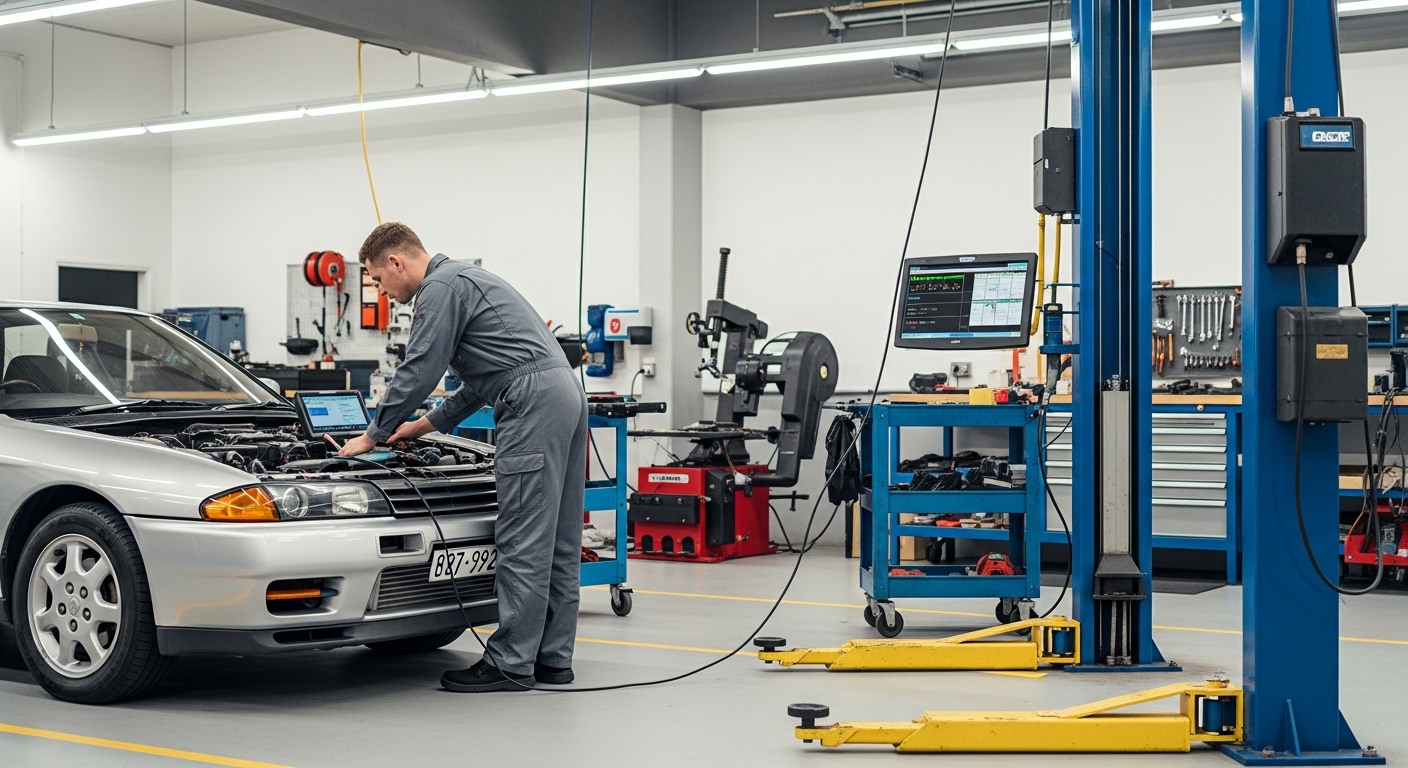 Compliance happens after arrival, not before shipping.
So why all the acronyms?
- ADR: Australian Design Rules. These are the national technical standards vehicles need to meet.
- RAW: Registered Automotive Workshop. For eligible specialist imports, this is the approved workshop path for compliance work.
- AVV: Authorised Vehicle Verifier. This is the independent verifier in Australia for relevant vehicles under the scheme.
- RAV: Register of Approved Vehicles. This is the national register entry that sits before the vehicle moves toward road use.
- VSCCS: Vehicle Safety Compliance Certification Scheme in NSW. This is the licensed certifier path for compliance certificates in NSW.
In practical terms, workshop compliance is where the vehicle is inspected, documented, and brought into line with the required standards. That may mean checks, paperwork, and modifications where needed. After that, the verification step and RAV entry can happen under the relevant pathway.
NSW adds its own angle. The NSW imported vehicle page says imported vehicles require a compliance certificate from a VSCCS licensed certifier (NSW Government, 2026). That’s another reminder that federal import approval does not finish the job.
Under Australia’s road vehicle scheme, an AVV is not the same as a workshop. The verifier independently checks the vehicle in Australia, while the workshop handles the compliance work. Only after the required steps are complete can the vehicle move to RAV entry and then state registration (Department of Infrastructure, 2026).
Road registration after import and compliance
Registration is a separate state process after import and compliance. In NSW, annual registration is $82, standard plates are $57, and private vehicle tax starts at $270 for cars up to 974kg tare. That spend sits outside many early import quotes (NSW Government, 2025–26).
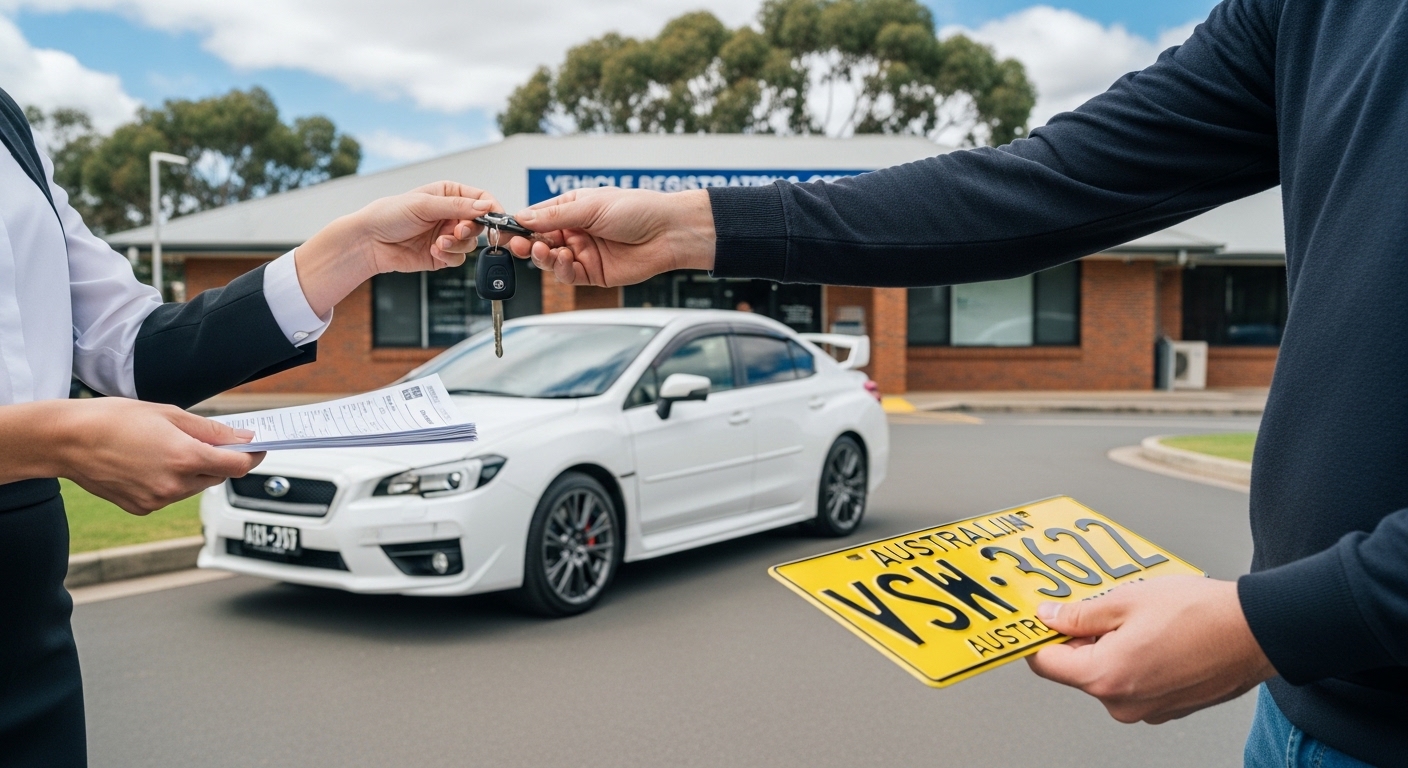 Registration is a separate state step after compliance is complete.
For NSW buyers, Service NSW says a personally imported vehicle may need the following before registration:
- VIA documentation
- Proof of entitlement to register the vehicle
- Proof of identity
- An AUVIS inspection report
- CTP insurance
- A VSCCS compliance certificate, where applicable
- A VIIU report, where applicable
- The registration application form
(Service NSW, 2024).
Here is the part many people skip when costing the job:
| NSW item | Current example |
|---|---|
| Annual registration fee | $82 |
| Standard number plates | $57 |
| Private-use vehicle tax up to 974kg tare | $270 |
| CTP, inspection and other checks | Varies |
Does that mean the car is automatically road-ready once compliance is done? Not quite. Registration still sits with the state. NSW says to check the state requirements before import because registration can be refused if those requirements are not met (NSW Government, 2026).
That matters outside NSW too. This article uses NSW as the worked example, but each state and territory can apply different inspection, paperwork, and insurance steps. If you live outside NSW, check your own local rules before assuming the process will match.
In NSW, a vehicle isn’t simply registered because it has arrived and passed customs. The state lists separate paperwork, and annual registration is $82 before plate fees, insurance, inspections, and vehicle tax, which starts at $270 for private cars up to 974kg tare (NSW Government, 2025–26).
When does using a specialist make the process easier?
Specialist help makes the process easier when you want fewer surprises on timing and paperwork. Carbarn's public import guide says the full process usually takes 6–10 weeks, while its compliance guide says VIA commonly takes 1–4 weeks and workshop compliance 2–12 working days (2026).
There are two practical use cases. The first is full import support, where one specialist helps manage sourcing, approval, shipping, compliance and handover. The second is compliance-only help, where you have already bought or sourced the vehicle and now need the Australian side handled properly.
That second case matters more than many buyers expect. Plenty of people can find a car. Fewer people enjoy sorting out approval paperwork, workshop compliance, AVV steps, RAV entry, and state registration documents. Why carry all of that yourself if you don’t have to?
Carbarn is relevant here because its public pages clearly separate the two paths. The importing page currently lists 405 eligible models, and it also makes the point that eligible models are not the same as live inventory. That helps buyers avoid mixing up model eligibility with actual stock on hand.
In real import jobs, the delays are usually ordinary things: missing documents, contamination, vessel timing, or extra ADR-related work. They aren’t dramatic, but they do move delivery dates. That is where having one party coordinate the process can save a lot of back-and-forth.
For buyers who want next steps, these pages are the most useful:
- how importing from Japan works
- how import compliance works in Australia
- eligible models for import
- used hybrid cars in Australia
- book compliance or ask about an import
For buyers who want fewer moving parts, a specialist can reduce admin and handover risk. Carbarn's public guides put the full import process at about 6–10 weeks, with VIA commonly 1–4 weeks and workshop compliance 2–12 working days once the vehicle is ready (2026).
If you only remember four things, make them these:
- Check eligibility before you move money.
- Budget on-road cost, not just landed cost.
- Treat compliance and registration as separate stages.
- Ask for help early if the pathway is unclear.