



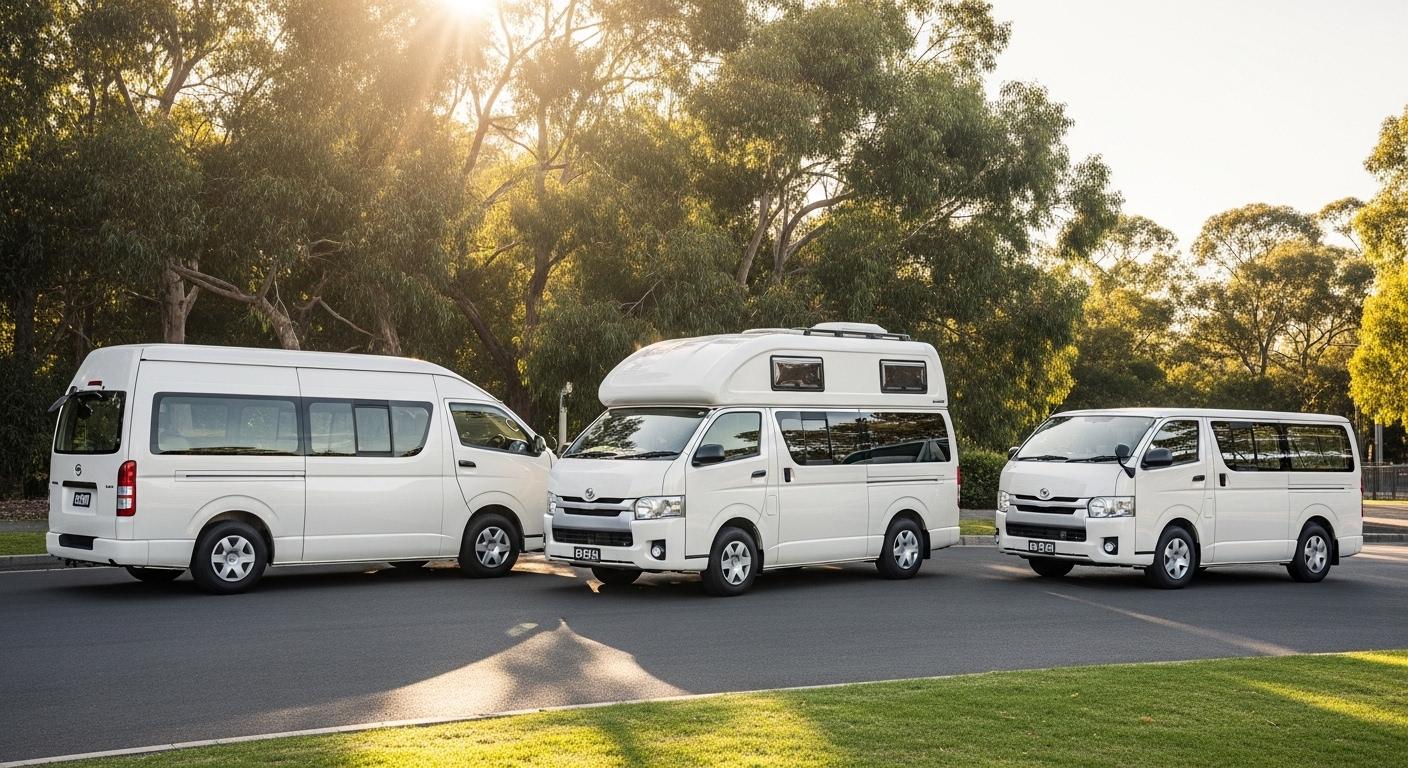
Ready to Hit the Road in Style?
Save money and reduce emissions with vehicles designed to deliver exceptional mileage. Visit our inventory and find a car that fits your lifestyle.
Ready to Hit the Road in Style?
Save money and reduce emissions with vehicles designed to deliver exceptional mileage. Visit our inventory and find a car that fits your lifestyle.
You start with a simple idea: import a Toyota HiAce. Then you open a Japanese auction feed and the same nameplate splits into a wall of codes, KDH220, TRH200, GDH206, KDH201, and nothing tells you which one you're actually allowed to bring home. Australia brought in about US$7.66 billion worth of passenger vehicles from Japan in 2025 (Trading Economics / UN COMTRADE, 2025), and vans are a big slice of that. The trap is that one wrong code at auction sends you down the wrong compliance path, costing bidding fees and weeks of delay. This guide maps three practical use-case groups, decodes the model codes, and lists the conditions that quietly disqualify the wrong van.
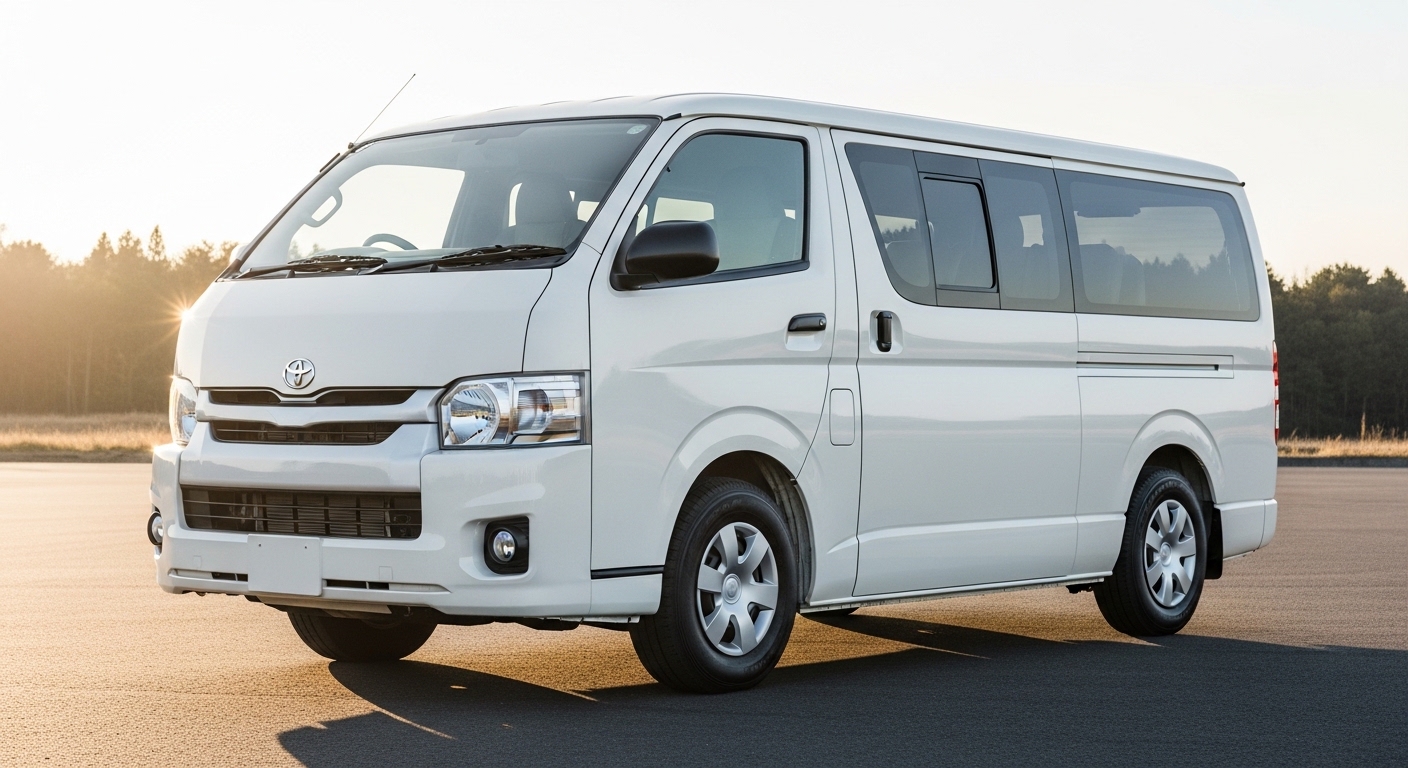
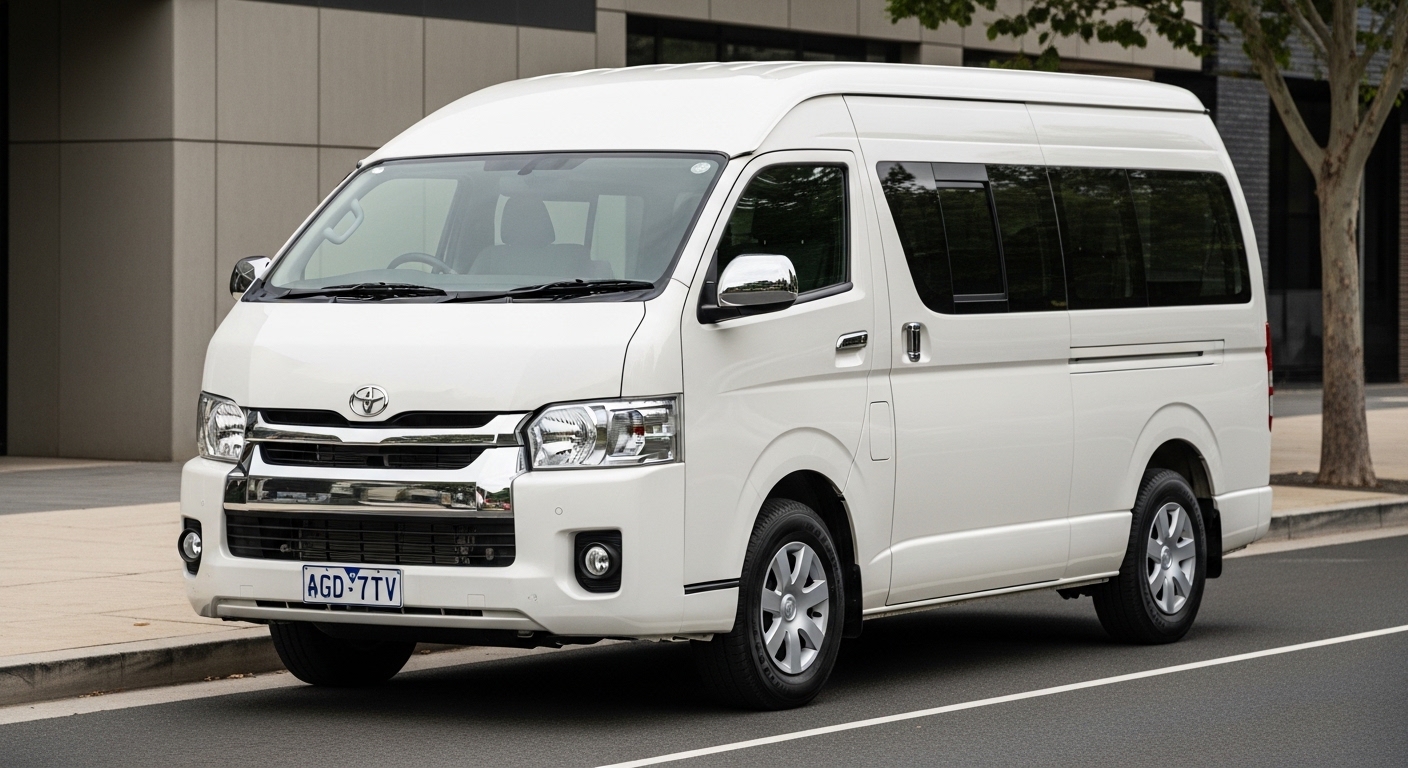
White Toyota HiAce van shown front three-quarter on a paved road at sunset White Toyota HiAce H200 van parked on a sealed road in front three-quarter view
Quick Answer
- Around 29 HiAce variants appear on the eligible-models list drawn from the SEVS ROVER register — SEVS (Specialist and Enthusiast Vehicle Scheme) is Australia's federal approval pathway for eligible Japanese imports, and ROVER is the Department of Infrastructure's searchable database of approved vehicles. The variants split into three practical use-case groups with different MRE (Model Report Entry) conditions: passenger van (roughly 5 to 9 original factory seats), campervan/motorhome (usually 2 to 6 seats, and some codes must already carry a fit-out at import), and Welcab (wheelchair-accessible, built around the TRH200).
- Cheapest passenger-style base: KDH220 diesel, landed from around $18,966 to $27,731 depending on year and grade.
- Cheapest campervan-capable base: KDH201 diesel, from around $21,082 landed.
- Welcab: TRH200, around $39,792 landed (check the live listing for current figures).
- Vans with a 1TR-FE petrol or 1GD-FTV diesel engine must sit under 80,000 km on the odometer under specific SEVS approvals.
- Landed prices are estimates that move with auction conditions. Check the live listing for current figures.
A quick note on the numbers below. Every landed price is an estimate that includes freight, compliance and GST, and it shifts with the year, grade and the auction market on the day. Treat each figure as a starting point, then check the live page for the current estimate before you plan a budget.
How Do You Read a HiAce Model Code?
The single most useful skill for a HiAce buyer is reading the code, because roughly 29 eligible variants share one nameplate but qualify under different approvals. The first three letters tell you the engine family. The trailing numbers hint at wheelbase, body width and drivetrain. Get both parts right and the auction feed stops looking like alphabet soup.
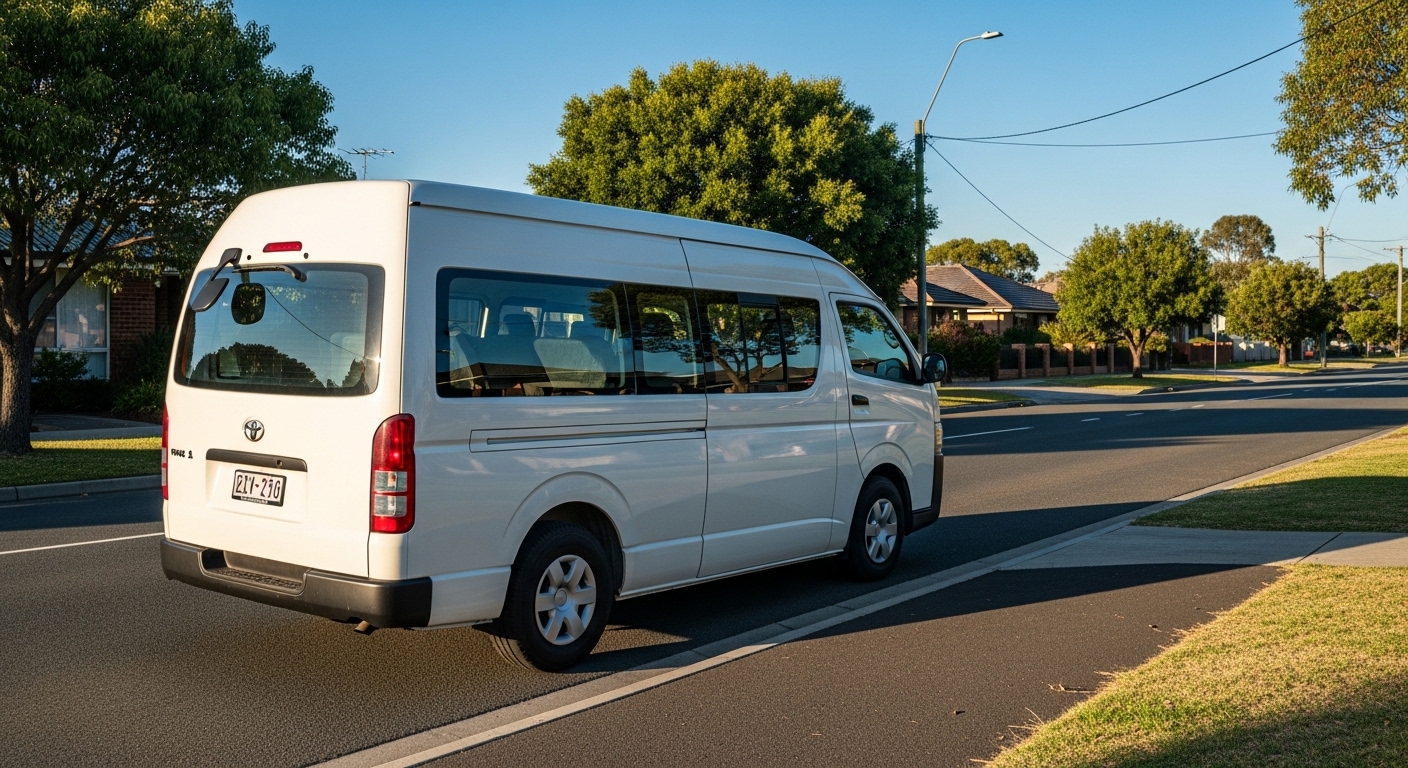
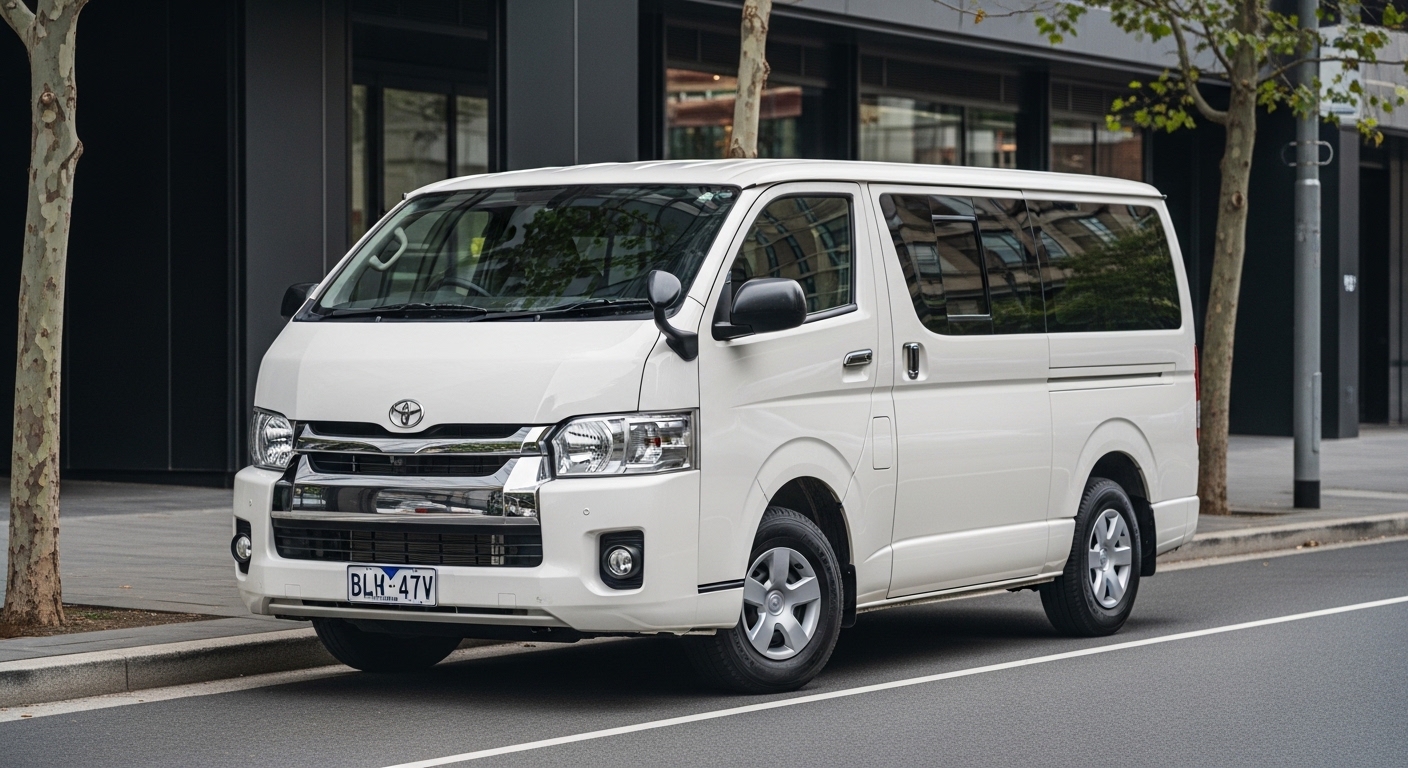
White Toyota HiAce van parked on a suburban roadside, rear three-quarter view in late afternoon light White Toyota HiAce parked along a quiet suburban street in warm afternoon sun.
| Prefix | Engine family | Character |
|---|---|---|
| KDH | 1KD-FTV or 2KD-FTV diesel | Strong torque, built for towing, load and long distance |
| TRH | 1TR-FE or 2TR-FE petrol | Lighter and cheaper to buy, easy around town |
| GDH | 1GD-FTV diesel | Modern 2.8-litre turbo, more power, cleaner emissions |
The trailing numbers are a rough guide, not a rule. The 200s tend to be standard-wheelbase 2WD. A 201 is often a narrower body or a base 4WD. The 205 and 206 codes usually mean long wheelbase, wide body or 4WD, and the 220s point to a wide body on the standard wheelbase.
Here's the catch: the same trailing number does not mean the same van. A KDH201 is a 2WD diesel, while a TRH201 is a 4WD or AWD petrol. They qualify under different approvals even though they look near-identical in a photo. Every code below uses this logic, so keep it handy, and always match the full code to a live approval before you bid.
Which SEVS Eligible HiAce Codes Suit a Passenger Van?
Every HiAce variant on the eligible-models list qualifies under the single SEVS Campervans and Motorhomes Criterion. The three groups below reflect practical differences in MRE conditions — seating count, fit-out requirements and accessibility — not separate SEVS eligibility criteria.
This is the cheapest way into a HiAce, and it suits anyone moving people rather than gear. Shuttle operators, school and community transport, and large families needing eight or nine genuine seats all land here. The deal-breaker is simple: the seating has to be exactly as the factory built it. No added rows, no removed rows, no clever reconfiguration.
Who this path suits
Choose this path if you need factory-verified seating and plan to leave the interior alone. It's a strong fit for group transport, airport and hotel shuttles, sports clubs and big households. It's the wrong path if you're planning to strip the rear seats for cargo or start any internal conversion, because that intent belongs in a different eligibility bucket.
The rule that decides everything: factory-original seating
The passenger-van criterion turns on seating "as originally manufactured," and it's the most common reason a van fails at compliance. A dealer-fitted extra row added in Japan fails. Rear seats pulled out for a delivery fit-out fails. An auction sheet showing five seats against a code approved as a nine-seater fails. Before you bid, confirm the full model code sits on an active MRE. Then check that the auction sheet seat count matches that approved configuration. Exactly how these codes are grouped on the register can vary, so verify the criterion per code rather than assuming.
Lead variants, cheapest to dearest
The KDH220 diesel passenger van is the cheapest sensible entry, landed from around $18,966 to $27,731 depending on year and grade. It covers a 2004 to 2014 build window, 2WD diesel power from the 1KD-FTV or 2KD-FTV, and seating up to nine. It suits budget buyers who want a reliable diesel people mover and are comfortable with pre-2014 stock. It's not for anyone who needs 4WD or a later build year.
Step up and the KDH211 lands from around $29,656, with wider approval coverage. The KDH221 lands from around $31,258 as a 2WD diesel on a standard-width body. Both suit buyers chasing slightly newer stock or a specific width. Seating configurations differ between these codes, so confirm the exact layout on the live listing before committing.
If you specifically want petrol, the TRH211 lands around $45,826, noticeably dearer than the diesel equivalents. It runs the 1TR-FE or 2TR-FE petrol engine and qualifies under a different window from the KDH codes. It makes sense for buyers who want petrol running and can absorb the higher entry cost. For price-sensitive shuttle use, the KDH diesels remain the smarter buy.
One current locally available example shows what a low-kilometre passenger base looks like. This 2018 Toyota HiAce TRH200V DX runs the 2.0-litre petrol four (1TR-FE) on a standard van body. It has covered just 20,584 km — barely run-in for a HiAce.
2018 Toyota HiAce — TRH200V DX — used car available in Australia 2018 Toyota HiAce — TRH200V DX
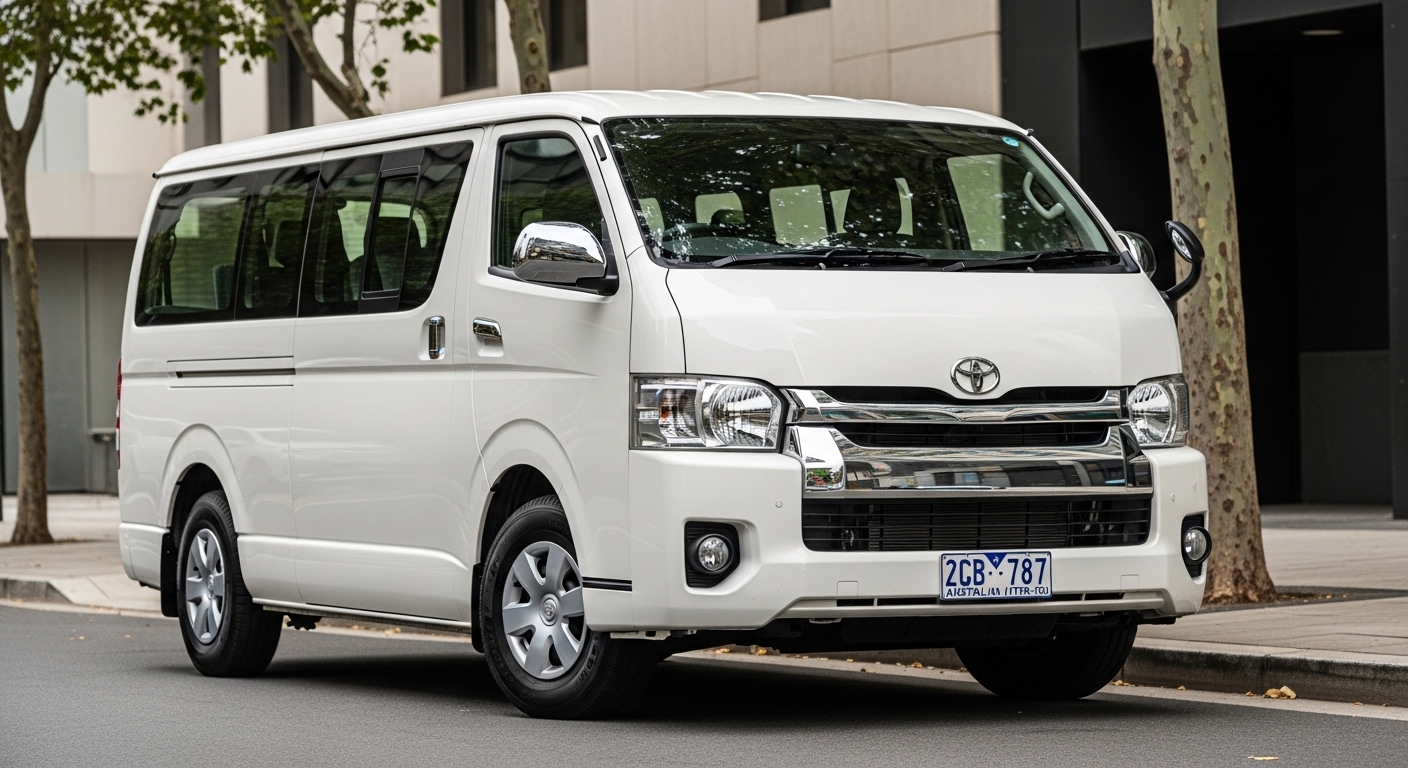
A van this fresh is a genuinely low-kilometre find. If it carries the 1TR-FE petrol engine, remember the under-80,000 km rule that applies under certain approvals, though at 20,584 km this one sits comfortably inside it.
Which HiAce Codes Suit a Campervan or Motorhome Build?
Campervan-eligible HiAce codes — KDH201, KDH205, GDH206, TRH201, and TRH224 — seat 2 to 6 people and qualify under the SEVS Campervans and Motorhomes Criterion. The critical split is whether a code requires the van to arrive with a factory campervan fit-out already installed, or allows import as an empty shell for conversion after arrival. Road-trip families, grey nomads, off-grid tourers and weekend adventurers all land in this group. The rule that trips most buyers up isn't about seats — it's about fit-out timing.
Who this path suits
This suits anyone planning to live in, travel in or convert a HiAce, plus buyers who want a pre-fitted Japanese camper that's already converted before it ships. It's the wrong path if you need more than six seats. It's also the wrong assumption if you believe any van can be imported empty and converted later, because for some codes the fit-out rules override that entirely.
The rule most buyers miss: fit-out at import
Read this before you bid. Campervan approvals fall into two very different groups. The first is approved "for modification and conversion," which means you can bring in an empty van and fit it out after it arrives in Australia. The second requires the vehicle to already be fitted with an internal campervan fit-out before it ships, which is the wording confirmed on codes like the GDH206 and TRH224.
Campervan interior with overhead cabinets, bench seat, sink, gas hob, and pop-top sleeping area Warmly lit campervan interior with bench seating, galley, and pop-top bed area
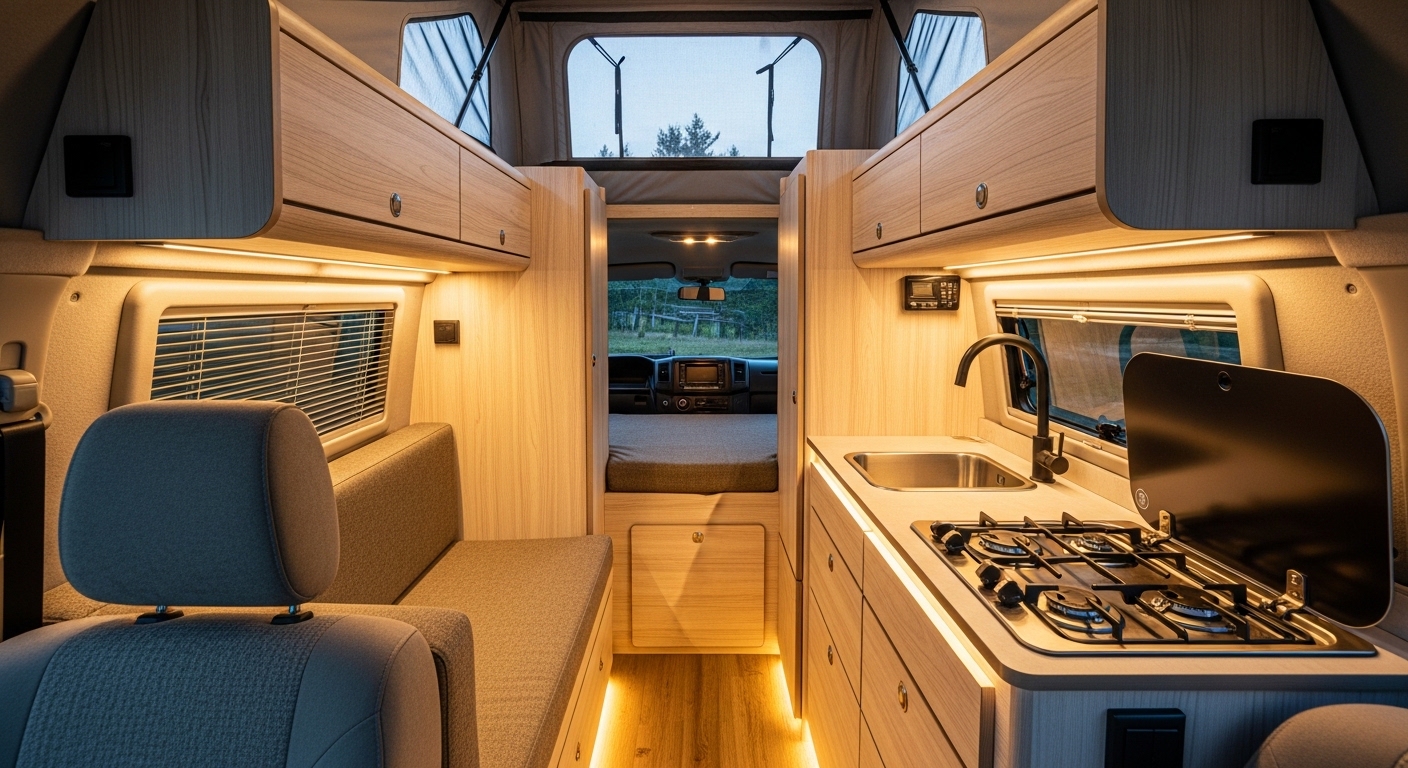
The classic error is winning a stripped, empty auction van under a code that demands the fit-out already installed. The van then can't clear compliance the way you planned. The government's SEVS campervan requirements are the authority on fit-out timing, so confirm the wording for your exact code, and don't assume one camper code behaves like another.
Cheapest entry: KDH201 2WD diesel
The KDH201 campervan base is the cheapest campervan-capable base, landed from around $21,082. It's a 2WD diesel, usually the 1KD-FTV or 2KD-FTV depending on spec, and comes in 5, 8 or 9-seat layouts. The older 1KD-FTV in this code has a strong reputation for distance, known for very high mileage potential in commercial fleet applications. It suits a diesel motorhome build at the lowest entry cost without 4WD. Confirm the specific configuration is approved "for modification and conversion" if you intend to fit it out after arrival.
KDH205 (2WD) and TRH224 (4WD): mid-range options
The KDH205 is a long-wheelbase 2WD option. Its landed estimate has sat as low as around $14,587 in recent months — well under older reference figures. Treat that as a starting point and check the current listing for the year and grade behind it. Post-import conversion is generally allowed here, but verify it against the specific approval.
The TRH224 is a different animal, landed around $54,545 with a petrol engine and the "must be fitted with internal campervan fit out" condition. In plain terms, that means a pre-converted Japanese camper only, not an empty shell. It suits buyers who specifically want a ready-made petrol JDM campervan and don't intend to build one themselves.
4WD options: TRH201 and GDH206
Four-wheel drive is what turns a highway van into a genuine tourer. Unsealed roads, remote camps and towing off sealed routes all expose a 2WD van's limits, and this is where the drivetrain in the code really matters. The TRH201 4WD petrol is a 4WD or AWD petrol, with pricing available on enquiry. Check the live listing for current landed estimates. Its approval covers factory-built or converted campers.
The GDH206 4WD turbo-diesel is the flagship campervan base, landed from around $52,543. It runs 4WD with the modern 1GD-FTV diesel. It carries the "must be fitted with internal campervan fit out" condition — you cannot import an empty van under the GDH206 approval. Check whether the sub-80,000 km odometer rule applies to your specific GDH code, since it's confirmed on some GDH approvals.
A white 4WD driving on a red dirt road, trailing dust beneath a cloud-filled blue sky A dusty 4WD travels along a red outback track under a wide, cloud-streaked sky.
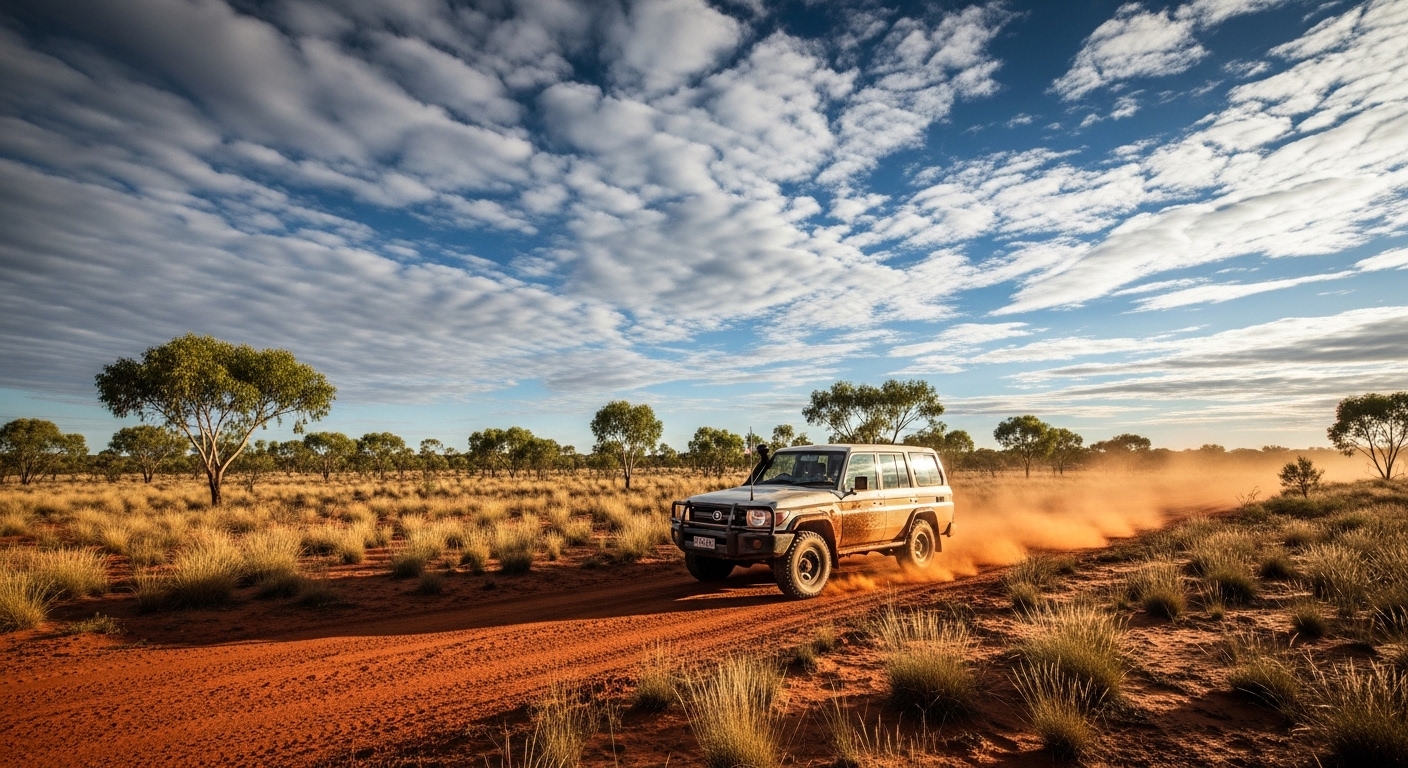
Examples across the price range
The freshest 4WD base worth pointing to is a 2024 Toyota HiAce GDH206V. It's a long-wheelbase 4WD van running the 1GD-FTV 2.8-litre turbo-diesel, with just 60,000 km on the clock. That long body and modern diesel make it a strong platform for a custom motorhome build.
2024 Toyota HiAce — GDH206V VAN LONGDX 4WD (Recommended — Most Current) — used car available in Australia 2024 Toyota HiAce — GDH206V VAN LONGDX 4WD (Recommended — Most Current)
For lower entry cost, a 2021 Toyota HiAce GDH206V is available to order from Japan. It's the same capable long-wheelbase 4WD diesel spec, sitting at 117,000 km. That's road-proven rather than tired for this platform, and sourcing it from Japan generally lands cheaper than an equivalent local example.
2021 Toyota HiAce — GDH206V VAN LONG DX 4WD (JP Import — Lower Entry Price) — used car available in Australia 2021 Toyota HiAce — GDH206V VAN LONG DX 4WD (JP Import — Lower Entry Price)
Between those two sits a 2019 Toyota HiAce GDH206V, a 4WD 1GD-FTV diesel with 123,513 km and Australian compliance history behind it. For buyers who value a local paper trail over the very lowest kilometres, that history can be worth paying a little more for.
2019 Toyota HiAce — GDH206V DX 4WD — used car available in Australia 2019 Toyota HiAce — GDH206V DX 4WD
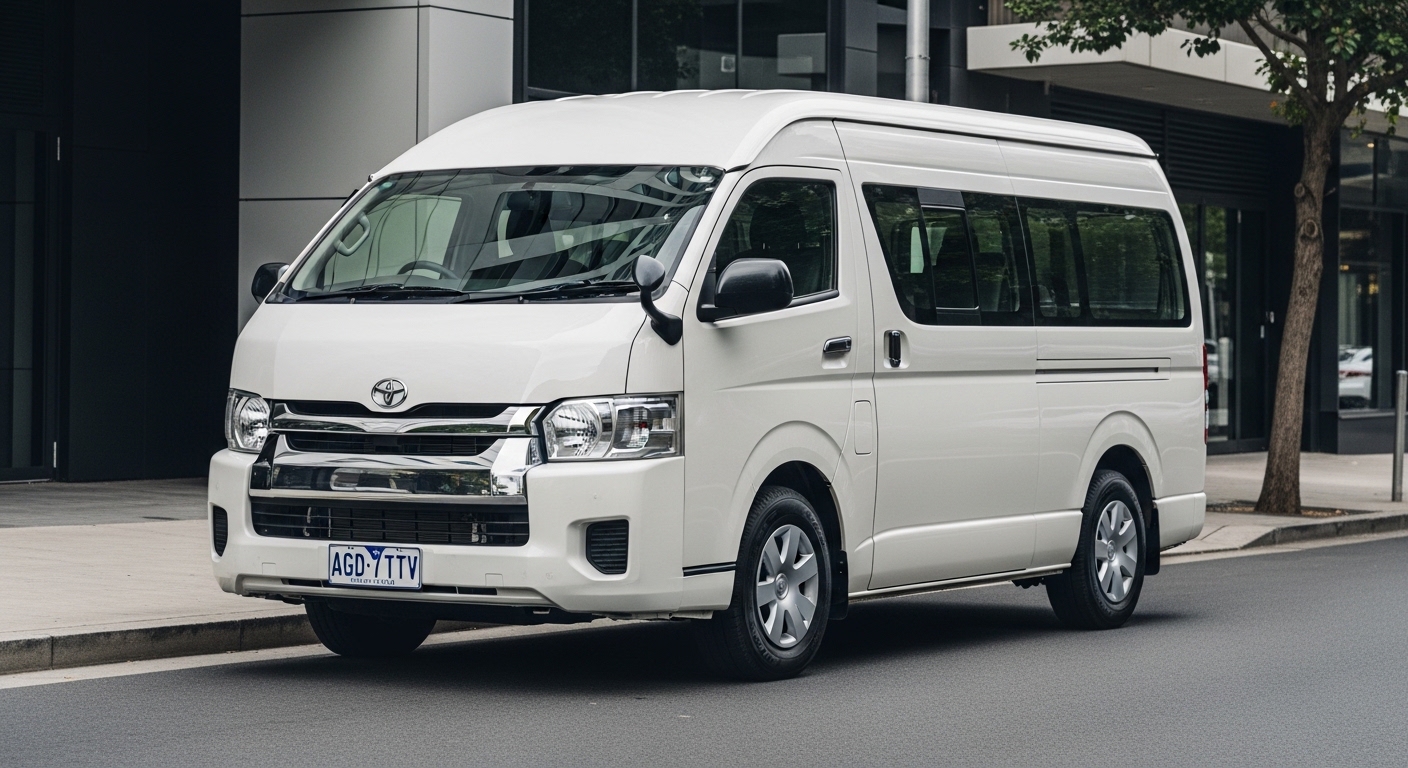
For a budget camper base, a 2020 Toyota HiAce TRH200V is available to order from Japan. It's a long-wheelbase petrol van running the 2.0-litre four (1TR-FE), at a relatively low 68,700 km. It's noticeably cheaper than the 4WD diesels and suits a lighter conversion or lower-load touring.
2020 Toyota HiAce — TRH200V VAN LONGDX (JP Import — Budget Camper Option) — used car available in Australia 2020 Toyota HiAce — TRH200V VAN LONGDX (JP Import — Budget Camper Option)
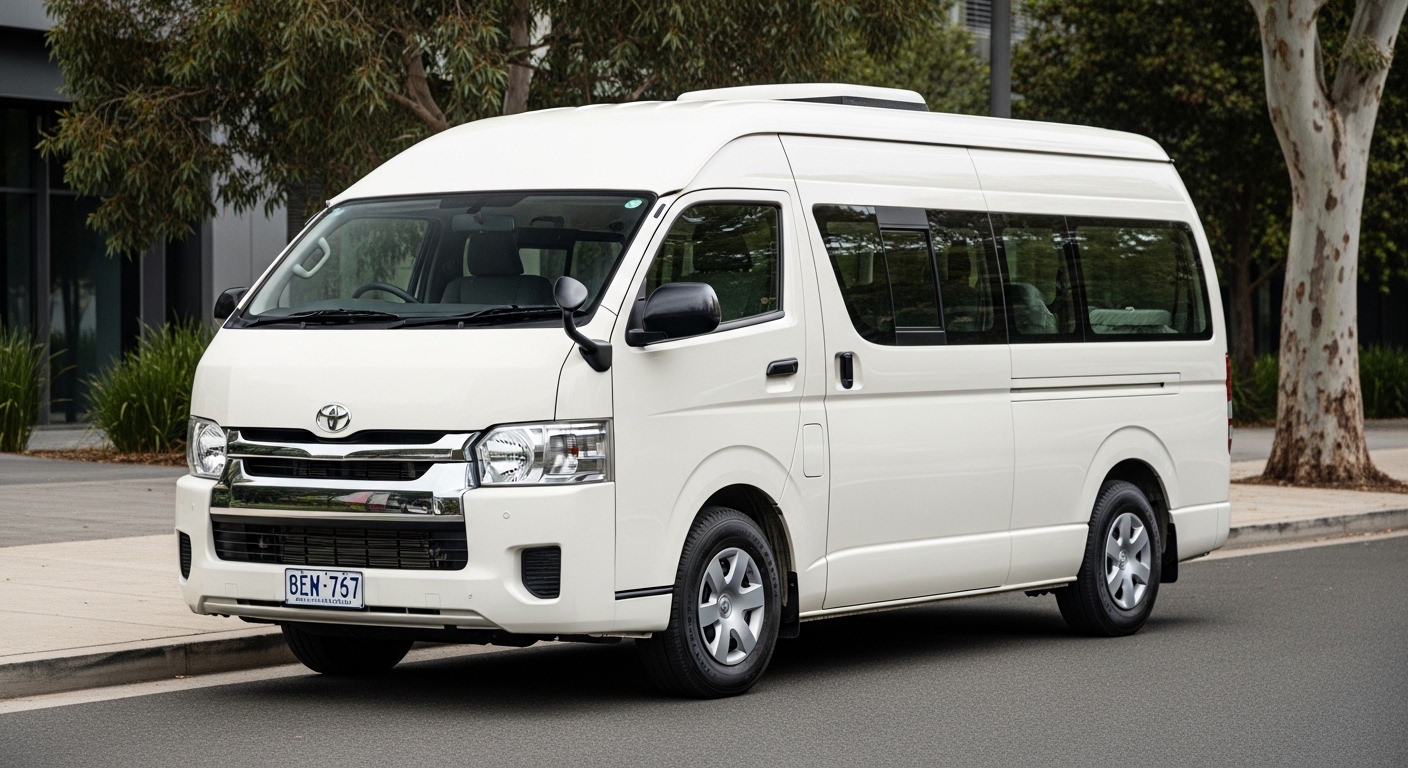
These are eligibility references and examples of what the market offers, not a fixed shelf of stock. Availability moves week to week, so use them to shape a shortlist rather than a shopping cart.
Engine choice: diesel or petrol for touring
Engine family is a bigger decision than the badge suggests. The 1KD-FTV and 2KD-FTV diesels in the KDH codes bring proven torque and highway economy, and they're the default for towing and long-distance travel. The modern 1GD-FTV in the GDH codes adds more power and cleaner emissions than the older 1KD. The odometer rule applies under some approvals, so check per code. The 1TR-FE and 2TR-FE petrol engines in the TRH codes are lighter and cheaper to buy. They suit semi-regional or lower-load use but drink more on long highway runs.
Which HiAce Code Should You Import for Wheelchair Access?
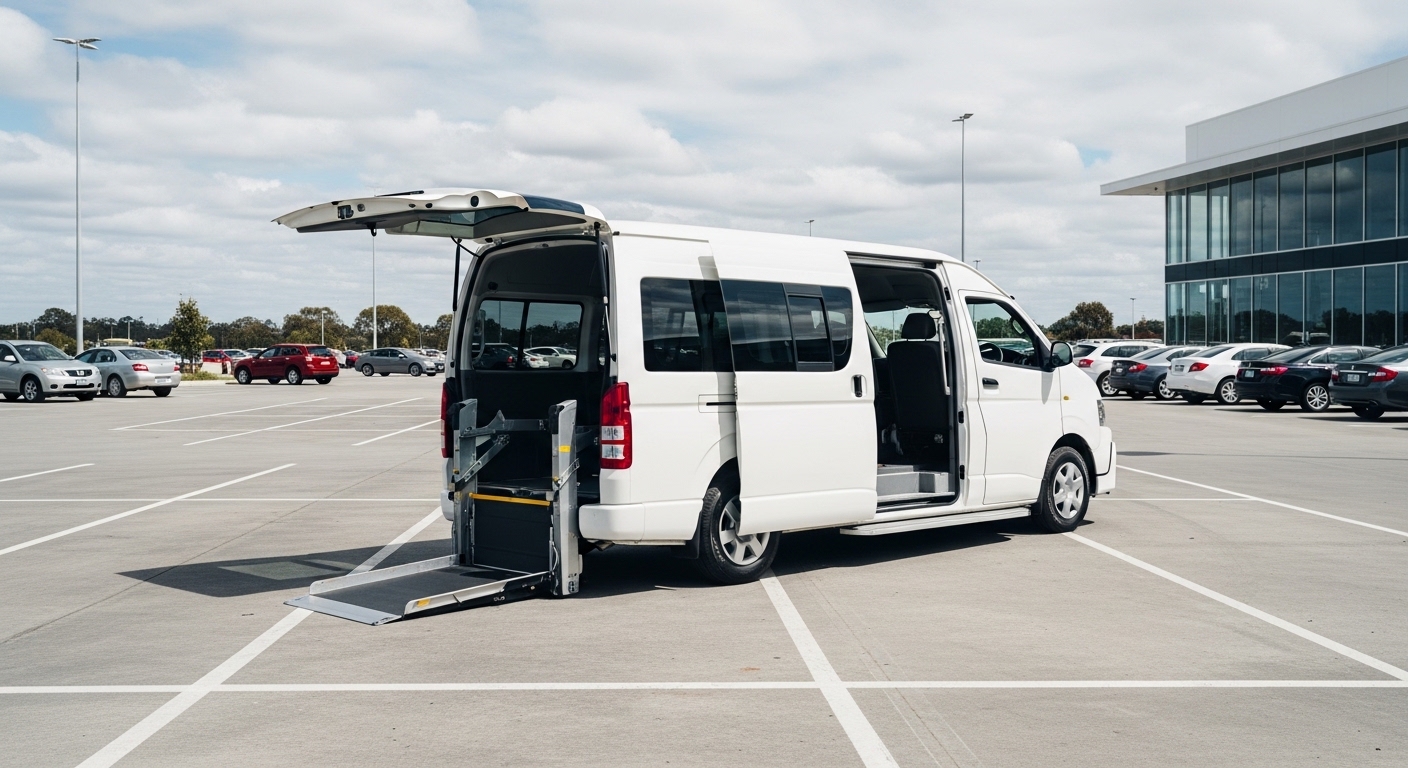
Toyota's Welcab — a factory-built accessible van fitted from new with a side-entry ramp or internal lift — is available to import under the TRH200 code, covering build dates from approximately 2004 to February 2025. It's the established code for a factory-accessibility HiAce import, and low-kilometre examples are harder to source than standard vans, which pushes the price up.
White accessible van in a parking lot with rear lift lowered and side door open White wheelchair-accessible van parked with rear lift down in a large car park
Who this path suits
This suits families and organisations supporting someone with mobility needs who still want the size and durability of a HiAce. It's a natural fit for community transport that needs a wheelchair position alongside multiple passenger seats. It's the wrong path if you only need passenger or camper capacity, because the accessible configuration is purpose-built and carries a price premium for it.
TRH200 Welcab: the anchor code
The TRH200 Welcab is the accessible HiAce most buyers should start with, covering build dates from roughly 2004 to Feb 2025. In Welcab form it carries a factory-fitted wheelchair access installation — a side-entry ramp or internal lift — alongside various factory seat configurations. It accepts 1TR-FE or 2TR-FE petrol and 1KD-FTV or 1GD-FTV diesel engines. The live landed estimate sits at around $39,792 — check the current listing as figures move with auction conditions.
The hard rule to watch: on the 1TR-FE petrol or 1GD-FTV diesel, the odometer must sit under 80,000 km under the relevant approval. This limit is confirmed on the TRH200 importing page. Low-kilometre accessible examples are harder to source, which is why they cost more at auction.
Exactly how the accessible body is grouped on the register can differ from the generic listing. Treat "Welcab" as a body configuration to confirm per code rather than a guaranteed separate criterion. As a concrete accessible example, this 2013 used Toyota HiAce stock KDH206K Welcab is a 4WD 1KD-FTV diesel with 127,334 km and a factory wheelchair-access installation.
2013 Toyota HiAce — KDH206K VAN WELCAB 4WD — used car available in Australia 2013 Toyota HiAce — KDH206K VAN WELCAB 4WD
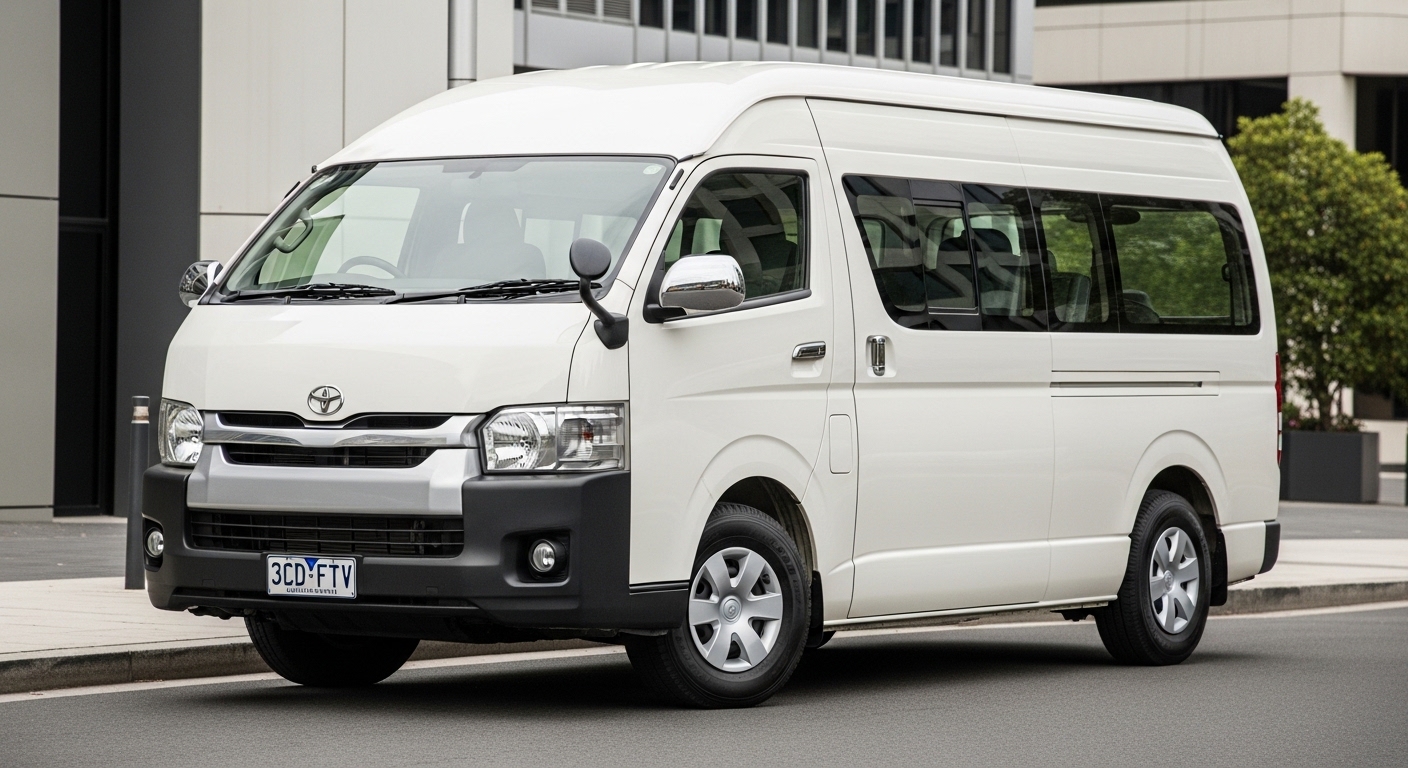
Because it runs the 1KD-FTV diesel rather than a 1TR-FE or 1GD-FTV, the sub-80,000 km odometer limit doesn't apply to this engine. That's why a 127,334 km reading is workable here. As with any accessible variant, confirm the exact code's eligibility on the register before you commit.
What Conditions Most Often Disqualify an Auction Car?
Most failed HiAce imports fail for one of six reasons, and every one of them is visible before you bid if you know where to look. Auction sheets in Japan rarely flag these points, so the checklist below is what separates a clean import from a costly rejection at the compliance workshop.
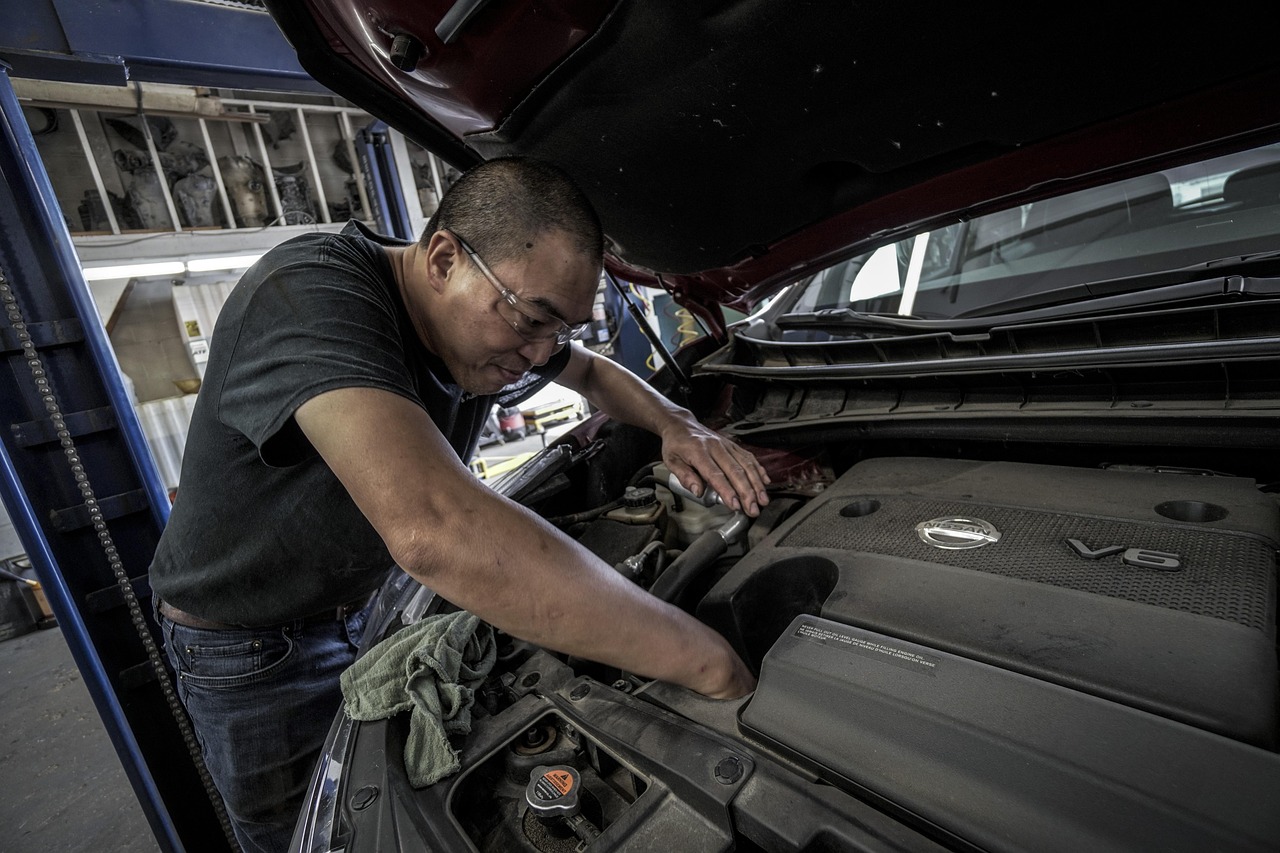
Mechanic leaning over an open Nissan engine bay inside an auto repair workshop A mechanic inspects a car engine under the hood in a workshop.
- Seating that doesn't match "as originally manufactured." An added row, a removed row or any reconfiguration that deviates from the approved seat count fails the passenger path. The auction sheet seat count has to match the approved layout.
- A missing camper fit-out on codes that require one at import. Codes like GDH206 and TRH224 can't come in as empty vans for later conversion. Verify the fit-out condition per code before bidding.
- Over 80,000 km on a 1TR-FE or 1GD-FTV engine. This limit is confirmed on the TRH200 and applies to certain GDH approvals too. There are no documented exceptions, and low-kilometre examples cost more.
- A 2WD van where the approval requires 4WD. The GDH206 approval is a 4WD approval. A 2WD unit of the same nameplate is ineligible under it, even if it looks identical.
- A build year outside the approved window. The KDH220 window runs 2004 to 2014, so a 2016 KDH220 does not qualify.
- A full code that isn't on any active approval. Even with "HiAce" on the badge, if the exact code, KDH206 versus KDH206K for instance, isn't on a live Model Report Entry, it will not clear.
Pick Your Path: Which Code Is Right for You?
Here's the fast way to narrow it down. Match your intended use to a starting code, then check the live listing for the current landed estimate before you plan a budget.
| Goal | Best starting code | Why | Approx. landed |
|---|---|---|---|
| Cheapest people mover (up to 9 seats) | KDH220 | 2WD diesel, 2004–2014, lowest entry | From around $18,966 |
| Wider or newer passenger van | KDH211 or KDH221 | Broader coverage, later stock window | From around $29,656–$31,258 |
| Cheapest campervan base (2WD) | KDH201 | Wide approval coverage, proven diesel | From around $21,082 |
| Best 4WD tourer | TRH201 or GDH206 | 4WD/AWD, modern diesel for range | TRH201 price on enquiry; GDH206 from around $52,543+ |
| Accessible / Welcab | TRH200 Welcab | The go-to accessible HiAce code | Around $39,792 |
Prices are estimates based on recent auction data and move with market conditions. Check the live page for current figures.
So, where do you land? If you need a reliable nine-seat shuttle, start with the KDH220 or step up to the KDH211. If you're building a motorhome, the KDH201 gives you diesel reliability at the lowest entry. The GDH206 makes sense when 4WD and a modern diesel matter more than price — and you're sourcing a pre-fitted unit. If accessibility is the priority, the TRH200 Welcab is your anchor code. And if you just want the cheapest way into a long-wheelbase petrol camper project, a Japan-sourced TRH200V is the budget door in.
How Does Carbarn Source HiAce Imports?
Getting the code right before the hammer falls is the whole game, and it's where an experienced importer earns its keep. Carbarn is a Lidcombe, Sydney-based importer specialising in Japanese-market vehicles. Before any bid is placed it verifies the full model code against the SEVS register and the active approvals — which is exactly how compliance failures get caught before they cost you anything.
Night view of loaded container ships beside a port with stacked containers and cranes Loaded container ships line a port at night under bright terminal lights
The service runs end to end. A Japanese inspector checks vehicle condition before bidding, with photos and notes shared before any approved bid. From there it covers VIA (Vehicle Import Approval) clearance, international shipping, workshop compliance, AVV (Approved Vehicle Verifier) inspection and RAV (Register of Approved Vehicles) entry, with transparent shipping and compliance invoices along the way. The full process typically takes 6 to 10 weeks from auction to a delivery-ready van in Sydney. Compliance costs sit at approximately $1,980, covering the compliance work, AVV inspection, RAV entry and VIA approval (how importing works, 2026).
Two easy next steps: browse the full list of eligible HiAce variants and current landed estimates to see where your chosen code sits. Or start your HiAce import enquiry to discuss sourcing around your budget, year range and configuration.