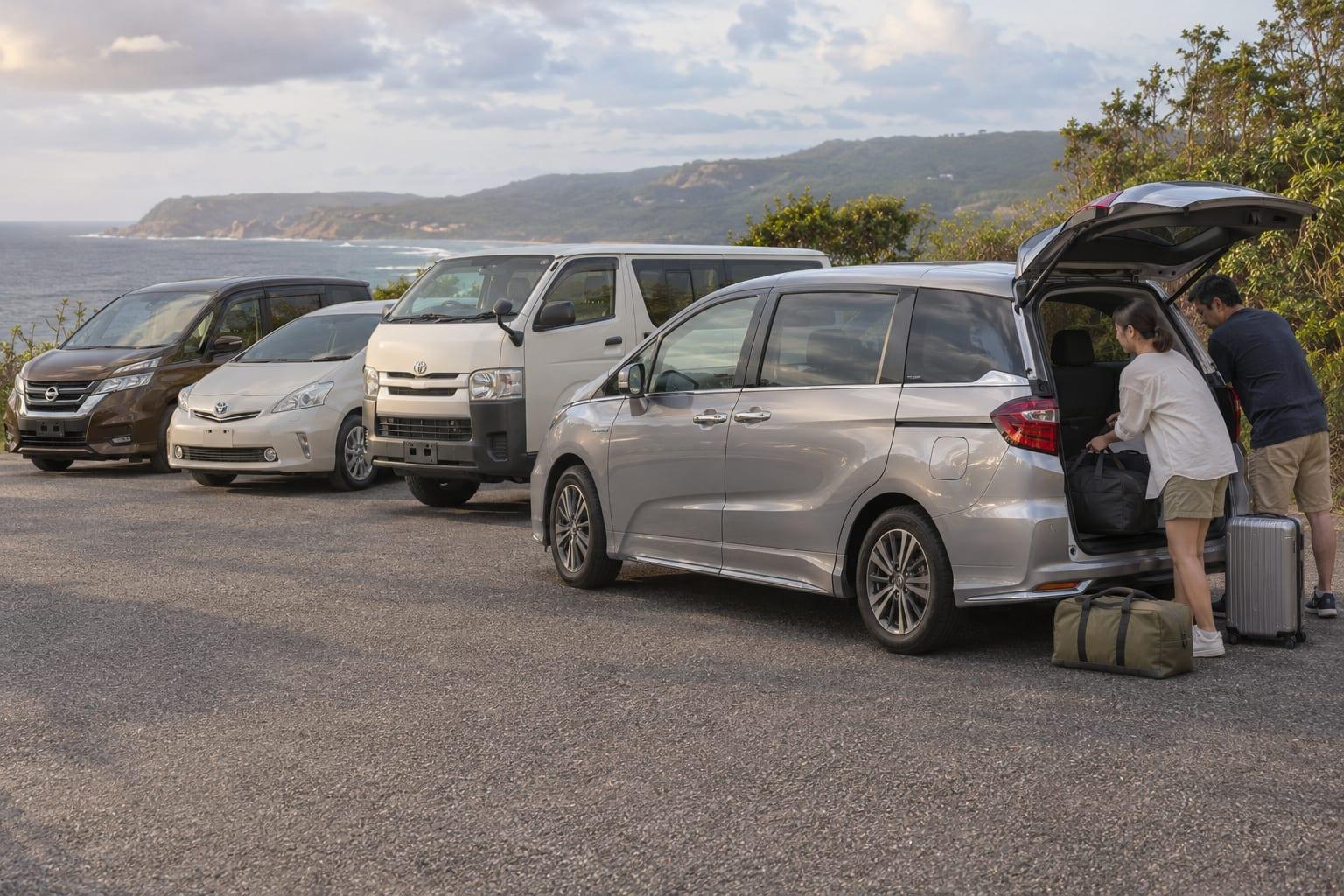
Ready to Hit the Road in Style?
Save money and reduce emissions with vehicles designed to deliver exceptional mileage. Visit our inventory and find a car that fits your lifestyle.
Ready to Hit the Road in Style?
Save money and reduce emissions with vehicles designed to deliver exceptional mileage. Visit our inventory and find a car that fits your lifestyle.
You've booked the house up north, the kids are counting down, and now you're staring at the family car wondering if it's up to eight hours on the Pacific Highway. A big, thirsty SUV isn't the only answer.
This guide compares four used cars that suit a long summer drive: two hybrid people-movers, a long-bodied hybrid Prius and a 4WD Hiace van. You'll see how they stack up on seats, luggage room, highway comfort and fuel use, then a worked fuel bill for a Sydney to Byron Bay return trip. The NSW Government's school holidays page puts the eastern division summer break at 18 December 2026 to 27 January 2027, so there's time to sort the car before the first long weekend of it.
Quick Answer
- Families of five to eight with luggage: the 2021 Nissan Serena hybrid, with the 2020 Honda Odyssey hybrid as the lower-roof seven-seat alternative.
- Smallest and cheapest-to-buy option for two to four people: the 2016 Toyota Prius Alpha, with the Odyssey showing the lowest fuel figure of the four.
- Bulk luggage, surfboards and gravel roads: the 2012 Toyota Hiace 4WD diesel.
- The fuel bill section works each car's litres from its listing figure and the return distance, then prices them at the NRMA's dated Sydney average and two inputs you can change.
What makes a good road-trip car?
A good road-trip car carries everyone and their bags without a fight, rides calmly at highway speed, and goes a long way between servo stops.
Range matters too. A long tank and a low fuel figure mean fewer stops with tired kids. Treat the fuel figure on a listing as a comparison tool rather than a promise. Our guide to real-world versus claimed fuel economy explains why the gap exists, including the Australian Automobile Association's February 2026 finding that 76 per cent of tested cars used more fuel than their label. If you'd rather sleep in the car, see our campervan buyer's guide instead.
How do the four cars compare?
The four picks split cleanly by job. Two are hybrid people-movers for families, one is a long-bodied hybrid for couples and small families, and one is a diesel van for people who carry a lot. Every figure below comes from each car's own listing record, and the fuel figures carry no stated test cycle, so compare them against each other rather than against a windscreen label.
| Car | Seats | Fuel | Listing fuel use (test cycle not stated) | Length × height | Tank | Luggage note | Suits |
|---|---|---|---|---|---|---|---|
| 2021 Nissan Serena Highway Star V | 8 | Hybrid | 5.8 L/100km | 4,770 × 1,860 mm | 55 L | Three rows, boot shrinks with all eight seats in use | Families of five to eight |
| 2020 Honda Odyssey Absolute EX | 7 | Petrol hybrid | 3.9 L/100km | 4,840 × 1,680 mm | 55 L | Three rows, lower roof than the Serena | Families of up to seven with a low garage |
| 2016 Toyota Prius Alpha S | 5 | Hybrid | 4.8 L/100km | 4,660 × 1,570 mm | 45 L | Longer body than a Prius hatch, two rows only | Two to four people |
| 2012 Toyota Hiace 4WD High Roof | 5 | Diesel | 9.2 L/100km | 4,690 × 2,230 mm | 70 L | Huge load area behind the seats | Bulk gear, rougher roads |
Nissan Serena: the eight-seat family pick
The Nissan Serena is the sensible answer for a family of five to eight who want everyone in one car with the bags still inside. This 2021 Serena Highway Star V is a hybrid people-mover with eight seats, dual power sliding doors and Pro-Pilot Assist, which eases the strain of long highway stretches. Its listing shows 49,536 km.
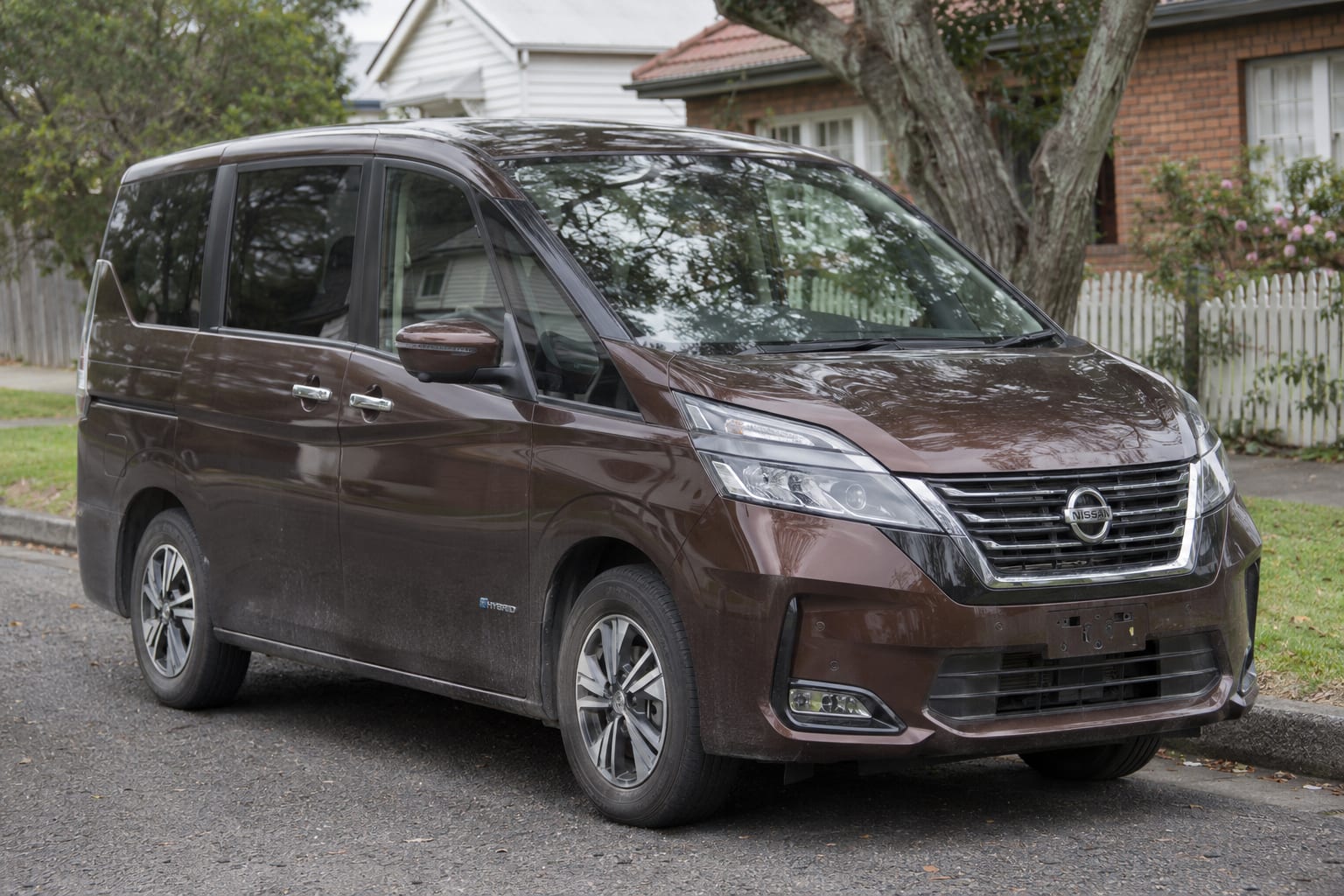 Illustration: Nissan Serena
The listing record gives a 2.0-litre hybrid drivetrain, front-wheel drive and an automatic transmission, with a combined fuel figure of 5.8 L/100km (test cycle not stated). It measures 4,770 mm long, 1,740 mm wide and 1,860 mm tall, and carries 55 litres of fuel.
Two honest trade-offs. The 1,860 mm height is fine on the road but worth measuring against your garage door and the clearance bar at your apartment car park. And eight seats in a 4,770 mm body means the third row and the boot share space. With all eight seats up you'll be packing soft bags and a roof pod, not hard suitcases. If you usually travel as five or six, fold part of the third row and the problem disappears.
Honda Odyssey: the lower-roof seven-seater
The 2020 Honda Odyssey Hybrid Absolute EX is the people-mover for families who want three rows without the tall-box feel. It sits 180 mm lower than the Serena, which helps with garages, car parks and crosswinds on the highway. The listing shows 48,000 km, seven seats, dual electric sliding doors, half-leather seats and Honda Sensing driver assistance.
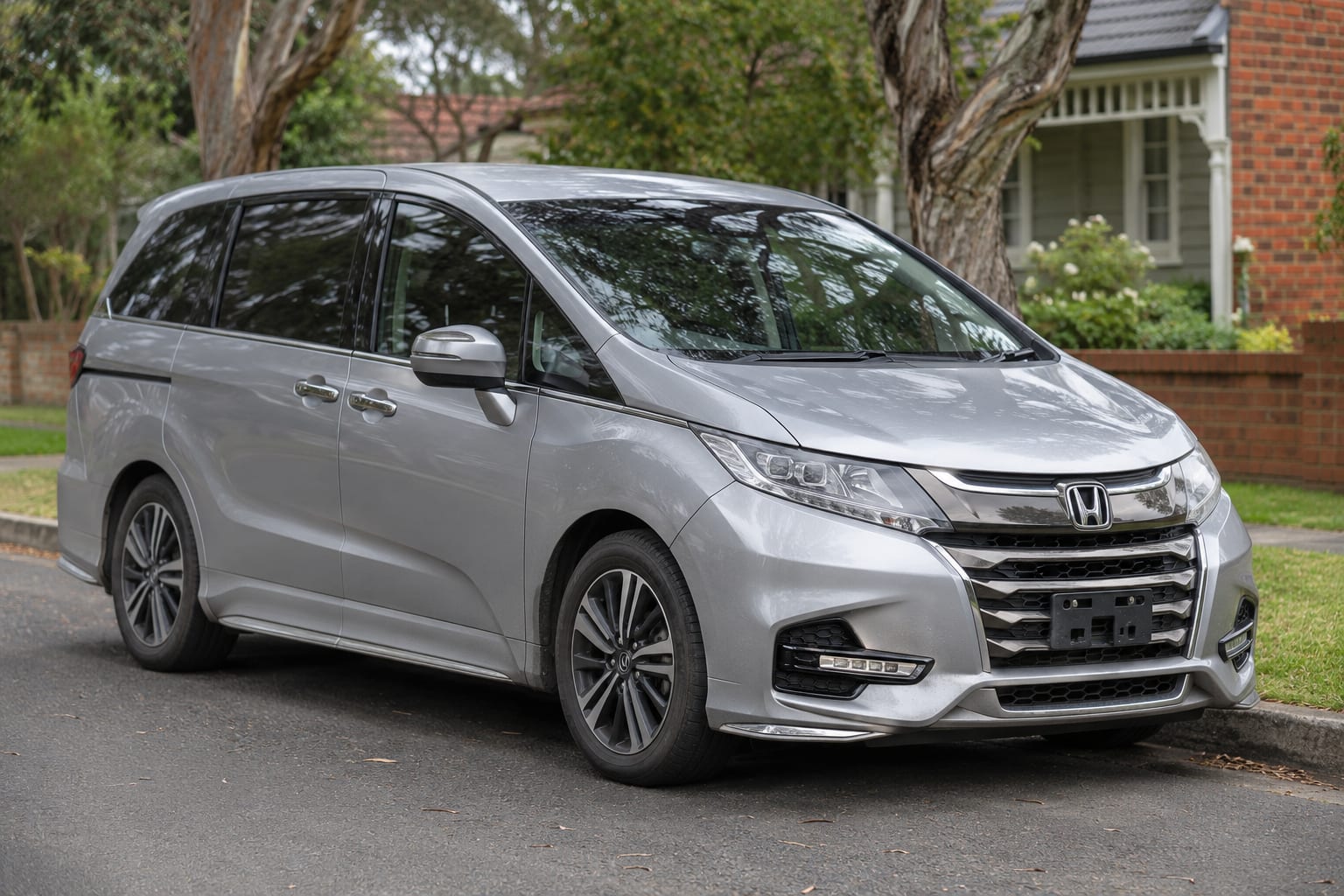 Illustration: Honda Odyssey
The listing record shows a 2.0-litre petrol hybrid drivetrain, labelled Petrol(HV), with front-wheel drive and an automatic transmission. Its combined fuel figure is 3.9 L/100km (test cycle not stated), the lowest of the four cars here. It measures 4,840 mm long, 1,820 mm wide and 1,680 mm tall, with a 55-litre tank.
Who should skip it? Anyone who genuinely needs eight seats, or who wants three child seats across a bench in the middle row. For a family of four or five who want comfort first and the odd extra passenger, it makes a lot of sense.
Toyota Prius Alpha: the compact pick for two to four people
The Toyota Prius is the obvious pick when two to four people want a compact, low-fuel drive north. This 2016 Toyota Prius Alpha S Hybrid is the longer-bodied Prius. The listing describes it as a five-seat hatchback with 86,501 km, cruise control, lane departure warning and front collision warning.
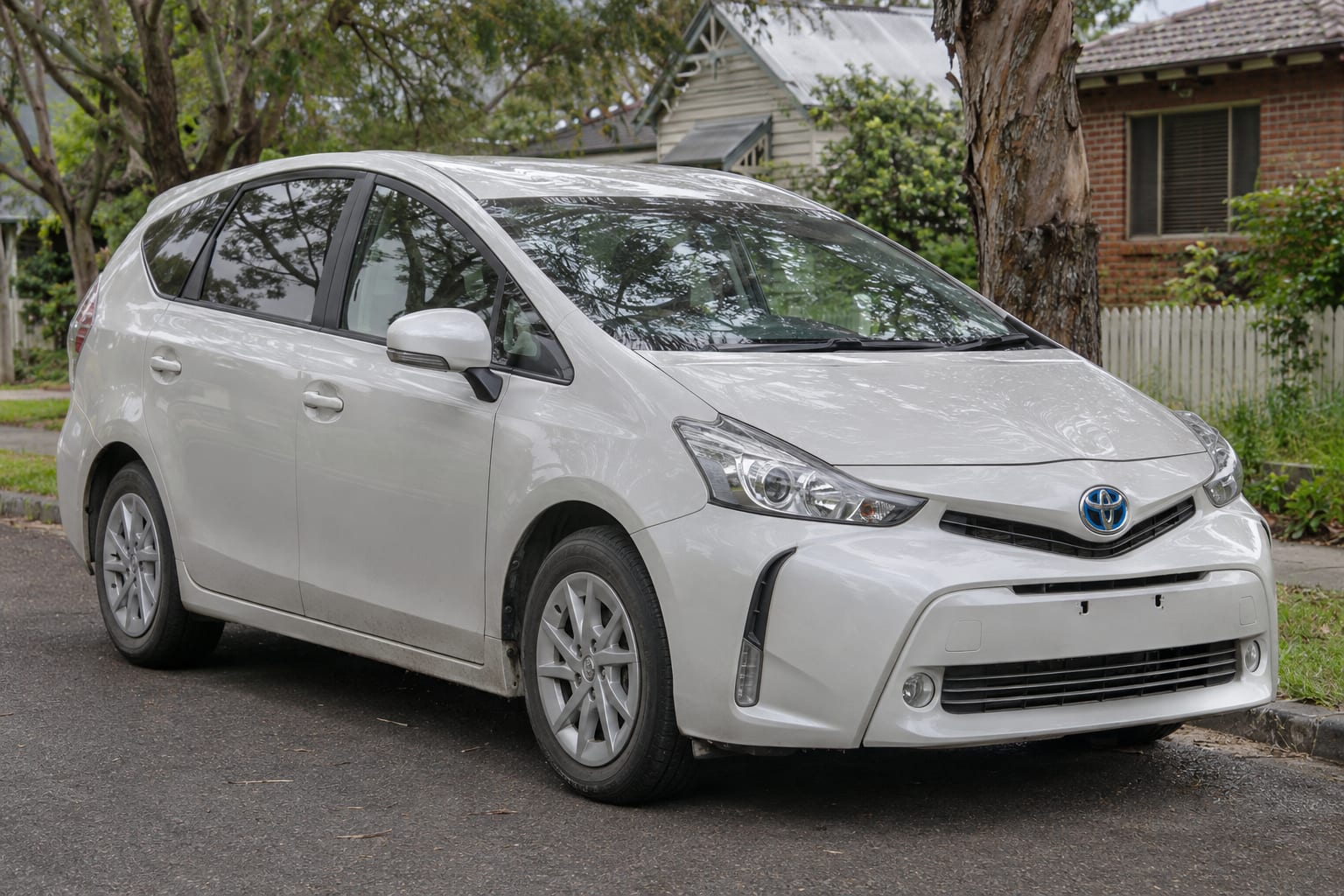 Illustration: Toyota Prius
The listing record shows a 1.8-litre hybrid drivetrain, front-wheel drive and an automatic transmission, with a combined fuel figure of 4.8 L/100km (test cycle not stated). It measures 4,660 mm long, 1,770 mm wide and 1,570 mm tall and has a 45-litre tank.
The catch is room. Five adults with a week of luggage will not enjoy this car. The Prius Alpha has two rows, not three, and no sliding doors. The listing gives no boot figure, so check it with your own bags at inspection. If you're weighing a standard Prius hatch instead, our Prius generations guide covers the differences.
Toyota Hiace 4WD: when bulk luggage matters more than economy
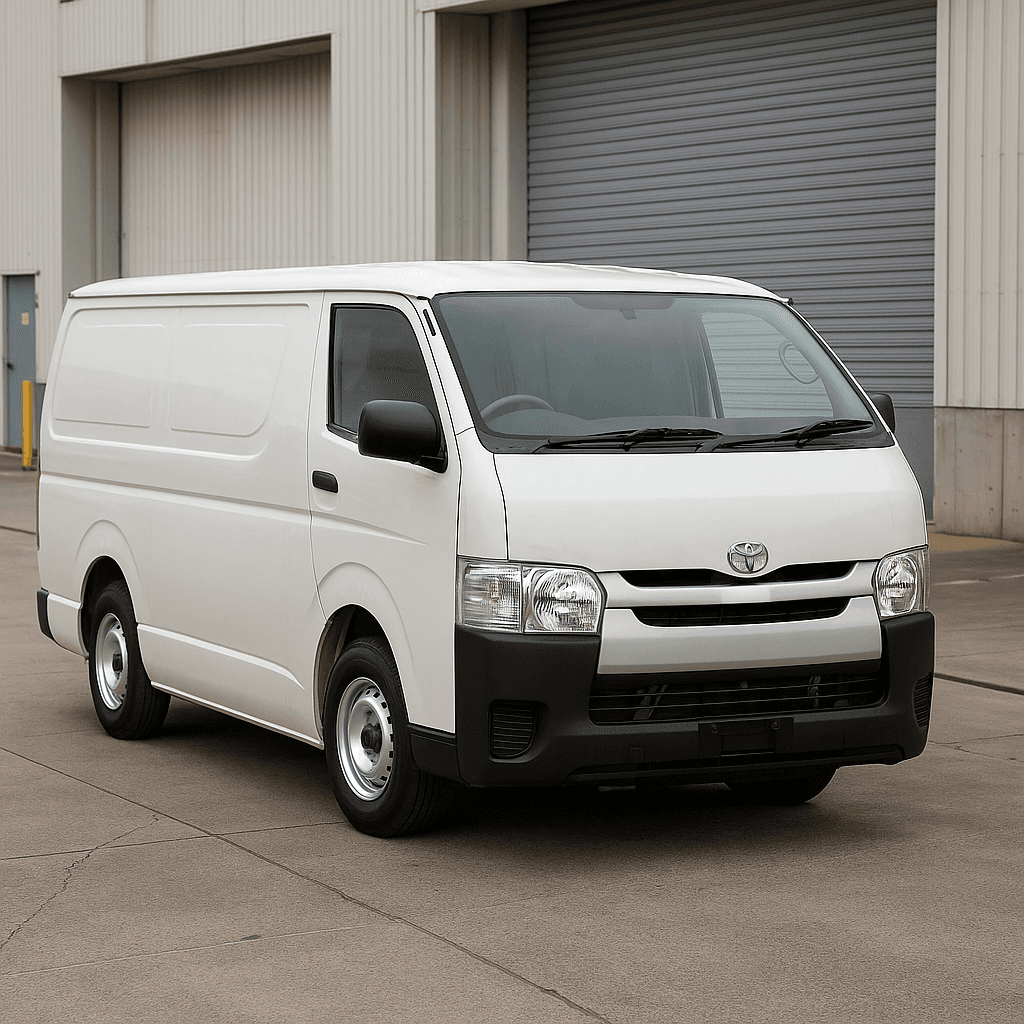
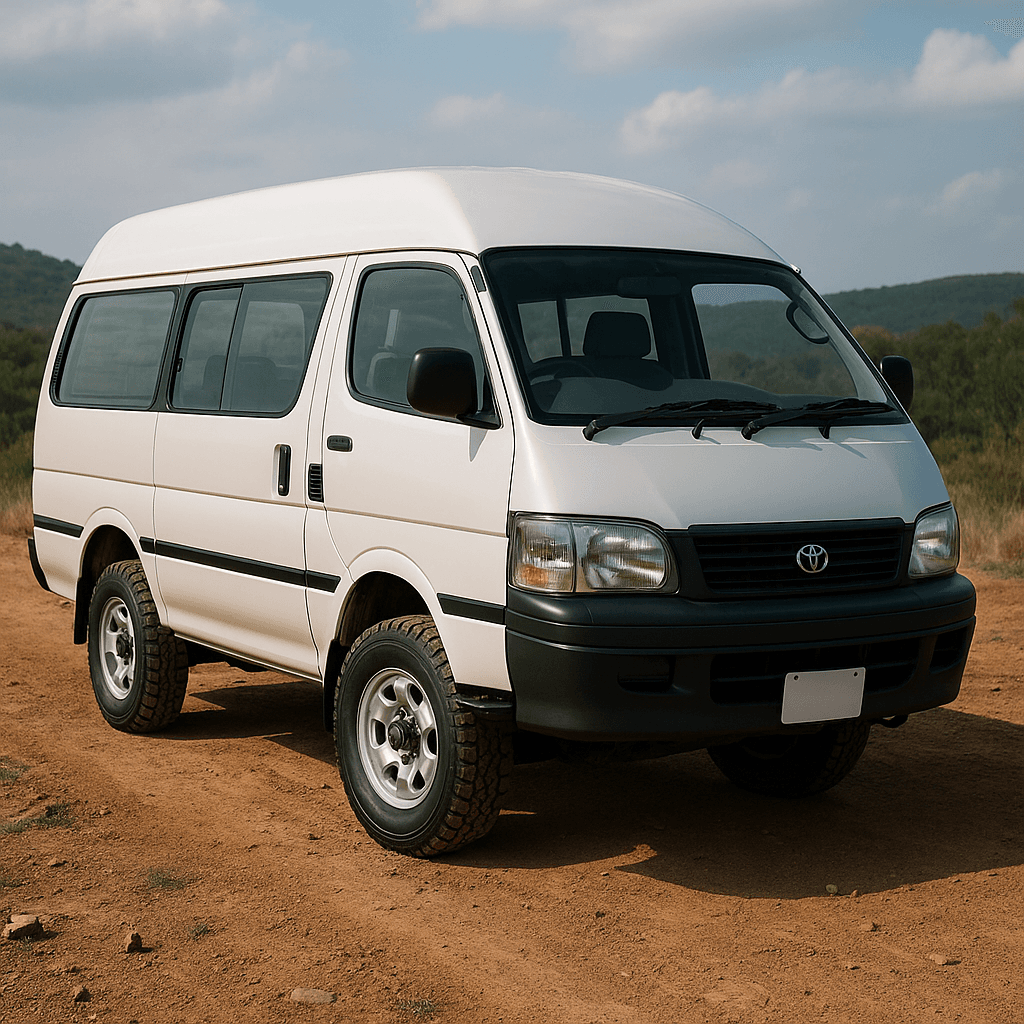
The Toyota Hiace 4WD is the pick when the gear is the problem, not the headcount. This 2012 Toyota Hiace 4WD High Roof Diesel seats five and leaves an enormous load area behind them for surfboards, bikes, camping gear and the family dog. The listing shows 103,480 km and a long wheelbase. Four-wheel drive earns its keep on gravel access roads and wet campsite tracks, not on the Pacific Highway itself.
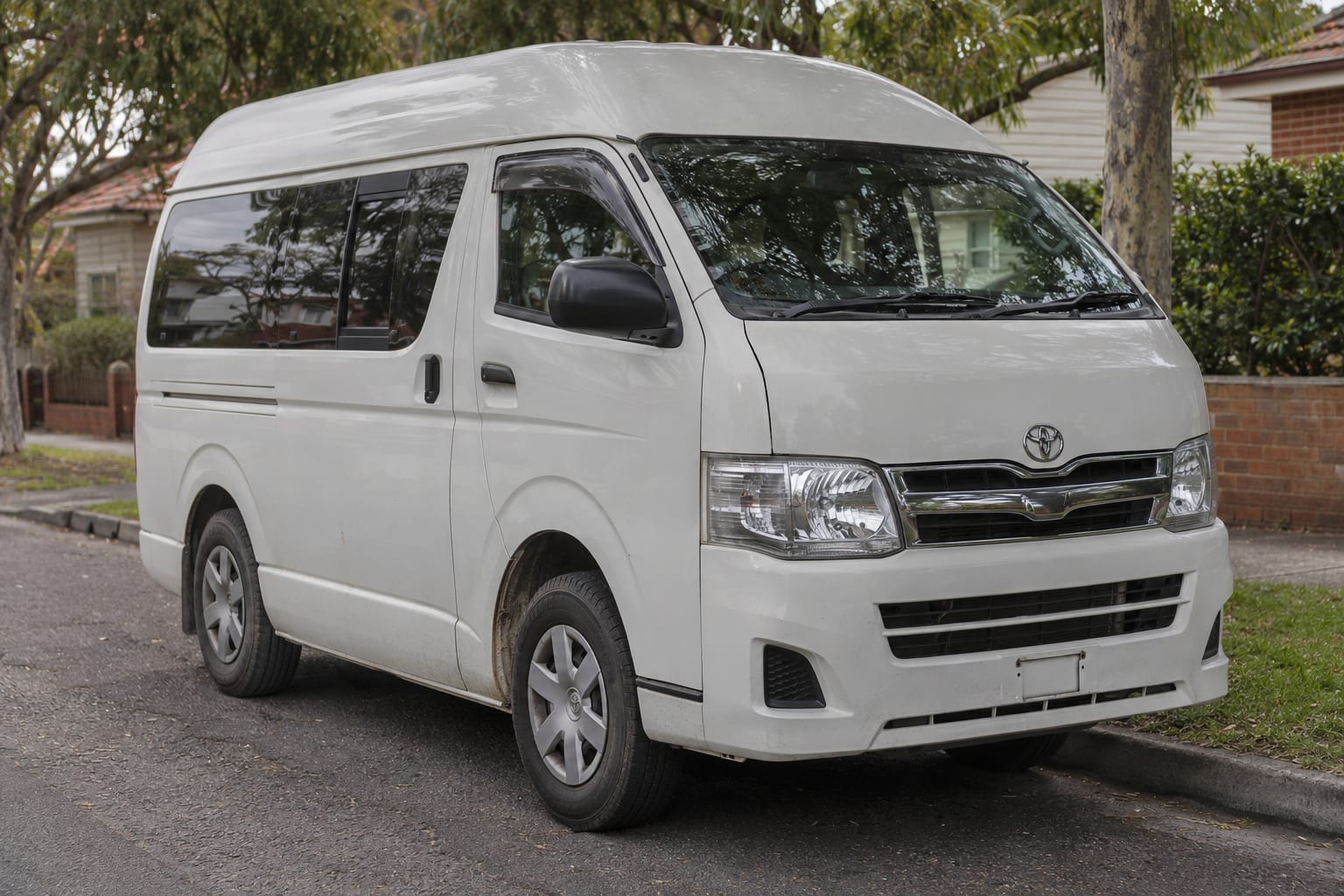 Illustration: Toyota Hiace 4WD
The listing record shows a 3.0-litre diesel engine making 100 kW and 300 Nm, with four-wheel drive and an automatic transmission. Its combined fuel figure is 9.2 L/100km (test cycle not stated), and the tank holds 70 litres. The van measures 4,690 mm long, 1,690 mm wide and 2,230 mm tall.
Be clear-eyed about the trade-offs. At 9.2 L/100km it uses well over double the fuel of the Odyssey, and diesel costs more per litre than unleaded. The ride is firmer than a people-mover, and the 2,230 mm roof rules out most underground car parks and many home garages. For a family of five with a boat trailer or a mountain of gear, it's a strong option. For a family who just needs seats, it isn't.
What should you check before a long drive?
Check five things a week before you leave: tyres, fluids, brakes, battery and air conditioning. Start with tyres and the spare, then fluids, a brake test, the battery and a blast of the aircon on a hot afternoon.
If you're buying a used car for the trip, add two checks. On a hybrid, confirm there are no hybrid system warning lights and feel for a smooth hand-over between electric and petrol drive on a slow test loop. On any car, read the service history and ask about anything missing. Our full guide on how to prepare your car for a road trip covers what you can do yourself, what needs a mechanic, and when not to go.
What does the fuel bill look like from Sydney to Byron Bay and back?
The fuel bill is simple arithmetic: return distance × litres per 100 km ÷ 100 gives litres used, and litres × price per litre gives dollars. Australian Traveller's Sydney to Byron Bay road trip guide puts the coastal drive at 766 km one way, and Destination NSW calls it just over eight hours. This working rounds that to 770 km each way, or 1,540 km return.
For prices, the NRMA Weekly Fuel Report for Monday 16 November 2026 put Sydney's average regular unleaded at 213.8 cents per litre and diesel at 265.2 cents per litre. The 200 and 240 cents per litre columns are inputs you can swap for the servo board price.
| Car | Fuel | Listing figure | Litres for 1,540 km | At NRMA 16 Nov 2026 Sydney average | At 200 c/L | At 240 c/L |
|---|---|---|---|---|---|---|
| 2020 Honda Odyssey | Unleaded | 3.9 L/100km | 60.1 L | $128 (at 213.8 c/L) | $120 | $144 |
| 2016 Toyota Prius Alpha | Unleaded | 4.8 L/100km | 73.9 L | $158 (at 213.8 c/L) | $148 | $177 |
| 2021 Nissan Serena | Unleaded | 5.8 L/100km | 89.3 L | $191 (at 213.8 c/L) | $179 | $214 |
| 2012 Toyota Hiace 4WD | Diesel | 9.2 L/100km | 141.7 L | $376 (at 265.2 c/L) | $283 | $340 |
Take the Serena as the worked example. 5.8 L/100km over 1,540 km is 89.3 litres, and 89.3 litres at $2.138 a litre is about $191. That is a calculation from stated inputs, not a forecast. Each fuel figure is the combined figure on the car's listing with no test cycle stated, so real use on a loaded highway run will be higher for every car here.
The pattern is what matters. An eight-seat hybrid people-mover costs about half as much to fuel for the trip as the diesel van, and the seven-seat Odyssey hybrid works out cheaper than the five-seat Prius Alpha on these figures.
Which car suits which trip?
If you're taking eight people, or six people and a week of luggage, the Serena is probably the best fit. Skip it if your garage or car park sits under 1,860 mm.
If you want three rows but a lower, more car-like drive, the Odyssey makes a lot of sense. Skip it if you need eight seats or three child seats across one row.
If there are two to four of you and you want the smallest car here, the Prius Alpha is the easy recommendation. If the fuel bill matters most, the Odyssey's lower listing figure is worth a look. Skip it if five adults and hard suitcases are coming.
If the gear is the problem, with boards, bikes or camping kit, the Hiace 4WD is the strong option. Skip it if you only need seats, because you'll pay for space you don't use every time you fill up.
Where can you look at these cars?
Carbarn is a licensed NSW motor dealer (AYANUK PTY LTD, Motor Dealer Licence MD056471) based in Lidcombe, Sydney. The Serena, Prius Alpha and Hiace 4WD in this guide are available locally. The Odyssey is a Japan-sourced vehicle available to order. Start with our used people-movers page for locally available family cars. If the exact configuration you want isn't listed, Japan-sourced vehicles are available to order through our import service, with compliance handled in-house and timelines that vary from car to car.