



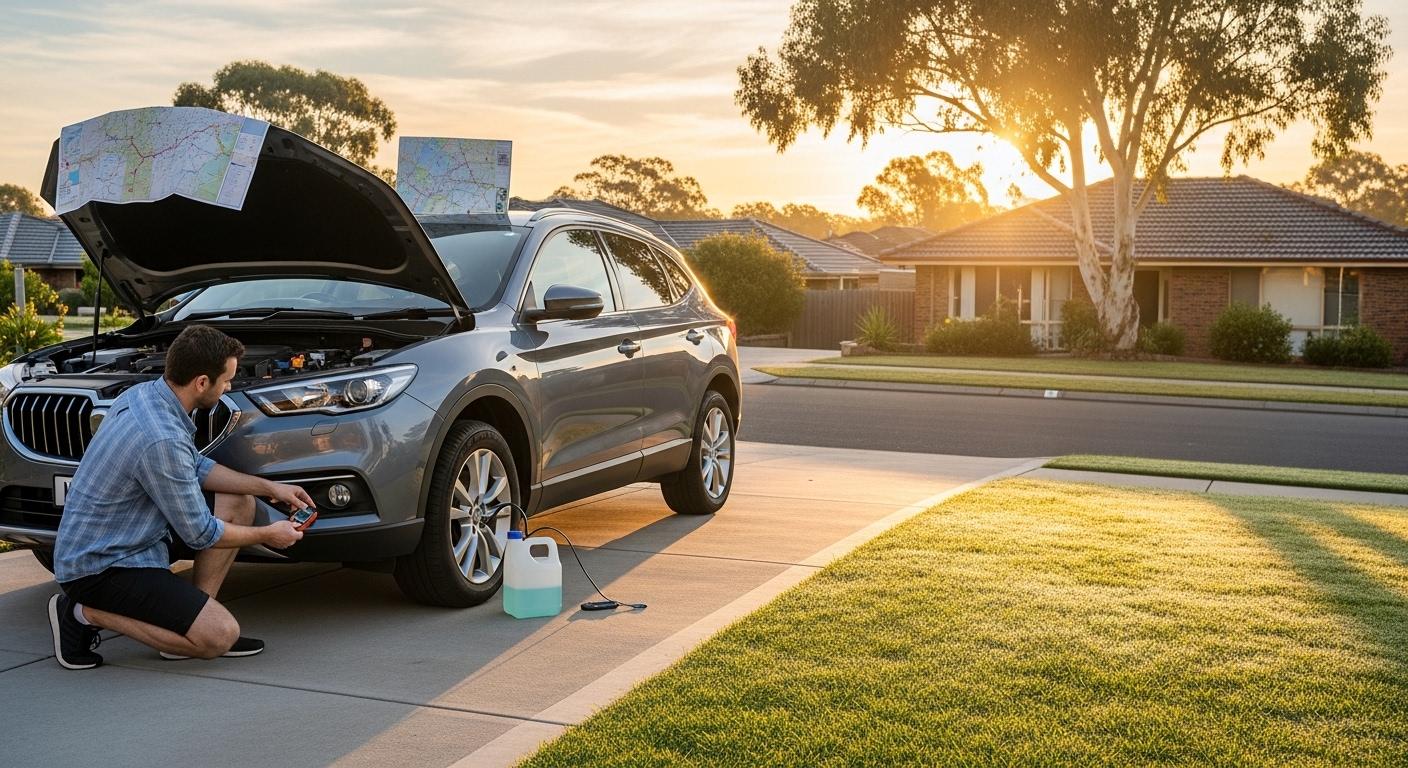
Ready to Hit the Road in Style?
Save money and reduce emissions with vehicles designed to deliver exceptional mileage. Visit our inventory and find a car that fits your lifestyle.
Ready to Hit the Road in Style?
Save money and reduce emissions with vehicles designed to deliver exceptional mileage. Visit our inventory and find a car that fits your lifestyle.
Road trips ask more of your car than the usual commute, school run, or dash to the shops. A tyre that feels mostly fine around town can become a real problem on the highway. A weak battery can still start the car in your driveway, then give up after a lunch stop three hours from home.
Plenty of Australians travel in older cars, and plenty of those trips go perfectly well. The key is preparation. This guide covers what you can check yourself, what deserves a mechanic, and when your current car simply isn’t the right one for the trip.
Quick Answer
- Check tread across all four tyres, and don’t forget the spare.
- Check oil, coolant, brake fluid and washer fluid a few days early.
- RACV attended 275,760 battery callouts in Victoria in 2025.
- Plan fuel, breaks every 2 hours, and no more than 8-10 driving hours a day.
[UNIQUE INSIGHT] Quick pre-trip scorecard
Status What it means Green Tyres, fluids, battery, lights and brakes all check out. Safe to monitor and go. Amber Service overdue, battery weak, wipers old, or slight vibration. Book a mechanic before you leave. Red Warning lights, leaks, overheating history, damaged tyres, or poor braking. Don’t risk the drive.
What should you check a week before your road trip?
A week out is the right time to do your main checks. It gives you time to fix tyres, batteries or leaks without last-minute stress, and it helps you spot problems while there’s still time to book a mechanic.
Start with the basics: service history, dashboard warning lights, and whether anything has changed recently. Has the steering started pulling? Has a new smell appeared after a drive? Are you seeing fresh drips on the driveway? Small clues like that matter more than people think.
If the car has been sitting unused, give it extra attention. Batteries hate long periods of sitting. Tyres can lose pressure. Wipers harden up. Air conditioning that felt fine last summer can suddenly feel weak on a hot day. Why find that out after you’ve packed the boot?
What can you check yourself, and what needs a mechanic?
You can usually check these at home:
- tyre pressure and tread
- lights and indicators
- fluid levels
- windscreen wipers and washers
- spare tyre and tools
- obvious leaks or cracked hoses
Book a mechanic before the trip if you notice:
- warning lights
- brake vibration, squeal or grinding
- steering pull or suspension knocks
- coolant loss
- overheating history
- strong fuel or coolant smells
Tyres, spare tyre and tools for your road trip
RACQ said 70,456 motorists needed help with a flat tyre in 2023, according to RACQ, Top tips to check your car before hitting the road, 2024. That’s a solid reason to check tread, pressure and overall tyre condition before you head off.
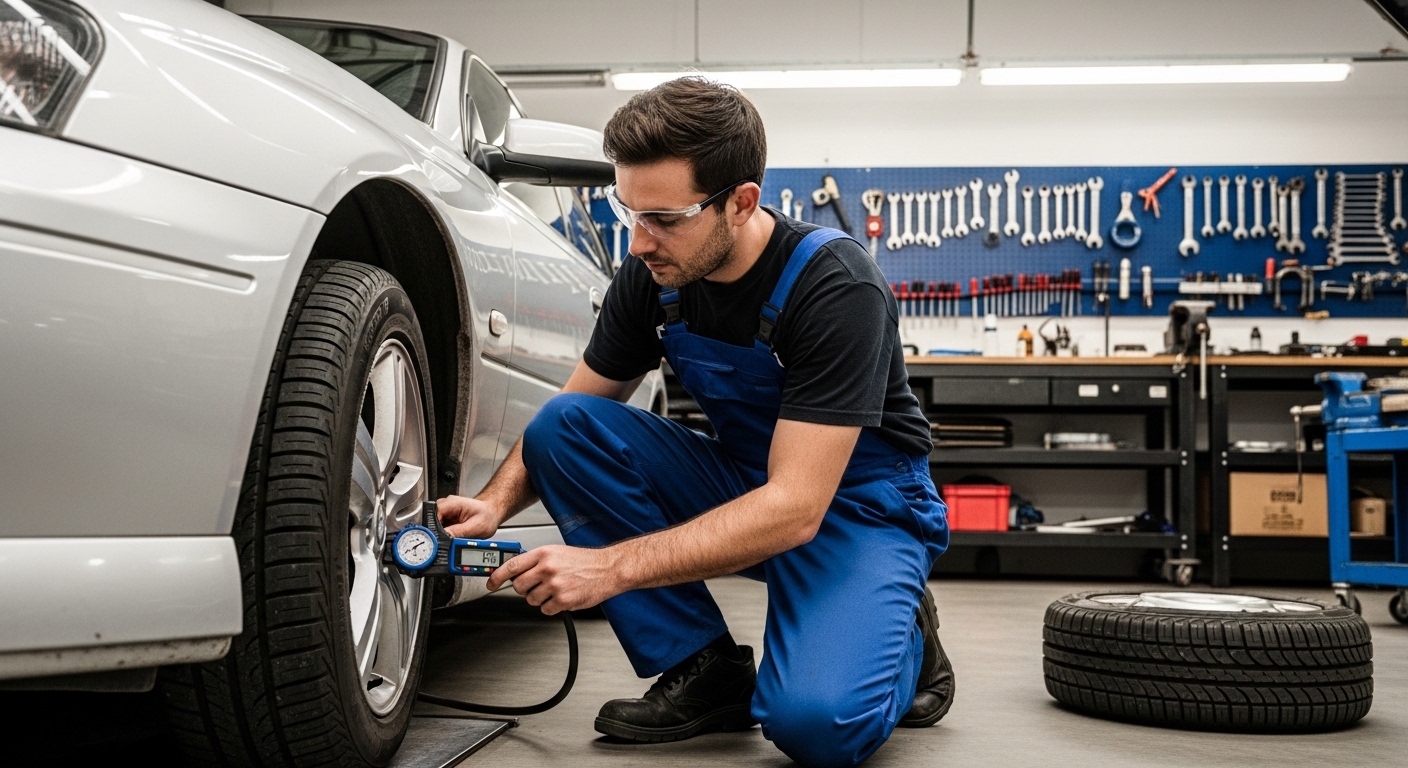 Tyres, pressure and the spare are the first road-trip checks to do.
Check tyre pressure when the tyres are cold, and use the placard or owner’s manual, not a guess. If your placard lists a heavier-load setting, use it when the car will be full of passengers and luggage. Underinflated tyres can hurt grip, fuel use and comfort.
Then inspect the tread and sidewalls properly. Look for cuts, bulges, sidewall cracks and uneven wear across the tread. If one shoulder is wearing faster, alignment may be off. If the tyre looks old and hard, don’t be fooled by tread depth alone.
Don’t stop at the four tyres on the car. Check the spare tyre’s pressure, and make sure the jack, wheel brace and locking wheel nut key are actually there. Would you trust a spare you haven’t touched in two years? Most people shouldn’t.
[CHART: Horizontal bar chart - RACQ 2023 patrol assists: battery-related issues 267,524 vs flat tyres 70,456 - Source: RACQ, "Top tips to check your car before hitting the road", 2024]
| Common roadside issue | RACQ assists |
|---|---|
| Battery-related issues | 267,524 |
| Flat tyres | 70,456 |
Which fluids and cooling checks matter most before a long drive?
In its standing long-trip guidance, the Queensland Government tells drivers to check seven core fluid and cooling items before leaving: brake, coolant, oil, clutch, automatic transmission, power steering and water, according to Queensland Government, Road safety and vehicle maintenance for long trips. That’s a good reminder that the simple under-bonnet checks still matter most.
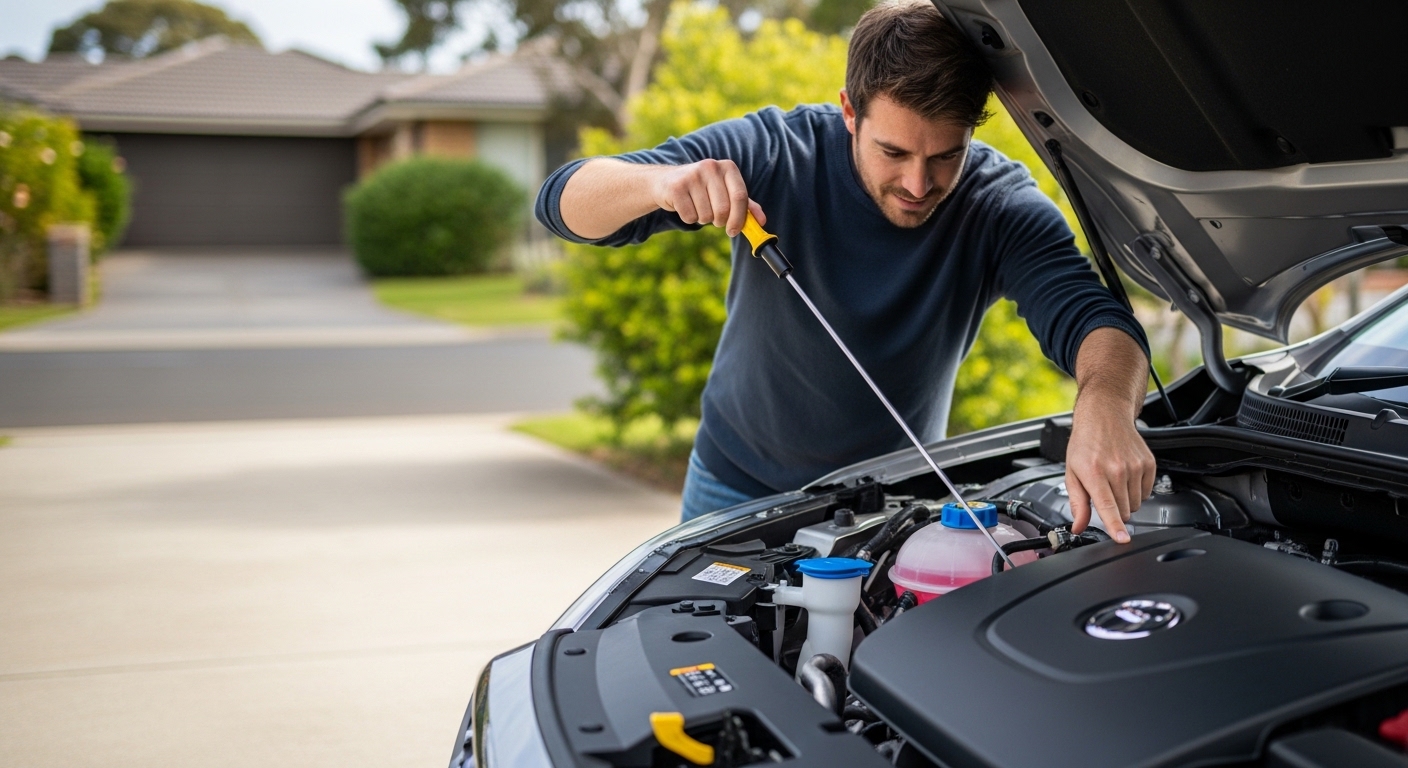 A quick under-bonnet check can catch small problems before they become a breakdown.
Check engine oil first. Make sure the level is correct and the oil doesn’t look unusually dirty or milky. Then check coolant. The level should sit where it should in the reservoir, and you shouldn’t see residue, staining or dampness around hoses.
Brake fluid matters too. If it’s low, don’t just top it up and forget about it. Brake systems don’t normally consume fluid the way washer bottles do. Low brake fluid can mean worn components or a leak. Washer fluid is simpler, but it still matters on Australian highways where bugs, dust and road grime can coat the windscreen quickly.
When is a top-up enough, and when is it a workshop job?
A top-up is usually fine for:
- washer fluid
- slightly low oil, if you know the car uses some between services
- coolant that was a touch low and shows no sign of leaking
Book a workshop if:
- coolant keeps dropping
- oil looks milky
- you smell coolant after driving
- brake fluid is low
- you spot fresh puddles or oily residue
If coolant keeps disappearing, is another top-up really the answer? Usually it isn’t.
Is your battery, braking system and lighting healthy enough?
In March 2026, RACV said it attended 275,760 battery callouts in Victoria in 2025, according to RACV, Car battery guide: how they work, when to replace them, and how to jump-start, 2026. If the battery feels weak or the brakes feel off, don’t gamble on a long drive.
Watch for slow cranking, dim lights, or electronics behaving oddly before the engine starts. Those are common early battery clues. If you know the battery is older, or the car has been doing short trips only, it’s worth having it tested before you leave.
Brakes deserve the same honesty. Squealing, grinding, steering wheel shake under braking, or a soft pedal all belong in the mechanic column. A road trip asks for repeated highway braking, long downhill control and traffic patience. That’s not the place to discover your pads are finished.
Also do a full walk-around. Check headlights, high beam, brake lights, reverse lights and indicators. Test the wipers and washers. Make sure the mirrors are clean and adjusted. Confirm the demister works, and that your phone can actually charge if you’ll rely on it for navigation.
[PERSONAL EXPERIENCE] The common trip-killers are usually boring.
Weak batteries, worn tyres, overdue servicing and ignored warning lights cause far more ruined holidays than dramatic failures. Problems that seem manageable around town often show up first on a cold start, a fuel stop, or a long highway run.
If your current car doesn’t feel ready for a long drive, it may be worth comparing used cars in Australia before you lock in the trip.
What should you pack for safety, comfort and Australian conditions?
For country or outback driving, Queensland Government guidance says to carry 4L of water per person per day, plus 20L of emergency water, and even 2 spare wheels, according to Queensland Government, Road safety and vehicle maintenance for long trips. Most trips won’t need that much, but the principle is dead right: pack for delays, not just the best-case run.
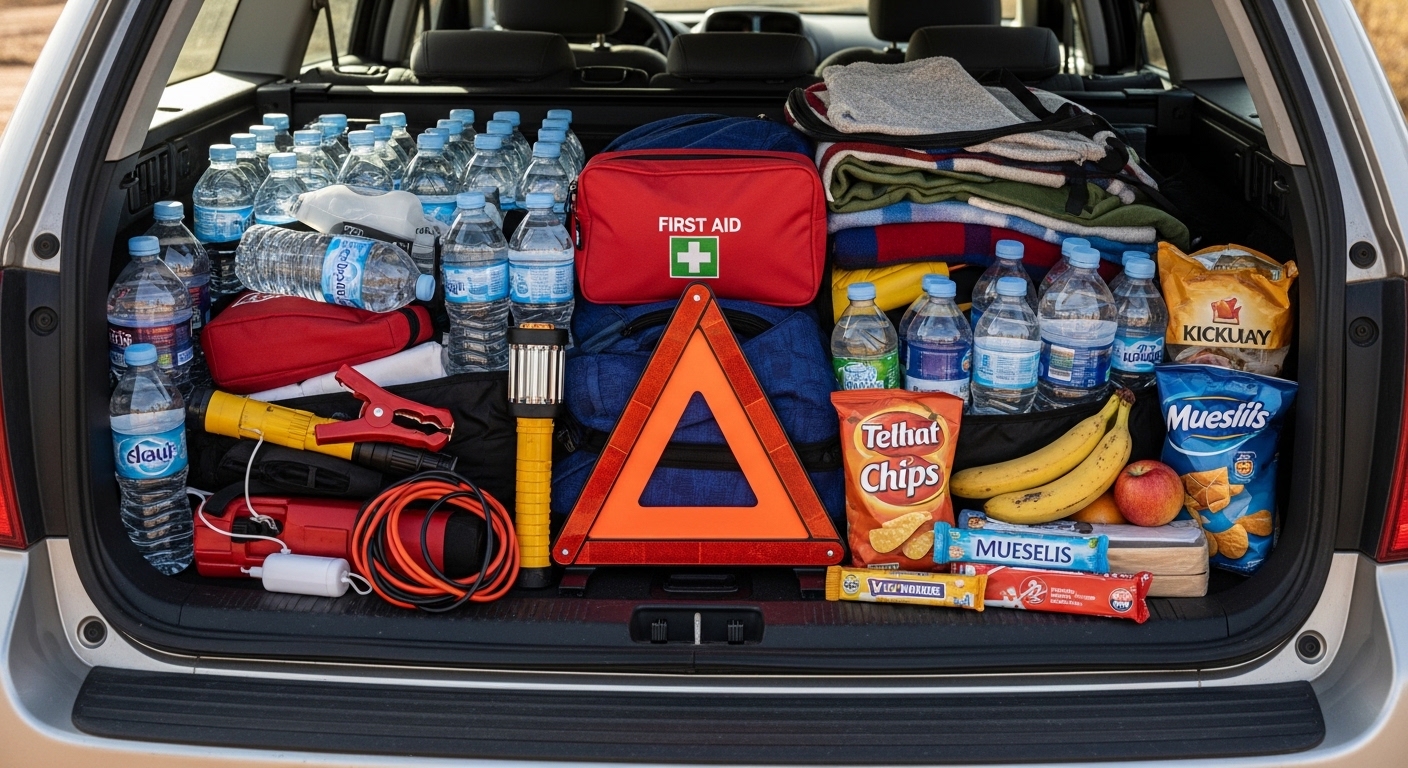 Pack for delays first, then add extra supplies if you are heading regional or remote.
For a normal highway or coastal trip, your kit should include:
- bottled water
- snacks
- first-aid kit
- phone charger and charging cable
- power bank
- torch
- jumper leads
- reflective triangle
- hi-vis vest
- blanket or picnic rug
- medications
- paper map or offline directions
If you’re heading regional or remote, step it up. Add more water, extra food, better sun protection, basic tools, and a stronger plan for poor phone coverage. Driving from Sydney to Newcastle is one thing. A long regional run in summer is another.
How should you plan fuel stops, rest breaks and the route?
Queensland Government says you should take a break every 2 hours and avoid driving more than 8-10 hours in a day, according to Queensland Government, Road safety and vehicle maintenance for long trips. That means route planning isn’t just about distance. It’s also about fatigue, fuel and realistic timing.
Map your fuel stops before you leave, especially if you’ll be driving through smaller towns, on public holidays, or outside city hours. Don’t assume the next servo will be open, easy to find, or cheaper. Leave a margin. Fuel use changes with speed, luggage, air conditioning, hills and headwinds.
Build fatigue planning into the route too. Aim for regular stops, swap drivers if you can, and avoid trying to smash out huge days just because the map says it’s possible. Why plan a perfect route if you’re too tired to drive it safely?
Check weather, road closures and local warnings before you go. Download offline directions if coverage may be patchy. If you’ll be driving at dawn or dusk, watch for wildlife. Let someone know your route and rough arrival time, especially on longer regional drives.
Do hybrid vehicles and older used cars need extra checks before a long trip?
Hybrid vehicles usually don’t need a special road-trip overhaul beyond the normal tyre, fluid, brake and battery checks. The extra checks aren’t scary, but you do need realistic expectations, especially if the car has warning lights or a weak 12V battery.
Are hybrid cars good for road trips?
Usually, yes. For many Australian drivers, a hybrid makes a lot of sense for mixed driving and holiday travel. The smart approach is to plan fuel stops conservatively, keep the 12V battery healthy, and make sure there are no warning lights before you leave.
For hybrids, pay extra attention to the 12V battery, any warning lights, and cooling airflow around the hybrid system. If your car has a battery cooling intake inside the cabin, don’t block it with bags or blankets. If something feels off, get it checked before the trip.
Toyota also says many hybrids purchased after 1 January 2019 have 5 years of hybrid battery cover with unlimited kilometres, extendable by another 5 years through annual Hybrid Health Checks, according to Toyota Australia, Frequently Asked Questions. That’s useful peace of mind, but it doesn’t replace a basic pre-trip inspection.
When should you avoid taking your car on a long trip?
Delay the trip, or book an inspection first, if you have warning lights, coolant or oil leaks, overheating history, obvious tyre damage, poor braking, strong vibration, or a battery that already feels weak. Those aren’t “keep an eye on it” issues. They’re red flags.
[UNIQUE INSIGHT] The real question isn’t whether your car is old. It’s whether it is predictable.
An older car with solid tyres, stable temperatures and a healthy battery is often a better road-trip bet than a newer one with warning lights, poor braking, or a history of overheating.
Planning a longer trip and thinking about upgrading before you go? Start with used hybrid cars if lower running costs matter most.
If your issue is space, child seats, or luggage, people movers, 7 seater cars in Australia and 8 seater cars in Australia are worth a look.
For gear-heavy travel or van-style practicality, a Toyota Hiace 4WD may suit better. You can also check the warranty details or review car finance options if you’re comparing ownership costs before the trip.
Final road-trip car checklist before you leave home
RACV’s road-trip checklist centres on 10 simple checks before departure, according to RACV, Road trip checklist and tips for a long drive, 2024. That’s a useful reminder that the final walk-around still matters. If you can tick the list below, you’ve covered the checks most Australian drivers actually need.
- Tyres checked for pressure, tread and visible damage
- Spare tyre checked and tools packed
- Engine oil checked
- Coolant checked
- Brake fluid checked
- Washer fluid topped up
- Battery starting normally
- Brakes, lights, indicators and wipers checked
- Mirrors, demister and air conditioning sorted
- Phone charging, navigation and offline directions ready
- Fuel stops and rest breaks planned
- Emergency kit packed
- Licence, rego, roadside details and booking details ready
Screenshot that list and use it on the morning you leave. It’s a simple habit, but it works.
Sources used in this guide
- Queensland Government, Road safety and vehicle maintenance for long trips, retrieved 2026-07-20, https://www.qld.gov.au/transport/safety/holiday-travel/long-trips
- RACQ, Top tips to check your car before hitting the road, retrieved 2026-07-20, https://www.racq.com.au/articles/car-maintenance/ns250324-top-tips-to-check-your-car-before-hitting-the-road-this-easter
- RACV, Road trip checklist and tips for a long drive, retrieved 2026-07-20, https://www.racv.com.au/royalauto/travel/travel-advice/road-trip-tips.html
- RACV, Car battery guide: how they work, when to replace them, and how to jump-start, retrieved 2026-07-20, https://www.racv.com.au/royalauto/transport/cars/car-battery-guide-how-to-know-if-it-needs-replacing.html
- Toyota Australia, Frequently Asked Questions, retrieved 2026-07-20, https://www.toyota.com.au/support/faqs