




Ready to Hit the Road in Style?
Save money and reduce emissions with vehicles designed to deliver exceptional mileage. Visit our inventory and find a car that fits your lifestyle.
Ready to Hit the Road in Style?
Save money and reduce emissions with vehicles designed to deliver exceptional mileage. Visit our inventory and find a car that fits your lifestyle.
Choosing the best campervan in Australia isn’t about finding one perfect model. It’s about getting the right mix of layout, roof height, platform, and legal/weight reality for how you actually travel. A lot of people start with looks: timber ceilings, mood lights, chunky tyres, and the “vanlife” vibe. Then real life shows up. You realise you can’t stand up inside. The bed setup is annoying after a few days. Storage takes over your living space. Or worse, the build is heavy, and your payload disappears before you even add water and passengers.
This guide is designed to help you avoid those expensive mistakes. It’s written for Australian conditions: long highway runs, mixed weather, hot summers, and the occasional rough access road to a campsite.
We also weight the things Australians learn the hard way on their first big trip: standing height, heat management, dust sealing, and range between services on long highways. That’s why roof choice and platform choice (2WD vs 4WD, van vs ute-based) show up early in this guide, not as afterthoughts.
Best Campervan Layouts: Which One Fits Your Travel Style?
Layouts aren’t just floorplans. They’re how you live, every day, on every trip. The layouts below keep winning in Australia because they solve the problems that actually matter: fast sleep setup, comfortable indoor space during bad weather, and storage that doesn’t destroy the cabin.
If you travel often, a fixed bed tends to be the most “Australia-proof” choice. After a few days on the road, clever matters less and easy matters more. You want to pull up, park, and sleep without rebuilding the interior.
If you mostly do weekends, a dinette conversion can be a great compromise, especially in smaller vans, because you get proper daytime living space without paying for a longer vehicle.
If you have kids, the best family layout is the one that doesn’t turn every night into furniture Tetris. Bunks or a roof bed can work brilliantly, but this is where you must be honest and verify seating and restraints. If the on-road seating doesn’t suit your family setup, the layout doesn’t matter.
If you bring toys, bikes, boards, bulky touring gear, the “garage” style layout is a winner, as long as the sleeping setup stays fast and doesn’t become annoying.
In Australian search terms, the best campervan layout for couples is usually a fixed rear bed with a side kitchen, because it’s the easiest routine: pull over anytime, cook inside during storms, and sleep without clearing the van. For a family of four, you’re usually looking at a roof bed/bunks plus usable seating/anchor points, not just more mattresses.
Campervan Roof Height Explained
Roof choice decides whether your campervan feels like a clever car or a small home. In Australia, it also decides how you cope with heat, storms, and those long stretches where you’re stuck inside.
Pop-top: best when height and parking matter
A pop-top makes sense if you want a lower height for city parking, ferry limits, and reduced wind impact on highways. It suits weekenders and “dual-use” builds because it drives closer to a normal vehicle. The compromise is comfort in poor weather: canvas sides can be colder, noisier, and more exposed.
High roof: best for year-round comfort and simple builds
A fixed high roof is the comfort choice. Standing room changes everything: you cook more, move more, and the van feels less cramped when it rains. High roofs also make insulation and condensation control simpler because you’re sealing and lining rigid panels rather than fabric sections.
Extra-high roof: best for full-timers and tall buyers
Extra-high roof vans are where “live inside it” buyers land. You get the easiest daily living, better overhead storage, and more layout flexibility (upper cupboards without destroying headroom). The trade-offs are practical: overall height, wind sensitivity, and parking structure clearance.
If you’ve seen searches like “extra high roof HiAce campervan Australia,” this is the reason. That body style makes a compact van significantly more livable without needing a full motorhome footprint.
How to Choose the Right Campervan Platform in Australia
This is where many buyers overspend. Australia makes 4WD feel essential, but your real usage decides whether it’s worth the extra cost, complexity, and fuel.
When 4WD Actually Matters in Australia
4WD earns its keep when you regularly deal with soft sand access, muddy forest roads, steep loose surfaces where gearing and traction help, or remote touring where recovery and capability reduce stress. If your trips are mostly sealed highways, caravan parks, and graded dirt roads, a well-sorted 2WD van on the right tyres can be the smarter buy.
Diesel vs Petrol
Diesel remains popular for long-distance touring because it suits load carrying and highway work. Petrol can still be a great option for lighter builds, shorter trips, and sometimes a cheaper upfront buy. The right answer depends on the base vehicle, service history, and how heavy the fit-out is.
Van vs UTE-Based Camper
Ute-based built-ins can be excellent for access roads and point-to-point travel, especially if you need clearance and rugged simplicity. Vans often win on packaging: a square cargo box is easier to build, and daily living can be less compromised.
Our best picks for a campervan in Australia
Australians shopping for the best campervan in 2026 usually fall into two camps: proven conversion bases (easy to build and live with) and ready-built campervans (already fitted out, but condition and paperwork matter even more). The models below are popular because their platform, roof, and drivetrain combinations.
1991 Toyota HiAce LH119 Extra High Roof
The 1991 Toyota HiAce LH119 Extra High Roof stands out in Australia because it combines two things touring buyers usually have to choose between: real standing-room comfort and genuine low-speed capability. The extra-high roof isn’t just a comfort upgrade; it changes daily living. You can move around without crouching, cook inside more comfortably, and add overhead storage without making the cabin feel cramped. Pair that with part-time 4WD and low range, and you’ve got a setup that’s genuinely useful on steep campsite entries, rutted access roads, wet grass, and loose gravel where heavier campers can struggle in 2WD.
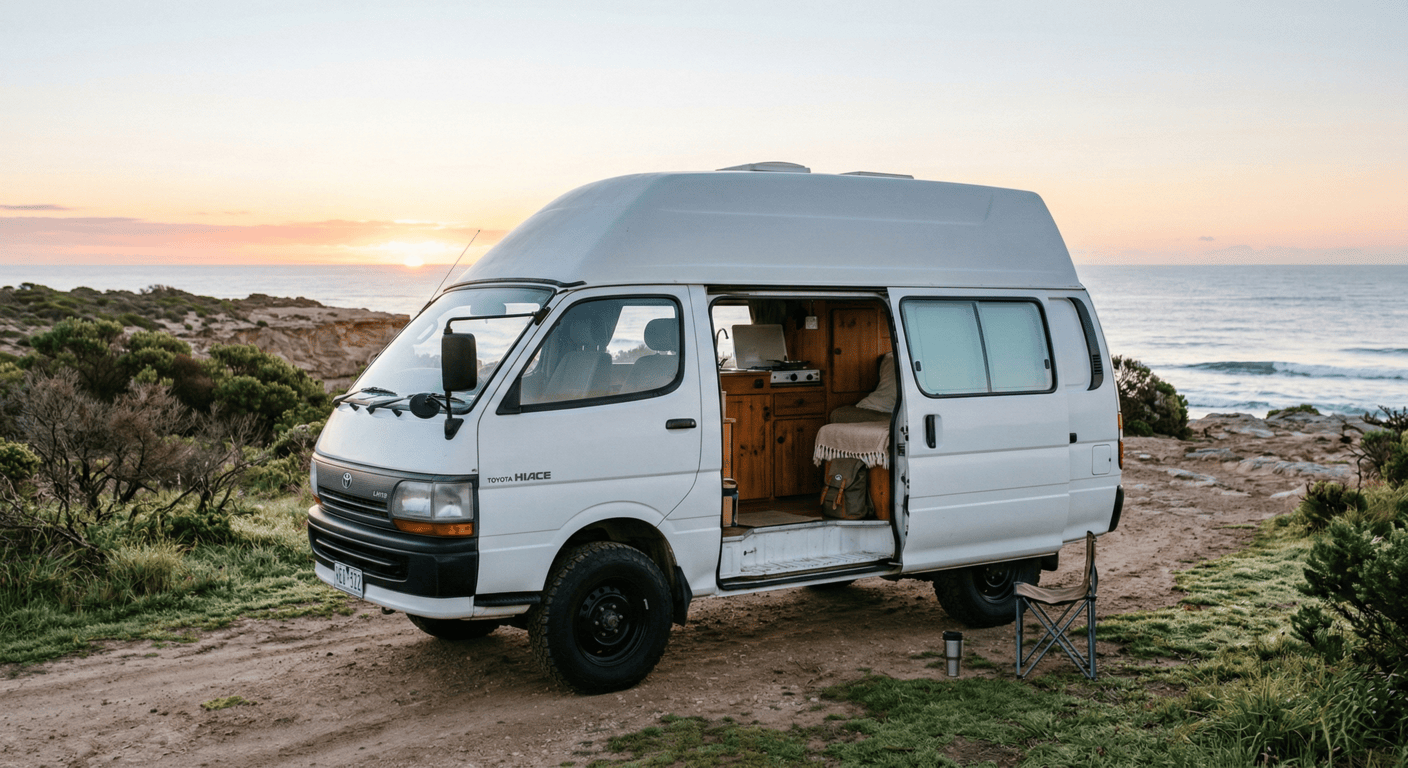
LH119-era HiAce campers are commonly linked with Toyota’s 3L 2.8L diesel, and this example is listed at 67kW and 188Nm. It’s not about speed; it’s about simple, dependable touring behaviour. The cab is typically a classic HiAce, functional, durable, and no-nonsense, while the built-in camper body means the comfort is already there. With older built-ins, the real value comes down to overall condition and how well it’s been looked after over time, because a campervan is both a vehicle and a tiny home.
Budget-wise, this type of HiAce can be a strong value compared with newer extra-high-roof 4WD builds, especially if you want capability and livability without premium pricing. The smartest approach is to prioritise fundamentals, overall structure, sealing, and general upkeep, before you get attached to the layout.
2013 Toyota HiAce 4WD Extra High Roof SLWB
For big trips around Australia, the 2013 Toyota HiAce 4WD Extra High Roof SLWB keeps coming up because it delivers the comfort basics without pushing you into a full motorhome footprint. The winning combo is simple: serious interior volume plus real standing height. Add the super long wheelbase, and you get genuine layout freedom, enough space to run a fixed bed while still fitting a usable kitchen, proper storage, and a cabin that doesn’t feel like constant furniture shuffling. Over long distances, that “less compromise” factor is what makes a campervan feel easy to live in.
Mechanically, many Japan-spec examples are commonly linked with the KDH206V setup and Toyota’s 1KD-FTV 3.0L turbo-diesel (2,982cc). The point isn’t the badge or the code, it’s the touring intent: a proven diesel family that suits Australian-style travel with long highway days, heavier fit-outs, and extra load from water, batteries, and gear.
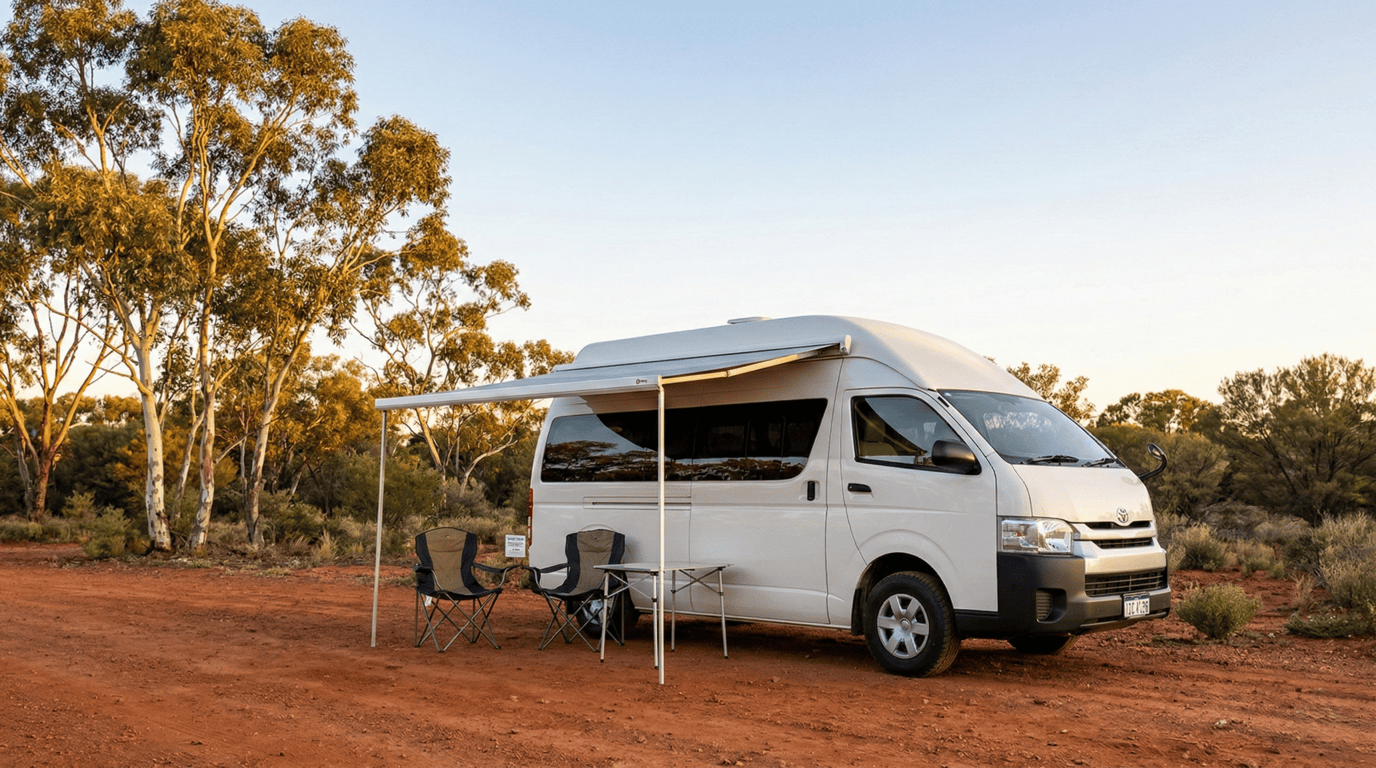
Where buyers should pay attention is the interior grade. Japan-market HiAce/Regius Ace variants can range from tough commercial trims to more comfort-focused touring specs, and that difference can significantly change how quiet and pleasant the van feels on long drives. Budget-wise, this combination usually lands in the mid-to-premium range because 4WD, extra high roof, and long wheelbase are exactly what touring buyers chase. The smartest approach is to judge it as a platform first: confirm the exact configuration, be realistic about payload once fitted out, and check for signs of a hard commercial past, because a clean example is one of the most capable “do-it-all” touring bases you can buy in Australia.
1999 Mitsubishi Strada 4WD Diesel
The 1999 Mitsubishi Strada 4WD Diesel is popular in Australia for travellers who want a camper that feels like a proper 4WD tourer, not a van-based tiny house. Ute-based built-in campers suit a simple travel style: drive to the spot, set up, live outdoors, then move on. You get a tougher stance, better clearance, and a gear-friendly setup that works well for regional routes, mixed surfaces, and trips where bikes, boards, tools, or recovery gear would quickly dominate a smaller van’s interior.
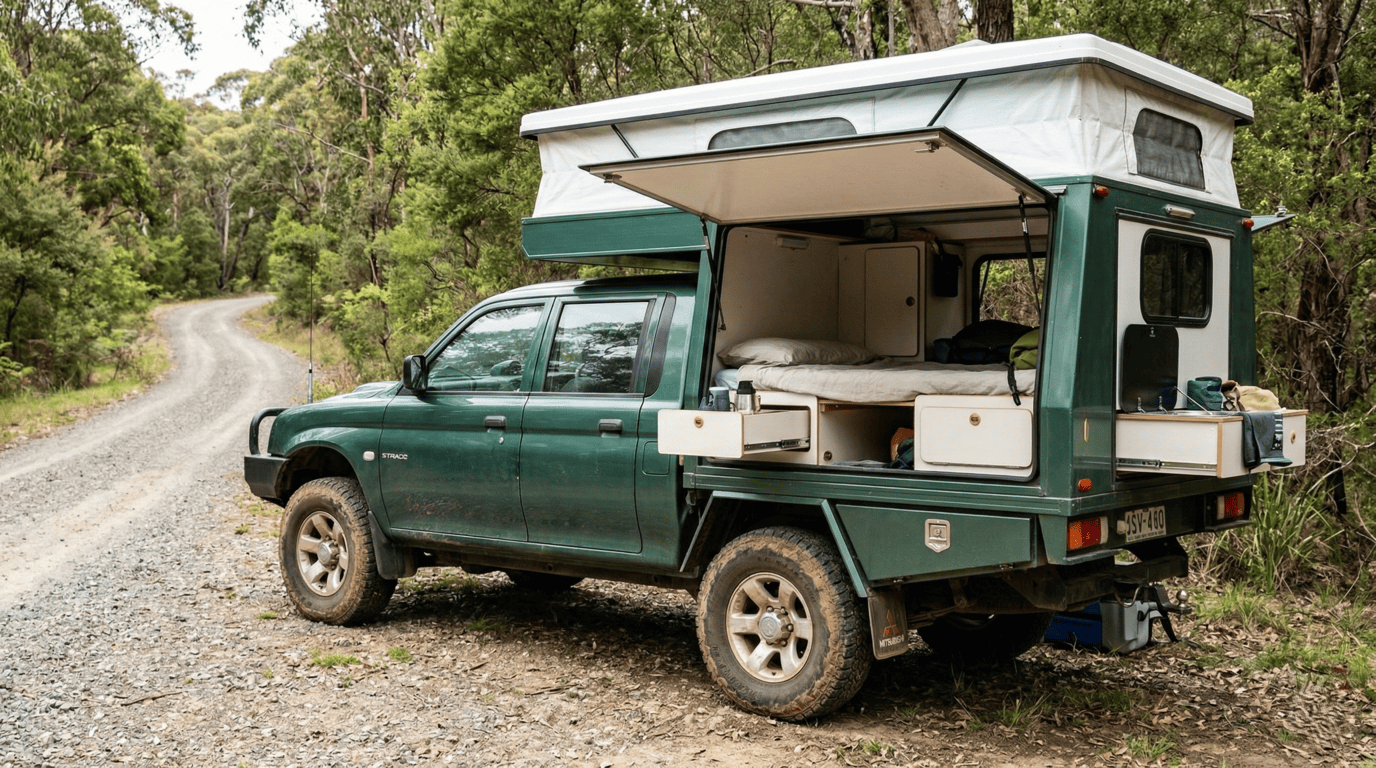
Many Strada/L200-era platforms are commonly linked with Mitsubishi’s 4D56 2.5L diesel family, but it’s best treated as a guide rather than a guarantee. Specs can vary by market and configuration, so verifying the engine code via paperwork is important. The appeal is touring practicality: steady long-distance driving and a platform that can handle a load without feeling delicate.
Compared with a van, the interior experience is different. The cab is familiar and practical, but you don’t get walk-through convenience, and the built-in living area is usually more compact and purpose-built. That makes it ideal if you mostly sleep, cook simply, and use the camper as shelter when the weather turns, while high-roof vans generally feel better for long “stuck inside” days. Budget-wise, these often sit in the value-to-mid range versus modern high-roof van builds, and the real deciding factor is condition: chassis health, underbody state, and how well the camper body has been sealed over time.
Toyota HiAce Australia’s most common camper conversion platform
Even if you’re not buying a ready-built camper, the Toyota HiAce stays near the top of Australian shortlists because it’s one of the easiest vans to convert into a layout that actually works. The shape is the win: a boxy, square cargo bay and straight walls mean you can build practical setups without weird compromises, and resale stays strong because Australians already understand the HiAce campervan formula.
Engine options depend on the exact market and model. In Australia, newer HiAce variants are commonly linked with a 2.8L turbo-diesel (grade-dependent). Japan-market H200 bases often show up with diesels like the 1KD-FTV 3.0L and petrol options such as the 2TR-FE 2.7L, depending on model code. What matters in real life is choosing a drivetrain that matches your build weight and trip style, then prioritising service history over hype.
Inside, the HiAce works because it supports the layouts Australians buy most: fixed rear bed + side kitchen (the easiest day-to-day routine), dinette conversions (great for weekend flexibility), and pop-top weekender builds (standing room without permanent height). Budget-wise, it spans everything from simple DIY to premium touring builds; platform flexibility is the whole point.
Toyota Regius Ace Van 4D: The HiAce Twin
The Toyota Regius Ace sits in the same “makes sense in Australia” category as the HiAce because it delivers the same core advantage: clean, practical van packaging that converts well for touring. For many buyers, the decision isn’t about one being magically better than the other, it’s about what’s actually available at the time, which body/roof combinations you can find, and whether the specific variant suits your planned layout.
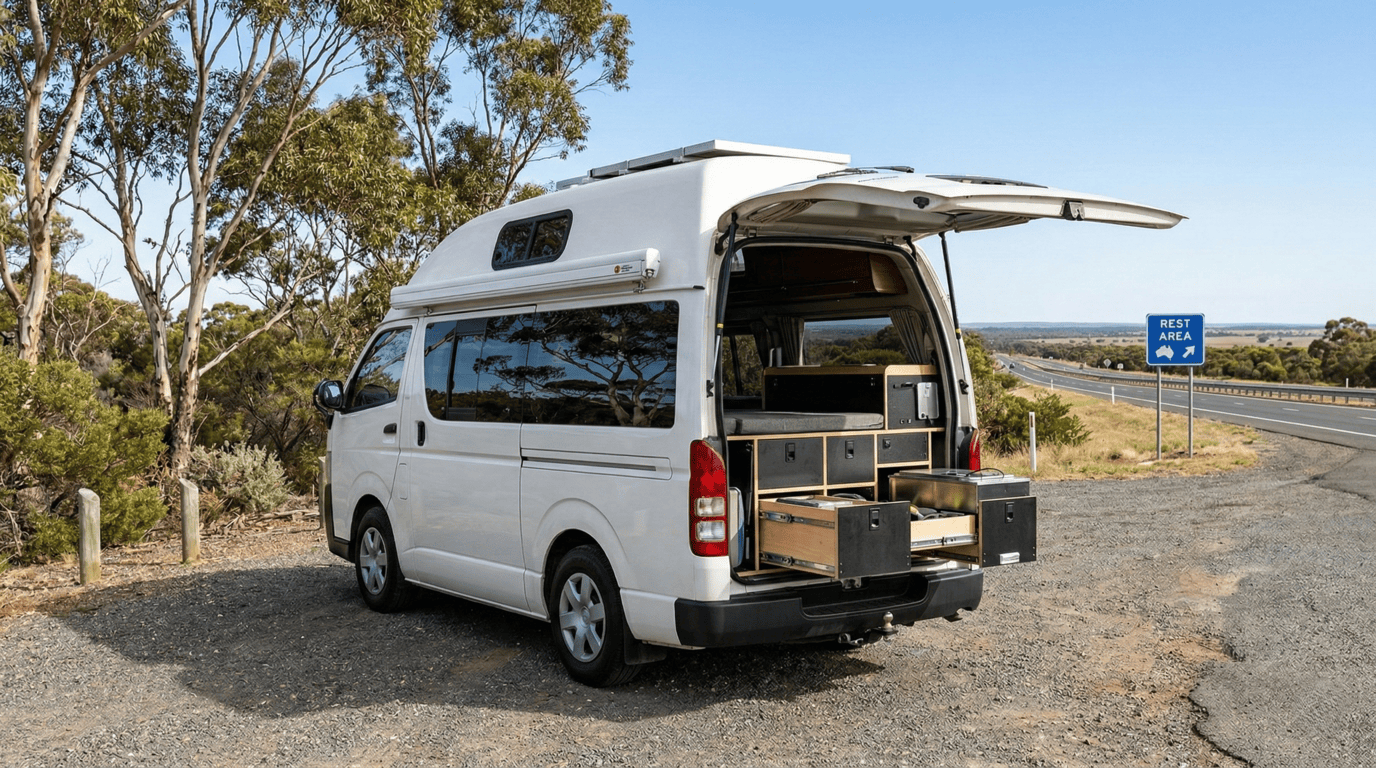
Engine options can vary by model code, but common pairings include Toyota diesels like the 1KD-FTV 3.0L (2,982cc) and the 2KD-FTV 2.5L (2,490cc), along with other variants depending on the exact code. The smarter way to approach it is the same rule that works for HiAce buyers: go platform-first. Lock in the body length, roof height, and overall condition you need for your layout, then evaluate trim level and cabin comfort after the fundamentals check out.
From a budget perspective, Regius Ace can represent strong value because you’re often getting HiAce-like usefulness without paying extra for a more “prestige” badge elsewhere. If you want a straightforward base for a touring conversion, especially a fixed-bed or practical weekender layout, it remains one of the most sensible alternatives to consider in the Australian campervan market.
Most popular campervans Australians cross-shop
Volkswagen Transporter (T5/T6)
The Volkswagen Transporter (T5/T6) remains a popular choice in Australia because it blends camper capability with everyday usability. It drives more like a car than a large commercial van, fits easily into urban life, and still converts into a capable weekender or couples tourer. For buyers who want one vehicle to handle Monday-to-Friday duties and weekend escapes, it’s a natural cross-shop option.
A commonly referenced example is the T6 Transporter TDI340, typically linked with a 2.0L turbo-diesel (1968cc) producing around 103kW and 340Nm, often paired with a 7-speed DSG (spec varies by model and year). On the road, that translates to smooth drivability and comfortable highway cruising.
Inside, the Transporter’s more car-like cabin and tidy ergonomics make it well-suited to pop-top conversions, slide-out kitchens, and compact fixed-bed or convertible layouts, ideal for solo travellers and couples who want flexibility without stepping up to a larger van platform.
Mercedes-Benz Sprinter
The Mercedes-Benz Sprinter is the go-to reference point in Australia for “big comfort” camper conversions because it gives you what smaller vans can’t: true standing height, long wheelbase options, and the space to build something that feels closer to a compact motorhome than a weekend van. That extra volume is what makes proper indoor seating practical, and it’s why many larger builds can also accommodate features like internal bathrooms without the layout becoming a compromise-fest.
Modern Sprinter variants are commonly associated with a 2.0L four-cylinder drivetrain, often quoted in the ballpark of 125kW and 400Nm, paired with an automatic transmission depending on grade. The numbers aren’t the main attraction; the platform is. A Sprinter’s high-roof, long-body proportions make it easier to design a comfortable, live-in layout with sensible storage, better separation between zones (sleep/cook/lounge), and less daily rearranging.
For buyers planning extended touring or full-time travel, the Sprinter tends to feel like the most “home-like” option in the van world, because it gives you the space to live inside, not just sleep inside.
In Summary
If you’re looking for the best campervan in Australia in 2026, the biggest takeaway is that the best choice is rarely a single model; it’s the right combination of layout, roof height, and platform for how you actually travel. Fixed-bed layouts keep winning because they make day-to-day touring easy, while dinette conversions suit weekenders who want maximum daytime space. Roof height is the comfort multiplier: pop-tops fit city life, high roofs suit year-round touring, and extra-high roofs are where “live inside it” buyers end up once they’ve experienced a wet week on the road.
Carbarn Australia helps you shortlist the right setup by comparing stock side-by-side and checking the fundamentals that matter in Australia: payload, condition, and paperwork. If you want a campervan that works on real trips, not just in photos, use Carbarn’s inventory and checklist approach to choose confidently.