



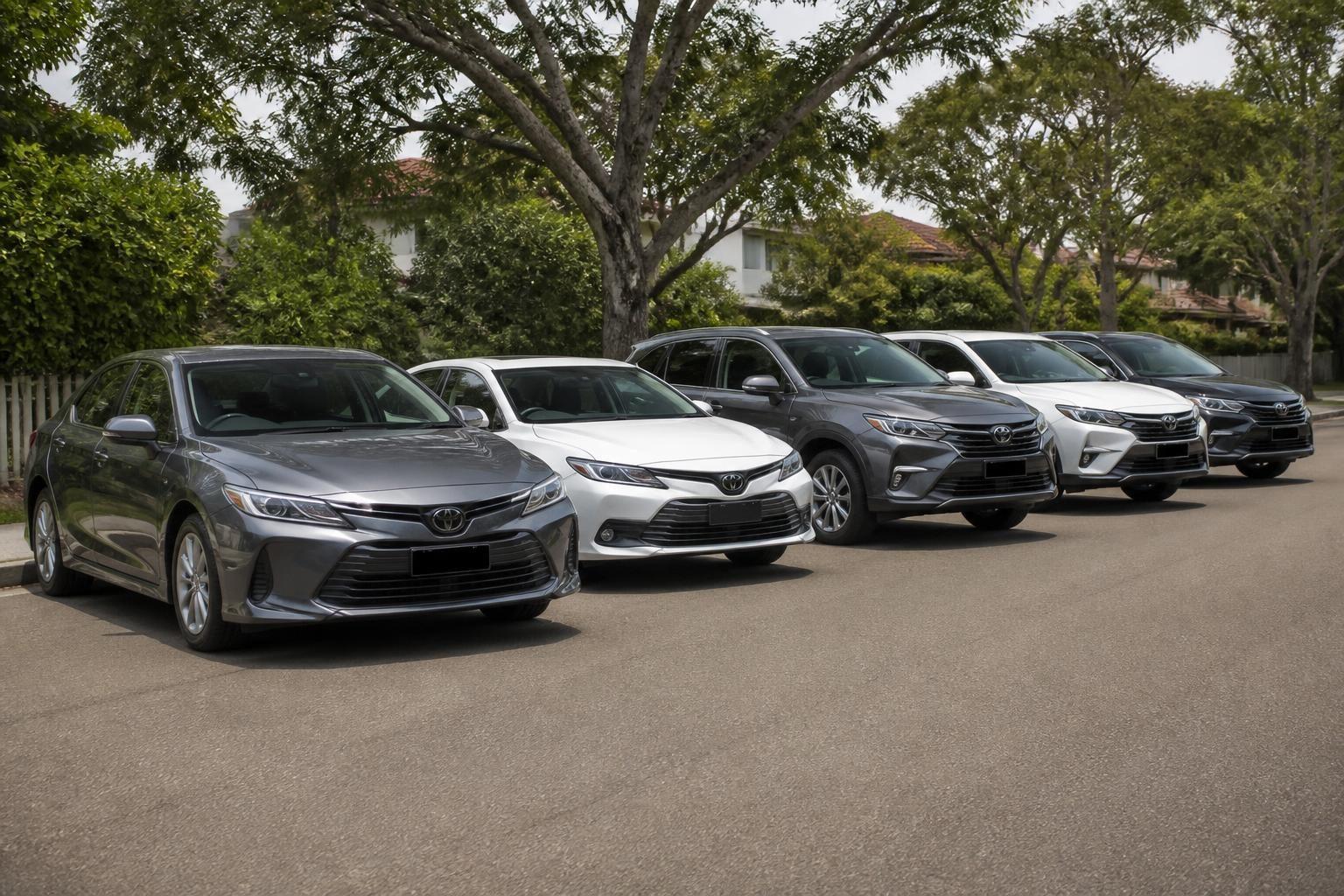
Ready to Hit the Road in Style?
Save money and reduce emissions with vehicles designed to deliver exceptional mileage. Visit our inventory and find a car that fits your lifestyle.
Ready to Hit the Road in Style?
Save money and reduce emissions with vehicles designed to deliver exceptional mileage. Visit our inventory and find a car that fits your lifestyle.
You fill up, wince at the total, and wonder how much of that you could have avoided. It's a fair question. Australians bought 104,864 hybrids in the first half of 2026, up 11.9% year on year, according to FCAI VFACTS data reported by CarExpert in July 2026. Most "best hybrid" lists stop at the badge. This one runs the numbers: official consumption figures, the test cycle each one came from, and what that works out to per year at the bowser.
The Bottom Line
- At 15,000 km a year and $2.02 a litre (GlobalPetrolPrices, September 2026), a 7.5 L/100km petrol car costs about $2,273 a year in fuel.
- A late Toyota Aqua (NHP10) at roughly 3.3 L/100km costs about $999 a year in fuel, a saving near $1,274 compared with a 7.5 L/100km petrol car.
- Series hybrids like the Nissan Note e-POWER and Toyota Raize shine in stop-start traffic, less so on long highway runs.
- Japanese JC08 figures flatter a car badly. WLTC is the number to compare.
Why Does L/100km Matter More Than the Badge?
Fuel is the running cost you pay every single week, and the gap between a hybrid and a mid-size petrol car is worth more than most buyers assume. At the September 2026 national average of $2.02 a litre, every 1.0 L/100km of difference costs you about $303 a year over 15,000 km. Here's the maths, so you can run your own:
Annual fuel cost = (L/100km × your annual km ÷ 100) × price per litre
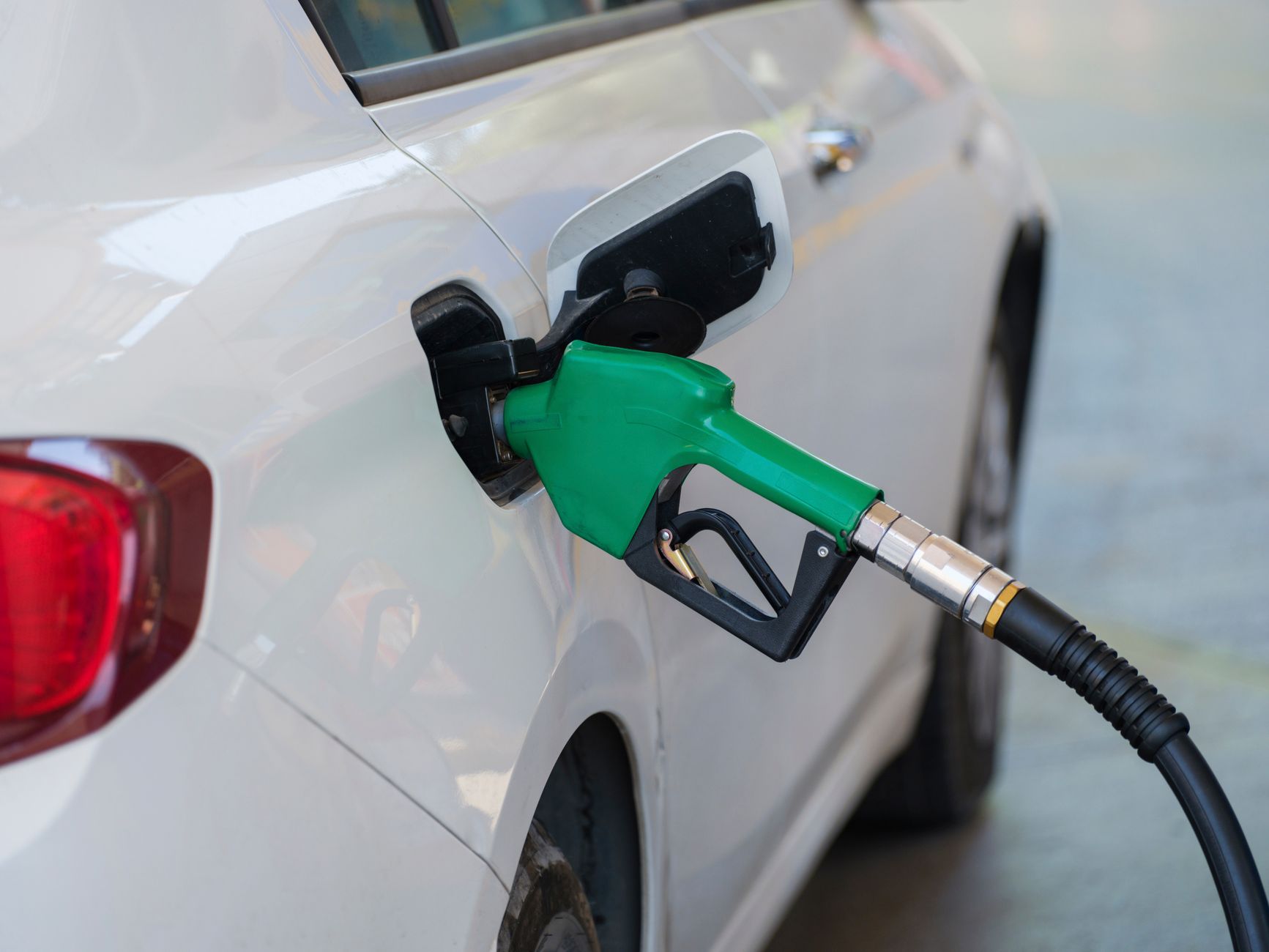 A white car being refuelled with a green petrol pump nozzle.
One trap catches import buyers out. JC08 is an older Japanese test cycle that uses gentle acceleration and low average speeds — it produces very optimistic numbers. WLTC is the replacement cycle Japan's Ministry of Land, Infrastructure, Transport and Tourism (MLIT) introduced from 2018; its figures are much closer to real driving. A JC08 figure and a WLTC figure are not comparable, so never put them side by side without labelling which is which.
How Do These Six Hybrids Compare on Fuel?
Ranked on official consumption, the spread across these six is wide: about 3.0 L/100km for the smallest hatch against 4.6 L/100km for the mid-size SUV, per manufacturer ratings and Australia's Green Vehicle Guide. Costs below assume 15,000 km a year at $2.02 a litre.
| Model | Body | Official figure (cycle) | Fuel bill / year | Saving vs 7.5 L/100km |
|---|---|---|---|---|
| Toyota Aqua (NHP10, 2019–21) | Small hatch | ~3.3 L/100km (WLTC) | ~$999 | ~$1,274 |
| Nissan Note e-POWER (E13) | Small hatch | 3.4 L/100km (WLTC) | ~$1,030 | ~$1,243 |
| Toyota Raize Hybrid (A202A) | Light SUV | 3.6 L/100km (WLTC) | ~$1,091 | ~$1,182 |
| Toyota Prius (ZVW30 / ZVW40) | Hatch / 7-seat | ~30 km/L (JC08, flattering) | ~$1,364 at 4.5 | ~$909 |
| Honda Shuttle Hybrid (GP7) | Wagon | 34.0 km/L (JC08, flattering) | ~$1,455 at 4.8 | ~$818 |
| Toyota Harrier Hybrid (AXUH85) | Mid-size SUV | ~4.6 L/100km (WLTC, AWD) | ~$1,394 | ~$879 |
| Petrol comparison car | Any | 7.5 L/100km | ~$2,273 | — |
For the two JC08-rated cars, we've used a realistic on-road figure in the cost column rather than the flattering lab number. That's the honest way to budget.
Which Small Hybrids Use the Least Fuel?
The Aqua, Note e-POWER, and Raize all sit below 3.7 L/100km on WLTC — the strongest efficiency results in this comparison. Two use a series hybrid layout, where the petrol engine generates electricity but never drives the wheels directly.
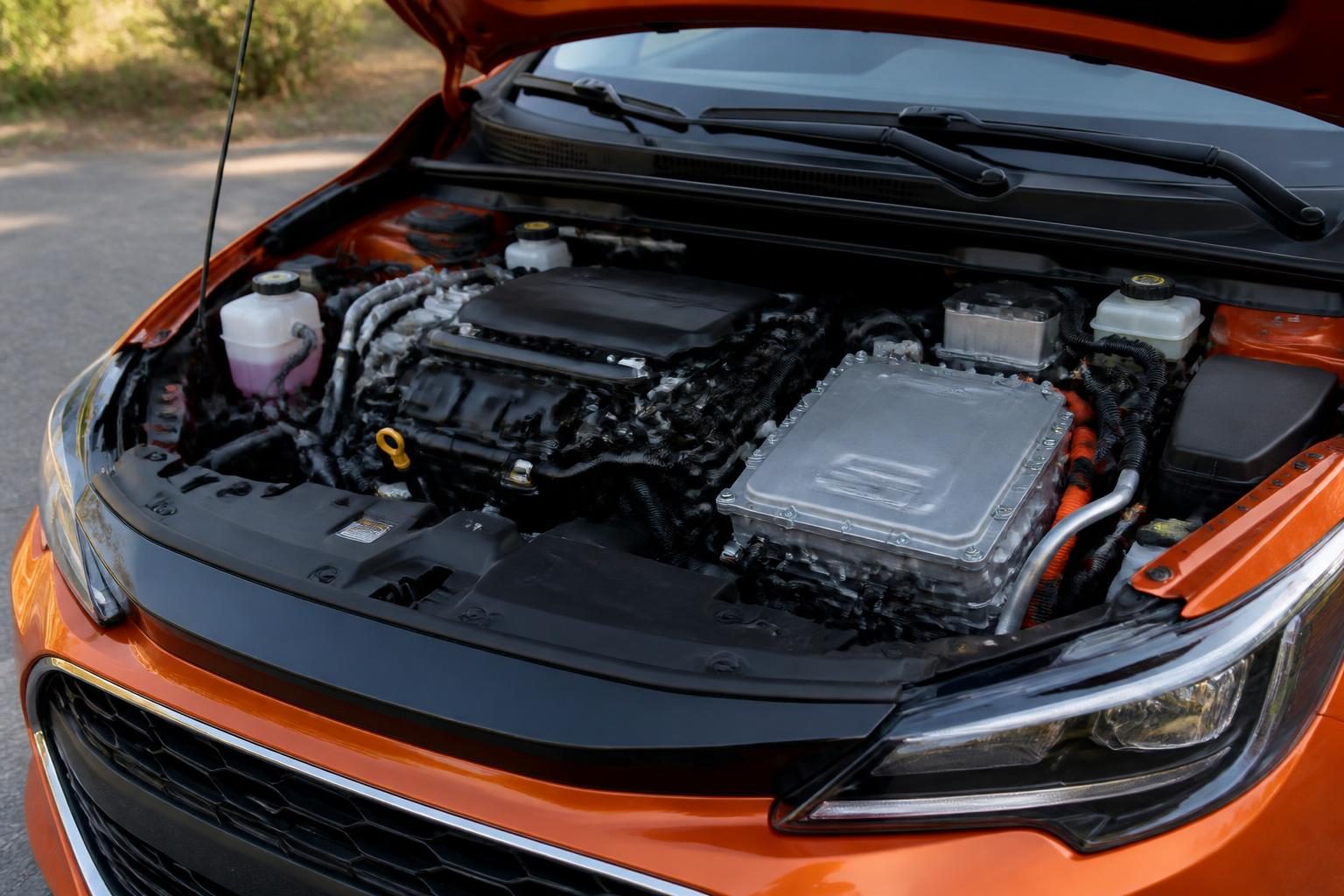 Hybrid vehicle engine bay showing engine and electric-drive hardware
Toyota Aqua
The Toyota Aqua is the efficiency benchmark of this group, and it gets there by being small, light and single-minded about it. Late NHP10 cars carry a WLTC combined rating of around 28–30 km/L, roughly 3.3 L/100km. (The 33+ km/L WLTC figures cited for the Aqua elsewhere refer to the second-gen MXPK (XP210) with its 3-cylinder engine, which launched in mid-2021; the NHP10 uses a 4-cylinder.) On our formula that's roughly $999 a year in fuel.
Under the bonnet is Toyota's 1.5-litre 1NZ-FXE Atkinson-cycle four: 54 kW and 111 Nm. A 45 kW electric motor brings combined system output to near 74 kW, delivered through an e-CVT. It's a five-door, five-seat hatch under four metres long, so it parks anywhere.
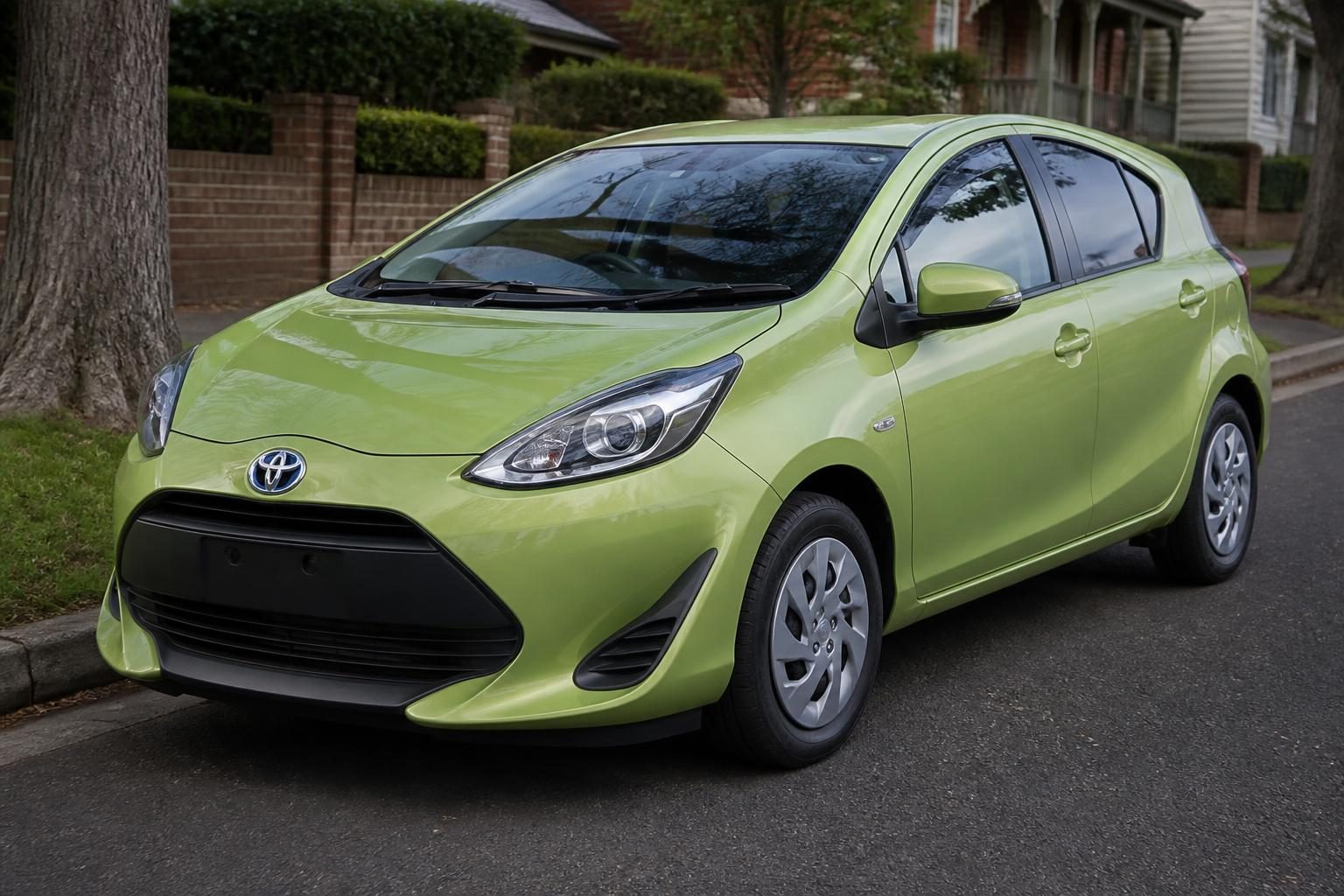 2021 Toyota Aqua
Who it doesn't suit: anyone who regularly carries four adults plus luggage, or who wants brisk overtaking. Pre-2018 Aquas only ever quoted JC08, so treat those spec sheets with caution.
Nissan Note e-POWER
The Nissan Note e-POWER drives like an electric car without ever needing a plug, and that's the whole point of it. The 1.2-litre HR12DE three-cylinder runs purely as a generator. The wheels are only ever turned by the electric motor, which is why throttle response feels instant from a standstill.
The second-generation E13 motor makes 85 kW and 280 Nm — a torque figure well above anything else in this size class. Nissan rates the X and S grades at 29.5 km/L WLTC, or 3.4 L/100km, which works out near $1,030 a year in fuel.
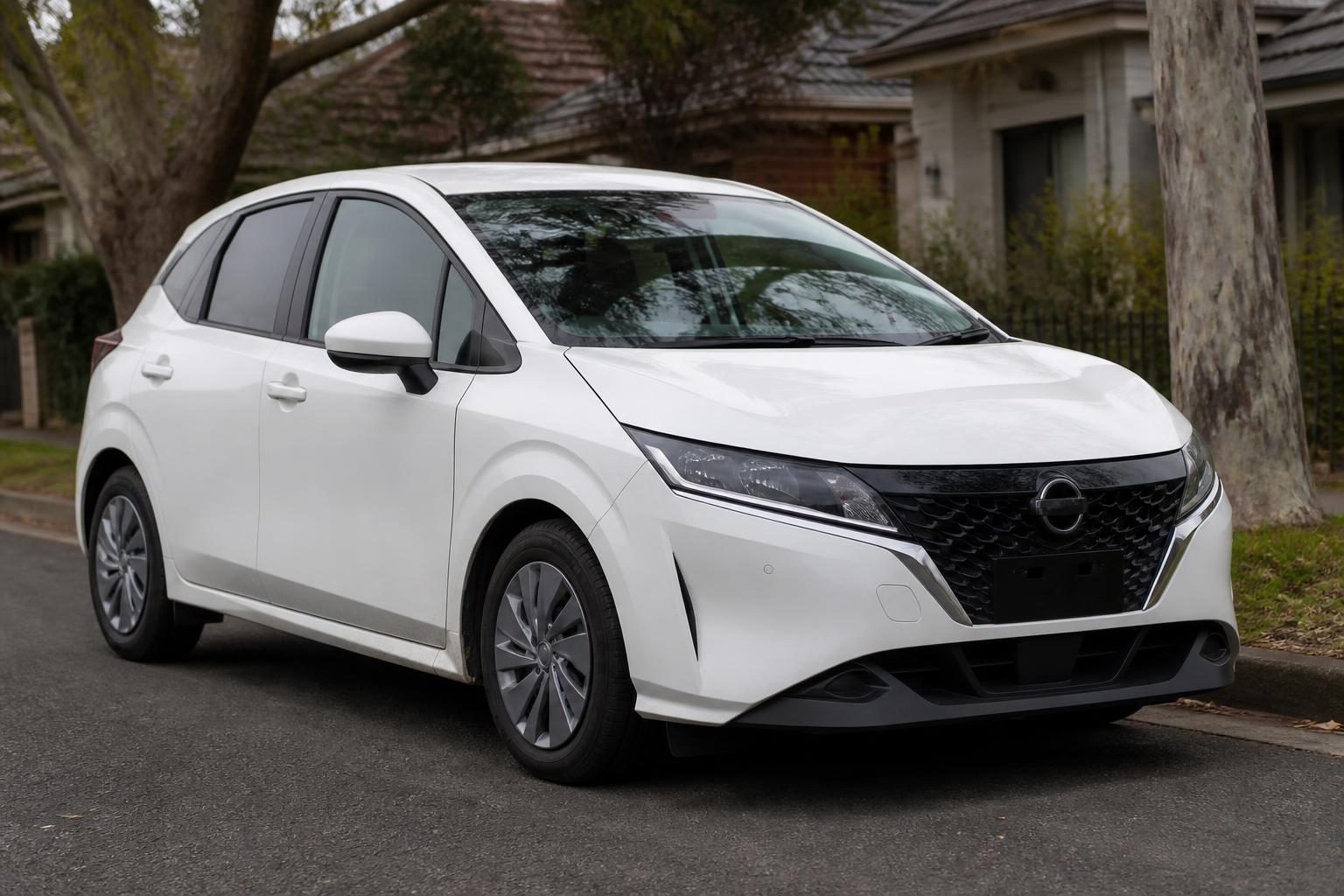 2021 Nissan Note e-POWER
Worth knowing: the advantage narrows at sustained highway speed. The engine has to keep generating with no direct mechanical path to the wheels. City commuters gain the most here. Regular Hume Highway drivers gain the least.
Toyota Raize
The Toyota Raize answers a question plenty of buyers ask: can you get SUV height and vision without an SUV fuel bill? The hybrid A202A version uses the same series layout as the Note, badged e-SMART. Toyota rates it at 28.0 km/L WLTC, about 3.6 L/100km.
The 1.2-litre WA-VEX three-cylinder acts as generator only, with a 78 kW, 170 Nm motor driving the front wheels. At 3,995 mm long, 1,695 mm wide and 1,620 mm tall, it's Aqua-sized on the road but sits you noticeably higher.
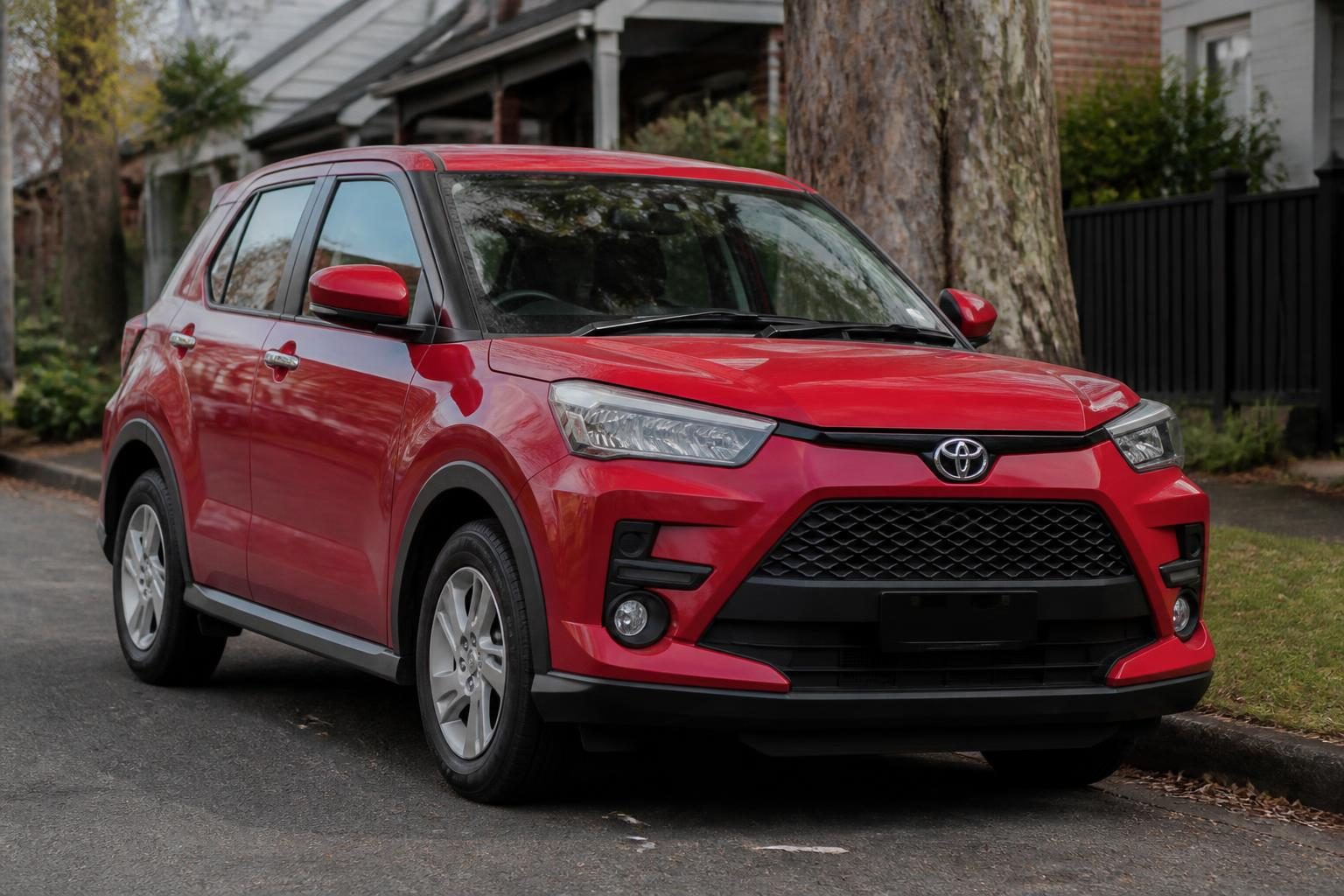 2022 Toyota Raize
It's front-drive only, so it isn't a gravel-touring machine. As a raised city hatch for around $1,090 a year in fuel, it makes a lot of sense.
Which Family Hybrids Keep Running Costs Down?
All three larger cars in this group land under 5 L/100km on the road — against roughly 7.5 L/100km for a comparable petrol equivalent, a saving of $800 to $900 a year at current pump prices. Space costs fuel, but not as much as it used to.
Toyota Prius
The Toyota Prius is the reference point for hybrid durability in Australia. More than two decades of taxi and fleet use have put the drivetrain through sustained high-kilometre work that few platforms can match.
Australian listings mostly carry the ZVW30 hatch and the longer ZVW40/41 Alpha. The ZVW41 adds a third row for seven seats; the ZVW40 is the five-seat Alpha.
Both use the 1.8-litre 2ZR-FXE Atkinson four: 73 kW and 142 Nm. The electric motor adds 60 kW and 207 Nm. Combined system output is near 100 kW, through Toyota's planetary e-CVT. Toyota's JC08 ratings sat in the high-20s to low-30s km/L. On the road, plan on about 4.5 L/100km — near $1,364 a year.
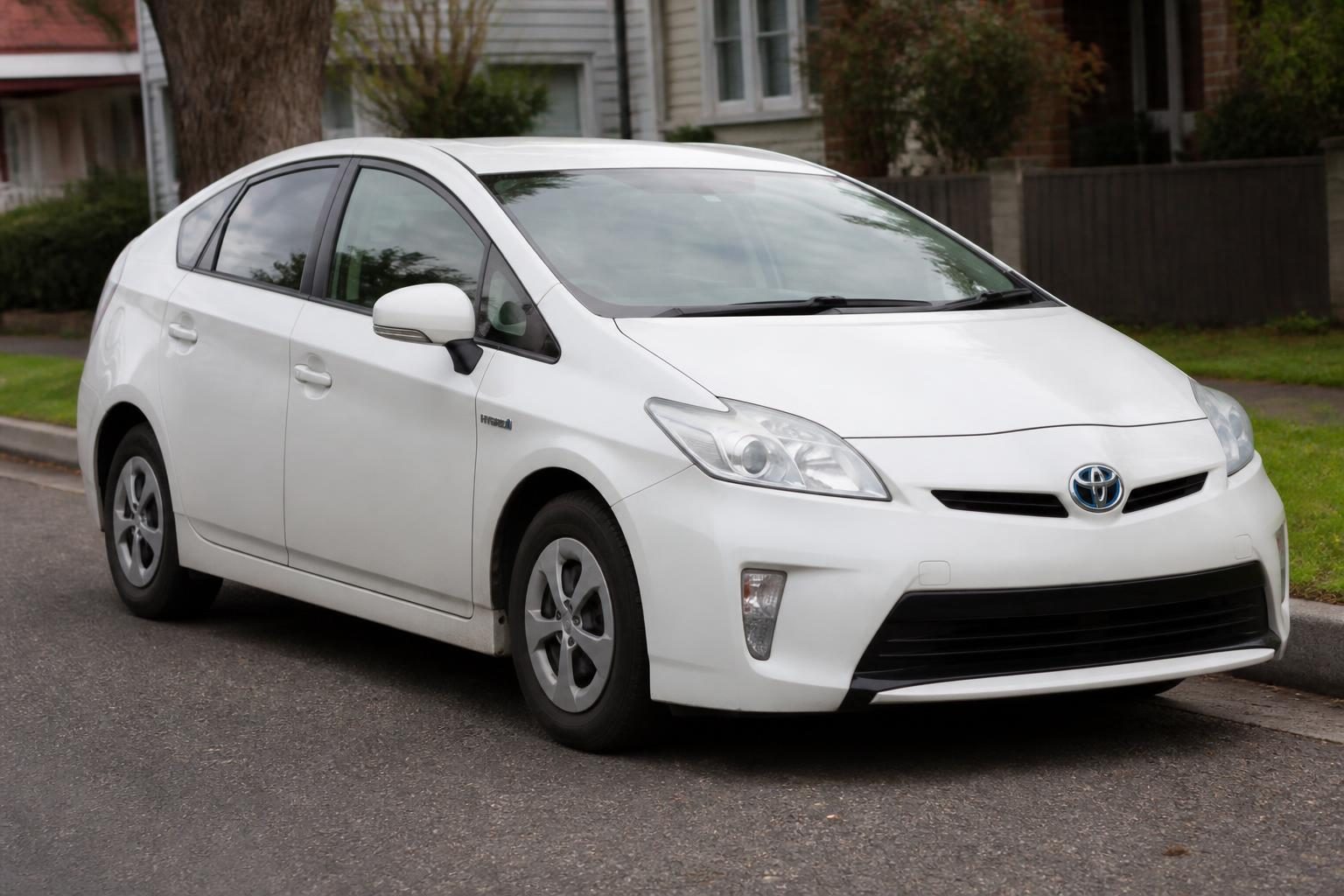 2016 Toyota Prius
The Alpha's third row is best treated as occasional seating for kids. Check the model code before you compare two listings, because ZVW30, ZVW40 and ZVW41 are quite different cars.
Honda Shuttle Hybrid
The Honda Shuttle is the pick for anyone who wants a wagon boot without stepping up to a large SUV. At 4,400 mm long and only 1,545 mm tall, it fits standard car parks and low garages, which the equivalent people mover generally won't.
i-DCD is Honda's Intelligent Dual Clutch Drive system — a 22 kW, 160 Nm electric motor integrated directly into a seven-speed dual-clutch gearbox, giving a more conventional gear-shifting feel than a CVT hybrid. The 1.5-litre LEB Atkinson engine makes 81 kW and 134 Nm. Honda quoted up to 34.0 km/L on JC08, so budget nearer 4.8 L/100km in real conditions.
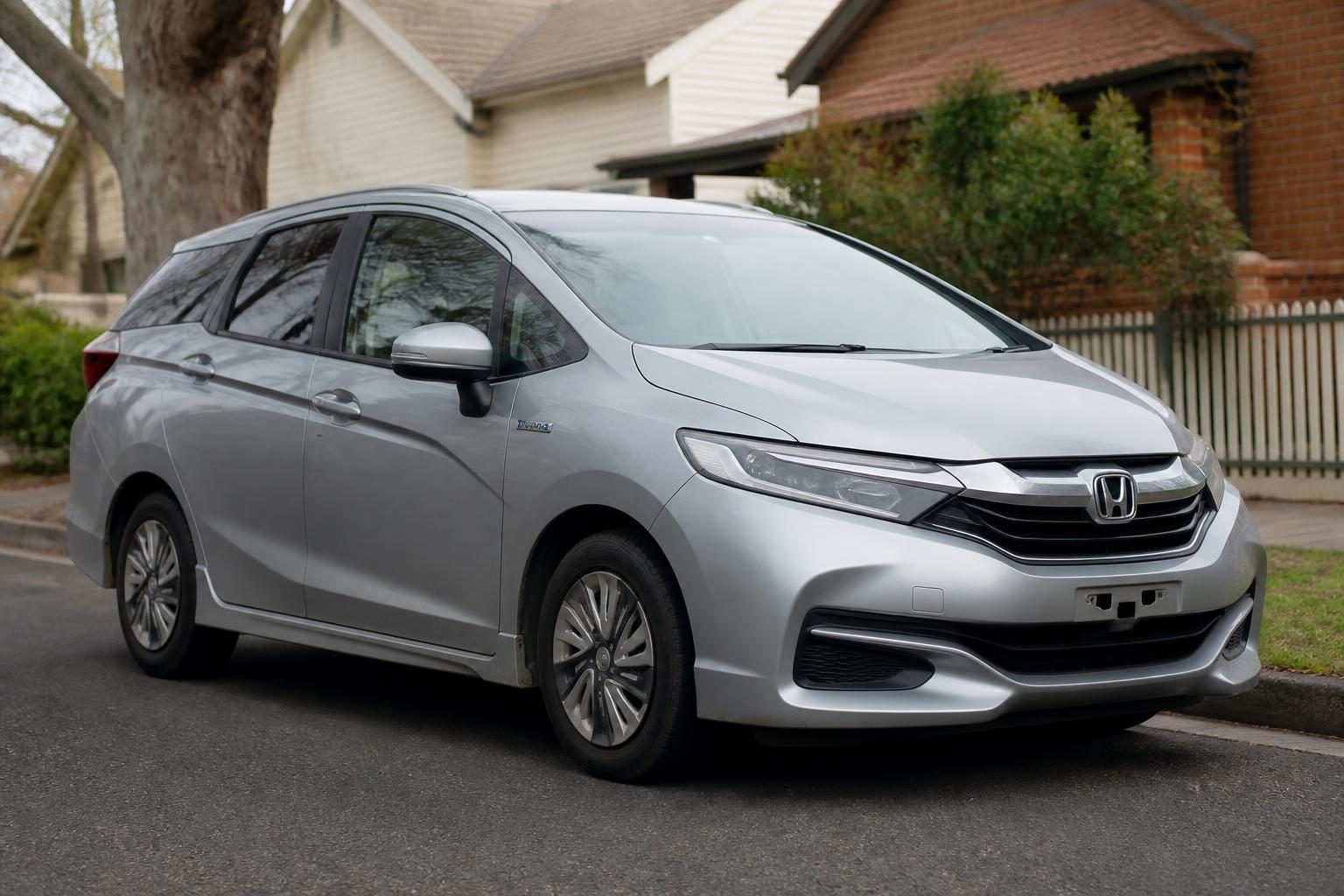 2020 Honda Shuttle Hybrid
Later cars add Honda Sensing driver assistance. For current pricing, see the Honda Shuttle listings directly.
Toyota Harrier Hybrid
The Toyota Harrier Hybrid is the upmarket option here, a mid-size SUV with a quiet cabin and a genuinely frugal drivetrain for its size. The AWD AXUH85 is rated around 4.6 L/100km on WLTC, which is roughly $1,394 a year in fuel and better than plenty of small petrol hatches.
The powertrain is Toyota's 2.5-litre A25A-FXS Atkinson four: 131 kW and 221 Nm. An 88 kW front motor pairs with a separate rear motor for electric all-wheel drive. Combined system output is near 163 kW. Build years from June 2020 to July 2026 are approved for Australian import under the SEVS Environmental Criterion.
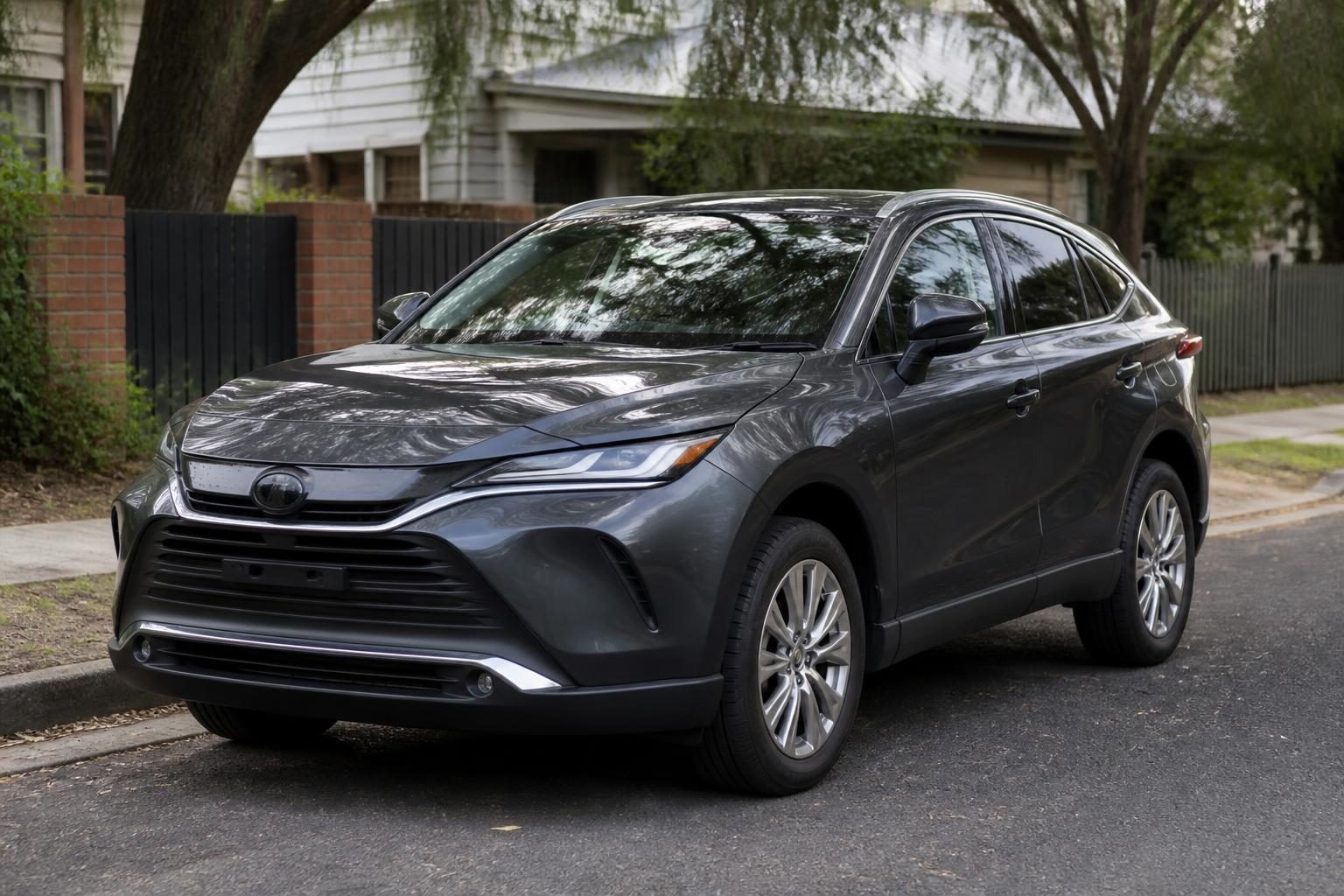 2023 Toyota Harrier Hybrid
It isn't a seven-seater and it isn't a serious off-roader. As a comfortable, efficient mid-size SUV for a family that also wants real fuel economy, it's a strong option — check the current import page for live pricing.
Matching the Car to How You Drive
Match the car to your week, not to the headline figure. A series hybrid that saves $1,200 a year on a Sydney commute will give back part of that advantage on a weekly Newcastle run.
| If you mostly | Start with |
|---|---|
| Crawl through inner-city traffic | Nissan Note e-POWER |
| Do short suburban and school runs | Toyota Aqua |
| Want SUV height on a small footprint | Toyota Raize |
| Carry prams, dogs and flat-packs | Honda Shuttle |
| Need seats six or seven now and then | Toyota Prius Alpha |
| Do long highway stints or want AWD | Toyota Harrier Hybrid |
Getting One of These Into Your Driveway
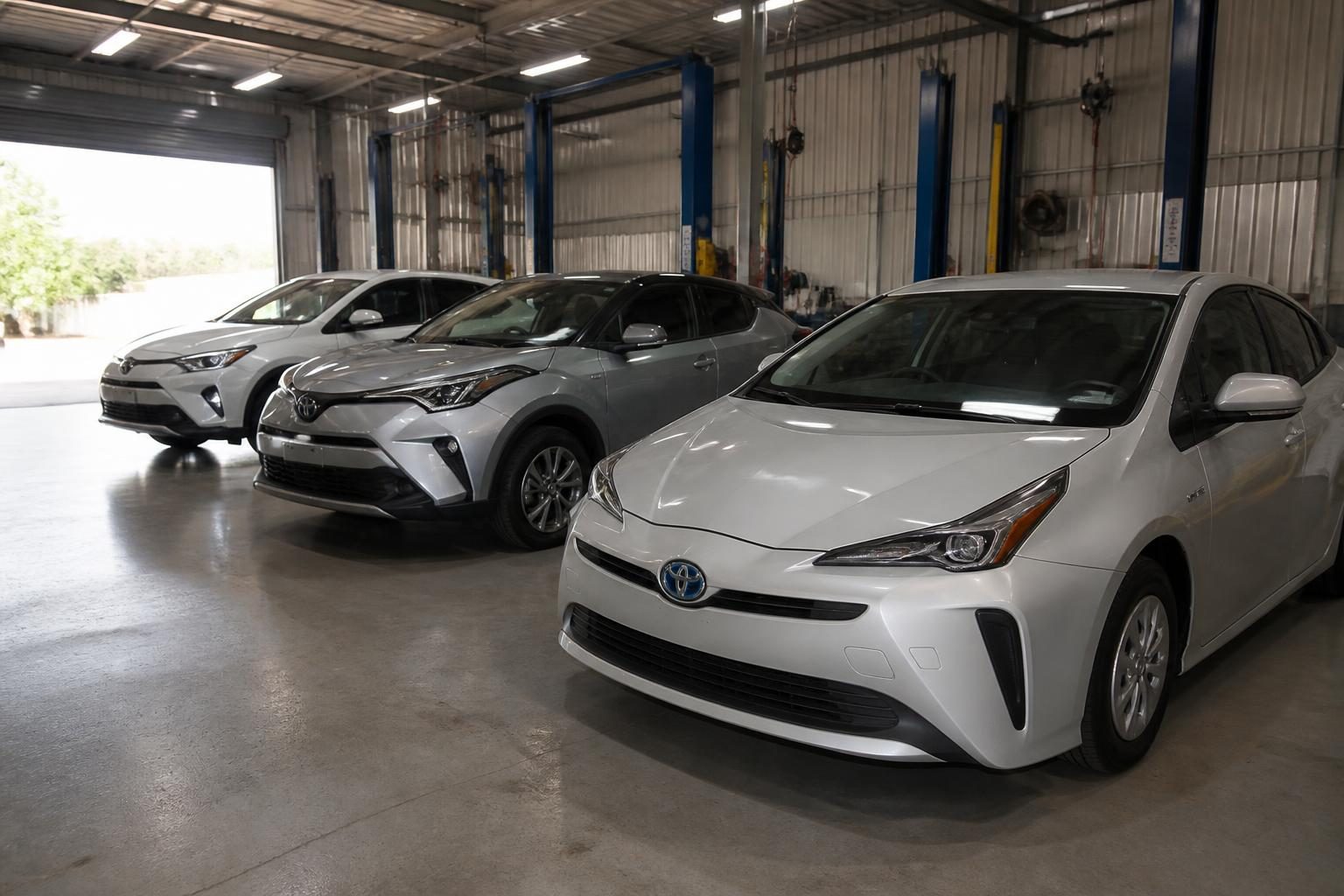 Toyota hybrids lined up inside a sunlit vehicle workshop.
There are two realistic paths to a Japanese-market hybrid in Australia, and which one suits you comes down to whether your model is already here. Carbarn works both. The locally available range covers complied cars ready to drive away from Sydney. Each listing shows the recorded model code, odometer, PPSR result and service history, with a live price, five-year extended warranty on eligible vehicles, finance, inspection and door delivery available. For anything not on the ground, the Japan import service checks SEVS eligibility and verifies auction sheets. It arranges a pre-bid inspection, bids only to your approved cap, then handles freight, customs and in-house RAW-certified compliance in Sydney.