


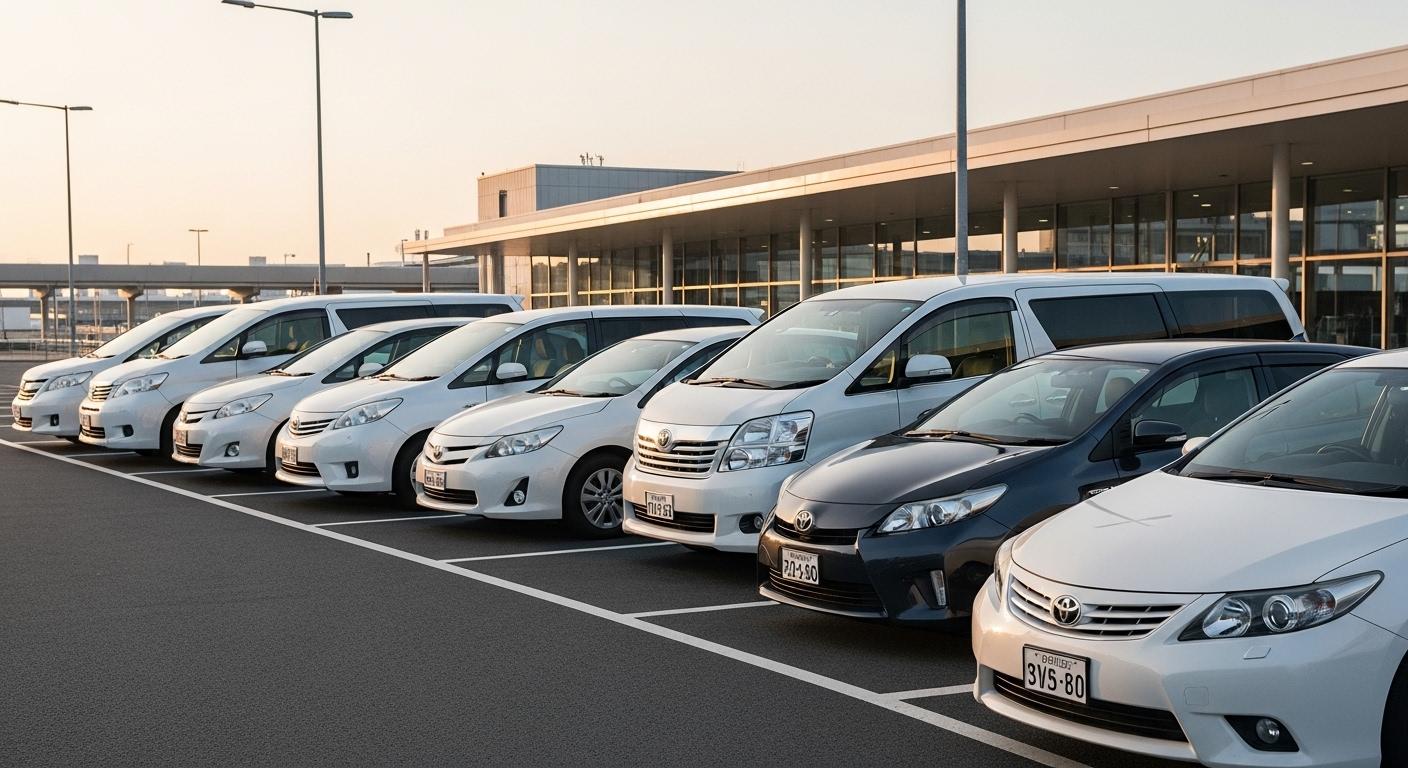
Ready to Hit the Road in Style?
Save money and reduce emissions with vehicles designed to deliver exceptional mileage. Visit our inventory and find a car that fits your lifestyle.
Ready to Hit the Road in Style?
Save money and reduce emissions with vehicles designed to deliver exceptional mileage. Visit our inventory and find a car that fits your lifestyle.
Sydney currently allows UberX vehicles up to 15 years old, while Adelaide shows 8 years (Uber Sydney, 2026; Uber Adelaide, 2026). That gap tells you the real story straight away. The best hybrid car for Uber Australia is not simply the most efficient one. It has to qualify in your city, suit the tier you want to drive, and keep your running costs under control. This fresh 2026 guide starts with the rules, then moves into the cars that make the most sense for UberX, Comfort and XL, including five practical hybrid options linked to real Australian vehicle pages.
Quick Answer
- Camry Hybrid is the safest mainstream benchmark at 4.0L/100km (Green Vehicle Guide, 2024).
- Sydney shows 15 years for UberX and UberXL, Adelaide shows 8.
- Comfort tightens that to 7 years, plus a 4.85 driver rating.
- For XL, a real people mover usually makes more sense than a stretched SUV.
This shortlist was checked on 20 June 2026. The rules come from Uber Australia, the safety data comes from ANCAP, and the running-cost benchmarks come from the Green Vehicle Guide, which bases annual energy and fuel cost figures on 14,000km per year. If you want a broader fuel-saver shortlist after this, see best used hybrid cars in Australia.
| Vehicle | Best Uber tier | Efficiency benchmark | Seats | Best fit | Main trade-off |
|---|---|---|---|---|---|
| Toyota Camry Hybrid | UberX / Comfort | 4.0L/100km | 5 | Safest all-round benchmark | Not ideal for XL work |
| Tesla Model 3 | UberX / Comfort Electric | 132Wh/km, 513km range | 5 | Lowest official energy cost | Charging access matters |
| Toyota Corolla Cross Hybrid | UberX | 4.2L/100km | 5 | Easier access, newer SUV feel | Less rear-seat stretch room than Camry |
| Kia Carnival Hybrid | UberXL | 5.8L/100km | 8 | Mainstream XL benchmark | Bigger vehicle, bigger total costs |
| Imported people mover option | XL-style use, check first | Varies by model | 7-8 | Strong cabin practicality | Must verify approval and exemption policy |
What car actually qualifies for Uber in Australia in 2026?
Uber eligibility is not one national number. Sydney currently allows UberX and UberXL vehicles up to 15 years old, while Adelaide shows 8 years, and Comfort requires a vehicle manufactured within the last 7 years (Uber Sydney, 2026; Uber Adelaide, 2026). That difference should shape your shortlist before you price anything.
Most competing articles flatten this into one national answer. That is the biggest mistake buyers make. Why does that matter? Because a cheap, efficient car can still be the wrong buy if your local city page rejects it on age, seating, or model eligibility. Uber also says vehicles must have a 5-star ANCAP rating or fall under its exemption policy (Uber licence requirements, 2026).
For UberX, the baseline is simple: four doors, 4 to 7 passenger seats plus the driver, strong condition, and the right age for your city (Uber Sydney, 2026). For UberXL, Sydney and Adelaide both require 6 to 7 passengers plus the driver. Comfort is tighter again. Uber says the car must be within the last 7 years, on the eligible model list, and the driver needs at least 20 trips, a 4.85 rating, and a cancellation rate of 15% or lower (Uber Sydney, 2026).
We regularly see shoppers assume the Uber age rule is 15 years everywhere, then realise a different city setting can narrow the list fast. If you are looking at an imported people mover, do not assume it is automatically approved. Check Uber’s current approved-model list and exemption policy first. If you want a Sydney-only Toyota breakdown, the narrower follow-up is Uber-eligible Toyotas in Sydney.
| Requirement | Sydney | Adelaide |
|---|---|---|
| UberX age limit | 15 years or less | 8 years or less |
| UberXL age limit | 15 years or less | 8 years or less |
| UberX seating | 4-7 passengers plus driver | 4-7 passengers plus driver |
| UberXL seating | 6-7 passengers plus driver | 6-7 passengers plus driver |
| Comfort age rule | Within last 7 years | Within last 7 years |
| Safety rule | 5-star ANCAP or exemption policy | 5-star ANCAP or exemption policy |
Which hybrid cars are best for UberX in Australia?
UberX in Sydney and Adelaide accepts vehicles seating 4 to 7 passengers plus the driver (Uber Sydney, 2026; Uber Adelaide, 2026). That means most drivers do not need XL size. For metro work, compact and mid-size hybrids usually make more financial sense.
Toyota Corolla
Toyota Corolla is the neatest fit here if your Uber work is mostly solo riders, couples, and short metro trips. It is easy to place in tight car parks, easy to live with in traffic, and backed by strong Toyota resale demand. It is not the roomy airport favourite that a Camry is, but for ordinary UberX duty it makes a lot of sense.
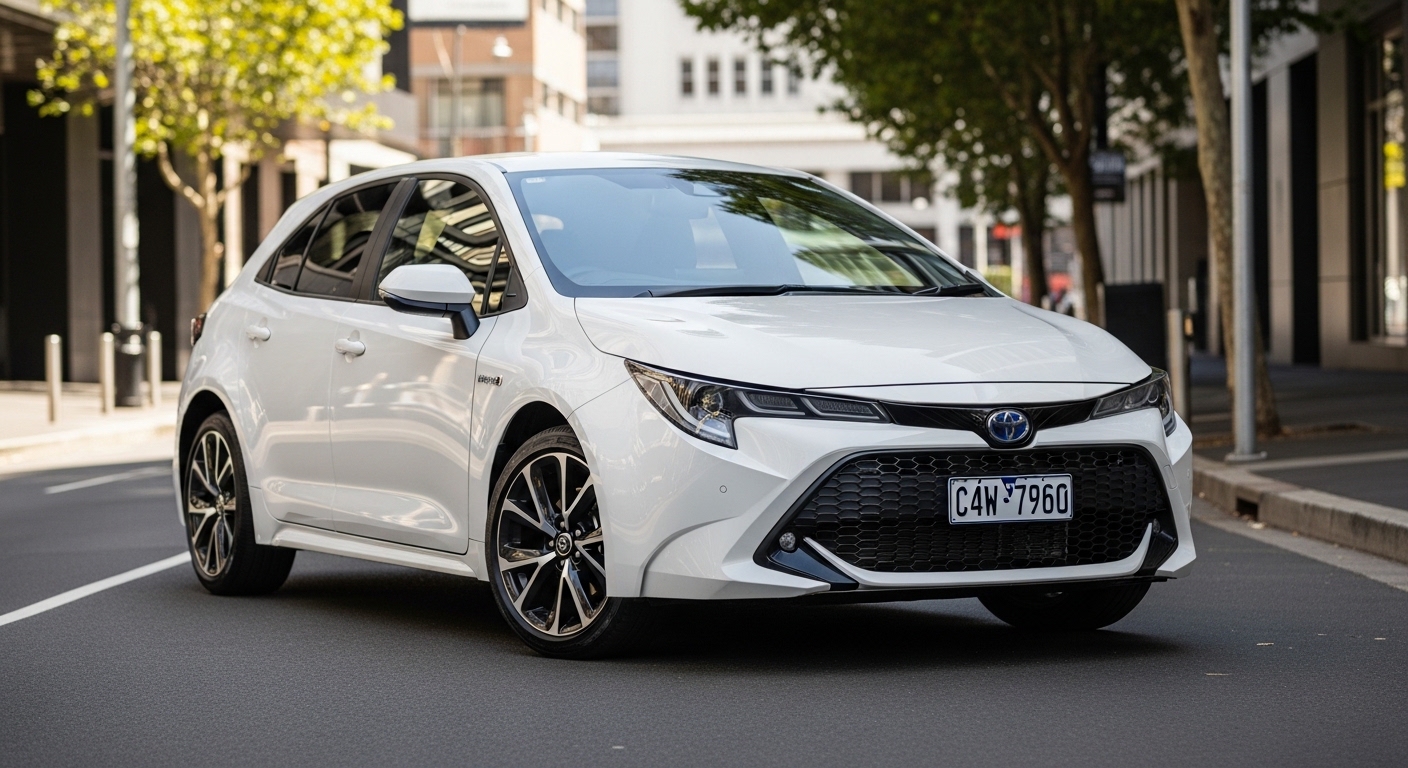 2023 Toyota Corolla (4WD Hybrid WXB)
The linked Corolla page lists a 4WD Hybrid WXB example and explains that current Japanese-delivered Corolla sedan hybrids use Toyota’s 1.8-litre 2ZR-FXE hybrid system, automatic transmission, and five-seat layout, with facelift hybrid sedan variants sitting in a 25.3 to 30.2km/L band depending on spec (Toyota Corolla page, 2026). That makes it a strong low-stress UberX pick for drivers who value efficiency more than rear-seat stretch room.
Best practical wagon and MPV options for UberX
If you want more luggage flexibility or occasional extra-seat usefulness without stepping up to XL size, wagon and compact MPV hybrids are worth a closer look. They still suit ordinary UberX work, but they cope better with airport bags, prams, and mixed family use.
Honda Shuttle
Honda Shuttle is the smart left-field option if you like the idea of Corolla running costs but want more boot space. A wagon body gives you more room for airport bags, prams, or shopping without stepping into SUV size. Sounds like a small thing? It matters when you are doing mixed suburban and airport runs.
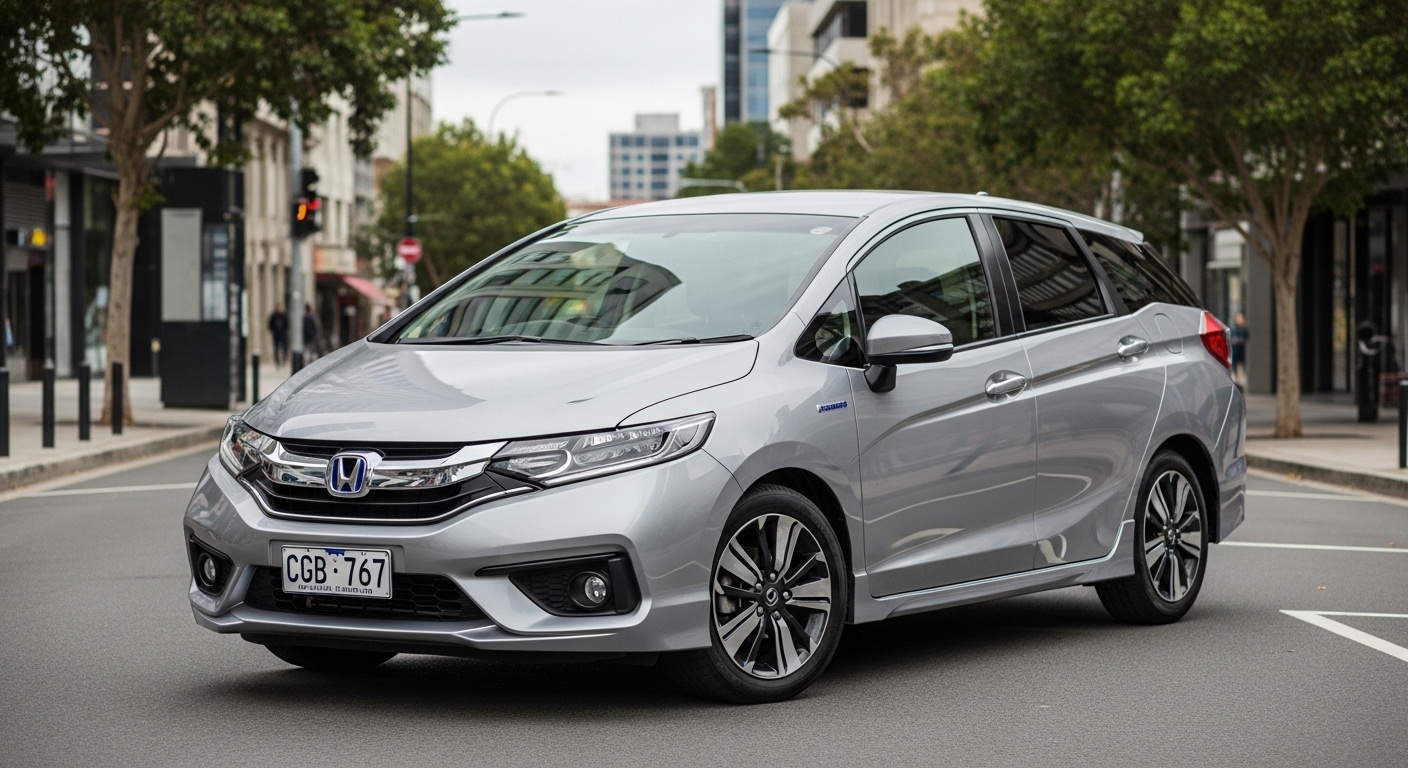 2019 Honda Shuttle (Hybrid Honda Sensing)
Honda’s 2022 official Shuttle spec sheet lists the GP7 Hybrid with Honda Sensing as a five-seat automatic wagon using a 1.496-litre petrol-electric hybrid system, with fuel economy quoted at 22.0km/L on the WLTC cycle and 27.8km/L on the older JC08 cycle (Honda Shuttle official spec sheet, 2022). That wagon layout is exactly why this car suits drivers who want more luggage flexibility than a typical hatch or small sedan.
Toyota Sienta
Toyota Sienta is probably the most practical city wildcard on this page. It gives you sliding doors, a smaller footprint than a big people mover, and genuine extra-seat flexibility for family use outside rideshare hours. If you spend most of your time weaving through inner-suburban streets, that compact shape can be a real advantage.
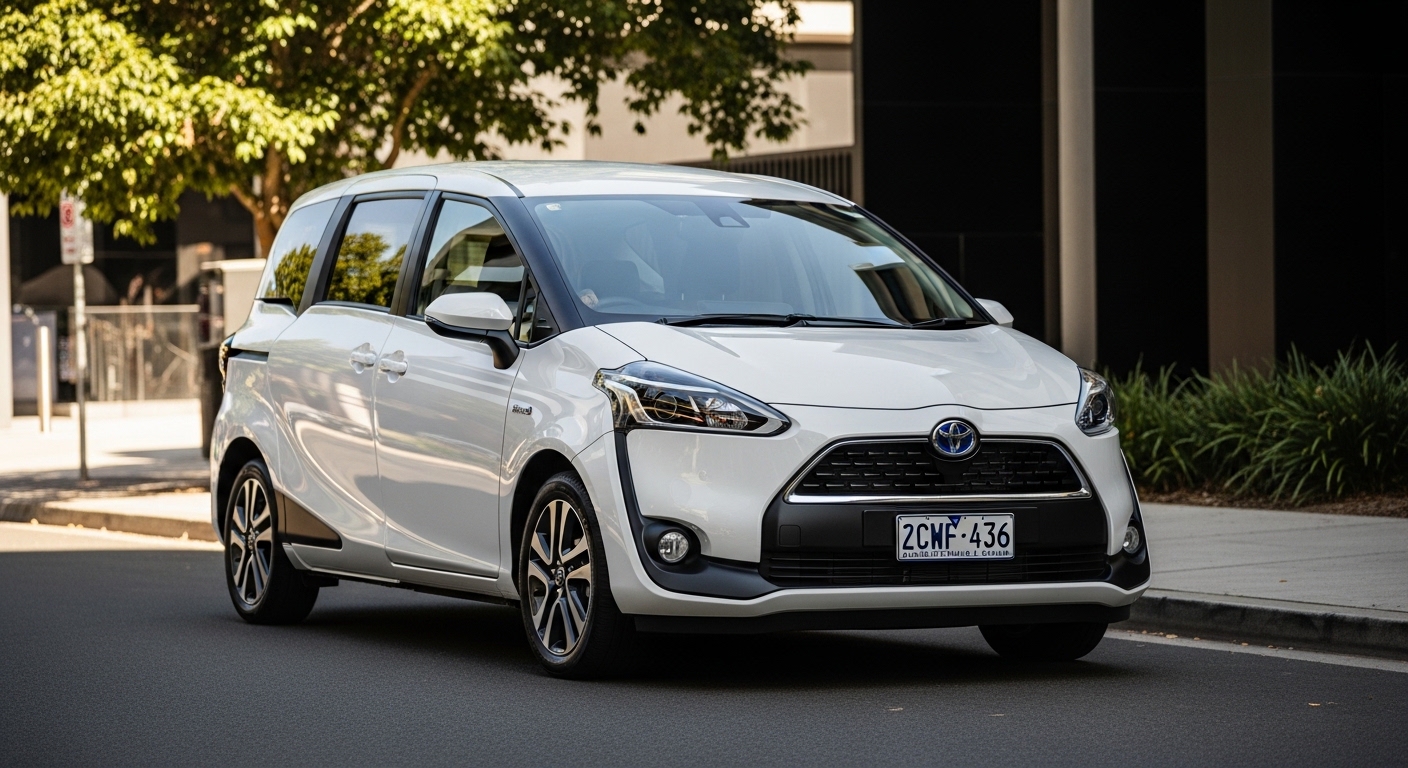 2020 Toyota Sienta (G)
Toyota’s official Sienta catalogue page for current hybrid variants shows 5-seat and 7-seat layouts, with WLTC fuel-economy figures from 25.3 to 28.8km/L depending on grade (Toyota Sienta catalogue, 2026). That still supports the core Sienta case here: compact size, sliding doors, and extra seating flexibility without stepping up to a much larger people mover. The catch is simple: it is better for practical UberX work than prestige-focused Comfort work, because passengers will notice the difference in cabin width and long-trip comfort.
Best people movers for UberXL in Australia
UberXL in Sydney and Adelaide requires 6 to 7 passengers plus the driver (Uber Sydney, 2026; Uber Adelaide, 2026). That is why a true people mover usually beats trying to stretch a smaller SUV into XL duty. Space, access, and luggage room matter just as much as seat count.
Toyota Noah
Toyota Noah makes sense for buyers who want a tall-cabin people mover without jumping to the size and cost of a full commercial van. It is easier to load, easier for older passengers to step into, and usually far more practical than a seven-seat SUV once every row is actually occupied. That is a big deal for airport trips.
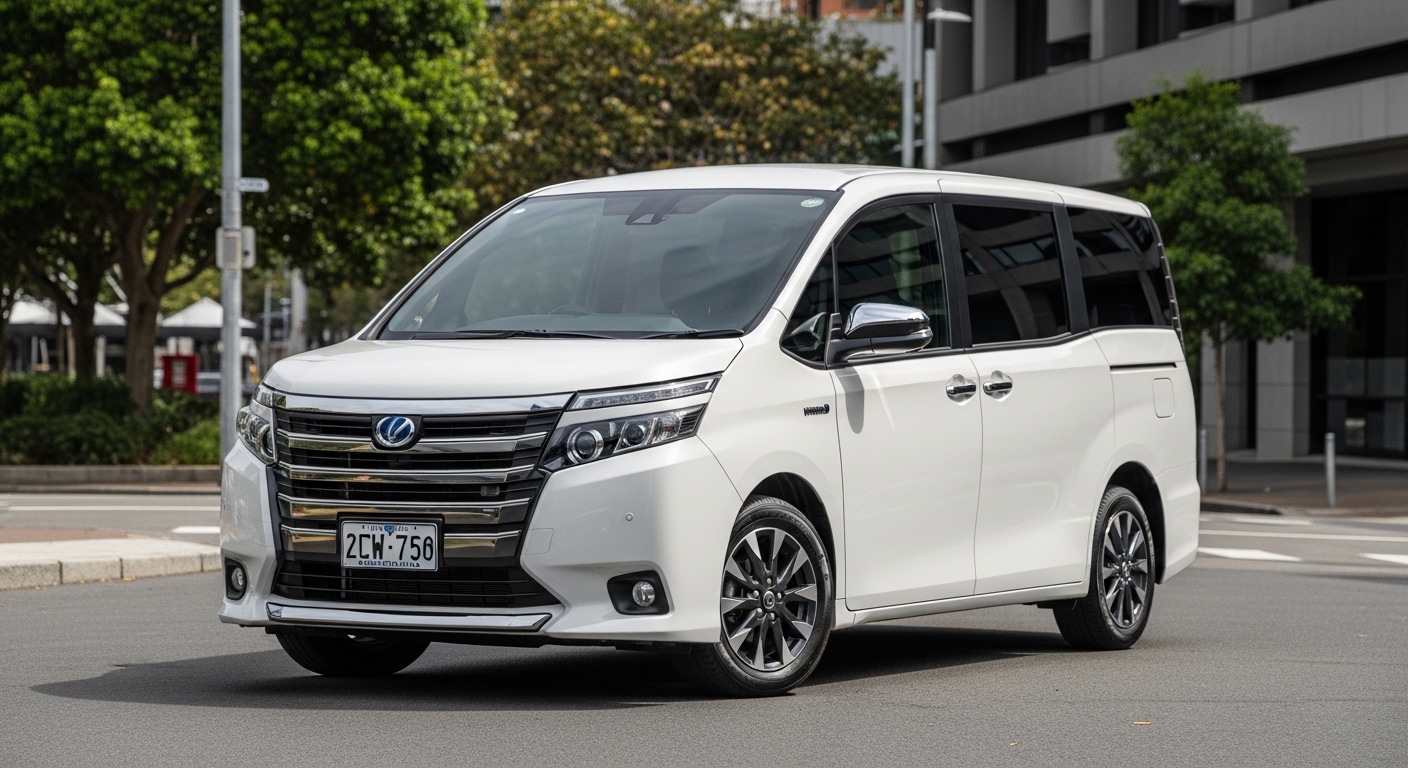 2023 Toyota Noah (HYBRID S-Z)
The Noah guide says hybrid versions use a 1.8-litre petrol engine plus electric motor, with 7-seat and 8-seat layouts and wide sliding doors (Toyota Noah page, 2026). The linked page also mentions some owner-reported city fuel use around 4.5 to 5.0L/100km, but treat that as a secondary guide rather than a manufacturer benchmark. That looks promising, but this is where honesty matters: a Noah may suit XL-style work, yet you should still check it against Uber’s approved-model list and exemption policy before buying. For more background on the process, read importing a vehicle from Japan.
Nissan Serena
Nissan Serena is the other strong people-mover option, especially if you like the idea of EV-like smoothness without needing to plug in. The Serena’s tall cabin, sliding doors, and flexible 7-seat or 8-seat layouts suit group work well. It is also one of the easier large-cabin vehicles to manage in suburban streets.
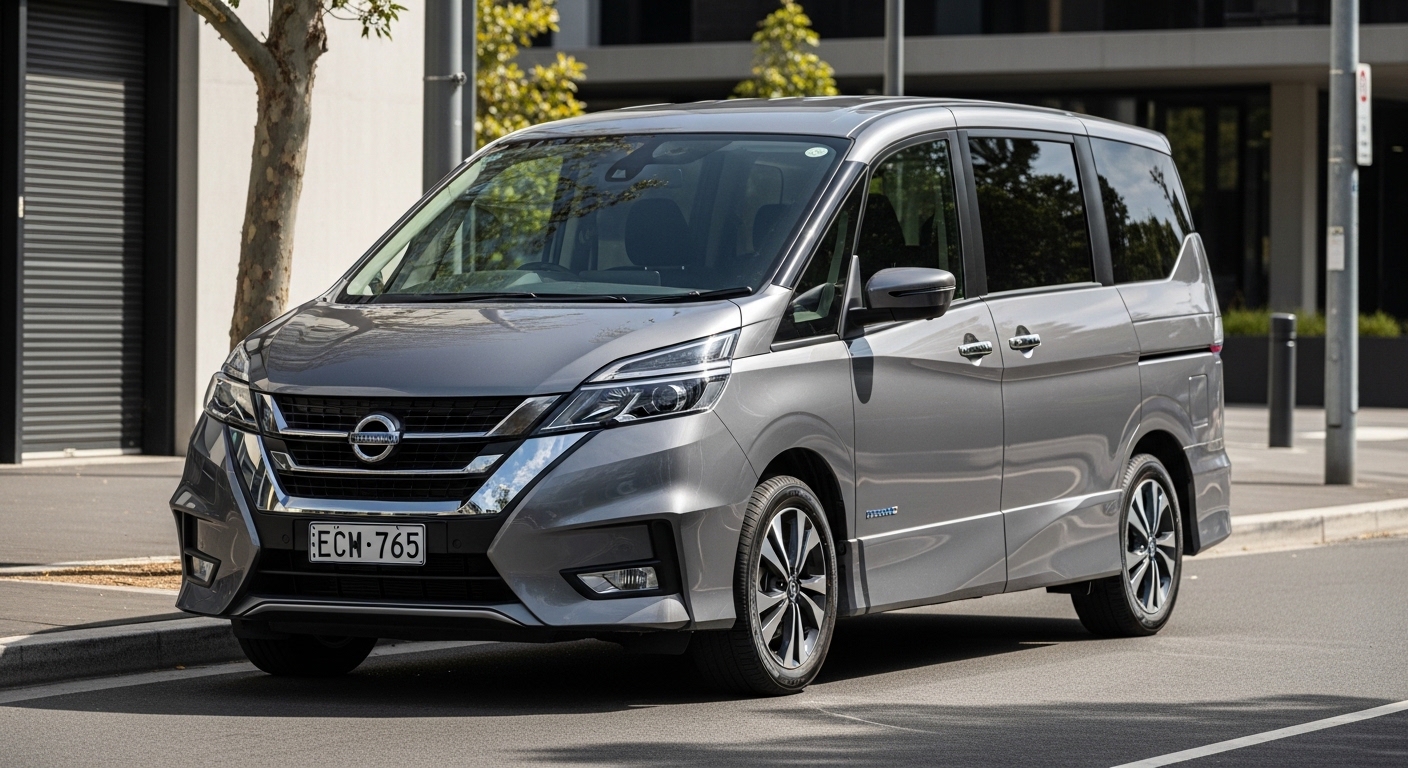 2021 Nissan Serena (E-Power X)
The Serena page explains the difference clearly. C26 S-Hybrid versions use a 2.0-litre petrol engine with mild-hybrid assist, while current-generation Serena e-POWER versions use a petrol engine as a generator and an electric motor to drive the wheels (Nissan Serena C26 specification PDF, 2013; Nissan Serena specifications, 2026). Nissan’s current Serena specifications page also lists WLTC fuel economy by grade for the e-POWER range, so you can compare the exact variant you are pricing rather than mixing generations or test cycles (Nissan Serena specifications, 2026). The linked page also says some owner-reported real-world use lands closer to 6.6L/100km, so treat that as a secondary guide rather than a manufacturer benchmark (Nissan Serena page, 2026). That makes the e-POWER version especially interesting for rideshare, but, again, it is worth checking against Uber’s approved-model list and exemption policy before buying.
Is a hybrid or an EV better for Uber in Australia?
A 2023 Tesla Model 3 shows 132Wh/km, 513km of range, and a $665 annual electricity-cost benchmark, while the 2024 Toyota Camry Hybrid shows 4.0L/100km and a $1,170 annual fuel-cost benchmark (Green Vehicle Guide Tesla Model 3, 2023; Green Vehicle Guide Camry, 2024). So yes, the EV can be cheaper to run, but only if charging is easy.
If you have dependable home charging, a Model 3 is a strong Uber car. Its current ANCAP result shows 90% Adult Occupant Protection, 95% Child Occupant Protection, and 89% Vulnerable Road User Protection (ANCAP Tesla Model 3, 2025). That is a serious safety story. The catch is downtime. If you live in an apartment, rely on public chargers, or do long unpredictable shifts, the cheaper energy figure can quickly be offset by inconvenience.
A hybrid is still the safer ownership bet for many Australian drivers. You refuel anywhere, you do not change your routine, and the cost gap is still respectable. That is why the Camry remains the most common sensible answer. It is not the cheapest energy user on paper, but it is one of the easiest cars to live with day after day.
| Vehicle | Official benchmark | Annual running-cost benchmark | Safety snapshot |
|---|---|---|---|
| Tesla Model 3 | 132Wh/km, 513km range | $665 | 90% adult, 95% child |
| Toyota Camry Hybrid | 4.0L/100km | $1,170 | 95% adult, 5-star ANCAP |
Using the Green Vehicle Guide annual-cost method as a base, here is a simple rideshare mileage scale-up. It is not a full ownership-cost model, because tyres, servicing and insurance vary, but it gives a cleaner comparison than vague guesses. If you want the lowest official energy spend, the EV wins. If you want the lowest hassle, the hybrid still has a very strong case.
| Vehicle | 500 km/week | 1,000 km/week | 1,500 km/week |
|---|---|---|---|
| Toyota Camry Hybrid | $2,173 | $4,346 | $6,519 |
| Tesla Model 3 | $1,235 | $2,470 | $3,705 |
| Toyota Corolla Cross Hybrid | $2,108 | $4,216 | $6,324 |
| Kia Carnival Hybrid | $2,910 | $5,820 | $8,730 |
What are the safest mainstream benchmarks for Comfort and XL?
The safest mainstream answer is still the Camry Hybrid for Comfort-style work, because it pairs an official 4.0L/100km figure with 95% Adult Occupant Protection, while the Carnival Hybrid gives XL buyers 5.8L/100km and eight seats (Green Vehicle Guide Camry, 2024; ANCAP Camry, 2024; Green Vehicle Guide Carnival, 2024).
If you want the safest default answer to "what is the best hybrid car for Uber Australia", the Camry Hybrid is still it. It is roomy enough for better passenger comfort, easy to explain to any buyer, and backed by a clean ANCAP story. Comfort buyers should still remember that the car itself is only half the requirement. Uber also wants a vehicle within the last 7 years, at least 20 completed trips, and a 4.85 driver rating (Uber Sydney, 2026).
The Corolla Cross Hybrid is the more compact mainstream alternative. Green Vehicle Guide lists it at 4.2L/100km and $1,135 per year, while ANCAP scores it at 85% for adult occupant protection, 88% for child occupant protection, 87% for vulnerable road user protection, and 83% for safety assist (Green Vehicle Guide Corolla Cross, 2024; ANCAP Corolla Cross, 2022). It is easier around town than a Camry, but the rear seat does not feel quite as relaxed.
For XL, the clean mainstream benchmark is the Kia Carnival Hybrid. Green Vehicle Guide lists 5.8L/100km, $1,567 annual fuel cost, and eight seats, while ANCAP confirms that the five-star rating now applies to diesel, petrol and 1.6-litre petrol hybrid variants (Green Vehicle Guide Carnival, 2024; ANCAP Carnival Hybrid, 2025). If you want a simpler, fleet-style answer for XL, it is hard to argue with that.
Which Uber car fits your driving pattern best?
Comfort only accepts vehicles manufactured within the last 7 years, and Uber asks Comfort drivers to have at least 20 trips plus a 4.85 rating (Uber Sydney, 2026). In other words, the right Uber car depends on your city, trip mix, and whether you can actually access higher-paying tiers.
If you mostly do short metro trips and want the easiest low-risk answer, start with a Corolla Hybrid or Camry Hybrid. If you want more luggage room without SUV bulk, the Shuttle is worth a look. If you need occasional extra seats in a compact footprint, the Sienta is the practical outsider. If XL-style work is the goal, a Carnival, Noah or Serena-style people mover is the right direction. If home charging is easy and predictable, the Model 3 has the best official running-cost story.
If you want to compare used hybrid cars for Sydney buyers or ask about importing a vehicle from Japan, Carbarn can help with inspected vehicles, warranty options, finance, nationwide delivery, Japan sourcing, in-house compliance support, and registration-ready guidance for buyers who want either a locally available hybrid path or a harder-to-find Japanese-market alternative.