



Ready to Hit the Road in Style?
Save money and reduce emissions with vehicles designed to deliver exceptional mileage. Visit our inventory and find a car that fits your lifestyle.
Ready to Hit the Road in Style?
Save money and reduce emissions with vehicles designed to deliver exceptional mileage. Visit our inventory and find a car that fits your lifestyle.
A Sydney electrician and a Mascot shuttle operator can both walk in wanting a HiAce. They will drive away in completely different vans.
That is the trouble with shopping for one. The badge is identical on every example. Underneath sit two wheelbases, several roof heights, cargo bodies, crew bodies and a 12 seat bus, plus a wall of Japanese model codes like GDH201 and KDH226. None of it means much until you line it up against the work you actually do.
This guide sorts the range by buyer rather than by spec sheet. Trades, crews, shuttle operators and used-market buyers each get a straight answer.
Quick Answer
- The LWB cargo van suits most solo Sydney tradies: 6.2 m³ of load space and a body short enough for a standard parking space.
- The SLWB stretches to 9.3 m³, which earns its keep on refrigeration and high-volume delivery runs.
- The Commuter is a 12 seat bus-class van built for airport shuttles and fixed routes, not for school runs.
- The HiAce held 49.7% of Australia's 2.5 to 3.5 tonne van segment (Drive's 2026 HiAce LWB review).
- 4WD and used-market diesel options come from Japan under model codes such as GDH226 and GDH201.
Why Does the HiAce Dominate Sydney's Commercial Roads?
The Toyota HiAce is Toyota's commercial van range, sold in Australia in LWB (Long Wheelbase) and SLWB (Super Long Wheelbase) cargo, Commuter, and Crew Van configurations. Toyota moved 14,887 of them nationally in 2024 on VFACTS figures reported by Drive — enough volume to claim 49.7% of Australia's 2.5 to 3.5 tonne van segment, according to Drive's 2026 LWB review. That depth of market penetration matters to a used-car buyer: parts are everywhere, and every mechanic has seen one.
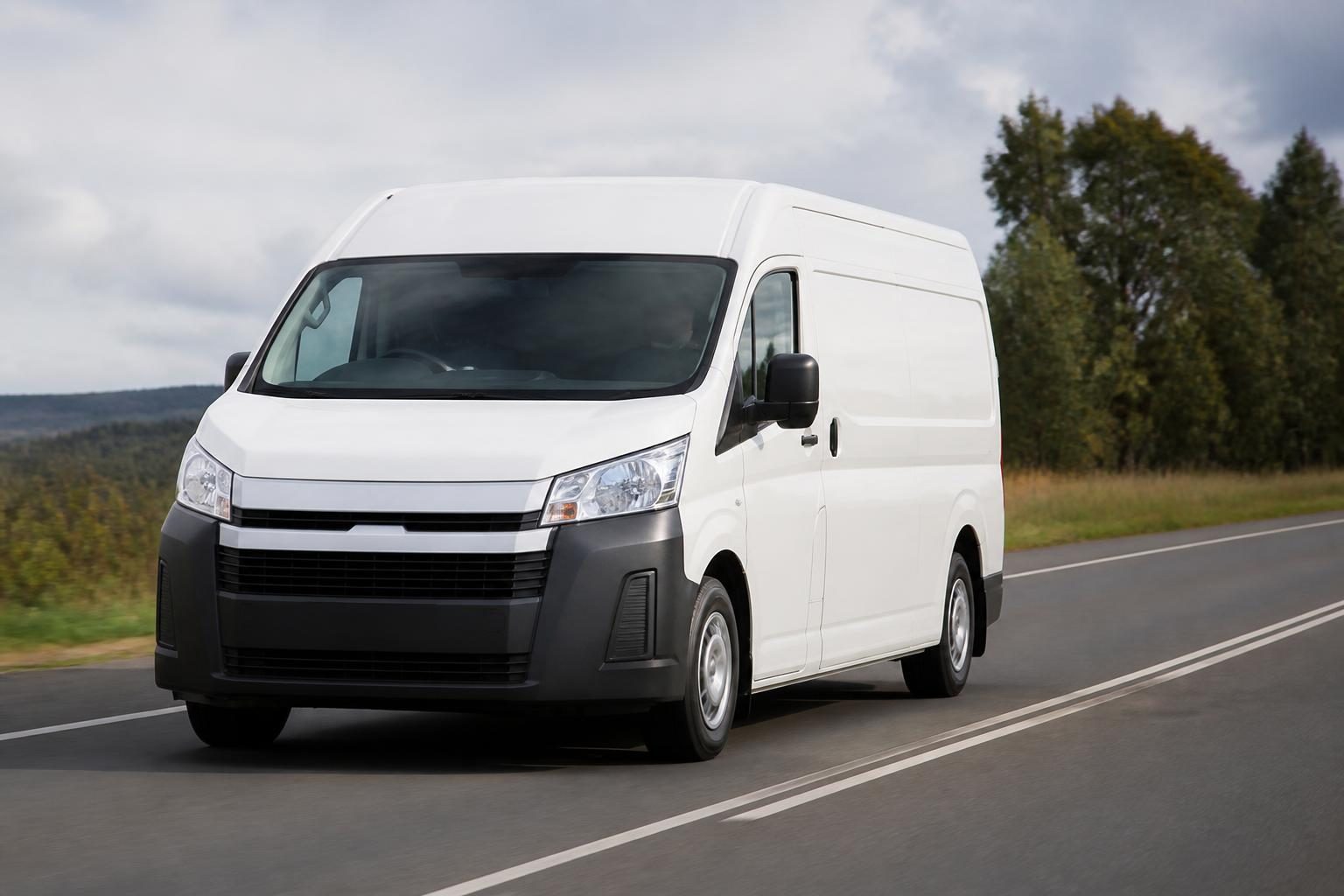 A white commercial cargo van travels along a rural sealed highway.
Sydney is hard on a work van. Stop-start traffic on the M4 and M5, a loaded run out to Penrith, then a 12 hour day repeated five days a week. The 1GD-FTV — Toyota's 2.8 litre common-rail turbo diesel — delivers 130 kW and 450 Nm (auto) or 420 Nm (manual) from 1,600 rpm, so it pulls without needing revs. CarExpert's 2026 review also notes the current van holds a 5-star ANCAP (Australasian New Car Assessment Program) rating.
None of that tells you which one to buy. The variant you need depends entirely on what goes in the back.
LWB or SLWB: Which HiAce Cargo Van Do You Need?
The LWB (Long Wheelbase) and SLWB (Super Long Wheelbase) cargo vans are the workhorse pair of the HiAce range. The LWB carries 6.2 m³ of load space in a 5,265 mm body; the SLWB stretches to 9.3 m³ in a 5,915 mm body — a 650 mm difference that decides where you can park, per Carbarn's verified HiAce dimensions guide. Drive's 2026 LWB review lists payload at 1,095 kg for the barn-door LWB and 1,115 kg for the tailgate version, so the rear door choice alone swings capacity by 20 kg. Official combined fuel use is 7.8 L/100km for the LWB auto and 8.1 L/100km for the SLWB auto (Green Vehicle Guide, gov.au, 2025). Drive recorded 9.2 L/100km in real-world testing — that is the figure worth budgeting on. Earlier used LWB vans, like the 2020 TRH200V, ran the 1TR-FE petrol engine instead, which is cheaper to service but thirstier under load.
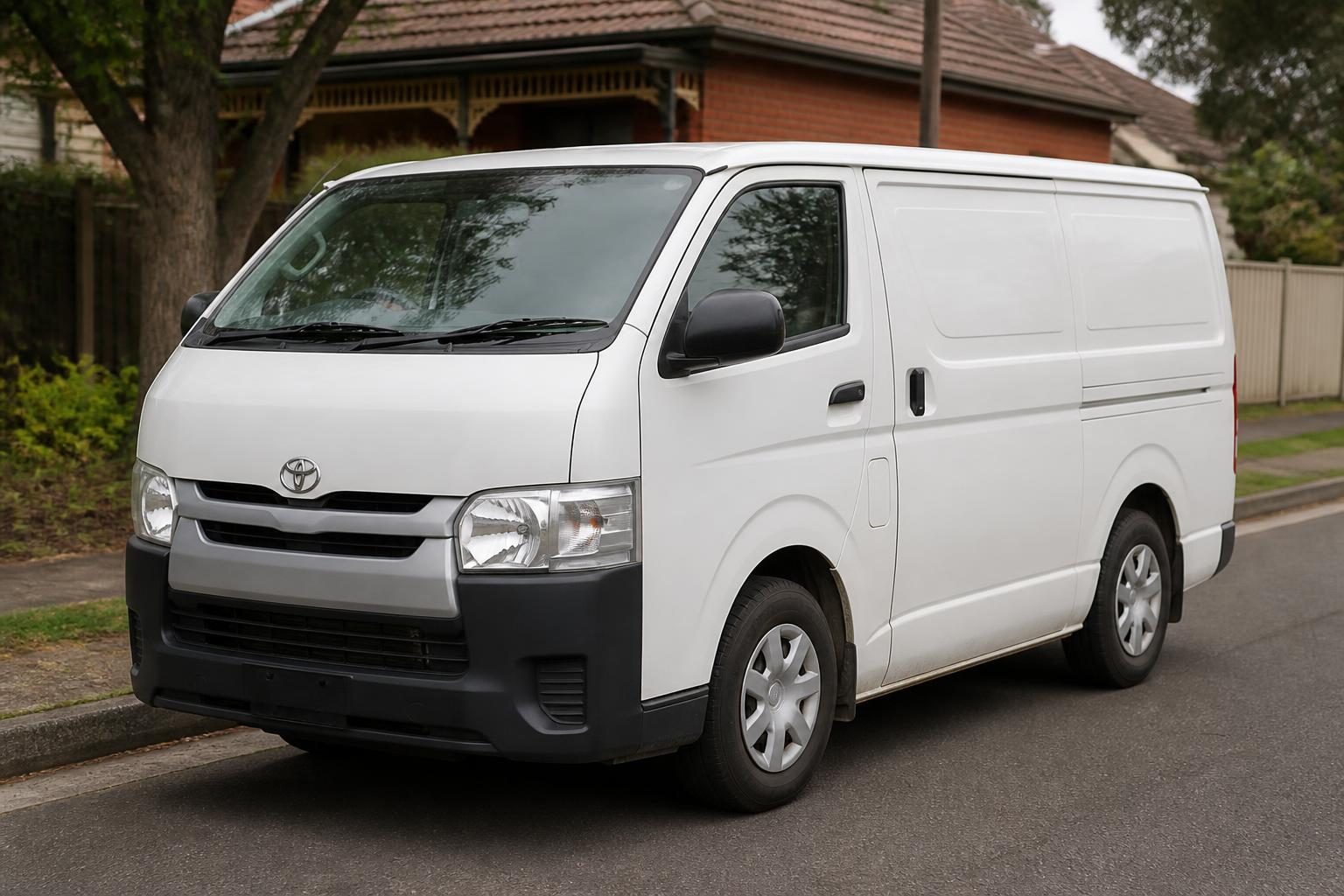 2020 Toyota HiAce (LWB Cargo Van)
The LWB cargo van fits a standard Australian parking bay. The SLWB does not, and you feel that every time you pull into a Surry Hills loading zone or a tight industrial cul-de-sac in Silverwater. If you're parking at job sites in Parramatta or Blacktown and loading up with tools daily, the LWB is the one to shortlist.
Pick the SLWB only if volume genuinely pays you back. For a solo sparky or plumber, the extra 3.1 m³ is mostly air you're pushing through traffic.
HiAce Commuter vs Cargo Van: Which Suits Your Operation?
The Commuter is the 12 seat bus-class member of the family, and it is a purpose-built passenger vehicle rather than a van with seats bolted in. A left-side sliding door and a high roof are the reason operators keep buying it: passengers board upright in tight drop-off zones.
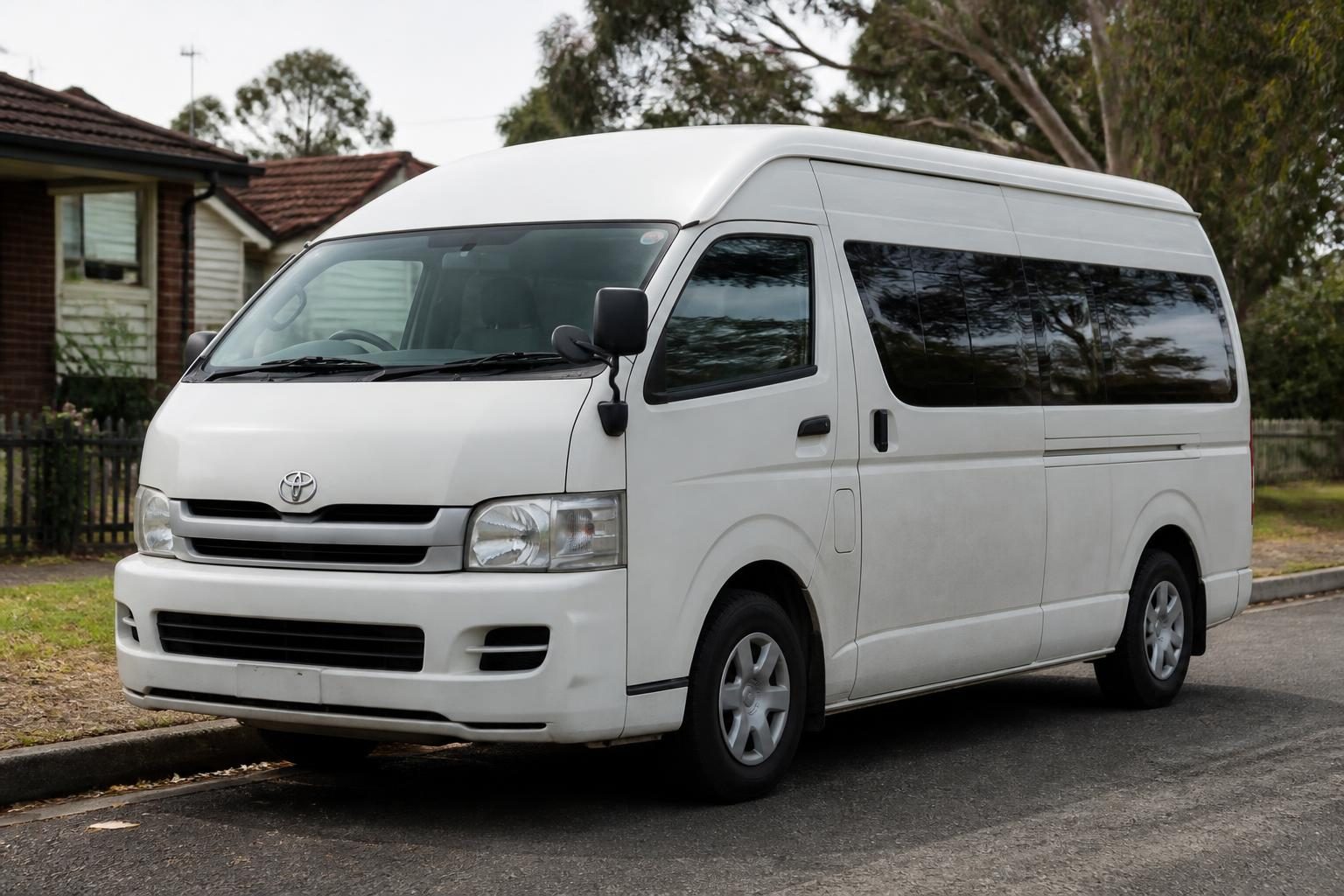 2012 Toyota HiAce (SLWB Welcab Commuter)
The used market also throws up SLWB people-mover HiAce configurations that sit between a van and a bus. The 2012 KDH206K — a Welcab (Toyota's accessible-boarding conversion body) — is a good example: SLWB body, 10 seats, 2,230 mm tall, 1KD-FTV 3.0 litre turbo diesel and an automatic gearbox. A high-roof 10 seater like that suits a hotel circuit or a community group better than a full 12 seater, because it is easier to drive and easier to park.
Be honest about what the Commuter is not. It is a commercial vehicle with commercial ergonomics: firm bench seating, a hard-wearing interior and a bus-like driving position. Families after eight seats for the school run and weekend trips will be happier in something like the Nissan Serena. Tradies should skip it too, since the rear is passenger space, not a load floor. If your business runs a fixed route and needs to move 10 or more passengers reliably, the Commuter is built for exactly that.
The Crew Van: When You Move a Team and Their Gear
The Crew Van seats six, driver included, and trades load space for a second row. Payload drops to around 954 kg on the LWB Crew Van, and official combined fuel use stays at 7.8 L/100km (Green Vehicle Guide, gov.au, 2025). One vehicle, five workers, and the gear still travels in the back.
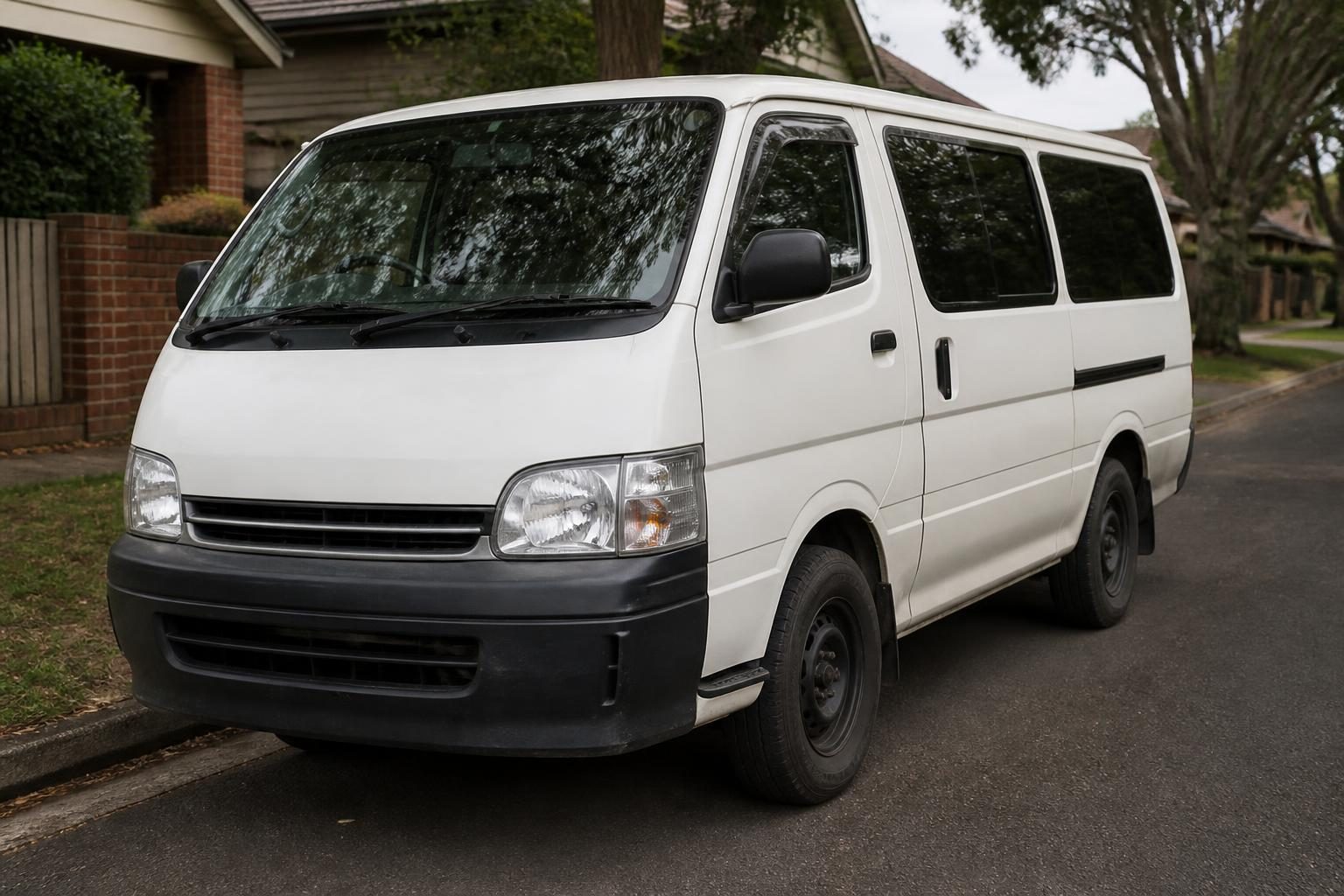 Toyota HiAce LWB Crew Van
Think of four solar installers heading to a job in Western Sydney. Everyone rides together, the rails and panels go in behind them, and nobody follows in a second ute burning its own fuel, rego and insurance. That consolidation is the whole argument for a Crew Van.
The trade-off is real. A standard LWB carries noticeably more, because the Crew Van gives up load floor to seating. If you move a crew and tools in the same vehicle most days, the Crew Van removes the second-ute problem. If cargo is king and the team travels separately anyway, stay with the plain van.
Need 4WD or a Used-Market Diesel HiAce?
Factory 4WD is not part of Toyota's current new Australian HiAce range. Every 4WD HiAce here arrives either as an already-complied used van or as a Japan-sourced import, and Carbarn's live HiAce 4WD listings currently run from $27,900 to $36,900 across eight vehicles.
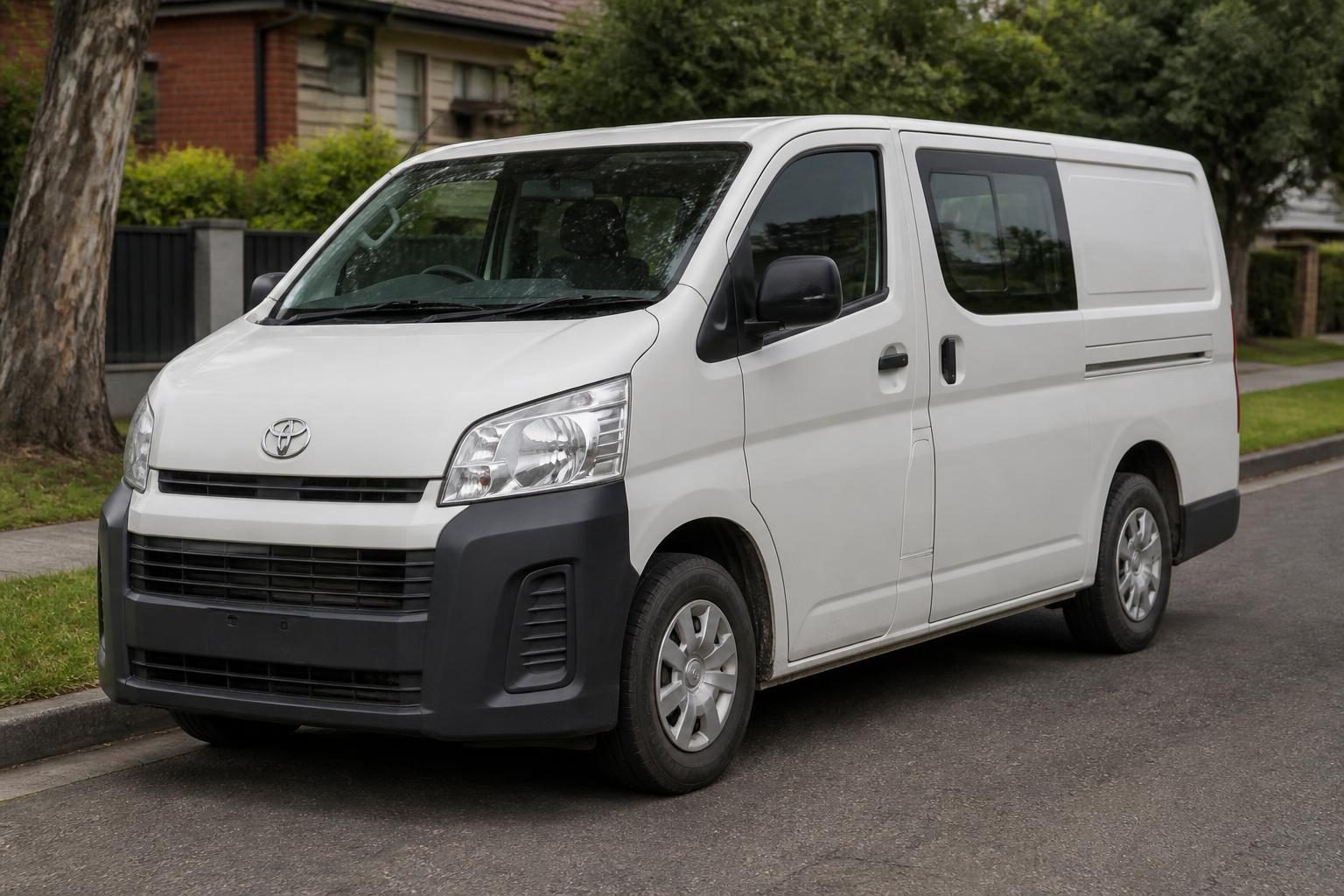 2024 Toyota HiAce (Modern 4WD Diesel)
The GDH201 import guide covers the 2WD option, eligible for import under the campervans and motorhomes criterion, with petrol or diesel engines including the 1GD-FTV.
The GDH226 4WD import guide covers the modern 4WD pick. It comes as an SLWB high roof with the 1GD-FTV turbo diesel and a six-speed auto, approved under SEVS (Specialist and Enthusiast Vehicle Scheme) numbers SEV-000719 and SEV-000813. Like the KDH226, the approval sits under the campervans and motorhomes criterion — so the vehicle must be a campervan or motorhome build. It suits outer-Sydney operators on gravel driveways and unsealed access roads who need a modern-engine, campervan-compliant 4WD.
The KDH226 import page covers the older 1KD-FTV — a 3.0 litre turbo diesel — and is 4WD only. It comes in long or super long wheelbase with 2, 3, 5 or 6 seats. The campervans and motorhomes approval criterion applies here too, so read the fine print on this one. Pricing is quoted on request. For a Sydney reference point on the same engine family, a 2012 HiAce 4WD Diesel High Roof is listed at $28,900 with 147,816 km. These vehicles are sourced directly from Japan and go through Australian compliance before delivery, and the full import guide covers the model codes in depth.
Which HiAce Is Right for You?
Match the van to the job, then check the parking. That order saves most buyers a wasted test drive.
| Your situation | Best-fit HiAce |
|---|---|
| Solo tradie, tools, tight site parking | LWB Van (auto) |
| High-volume delivery or refrigeration runs | SLWB Van |
| Crew of four or five plus equipment | LWB Crew Van |
| Shuttle or fixed-route group transport | Commuter (12 seat) |
| Used-market diesel, 2WD | GDH201 (Japan-sourced) |
| 4WD with the modern 1GD diesel | GDH226 (Japan-sourced) |
| 4WD campervan or motorhome build | KDH226 (Japan-sourced) |
HiAce Options Through Carbarn
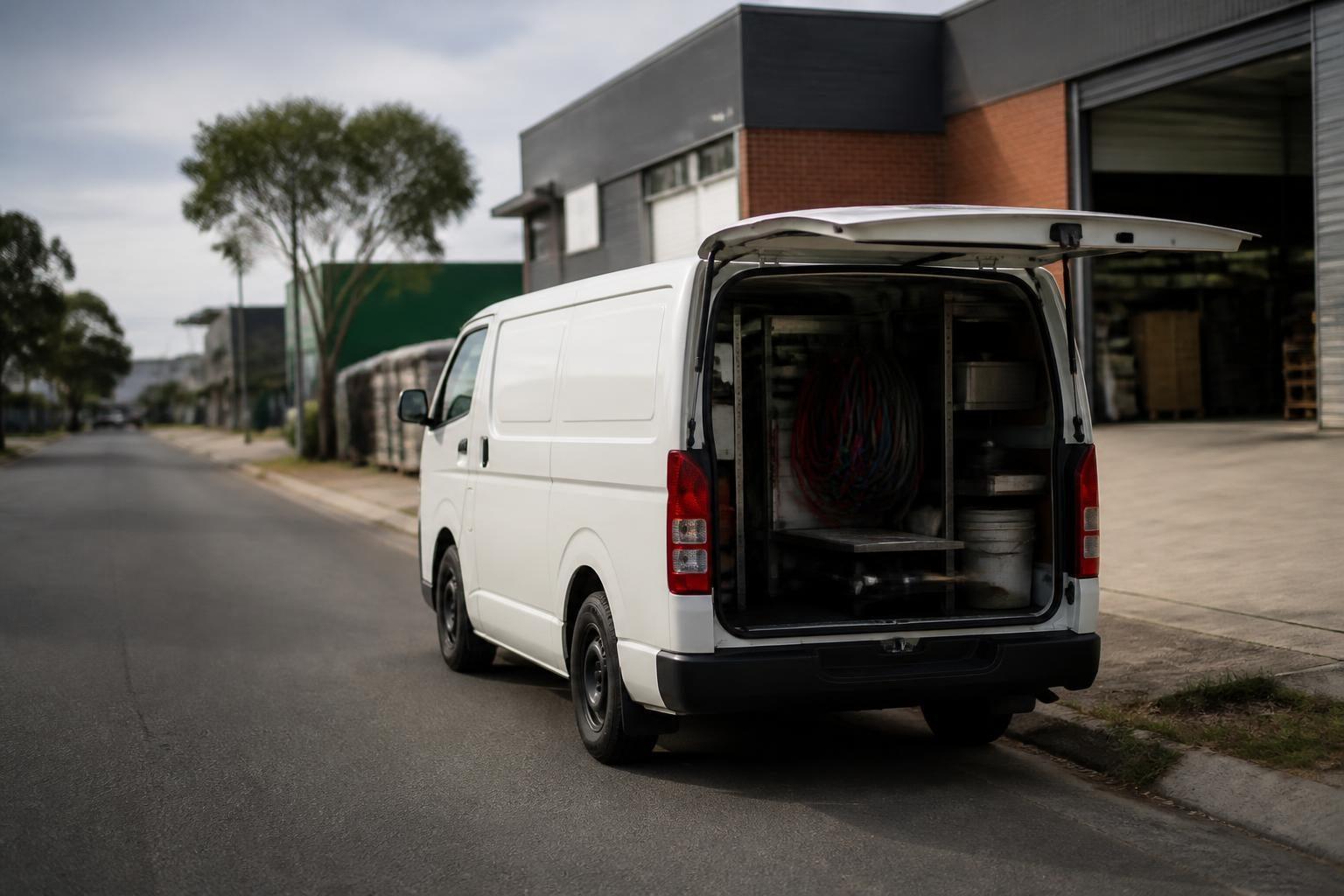
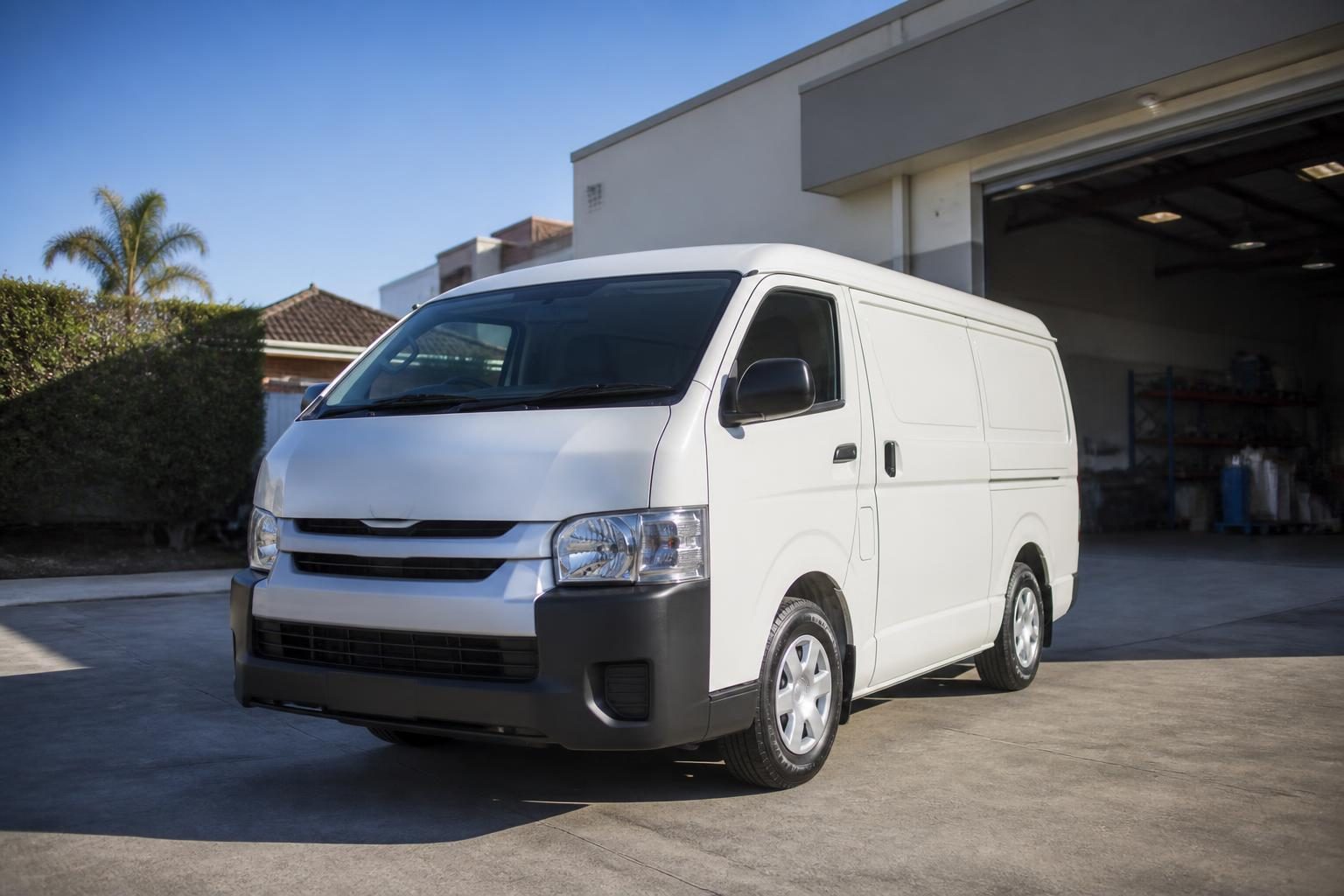 White commercial van outside a suburban workshop and open warehouse.
Carbarn is a licensed NSW motor dealer (MD 056471) working out of a RAW-certified workshop at Lidcombe in Sydney. HiAce 4WD vans that are already complied and ready to inspect sit on the HiAce 4WD listings page with live prices, and the wider used HiAce range covers cargo, high roof and people-mover bodies. Japan-sourced variants including the GDH201, GDH226 and KDH226 can be ordered to your spec, with auction-sheet verification, bidding only on your approval, freight, customs, in-house SEVS compliance, AVV (Australian Vehicle Verifier) inspection, RAV entry, warranty, finance and nationwide door delivery all handled by the same team.