


Ready to Hit the Road in Style?
Save money and reduce emissions with vehicles designed to deliver exceptional mileage. Visit our inventory and find a car that fits your lifestyle.
Ready to Hit the Road in Style?
Save money and reduce emissions with vehicles designed to deliver exceptional mileage. Visit our inventory and find a car that fits your lifestyle.
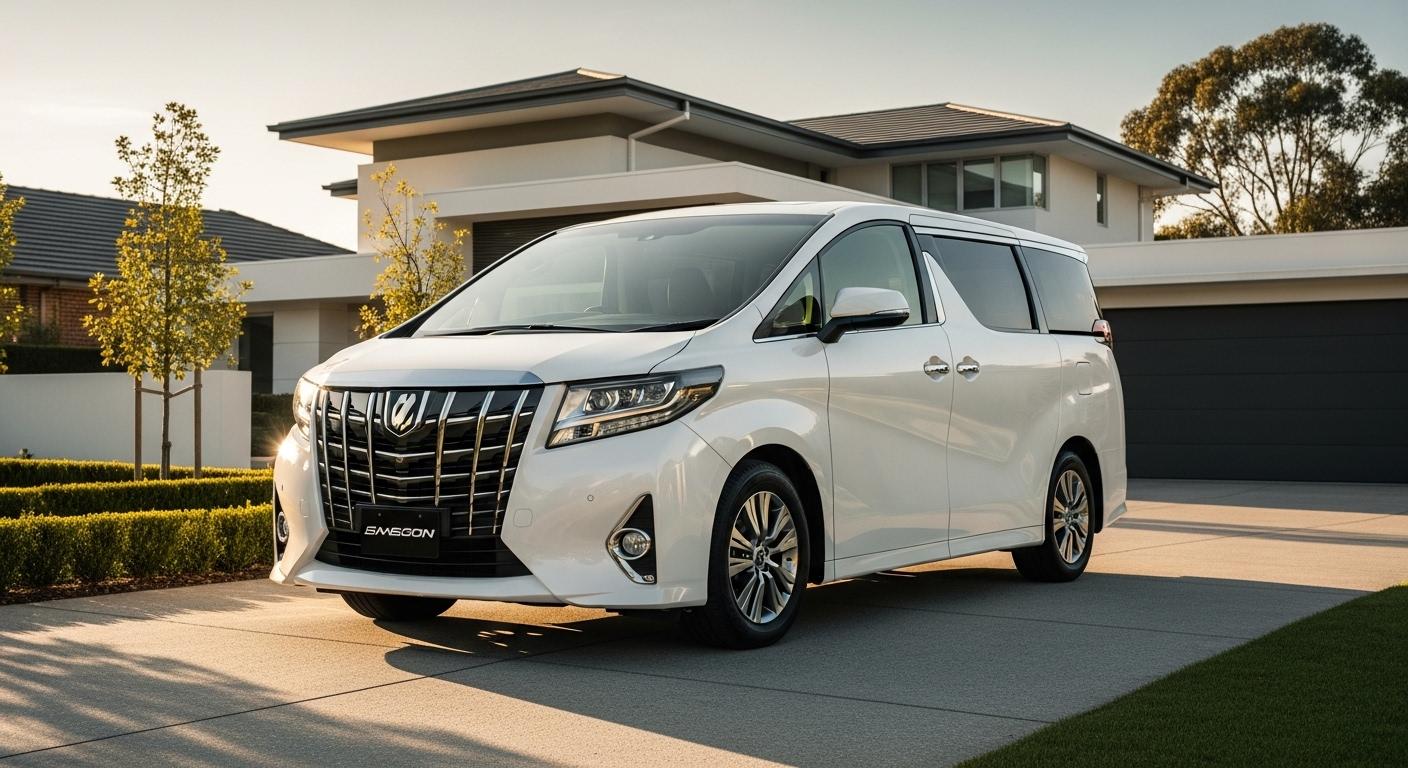
 The AYH30 hybrid is the Alphard most Australian import buyers chase, but the grade you pick changes everything.
Toyota Alphard AYH30 Hybrid Buyer's Guide: Which Grade Is Worth It?
You've spotted a Toyota Alphard online, fallen for the lounge-like cabin, then noticed something odd. Two cars from the same year, both badged hybrid, can be priced thousands apart. One reads "Hybrid X", the next says "Executive Lounge", and the listings rarely explain why that matters.
That gap is where buyers get stuck. The Alphard isn't one car. Instead, it's a family of grades, and the badge on the tailgate shifts the cabin, the seats, the wheels and the price far more than most people expect.
So this guide walks through the AYH30 hybrid grade by grade, in plain terms. You'll see what each one gives you, who it suits, what it costs to run, and which build years are worth chasing. The goal is simple: match the right Alphard to how you'll actually use it.
Quick Answer
- The AYH30 is the 2.5-litre hybrid 30 Series Alphard, built from 2015 to 2023, returning 19.4 km/L (5.15 L/100km) on the JC08 test cycle (paultan.org, 2026).
- Hybrid G is the all-rounder most self-drivers land on; Executive Lounge is the rear-seat flagship; SR adds the sporty aero look.
- Real running costs sit near $1,800 a year in fuel at 15,000 km, cheaper than a diesel people mover.
- Landed in Australia, a clean import sits in roughly the low-$60K range once GST, duty and compliance are included.
- The build-year sweet spot is July 2019 onwards for English Display Audio, Apple CarPlay and Toyota Safety Sense 2.0.
What Makes the AYH30 Alphard Hybrid Worth a Look?
The Toyota Alphard AYH30 is the 2.5-litre hybrid version of Toyota's 30 Series, built between 2015 and 2023. Toyota sold 60,225 Alphards in Japan in 2022 alone (Chasing Cars, 2023), which is exactly why the used import pipeline runs so deep and so many grades reach Australia.
First, the codes. AYH30 is the 2.5-litre hybrid family. In Japanese paperwork you'll also see AYH30W, which is the same hybrid wagon. The earlier 20 Series hybrid wore the ATH20W code, so a 2012 or 2013 hybrid Alphard is the previous generation, not an AYH30. That distinction matters when you compare prices and equipment.
Under the bonnet sits the 2AR-FXE, a 2.5-litre Atkinson-cycle four-cylinder making about 112 kW and 206 Nm on its own, for a combined system output near 145 kW with the electric motors. Drive then goes through an e-CVT, so there are no conventional gears, just smooth, stepless delivery that suits stop-start traffic. This drivetrain carries over to every grade in the range, which is worth keeping in mind as the prices climb.
Most hybrids also run Toyota's E-Four all-wheel drive. The rear wheels are turned by a separate electric motor rather than a driveshaft, so it adds wet-road traction and stability when the car is loaded. Even so, it's a confidence system for sealed roads, not an off-road 4WD. If you want bush tracks, this isn't the segment.
What Does an Alphard Hybrid Cost to Run?
Running costs are where the hybrid earns its keep. At a realistic 7.5 L/100km over 15,000 km a year, the Alphard burns about 1,125 litres. With unleaded averaging around $1.60 a litre in mid-2026, helped by the federal fuel-excise relief that started in April (Australian Institute of Petroleum, 2026), that works out to roughly $1,800 a year in fuel for a near-2-tonne luxury people mover. Pump prices are expected to climb again once that relief ends, so treat this as the low end of the band.
Put that next to the alternatives. A diesel Kia Carnival, rated at 6.5 L/100km combined (CarsGuide, 2024), still lands close to $2,400 a year once you allow for real-world driving, city traffic and dearer diesel pricing. Larger petrol vans, by comparison, drink far more.
In practice, the hybrid's real advantage shows up around town. In Sydney stop-start running, the electric motor does the low-speed work, the engine rests, and you stop wincing every time you pull into the servo. Highway economy is less dramatic, but it stays comfortably efficient for the size.
One honest caveat: the official JC08 figure of 19.4 km/L is a lab number. Across the cars we've landed, owners report 11 to 14 km/L (7.1 to 9.1 L/100km) in mixed use (paultan.org, 2026). Plan around that real-world band, not the brochure.
How Do the AYH30 Hybrid Grades Compare at a Glance?
The grade decides almost everything that separates one Alphard from another. Wheel size, seat hardware and cabin focus all move with the badge, and together they drive the price more than the year does. Below is the verified grade map, with tyre data cross-checked against (Wheel-Size.com).
| Grade | Body | Standard wheels | Seating | Second row | Best for |
|---|---|---|---|---|---|
| Hybrid X | Standard | 16-inch (215/65 R16) | 8-seat | Split bench | Flexibility and cargo |
| Hybrid G | Standard | 16-inch (215/65 R16) | 7-seat | Captain's chairs + aisle | Families, self-drivers |
| Hybrid G F Package | Standard | 16 or 17-inch | 7-seat | Power seats + ottomans | Comfort without the flagship price |
| Hybrid SR | Aero | 17-inch (225/60 R17) | 7-seat | Captain's chairs | Sportier owner-drivers |
| Hybrid SR C-Package | Aero | 17-inch | 7-seat | Full leather + ottomans | Premium owner-drivers |
| Executive Lounge | Aero | 17- or 18-inch | 6-seat (some 7) | VIP power seats | Rear passengers, chauffeur use |
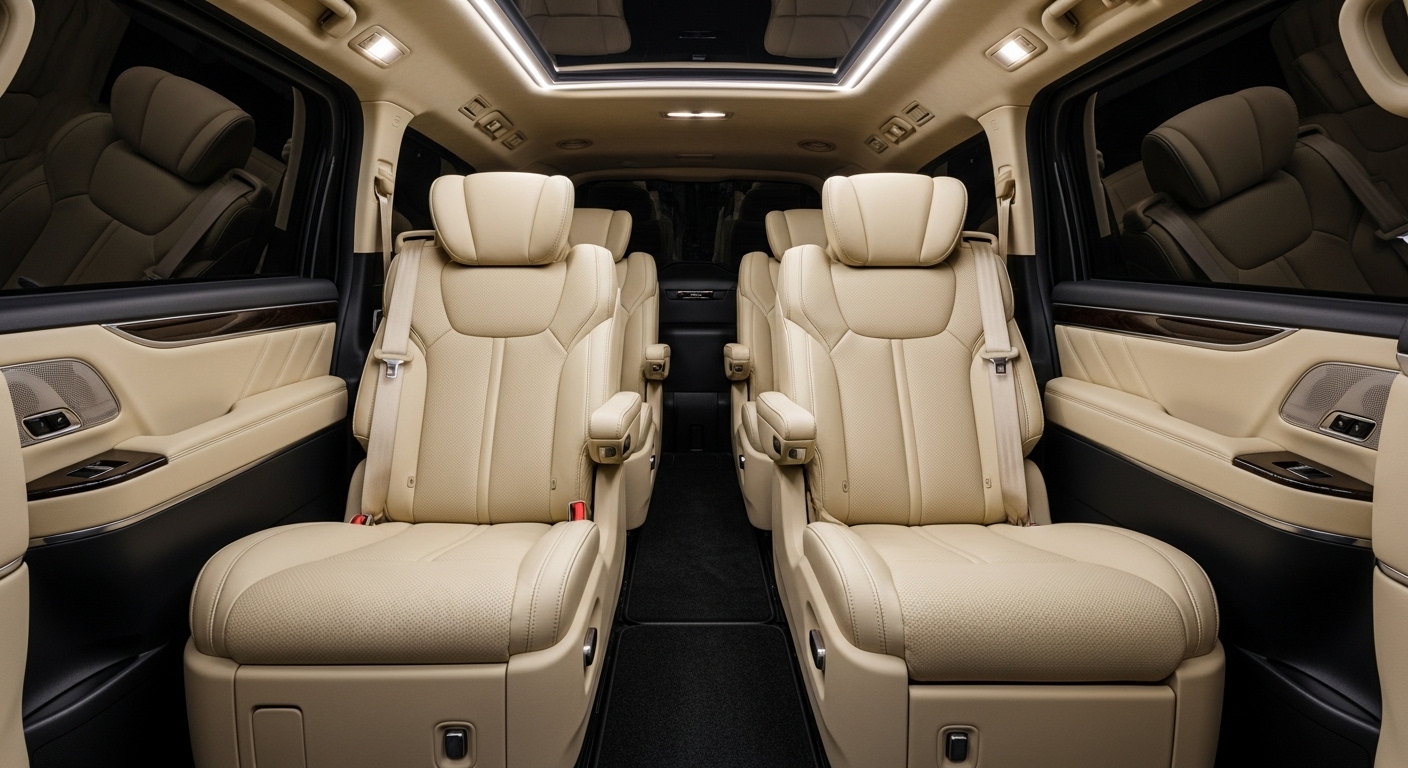 The centre walk-through aisle on the seven-seat grades is one of the Alphard's most useful family features.
A quick naming note is worth keeping straight. On the hybrid, the sporty aero grade is called SR, while the petrol cars use S instead. So an "S C-Package" is a petrol Alphard, whereas the hybrid equivalent is the "SR C-Package". Mixing the two up is the most common listing error we see buyers make.
Is the Hybrid X Enough for Most Families?
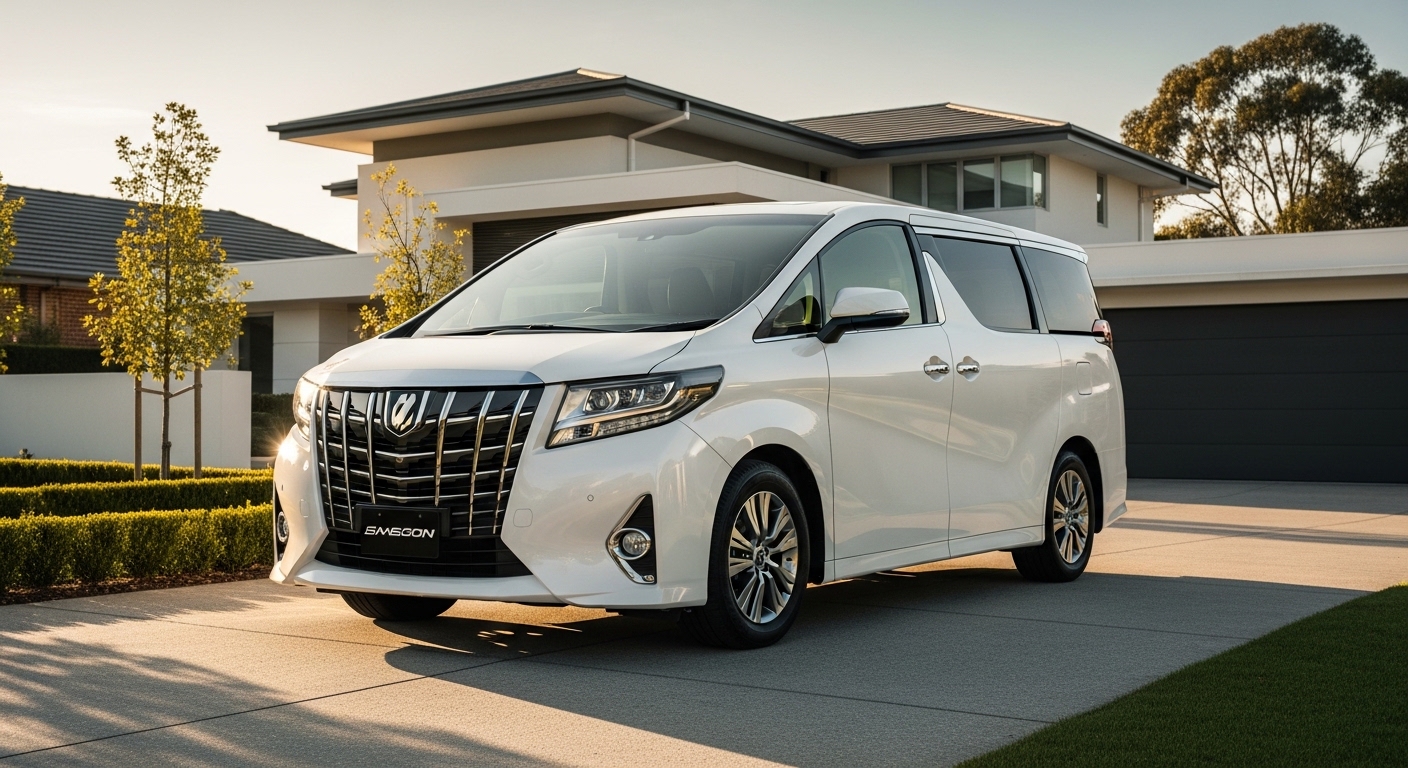
The Hybrid X is the value entry point, and for plenty of buyers it's all the Alphard they need. It keeps the parts that matter most: the quiet cabin, the long-wheelbase ride, the soundproofing and the smooth E-Four drivetrain, without charging for rear-seat theatre you may rarely use.
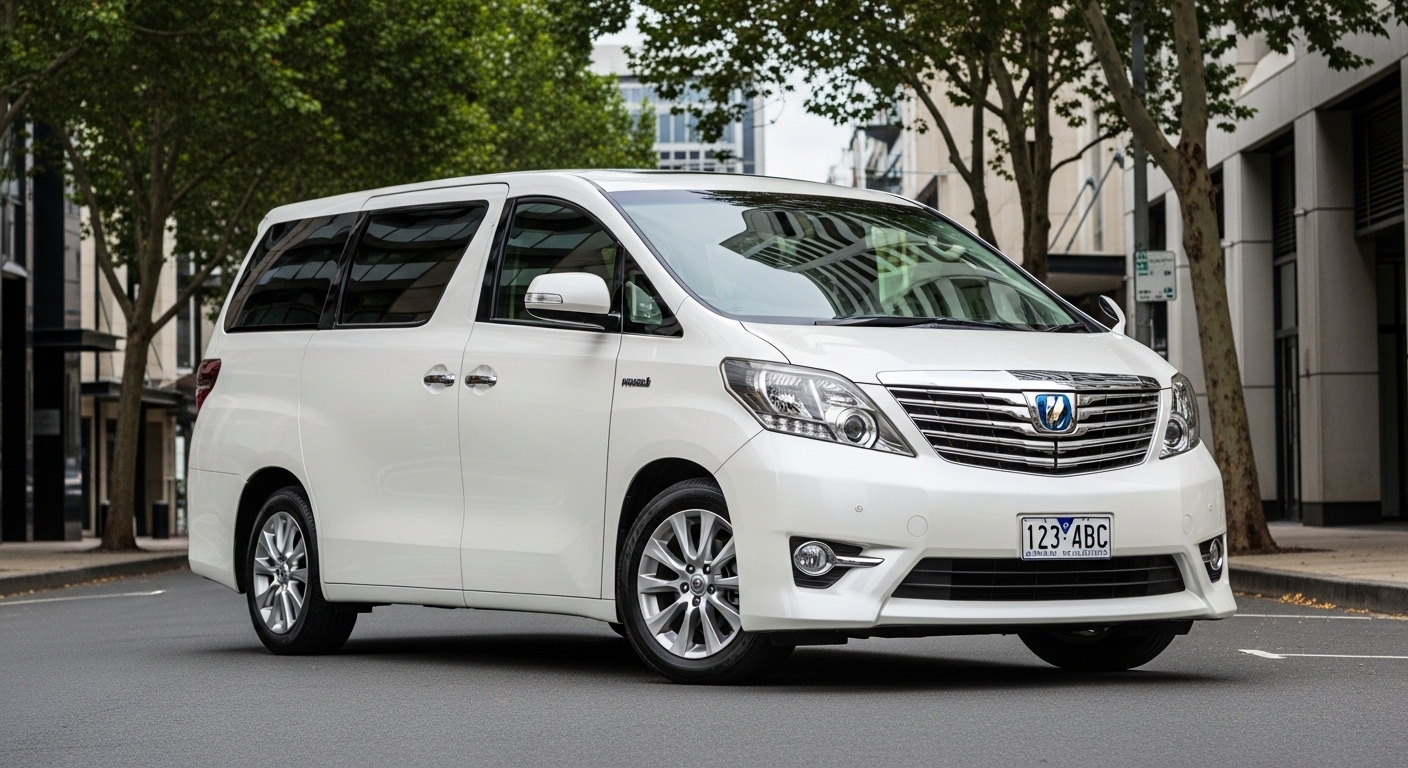 The standard-body Alphard keeps a clean, executive look across the entry grades.
Mechanically, the X is identical to every other AYH30 — the shared 2.5-litre hybrid drivetrain, and the same JC08 figure of 19.4 km/L. It rides on 16-inch wheels with tall 215/65 R16 tyres, and those soft sidewalls actually help ride comfort on rough Australian roads.
Its quiet advantage, though, is the eight-seat layout. Most X grades run a 60/40 split bench in the second row, and the backrests fold flat. Flip the third row as well and you get a genuinely large, flat load space, handy for cargo or a camping setup. The trade-off is the loss of the centre walk-through aisle, so reaching the third row means sliding a seat forward. Still, if you value seats and space over rear-cabin luxury, the X makes a lot of sense.
Why Is the Hybrid G the One Most Buyers Land On?
If one grade keeps getting recommended by people who've actually lived with an Alphard, it's the Hybrid G. It sits in the sweet middle: the materials feel genuinely premium, the cabin steps up clearly from the X, and you avoid the steep "Executive Lounge tax" that the flagship attracts. So which grade do we get asked to source most often? This one.
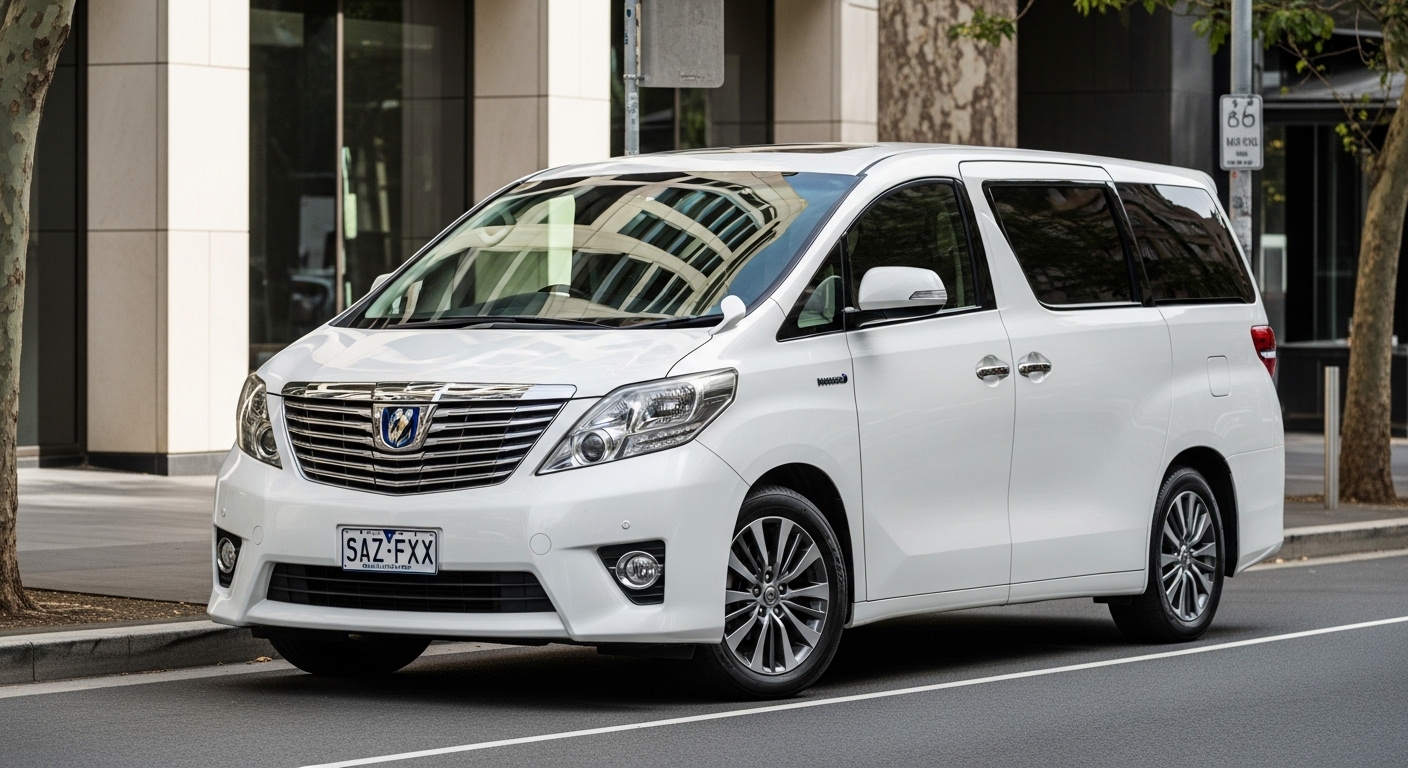 The Hybrid G balances real luxury with everyday usability, which is why resale stays strong.
The powertrain carries over unchanged, so the real story here is the second row. The G's captain's chairs keep the centre aisle, which means kids can walk through to the third row without anyone shuffling seats. For a busy family, that's a daily win.
The G also runs 16-inch wheels as standard, so you get taller tyre sidewalls and a calmer ride than the sportier aero grades. Step up to the G F Package and you gain the Executive power seats, including leather, power ottomans and second-row heating, while keeping the discreet standard body. The G F Package cars we've inspected feel close to flagship comfort in a quieter wrapper, and on a well-optioned example the badge matters less than the individual spec.
Who Should Choose the Hybrid SR?
The SR exists for buyers who want Alphard comfort without the formal, chauffeur-driven image. Rather than changing the mechanicals, it shifts the car's personality through styling. You get the aggressive aero body kit — sculpted front and rear bumpers and side skirts — plus 17-inch wheels on 225/60 R17 tyres for a sharper stance.
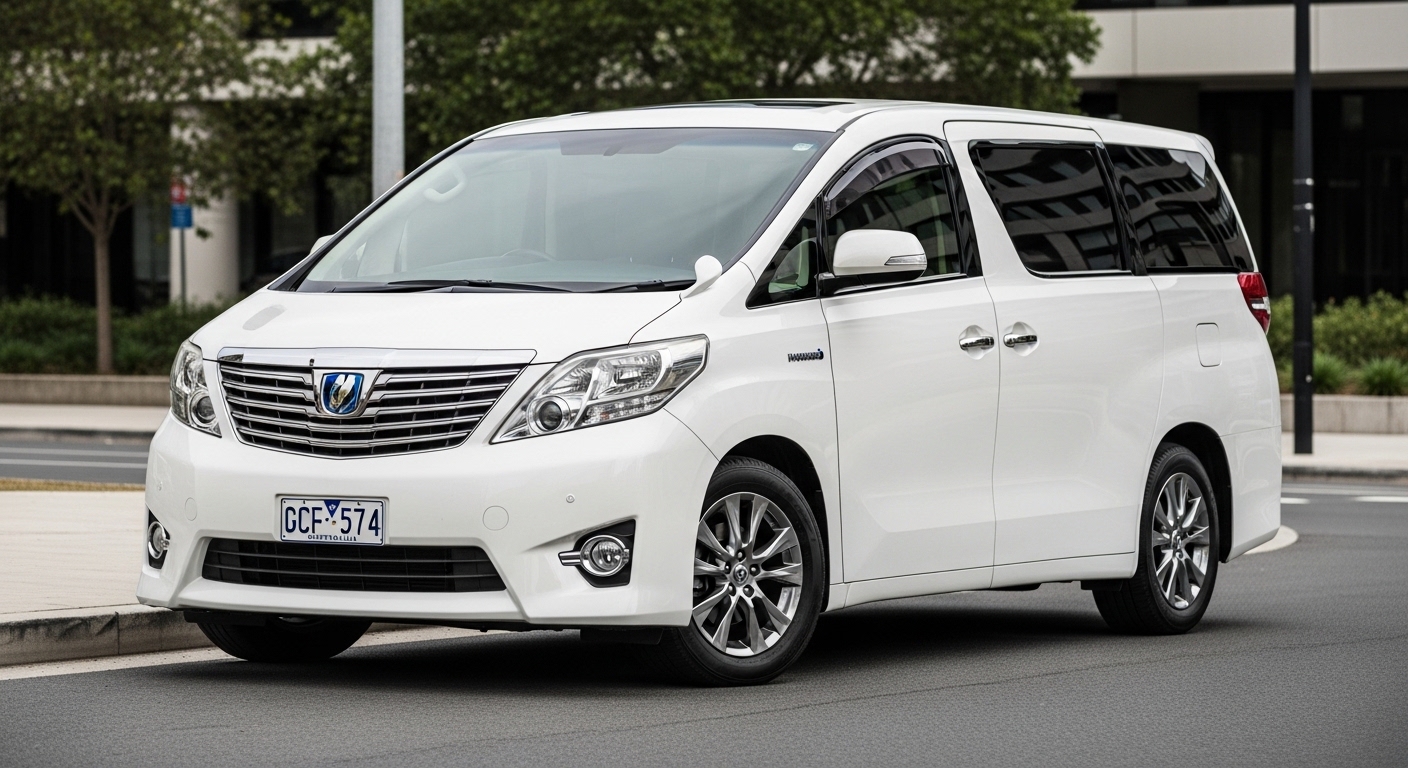 The SR swaps the conservative front for the aero body kit, giving the Alphard a bolder road presence.
Underneath, the mechanical package is the same shared hybrid, so nothing about how it drives really changes. The 17-inch wheels do firm up the ride a touch over the 16-inch G, but it stays comfort-first.
Inside, the SR splits into two distinct interiors, and it's worth knowing which one you're looking at. The standard SR uses half-leather — fabric centres with synthetic bolsters — so it looks sporty without being full luxury.
The SR C-Package, by contrast, adds full leather, heated and ventilated front seats and the Executive power second row. On the C-Package cars we've handled, that combination of the bolder look and the premium cabin is the one most buyers are really after. Either way, the SR suits self-drivers who want presence, not passengers chasing the quietest possible back seat.
Is the Executive Lounge Worth the Premium?
The Executive Lounge is the grade that sets the ceiling, and the prices can look outrageous until you understand what you're paying for. You aren't buying a badge. Instead, you're buying the most complex seating hardware Toyota builds, which is exactly why these cars hold value and attract chauffeur and VIP buyers.
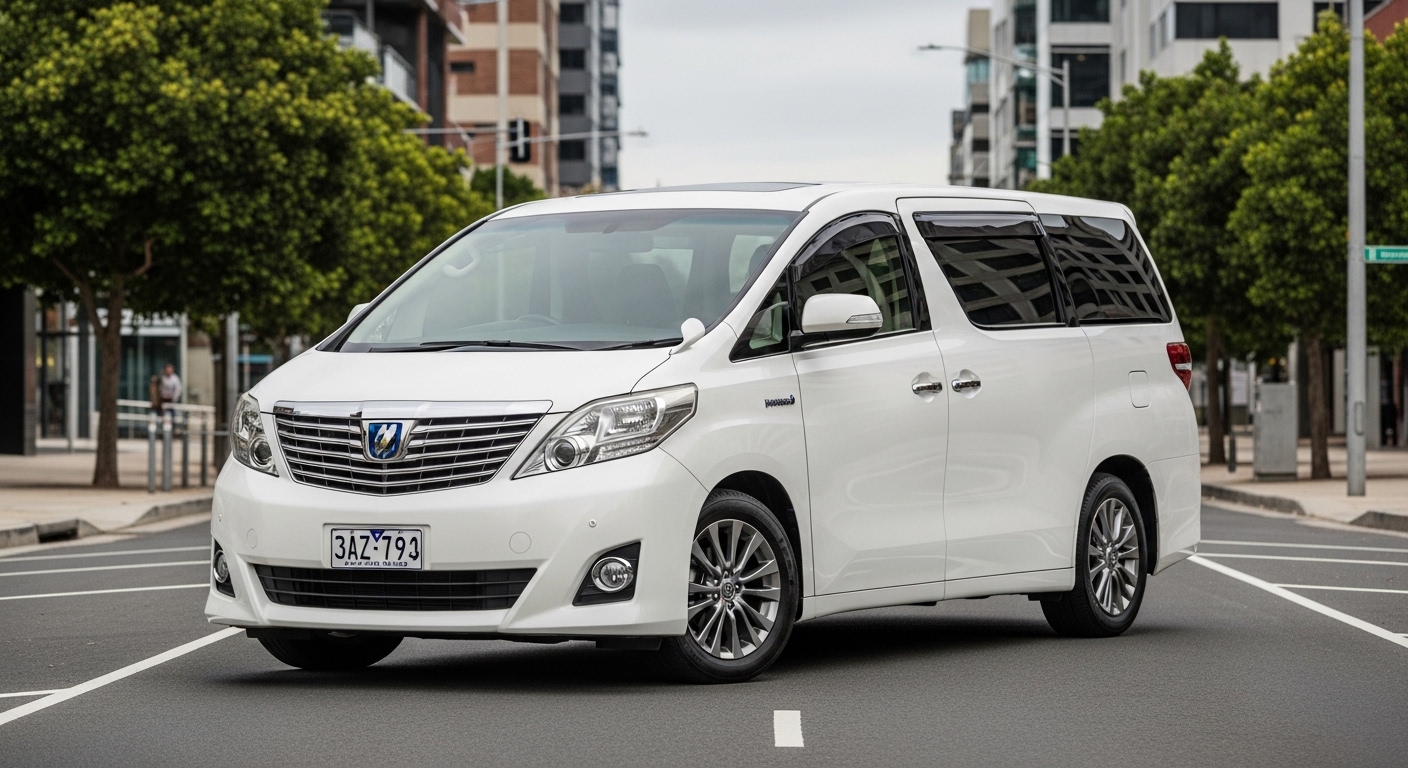 The Executive Lounge is built around the rear passenger, with the widest, most adjustable seats in the range.
The hardware list is the story. The captain's chairs are noticeably wider than standard, with power recline, power-extending ottomans, heating and ventilation, plus airline-style fold-out tables. Later cars then add a 17-speaker JBL system and a large rear drop-down screen on the updated multimedia builds. Most are configured as a six-seat layout that prioritises space over headcount, though some builds keep a seven-seat arrangement.
The drivetrain matches the rest of the family; only the wheels change, with the Executive Lounge typically running the largest in the range at 17 or 18 inches, tuned for a luxury-biased ride. In our experience, the buyers who choose it almost always spend most of their trips in the second row, or carry people who do. If that's you, it's the clear pick. On the other hand, if you mainly drive yourself, you're paying for seats you'll rarely sit in.
Alphard vs Vellfire: Which Suits You Better?
The Toyota Vellfire is the Alphard's twin, built on the same platform with the same hybrid drivetrain, then dressed for a different buyer. Mechanically they're near-identical, sharing the drivetrain, the E-Four AWD and the cabin space. The split, instead, is all about face and feel.
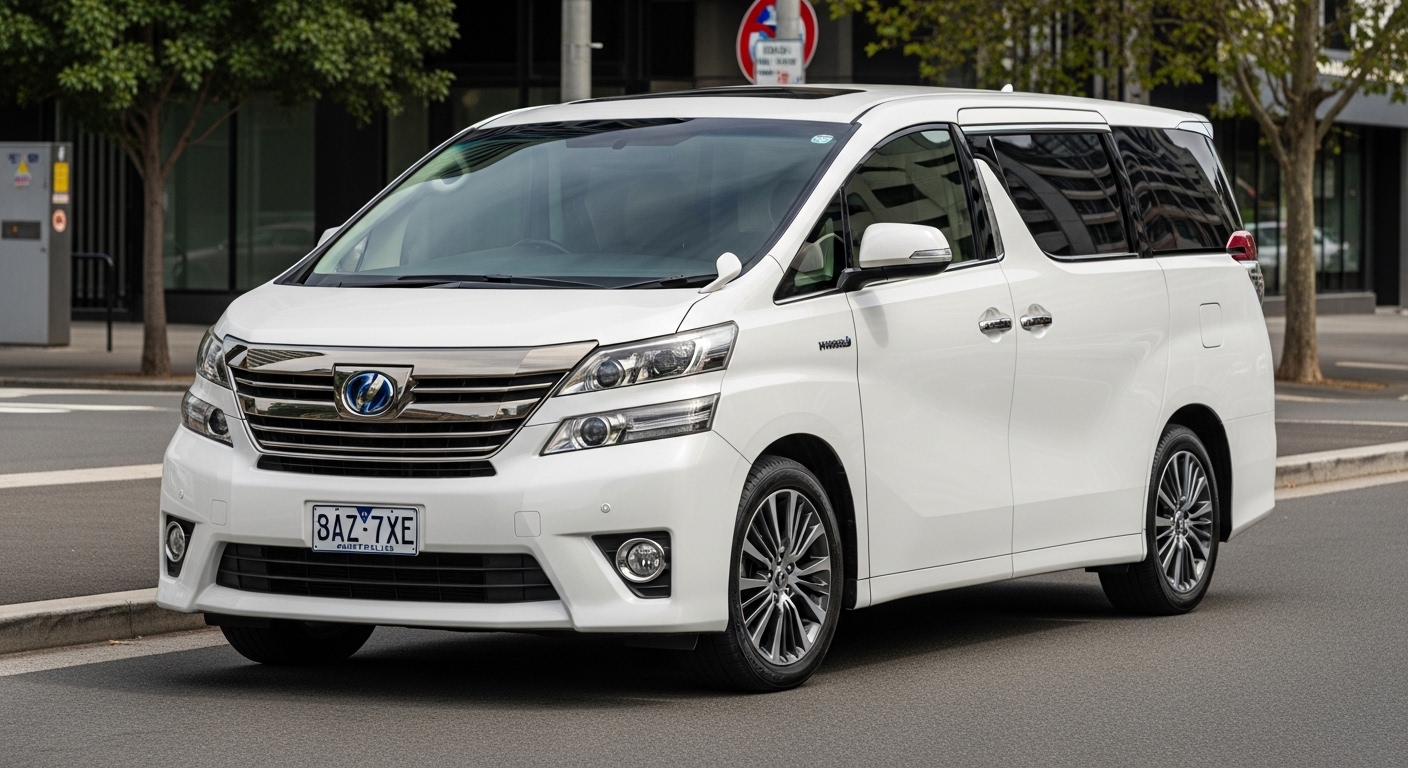 The Vellfire wears a bolder, more aggressive front than the executive-styled Alphard.
Styling is the obvious difference. The Alphard wears a refined, chrome-heavy executive grille, whereas the Vellfire goes aggressive with sharper lamps and a bolder fascia. If you want subtle prestige, the Alphard reads better. If you want road presence and a sportier statement, the Vellfire delivers it without changing how the car drives.
Helpfully, the grades line up neatly once you learn the translation. The Vellfire V matches the Alphard G, while the Vellfire's aero grade (badged ZR on the hybrid) matches the SR and its top aero trim mirrors the SR C-Package. So if you've decided on a comfort-first seven-seater with a centre aisle, you can shop both badges and simply pick the look you prefer.
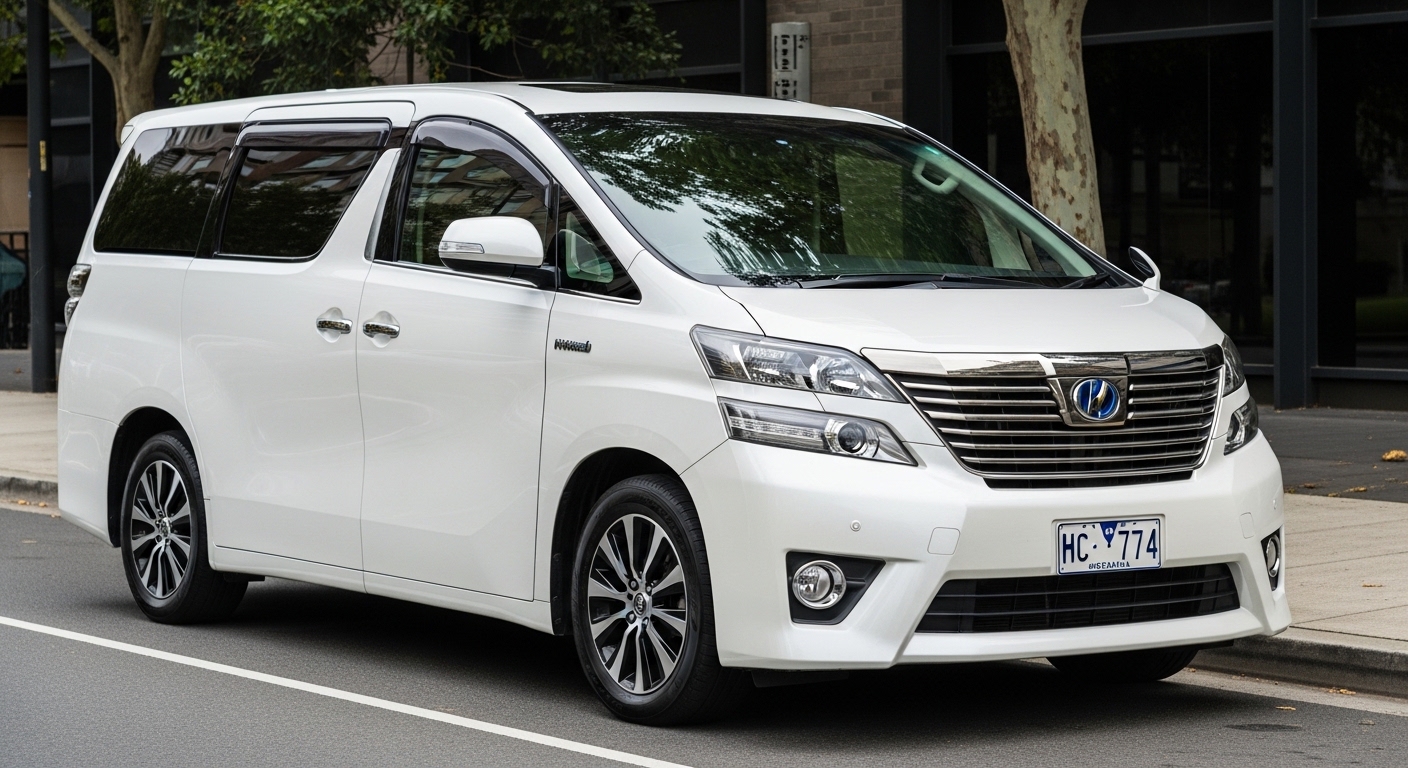 Same platform, same hybrid drivetrain: the choice between Alphard and Vellfire comes down to character.
On resale, the Alphard generally holds a slight edge for chauffeur and executive use, while the Vellfire appeals to owner-drivers who want a sharper image. Either way, neither is the wrong call. Pick the face you'll be happy parking in your driveway for years, because everything behind it is the same well-proven hybrid people mover.
What Should You Know About AYH30 Reliability?
The AYH30 hybrid has a strong reliability record, but a few known items are worth checking before you buy. None are dealbreakers, and most are cheap to address if you know to look. In our experience, a pre-purchase inspection and a VIN history check matter far more than the odometer reading alone.
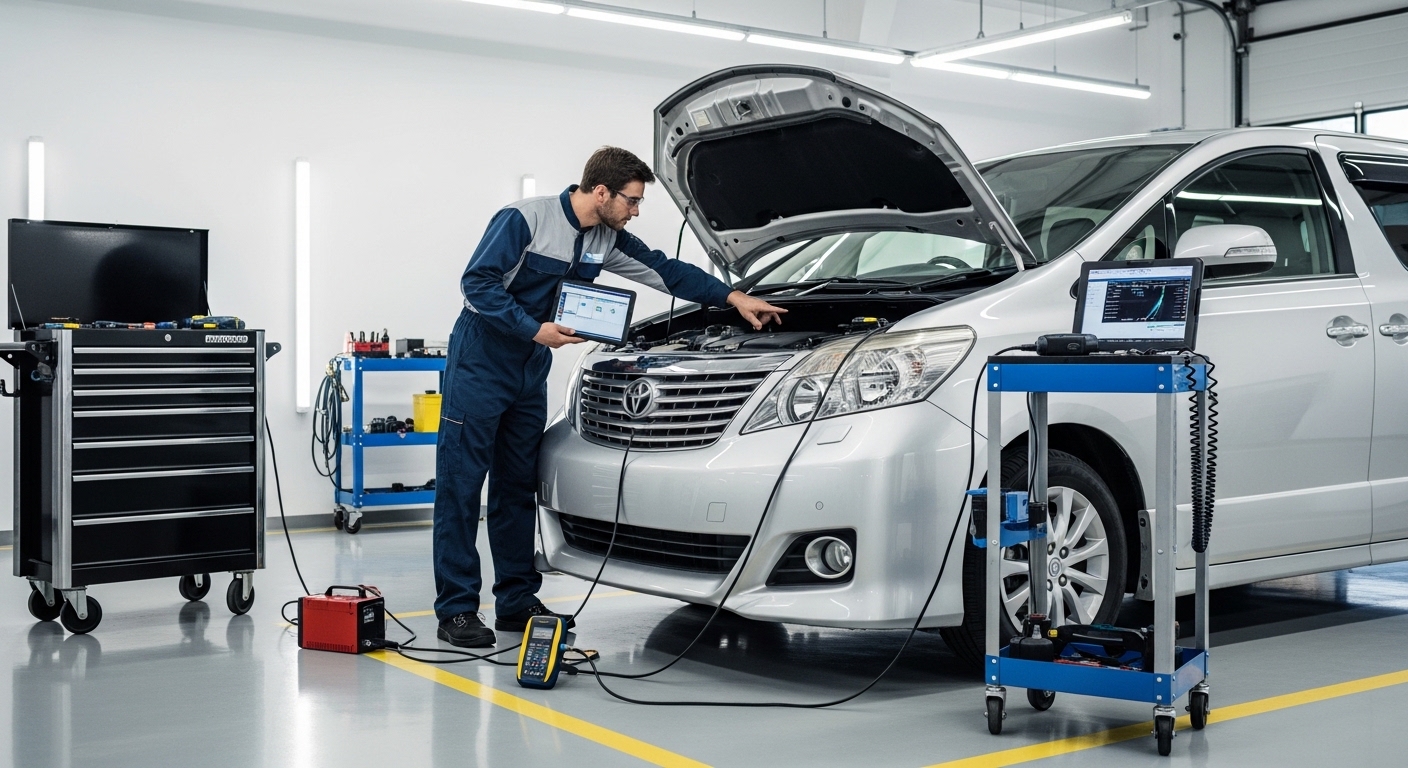 A pre-purchase inspection and a VIN recall check are worth more than a low odometer on an imported hybrid.
The most important flag is the Denso fuel pump. Some AYH30 builds were included in a global Denso low-pressure fuel pump recall (paultan.org, 2026). Not every car is affected, however, so check the specific VIN against Toyota's recall database and confirm whether the work has already been done.
On our pre-import inspections, a few smaller items round out the list:
- 12V auxiliary battery: hybrids are sensitive to a tired 12V battery, which can trigger odd warning lights. It's a cheap replacement and worth doing early.
- Power sliding door sensors: the powered doors rely on sensors and motors that can need adjustment or cleaning with age. So test both doors fully on inspection.
- Hybrid transaxle fluid: the e-CVT uses a sealed hybrid transaxle, not a belt CVT. Confirm the fluid servicing history rather than assuming it's maintenance-free.
- Brake and suspension wear: a near-2-tonne body works its brakes and bushes, so budget for normal consumables on higher-kilometre cars.
The hybrid battery itself, meanwhile, is generally durable, and Toyota's hybrid system is one of the most proven in the world. Treat the AYH30 like any quality used import: verify the history, inspect properly, and the ownership story is usually a calm one.
Which Build Years Are the Sweet Spot?
While the whole 2015 to 2023 run is solid, most Australian buyers target cars built from July 2019 onwards, and the reasons are practical. That window brought the updated Display Audio system with native English support, plus wired Apple CarPlay and Android Auto, so you skip the aftermarket head-unit headache that earlier cars often need.
The same period also standardised the upgraded Toyota Safety Sense 2.0 suite. That adds Lane Tracing Assist, Road Sign Assist and an improved Pre-Collision system with cyclist and night-time pedestrian detection. The 2018 facelift had already made TSS standard, but the 2019 update is the one we'd hold out for.
One Australian compliance tip on child seats is worth planning ahead for. The AYH30 has two ISOFIX points and two top-tether anchorages in the second row, but no factory third-row anchor points. A compliance workshop can often fit an additional third-row anchor during the import process if you ask, which we'd flag early for anyone running three child seats.
Which Alphard Grade Makes Sense for You?
There's no single best Alphard, only the best Alphard for your situation. The fast way to decide is to start from how you'll use the car, then let the grade follow. Here's the short logic most buyers end up using.
| If you... | The grade that fits |
|---|---|
| drive yourself and want the best all-round balance | Hybrid G or G F Package |
| want Alphard comfort for the lowest outlay | Hybrid X |
| need eight seats or a big flat cargo floor | Hybrid X |
| regularly fit three child seats | Hybrid G (centre aisle) |
| want a bolder, sportier look | Hybrid SR or SR C-Package |
| spend most trips in the back seat | Executive Lounge |
| love the recipe but want a sharper face | Toyota Vellfire equivalent |
If you're still torn, default to the Hybrid G. It's the grade that satisfies the widest range of buyers, holds value well, and rarely leaves owners wishing they'd spent more or less. The Executive Lounge, by contrast, is the exception worth the stretch only when the rear seat is the point of the car.
Importing an AYH30 Alphard to Australia
Bringing a newer AYH30W Alphard into Australia is straightforward when the eligibility lines up. The 30 Series hybrid is approved under the SEVS pathway (Prestige Motorsport, 2024), with import-eligible cars typically capped at under 80,000 km and sourced to a minimum auction grade of 3.5.
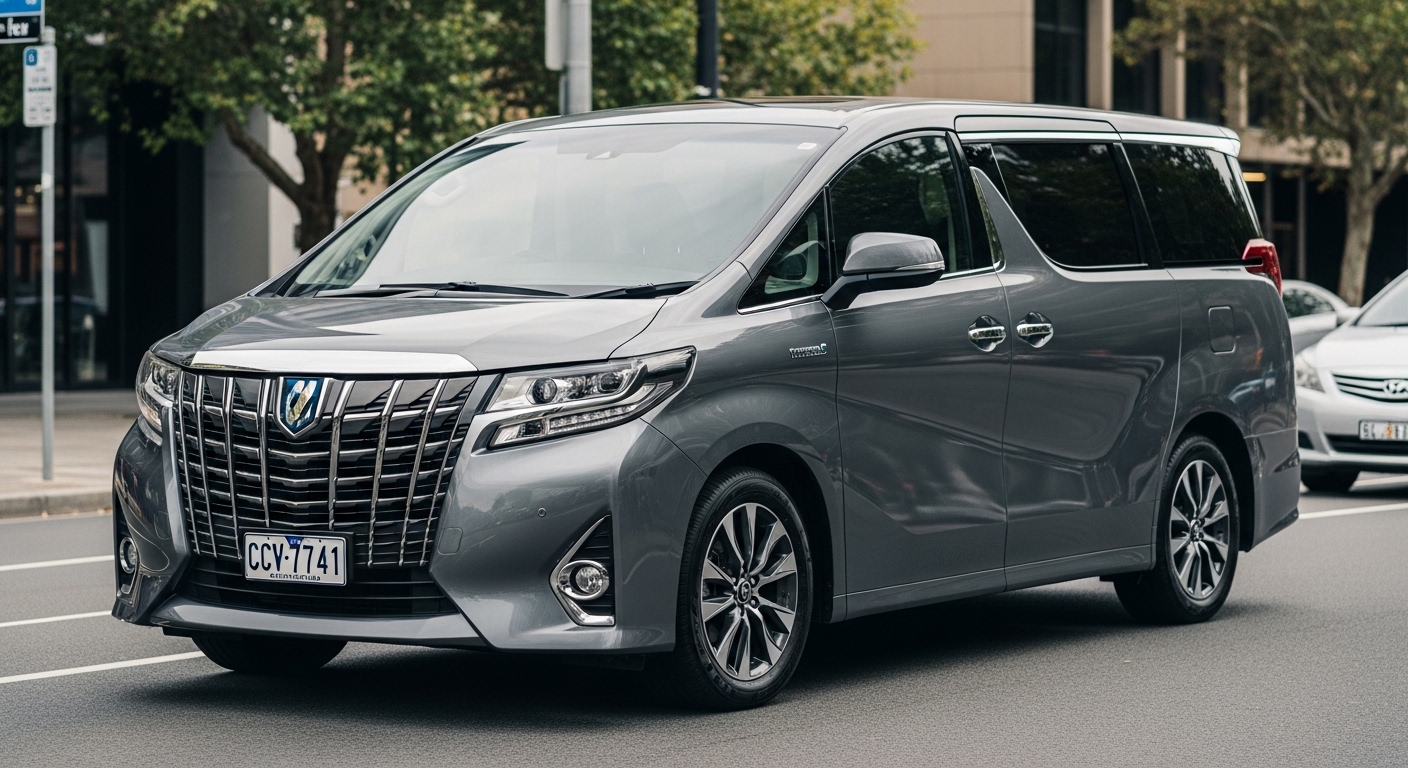 A well-graded AYH30W sourced from Japan, ready for compliance and delivery in Australia.
On money, a clean example typically sits in the ¥4–5 million range at Japanese auction depending on grade and year, with a realistic landed figure in the low-$60K range once shipping, GST, import duty and compliance are included. The full process then usually runs six to ten weeks across three phases: sourcing and approval in Japan, shipping, then compliance and delivery in Australia.
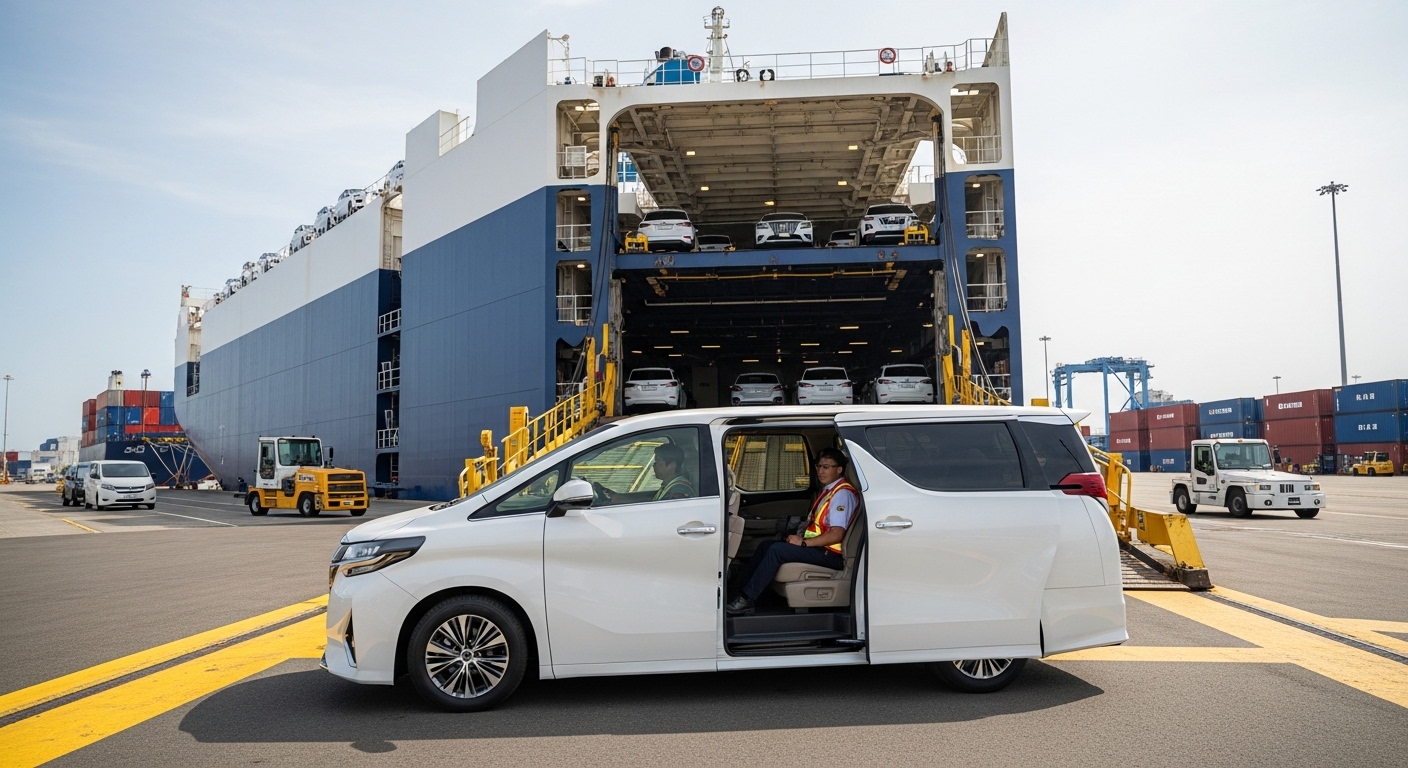 The typical import runs six to ten weeks from auction to a compliance-ready car in Sydney.
This is where buying with help pays off, because the wrong variant or build detail can cost you later. Carbarn manages the full journey end to end: sourcing and physical pre-bid inspection in Japan, bidding only with your approval and within your budget cap, a refundable auction deposit, VIA import approval, in-house workshop compliance, AVV inspection and RAV entry, extended warranty options on eligible cars, plus registration-ready support and Australia-wide door delivery. If you'd rather skip the wait, you can browse hybrids already in Australia, or start a custom AYH30W sourcing request.
The Bottom Line
The AYH30 Alphard hybrid rewards buyers who shop with logic rather than looks. Because the drivetrain is the same calm, efficient hybrid across every grade, your decision really comes down to seats, styling and build year. Get those right and you've bought well.
For most people, the Hybrid G is the smart default: premium enough to feel special, practical enough to live with, and strong on resale. The Executive Lounge, meanwhile, is the flagship to chase when rear-seat comfort is the whole point, the SR is for owner-drivers who want presence, and the X is the value play with eight-seat flexibility. Whichever you choose, target a July 2019-onwards car, check the VIN and history, and match the spec to your real-world use. Do that, and an imported Alphard is one of the easiest large vehicles to recommend.