



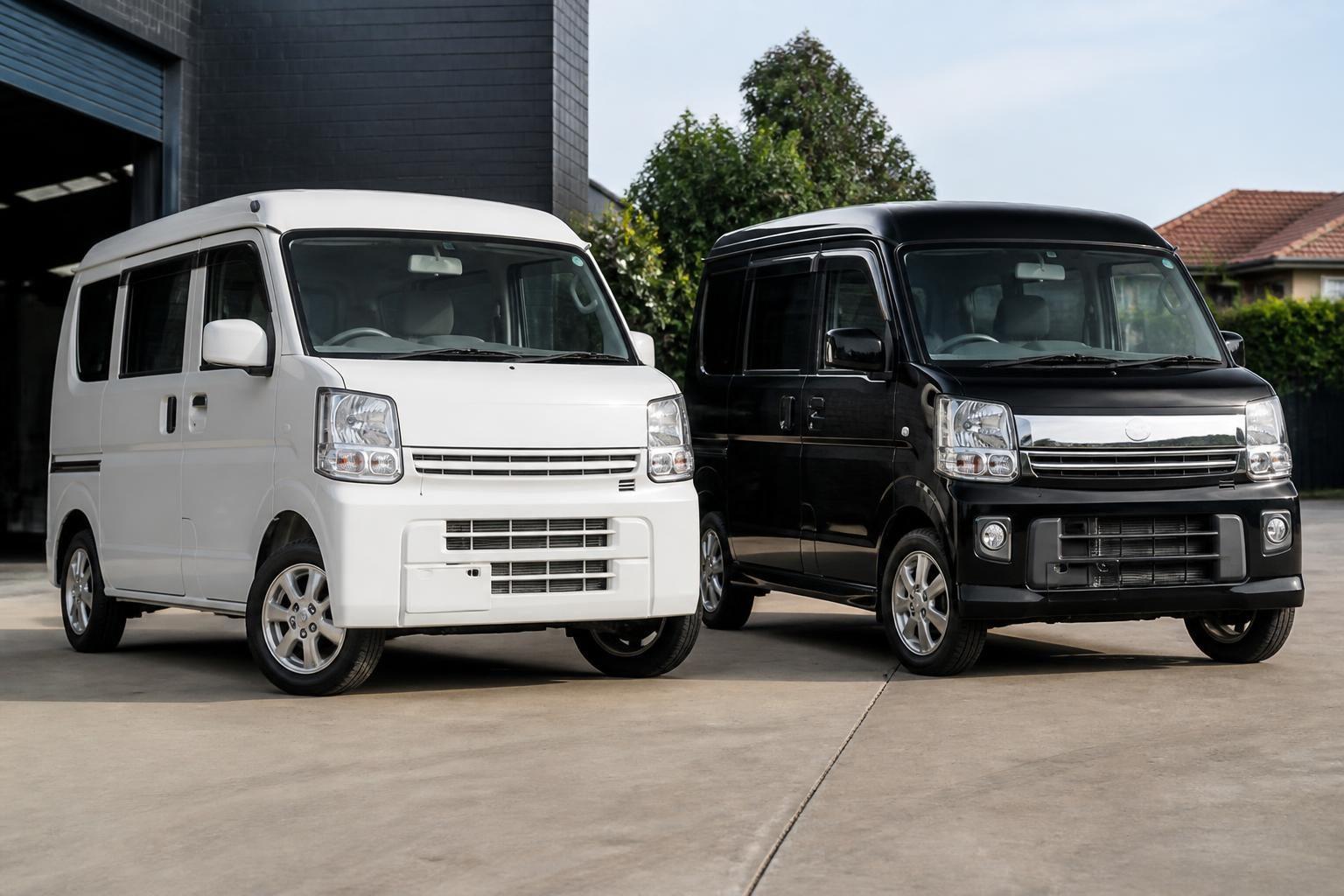
Ready to Hit the Road in Style?
Save money and reduce emissions with vehicles designed to deliver exceptional mileage. Visit our inventory and find a car that fits your lifestyle.
Ready to Hit the Road in Style?
Save money and reduce emissions with vehicles designed to deliver exceptional mileage. Visit our inventory and find a car that fits your lifestyle.
You've decided a kei van is the right size for the job. Now comes the harder part: two of them are legal to bring in, both take roughly the same time to land, and both cost exactly the same to comply. So what actually separates the Suzuki Every from the Daihatsu Atrai? The honest answer is that they were built for different people. One is a tool. The other is closer to a small car with a big back end. This guide walks through the specs, the variants, and the eligibility fine print so you can decide before you commit to an order.
Quick Answer
- Kei cars account for 38% of Japan's new-car sales — AutoNergy, citing Zenkokei 2025, so used supply and auction documentation are both strong.
- The Suzuki Every (DA17V/DA17W) suits buyers chasing maximum load space and a flat floor.
- The Daihatsu Atrai (S321/S331) suits buyers who need four usable seats and a more car-like feel.
- Both hold SEVS approval into 2028: Every under SEV-000930 (valid 13 Aug 2028), Atrai under SEV-000971 (valid 23 Oct 2028).
- Compliance runs $1,540 and the import window is 6–10 weeks, identical for both.
What Is a Kei Van, and Can You Import One?
Japan's kei class has been capped since October 1998 at 660cc, 3.4 metres long, 1.48 metres wide, with an industry-agreed 64PS power ceiling (Wikipedia — Kei car). Those limits are why kei vans are so useful: tiny footprint, upright body, and far more cubic space inside than the outside suggests.
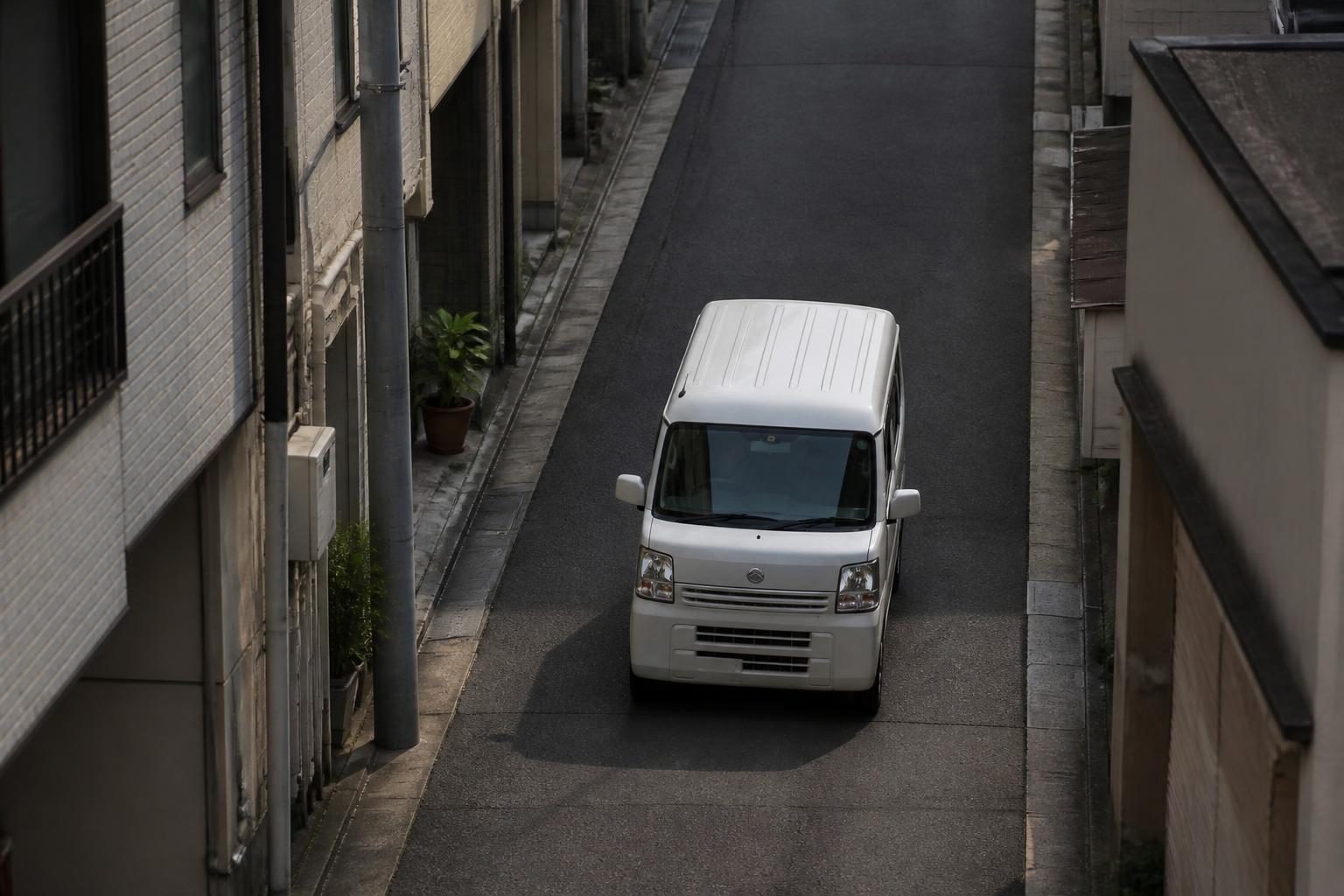 A white kei van travels through a tight urban alleyway.
They reach Australia through SEVS, the Specialist and Enthusiast Vehicle Scheme. It's the pathway that makes approved used models legal to register here, and it's the reason importing a vehicle from Japan is a documented process rather than a grey area.
One caution worth taking seriously. Not every kei van is approved, and approvals aren't permanent. Determinations have been suspended before. Check the model still holds a live approval on the day you enquire, not the day you read about it.
What Sets the Suzuki Every DA17V and DA17W Apart?
The Suzuki Every DA17V is the cargo-first version of Suzuki's kei van, and it's the one most tradies end up looking at. It runs the 658cc R06A petrol engine, and the approval covers both naturally aspirated and turbocharged variants. The body is a plain box with a low, flat load floor and sliding doors on both sides. Nothing about it is fancy. That's rather the point.
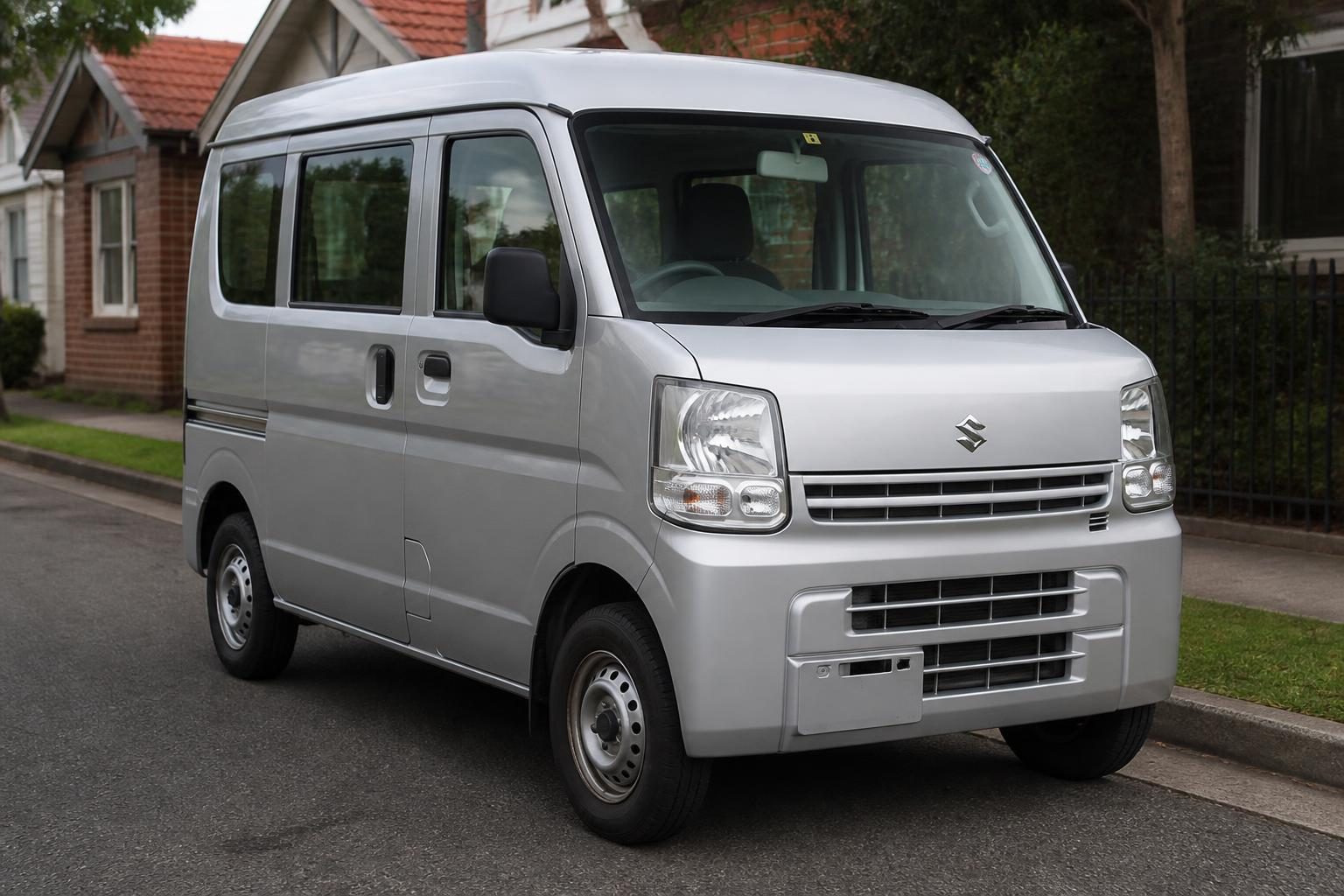 2021 Suzuki Every (DA17V) —
DA17V vs DA17W: What Separates Them
The DA17V is the commercial van. The Suzuki Every DA17W is the wagon, same platform but trimmed and seated for people rather than pallets. Both seat four and run the R06A, and both sit under the same SEVS approval, SEV-000930, valid until 13 August 2028. The eligible build window is narrow: January to October 2021 only. A van built in November 2021 doesn't qualify, and no amount of paperwork changes that.
Odometer Caps Under SEV-000930
This is the detail most buyers miss. The approval sets different mileage ceilings by engine. Naturally aspirated Everys qualify up to 101,695 km. The turbo cap is 80,000 km. If you want the turbo, your sourcing pool is meaningfully smaller. Carbarn's auction feed data for the 90-day window to August 2026 shows around 75 DA17W wagon sales at roughly 64,000 km average, so decent-mileage stock does move through regularly.
Who the Every Suits
Trades, couriers, market stallholders, anyone loading and unloading all day. The parts situation helps too: the Every shares much of its architecture with the Suzuki Carry, which has a longer history on Australian roads. If you want the cheapest possible running experience in a small commercial van, the Every is the safer bet. It's not the one to pick if you regularly carry passengers.
What Sets the Daihatsu Atrai S321 and S331 Apart?
The Daihatsu Atrai S331 approaches the same brief from the passenger side. It qualifies as a four-seat petrol van running Daihatsu's 658cc KF engine, and the S331 specifically comes with an automatic gearbox and 2WD. Inside, the trim is a step up from a bare cargo van: better seat padding, more considered cabin layout, less of that echoing-tin-box feeling on the highway.
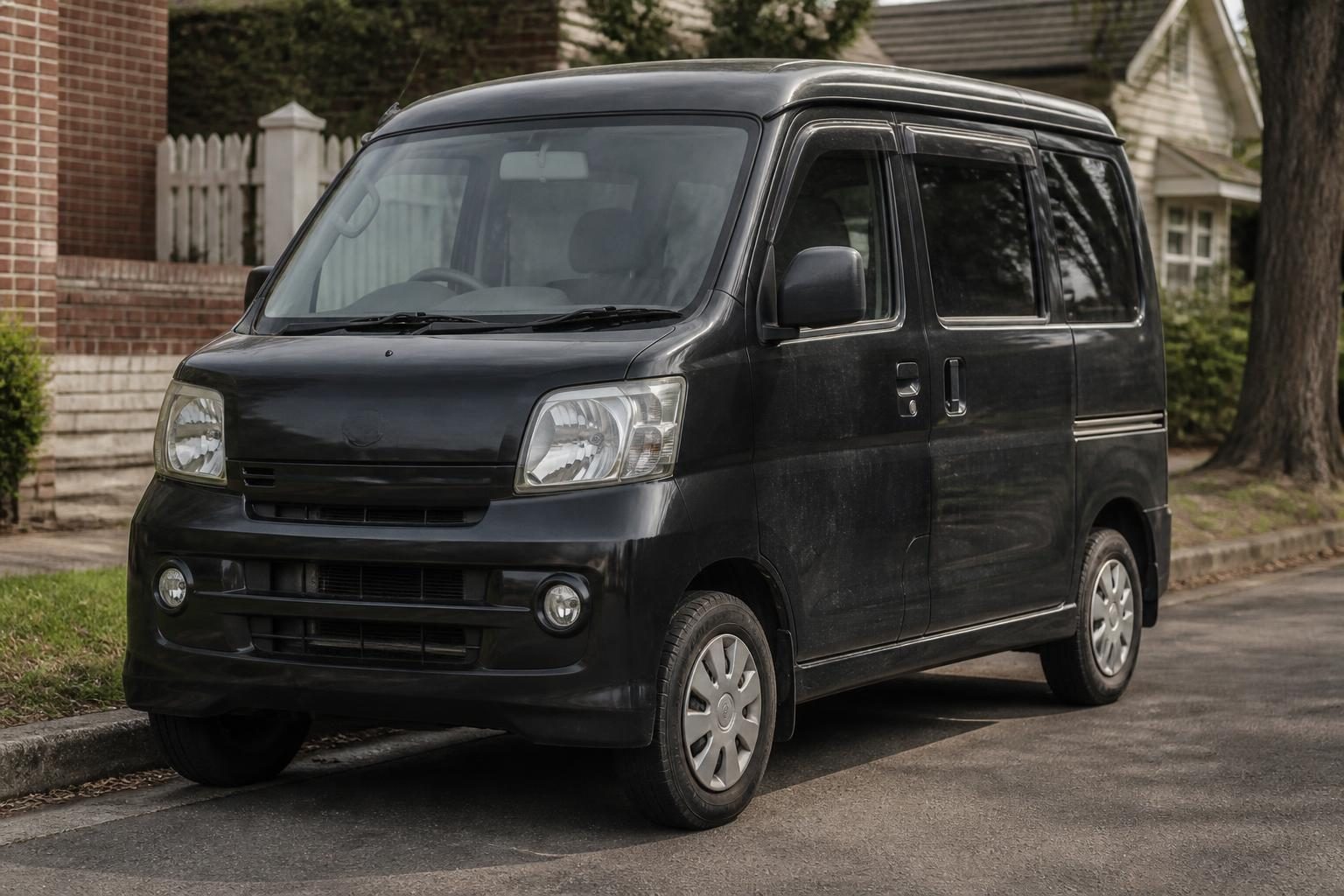 2020 Daihatsu Atrai
S321 vs S331: Generation and Supply
These two are the same generation — S321 is the 2WD variant and S331 the 4WD-spec variant in the standard Japanese market, though the SEVS-approved S331 carries a 2WD specification. Both run the KF petrol engine, both qualify as four-seat vans, and both fall under SEVS approval SEV-000971, valid to 23 October 2028. Eligible builds span August 2020 to October 2021, a wider window than the Every's.
Supply is where they diverge. Carbarn's auction feed for the 90-day window to August 2026 shows the Daihatsu Atrai S321 with 26 sales across 2020–2021 models, with the 2020 cohort averaging grades 3.5–4.5 at around 56,500 km, against just four recorded S331 sales at grades 3.5–4 and around 64,500 km. The S321 is simply easier to find, and it tends to turn up with lower kilometres. If you're flexible on the exact code, that matters more than the badge.
Who the Atrai Suits
Families running a side business. Campers and weekend market sellers. Anyone who needs four seats on Monday and a load bay on Saturday. It's the pick if the Every's commercial ergonomics feel too spartan for daily use. Much like the Daihatsu Hijet, it rewards buyers who value flexibility over pure payload.
Head-to-Head: Every vs Atrai
Side by side, the eligibility fine print separates these two more than the driving experience does. Compliance cost and timeline are identical, so the decision rests on body focus, engine options, and how tight the mileage rules are.
| Feature | Suzuki Every DA17V/W | Daihatsu Atrai S321/S331 |
|---|---|---|
| Engine | R06A 658cc (NA or turbo) | KF 658cc petrol |
| SEVS number | SEV-000930 | SEV-000971 |
| SEVS valid until | 13 Aug 2028 | 23 Oct 2028 |
| Eligible build years | Jan–Oct 2021 | Aug 2020–Oct 2021 |
| Seats | 4 | 4 |
| Turbo available | Yes | Confirm with importer |
| Odometer cap (NA) | 101,695 km | Not specified in approval |
| Odometer cap (turbo) | 80,000 km | Not specified in approval |
| Compliance cost | $1,540 | $1,540 |
| Import timeline | 6–10 weeks | 6–10 weeks |
| Body focus | Cargo / load | Passenger / mixed use |
Which One Should You Import?
Pick the Every if load space is the whole reason you're buying. You want the flat floor, you're running tools or stock daily, and you'd rather have the stronger parts ecosystem behind you. Passenger comfort is a bonus, not a requirement. The turbo is worth chasing if you'll be loaded on hills, though the 80,000 km ceiling narrows what you can bid on.
Pick the Atrai if four seats genuinely get used. It feels more like a car to live with, and the S321 in particular shows better auction supply and lower typical kilometres than the S331 in recent sales data. That's a practical sourcing advantage, not a spec-sheet one, but it's the kind of thing that decides how long you wait.
For either van, confirm the SEVS determination is still current when you enquire. Approvals do change, and the published entry on the Rover register — the Department of Infrastructure's live SEVS determination list at infrastructure.gov.au — is the binding reference, not any article, including this one.
What Does It Cost to Import One?
Only one number here is fixed. Compliance is $1,540 — Carbarn's current compliance quote — identical for both models, covering the compliance work, AVV inspection and RAV entry. Everything else moves.
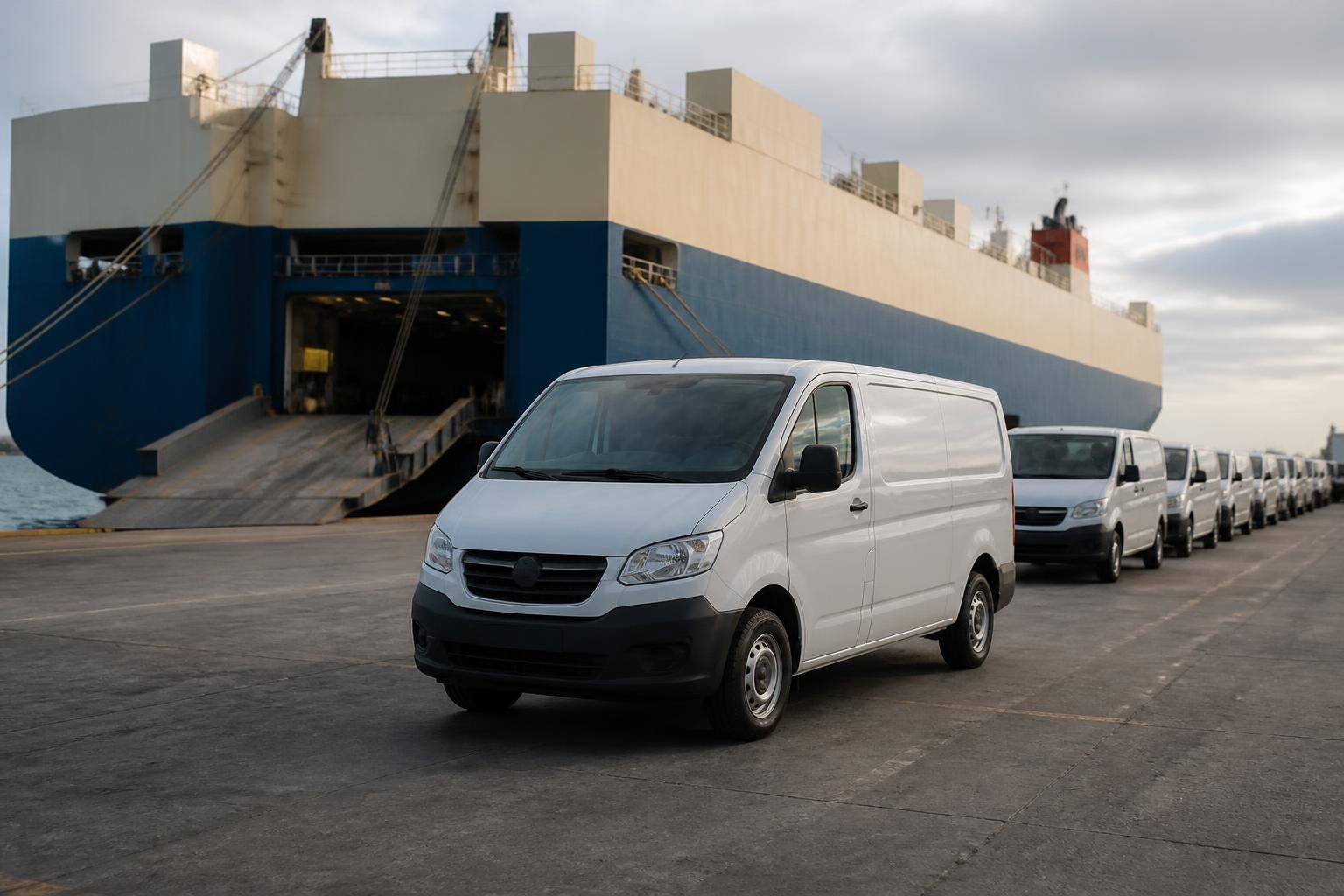 White vans queue beside a docked vehicle carrier at the port.
The auction result is the real variable, and it swings on grade, odometer, options, condition and the exchange rate on the day. On top of that sit freight, port and customs charges, GST, and any applicable import duty. Reading auction grades properly is the single best thing you can do to control that number, because grade drives price far more than model year does.
The timeline is consistent across all four eligible model codes: 6–10 weeks, split into 1–6 weeks sourcing and approval in Japan, 4–6 weeks shipping, and 2–3 weeks compliance and delivery here. If you want current figures rather than ranges, the live pages for the Every DA17V and Atrai S331 show a full breakdown alongside recent auction results. That's also where how the import process works is set out step by step.
Importing One Through Carbarn
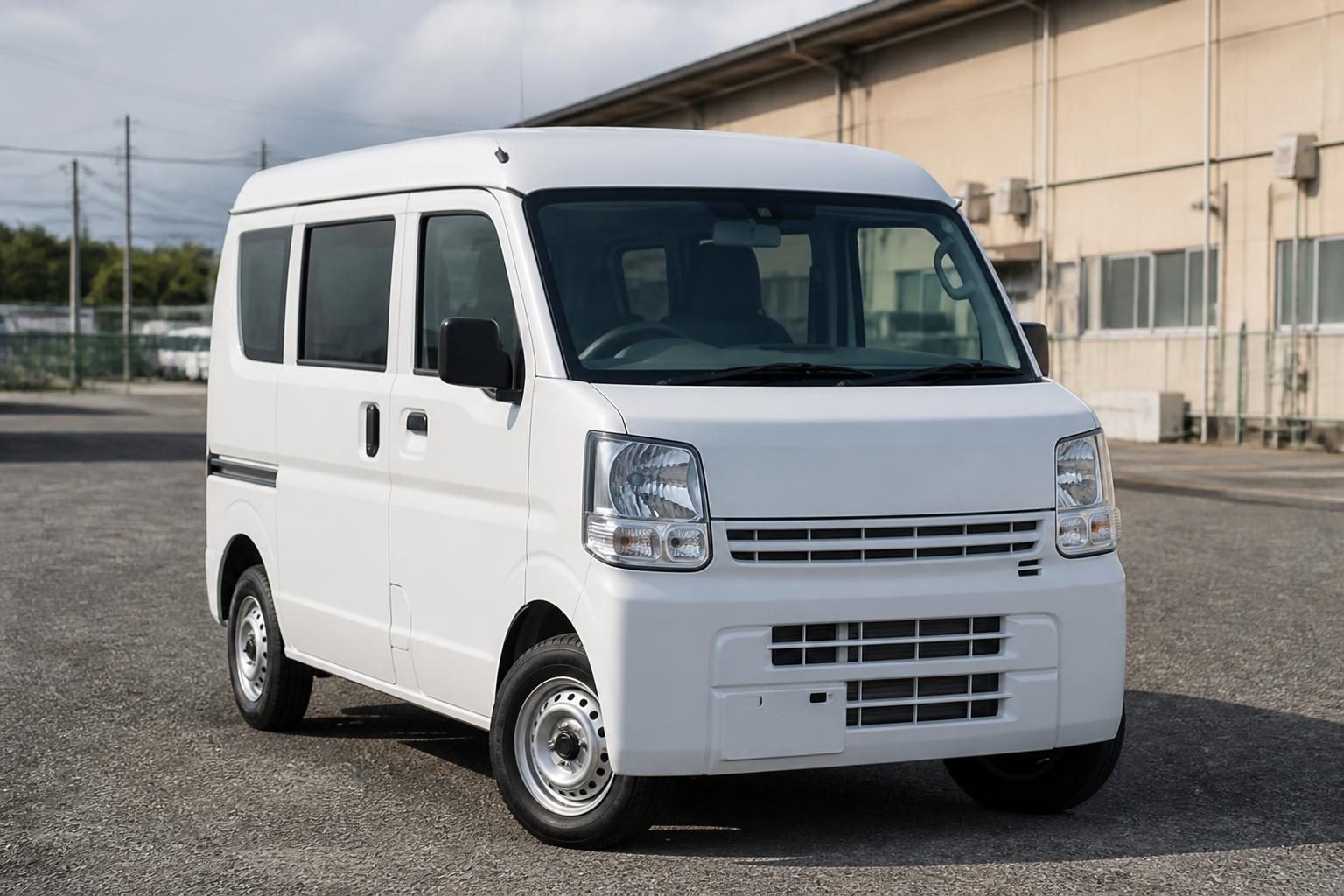 White kei van parked outside an industrial building
Both of these vans can be ordered from Japan through Carbarn, a licensed NSW motor dealer (MD 056471) operating a RAW-certified compliance workshop in Lidcombe, Sydney. The process runs end to end: shortlisting candidates at approved Japanese auctions against your budget and grade requirements, arranging pre-bid physical inspection where the auction format allows, sharing auction sheets and inspector notes before anything is bid on, then handling ocean freight, customs entry, biosecurity, and the full SEVS compliance program in-house.
The same workshop handles AVV inspection and RAV entry, and the van is handed over with paperwork ready for state registration, plus warranty and finance options if you want them. Tell the import team your target model code, build window and budget cap, and they'll come back with what's actually available. Start with the Suzuki Every DA17V or Daihatsu Atrai S331 page to lodge an enquiry.