



Ready to Hit the Road in Style?
Save money and reduce emissions with vehicles designed to deliver exceptional mileage. Visit our inventory and find a car that fits your lifestyle.
Ready to Hit the Road in Style?
Save money and reduce emissions with vehicles designed to deliver exceptional mileage. Visit our inventory and find a car that fits your lifestyle.
You've probably heard the pitch: drive to work on electricity all week, then road-trip on petrol at the weekend. It sounds ideal. The catch is that plug-in hybrids only work like that if the electric range actually covers your daily kilometres and you have somewhere to plug in overnight. Get those two things wrong and you're carrying a heavy battery around for nothing.
This guide walks through five plug-in hybrids worth shortlisting in Australia right now, what their batteries and charging hardware actually do, and how to work out which one fits the way you drive.
Quick Answer
- Australians bought 54,241 PHEVs in the first half of 2026, up 112% year-on-year and 8.6% of all new vehicles (Drive, July 2026).
- The average Australian vehicle covers about 33 km a day (ABS Survey of Motor Vehicle Use, 2020). Every car below beats that on electricity alone.
- Longest electric range here: GWM Haval H6 GT PHEV at 170 km WLTP. Shortest: BYD Sealion 5 at 71 km.
- A 7 kW home wallbox refills a 22 kWh PHEV in 2 to 4 hours; a standard 10A socket adds about 10 km per hour.
- The FBT exemption for plug-in hybrids ended on 1 April 2025 (ATO).
Why Are PHEVs Selling So Fast in Australia Right Now?
Australians registered 54,241 plug-in hybrids in the first half of 2026, a 112% jump on the same period a year earlier and 8.6% of every new vehicle sold (Drive, July 2026). Buyer choice has widened just as quickly: 50 PHEV models across 90 variants and 35 brands are now on sale here (zecar, June 2026).
That growth is outpacing full battery-electric sales, which also grew strongly over the same stretch — PHEVs still pulled ahead overall. The reason is straightforward. A plug-in hybrid removes range anxiety from the equation without asking you to change how you plan a long drive.
How Much Does Home Charging Actually Cost to Set Up?
A dedicated 7 kW home wallbox has a median installed cost of $2,150, based on 500 residential installs across Sydney, Newcastle and the Central Coast (Cable Co, June 2026). The full spread runs from $800 to over $5,000, with switchboard upgrades the usual reason a quote lands at the top end.
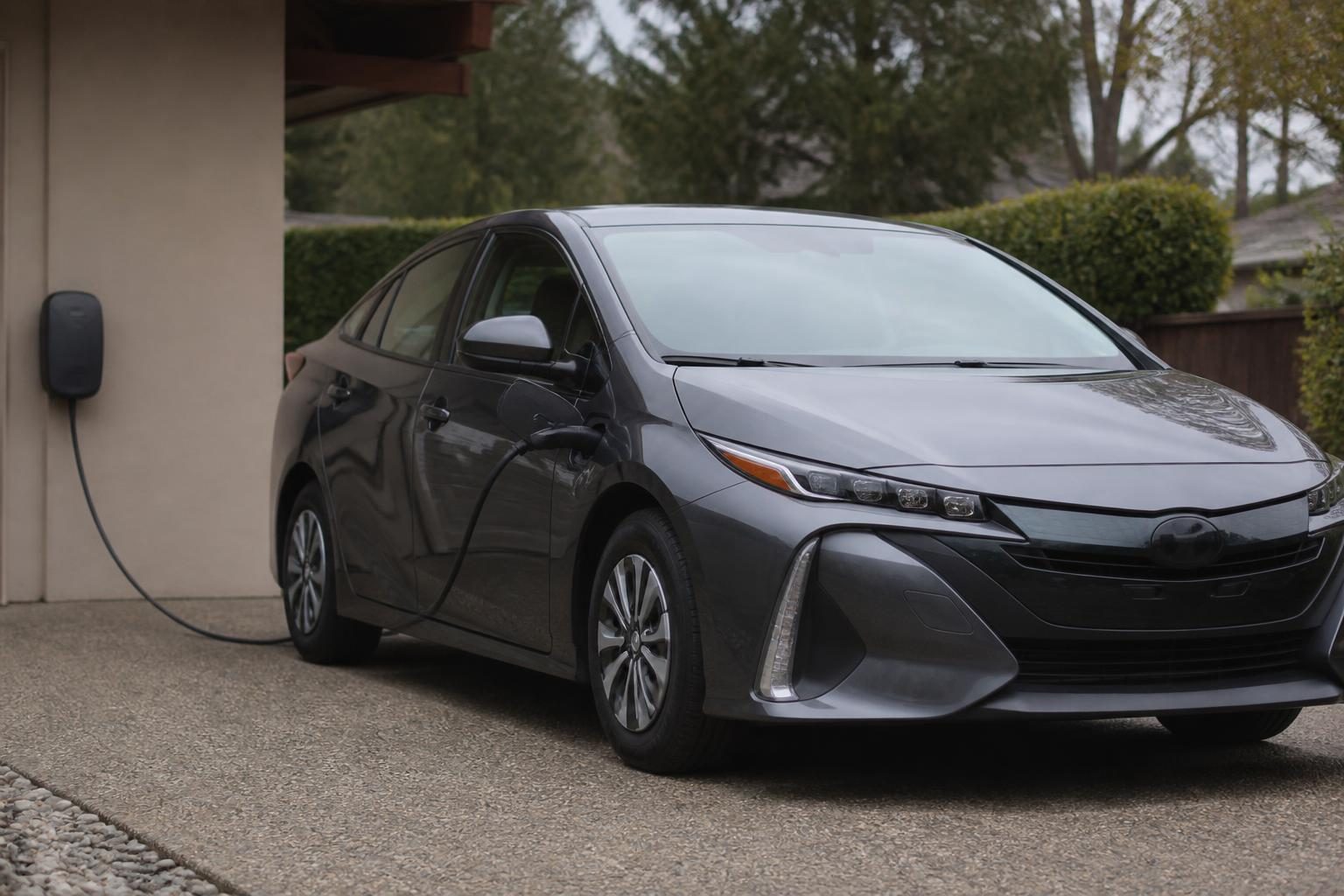 A gray plug-in car charging from a home wall unit in a driveway.
You don't strictly need one. A standard 10A household socket adds roughly 10 km of range per hour, so an overnight plug-in covers most people's commute (Gridly, March 2026). A 7 kW wallbox does the same job in 2 to 4 hours for a 20 to 22 kWh pack, which matters if you charge twice a day or drive a bigger battery.
One honest caveat before you budget: real-world electric range usually lands at 60 to 80% of the claimed figure once you factor in cold mornings, hills and highway speeds.
How Do These PHEVs Compare on Key Specs?
Here's how the five models stack up on the numbers that decide daily usability. Note the WLTP and NEDC labels, since the two test cycles aren't interchangeable and NEDC figures read optimistically.
| Model | Battery | Electric Range | AC Charging | DC Fast Charge | Body |
|---|---|---|---|---|---|
| Mitsubishi Outlander PHEV (2026) | 22.7 kWh | 86 km WLTP | 7.2 kW | Yes | Mid-size SUV, 5–7 seats |
| Toyota RAV4 PHEV XSE 2WD (2026) | 22.7 kWh | 105 km WLTP | 11 kW | Yes, 50 kW | Mid-size SUV, 5 seats |
| BYD Sealion 5 PHEV | 12.9 kWh | 71 km NEDC | 3.3 kW | No | Mid-size SUV, 5 seats |
| GWM Haval H6 GT PHEV | 35.43 kWh | 170 km WLTP | Check variant | Check variant | Mid-size SUV, 5 seats |
| Toyota Prius Prime (5th Gen) | 13.6 kWh | 68 km WLTP | 3.3–6.6 kW | No | Compact hatch, 5 seats |
Specs via zecar (2026), Drive (March 2026) and manufacturer Australian specification sheets.
Mitsubishi Outlander PHEV
The Mitsubishi Outlander PHEV is the reference point in this class, and the 2026 facelift finally gave it the battery it needed. Capacity rose from 20 kWh to 22.7 kWh, lifting WLTP electric range to 86 km (zecar, March 2026). It's also the only car here that can be had with a third row, which makes it the practical pick if you occasionally carry six or seven people.
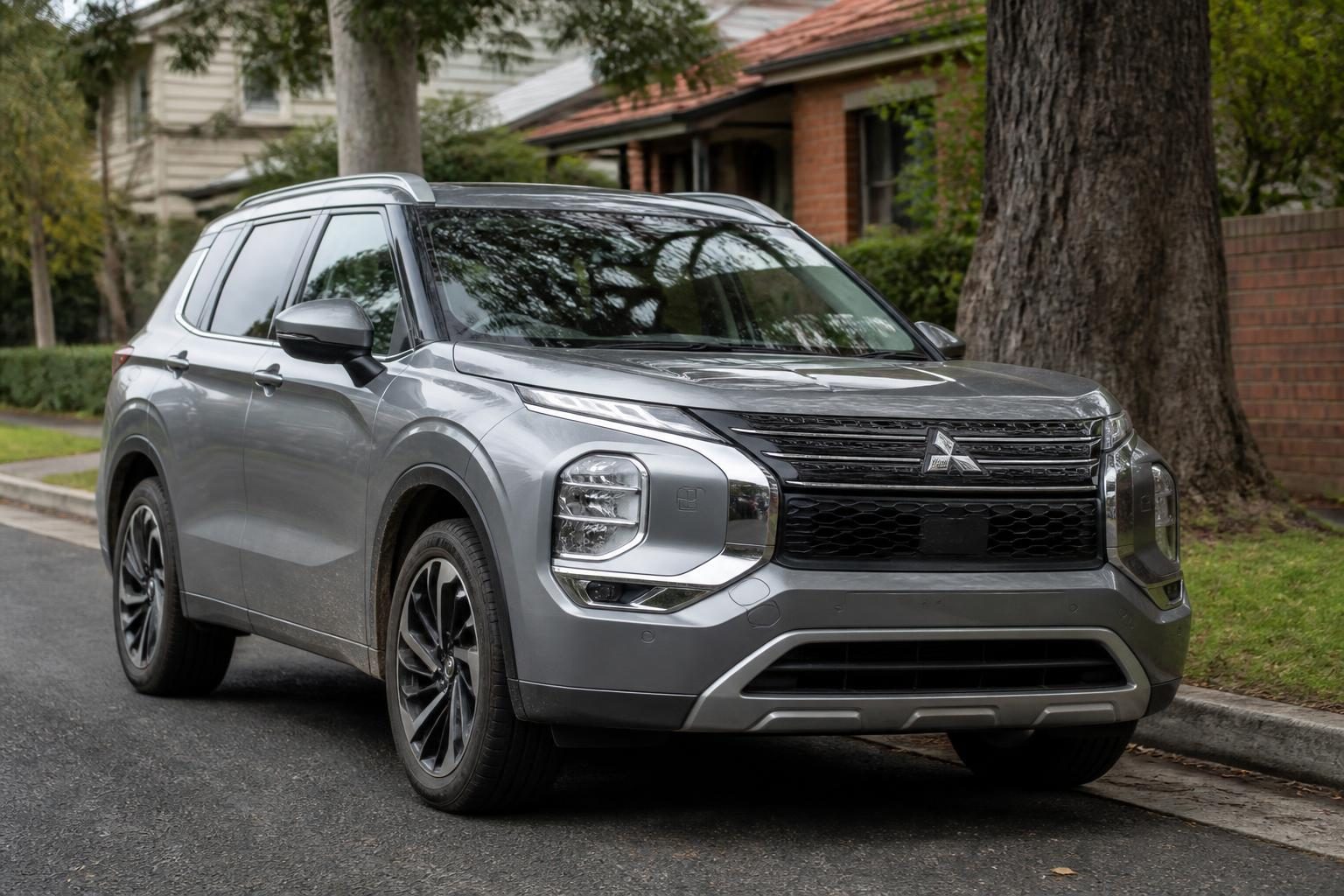 2026 Mitsubishi Outlander PHEV
Mechanically it runs a 2.4-litre four-cylinder petrol engine paired with twin electric motors, one per axle, for a combined 221 kW and permanent all-wheel drive. AC charging is capped at 7.2 kW, and DC fast charging is supported through a CHAdeMO port, which is increasingly rare on Australian public chargers. Kerb height sits around 1,665 mm.
The other draw is the warranty. Mitsubishi's conditional 10-year, 200,000 km cover is the longest in the segment, and for a drivetrain this complex that peace of mind carries real weight. It suits families who want AWD traction and don't want to think about the powertrain again for a decade.
Toyota RAV4 PHEV (XSE 2WD)
The Toyota RAV4 PHEV landed in Australia for the first time in July 2026, and it arrived with the longest electric range of any mainstream Japanese-brand mid-size PHEV SUV in Australia. The XSE 2WD is rated at 105 km WLTP; the AWD GR Sport gives up a little at 100 km (zecar, July 2026). For most buyers that's a fortnight of commuting between fills.
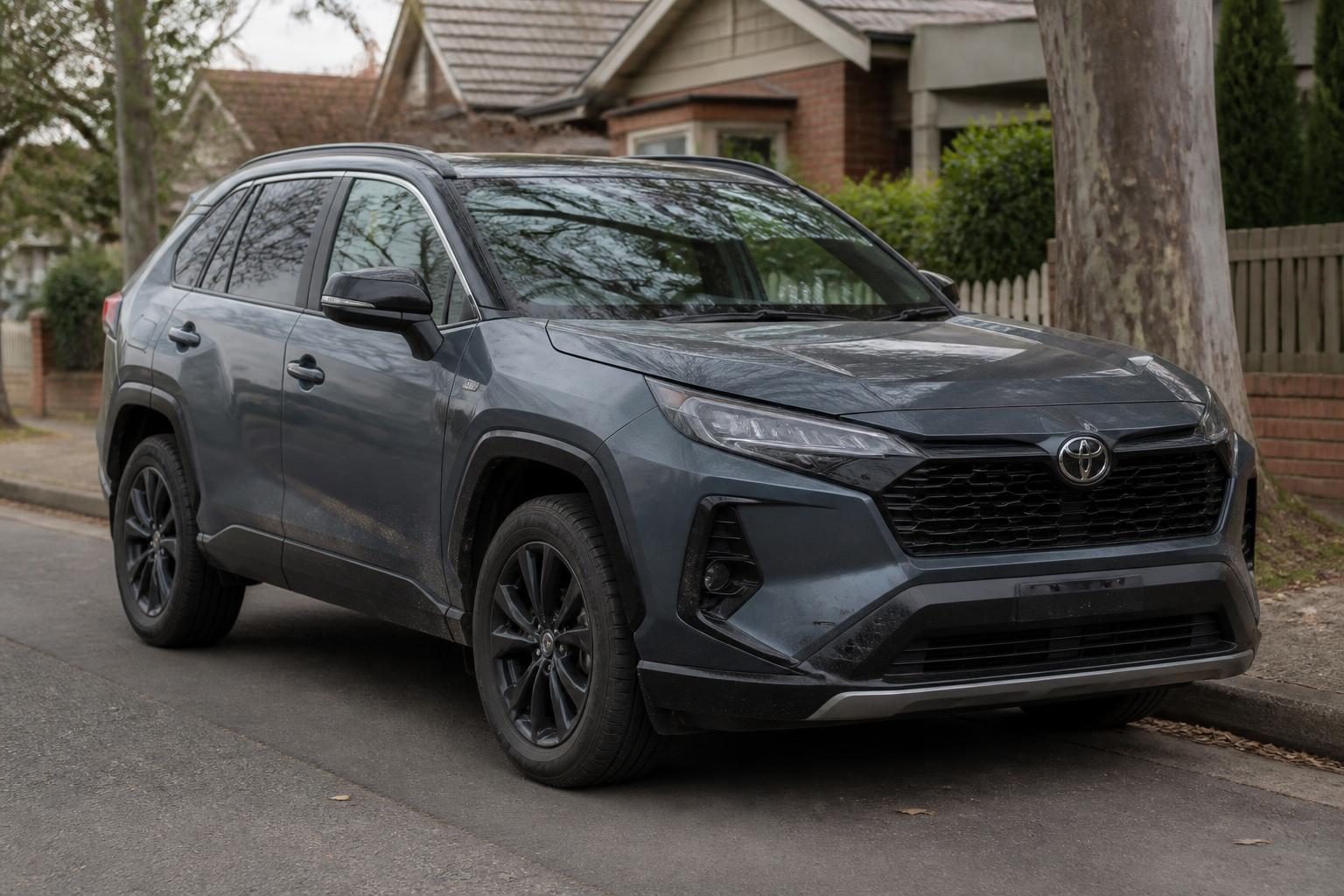 2026 Toyota RAV4 PHEV (XSE 2WD)
It shares the Outlander's 22.7 kWh battery capacity but does more with it, and the charging hardware is a genuine step ahead. AC charging runs at up to 11 kW, and it accepts 50 kW DC fast charging for a 10 to 80% top-up in around half an hour. That's a meaningful advantage on a road trip where you'd otherwise burn petrol the whole way.
Toyota's hybrid engineering has two decades of Australian service history behind it, and that reliability record is the quiet reason this car will sell. Worth a look if you want maximum electric range and can live without all-wheel drive.
BYD Sealion 5 PHEV
The BYD Sealion 5 is the entry point to plug-in hybrid ownership in Australia, and it's the model that makes the maths work for buyers who can't justify a mid-$50K SUV (Drive, March 2026). It sits in the low-$30K range before on-road costs, well under everything else here.
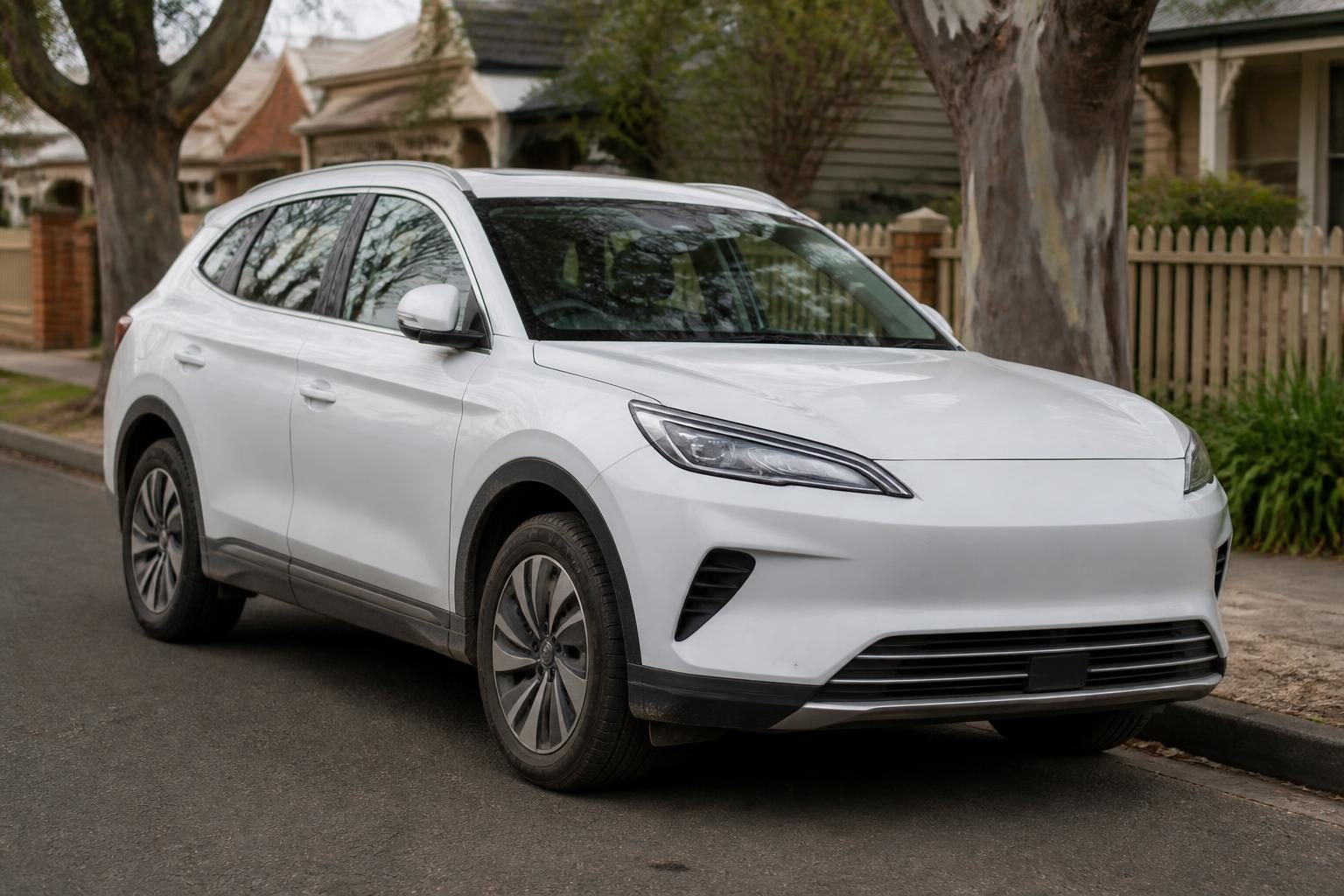 2025 BYD Sealion 5 PHEV
The 12.9 kWh battery is the smallest in this group, rated at 71 km on the NEDC cycle. Treat that as an optimistic number and assume a real-world figure closer to 45 to 55 km, which still comfortably clears the 33 km average daily drive. AC charging is limited to 3.3 kW with no DC capability, so a home wallbox fills it in roughly four hours. Boot space and rear legroom are competitive with the Outlander despite the lower price.
The trade-off is track record. BYD has grown quickly here, taking 23,143 sales in H1 2026 (Drive, July 2026), but its long-term Australian ownership data is still building compared to Toyota or Mitsubishi. Strong option for urban and commuter use where fuel cost is the main concern.
GWM Haval H6 GT PHEV
The GWM Haval H6 GT PHEV is the range outlier of this group, running a 35.43 kWh battery that is roughly 50% larger than anything else here. Its WLTP electric range is 170 km, though you'll see 180 to 183 km quoted in some places, which is the older NEDC figure. Use the 170 km number when you're planning.
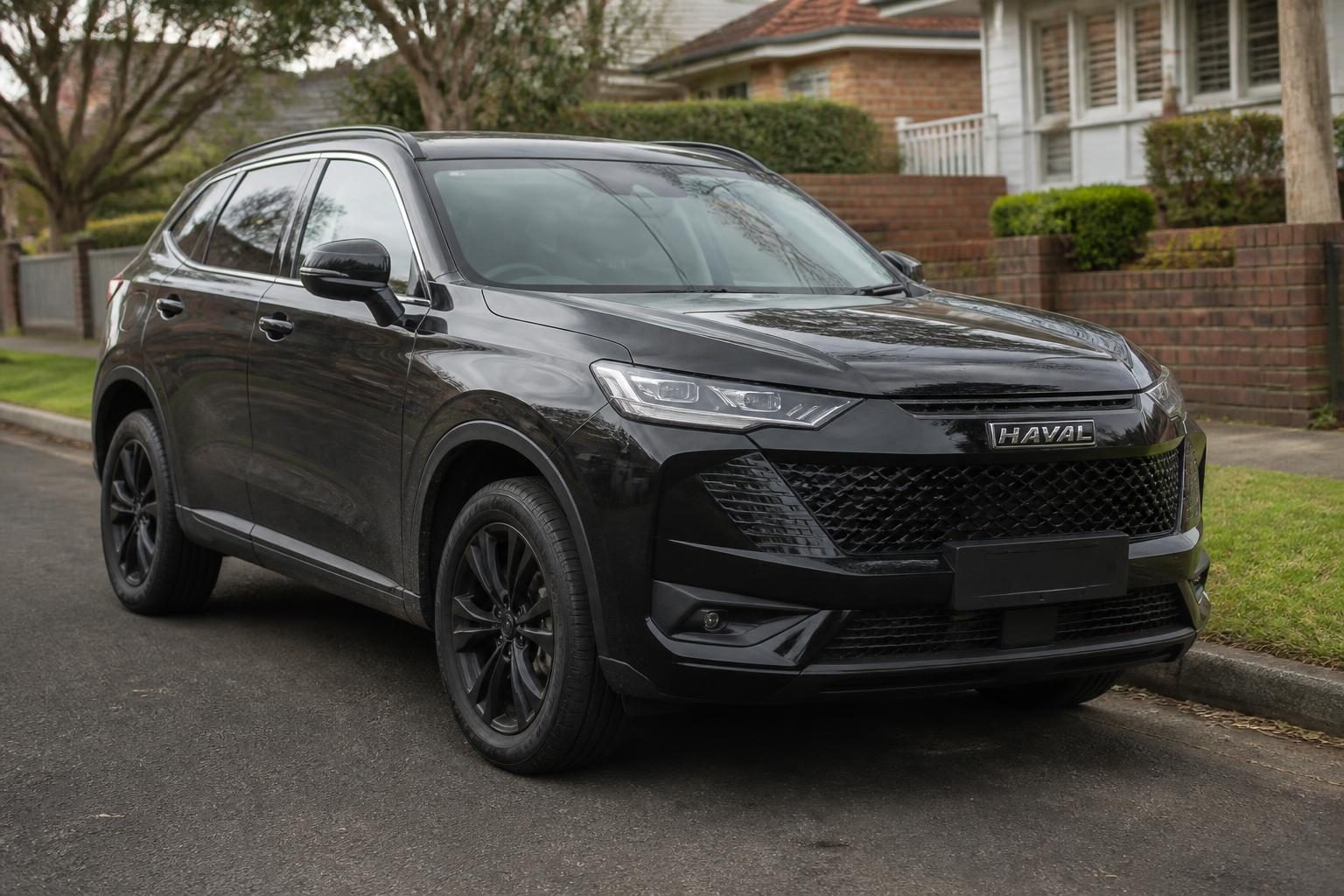 2024 GWM Haval H6 GT PHEV
Performance is the other headline. The Ultra AWD produces a combined 321 kW and 642 Nm, which puts it well ahead of the Outlander's 221 kW. Ride height is around 1,680 mm, and the coupe-styled roofline costs a little rear headroom versus a conventional H6. Charging specifications vary by variant, so confirm the AC and DC rates on the exact car you're looking at rather than assuming.
That battery is big enough to run as a de facto electric car for most of the week, with petrol as genuine backup rather than daily support. It makes a lot of sense if you want near-EV running costs without committing to public charging infrastructure.
Toyota Prius Prime (5th Gen)
The Toyota Prius Prime is the odd one out here, and deliberately so. It's a compact five-door hatch rather than an SUV, standing about 1,420 mm tall, and that lower, lighter body is exactly why it's more efficient than everything above it once the battery is depleted.
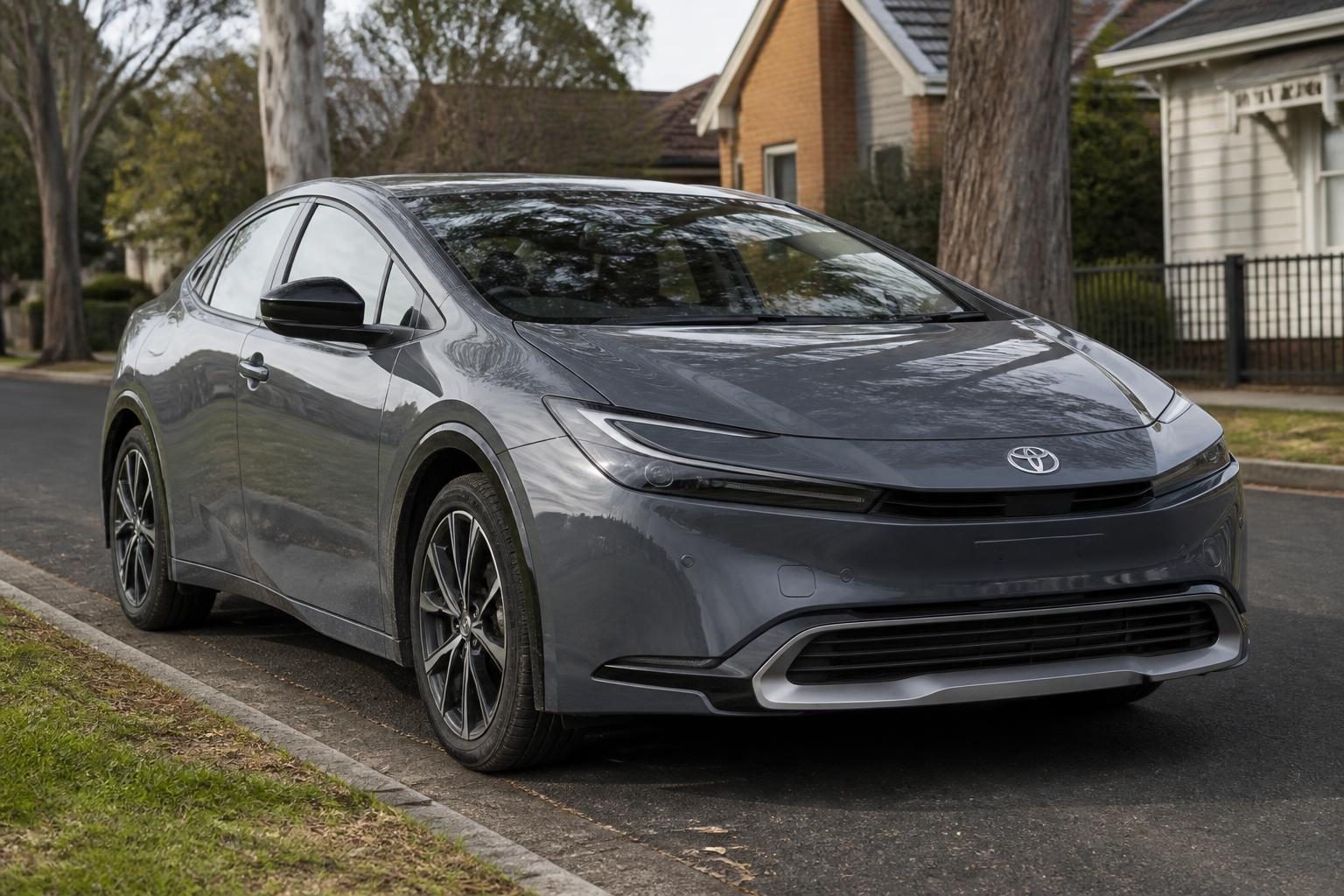 2024 Toyota Prius Prime (5th Gen)
The fifth-generation car pairs a 2.0-litre Atkinson-cycle petrol engine with a 13.6 kWh battery for around 68 km of WLTP electric range. Charging is AC-only at 3.3 to 6.6 kW depending on the market and build, so overnight top-ups are the plan. Where it separates itself is the petrol-mode economy: with a flat battery it still behaves like a conventional Prius, which no mid-size SUV in this comparison can claim.
It's also the most car-like to drive. Lower centre of gravity, lighter steering, easier to park. Probably the best fit if you're mostly doing city and suburban kilometres and don't need SUV cargo space or ground clearance.
When Does a Plug-In Hybrid Not Make Sense?
A PHEV only saves money if you charge it. Run one on petrol alone and you're hauling a battery pack that adds 200 to 300 kg for no benefit, which makes it thirstier than the equivalent conventional hybrid.
 A family packs bags into a silver SUV outside a shopping centre.
Skip the plug-in hybrid if you park on the street with no power access, live in an apartment without an allocated charging point, or do mostly highway kilometres where the electric portion runs out in the first 45 minutes. A standard hybrid is the smarter, cheaper choice in all three cases. Novated-lease buyers should also note that the FBT exemption ended on 1 April 2025, so the salary-packaging arithmetic has changed.
Where Carbarn Fits In
If a plug-in hybrid doesn't suit your parking situation, a conventional hybrid usually does, and that's where a good deal of Japanese-market stock sits. Browsing Carbarn's hybrid range is a reasonable place to compare petrol-electric options that need no charging infrastructure at all. For buyers set on a plug-in, the guide to Japanese import PHEVs covers what can be sourced from Japan and what compliance involves.
Work out your real weekly kilometres first, then check whether you can plug in overnight. Those two answers narrow this list to one or two cars very quickly. Carbarn is a Sydney-based used car dealer in Lidcombe handling locally available stock with compliance-ready paperwork, custom Japanese vehicle sourcing and import arrangement, inspection and finance support, and Australia-wide delivery.