



Ready to Hit the Road in Style?
Save money and reduce emissions with vehicles designed to deliver exceptional mileage. Visit our inventory and find a car that fits your lifestyle.
Ready to Hit the Road in Style?
Save money and reduce emissions with vehicles designed to deliver exceptional mileage. Visit our inventory and find a car that fits your lifestyle.
Shopping for an S-Class in Australia tends to end the same way. New-car money is out of the question, the local used listings still ask serious coin, and the cars that do surface have often had a hard life. Japan ran the same generation, in right-hand drive, usually on lower kilometres and a stricter service culture. So what does it actually take to put one of those in a Sydney driveway?
Quick Answer: the W222 S-Class in Sydney
- The W222 was built from June 2013 to September 2020, with right-hand-drive Japanese-market cars from November 2013 (Wikipedia).
- Three W222 variant codes hold SEVS (Specialist and Enthusiast Vehicle Scheme) approval for Australian import: S400h (222057), S450 (222058) and the long-wheelbase 222158. All three appear on the ROVER register at infrastructure.gov.au.
- Two 2014 S400H hybrids are listed in Sydney at $29,900 and $32,400, both carrying a 4.5 Japanese auction grade.
- Australia brought in 18,987 vehicles through SEVS during 2025 (Drive.com.au, April 2026), so this is a well-worn pathway, not a loophole.
- ADR 79/05 (Australian Design Rule 79/05), in force since December 2025, affects hybrid approvals on the environmental criterion (Drive.com.au, April 2026; Federal Register of Legislation). The 222158 is on the performance criterion and ADR 79/05 does not affect it.
Why Does the W222 Still Hold Up?
Seven model years of production, June 2013 to September 2020 (Wikipedia), means parts supply and workshop familiarity are both good. That matters more on a flagship than on a hatchback, because the expensive part of S-Class ownership is never the purchase.
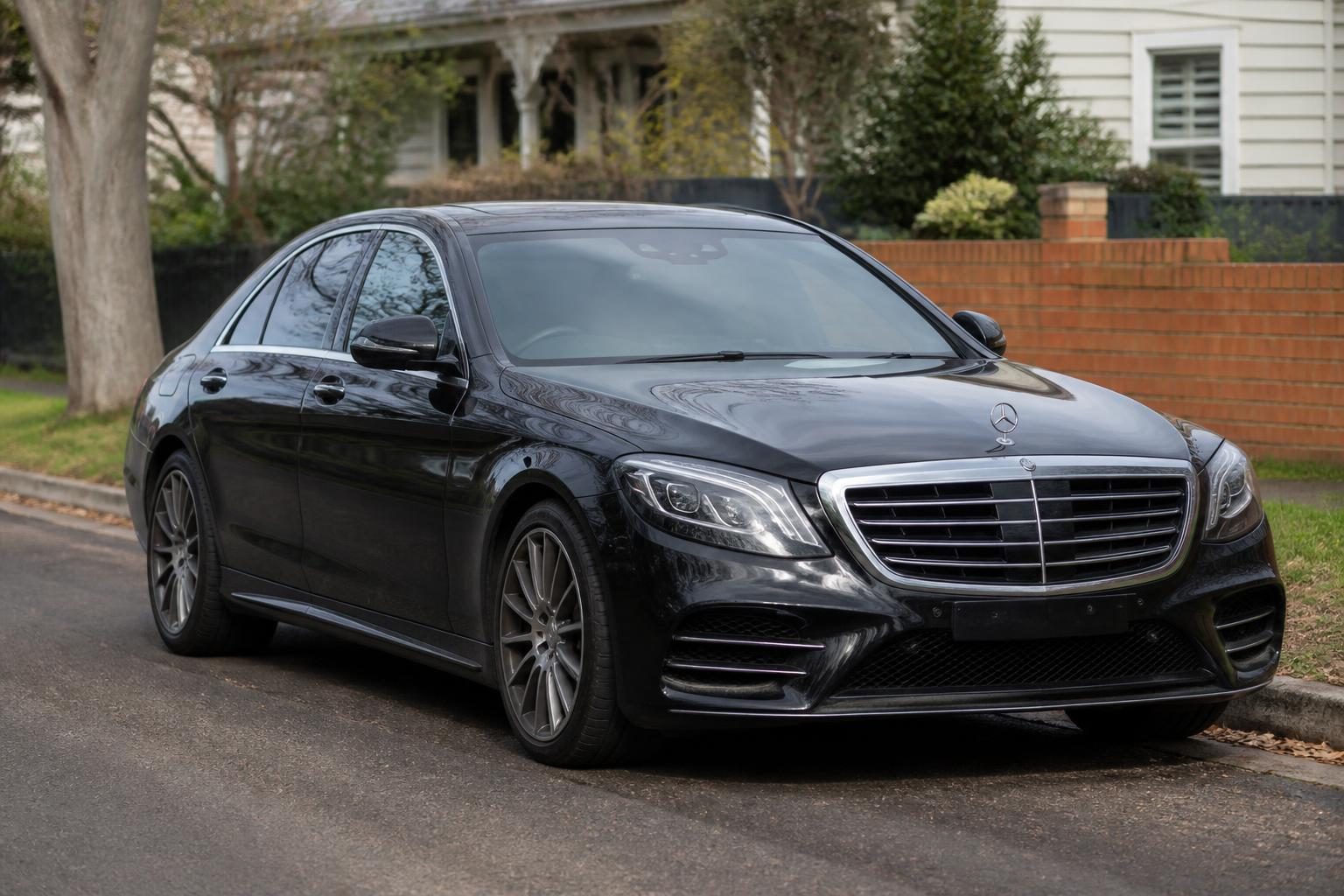
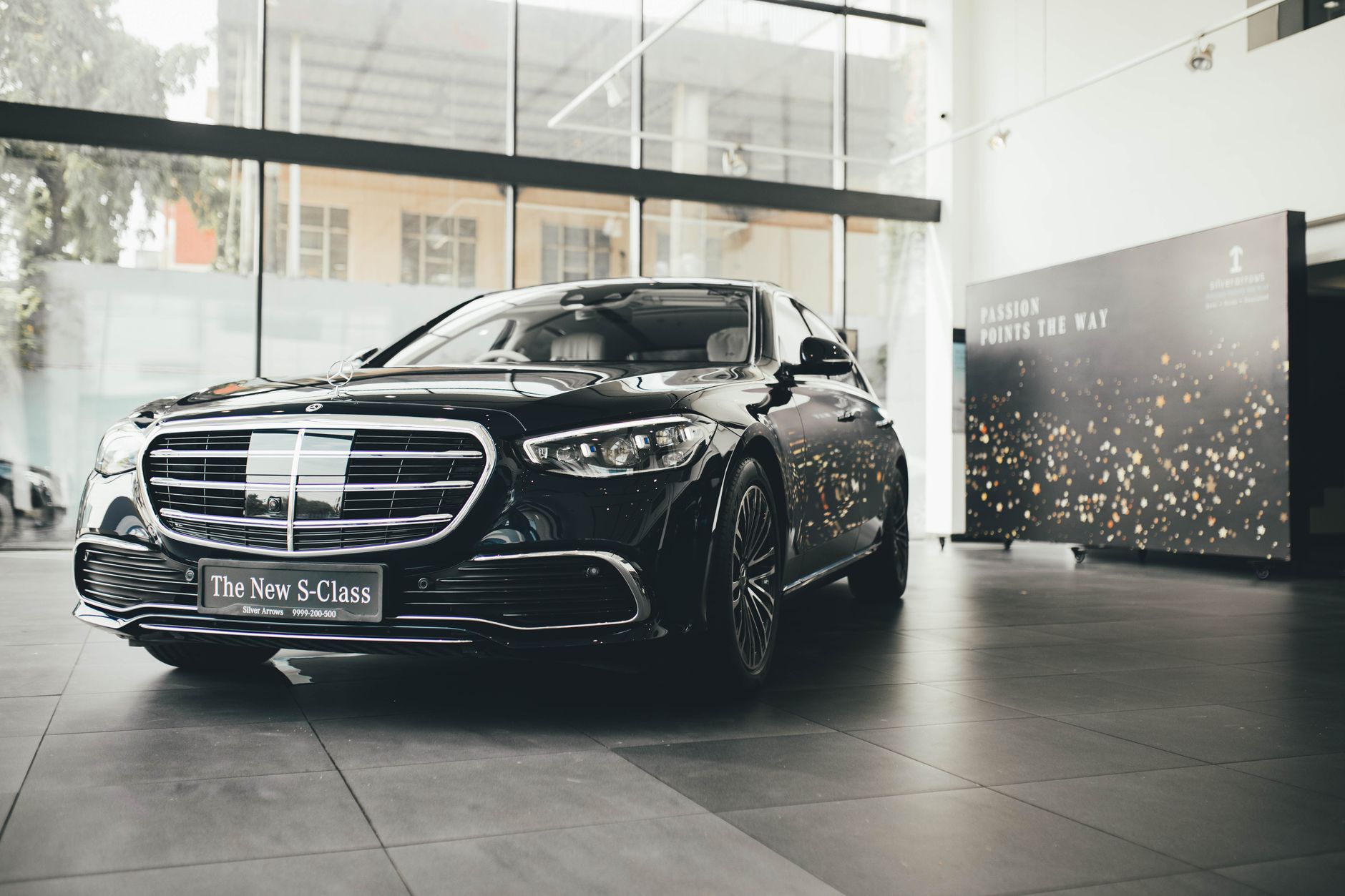 A black Mercedes-Benz S-Class displayed under showroom lighting.
Japanese cars arrive in right-hand drive from the factory — nothing requires conversion or rework behind the dash. The W222 was also the first car to use Magic Body Control's road surface scan, where a stereo camera reads the road up to 15 metres ahead and preloads the damping before the wheel gets there (Wikipedia). On cars fitted with it, that is the single biggest reason a W222 feels different from anything else at this money.
Grade is the other thing to watch. A 4.5 at Japanese auction means a car in high demand, generally well maintained, with minor scratches or dents possible but no severe collision damage (Carbarn auction grading guide, June 2026). On a twelve-year-old flagship, that is the grade worth holding out for.
Is the S400H Hybrid the Cheapest Way Into a W222?
Yes — the S400H is the lowest-priced path into a W222. Two 2014 examples sit on the Mercedes-Benz S-Class listings in Sydney: a white car with 26,669 km at $32,400, and a silver one with 43,747 km at $29,900. Both are grade 4.5, both PPSR-clear with no major accident history on record, and both already through compliance.
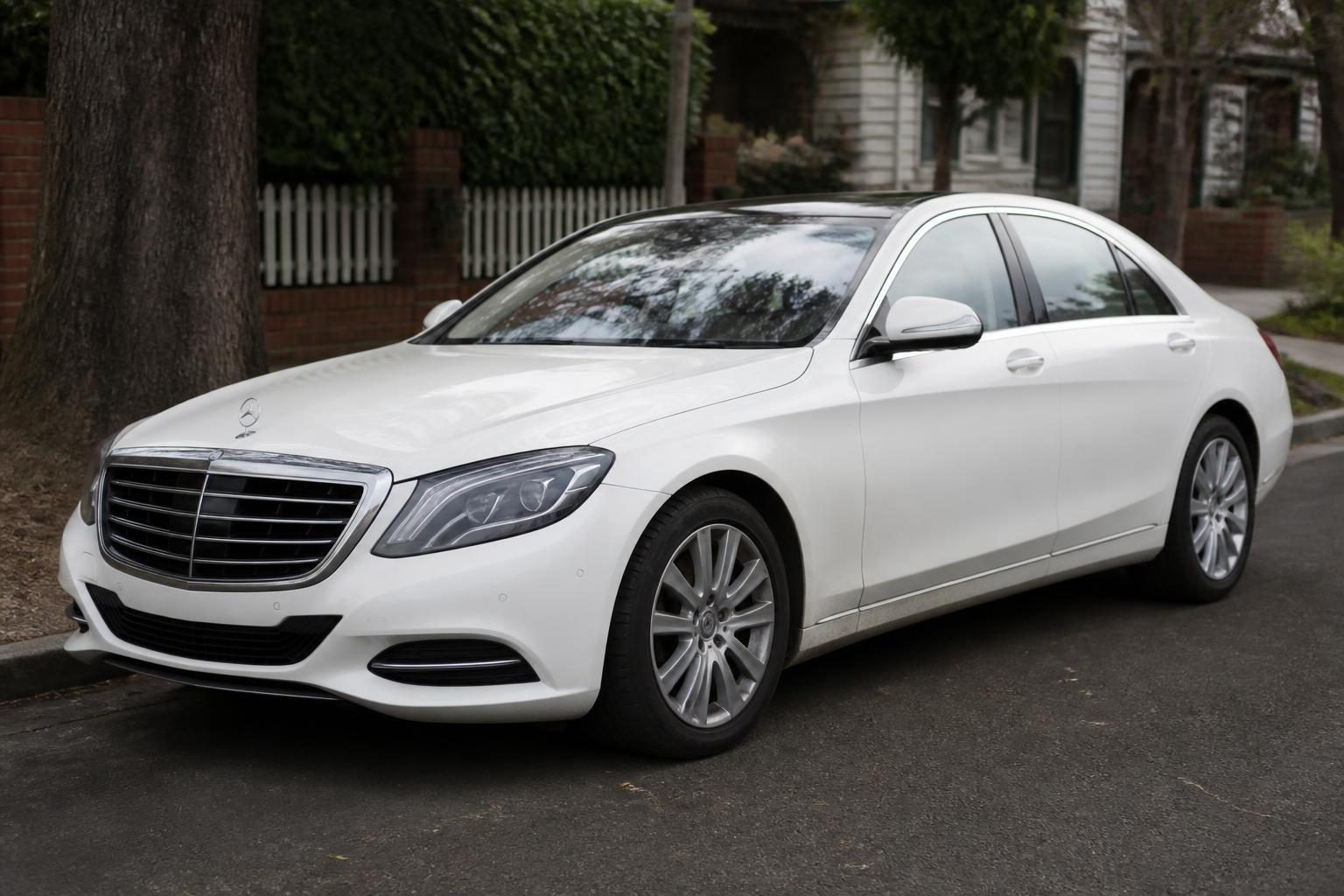 2014 Mercedes-Benz S-Class (W222) — S400H Hybrid #1
Both cars share the same mechanical package: a 3.5-litre (3,498 cc) V6 petrol engine paired with an electric motor, producing 245 kW and 370 Nm, delivered to the rear wheels through Mercedes' 7G-TRONIC seven-speed automatic. Official NEDC combined fuel consumption is approximately 6.6 L/100km (Wikipedia), which for a 5,116 mm sedan with a 70-litre tank is genuinely reasonable. This is a full parallel hybrid rather than a 48-volt assist system, so it will pull away from lights on electric alone in slow traffic. The auction sheets record standard equipment on both cars as full leather, heated seats, radar cruise control, lane departure warning, a 360-degree parking camera, and six airbags. The W222 also carries additional curtain and knee airbags beyond that tally.
The five-year Integrity Car Care extended warranty listed with both vehicles covers the hybrid battery — the question every buyer raises first. The 222057 code carries two SEVS approvals, SEV-001070 and SEV-000683, both verifiable on the ROVER register, granted on the performance and environmental criteria respectively across May 2013 to May 2017 builds. ADR 79/05 does not touch the performance pathway.
Who it suits: someone who wants the W222 experience with the least waiting and the least uncertainty. The 26,669 km car and the 43,747 km car are two genuinely different propositions, so comparing them side by side on the live listings is worth the time.
What Does the S450 Post-Facelift Bring?
The Mercedes-Benz S450 pairs Mercedes' M256 3.0-litre inline-six with EQ Boost — its integrated 48-volt mild hybrid system — covering June 2017 to December 2020 builds and replacing the S400h at the efficiency end of the range. If you want the newest hardware the W222 generation produced, this is the one.
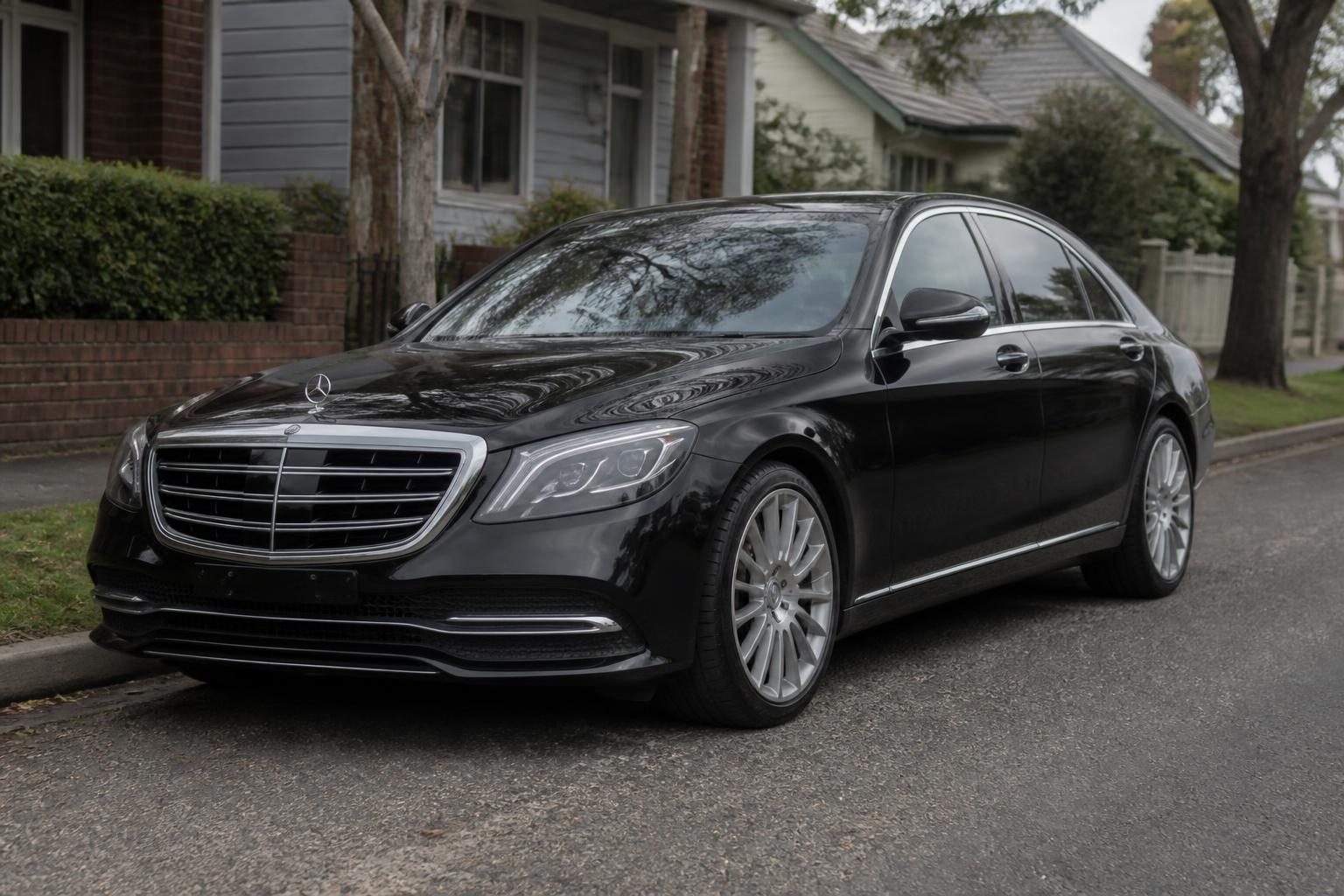 2018 Mercedes-Benz S450
EQ Boost places an integrated starter-generator on a 48-volt bus, filling in torque at low revs while the turbo spools. The ancillaries — water pump and air conditioning compressor — run electrically rather than belt-driven off the crank, reducing engine load at idle. In stop-start Sydney traffic that means fewer harsh restarts and a quieter cabin at the exact moments a big sedan feels least refined. The 2017 facelift also brought updated COMAND Online infotainment, revised LED lighting front and rear, and tidier exterior detailing.
On compliance, the 222058 code carries SEVS approval SEV-000712 on the environmental criterion, supported by MRE-000065 and MRE-000082. That environmental-criterion approval means the current status warrants confirmation before you commit. The full cost breakdown and import timeline are published on the S450 import page.
Who it suits: buyers who want the last and best version of this generation, and who are relaxed about waiting a couple of months for the right car.
What Does the S450L Long-Wheelbase Add?
The Mercedes-Benz S450L adds rear legroom and a performance-criterion SEVS approval that sidesteps ADR 79/05. Under variant code 222158, if you spend more time behind the driver's seat than in it, this is the only W222 worth considering.
 2017 Mercedes-Benz S450L
Mechanically it matches the standard S450: the same M256 3.0-litre turbocharged inline-six petrol engine, automatic gearbox and rear-wheel drive, across the same June 2017 to December 2020 build window. The extra body length goes almost entirely to the rear doors and rear footwells, so the efficiency penalty is negligible and the driving experience barely changes.
The real advantage is regulatory. The 222158 code holds SEVS approval SEV-000576 on the performance criterion, backed by MRE-000592 and MRE-000894, which puts it outside the reach of the ADR 79/05 environmental-criterion changes. Cost components for this variant are published on the S450L import page. Business buyers, anyone running a driver, and families who treat the back seat as the main seat should start here. Everyone else is better served by the standard-wheelbase car.
Which W222 Variant Suits You at a Glance?
| Feature | S400H (222057) | S450 (222058) | S450L (222158) |
|---|---|---|---|
| Build range | May 2013 to May 2017 | June 2017 to Dec 2020 | June 2017 to Dec 2020 |
| Engine | 3.5L V6 petrol-electric hybrid | 3.0L I6 M256 turbo, 48V EQ Boost | 3.0L I6 M256 turbo, 48V EQ Boost |
| Output (as listed) | 245 kW / 370 Nm | Not published | Not published |
| Wheelbase | Standard | Standard | Long |
| SEVS approval | SEV-001070 and SEV-000683 | SEV-000712 | SEV-000576 |
| ADR 79/05 exposure | Performance pathway unaffected | Environmental criterion, confirm status | Not affected |
| How you buy it | Listed in Sydney, $29,900 and $32,400 | Sourced from Japan on request | Sourced from Japan on request |
Which W222 Makes Sense for You?
Three fairly clean buyer profiles fall out of the above, and the deciding factor is usually time rather than money.
The S400H is the right choice if you want a car now at the lowest entry point. Both Sydney examples are complied, graded 4.5, and the five-year warranty covers the hybrid battery. Pre-facelift styling and infotainment is the trade-off, but from the kerb and from the driver's seat, the difference is smaller than the spec sheet suggests.
The S450 makes sense if you want the newest powertrain this generation produced. EQ Boost, updated COMAND, refreshed lighting, and a sourcing window of roughly six to ten weeks.
The S450L is the clear answer if the back seat is the whole point. Its performance-criterion SEVS approval puts it outside the ADR 79/05 changes, making it the most settled of the three on compliance.
For the other half of the picture, servicing intervals, AIRMATIC repairs and what registration and tyres actually cost, read the used Mercedes-Benz S-Class cost-to-own guide.
How Do These Cars Actually Reach Sydney?
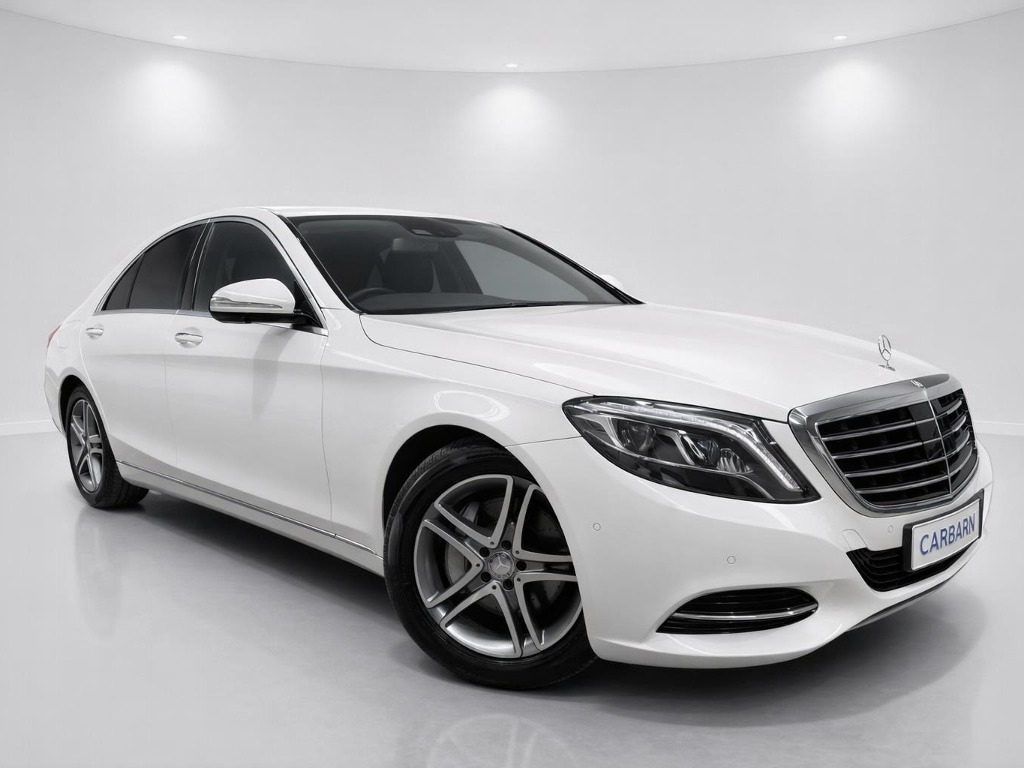 White Mercedes-Benz S-Class sedan in an indoor showroom.
Carbarn works both ends of this. The two S400H hybrids sit at the Lidcombe workshop in Sydney, already complied, inspected and prepared, and each one comes with six months NSW registration, a fresh roadworthy certificate, CTP insurance, a five-year Integrity Car Care extended warranty covering the hybrid battery, one year of 24/7 roadside assistance and doorstep delivery across greater Sydney. Carbarn handles finance and trade-in in house, and interstate buyers can inspect by video call. You can see them on the Mercedes-Benz S-Class listings. For the S450 and the long-wheelbase 222158, the team sources through approved Japanese auctions, arranges a physical inspection before bidding, bids only with your approval and within your cap, then manages freight, customs, biosecurity, VIA approval, compliance, AVV inspection and RAV entry at the RAW-certified Sydney workshop, with the cost components published on each import page rather than quoted after the fact.