



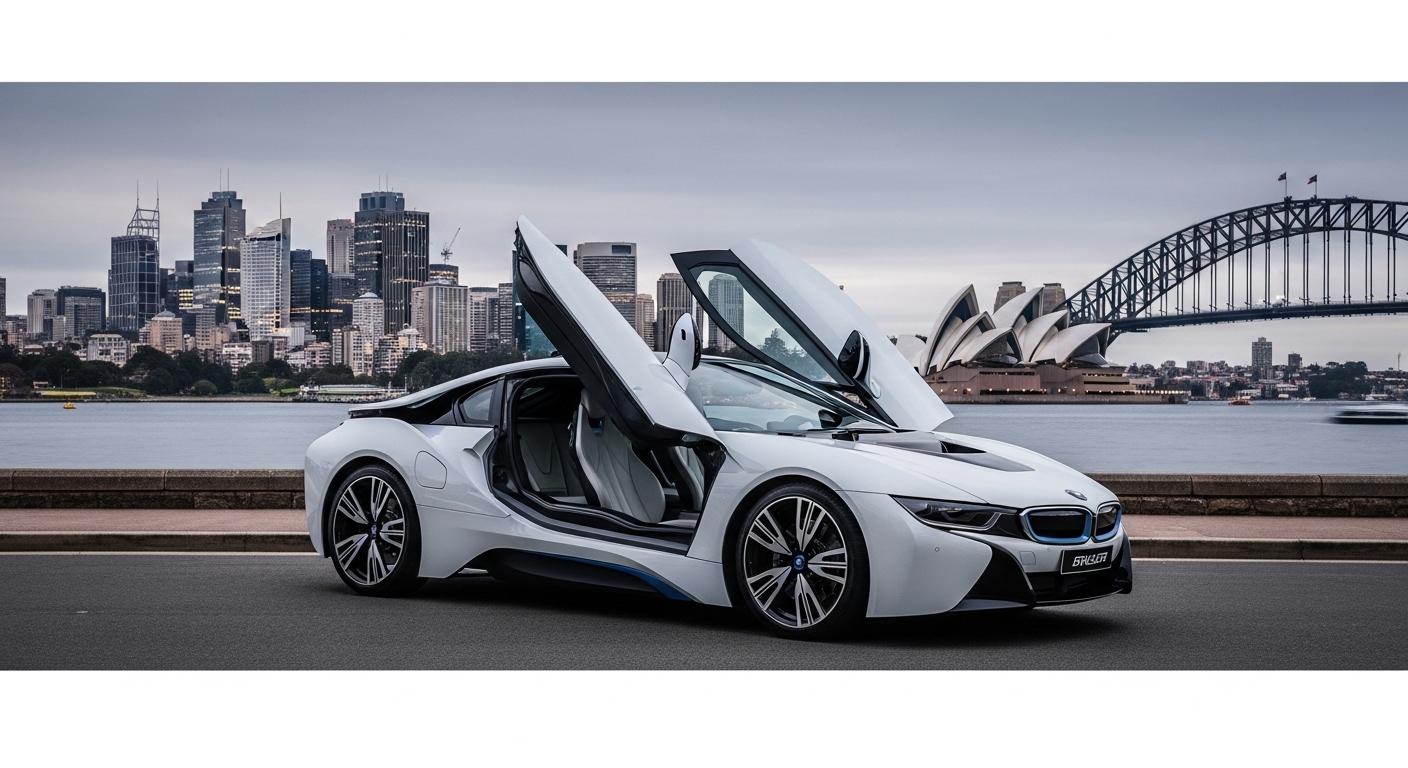
Ready to Hit the Road in Style?
Save money and reduce emissions with vehicles designed to deliver exceptional mileage. Visit our inventory and find a car that fits your lifestyle.
Ready to Hit the Road in Style?
Save money and reduce emissions with vehicles designed to deliver exceptional mileage. Visit our inventory and find a car that fits your lifestyle.
The BMW i8 still gets attention because it never looked like a normal mid-2010s sports car. In 2020, BMW PressClub's The BMW i8: From vision to icon, from bestseller to classic of the future said more than 20,000 i8s had been sold since 2014. It also said the model held more than 50 percent share of its electrified sports-car niche for years (BMW PressClub, 2020). That's why used buyers still stop and look.
The BMW i8 is a plug-in hybrid sports car built for style first, practicality second.
But attention isn't the same as a good buy. If you're considering one in Australia, the real questions are simpler: what changed across the run, what does it feel like to live with, and what should you inspect before committing? This guide keeps the focus on buyer research, not the full import process.
If you're already at the sourcing stage, see our guide to importing a BMW i8 from Japan to Australia.
Quick Answer
- BMW says more than 20,000 i8s sold since 2014, so its lasting appeal isn't imagined (BMW PressClub, 2020).
- Later cars are the pick, with an 11.6kWh battery and BMW global NEDC EV figures of up to 55km for the Coupé and 53km for the Roadster (BMW PressClub, 2018).
- The big checks are recall status, charging behaviour, repair history and full service records.
- It suits design-led buyers, not anyone wanting easy practicality or low ownership risk.
| Snapshot | BMW i8 |
|---|---|
| Build years | 2014 to 2020 |
| Body styles | Coupé, 4 seats / Roadster, 2 seats |
| Early battery and EV range | 7.1kWh gross, 37km official AU figure |
| Updated battery and EV range | 11.6kWh gross, BMW global NEDC figures of 55km Coupé / 53km Roadster |
| Practicality basics | 154L boot, 117mm clearance in early official specs |
| Best for | Distinctive second-car or collector-style ownership |
| Not for | Buyers needing rear space, low repair risk, or simple servicing |
Source notes: 7.1kWh gross battery from BMW PressClub, 2013; 37km Australian official EV figure from the Green Vehicle Guide, 2026; 11.6kWh battery and 55km Coupé / 53km Roadster BMW global NEDC figures from BMW PressClub, 2018; 154L boot and 117mm clearance from BMW PressClub PDF attachment, 2014.
Why the BMW i8 still attracts attention
In 2020, BMW PressClub's The BMW i8: From vision to icon, from bestseller to classic of the future said the i8 had sold more than 20,000 units since 2014. BMW's 2013 press kit also quoted a 0.26 drag coefficient for the shape (BMW PressClub, 2020; BMW PressClub, 2013). That mix of real production success and concept-car styling is why it still feels current.
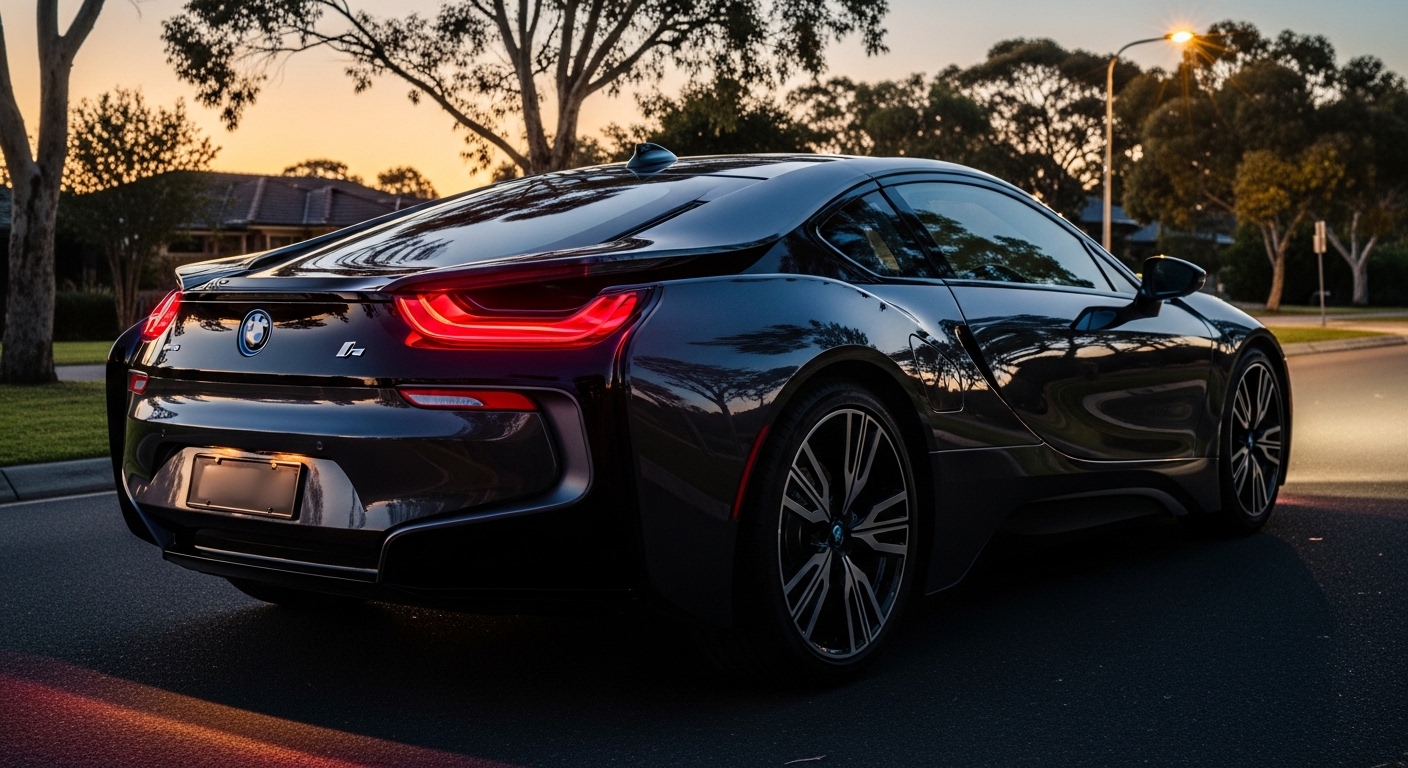 Rear three-quarter view of a black BMW i8 parked on a suburban street at dusk
The i8 works because BMW didn't treat aerodynamics as something to hide. The flying buttresses, low nose, narrow glasshouse and upward-opening doors all make the car feel theatrical before you've even pressed the start button. Why does that matter? Because a lot of used sports cars still feel fast, but not many still feel genuinely different.
The honest way to frame it is this: the i8 is a design-led GT-style plug-in hybrid, not a cut-price supercar and not a hardcore track special. That's actually its strength. If you want a car that turns an ordinary run to dinner into an occasion, it makes a lot of sense. BMW also noted its powertrain won at least one Engine of the Year class title in each year from 2015 to 2019. That helps explain its lasting reputation (BMW PressClub, 2020).
How does the i8's plug-in hybrid system work, and what changed over the run?
In 2013, BMW PressClub's The BMW i8 press kit quoted 266kW, 570Nm and 0-100km/h in 4.4 seconds. BMW's 2018 Roadster update then lifted output to 275kW and gross battery capacity to 11.6kWh (BMW PressClub, 2013; BMW PressClub, 2018). In plain English, year matters a lot on an i8.
BMW's layout is unusual even now. The 1.5-litre turbo three-cylinder drives the rear axle, while the electric motor drives the front. BMW described that as hybrid-specific all-wheel drive in its official material. If you're comparing listings, always confirm the exact year and market specification of the car in front of you.
[CHART: Grouped bar chart comparing early and updated BMW i8 figures. Data: 7.1kWh vs 11.6kWh gross battery, 37km Australian official EV range vs 55km BMW global NEDC EV range, 266kW vs 275kW system output. Source: BMW PressClub; Green Vehicle Guide.]
| Version | Gross battery | Official EV range | System output | Buyer fit |
|---|---|---|---|---|
| Early i8 | 7.1kWh | 37km AU official figure | 266kW | Better if price matters more than EV usefulness |
| Updated i8 | 11.6kWh | 55km Coupé, BMW global NEDC figure | 275kW | Better if you want the easiest ownership case |
Source notes: 7.1kWh gross battery and 266kW / 570Nm from BMW PressClub, 2013; 37km Australian official EV figure from the Green Vehicle Guide, 2026; 11.6kWh gross battery, 55km Coupé BMW global NEDC figure and 275kW from BMW PressClub, 2018.
BMW's published figures show why later cars are easier to recommend. Early i8s used a 7.1kWh gross battery and carried an Australian official EV figure of 37km, while the 2018 update lifted gross capacity to 11.6kWh and quoted BMW global NEDC EV figures of 55km for the Coupé and 53km for the Roadster (BMW PressClub, 2013; Green Vehicle Guide, 2026; BMW PressClub, 2018). System output also rose from 266kW to 275kW (BMW PressClub, 2013; BMW PressClub, 2018). The test cycles are different, so it isn't a clean Australia-to-Australia range comparison. Even so, the update made the i8 more useful as a plug-in hybrid, not just quicker on a spec sheet. For most buyers, later cars make the easier ownership case.
If you want broader context on how a car like this fits the market, our guides to plug-in hybrids in Australia and hybrid vs plug-in hybrid vs electric are useful next reads.
What is the BMW i8 like to drive and live with?
In 2013, BMW PressClub quoted a DIN weight below 1,500kg, 50:50 weight distribution and 0-100km/h in 4.4 seconds. BMW also said the hybrid system could run electrically up to 120km/h (BMW PressClub, 2013; BMW PressClub, 2020). On Australian roads, that means it feels special at everyday speeds, not only when you're pushing hard.
The first thing you'll notice is the sense of occasion. The seating position is low, the nose stretches out ahead of you, and the instant shove from the electric motor makes suburban speeds feel more vivid than the numbers suggest. Is it a razor-edged sports car? Not really. It's calmer than that, which is why the GT label fits.
2019 BMW i8, the later-run reference point
A later-run 2019 BMW i8 is the clearest reference point for Australian buyers. It gives you the bigger battery, the stronger later output and the tidier ownership logic of the updated car. It still delivers the low-slung shape, unusual doors and sense of theatre that make the i8 memorable.
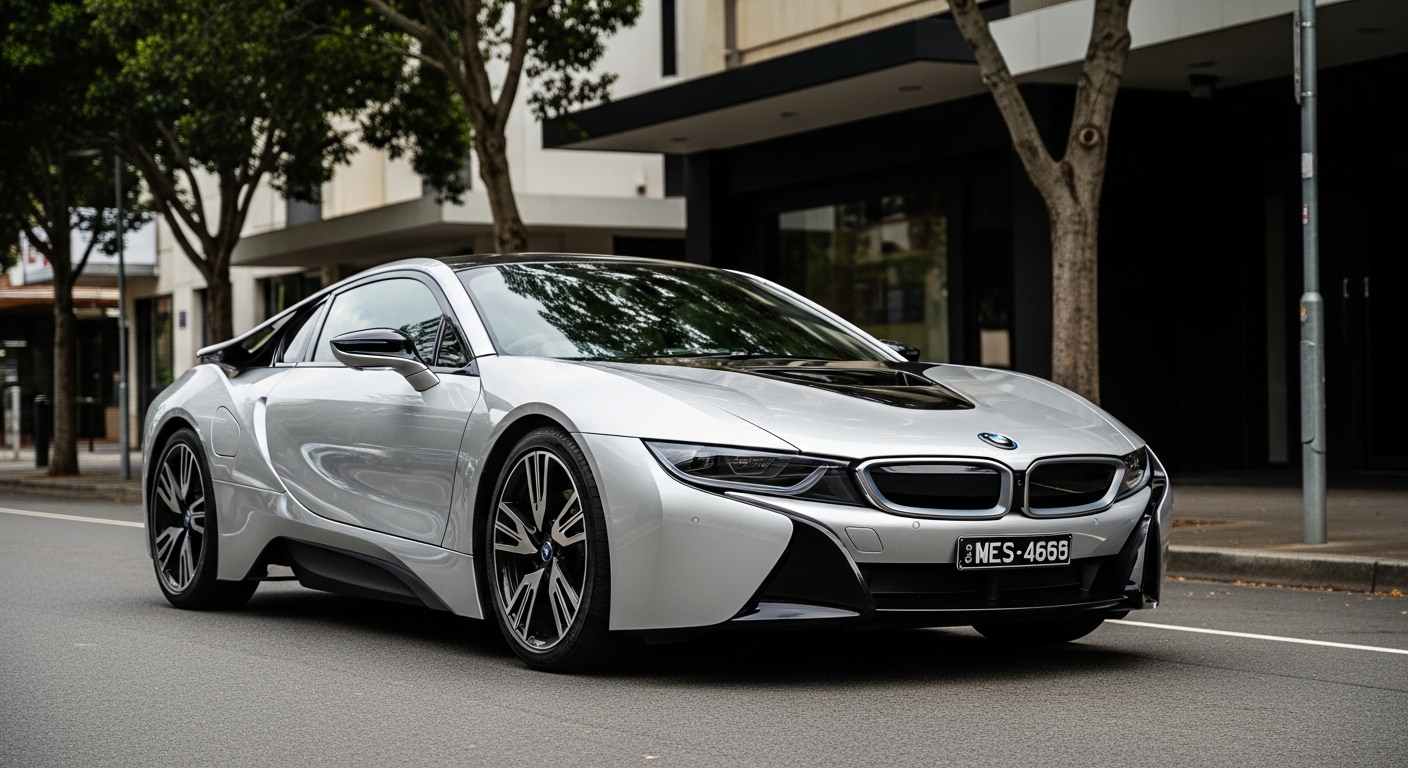 2019 BMW i8
Official BMW material says later cars moved to 275kW. The 2018 update also quoted BMW global NEDC EV figures of 55km for the Coupé and 53km for the Roadster (BMW PressClub, 2018). Early official specs also show 20-inch wheels, 117mm ground clearance and about 154 litres of boot space, so this is still a tightly packaged premium car, not a practical all-rounder (BMW PressClub PDF attachment, 2014).
The cabin is usable, but only with realistic expectations. The Coupé is a 2+2, not a family coupe, and the Roadster is a strict two-seater. Entry and exit are part of the experience, but they're not graceful. If you do school-run duty, bulky luggage or steep driveways every day, that low 117mm clearance becomes part of the ownership story quickly.
What should you know about battery age, charging, reliability and running costs?
In 2026, the Australian Government's Green Vehicle Guide listed the 2014 i8 at 2.1L/100km, 49g/km CO2, 119Wh/km and $1,214 annual fuel cost at 14,000km. BMW's 2018 update also quoted a BMW global NEDC EV figure of 55km for the Coupé (Green Vehicle Guide, 2026; BMW PressClub, 2018). Cheap to fuel, then? Yes. Cheap to own, not automatically.
[CHART: Stat comparison for Australian 2014 official efficiency and later battery update. Data: 2.1L/100km, 49g/km CO2, 119Wh/km, $1,214 annual fuel cost at 14,000km, 37km early Australian official EV range, 55km later Coupé BMW global NEDC EV range. Source: Green Vehicle Guide; BMW PressClub.]
The official efficiency figures explain why buyers stay interested. The Australian Government's Green Vehicle Guide lists the 2014 i8 at 2.1L/100km, 49g/km CO2, 119Wh/km and $1,214 annual fuel cost at 14,000km (Green Vehicle Guide, 2026). BMW's 2018 update also quoted a BMW global NEDC EV figure of 55km for the Coupé (BMW PressClub, 2018). Those figures make the i8 look cheap to run. They don't make it cheap to own. Tyres, brakes, electronics and body repairs still sit in premium performance-car territory. That's the gap that catches buyers who only focus on the fuel label. Use the official figures to compare versions and charging usefulness, then budget like you're buying a specialised BMW, not a mainstream hybrid.
The first check is simple: charge the car fully and see how it behaves. Watch how much electric range it shows, whether the charging port and cable work properly, and whether any warnings appear once the car starts moving. Sounds basic, but what tells you more about a used plug-in hybrid than its actual charging behaviour?
The second check is mindset. Australia's fuel-label rules say official fuel and energy figures are laboratory comparison figures, not promises of real-world results (Department of Infrastructure, 2026). So use the numbers to compare versions, not to predict your week exactly. Later cars are plainly more useful on electric power. Every i8 should still be budgeted like a specialised premium performance car, with tyre, brake, electronics and body-repair risk to match. If you want a broader maintenance baseline, see our hybrid maintenance guide.
What should Australian buyers check before buying one?
In 2026, BMW Australia's customer support page said owners can check recalls by VIN and that authorised BMW service partners perform recall work free of charge (BMW Australia, 2026). For a used i8, that's just as important as kilometres. NHTSA also recorded a 2014 US fuel-tank recall for certain MY2014 i8s built from May 16, 2014 to September 16, 2014 (NHTSA Recalls, 2014).
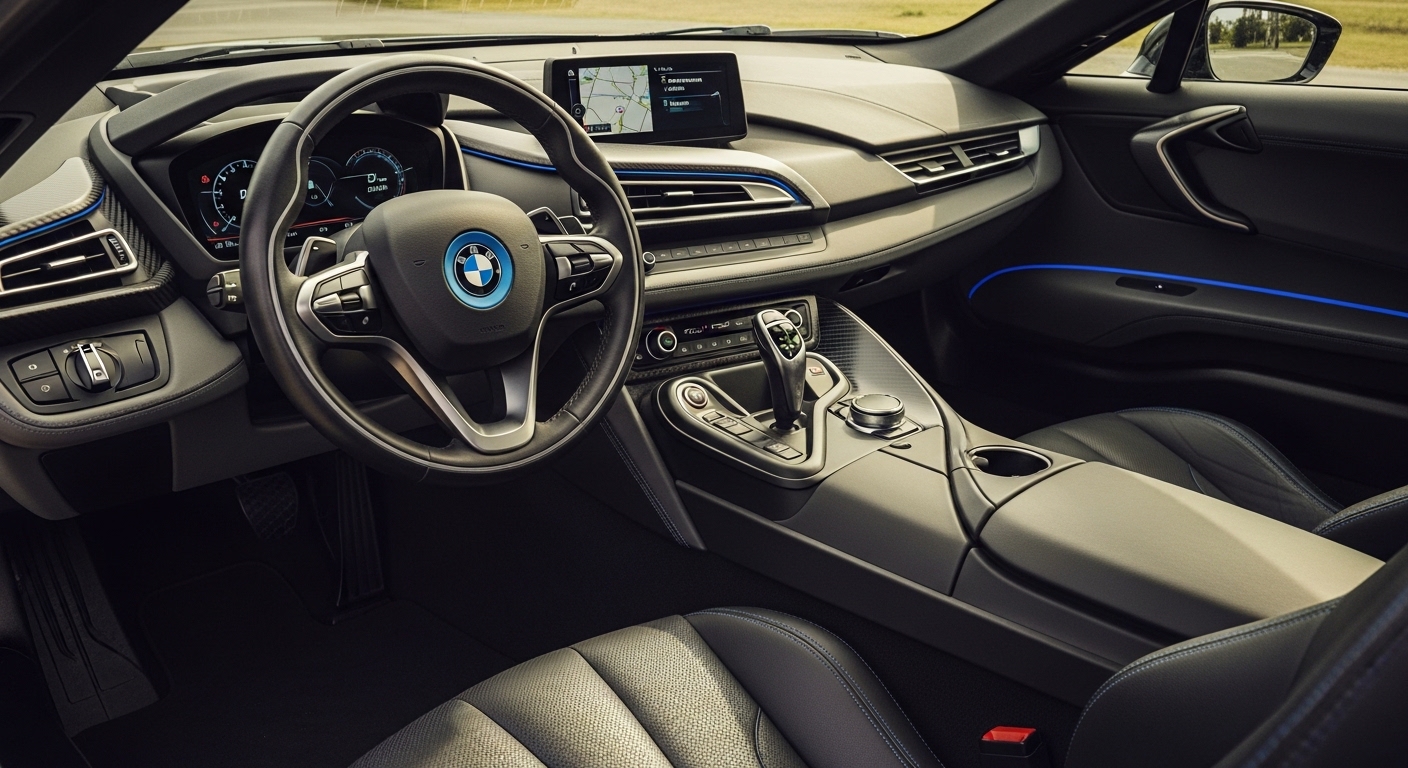 Close interior view of a BMW i8 cockpit with digital instruments and center console
Start with paperwork. You want full service history, recall status, battery and charging records where available, odometer consistency, and auction grade paperwork if the car is Japan-sourced. Also confirm the exact year, body style and market specification, because i8 equipment and battery details vary by version. If the car is being sourced from overseas, confirm compliance suitability before purchase, not after.
Then inspect the expensive stuff. Check tyre age and wear, brake condition, all electronic functions, headlight condition, door operation and cabin switchgear. What gets missed most often? Accident history and repair quality. The i8's carbon-fibre reinforced plastic structure and distinctive exterior panels mean poor body repairs deserve specialist scrutiny, not a quick cosmetic sign-off. A clean-looking car isn't always a clean car.
The BMW i8's best buyer fit
In 2014, BMW's technical material listed 117mm ground clearance and about 154 litres of boot space. The Coupé kept four seats, while the Roadster dropped to two (BMW PressClub PDF attachment, 2014; BMW PressClub, 2018). Those numbers tell you the truth: the i8 suits buyers chasing theatre and novelty more than space or simplicity.
The best fit is a buyer who wants something distinctive, technically interesting and still easy enough to use around town. It works especially well as a second car, a weekend car, or a collector-friendly modern halo car. If design matters as much as lap times, the i8 is still a strong option.
If you need generous rear seating, easy driveway clearance, or low-stress specialist servicing, it's probably not your car. The buyer verdict is fairly simple: a good i8 can still feel brilliant because the concept remains unusual and the later battery update helped real-world usefulness. Few used cars make every short trip feel this eventful. But you buy it with your eyes open, not because the official fuel figure looks tiny.
If you want help after the research stage, Carbarn's used hybrid and import service can point you toward locally available hybrid stock or source Japan-market vehicles on request. It can also review auction history, arrange pre-bid inspection where possible, manage import approvals, handle in-house compliance and registration-ready preparation, and offer warranty, finance and nationwide delivery support. For i8-specific next steps, see the BMW i8 import eligibility and sourcing page, or browse used hybrid cars in Australia if a less specialised option makes more sense.