



Ready to Hit the Road in Style?
Save money and reduce emissions with vehicles designed to deliver exceptional mileage. Visit our inventory and find a car that fits your lifestyle.
Ready to Hit the Road in Style?
Save money and reduce emissions with vehicles designed to deliver exceptional mileage. Visit our inventory and find a car that fits your lifestyle.
Go to any car meet in Australia and you'll see the same faces. An R34 in the corner, a Supra someone's still paying off, a couple of WRXs, maybe an FD RX-7 if the weather's good. Great cars, all of them. But you already know those cars. Everyone does.
Meanwhile, Japan's domestic market ran a parallel universe of machines that almost nobody here noticed. Some shared engines with the headline heroes. Some wore a Type R badge and never left the country. A few are just plain misunderstood. This article is about those cars, the ones that reward you precisely because most people walk straight past them.
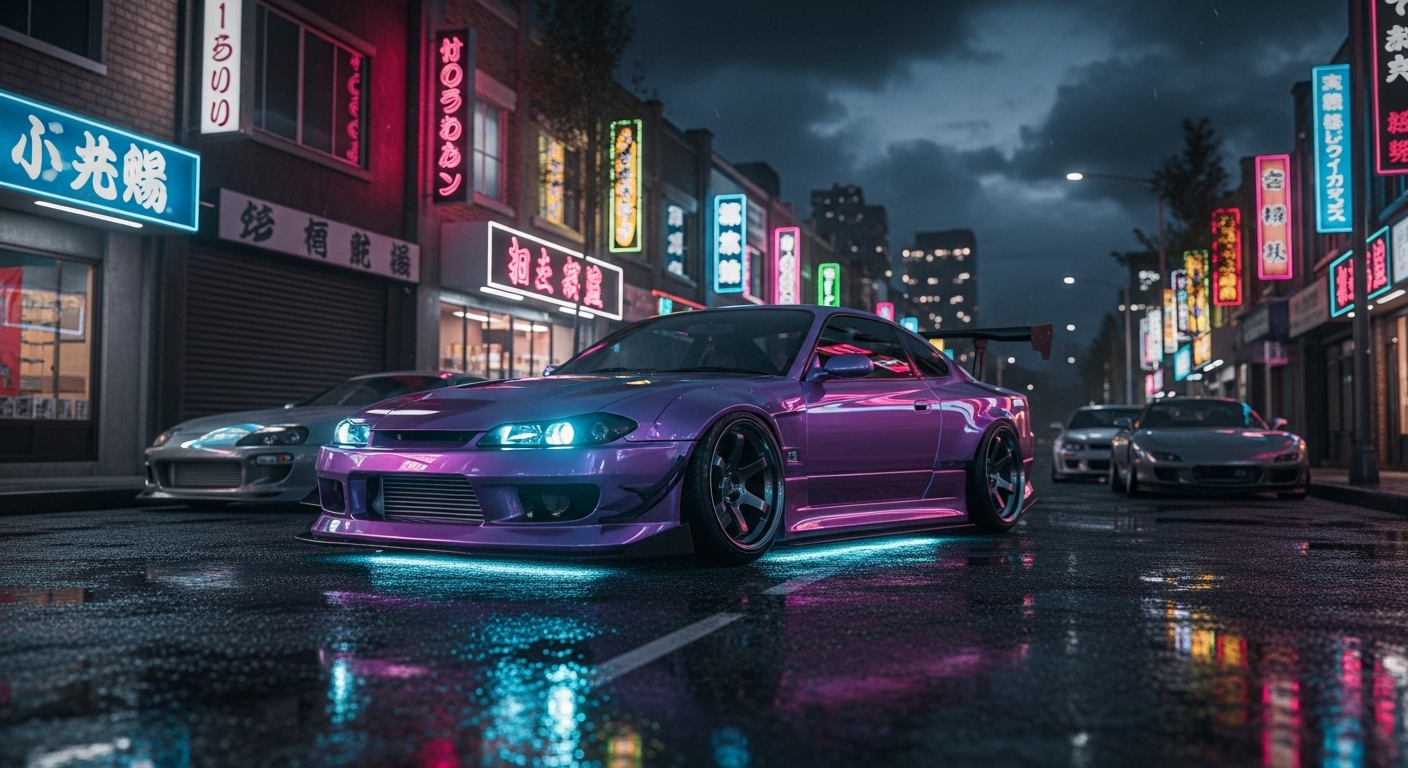 Modified purple coupe on a rain-slick street beneath bright neon signs at night
Quick Answer
- Japan built hundreds of models that never officially reached Australia. These seven are the ones worth tracking down in 2026.
- As of August 2026, vehicles built before August 2001 qualify for Australia's 25-year rule, which opens up a wide window of 1990s JDM performance (infrastructure.gov.au, 2026).
- Values are moving. A 2002 Silvia S15 Spec-R sold for a recorded high of USD $90,000 in January 2026 (classic.com, 2026).
- Every car here can be sourced from Japan and registered on Australian roads through either the SEVS register or the 25-year concessional pathway.
Which Japanese Performance Cars Flew Under the Radar?
Hundreds of model codes are approved for import and compliance into Australia right now, and only a fraction of them ever get talked about. The shortlist below follows three rules: the car was JDM-only or near-invisible on our roads, it has a live import pathway, and it has a genuine "why forgotten" story rather than just being obscure for the sake of it.
That last rule matters. Plenty of Japanese cars are forgotten because they were forgettable. These aren't. Each one has a real case, and in most instances a growing community that already knows it. If your budget stretches to fun money, our guide to fast JDM cars under $30K and the rundown of cheap turbo JDM options cover the budget end. This list is about desirability, not just price.
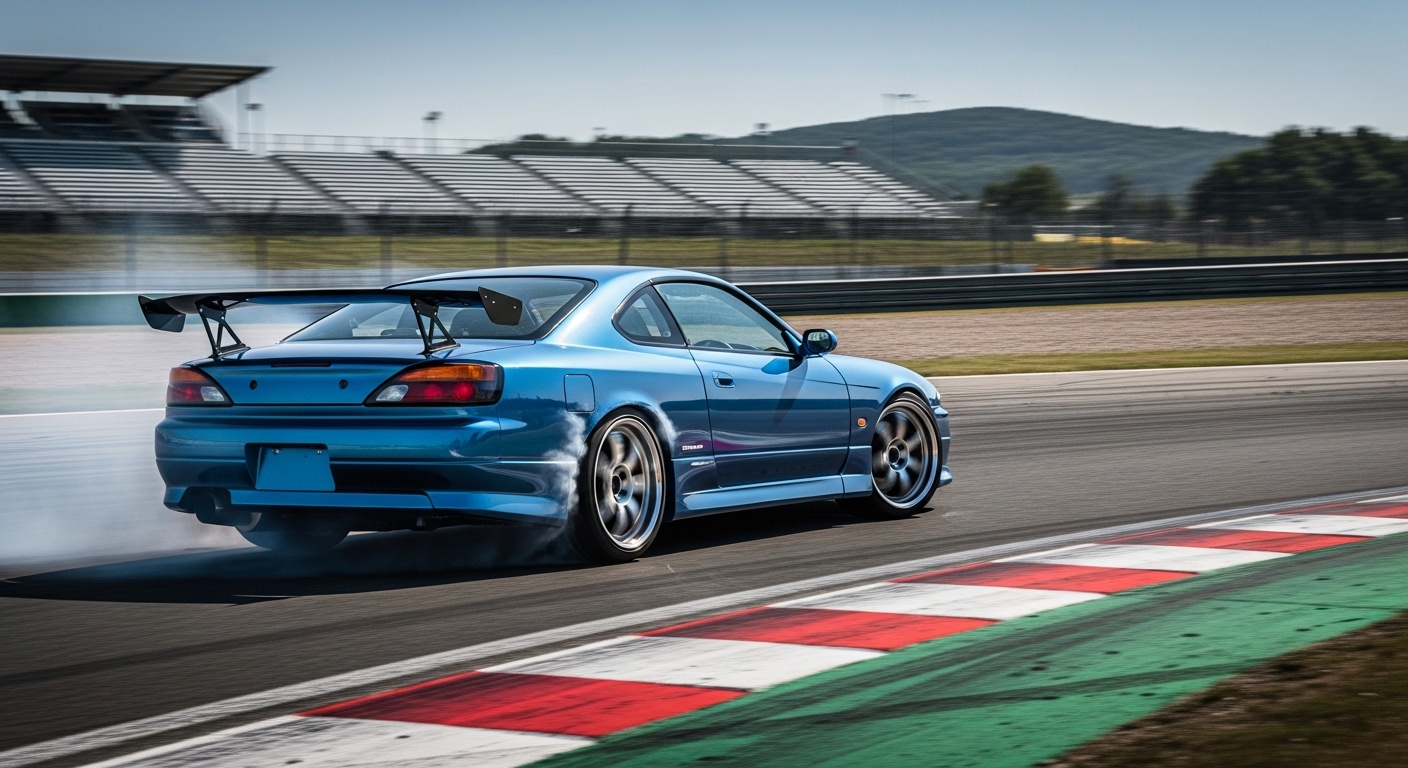 The S15 Silvia, one of the JDM icons that never officially reached Australian showrooms
| Car | Engine | Why it was overlooked | Import pathway |
|---|---|---|---|
| Toyota Chaser Tourer V (JZX100) | 1JZ-GTE 2.5L twin-turbo I6 | Lost in Toyota's three-brand dealer split | SEVS + 25-year rule |
| Toyota Aristo (JZS161) | 2JZ-GTE 3.0L twin-turbo I6 | Lexus-badged abroad, never reached us | SEVS + 25-year rule |
| Honda Accord Euro R (CL1) | H22A 2.2L DOHC VTEC | Overshadowed by Civic and Integra Type R | SEVS + 25-year rule |
| Nissan Silvia S15 | SR20DET 2.0L turbo | Never officially sold in Australia | SEVS + 25-year rule |
| Nissan Fuga (Y50) | VQ35DE 3.5L V6 | Sat above the Skyline sedans, invisible here | SEVS |
| Mazda RX-8 (SE3P) | 13B Renesis 1.3L rotary | Engine reputation scared buyers off | SEVS |
| Toyota Altezza RS200 (SXE10) | 3S-GE BEAMS 2.0L NA | Became the Lexus IS, the JDM original was forgotten | SEVS + 25-year rule |
What Makes the Toyota Chaser Tourer V (JZX100) Worth Importing?
The Toyota Chaser Tourer V is the car that proves fame and merit aren't the same thing. It shares its platform and 1JZ-GTE engine with two other Toyota sedans, the Mark II and the Cresta, which Toyota sold through separate dealer networks in Japan. Three versions of essentially the same car meant none of them got the singular cultural moment the Skyline earned.
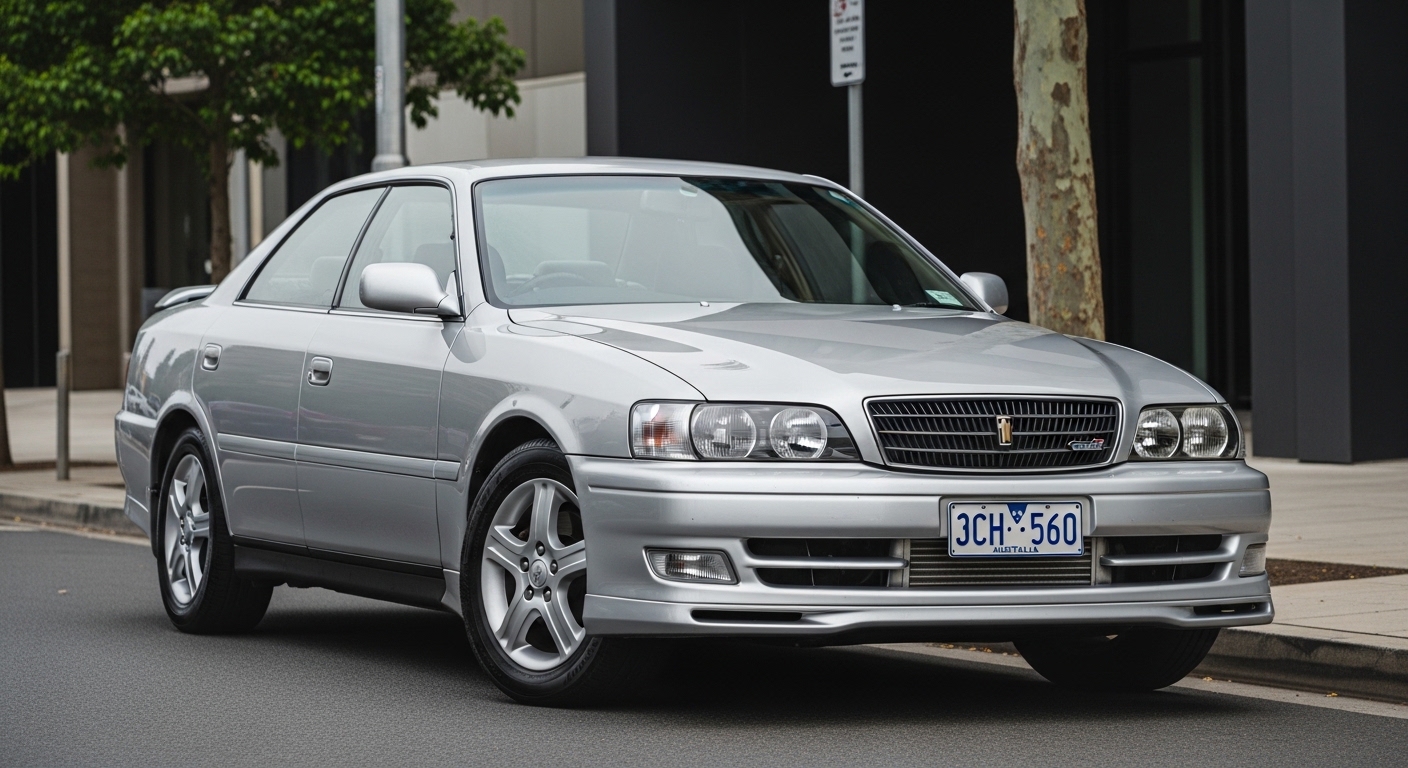 1001 Toyota Chaser Tourer V
Underneath, the Tourer V carries the 1JZ-GTE, a 2.5L twin-turbo inline-six rated at 280 PS at 6,200 rpm with 268 lb-ft of torque (projectjdm.org, 2025). It drives the rear wheels through a Torsen limited-slip diff, and it responds well to a modest boost and ECU tune. The Carbarn import page confirms the JZX100 chassis and 1JZ-GTE engine, with manual or automatic gearboxes eligible.
Here's the part most people miss: this car has a championship on its record. Nobuteru Taniguchi won the 2002 D1 Grand Prix title in a JZX100 Chaser (projectjdm.org, 2025). No other car on this list can say that. For a buyer, the appeal is simpler still. It's a four-seat sedan with a boot and anonymous bodywork that happens to be one of the best rear-drive daily drivers Japan ever built. Pre-2001 examples fall inside the 25-year rule, so the eligible window is wide open.
Why Is the Toyota Aristo (JZS161) Still Underrated?
The Toyota Aristo V300 is the only four-door production Toyota ever fitted with the 2JZ-GTE (JDMBUYSELL, 2026). Same legendary engine as the Supra, completely different brief. This one came wrapped in an executive sedan with a full boot and four comfortable seats.
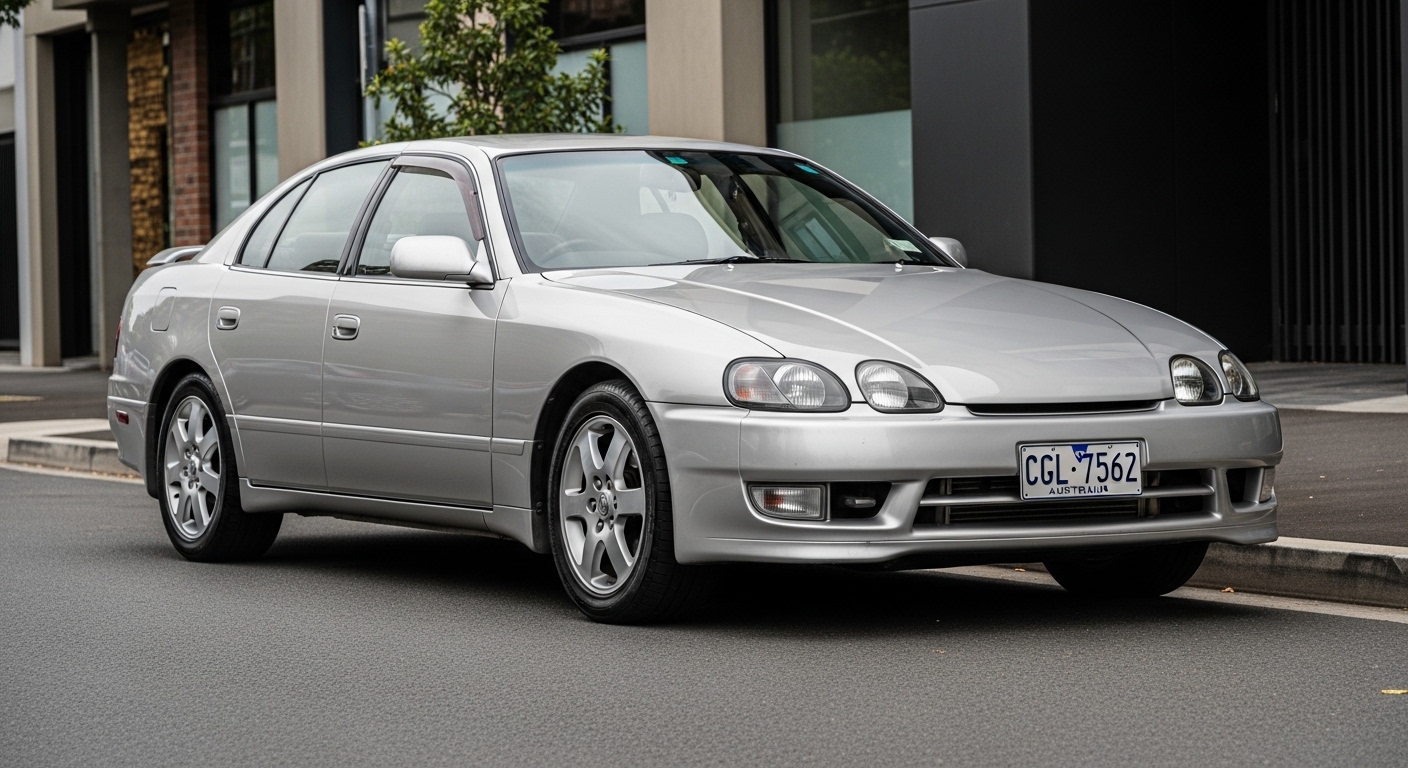 1611 Toyota Aristo
The reason it flew under the radar comes down to badging. In Japan it was a Toyota. Abroad it became the Lexus GS. Neither market really celebrated the hot V300 version, so the performance story got buried under leather and wood trim. The Carbarn page confirms the JZS161 chassis and 2JZ-GTE engine, driving the rear wheels through an automatic gearbox. In V300 spec that twin-turbo six is rated at 280 PS at 5,600 rpm, with VVT-i and sequential turbos (JDMBUYSELL, 2026).
Be honest with yourself about the character, though. This is a fast luxury cruiser, not a stripped-out sports car. The automatic and the size mean it plays a different game to a Silvia. What it offers instead is the same tuning platform enthusiasts have chased for decades, in a body you can put your family in. Carbarn's recent Japan auction average for the Aristo sits around ¥2.2 million, and landed examples generally settle into the low-to-mid $20K range once complied. Skip the very cheapest cars; condition is everything with a 2JZ.
Why Did the Honda Accord Euro R (CL1) Get Overlooked?
Honda put the Euro R badge on an Accord, and almost nobody in Australia noticed. The Honda Accord Euro R was Japan-only, built between 2000 and 2002 in genuinely low numbers. While buyers here argued over the Civic and the Integra Type R, this four-door sport sedan quietly existed, and most people had no idea.
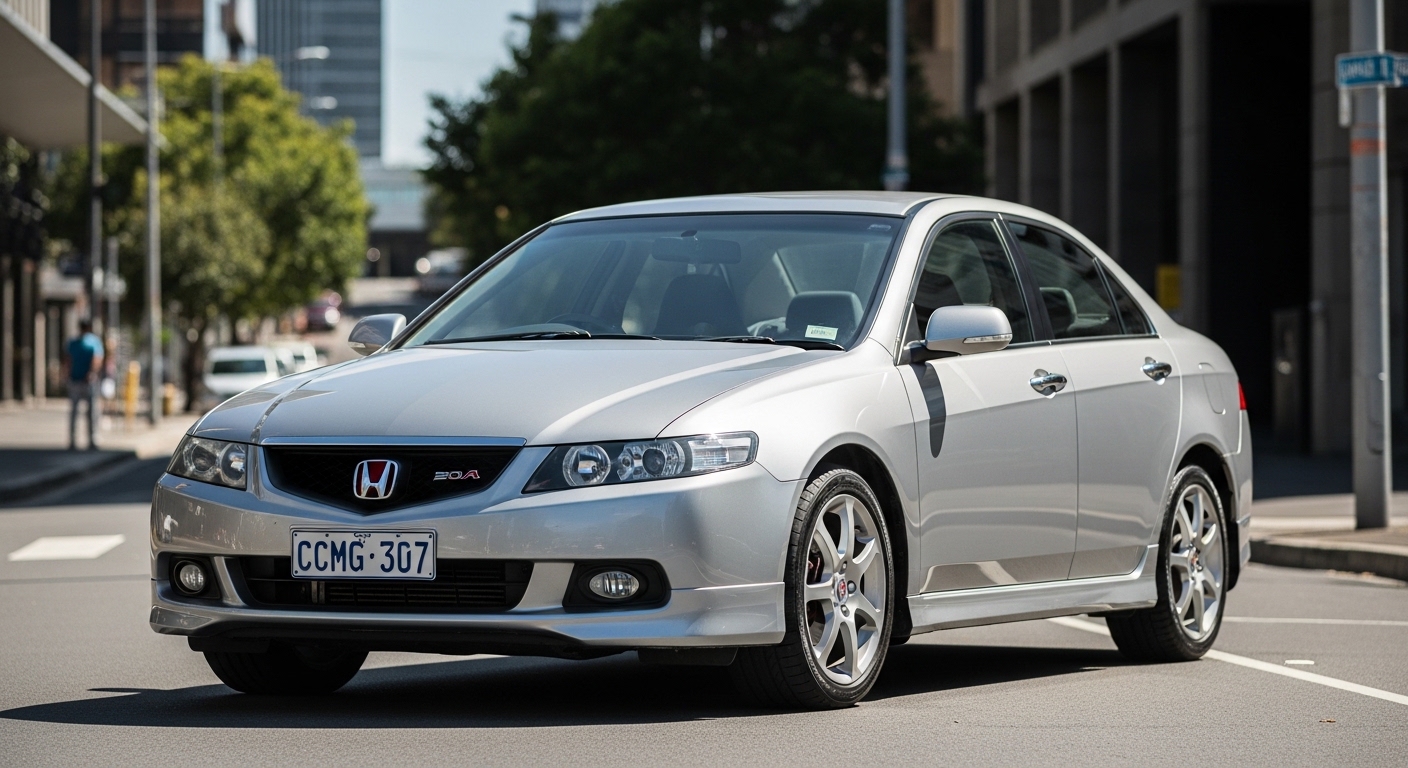 1200 Honda Accord Euro R
The CL1 runs the H22A, a 2.2L DOHC VTEC four rated at 162 kW (220 PS) at 7,200 rpm, confirmed on the Carbarn import page. It came with a six-speed manual and a limited-slip diff. This is a front-wheel-drive car, so set your expectations accordingly. It won't slide around like the rear-drive cars here, but the steering, the gearshift and the top-end VTEC rush are pure Honda from the era when Honda was at its sharpest.
The practical case is the interesting bit. You get four usable seats and real luggage space, the everyday usability the Civic and Integra simply can't match. Every Honda conversation defaults to the EK9 and the DC5, which is exactly why the Euro R has stayed affordable, landing in the low-$20K range. As collector interest in period Honda climbs, that won't last. Pre-June-2001 cars slip into the 25-year window, and the later ones qualify through SEVS.
Is the Nissan Silvia S15 Still Worth the Money?
The Nissan Silvia S15 was never officially sold in Australia. Enthusiasts know the name inside out. The average buyer has no idea you can legally register one on local roads. That gap between fame and familiarity is exactly what earns it a place here.
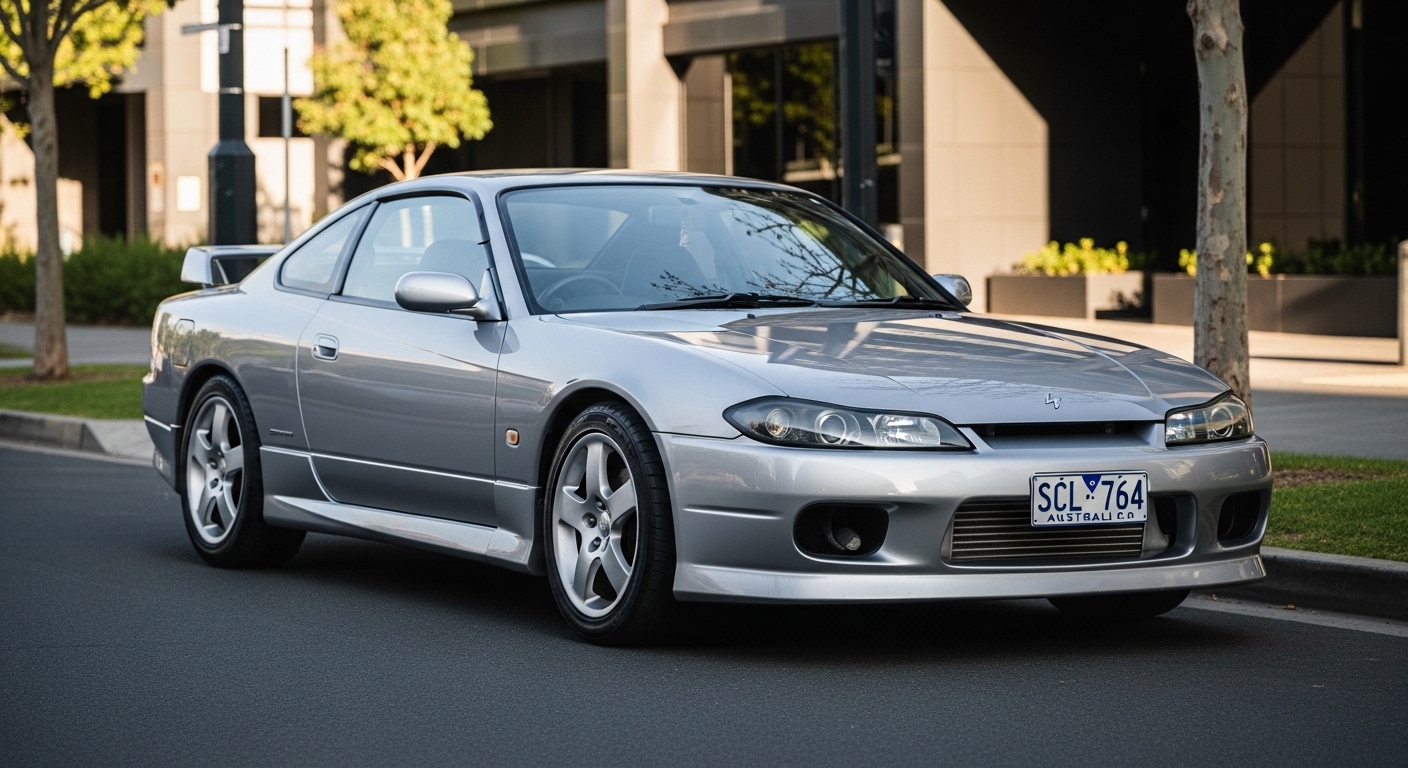 1999 Nissan Silvia S15
Because there was never a dealer network, the general public simply never encountered one. The S15 was the last and sharpest of the Silvia line, with the cleanest styling and the most power. In Spec-R form the SR20DET turbo four makes 250 PS at 6,400 rpm with 203 lb-ft of torque (JDMBUYSELL, 2026), and a proper manual gearbox is on offer. Carbarn confirms the SR20DET and the S15 chassis on its import page. There's also a naturally aspirated Spec-S, which makes a surprisingly sensible everyday car for buyers who don't need the turbo.
Now the part nobody should soften: prices have run hard. Clean S15s sit in a broad AUD $25,000 to $65,000 band depending on spec and condition, with tidy Spec-R six-speeds commanding a clear premium (JDMBUYSELL, 2026). A standout 2002 Spec-R hit USD $90,000 at auction in January 2026 (classic.com, 2026). The drift pedigree is real, but if you want one to actually enjoy rather than trade, the touring-spec cars make far more sense than the Drift King framing suggests. Pre-2001 cars qualify under the 25-year rule.
Why Is the Nissan Fuga So Easy to Miss?
Nissan's top-end executive sedan ran from 2004 to 2009 and, in Australia, may as well have been a rumour. The Nissan Fuga sat above the Skyline sedans in Japan, aimed squarely at the Lexus and BMW crowd. The Lexus LS got the import attention, the BMW 5 Series got the prestige buyers, and the Fuga got ignored.
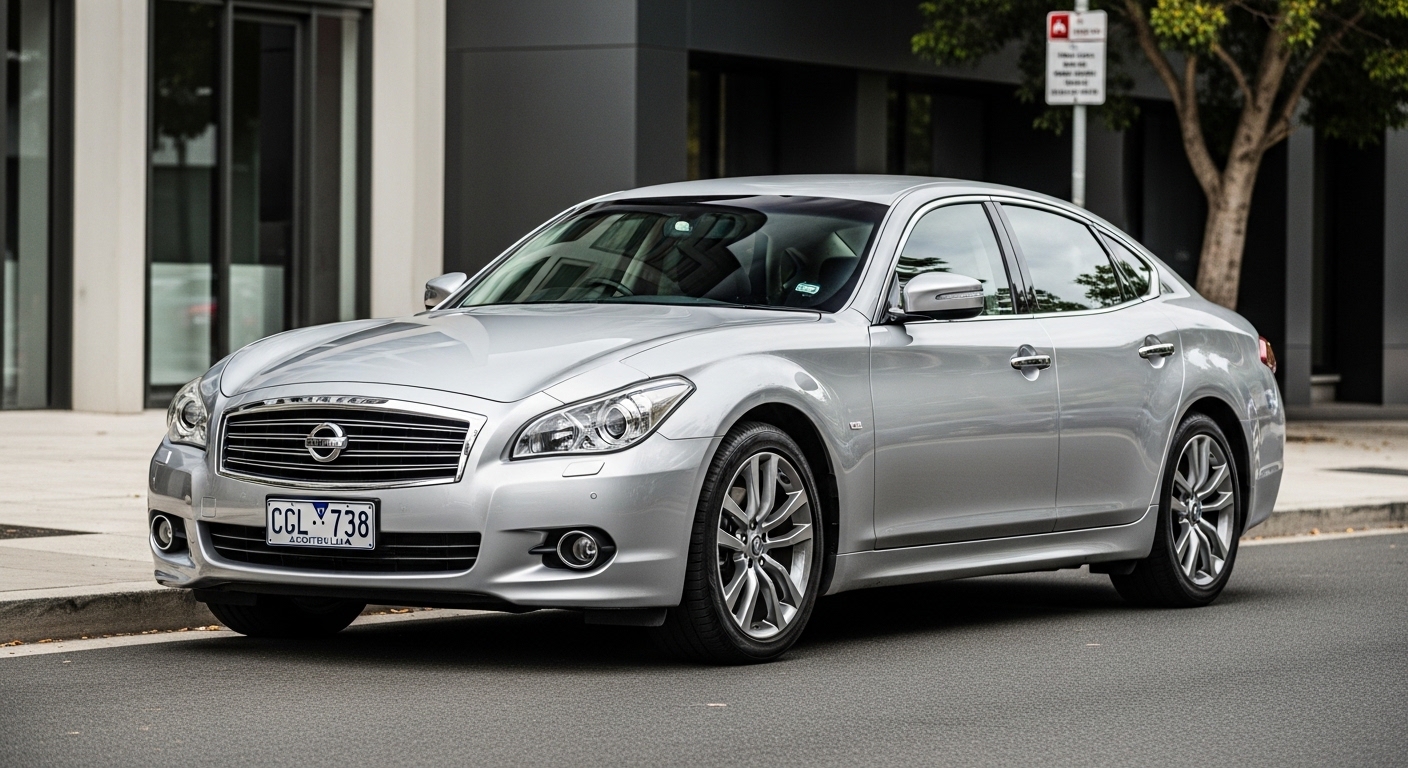 5020 Nissan Fuga
Carbarn's approved Fuga is the 350GT, which runs the VQ35DE, a 3.5L V6 driving the rear wheels through an automatic, as confirmed on the import page. There's a V8 range-topper too, the 450GT with the 4.5L VK45DE making 333 PS (manufacturer-rated), if you want to go down the research rabbit hole, but the eligible model here is the smooth, torquey V6 flagship. The case for it is straightforward: a large, comfortable, rear-drive Japanese sedan with proven mechanicals, at one of the most accessible price points on this whole list, often landing in the low-teens.
One honest note before you get excited. Parts availability in Australia is thinner than for high-volume JDM models, so factor a little patience and some Japanese online ordering into the ownership plan. If you want an executive car nobody else at the lights will recognise, that's a fair trade.
Mazda RX-8
The Mazda RX-8 has a reputation problem, and most of that reputation is deserved. The Renesis rotary needs its apex seals looked after, drinks oil on purpose, and must be revved properly rather than lugged around. Buyers who know all of that and still want one are exactly the cult audience this car quietly built.
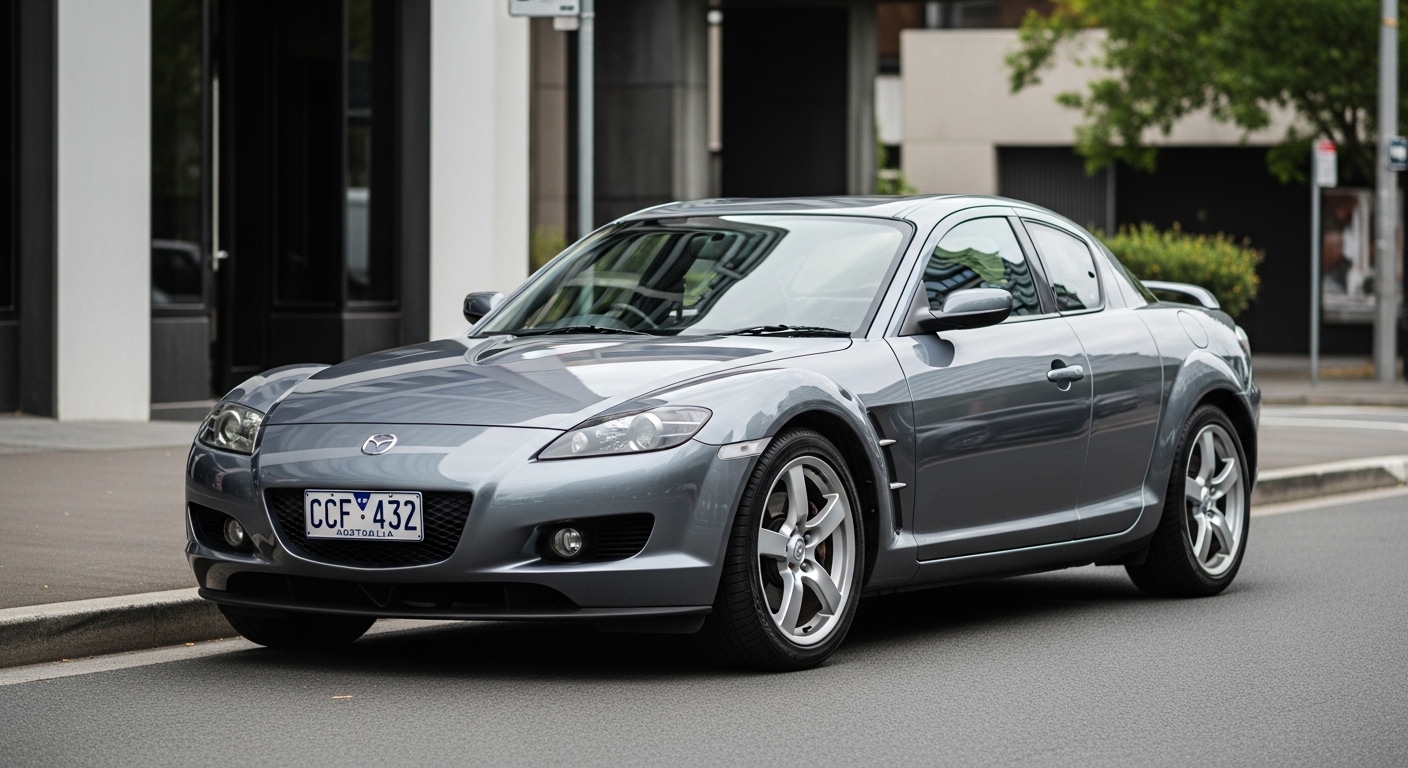 3200 Mazda RX-8
So let's lead with the downsides. Oil top-ups are normal, not a fault. Apex seal health is about maintenance and warm-up discipline, not luck. A cared-for RX-8 is reliable; a neglected one is a project. Get that out of the way and what's left is genuinely good. The 13B twin-rotor sits low and central, giving near-50:50 weight distribution and a chassis that impressed testers when new. Carbarn confirms the 1.3L 13B rotary and SE3P chassis, and high-power JDM variants run up to around 241 PS.
The four frameless doors are the party trick. This is a real sports car you can put people in the back of, which no MX-5 or dedicated coupe in the price range can claim. Values back up the cult case too: Hagerty's average sat just under USD $14,000 in 2024 after four years of steady gains (Hagerty, 2024), and the ownership base skews unusually broad at 29% millennials, 28% Gen X and 26% Gen Z (Hagerty, 2024). In AUD, tidy cars sit in the low-teens to low-$20K range and are holding, not falling.
Toyota Altezza RS200
The Altezza became the Lexus IS in Western markets, but the version we got was softened for our tastes. The Toyota Altezza RS200 is the SXE10, the original driver's car Toyota built before the IS became a comfortable luxury compact. The IS200 sold at Australian dealers was quieter and detuned; the JDM RS200 is the sharp one.
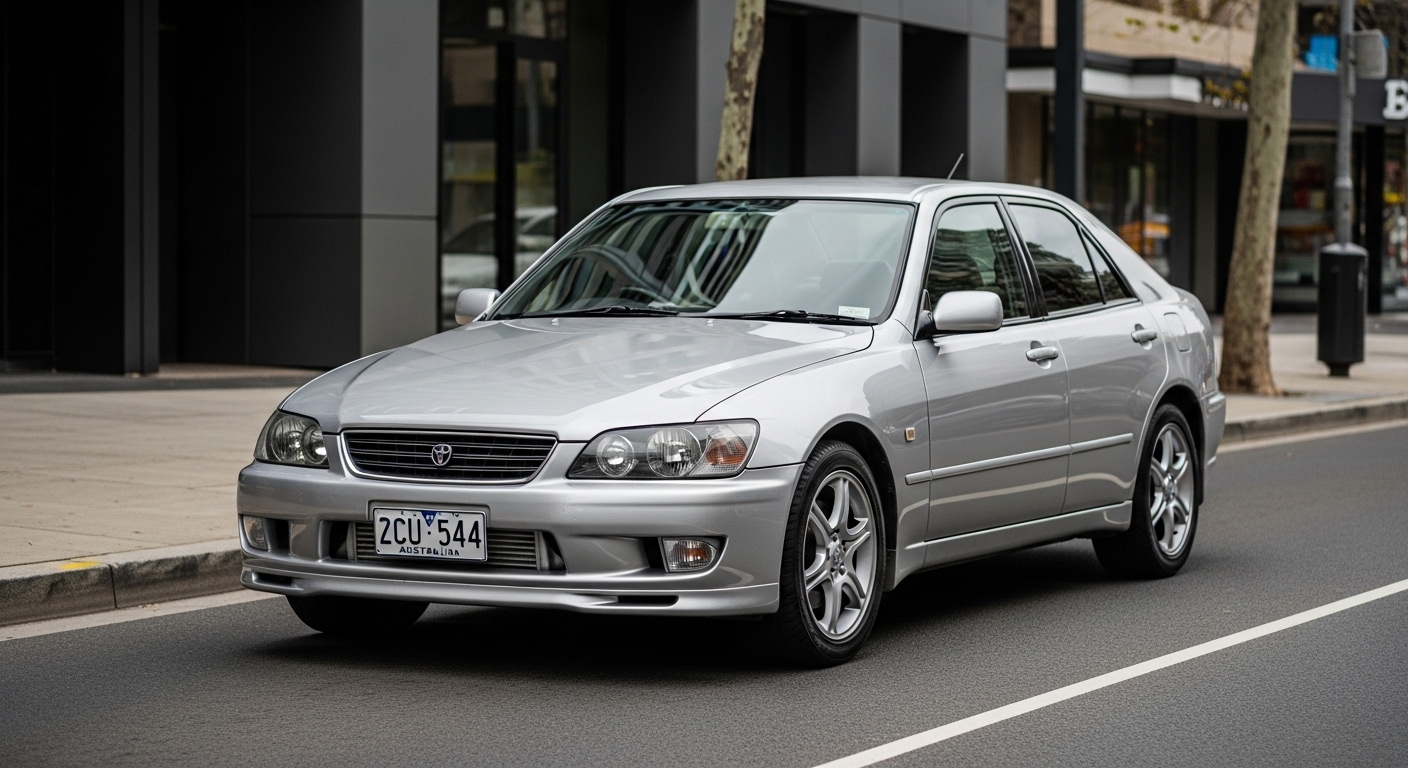 1019 Toyota Altezza RS200
The key detail is the engine, and it's worth getting right. The SXE10 RS200 runs the 3S-GE BEAMS, a naturally aspirated 2.0L making 210 PS (155 kW) at 7,600 rpm in six-speed manual form (JDMBUYSELL, 2026). That's a completely different experience to a turbo sedan: it wants revs, it rewards a smooth right foot, and paired with the six-speed it feels alive in a way the export IS200 never did. Carbarn confirms the 3S-GE BEAMS and SXE10 chassis, so make sure any car you chase is the SXE10 and not a different-engine variant.
Cult status here is building rather than peaking. Altezza clubs are active in Japan and growing in Australia, and the car is increasingly respected as a pure sports sedan. The market runs roughly AUD $12,000 to $38,000, with a median around $22,000 and manual cars carrying a clear premium (JDMBUYSELL, 2026). Target the six-speed if the drive matters to you.
Which One Makes Sense for You?
None of these are impulse buys. The common thread is that each one rewards a buyer who does the homework first, which is why the "right car" here depends entirely on what you actually want from ownership. Here's the shortest honest version.
| If you want… | Consider… |
|---|---|
| A drift-capable daily with real motorsport credibility | Chaser Tourer V |
| Maximum engine prestige in a quiet luxury package | Aristo JZS161 |
| Type R feel with four doors and everyday usability | Accord Euro R (CL1) |
| The sharpest Silvia, and you've done the budget maths | Silvia S15 |
| A rear-drive executive car almost nobody else owns | Nissan Fuga |
| Pure driving feel, and you know what apex seals are | RX-8 SE3P |
| The original Toyota sports sedan before it became a Lexus | Altezza RS200 |
If two or three of these are pulling at you, that's normal. The trick is matching the car to how you'll really use it, not to the version of yourself that lives at the track every weekend. A touring-spec S15 or a stock Chaser will make far more sense day to day than a hardcore build you're scared to park.
Sourcing One of These Through Carbarn
Every car on this list has to come from Japan, and that's where Carbarn fits in. Sydney-based and Lidcombe-run, Carbarn handles the full path from a Japanese auction to your driveway: shortlisting suitable cars to your model, year, budget and condition, arranging a physical inspection before any bid, and only bidding after you've approved the plan over WhatsApp. You can also browse live auction lots yourself, or pick from vehicles already secured in Japan.
The process runs on a refundable auction deposit, so you're never bidding blind and the deposit comes back if no car is secured. From a winning bid, the typical timeline is around six to ten weeks, covering VIA import approval, shipping, then Sydney workshop compliance, AVV inspection and RAV entry. Optional extras include a five-year extended warranty on eligible cars, Blue Slip and NSW registration, a pre-delivery service, and door-to-door delivery Australia-wide. If you're weighing up a specific model, the how importing works guide lays out every stage, and each import page notes whether a car comes in through SEVS or the 25-year rule.