



Ready to Hit the Road in Style?
Save money and reduce emissions with vehicles designed to deliver exceptional mileage. Visit our inventory and find a car that fits your lifestyle.
Ready to Hit the Road in Style?
Save money and reduce emissions with vehicles designed to deliver exceptional mileage. Visit our inventory and find a car that fits your lifestyle.
You have been watching JDM prices for a while now. Every few weeks another performance car pops up on your feed, and the same question keeps nagging: can a genuinely fast Japanese car still land in Australia for around $30,000 in 2026, or has that ship already sailed?
The honest answer is: it depends on the car. Some of the icons have run well beyond that budget. Others still land comfortably under it if you pick the right example. This guide walks through five fast Japanese performance cars worth researching around a $30K landed budget, what makes each one special, how they drive, what to check before you commit, and where the real cost caveats sit.
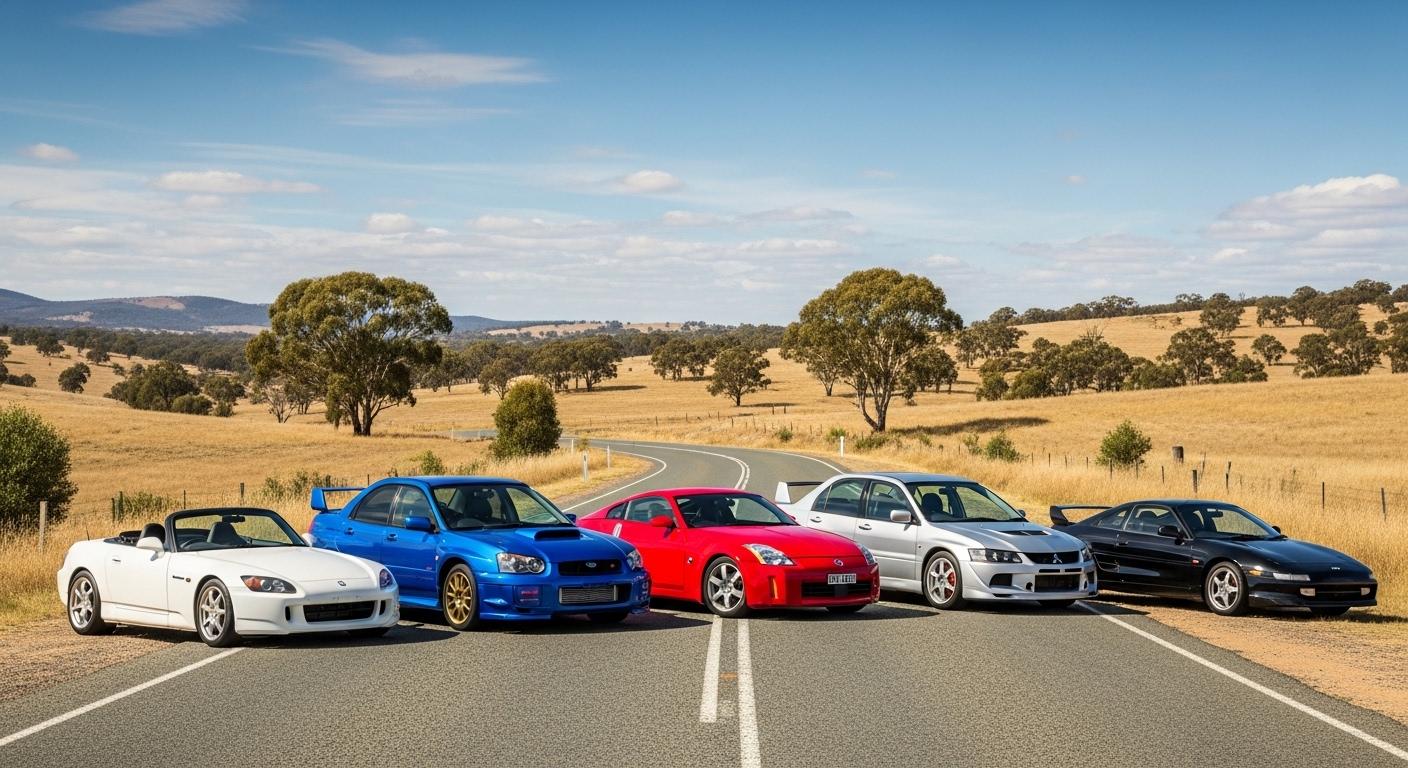
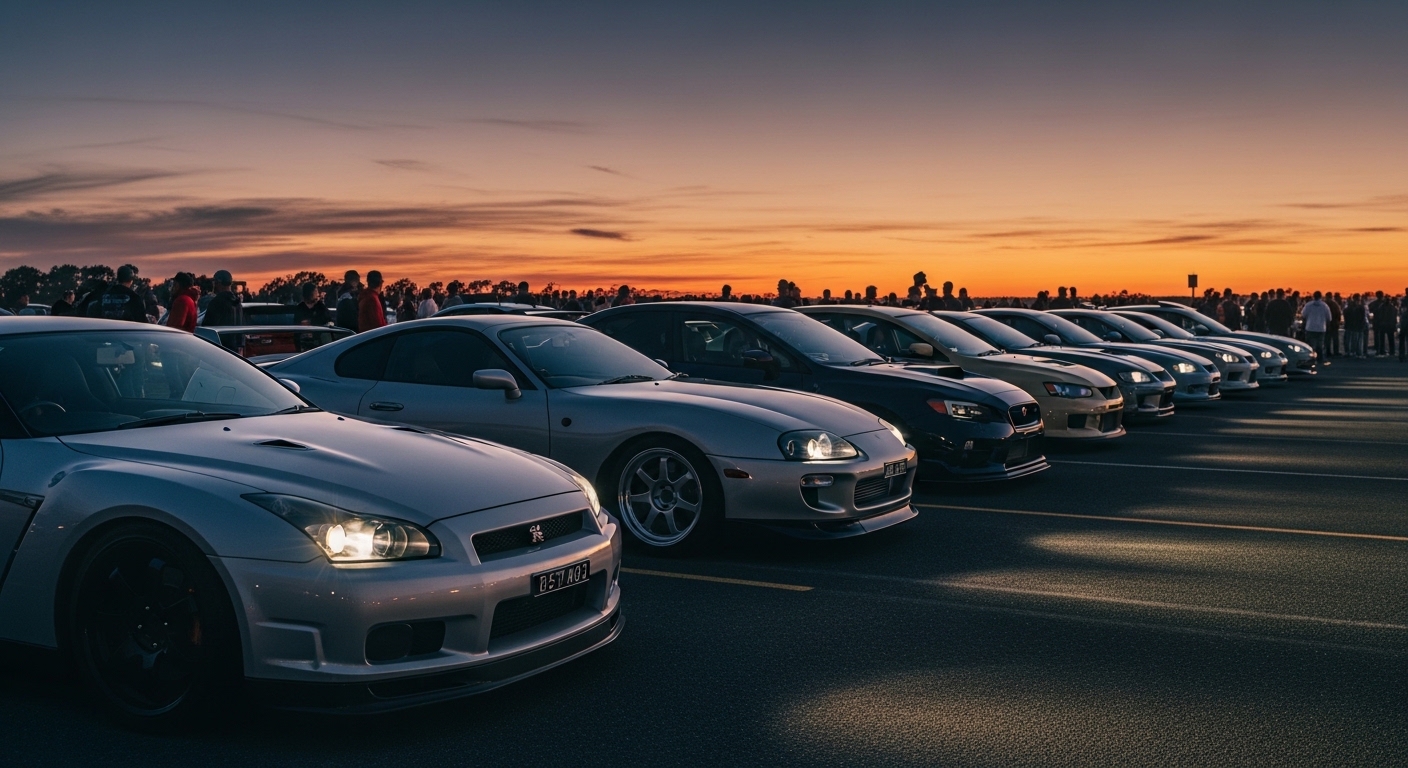 Japanese performance cars remain some of the most sought-after used buys for Australian enthusiasts.
The Bottom Line
- Two picks, the Nissan Skyline V35 350GT and Subaru WRX GDA, still average well under $30K landed on current data (Carbarn, July 2026).
- The Silvia S15, Evo VII and Civic Type R EP3 can approach $30K only with below-average auction results, so treat their budget fit as conditional.
- Japanese-built cars attract 0% customs duty under JAEPA, with proof of origin (DFAT, 2026).
- The EP3's SEVS approval (SEV-000554) expires 20 November 2026, so confirm eligibility before ordering.
- All landed figures are estimates that move with the exchange rate, auction grade and condition. Confirm a current estimate before you bid.
For buyers who want current availability, eligibility and landed-cost guidance, Carbarn can help assess suitable vehicles before you commit.
Why Is $30K Landed an Interesting Performance-Car Budget?
Around $30,000 landed is the sweet spot where genuine performance meets realistic import maths. Japanese-built cars now attract 0% customs duty under the Japan-Australia Economic Partnership Agreement (DFAT, 2026), which removed the old 5% impost and shifted the numbers in a buyer's favour.
"Landed" is the important word. It means the total cost to get a car from a Japanese auction to your driveway, complied and ready to register. That figure stacks up in layers: the auction price, the Japan-side agent fee, freight and port and customs handling, a fixed compliance step, then 10% GST calculated on the customs value plus freight and insurance (ATO via Carbarn, 2026).
Here is the useful part for budgeting. Most of those non-car costs form a fairly stable floor. Across a typical import they commonly sit somewhere in the region of $8,000 to $12,000, regardless of which car you choose. That means the auction price itself is the real variable. On a cheaper car it barely moves the total; on a sought-after icon it dominates it. That single fact explains why two cars on this list slip under $30K while others sit well above.
What Actually Moves the Landed Cost?
Landed cost is a moving target, not a fixed sticker. The biggest swing factor is the AUD/JPY exchange rate, which can shift a total by thousands between the day you research and the day you bid. Because of that, every figure in this article is a general guide, not a promise.
Beyond the exchange rate, the things that move the number most are:
- Auction grade and condition. A clean grade 4 or 4.5 car costs more than a rough grade 3, but a cheap low-grade example can carry hidden repair costs.
- Odometer and service history. Genuine low kilometres with records command a premium, and rightly so.
- Modifications. Aftermarket parts can complicate compliance and add cost, so a stock car is often the smarter buy.
- Freight rates. Shipping pricing moves with fuel and container demand.
- Market demand. Popular models get bid up hard at auction, especially the icons.
The figures in this guide are based on general market and landed-cost data (Carbarn, July 2026). Always confirm a current estimate before placing a bid, as your result will vary with the car and the day.
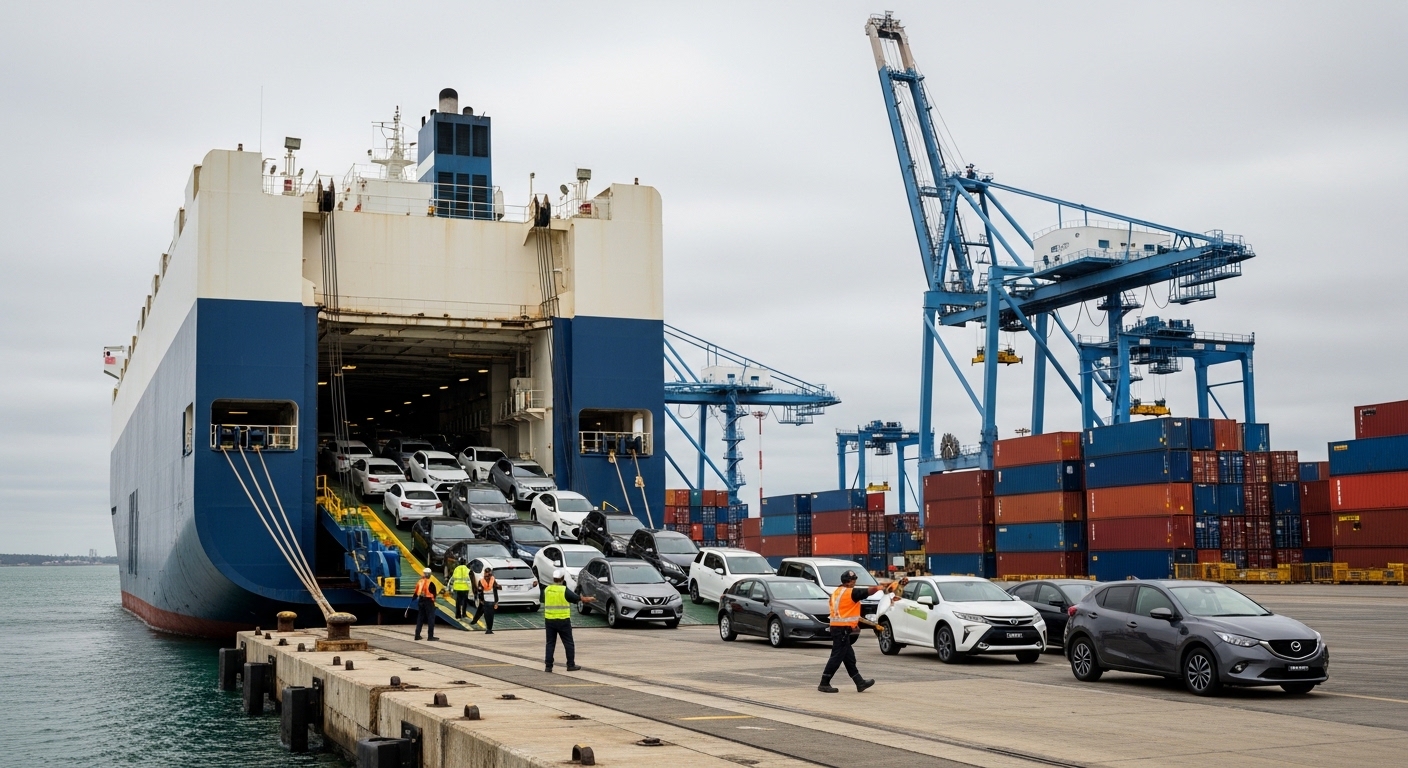 Freight, port handling and compliance all sit on top of the auction price when a car lands in Australia.
1. Nissan Silvia S15 (1999–2002): Can the RWD Icon Still Fit the Budget?
The Nissan Silvia S15 is the car most people picture first when they think fast, affordable and Japanese, and it is the reason so many buyers start this search in the first place. As the last of the S-chassis line, with roughly 43,000 built (JDMBuySell, 2026), it carries a cultural weight the others on this list cannot match. Rear-wheel drive, a tuneable turbo engine and huge aftermarket support make it the default enthusiast coupe.
 1 Nissan
Under the bonnet, the Spec-R runs the SR20DET, a 2.0-litre turbo four making 184 kW (250 PS) and pushing the S15 to 100 km/h in about 5.5 seconds (FastestLaps). The six-speed manual, kerb weight around 1,240 kg and balanced chassis are what give it that light, adjustable feel drivers love. The SR20DET responds well to sensible tuning, which is a big part of its appeal, and its cause for caution.
Here is the honest budget picture. The S15 has appreciated sharply, up 91% over twelve months in the Australian market (AutoMarkets, 2026), and average landed costs now sit well beyond a $30K budget. Only a rough, low-grade example on a soft auction day comes close, and even then you inherit the repair risk. Treat the S15 as an aspirational or collector pick rather than a budget one. On ownership, check for rust in the sills and rear quarters, confirm engine compression, scrutinise any modifications for quality, and be wary of accident or structural repair history. A grade 3.5 or better car with genuine records is worth paying for.
S15 landed costs sit well above the $30K mark on current data. Confirm a current estimate before setting your expectations.
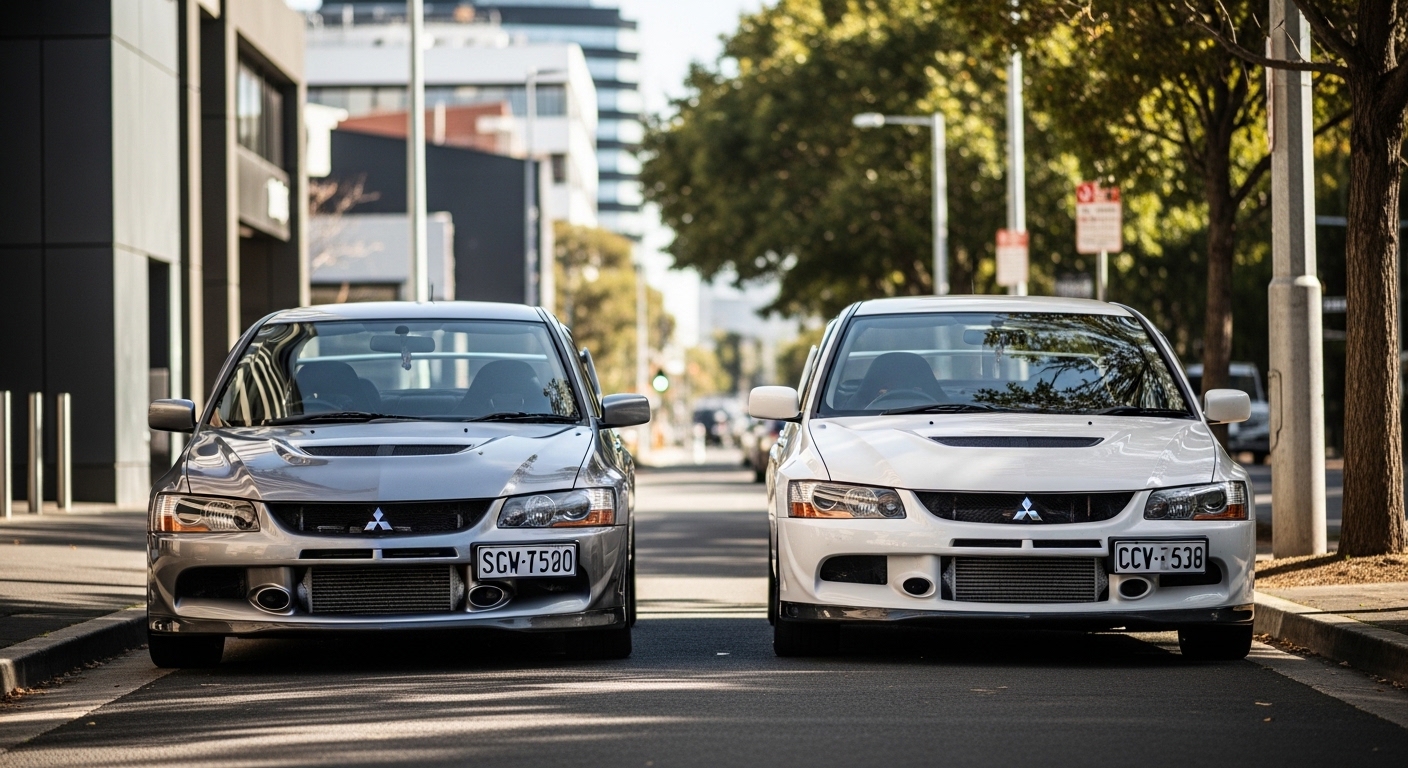
2. Mitsubishi Lancer Evolution VII (2001–2003): AWD Turbo Built for Tarmac
The Mitsubishi Lancer Evolution VII is the pick for buyers who want serious speed with four doors and all-weather traction. Built on the CT9A platform and drenched in World Rally Championship heritage, the Evo VII pairs a practical sedan body with genuinely rapid pace. Its Active Centre Differential lets you put the power down in conditions that would have a rear-drive car scrabbling for grip.
 2 Mitsubishi
The heart of it is the legendary 4G63, a 2.0-litre turbo four producing 206 kW (276 bhp) at 6,500 rpm with 382 Nm of torque (auto-data.net). That translates to a 0 to 100 km/h time of around 4.7 seconds and a top speed near 253 km/h (FastestLaps), which makes it the quickest car on this list in a straight line. Full-time all-wheel drive is what makes that pace so usable on real Australian roads, wet or dry.
Ownership demands respect. The 4G63 is tough when maintained, but the AWD driveline, ACD and AYC systems are often neglected, and putting them right is not cheap. Full service records are essential, not optional. Check for track-day wear, confirm turbo condition and boost behaviour, and walk away from cars with heavy AWD modifications. On budget, the Evo VII averages around the low-to-mid $50K range landed, so reaching $30K means a lower-grade car and accepting the inspection risk that comes with it.
The Evo VII typically lands well above $30K. Getting near budget means a lower-grade example, so confirm a current estimate and factor in the extra inspection risk.
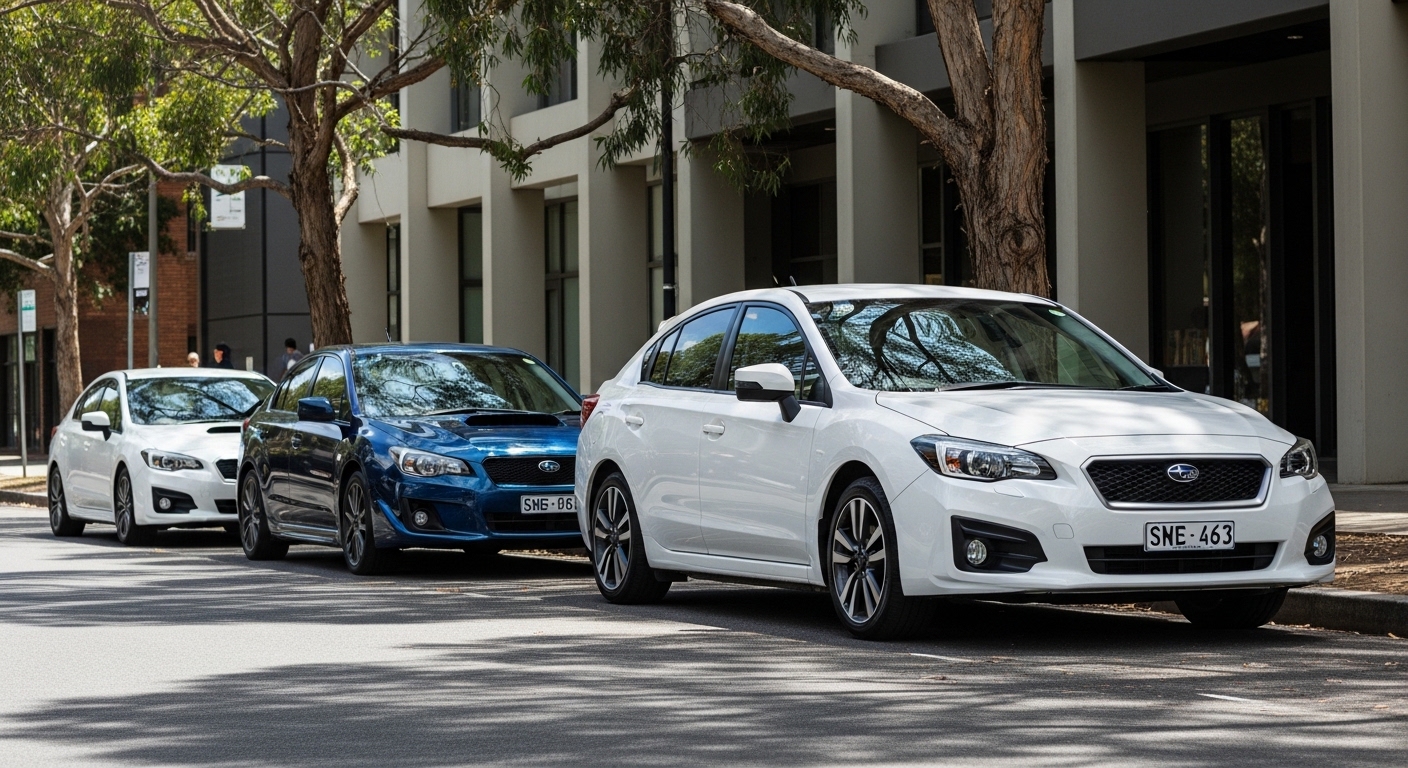
3. Subaru Impreza WRX GDA (2000–2007): AWD Traction With a Cult Following
The Subaru Impreza WRX is arguably the most sensible fast car on this list, and one of only two that genuinely averages under a $30K landed budget on current data. The GDA generation delivers the classic boxer rumble, symmetrical all-wheel drive and a rally pedigree that Australians have loved for decades. It also enjoys one of the strongest parts and service networks of any import here.
 3 Subaru
Power comes from the EJ205, a 2.0-litre turbo flat-four making 165 kW (224 PS), good for a 0 to 100 km/h time of about 5.9 seconds (FastestLaps). It is available as both a sedan and a wagon, so it suits buyers who need a little practicality without giving up the turbo AWD experience. On loose or wet surfaces, that symmetrical all-wheel-drive system is where the GDA really earns its following.
The critical ownership check on early boxer engines is head gasket history, so ask for records or evidence of the work being done. Beyond that, confirm turbo and boost health, review service intervals, and check whether the car has been remapped or modified. A stock, well-serviced example is the goal. On budget, the WRX GDA averages comfortably in the low-$20K range landed, making it one of the clearest under-$30K picks in this shortlist. That headroom leaves room for tyres, registration and a first service without blowing your budget.
The WRX GDA averages well under $30K landed, one of the most budget-realistic picks here. Still, confirm a current estimate before you bid.
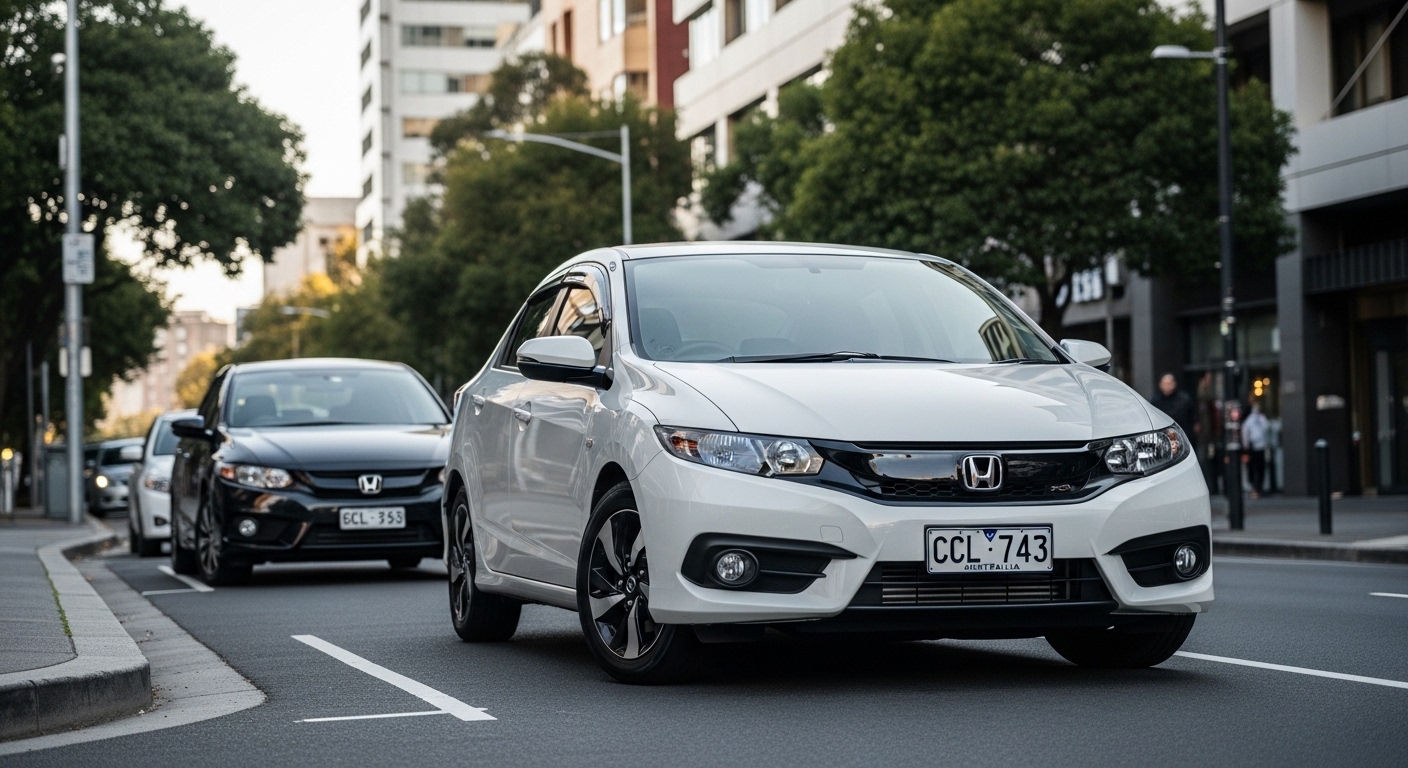
4. Honda Civic Type R EP3 (2001–2005): High-Revving and Turbo-Free
The Honda Civic Type R EP3 is the odd one out on this list, and that is exactly why it belongs here. No turbo, front-wheel drive, and a screaming naturally aspirated engine that rewards commitment rather than boost. For buyers who want performance with fewer moving parts to worry about, the EP3 makes a lot of sense.
 4 Honda
The star is the K20A, a 2.0-litre VTEC four making 158 kW (215 PS) in JDM specification and revving hard toward 8,000 rpm (the European-market EP3 produced 200 PS; the JDM K20A is 215 PS). At roughly 1,225 kg it is the lightest car here, with a 0 to 100 km/h time in the mid-6-second range and handling that thrives on a tight, twisting road. The close-ratio six-speed manual and that top-end surge are the whole point of the car.
One thing to flag clearly: the EP3's SEVS approval, SEV-000554, is valid only until 20 November 2026, so confirm current eligibility before you commit to an order. On the mechanical side, the K20A is robust and well regarded; watch for oil consumption on high-mileage cars, check front-end accident history given its front-drive layout, and inspect suspension bush wear. Being naturally aspirated, it is generally simpler and cheaper to maintain than the turbo cars. On budget, the EP3 averages around the $40K mark landed, so $30K is possible but needs a below-average auction result.
The EP3's SEVS approval expires 20 November 2026. Confirm the current status before committing, and get a current landed estimate before you bid.
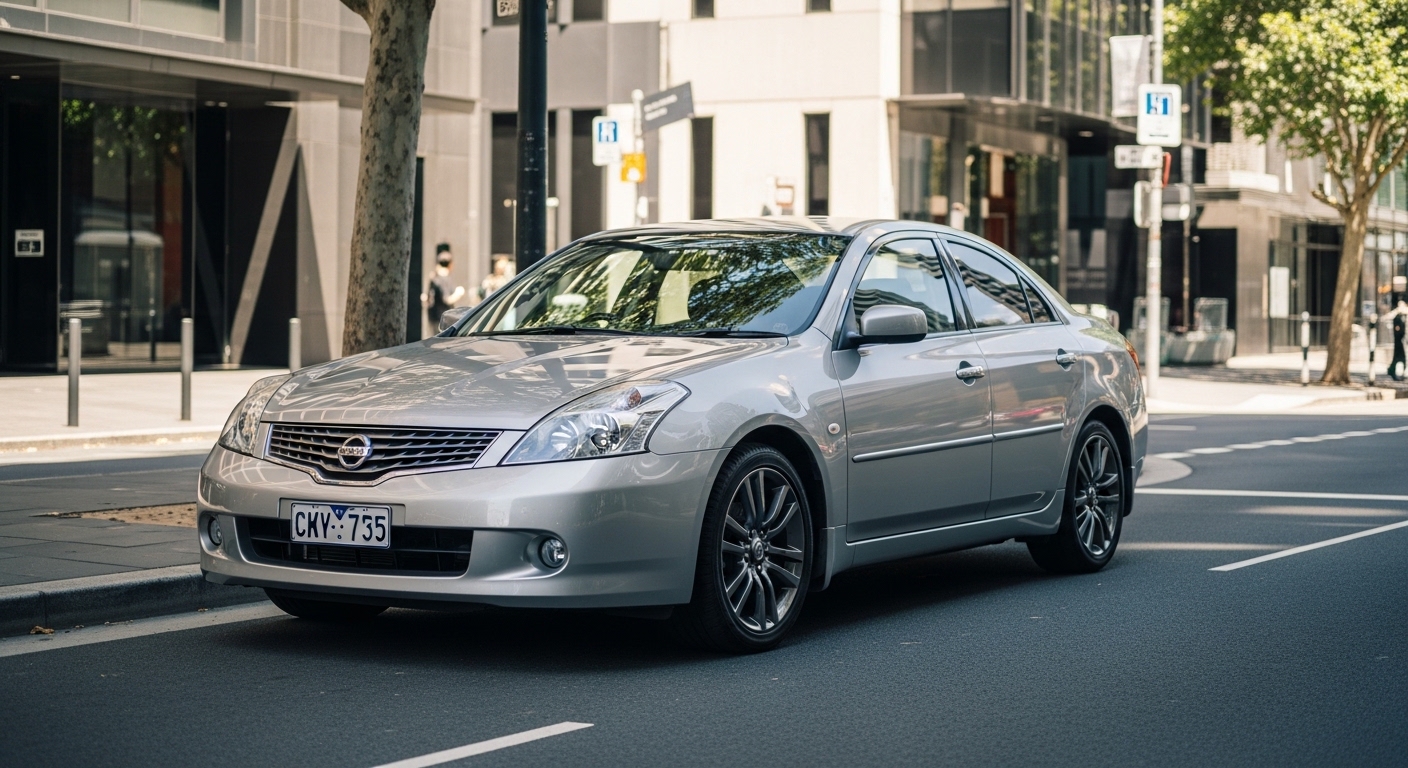
5. Nissan Skyline V35 350GT (2001–2006): Is the V6 Grand Tourer the Best Value Pick?
The Nissan Skyline V35 350GT is the value story of this shortlist, and the most budget-realistic pick of the five. It swaps the turbo-four formula for a smooth naturally aspirated V6, a premium cabin and rear-wheel-drive balance, sharing its FM platform with the 350Z. If you want a fast, comfortable grand tourer rather than a hard-edged track weapon, this is the one.
 5 Nissan
The VQ35DE, a 3.5-litre V6, gives the coupe around 206 kW and a 0 to 100 km/h time of about 5.7 seconds, with the sedan close behind at roughly 5.9 seconds (automobile-catalog.com). That makes it seriously quick for the money, with a effortless, torque-rich delivery that suits long Australian highway runs. It is the mature choice here, more cruiser than corner-carver, though it still handles tidily.
The VQ V6 is reliable when serviced, so ask for a full history and inspect for oil leaks around the rocker covers and cam seals on higher-mileage cars. Check transmission condition, suspension and tyre wear, and factor in that a V6 will use more fuel than the 2.0-litre options. On budget, the V35 350GT averages comfortably in the low-$20K range landed, the strongest under-$30K case on this list. For buyers chasing performance per dollar, it is hard to beat.
The V35 averages well under $30K landed, the clearest budget pick here. As always, confirm a current estimate before committing.
How Do These Five JDM Performance Cars Compare?
Across the five, straight-line pace ranges from the Evo VII's 4.7 seconds to the EP3's mid-6-second time, while landed budgets swing from the low-$20K range to well beyond $30K. The table below sets the performance data against a realistic budget verdict, so you can match the car to your expectations at a glance.
| Car | Engine | Power | 0–100 km/h | Drivetrain | $30K Landed Verdict |
|---|---|---|---|---|---|
| Nissan Skyline V35 350GT | VQ35DE 3.5 NA V6 | 206 kW | ~5.7 s | RWD | Comfortably under |
| Subaru WRX GDA | EJ205 2.0 turbo | 165 kW | ~5.9 s | AWD | Achievable |
| Honda Civic Type R EP3 | K20A 2.0 NA | 158 kW | ~6.5 s | FWD | Conditional |
| Mitsubishi Evo VII CT9A | 4G63 2.0 turbo | 206 kW | ~4.7 s | AWD | Conditional |
| Nissan Silvia S15 | SR20DET 2.0 turbo | 184 kW | ~5.5 s | RWD | Aspirational |
Performance figures: FastestLaps, auto-data.net and automobile-catalog.com. Budget verdicts are general guides based on market and landed-cost data (Carbarn, July 2026). Your result will vary.
The takeaway is simple. If the $30K figure is a hard ceiling, the V35 and WRX GDA are where the realistic search sits. The EP3 and Evo VII are conditional, needing the right auction result, and the S15 is best understood as an icon you buy because you want it, not because it fits the budget.
What Should You Check Before Choosing a JDM Performance Car?
Around one in every layer of the import stack can hide risk, so a disciplined checklist matters more than emotion. The single most valuable habit is verifying the auction grade and inspection sheet before you commit. That sheet, backed by an independent assessment, tells you more about condition than any set of photos ever will.
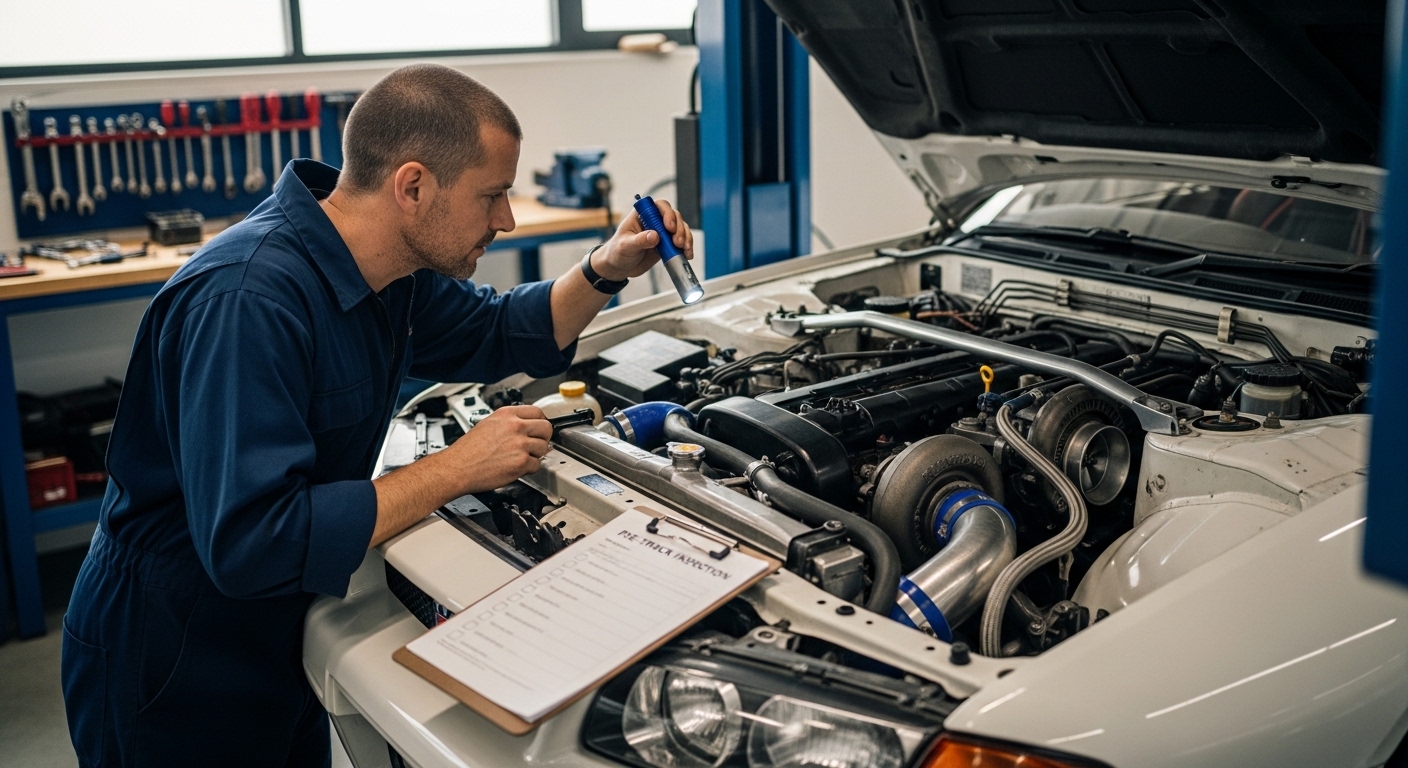 A proper pre-purchase inspection and auction grade check protects buyers from costly surprises.
Auction Grade and Vehicle History
Start with the auction grade and the inspection sheet's damage map. Grades and notations tell you what a car has been through, and repair or structural markers are worth taking seriously. If you are new to reading these, our guide to the Japanese auction grading system breaks the notation down. Cross-check the odometer against service records and the overall condition.
Mechanical Inspection Points
Confirm engine compression, and on turbo cars check the turbo and boost behaviour closely. Review transmission condition, look at suspension and tyre wear patterns for signs of hard use, and inspect for oil leaks, especially on the higher-mileage V6 and the SR20DET. Brakes and bushes are cheaper to fix but tell you how the car was treated.
Compliance and Eligibility
Eligibility must be confirmed before you order, not after. SEVS approval, modification status and vehicle age all matter. Remember the EP3's SEV-000554 approval expires 20 November 2026, so it needs checking first. The broader cost and compliance process is worth reading before you bid.
Budget and Timing
Get a current landed estimate for the specific car, not a rolling average. Watch the AUD/JPY rate around bidding time, and budget for registration, CTP and a first service on top of the landed figure. A typical import runs a 6 to 10 week timeline from purchase to delivery, so plan accordingly.
How Do You Source One of These Cars?
Once you know which car fits, the practical questions are eligibility, a real landed estimate and someone to manage the process end to end. This is where working with a specialist import service earns its keep, turning an intimidating overseas auction into a managed, transparent purchase.
A full walkthrough of what the Japan-to-Australia import process actually looks like.
All five cars in this guide can be researched and sourced through the import pathway, with a typical 6 to 10 week timeline from auction to your driveway. A specialist handles sourcing at auction, checks eligibility and compliance before you commit, provides a current landed-cost estimate rather than a guess, manages shipping and compliance, and delivers the finished car ready to register.
Ready to check what is actually available in your budget? Contact Carbarn Australia for current sourcing options, eligibility checks and landed-cost guidance.
Which One Makes Sense for Your Budget?
The right pick comes down to how firm your $30K ceiling is and what kind of driver you are. There is a car here for most buyers, as long as expectations match the real numbers rather than the headline.
- The clearest under-$30K picks: The Nissan Skyline V35 350GT or Subaru WRX GDA. Both average comfortably in the low-to-mid $20K range landed, leaving room for on-road costs.
- A high-revving naturally aspirated driver's car: The Honda Civic Type R EP3, provided you confirm its SEVS status first and accept it is a conditional budget fit.
- Serious AWD pace with a bigger budget: The Mitsubishi Evo VII, if you can stretch beyond $30K and commit to its higher maintenance demands.
- The icon, cost aside: The Nissan Silvia S15, an aspirational and collector buy rather than a budget one at today's prices.
Match the car to your honest budget and driving style, get a current estimate, and you will avoid the disappointment that catches out buyers who only read the headline number.