



Ready to Hit the Road in Style?
Save money and reduce emissions with vehicles designed to deliver exceptional mileage. Visit our inventory and find a car that fits your lifestyle.
Ready to Hit the Road in Style?
Save money and reduce emissions with vehicles designed to deliver exceptional mileage. Visit our inventory and find a car that fits your lifestyle.
Most people rule out a cheap turbo JDM car before they even look. The assumption is simple: anything with a factory turbo and real character costs $30K or more once it's landed and complied. So the search never starts.
That assumption is wrong, and the numbers prove it. Of the 393 SEVS-eligible models listed on Carbarn's import register (Carbarn), only a small handful of genuine factory-turbo cars slip into the true budget bracket, landing on Australian soil for somewhere near $20K all-in. This guide walks through four of them: what makes each a legend, who each one suits, and the one honest drawback you should know before you enquire.
A quick note first. These four are import-eligibility references, not cars sitting in a warehouse. You're sourcing them to order from Japan, so the figures below are landed estimates, not fixed price tags.
Quick Answer
- Four turbo JDM legends land in the budget-import window: the Mitsubishi Airtrek Turbo R, Subaru Forester SG5 XT, Subaru Legacy BRG 2.0GT and Toyota Crown Athlete V.
- Cheapest is the Airtrek Turbo R (around the $12K mark landed); priciest is the Crown Athlete V (around the $20K-$21K mark).
- All four qualify on the SEVS Performance Criterion, which requires more than 110 kW per tonne for pre-2020 vehicles (Dept of Infrastructure, 2025).
- Japanese-built passenger cars attract 0% customs duty under the Australia-Japan free trade agreement; only 10% GST applies (JDMConnect import cost guide, 2026).
- "Landed" means auction bid plus agent fees, freight, taxes and compliance, all rolled into one number.
What Does "Landed" Actually Mean?
Landed price is the total to get a car from a Japanese auction to your driveway, complied and ready to register. Add-on costs above the Japan purchase price typically run $8,000 to $15,000 (Carbarn import cost guide), which is exactly why a cheap auction win doesn't always stay cheap.
It helps to see where the money goes. A landed estimate is built from these categories, not one lump sum.
| Cost component | What it covers |
|---|---|
| Auction bid | The winning price for the car in Japan |
| Japan agent + service fee | Sourcing, inspection and handling in Japan |
| Freight | Roll-on roll-off shipping, roughly $2,300-$3,400 |
| Customs duty | 0% on Japanese-built passenger cars under the free trade agreement |
| GST | 10% on the customs value plus shipping and duty |
| Port and local charges | Wharf handling and quarantine processing |
| Compliance | Workshop work, AVV inspection and RAV entry |
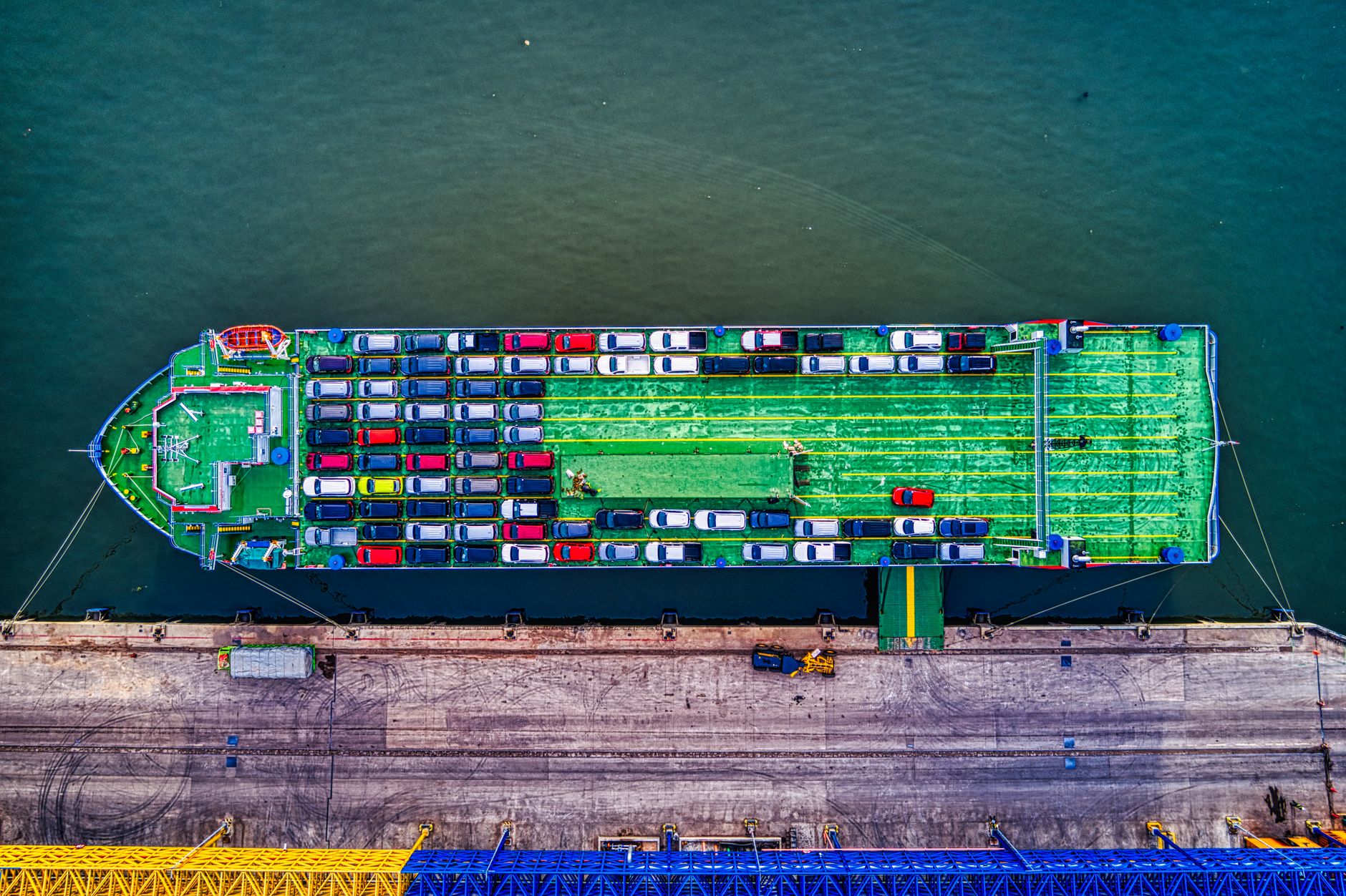 Top-down view of vehicles on a docked roll-on roll-off ship at port
The duty point is worth pausing on. Because all four cars here were built in Japan, they clear customs with no import duty, leaving 10% GST as the only headline tax (JDMConnect import cost guide, 2026). None of these land anywhere near the $80,567 Luxury Car Tax threshold either, so LCT never enters the picture. For a full step-by-step, the Carbarn import overview maps every stage and payment.
How Do the Four Compare?
The SEVS Performance Criterion is the federal import eligibility rule requiring more than 110 kW per tonne of power-to-weight for pre-2020 vehicles (Dept of Infrastructure, 2025) — and all four cars here clear that bar. That's the measurable reason these turbos are road-legal in Australia while plenty of ordinary Japanese cars aren't. Here's how they stack up.
| Model | Landed (est.) | Engine | Power | Drive | Character |
|---|---|---|---|---|---|
| Airtrek Turbo R | Around $12K | 4G63T 2.0L turbo | ~177 kW | AWD auto | Rally SUV bargain |
| Forester SG5 XT | Around $13K | EJ255/EJ205 turbo | ~160 kW | AWD auto | All-weather wagon |
| Legacy BRG 2.0GT | Around $17K | FA20 DIT 2.0L turbo | 221 kW | AWD CVT | Modern sports wagon |
| Crown Athlete V | Around $20-21K | 1JZ-GTE 2.5L turbo | 206 kW | RWD auto | Executive express |
The spread is genuinely useful. You go from a sub-$12K rally-bred SUV to a 300 PS modern wagon, with a rear-drive luxury six anchoring the top. Now to each one in turn.
What Makes the Mitsubishi Airtrek Turbo R Worth Importing?
The Mitsubishi Airtrek Turbo R CU2W lands for around the $12K mark — the cheapest factory-turbo import on this list — and carries the 4G63T, Mitsubishi's celebrated 2.0-litre turbocharged inline-four, producing roughly 177 kW and 343 Nm (ReDriven's used Airtrek review, 2025). Built between 2001 and 2005, it's a rally powertrain wearing sensible crossover clothes.
The 4G63T is the same engine family that powered the Lancer Evolution line, detuned slightly here for reliability in a heavier package. Power goes through an automatic gearbox to a full-time all-wheel-drive system, so it puts its grunt down in the wet without drama. Ground clearance and a tall boot make it genuinely practical, which is more than most turbo bargains can claim.
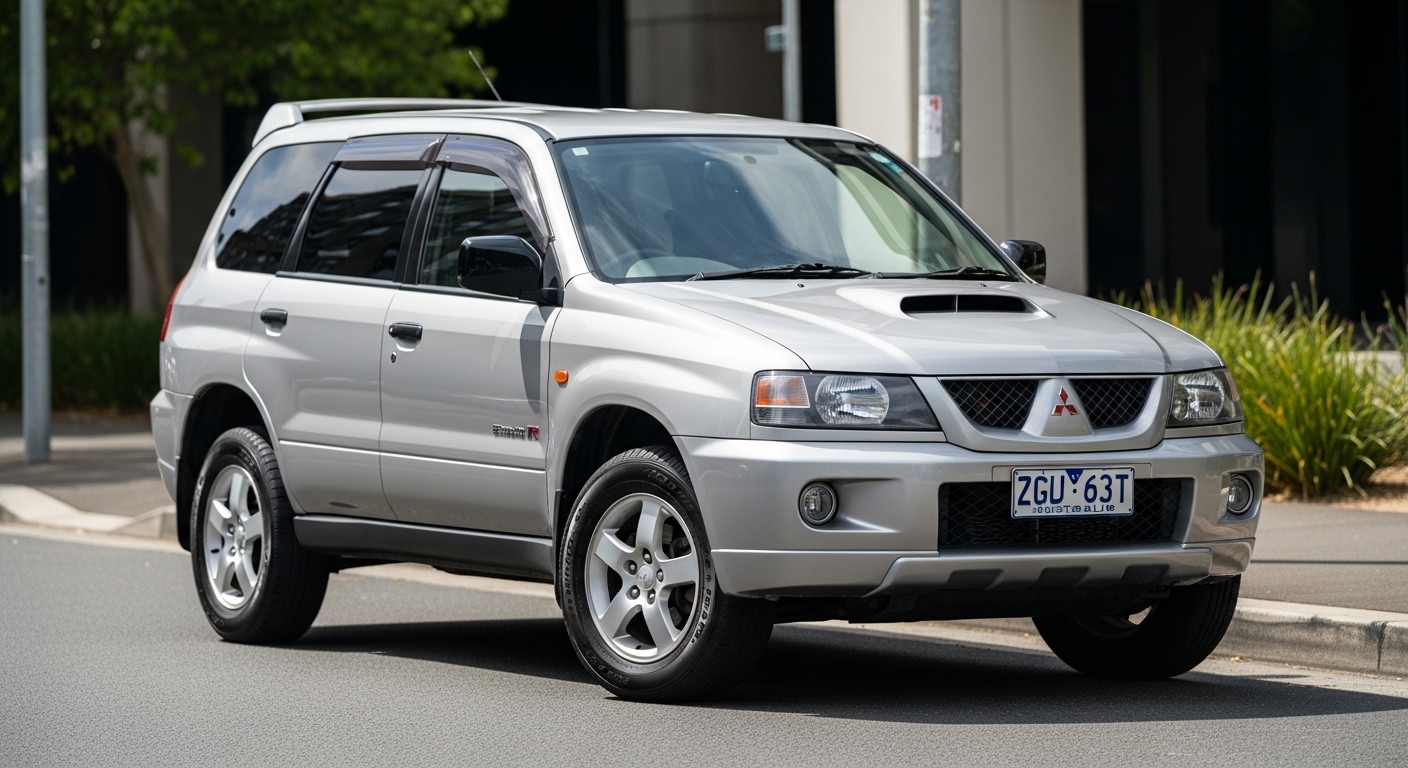 2001 Mitsubishi Airtrek Turbo R
It suits the buyer who wants Evo-family engineering without the Evo tax, and who values a usable everyday shape over outright track pace. The honest drawback is the automatic transmission. Under sustained boost it's the weak point. Neglected examples show slipping and delayed shifts (ReDriven's used Airtrek review, 2025). Buy one with a clean service history, keep the fluid fresh, and it holds up. Skip that step and it becomes an expensive lesson.
Is the Subaru Forester SG5 XT the Best All-Rounder?
The Subaru Forester SG5 XT lands for around the $13K mark and produces around 160 kW from its turbocharged flat-four — making it the most practical all-rounder on this list for buyers who need genuine cargo space, real ground clearance and all-weather security. Built from 2002 to 2007, the XT and Cross Sports variants took Subaru's WRX-derived turbo engine and put it in a taller, more usable wagon body.
Under the bonnet you'll find either the EJ205 — Subaru's 2.0-litre turbocharged boxer four — or the later EJ255, a 2.5-litre turbocharged variant, both driving all four wheels. Output sits around 160 kW depending on variant and year, with strong mid-range torque that makes the Forester feel quicker than the spec sheet suggests. The boxer engine's low centre of gravity gives it a planted, all-weather feel. The symmetrical all-wheel-drive system adds all-weather confidence few rivals at this price can match.
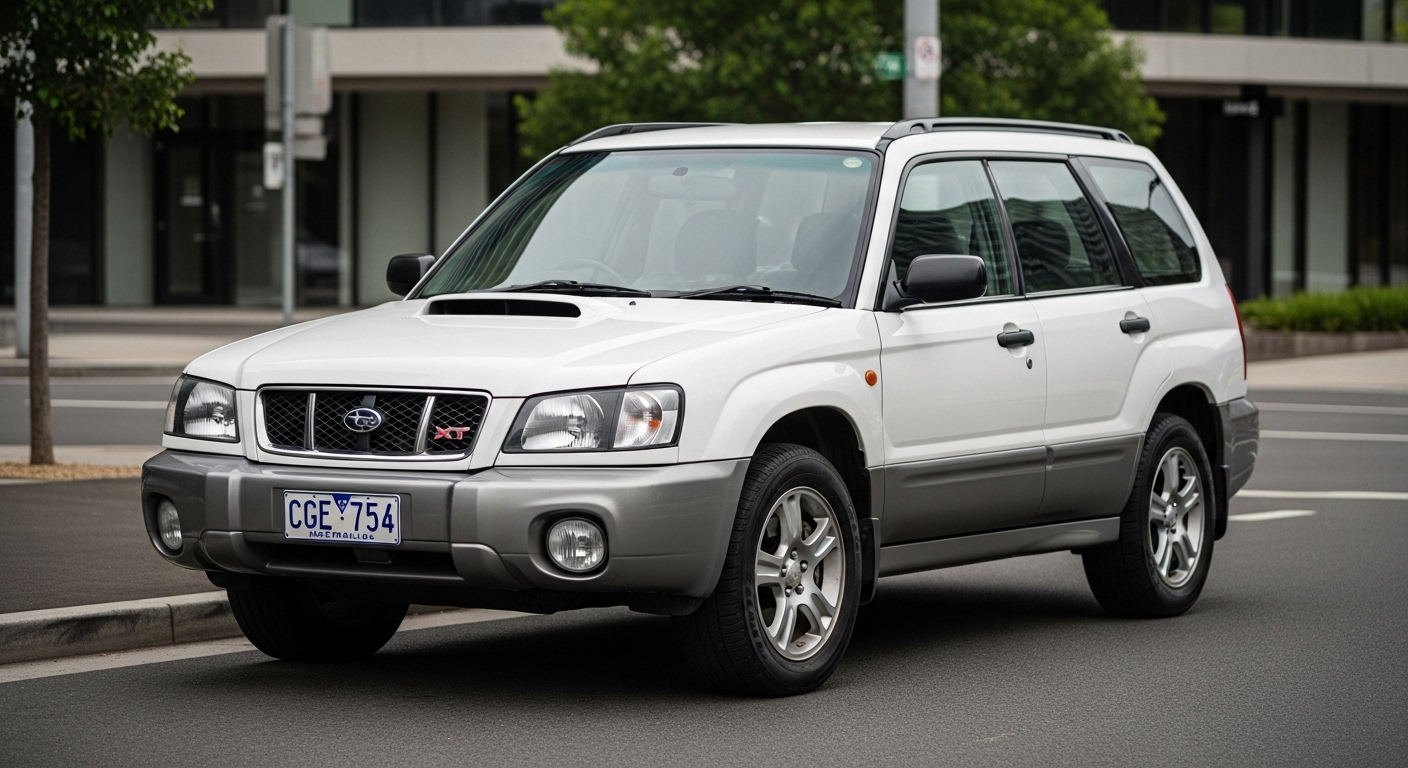 2002 Subaru Forester SG5 XT
This one makes a lot of sense for the buyer who wants a single car for the school run, the ski trip and the odd back-road blast. The turbo motors use multi-layer steel head gaskets, so they don't suffer the head-gasket reputation of the naturally aspirated 2.5. The honest drawback is fuel: a turbo boxer with all-wheel drive is thirsty. Heavily modified examples can also crack ring lands under high boost. A stock, unmolested car is the safe buy here.
Why Is the Subaru Legacy BRG 2.0GT the Best Modern Pick?
The Subaru Legacy BRG 2.0GT produces 300 PS (221 kW) — the highest output of any car on this list — and lands for around the $17K mark. Built between 2012 and 2014 and never sold new in Australia, this Japan-only sports wagon pairs a genuinely modern cabin with the strongest turbo engine of the four.
The headline figure comes from the FA20 DIT — Subaru's 2.0-litre direct-injection turbocharged flat-four producing 221 kW and 400 Nm. That torque arrives low and stays flat. It feeds through Subaru's Lineartronic, a continuously variable transmission (CVT) linked to the symmetrical all-wheel-drive system, for effortless overtaking and quiet cruising. The result is a wagon body with a big boot, a proper touchscreen and a refined ride — the closest thing here to a modern European fast wagon at a fraction of the price.
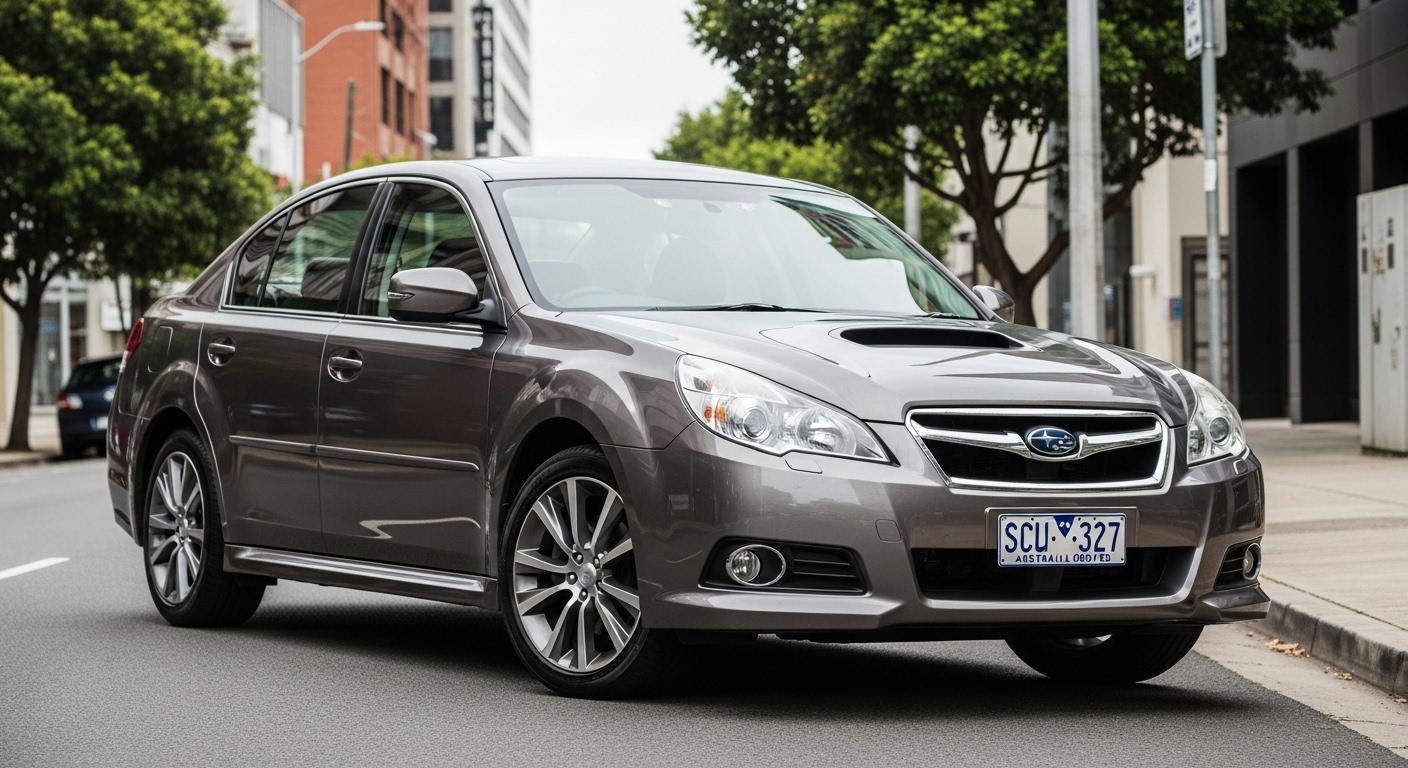 2012 Subaru Legacy BRG 2.0GT
It suits the buyer who wants performance and character but isn't willing to give up modern comfort, safety kit or daily refinement. The honest drawback is the transmission: there's no manual option. The Lineartronic won't satisfy anyone chasing an old-school, three-pedal feel. Being a rare, Japan-only model, it also rewards a workshop that knows current-generation Subaru turbos. For most buyers, that's a fair trade for the newest car in the group.
Is the Toyota Crown Athlete V Still Worth Importing?
The Toyota Crown Athlete V lands for around the $20K–$21K mark and is the only rear-wheel-drive car on this list. Built on the JZS171 chassis from 1999 to 2004, it pairs dignified executive bodywork with the 1JZ-GTE — Toyota's celebrated 2.5-litre turbocharged inline-six producing 280 PS (206 kW) and 363 to 378 Nm depending on the generation (1JZ-GTE engine spec sheet). It's the priciest of the four, but arguably the one with the deepest following.
The 1JZ-GTE is a single-turbocharged 2.5-litre inline-six renowned for smooth power delivery, strong aftermarket support and a long tuning ceiling. Paired with rear-wheel drive and an automatic, the Crown delivers quiet, torque-rich progress that feels a class above its price.
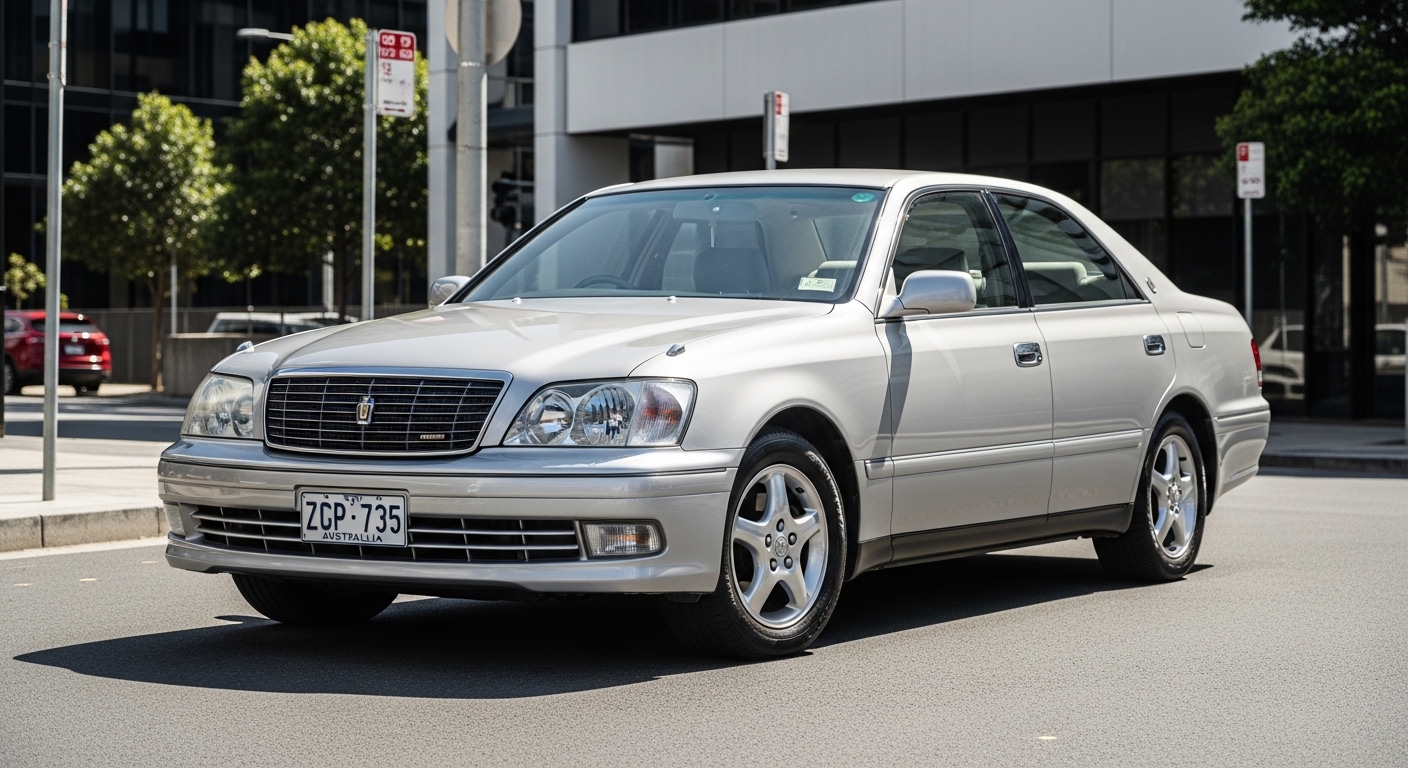 1999 Toyota Crown Athlete V
This is the car for the enthusiast who wants a rear-drive turbo six with genuine presence, and who enjoys a car that flies under the radar. Just be clear about what it is. The Crown was built for comfort first, so it's softly sprung and comfort-biased rather than a sharp corner-carver. It's also the oldest platform here, so age-related electrical niggles and the running costs of a turbo six are part of the deal. Buy a well-kept example and it's one of the most satisfying cars on this list.
Which One Suits You?
Four factory-turbo JDM legends span roughly a $9K price range — from the Airtrek Turbo R at around the $12K mark to the Crown Athlete V at around the $20K–$21K mark — covering every major buyer archetype from the budget rally fan to the rear-drive enthusiast.
Match the car to how you'll actually use it. If you want maximum turbo character for minimum outlay, the Airtrek Turbo R is the clear budget champion. If you need one all-weather car for family duties and the occasional adventure, the Forester SG5 XT is the sensible all-rounder.
If you want modern comfort, safety and the most power without stepping up in budget, the Legacy BRG 2.0GT is the standout. And if you're chasing rear-drive character, a storied engine and quiet presence, the Crown Athlete V is the enthusiast's choice, provided you accept its age and its comfort-first nature.
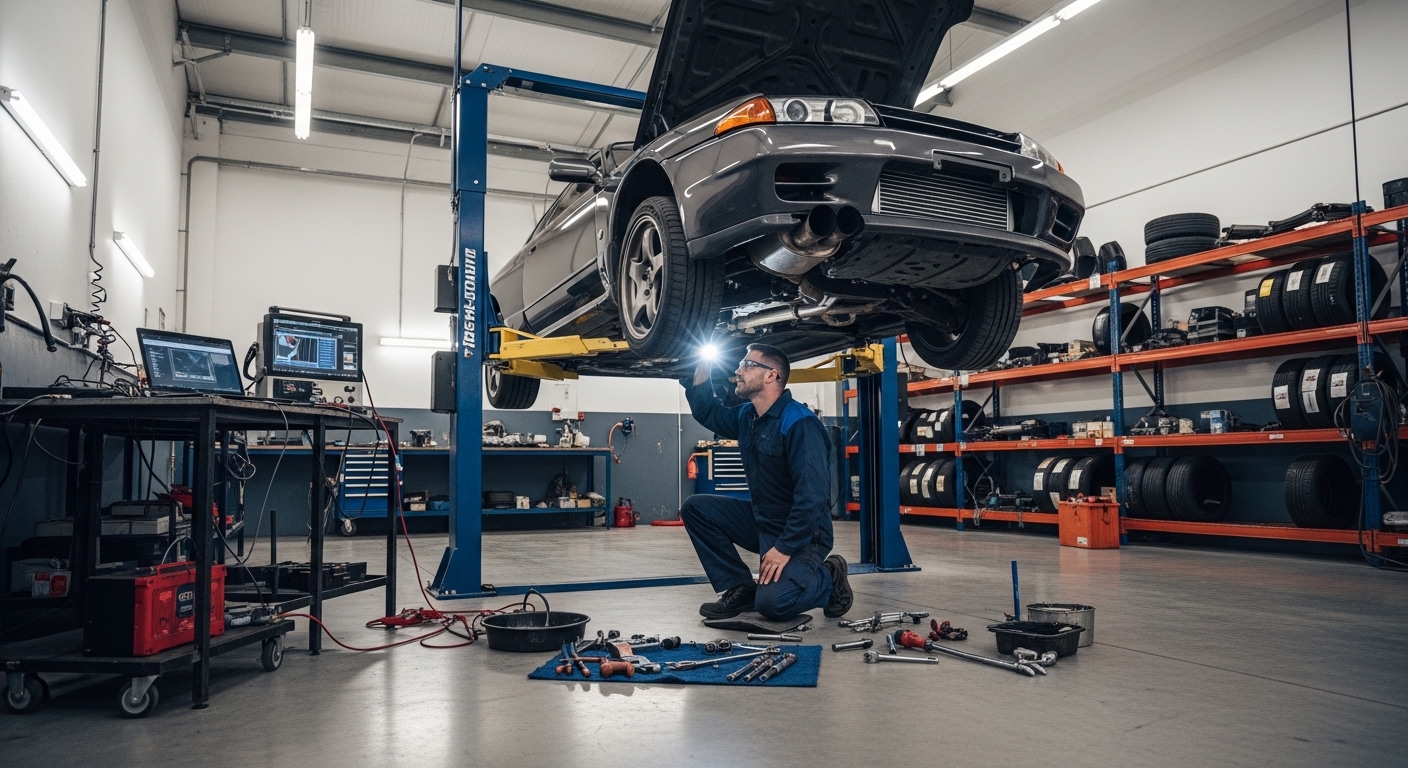 A mechanic inspects a gray car on a hoist in a well-equipped workshop.
How Do You Order One From Japan?
Japan exported a record 1,573,479 used vehicles in 2024 (Japanese Ministry of Finance via Japanstat), meaning supply of clean, low-kilometre examples across all four models here is healthy. Once you've picked a favourite, Carbarn handles the full pathway end to end — from Japan to your driveway — and the whole process usually takes around six to ten weeks.
It works like this. You tell Carbarn your target model, year range, budget and preferred condition, and a refundable auction deposit starts the bidding. Carbarn's team works with a Japanese inspector to check each car before bidding, shares auction sheets and inspector notes via WhatsApp, and only bids after your approval and within your agreed cap. Once a car is secured, Carbarn manages VIA approval, roll-on roll-off freight, customs, biosecurity, and the full SEVS compliance program at its RAW-certified Sydney workshop in Lidcombe, including AVV inspection and RAV entry. Optional extras include a five-year extended warranty from around $1,500, Blue Slip and NSW registration support, and Australia-wide door-to-door delivery. You can start an enquiry or browse the matching eligible-model pages at Carbarn's enquiry page. If you'd rather skip the wait, there's always locally available stock sitting ready in Sydney.
The takeaway is simple. A genuine turbo JDM legend under roughly $21K landed isn't a fantasy, it's four real choices. Work out which character suits your driving, confirm the current landed estimate, and start the conversation before you commit.