



Ready to Hit the Road in Style?
Save money and reduce emissions with vehicles designed to deliver exceptional mileage. Visit our inventory and find a car that fits your lifestyle.
Ready to Hit the Road in Style?
Save money and reduce emissions with vehicles designed to deliver exceptional mileage. Visit our inventory and find a car that fits your lifestyle.
The cheap 4x4 era is genuinely over. A category where a poor decision could once be undone by selling at a similar price has become one where a single overlooked inspection point can cost $5,000 to $15,000 in unexpected repairs inside the first year of ownership.
That matters because more buyers than ever are stepping into the used 4WD market, pushed by high new-car prices and better Japanese import availability. The market hasn't gotten simpler, though. It has gotten more expensive and more technical, so the price of getting it wrong has never been higher.
This isn't a standard "what to buy" list. It's an honest account of what buyers keep getting wrong with six of the most popular used 4WDs in Australia, so you can make a clear decision instead of an expensive one.
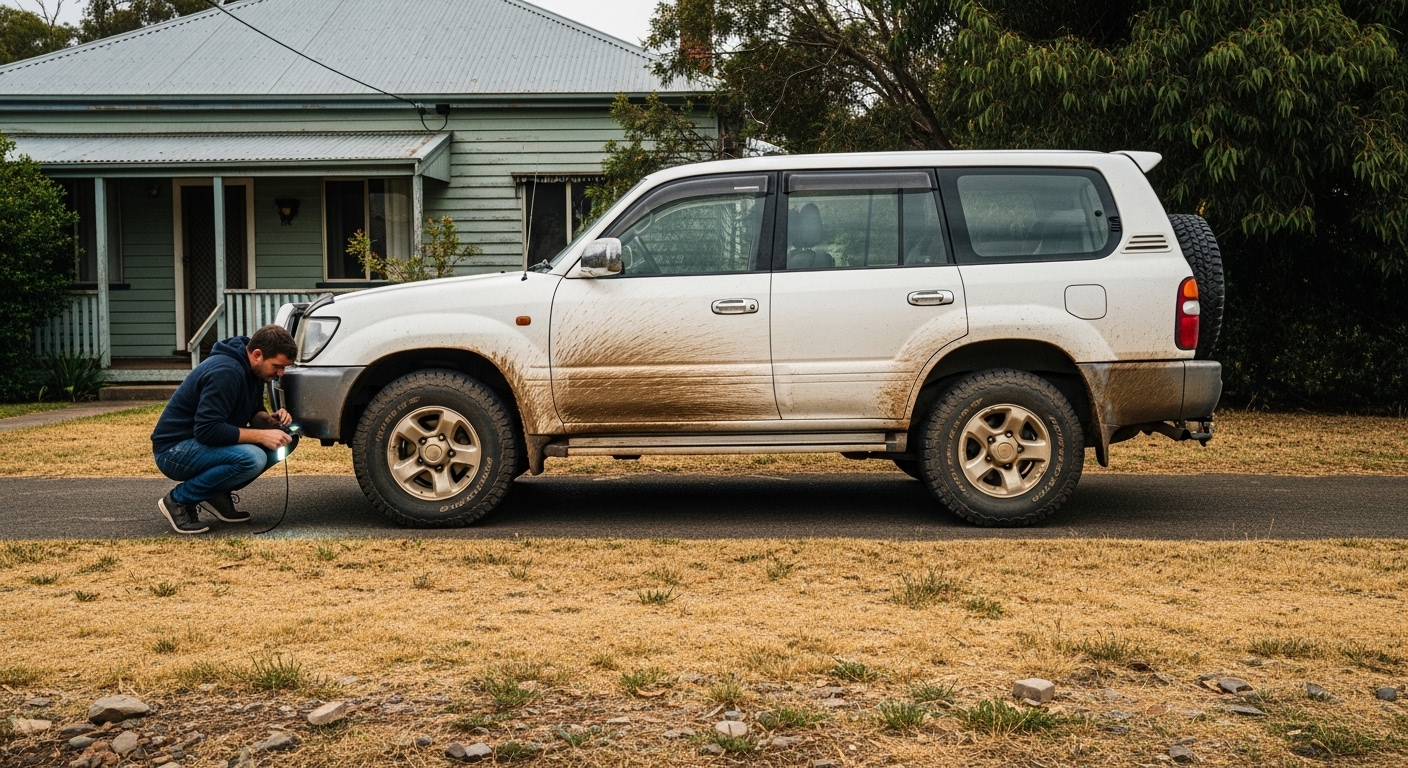 The most expensive 4WD mistakes hide underneath, not in the engine bay.
Quick Answer
- The costliest 4WD mistakes are model-specific: the wrong engine choice on a LandCruiser 105, hidden chassis rust on a Pajero NJ/NK, a blocked DPF on a Delica D:5, or buying a 2WD van you believed was 4WD on a HiAce.
- Used ute and SUV prices fell 10.7% in the year to September 2024, the fastest fall of any vehicle category (CarExpert / Moody's Analytics, 2024). Strong resale no longer rescues a bad buy.
- A pre-purchase inspection costs roughly $100 to $450 (AutoGuru, 2022) and routinely saves five figures.
- Match the vehicle to how you actually drive: remote touring, heavy towing, family duties, or van-life.
What's the Difference Between AWD and True 4WD?
The most expensive mistake happens before you choose a model: treating AWD and true 4WD as the same thing. They aren't. One keeps you stable on a wet road. The other is engineered to keep moving when a wheel leaves the ground entirely, and confusing them shows up the first time you're stuck.
AWD systems, common in modern SUVs and crossovers, split torque between the wheels to improve grip. They handle wet bitumen, light gravel, and the odd loose surface well. But they usually skip a low-range transfer case, can't lock a differential, and aren't built for the heat and mechanical load of serious terrain.
True 4WD, the hardware in every vehicle in this guide, adds a transfer case with a dedicated low-range gear, often with front and rear diff locks. That gives you slow, deliberate power delivery in deep sand, on steep rocky descents, and across off-camber ground where traction comes and goes.
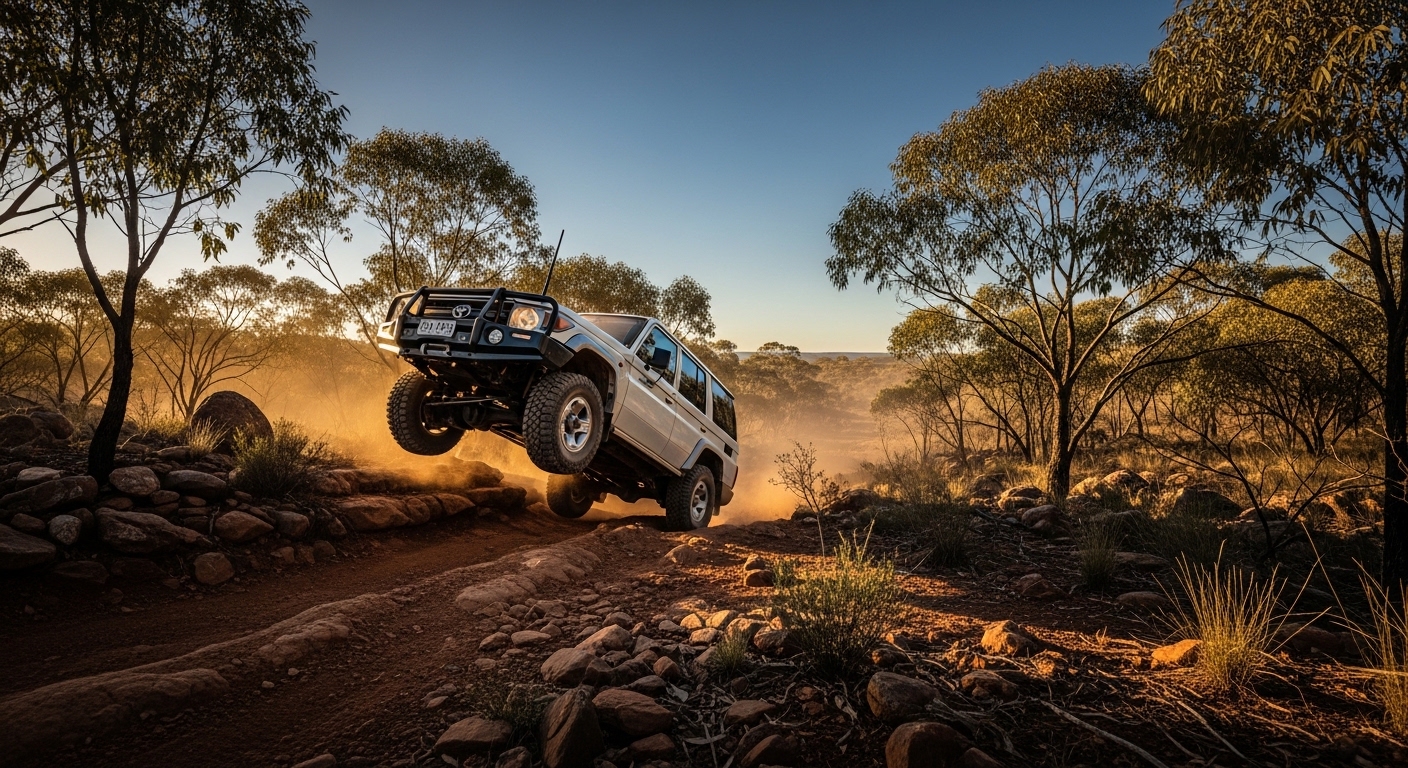 True 4WD with low range and locking diffs does what an AWD crossover cannot.
If you only ever see fire trails and snow-season car parks, AWD may be all you need. If you genuinely plan to tour remote tracks, buying AWD by mistake isn't a saving. It's a problem you discover at the worst possible time.
Why Has the Used 4WD Market Changed in 2026?
Used 4WDs no longer hold value the way they did. Prices for utes and SUVs fell 10.7% in the year to September 2024, against a 6.2% drop across all used vehicles and just 3.7% for passenger cars (CarExpert / Moody's Analytics, 2024). The category that once felt bulletproof is now the one falling fastest.
 Used 4WD prices have cooled from their 2022 peak but remain well above pre-pandemic levels.
That's a double-edged shift. Used 4WD and SUV prices still sit about 38% above pre-pandemic (September 2019) levels, yet they're roughly 20.7% below their May 2022 peak (CarExpert / Moody's Analytics, 2024). Anyone who paid top dollar in 2022 may already be underwater.
For a buyer today, the lesson is simple. You can't count on resale to bail you out of a bad purchase. The repair you miss at inspection is a repair you wear in full, because there's no longer a rising market to hide it. That's exactly why the model-specific mistakes below cost so much.
How Do the Six Models Compare at a Glance?
Here's the short version before the detail. Each of these is a capable vehicle when bought correctly, and an expensive lesson when the wrong thing goes unchecked. Use this table to find the section that matters most to you.
| Model | Engine (key variant) | Best suited to | Watch closely | Market band |
|---|---|---|---|---|
| Toyota LandCruiser 105 | 1HZ 4.2L diesel or 1FZ-FE 4.5L petrol | Remote, simple, high-km touring | Front diff lock, steering box | Mid-to-high $20K |
| Toyota LandCruiser 100 | 1HD-FTE 4.2L turbo diesel or 4.7L V8 petrol | Highway comfort with light touring | HDJ100 head gasket, cooling | Low-to-mid $30K |
| Nissan Patrol Y62 | VK56VD 5.6L V8 petrol (298kW/560Nm) | Heavy towing, long-distance | Real fuel cost, HBMC | Mid-to-high $40K |
| Mitsubishi Pajero NJ/NK | 6G74 3.5L V6 petrol | Value-focused weekend touring | Rear chassis rail rust | Mid-to-high teens |
| Mitsubishi Delica D:5 | 4N14 2.2L diesel | Family touring with 4WD | DPF regen history | Low-to-mid $30K |
| Toyota HiAce 4WD | 1GD-FTV 2.8L turbo diesel | Van-life, remote travel | Confirming it is actually 4WD | Mid-to-high $30K+ |
Toyota LandCruiser 105 Series: The Engine You Choose Defines Everything
The mistake here is choosing the wrong engine variant without understanding what it means in practice. The Toyota LandCruiser 105 Series came in two meaningfully different configurations, and buyers regularly pick the wrong one, sometimes without realising the choice exists.
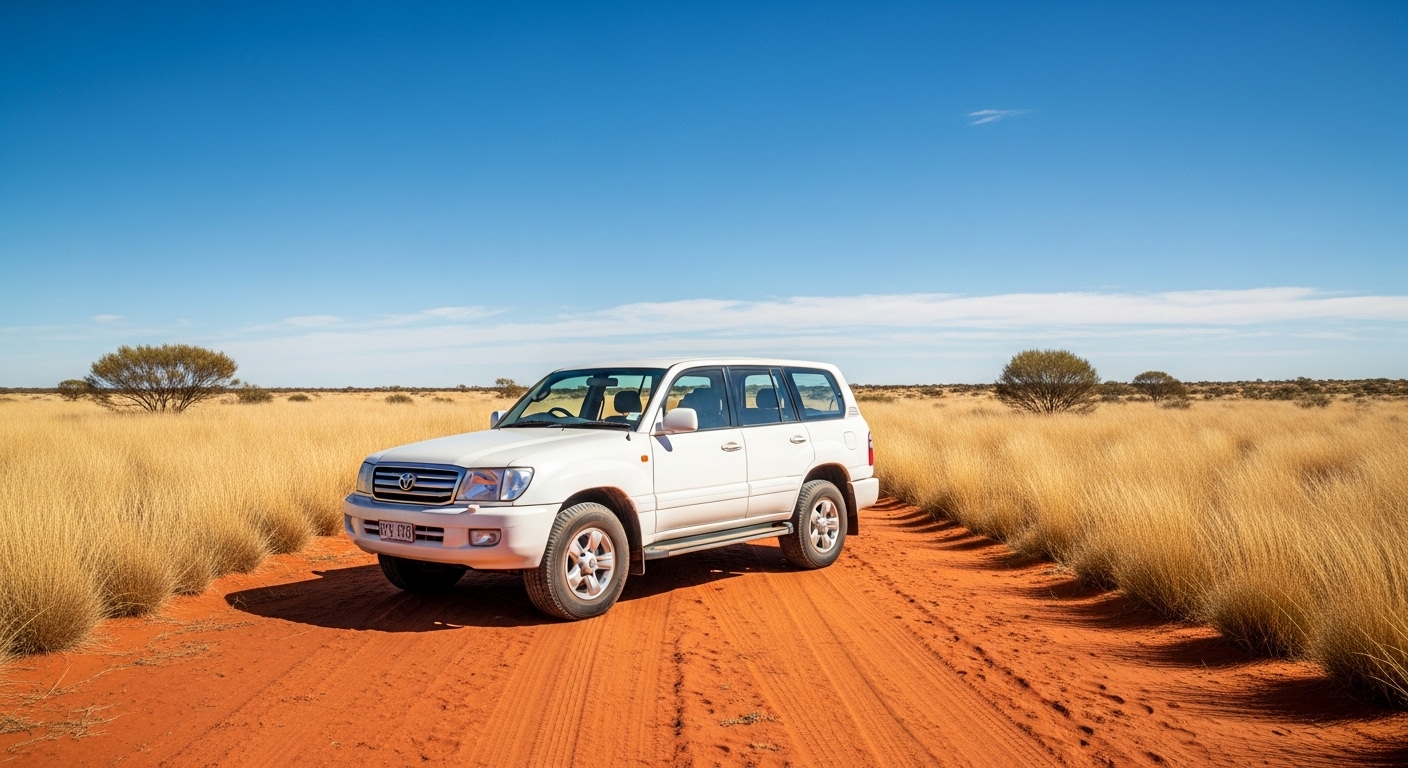 The 105 Series solid front axle is built for remote, high-kilometre touring.
The HZJ105 carries the 1HZ, a 4.2-litre naturally aspirated inline-six diesel making around 96 kW. Output is modest, but it's thermally stable, mechanically simple, and extraordinarily durable over the high-kilometre outback use that destroys more complex drivetrains. No turbo to fail under load, no intercooler to crack in dust, no clever electronics to misread altitude. The FZJ105 runs the 1FZ-FE, a 4.5-litre petrol inline-six. It's smoother on the highway and easier for buyers who don't want to learn diesel maintenance, but it drinks more fuel across the distances touring covers.
The mistake isn't petrol over diesel. It's choosing without modelling the trade-off. A buyer doing mostly sealed highway with the occasional gravel track may genuinely prefer the petrol FZJ105. A buyer heading into remote country, where fuel is scarce and mechanical help is hours away, should think hard about the 1HZ: its simplicity and economy are survival-relevant, not just running-cost preferences. The 105's solid front axle also gives it outstanding articulation for technical ground, which is a big part of why it stays so well regarded.
What to Check Before Buying a LandCruiser 105
Inspect the front differential lock actuator, which fails on high-mileage examples and is costly to replace. Test steering box play carefully, as it's a known wear point on this generation. Check leaf springs and rear differential seals too. Because the front axle is solid, those front-end components carry load directly rather than spreading it across an independent setup, so wear shows up in specific places. Well-kept examples generally sit in the mid-to-high $20K range, with condition, kilometres, and engine variant driving the spread.
Toyota LandCruiser 100 Series: Paying for Comfort, Losing the Track
The mistake with this one is buying an independent-front-suspension vehicle and expecting solid-axle off-road behaviour. The Toyota LandCruiser 100 Series arrived in 1998 with a real engineering compromise: it swapped the 105's solid front axle for Independent Front Suspension (IFS). Highway refinement improved a lot. What the vehicle can do when the road runs out changed permanently.
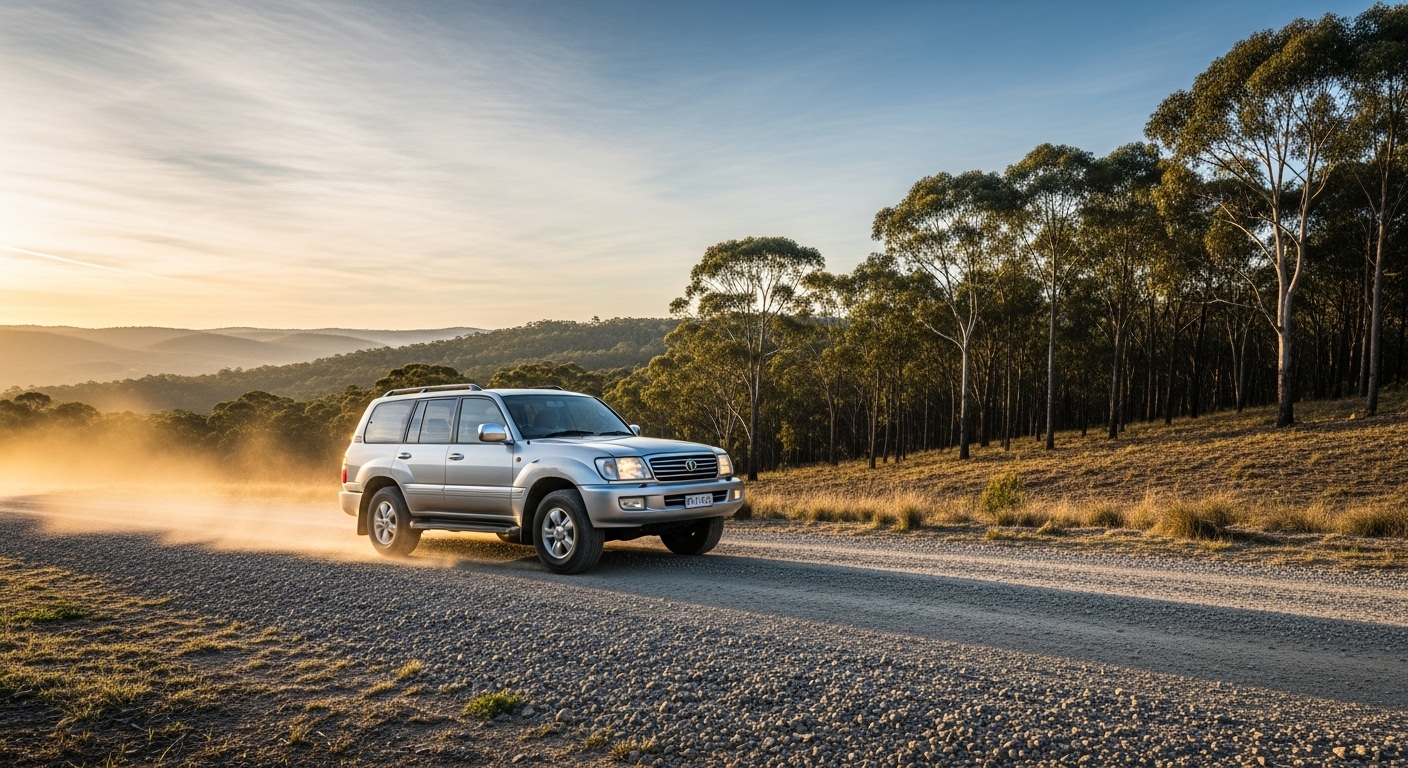 The 100 Series traded a solid front axle for highway comfort and IFS refinement.
IFS offers less articulation than a solid axle. When a front wheel drops into a rut, the geometry shifts in a way that can lift traction sooner than a solid axle would. For most owners this never matters, because the 100 Series handles the vast majority of Australian tracks without complaint. For buyers chasing genuinely technical terrain, uneven river crossings, off-camber climbs, boulder sections, the limit is real and worth knowing first.
The diesel HDJ100, with the 1HD-FTE 4.2-litre turbo diesel, carries a specific weakness: head gasket failure under sustained high load, especially when the cooling system isn't maintained meticulously. Long towing stints, prolonged low-range climbing, or a cooling system slightly below spec all add stress that can end in a major repair. Plenty of buyers pick up a running HDJ100 at a fair-looking price and meet that bill within a year. The petrol UZJ100, with its 4.7-litre 2UZ-FE V8, is more relaxed mechanically, but its thirst is a line item buyers routinely underestimate.
What to Check Before Buying a LandCruiser 100
On the HDJ100, commission a coolant pressure test and have the coolant checked for combustion gases before you commit. Confirm the thermostat works correctly and inspect the intercooler for cracks. On any IFS variant, check the lower control arm bushings and CV boots: they're wear items, and they cost more to replace here than equivalent parts on a solid-axle setup. Solid HDJ100 examples typically sit in the low-to-mid $30K range.
Nissan Patrol Y62: The Fuel Bill Nobody Planned For
The mistake with the Y62 is budgeting for the purchase price and ignoring the running cost. The Nissan Patrol Y62 is one of the most accomplished large 4WDs on the used market, and that competence is exactly what lulls buyers into underestimating what it costs to run.
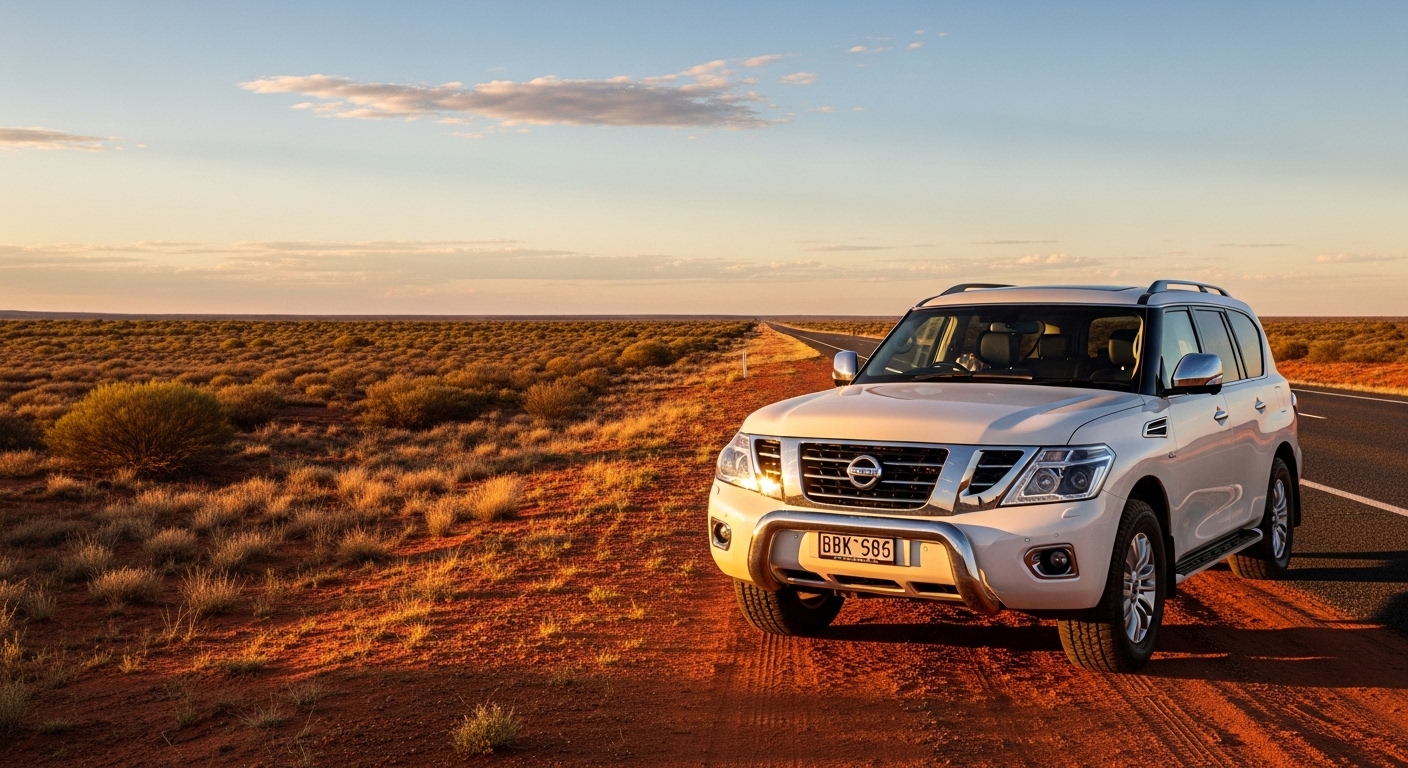 The Y62's 5.6-litre V8 tows effortlessly, but the fuel bill scales with the load.
Its VK56VD 5.6-litre petrol V8 produces 298 kW and 560 Nm, with a braked tow rating of 3,500 kg. That's genuine towing muscle wrapped in a refinement level that competes with European luxury SUVs. The Hydraulic Body Motion Control (HBMC) suspension uses hydraulic fluid instead of conventional anti-roll bars to keep this big wagon flat and composed on road, which is genuinely impressive for something with this much off-road intent.
The cost is fuel, and it scales sharply with load and terrain. Real-world, owner-reported figures put unladen highway driving around 13 to 15 L/100km, with city use climbing well past that. Tow a 3-tonne caravan, which is exactly what many Y62 buyers intend, and 22 to 30 L/100km is realistic depending on gradient and weight. (These are owner-reported numbers, not an official test-cycle figure.) Model that across a year of touring and the fuel line alone can pass $10,000 for active tourers. Buyers who skip that maths learn it through receipts instead, which is a less comfortable spreadsheet.
What to Check Before Buying a Patrol Y62
Request a full service history with consistent oil-change records. On the HBMC system, look for fluid leaks at the accumulator and lines, and listen for unusual body roll or knocking on rough surfaces, because HBMC faults on higher-mileage cars are expensive to diagnose and not every workshop knows them well. Confirm the transfer case engages cleanly into both 4WD-High and 4WD-Low, and run a diagnostic scan across all eight injectors before you commit. Well-kept examples typically sit in the mid-to-high $40K range, with low-kilometre cars pushing higher.
Mitsubishi Pajero NJ/NK: The Rust Nobody Looked For
The mistake here is inspecting the interior and engine bay and skipping the underside entirely. The Mitsubishi Pajero NJ/NK generations (1991 to 1999) offer real value, but that value depends almost completely on a part most buyers never look at.
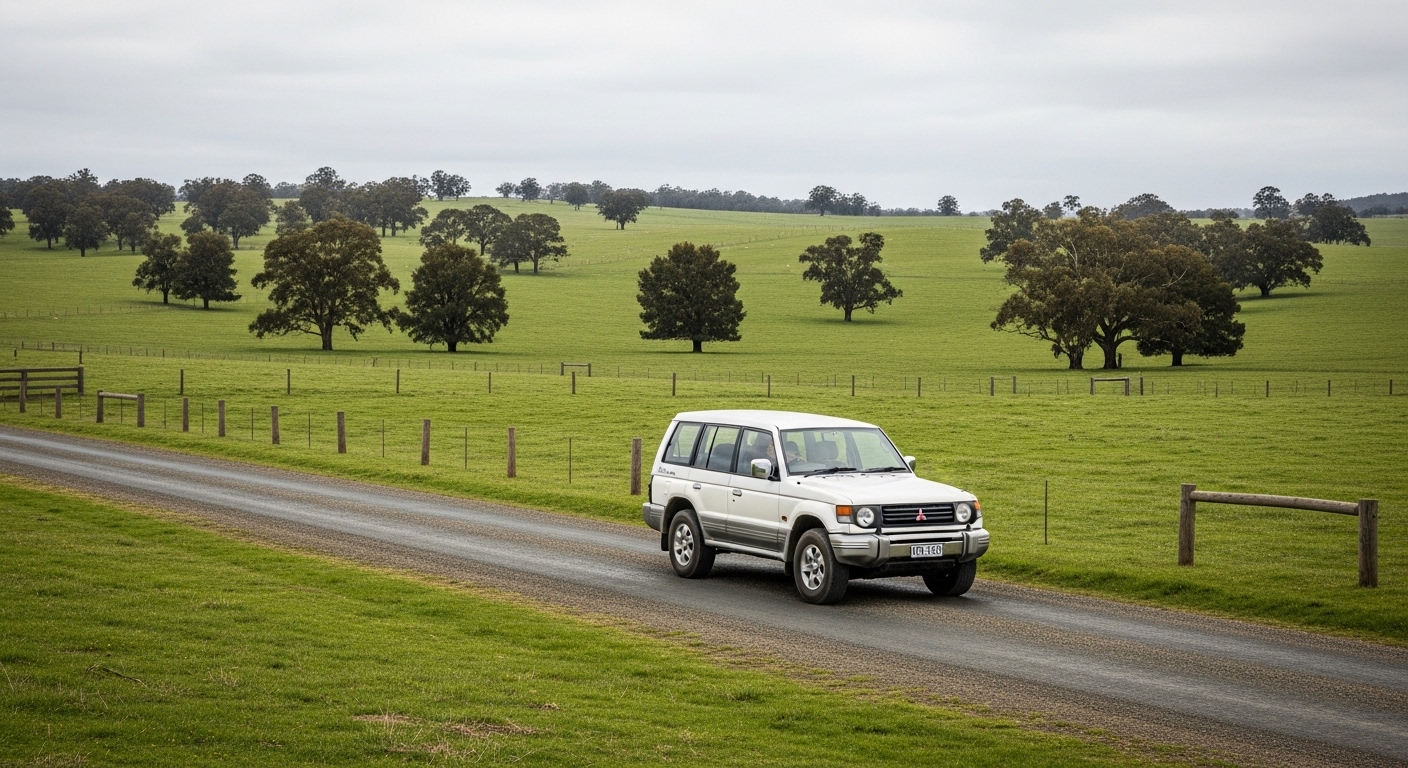 The NJ/NK Pajero offers real value, provided the chassis underneath is sound.
The mechanicals are genuinely likeable. The Super Select 4WD system remains one of the most usable setups ever fitted to a Japanese 4WD, allowing full-time 4WD on sealed roads while keeping low range and a rear diff lock for serious work. The 6G74 3.5-litre V6 DOHC petrol engine is smooth and durable when maintained. None of that helps if the chassis is rotting.
The rear chassis rails on NJ/NK Pajeros trap mud and moisture in a structural cavity behind the rear wheels. Left alone for decades, which describes a lot of cars at this price, the packed mud holds water against the rail and quietly eats it from the inside. By the time surface rust shows on the outside of the panel, the structural damage underneath is usually well advanced. A chassis that looks fine from a walk-around can fail a roadworthy or, worse, become a safety concern under load. Finding that at inspection is the good outcome. Finding it six months later, after a failed roadworthy and a repair quote, is the outcome this guide's title is about.
What to Check Before Buying a Pajero NJ/NK
Get it on a hoist before you commit. Examine the rear chassis rails, both the outer surface and, where you can reach, inside the cavity with a torch and a phone camera. A gentle screwdriver probe on suspect points tells you more than a glance. Confirm Super Select engages correctly through every mode with the car moving: 2WD, 4WD-H, 4WD-HLc, and 4WD-L. Check the front propeller shaft universal joints for play. Solid examples with a clean chassis and documented history tend to sit in the mid-to-high teens, and anything priced well below that deserves close scrutiny of what's been overlooked.
Mitsubishi Delica D:5: The DPF Trap
The mistake with the Delica is buying a diesel 4WD people-mover and then using it only for short urban trips. The Mitsubishi Delica D:5 in CV1W specification is one of the cleverest vehicles available to Australian import buyers, and its one hard requirement is the thing urban owners quietly break.
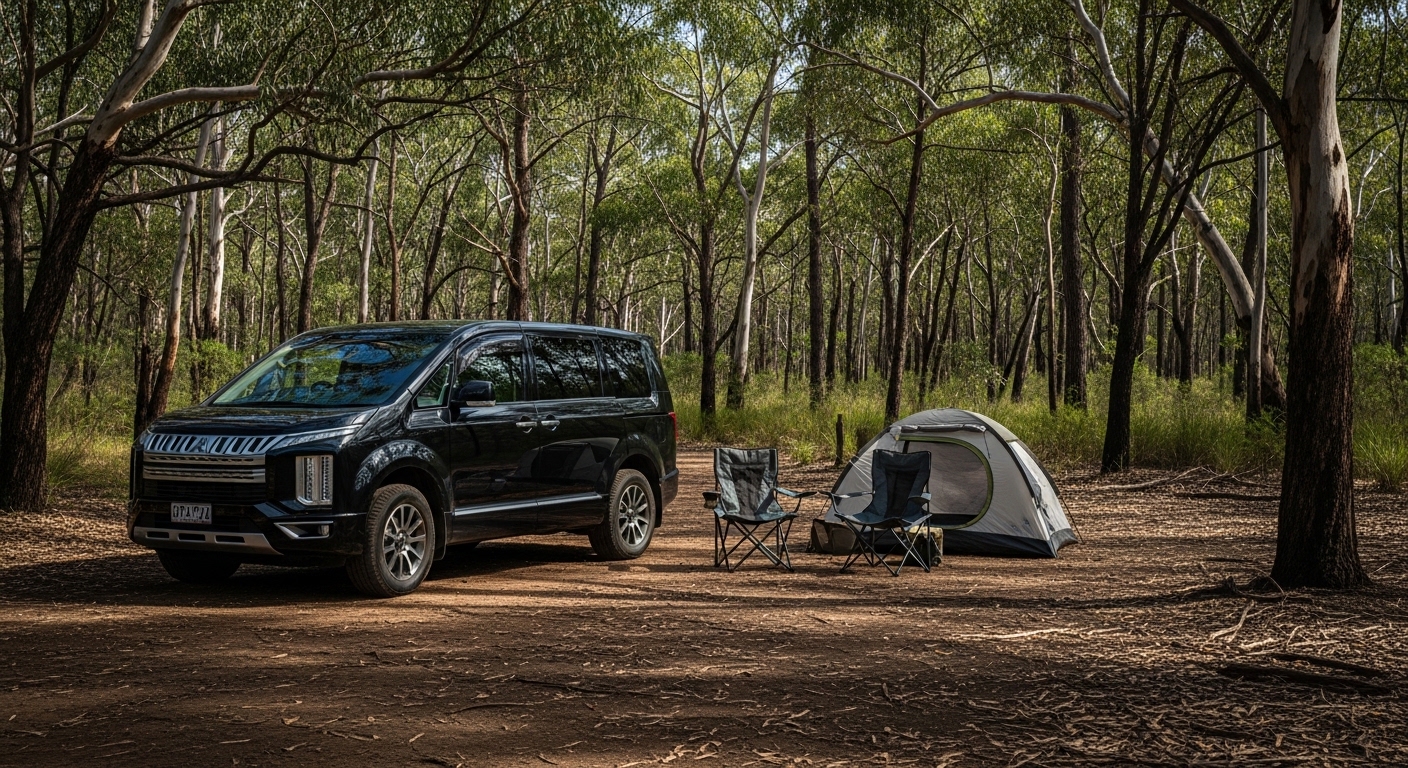 The Delica D:5 pairs genuine 4WD hardware with seven-seat family practicality.
It combines real 4WD hardware, a proper transfer case with low range, with a seven-seat people-mover body on a raised, capable platform. For families heading to remote campsites or regularly running unsealed access roads, it solves a problem no locally delivered vehicle answers as directly. The 4N14 2.2-litre diesel paired with a six-speed torque-converter automatic is reliable inside its design limits.
Those limits include one non-negotiable rule: the diesel particulate filter (DPF) needs regular regeneration to burn off soot. Passive regen happens during sustained driving, typically 15 to 20 minutes above about 60 km/h. Used mostly for school runs and stop-start commuting, that cycle never completes. The filter loads up, the engine tries an active regen by injecting fuel to raise exhaust temperature, and if the car is switched off mid-cycle, the blockage gets worse. A severely blocked DPF on the 4N14 is neither a quick nor a cheap fix. The real used-market danger is buying a D:5 whose DPF was already compromised by a previous owner's city use, with the warning lights cleared by a diagnostic reset before sale. It can drive normally on a test and present a major bill within months.
What to Check Before Buying a Delica D:5
Ask for a diagnostic scan showing current DPF differential (back-pressure) readings. Numbers that are high for the odometer point to a patchy regen history. Look for evidence of regular highway running in the service record, and treat a metro-only history as a reason to dig deeper, not to celebrate a cheap price. Have an independent workshop confirm DPF status before you finalise anything. Good mechanical examples generally sit in the low-to-mid $30K range depending on year and trim.
Toyota HiAce 4WD: The Most Misidentified 4WD in Australia
The mistake with the HiAce is the simplest and the most common: buying a 2WD van believing it's a 4WD. The Toyota HiAce 4WD is exceptional for a specific buyer, but only if the one you're looking at is actually the 4WD variant, and a surprising number aren't.
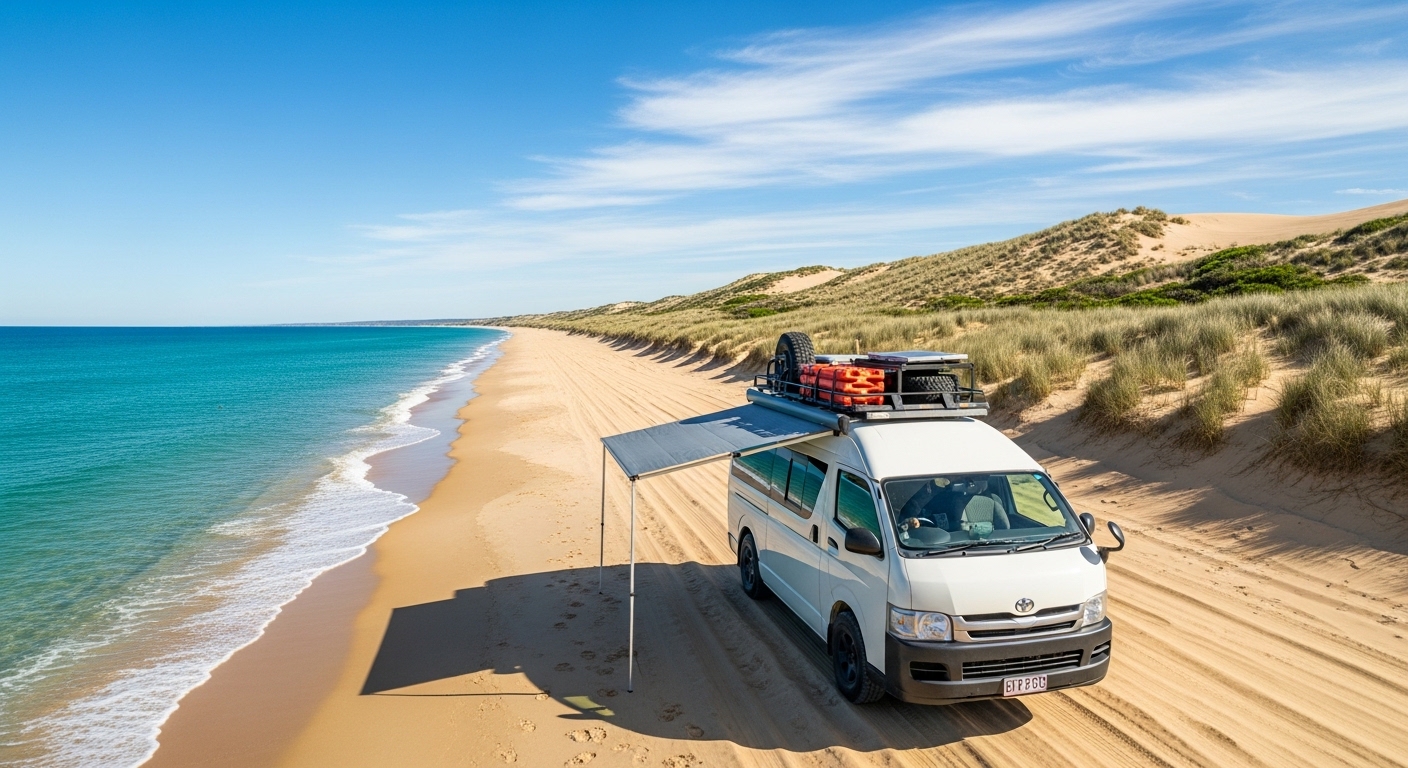 A genuine 4WD HiAce reaches places no standard van can, once you confirm the model code.
The GDH206V variant, the 1GD-FTV 2.8-litre turbo diesel with a proper 4WD transfer case, delivers something Australia never officially sold: a high-roof van with standing room, a full-length load space, and the ability to reach terrain where conventional 4WD wagons go. For van-life touring, remote travel, and overlanding builds, it sits in a class of its own.
The trouble is identification. The HiAce range spans several model codes across petrol and diesel, 2WD and 4WD. The genuine 4WD diesel carries the GDH206 code; the 4WD petrol is TRH226. The 2WD diesel (GDH201) and 2WD petrol (TRH200) look almost identical from the outside and cost noticeably less. Buyers who don't verify the code against the compliance plate routinely pay for 4WD and drive home in 2WD. It's especially common in online listings, where a grey-import van's description may have been transcribed from an auction sheet without anyone confirming the code. The discovery usually comes the first time the owner reaches for a 4WD selector that isn't there.
What to Check Before Buying a HiAce 4WD
Before you travel to inspect anything advertised as 4WD, ask the seller to photograph the compliance plate and confirm the code. GDH206 means diesel 4WD. TRH226 means petrol 4WD. TRH200 or GDH201 means 2WD, no matter how it's advertised. At the vehicle, confirm a front propeller shaft is physically present underneath, which is the one check that can't be faked, and test 4WD engagement from the cabin before any money moves. Genuine 4WD diesel examples command a clear premium over their 2WD siblings, typically the mid-to-high $30K range and up for well-kept vans.
What Mistakes Cut Across Every Model?
Some traps don't care which badge is on the bonnet. State and territory agencies fielded more than 13,000 reports about used-car issues in 2024–25 (ACCC, 2025), and the recurring themes (odometer fraud, hidden rust, and skipped inspections) apply to every vehicle above.
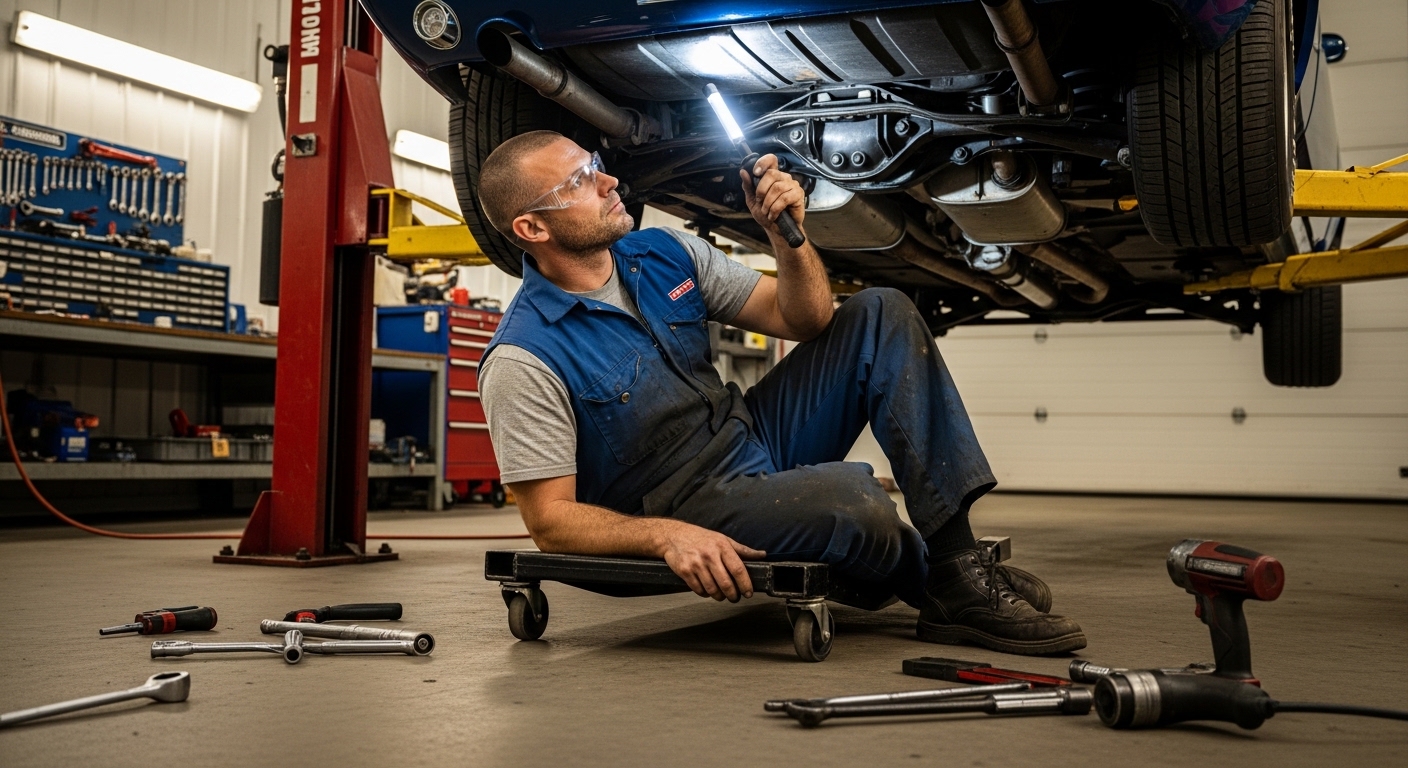 A pre-purchase inspection on a hoist is the cheapest insurance a 4WD buyer can buy.
Odometer tampering is rising, not fading. NSW Fair Trading issued 54 penalty notices worth over $100,000 in a single enforcement period — more than half for odometer interference, including 28 fines in one month alone (Service NSW, 2025). On a high-kilometre 4WD, a wound-back reading hides exactly the wear that decides whether you're buying a tired drivetrain or a sound one.
Rust is the other quiet budget-killer, and not only on the Pajero. Penetrating structural rust repairs run from $500 to well over $5,000 (AutoGuru, current), and on a ladder-chassis 4WD the structural rails are what carry the load. Against numbers like these, a pre-purchase inspection at roughly $100 to $450 (AutoGuru, 2022) isn't a cost. It's the cheapest line in the whole purchase.
Which Used 4WD Makes Sense for You?
Start from how you'll actually drive, not from the badge. If you're heading deep into remote country on a budget, the LandCruiser 105 in HZJ105 diesel form is hard to beat for simplicity and durability. If you want most of that toughness with far better highway manners, the 100 Series is the comfortable compromise, as long as you pressure-test an HDJ100 first.
If your priority is sustained heavy towing, the Patrol Y62 is the standout, provided you've done the fuel maths honestly before you sign. If you need genuine 4WD capability with seven seats for the family, the Delica D:5 is close to unique. If you're chasing value for weekend touring, the Pajero NJ/NK delivers it, but only on a chassis that's been checked underneath.
And if your version of touring is van-life, remote camping, or an overlanding build, the HiAce 4WD does something nothing else here does, once you've confirmed it's truly 4WD. There's no single best 4WD. There's the one that fits your use, your budget, and your tolerance for running costs.
A Safer Way to Buy a Used 4WD
The checks in this guide aren't optional extras. They're the line between a vehicle that performs as expected and one that becomes the mistake that cost thousands. Doing them properly takes either mechanical knowledge, a trusted workshop, or both, which is exactly the gap a specialist buyer can fill. Carbarn is a Sydney-based importer and dealer of Japanese-market vehicles, based at Lidcombe NSW (Motor Dealer Licence MD056471), and every vehicle is physically assessed, lifted and inspected underneath, with a free vehicle condition report rather than just a set of photos. You can browse the used 4WD range already in Australia with online inspection or an on-site test drive, or use the Japan import service to source a specific configuration through the auction system with a refundable deposit and a physical pre-bid inspection. Locally available vehicles carry a 3-month NSW dealer warranty, with a 5-year extended warranty offered on eligible vehicles, plus Blue Slip and 6-month NSW registration on request, nationwide door-to-door delivery, finance and pre-approval, and full compliance handled in-house. Details on the buying steps sit on the how it works page.
The Bottom Line for 2026 Buyers
The used 4WD market in 2026 rewards buyers who ask the right questions and punishes those who don't. Every vehicle here is a capable, fit-for-purpose choice when bought correctly, and an expensive lesson when the wrong thing goes unverified. With prices no longer climbing, there's no rising market to absorb a mistake for you.
- LandCruiser 105: Choose the engine for your real use. The 1HZ diesel suits remote, fuel-scarce touring; the petrol FZJ105 suits highway-biased driving. Always check the front diff lock and steering box.
- LandCruiser 100: Understand the IFS trade-off before a track exposes it, and pressure-test an HDJ100's cooling system before purchase, not after.
- Patrol Y62: Model the fuel cost at your real usage before committing. The V8 is exceptional; the fuel bill is a commitment.
- Pajero NJ/NK: Inspect the rear chassis rails on a hoist. The Super Select system is brilliant, but only on a structurally sound chassis.
- Delica D:5: Get a scan showing DPF back-pressure. A metro-only history without highway regen is a red flag, not a discount.
- HiAce 4WD: Confirm the model code on the compliance plate first. GDH206 is real 4WD; verify the front propeller shaft physically.