



Ready to Hit the Road in Style?
Save money and reduce emissions with vehicles designed to deliver exceptional mileage. Visit our inventory and find a car that fits your lifestyle.
Ready to Hit the Road in Style?
Save money and reduce emissions with vehicles designed to deliver exceptional mileage. Visit our inventory and find a car that fits your lifestyle.
Every time you pull into a servo, you feel it. Petrol prices have been volatile enough over the past few years that fuel cost has moved from a footnote to a main concern for a lot of Australian buyers. A used hybrid shifts that equation in a meaningful, practical way.
The good news: in 2026, there are more viable used hybrid options than ever. Conventional hybrids reached around 19 per cent of Australia's new car sales in May 2026 (FCAI VFACTS; CarExpert), up from low single digits just a few years ago. That volume is filtering into the used market, with Japanese-import hybrids in particular offering strong value for buyers willing to look beyond the local showroom.
This guide covers five of the most practical used hybrids you can buy here: one for city driving, one for eco-conscious daily use, one for compact-SUV buyers, and two for families who need seven or eight seats. All five come from the Japanese domestic market, where hybrid technology has been standard kit for well over a decade.
 HYBRID badge on the rear of a blue car with water droplets on the paint
Quick Answer
- Conventional hybrids hit ~19% of Australian new car sales in May 2026 (FCAI VFACTS), so used examples are easier to find and better priced than ever.
- The Honda Fit Hybrid suits city commuters on a tight budget; the Nissan Serena e-Power is the pick for families needing seven-plus seats.
- Toyota's THS-II system and Nissan's e-Power both have strong reliability records. Ask for a battery health report before buying any used hybrid.
- Price bands run from around the high-$10K mark for older compact hatches to the mid-$30K range for seven-seat vans.
- Battery replacement is a real cost to understand, but it's rarely needed under 150,000 km with regular servicing.
How we chose these five
All five picks come from Toyota, Honda or Nissan — three makers with proven hybrid drivetrain durability across hundreds of thousands of kilometres of service. From that base, the shortlist follows a simple, buyer-first logic. We wanted a spread of use cases (commuter, daily wagon, compact SUV and family van), confirmed availability through the Japanese market, and a genuine running-cost benefit in Australian conditions.
Beyond brand, two practical filters mattered. First, all five have established compliance pathways under Australia's SEVS scheme or direct import routes. Second, all five are widely available at Japanese auction, so supply isn't a limiting factor.
At a glance
Here's how the five compare before we get into the detail of each one.
| Model | Body type | Seats | Hybrid system | Best for |
|---|---|---|---|---|
| Honda Fit Hybrid (GP5 / GR3) | Hatchback | 5 | Honda i-DCD / e:HEV | City commuters |
| Toyota Corolla Fielder Hybrid | Wagon | 5 | Toyota THS-II (1.5L) | Eco-focused daily use |
| Toyota C-HR Hybrid | SUV | 5 | Toyota THS-II (1.8L) | Compact SUV buyers |
| Nissan Serena e-Power | Minivan | 7–8 | Nissan e-Power | Large families |
| Toyota Noah Hybrid | Minivan | 7–8 | Toyota THS-II (1.8L) | Multi-purpose families |
1. Honda Fit Hybrid: the city commuter's pick
The Honda Fit Hybrid earns top spot because it solves the most common used-hybrid problem: strong fuel economy, a practical size, and a used-market price most buyers can fund without a big loan.
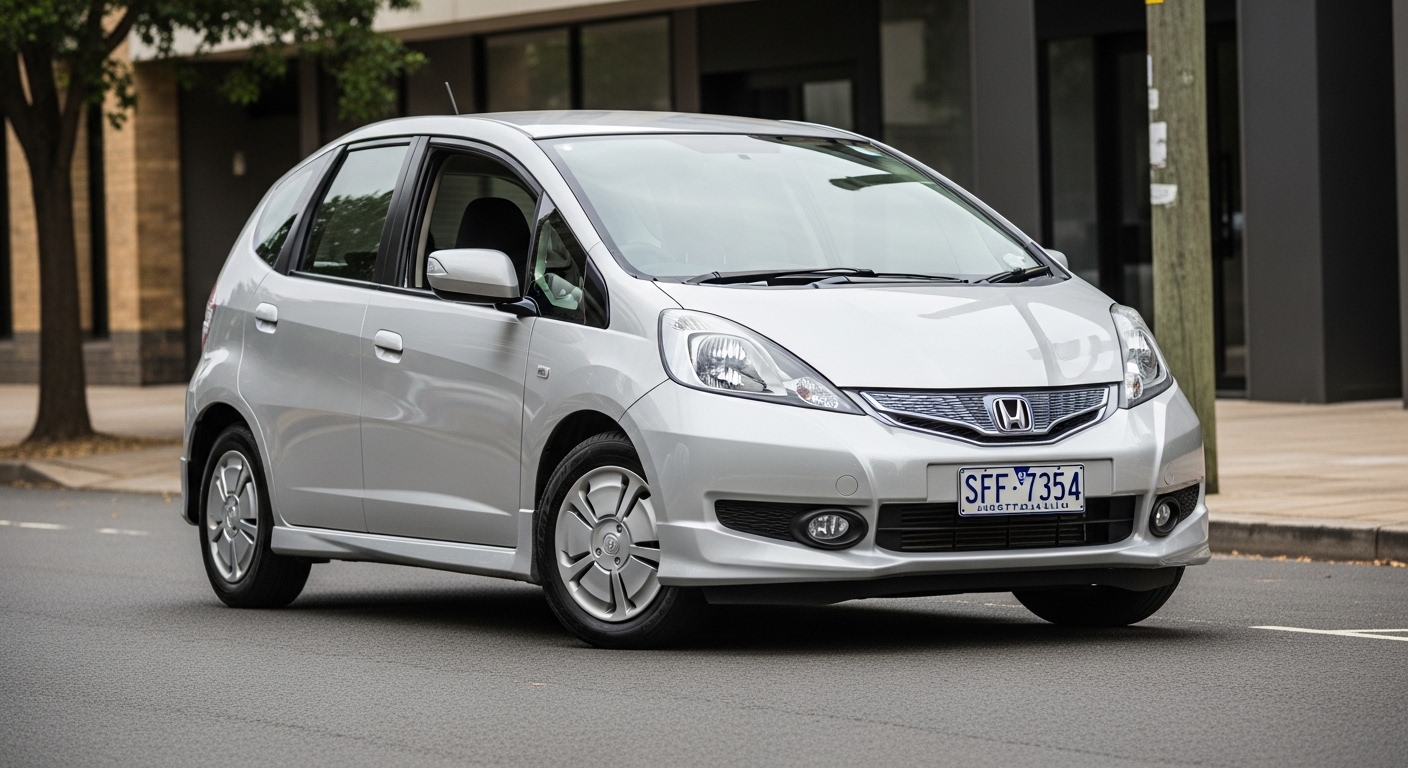 2012 Honda Fit Hybrid
The GP5 generation (2013–2020) uses Honda's i-DCD system. In plain terms, i-DCD is a single-motor hybrid: a 1.5-litre Atkinson-cycle petrol engine paired with a seven-speed dual-clutch transmission and an integrated electric motor. As a result, it prioritises efficiency at low speeds, which is exactly where most Australian city and suburban driving happens. The packaging punches above its weight too. Honda's centre-tank layout frees up rear floor space, and the rear seats fold flat or flip up, so five adults fit and a decent shop slides into the boot without drama. Parking in tight CBD spots is easy.
In practice, GP5 Fits turn up at Japanese auction in large numbers. That gives you room to hold out for one with a complete service book and the recall work signed off, rather than settling for the first car you see.
What to check first
Early GP5 units had documented issues with the i-DCD clutch and gear engagement, the subject of a 2014 Honda recall (Honda Global Newsroom). So ask for the service history, and confirm the relevant software update and recall work were completed. By contrast, post-2016 examples have a cleaner track record. The newer GR3/GR4 generation (2020 onward) uses Honda's simpler e:HEV system, and it's worth paying a little more for if reliability is your priority.
Good fit if you
This Fit makes sense if you mainly drive city streets and suburban commutes, want easy parking, and care more about fuel economy than cargo space. However, if you regularly do long highway runs at 110 km/h, the hybrid advantage narrows, and a petrol alternative might suit you just as well. Used-market pricing sits in the low-to-mid $20K range for complied examples, while tidy older GP5s come in closer to the high-$10K mark.
2. Toyota Corolla Fielder Hybrid: the practical eco wagon
The Toyota Corolla Fielder Hybrid is one of the least-discussed but most useful used hybrids from Japan. It's a proper station wagon with genuinely usable cargo space, not just a tall hatch, and it pairs Toyota's THS-II hybrid system with the brand reliability Australians have banked on for decades.
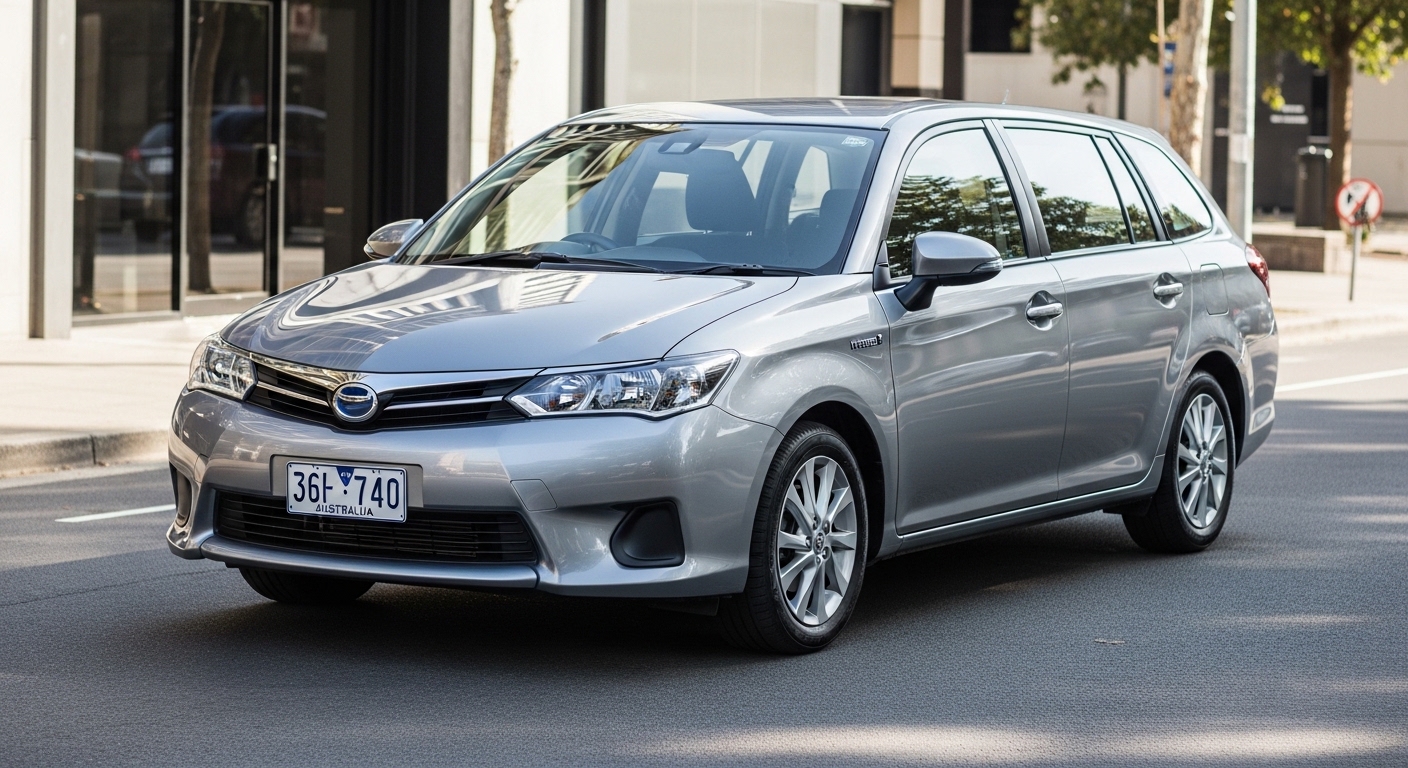 2015 Toyota Corolla Fielder Hybrid
The Fielder uses the 1.5-litre THS-II. THS-II is Toyota's power-split hybrid system, the same basic architecture as the early Prius. Because it's so widely used, it's well understood by mechanics familiar with Toyota hybrids, and it carries a strong long-term record across hundreds of thousands of kilometres in Japanese service. Boot space is the main argument over hatchback rivals. The wagon body handles bikes, surfboards, large weekly shops and tradie gear without eating into rear passenger comfort. It's not glamorous, but it's genuinely useful, which counts for a lot when you're funding a car with your own money.
From what we see at auction, Fielder Hybrids tend to come through with honest service records. That makes the all-important battery check straightforward to arrange before you commit.
What to check first
Battery condition is the main variable, especially on pre-2016 examples. A battery health check from a hybrid specialist costs a few hundred dollars, and it gives you a clear picture before you commit. Helpfully, the THS-II system is transparent about its state of health if you know what to ask.
Good fit if you
The Fielder suits you if you want wagon practicality in a fuel-efficient package, cover a mix of urban and regional driving, and prefer Toyota's conservative hybrid architecture over newer systems. Expect pricing in the low-to-mid $20K range for complied examples in good condition.
3. Toyota C-HR Hybrid: the compact SUV
The Toyota C-HR Hybrid is where used Japanese hybrid meets proper SUV proportions, without crossing into people-mover territory. It's a compact crossover with raised ride height, an SUV driving position and a modern interior, at a used-market price that makes sense.
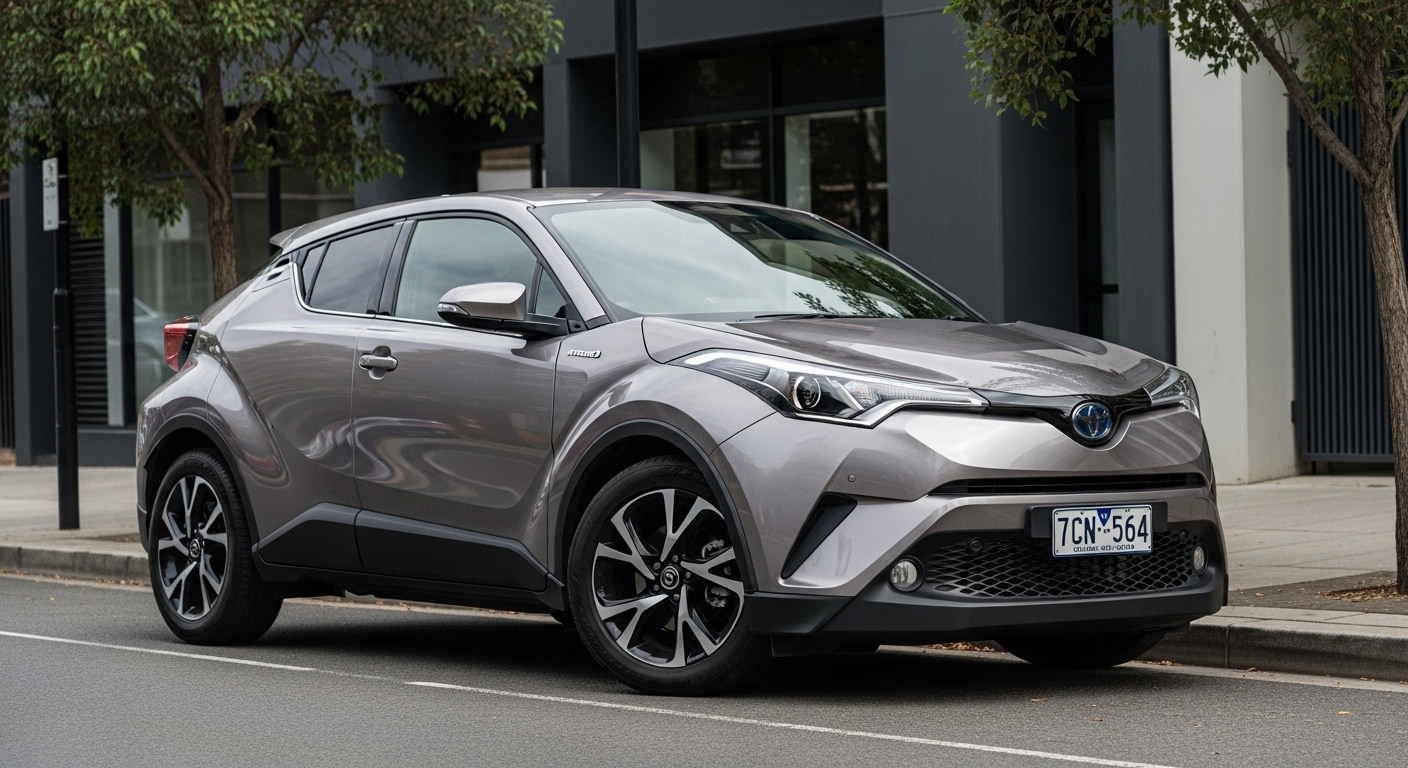 2019 Toyota C-HR Hybrid
The C-HR uses Toyota's 1.8-litre THS-II hybrid paired with a CVT. Most ZYX10 variants are front-wheel drive. However, some later models added Toyota's E-Four electric rear axle for AWD. That's worth looking for if you're in a wetter climate, or you occasionally head off sealed roads. The hybrid advantage is clearest in suburban and urban conditions, where the C-HR spends most of its time. On the open highway it's economical and comfortable, but the 1.8-litre prioritises efficiency over outright performance, so plan overtaking moves rather than relying on a sudden surge.
Interior quality is solid. That said, rear passenger space is a touch tighter than the Fielder wagon, and the boot isn't generous, but for two adults with everyday cargo needs it's fine. Families fitting rear-facing infant seats may find rear headroom a little snug.
Among the imports we look over, clean low-kilometre C-HRs are common, since many led easy lives as one-owner Japanese cars. As a result, the condition gap between examples is usually about service history rather than wear.
What to check first
The C-HR's reliability record is strong overall. Even so, check the service history, inspect tyre condition (18-inch rims make replacements pricey), and confirm the pre-collision assist system is active and calibrated.
Good fit if you
Go for the C-HR if you want a hybrid with SUV proportions and a modern cabin at a realistic used price, and you don't need seven seats or serious cargo volume. Expect pricing in the mid-$20K to low-$30K range, depending on year and specification.
4. Nissan Serena e-Power: the seven-seat family van
If seven or eight seats and fuel efficiency are both on your list, the Nissan Serena e-Power is the most compelling Japanese option in this segment.
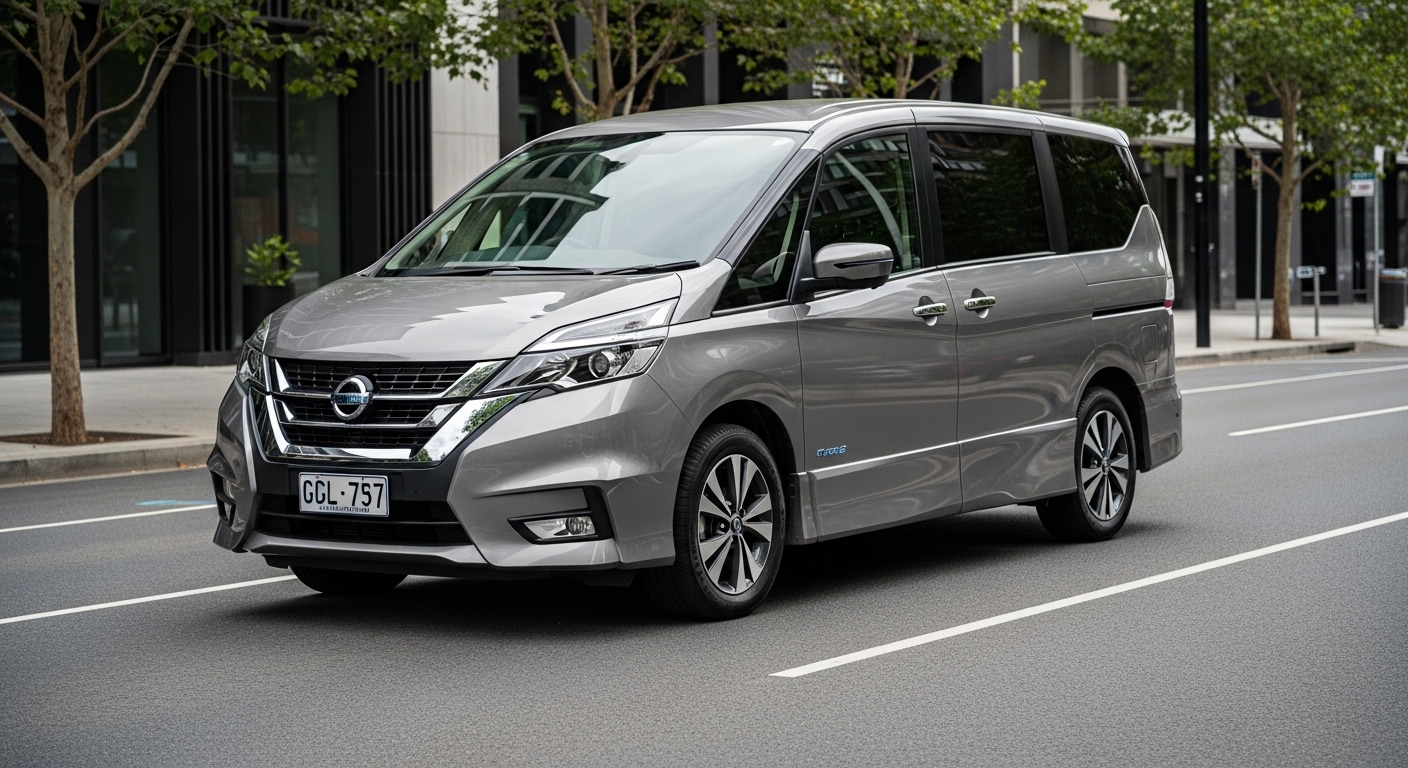 2021 Nissan Serena e-Power
Nissan's e-Power works differently from Toyota's THS-II. e-Power is a series hybrid: in the Serena, the 1.2-litre petrol engine runs purely as a generator and never drives the wheels directly. Instead, all propulsion comes from the electric motor. As a result, it feels closer to a pure EV than a conventional hybrid: strong low-speed torque, smooth and quiet delivery in slow traffic, and a natural feel through stop-start conditions. That is exactly where a seven-seat family van spends most of its life.
Importer comparisons put real-world fuel use for the HC27 Serena e-Power at approximately 5.6 to 5.8 L/100km, or roughly 17 to 18 km/L (Roundabout Australia). By contrast, a conventional petrol minivan of similar size typically uses 8 to 11 L/100km, so the saving is genuine and adds up across family distances. The cabin is well proportioned too. Third-row access is straightforward, the rear sliding doors make loading kids in tight car parks easier, and higher grades add rear seat ventilation. Impressively, the Serena seats seven or eight without cramping the first two rows, which is harder to pull off than it sounds.
On the auction sheets we read, well-kept HC27 Serenas usually show their service stamps clearly. That history is the first thing to confirm, because e-Power rewards consistent servicing more than a conventional hybrid does.
What to check first
Service history matters even more on e-Power models, since the HC27 needs specific Nissan service items at set intervals. So confirm the high-voltage battery has been checked and the inverter coolant serviced to schedule. It's also worth asking the compliance workshop whether the service record transferred across on the Japanese auction sheet.
Good fit if you
The Serena suits you if you have a growing family, run regular school pickups, or often carry five or more people. The e-Power driving experience is genuinely different from a conventional hybrid — smoother and more car-like — which most family buyers count as a plus. Expect pricing in the mid-$30K range for complied HC27 examples.
5. Toyota Noah Hybrid: the multi-purpose family wagon
The Toyota Noah Hybrid covers similar ground to the Serena, with seven or eight seats, sliding rear doors and generous family-wagon proportions. The key difference is under the skin: it uses Toyota's THS-II architecture rather than the e-Power series system. So for buyers who want Toyota's reliability record in a family van, the Noah is the straightforward answer.
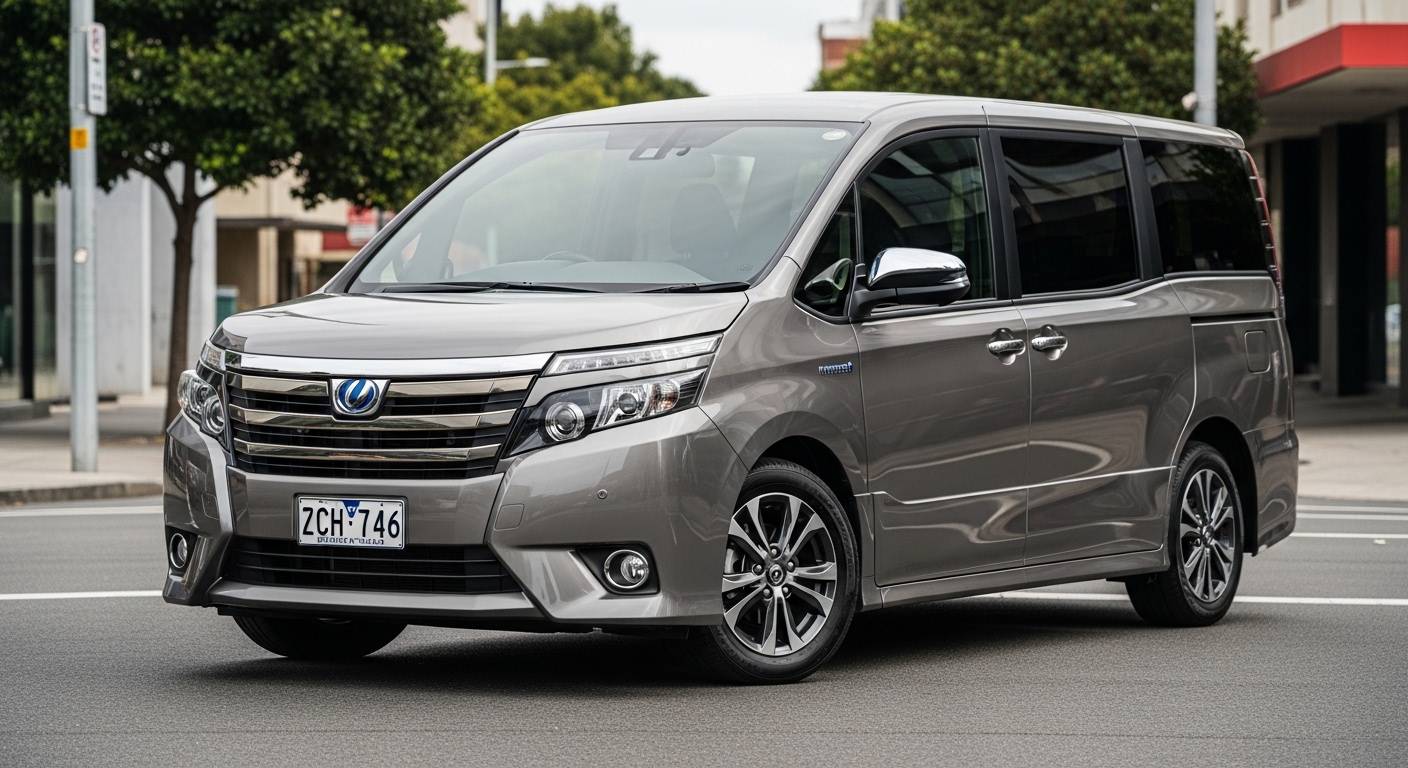 2020 Toyota Noah Hybrid
The ZWR80 (2014–2021) uses Toyota's 2ZR-FXE 1.8-litre THS-II, the same engine family as the Prius (Gen 3/4), Corolla Hybrid and the C-HR. Because it's a parallel hybrid, the petrol engine can drive the wheels at higher speeds. Real-world economy is well ahead of a conventional petrol Noah, and the drivetrain's long-term durability is well established in Australian conditions. Interior versatility is one of its strongest points. Seat layouts vary by variant, but the standard setup handles airport runs, school pickups, camping weekends and flat-pack furniture trips with similar ease. Fold the seats and the cargo floor is genuinely van-like.
Noah ZWR80s we come across at auction often present with lower odometers than equivalent petrol people-movers. That's a reflection of how they're used in Japan, and it works in a buyer's favour here.
What to check first
The ZWR80's traction battery sits under the rear floor. For that reason, inspect for any signs of moisture ingress, particularly on cars imported after flood-affected periods. High-odometer examples above 120,000 km are also worth a dedicated hybrid specialist inspection before purchase.
Good fit if you
The Noah is the pick if you prefer Toyota's proven THS-II over Nissan's e-Power approach, need seven seats and flexible cargo space, and want a drivetrain Australian mechanics already know well. Expect pricing in the low-to-mid $30K range for complied ZWR80 examples.
Which one suits you?
Across these five, three variables decide the right pick: fuel use, seat count and price band. Use this quick matrix to match your situation before you go deeper.
| Your situation | Best pick |
|---|---|
| City commuter, budget-focused | Honda Fit Hybrid |
| Daily driver who needs wagon practicality | Toyota Corolla Fielder Hybrid |
| Compact SUV, two adults or a small family | Toyota C-HR Hybrid |
| Family of 5–8, regular school runs | Nissan Serena e-Power |
| Family of 5–7, Toyota reliability a priority | Toyota Noah Hybrid |
| Prefer electric-feel driving in a van | Nissan Serena e-Power |
| Want the most fuel-efficient option | Honda Fit or Corolla Fielder Hybrid |
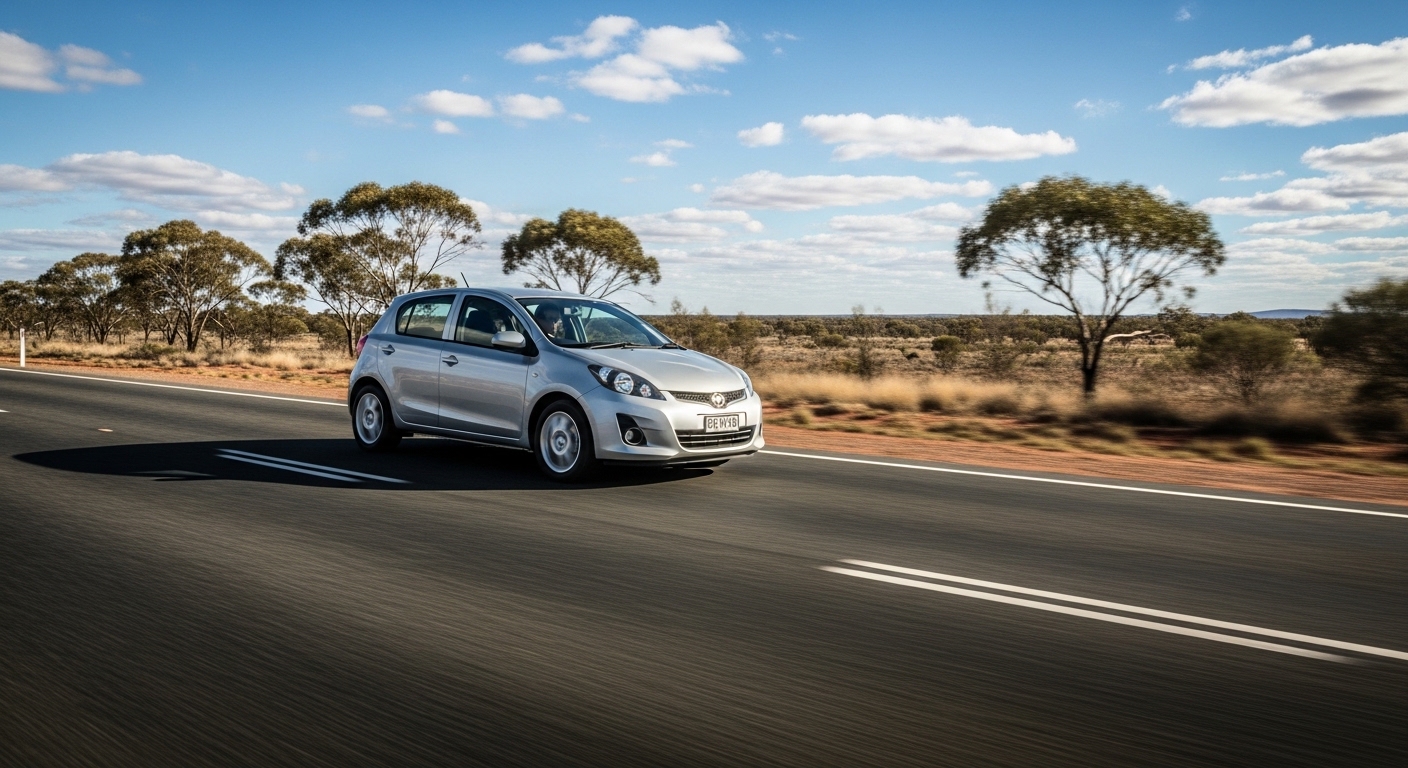 Silver hatchback in motion on a remote road under a bright daytime sky
If running costs are the main concern, the Fit and Corolla Fielder save the most per kilometre for solo and two-adult households. If seat count matters more, by contrast, the Serena and Noah are the practical answer. The C-HR sits between worlds: compact enough for daily city use, yet practical enough for a couple with occasional extra passengers.
Neither the Serena nor the Noah is a clear winner over the other. On one hand, the e-Power Serena is smoother to drive and burns less fuel around town. On the other, the Noah's THS-II is simpler, slightly cheaper to service, and backed by a longer reliability track record here. So your choice usually comes down to whether you value that electric driving feel or that service familiarity more.
Where to find these cars in Australia
If any of these five have made your shortlist, you have two practical routes to get one into the driveway. Carbarn is a Sydney-based specialist in Japanese-market vehicles, and it covers both routes. Alongside sourcing, it handles car finance, warranty cover, full import and compliance, and door-to-door delivery across Australia.
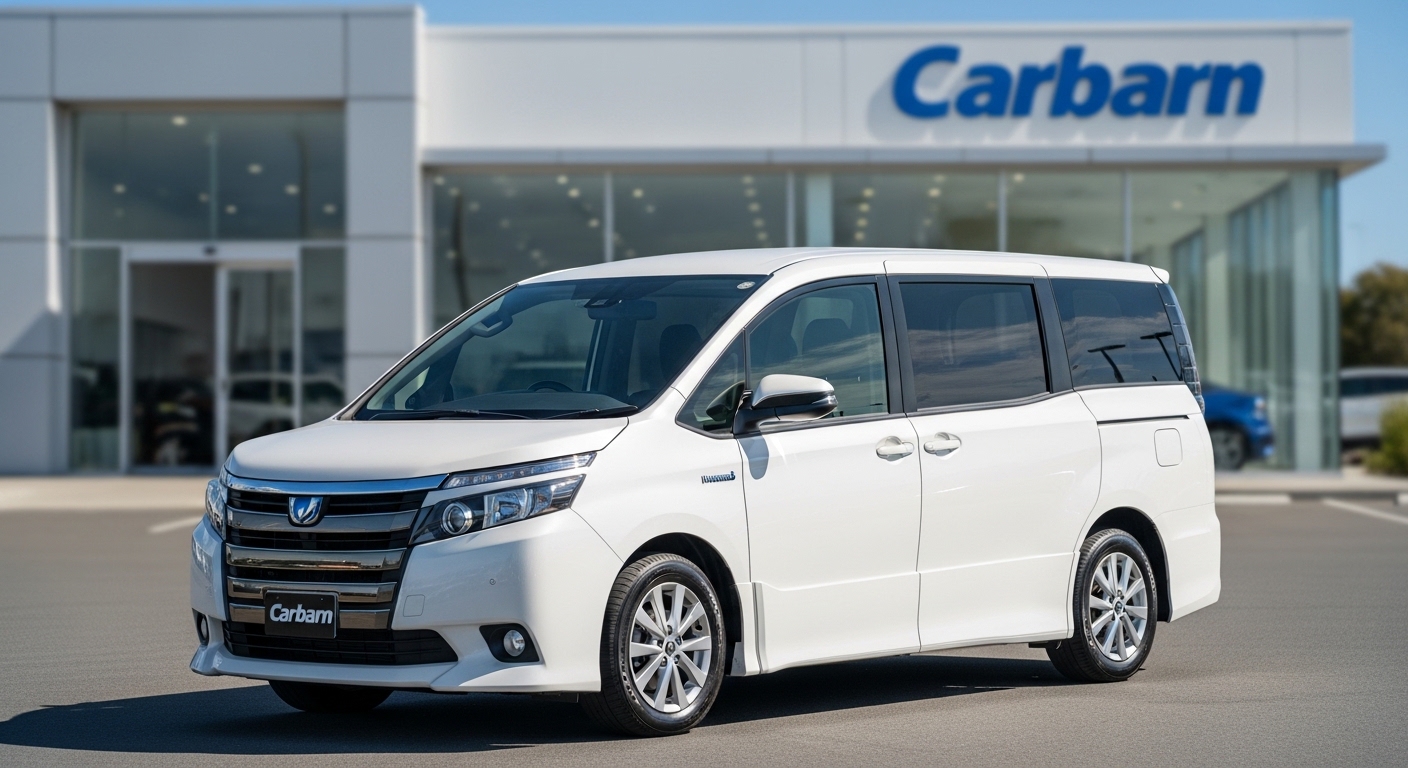 White hybrid people mover outside Carbarn showroom
Locally available stock is the quicker route, because it covers complied Japanese hybrids with live pricing you can browse. That includes a range of Toyota hybrid models — you can browse the complied hybrid range directly. Since these have already cleared Australian compliance, the price you see is the price to drive away. For a specific variant, year or colour that isn't on hand, the Japan-sourced route opens up the full Japanese auction market, with the whole process managed for you: bidding, shipping, customs, compliance and registration. To get a landed-cost estimate on any model in this guide, start a Japan import enquiry.