



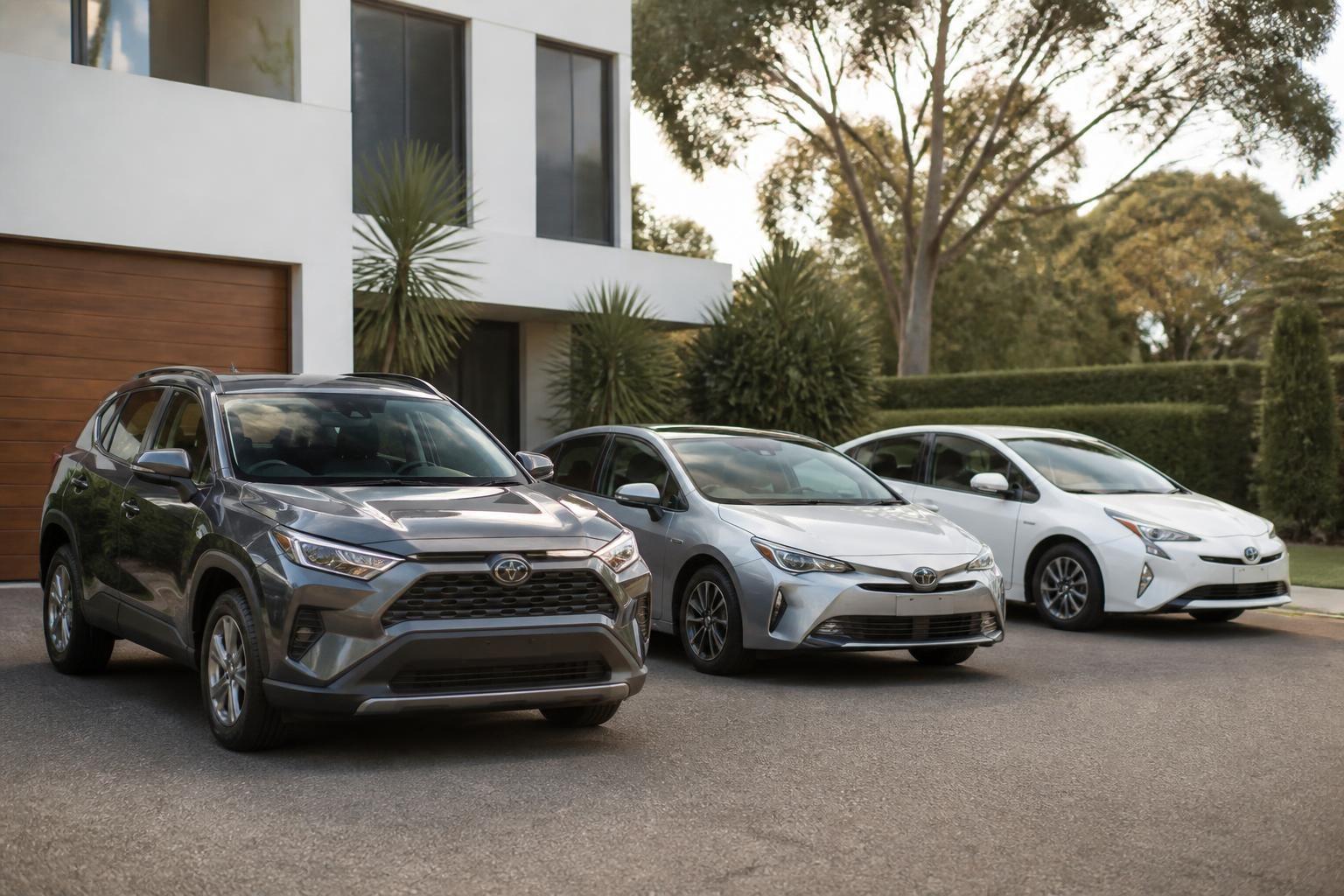
Ready to Hit the Road in Style?
Save money and reduce emissions with vehicles designed to deliver exceptional mileage. Visit our inventory and find a car that fits your lifestyle.
Ready to Hit the Road in Style?
Save money and reduce emissions with vehicles designed to deliver exceptional mileage. Visit our inventory and find a car that fits your lifestyle.
Toyota offers hybrid cars for almost every common Australian buyer. You can choose a small hatch for city streets, a sedan for commuting, a compact SUV for family duties or a seven-seat SUV for bigger households.
The hard part is choosing the right size and specification. The lowest fuel figure won’t help much if the boot is too small, while a larger SUV may suit your daily life far better.
This guide compares Toyota hybrid models in Australia, explains how to check current prices, and covers fuel economy, battery coverage, used-car inspections and Japan-sourced alternatives.
Quick Answer
- In 2026, Toyota Australia lists nine Hybrid Electric models, from the Yaris to the Kluger. (Toyota Australia, “All Toyota Models”, 2026)
- The Yaris SX claims 3.5L/100km combined, while the Camry claims 4.0L/100km. (Toyota Australia, “Yaris Range”, 2026; Toyota Australia, “Camry”, 2026)
- Used buyers should compare the individual car’s history, kilometres, condition, battery information and live listing details.
- Toyota traction-battery coverage can extend to 10 years when annual checks and servicing conditions are met.
Which Toyota hybrid models are available in Australia?
In 2026, Toyota Australia lists nine Hybrid Electric models across hatchbacks, sedans and SUVs. A Hybrid Electric Vehicle (HEV) combines a petrol engine with one or more electric motors, and does not need to be plugged in. The range therefore covers different needs, from compact city driving to seven-seat family transport. (Toyota Australia, “All Toyota Models”, 2026)
| Model | Body style | Suits |
|---|---|---|
| Yaris | Small hatch | City commuters and downsizers |
| Corolla Hatch | Small hatch | Buyers wanting a familiar all-rounder |
| Corolla Sedan | Small sedan | Efficient commuting with a separate boot |
| Camry | Medium sedan | Long-distance commuters and fleets |
| Yaris Cross | Small SUV | Buyers wanting a higher seating position |
| C-HR | Compact SUV | Urban buyers prioritising style |
| Corolla Cross | Small SUV | Small families needing flexibility |
| RAV4 | Medium SUV | Mainstream family use |
| Kluger | Large SUV | Families needing seven seats |
Prius, Crown and Raize examples can still be relevant to used-car buyers, but they are not part of Toyota Australia’s current nine-model Hybrid Electric list. Selected Harrier and Alphard variants also follow a Japan-sourced pathway rather than the standard Australian new-car range.
The body style usually matters more than a small difference in fuel consumption. A Yaris may use less fuel, but a Corolla Cross or RAV4 could save you from compromising on boot space and rear-seat room.
The four models shown mainly in the table still deserve a quick buyer-fit check. The Yaris Cross suits buyers who want a higher seating position in a small footprint, while the C-HR is better for urban buyers who place more value on styling than rear-seat flexibility. The Corolla Cross is the practical middle ground for small families. The RAV4 suits broader family use, while the Kluger is the choice for buyers who genuinely need seven seats. The trade-off is straightforward: moving up the range generally brings more room, but also a higher fuel figure and larger dimensions.
How much do Toyota hybrid cars cost in Australia?
Current prices should be checked against individual live listings because model year, kilometres, grade, condition and provenance all affect the figure. The listed vehicle, rather than a market-wide estimate, is the useful reference for a buyer comparing two Toyota hybrids. (Toyota hybrid listings, 2026)
New Toyota pricing can also change by location, state charges, delivery timing and specification. Toyota’s current model pages therefore direct buyers to confirm the latest figure with a dealer rather than relying on an old article.
For a used Toyota hybrid, separate the market into three pricing pathways:
| Vehicle type | Where to verify the current figure |
|---|---|
| Australian-market used Toyota | Individual listing, vehicle history and inspection details |
| Complied Japan-sourced vehicle | Individual listing and compliance information |
| Vehicle sourced from Japan on request | Model-specific import enquiry and written cost breakdown |
When comparing two specific listings, check the year, kilometres, grade and drivetrain first. Then compare service records, accident or repair history, compliance status, registration details and what the advertised figure includes. A newer car is not automatically better value if it has a less suitable grade, incomplete records or costs that another listing has already included.
You can view Toyota hybrid cars currently listed in Australia or browse used hybrid cars. Treat both pages as live inventory, not permanent market data.
Which Toyota hybrid has the best fuel economy?
The Yaris SX has the lowest official combined figure in this comparison, at 3.5L/100km, but it is not automatically the right choice for every buyer. The Corolla Sedan claims 3.9L/100km and the Camry claims 4.0L/100km. These are laboratory comparison figures, not promises about every Australian trip. (Toyota Australia, “Yaris Range”, 2026; Toyota Australia, “Corolla Sedan”, 2026; Toyota Australia, “Camry”, 2026)
| Model or grade | Official combined figure |
|---|---|
| Yaris SX Hybrid | 3.5L/100km |
| Yaris Cross 2WD | 3.8L/100km |
| Corolla Sedan Hybrid | 3.9L/100km |
| Corolla Hatch Hybrid | 4.0L/100km |
| Camry Hybrid | 4.0L/100km |
| C-HR GXL Hybrid | 4.0L/100km |
| Corolla Cross GX Hybrid 2WD | 4.2L/100km |
| RAV4 Hybrid 2WD | 4.5L/100km |
| RAV4 Hybrid AWD | 4.6L/100km |
| Kluger GX Hybrid AWD | 5.6L/100km |
Toyota’s current pages publish these official combined figures for the listed grades and drivetrains. (Toyota Australia, “Yaris Cross Specifications”, 2026; Toyota Australia, “Corolla Hatch information”, 2026; Toyota Australia, “C-HR Specifications”, 2026; Toyota Australia, “Corolla Cross”, 2026; Toyota Australia, “RAV4”, 2026; Toyota Australia, “Kluger Range”, 2026)
Australian fuel-label figures come from internationally standardised laboratory tests for comparison. Check the current Australian Government guidance for the applicable ADR81/03 requirements and any transition dates. Real consumption can be higher because of traffic, hills, cold starts, air-conditioning, tyres, payload and motorway speeds. (Australian Government, “Fuel Consumption Label”, retrieved 2026-08-25)
Toyota hybrids can use electric power during some low-speed driving, depending on driving style, battery charge and conditions. That helps explain why stop-start metropolitan driving often suits a self-charging hybrid.
Selected Toyota hybrid models
Toyota’s current Australian range covers nine models, while the five selected examples below show how used Toyota hybrids can differ by size, body style, model code and buyer fit. The listing details were checked against the relevant live model pages supplied for this guide.
Toyota Yaris: the compact city choice
The Toyota Yaris is the compact option for buyers who spend most of their time in urban traffic. The selected 2022 MXPH15 is a five-door, five-seat hybrid hatchback with automatic transmission, AWD X specification and 41,518km.
Toyota’s current Yaris uses a 1.5L Hybrid Electric system with an automatic CVT and claims 3.5L/100km combined across the listed grades. (Toyota Australia, “Yaris Range”, 2026) Match the exact figure to the used car’s grade before comparing it with newer examples. Skip the Yaris if you regularly need generous rear-seat space or a large boot.
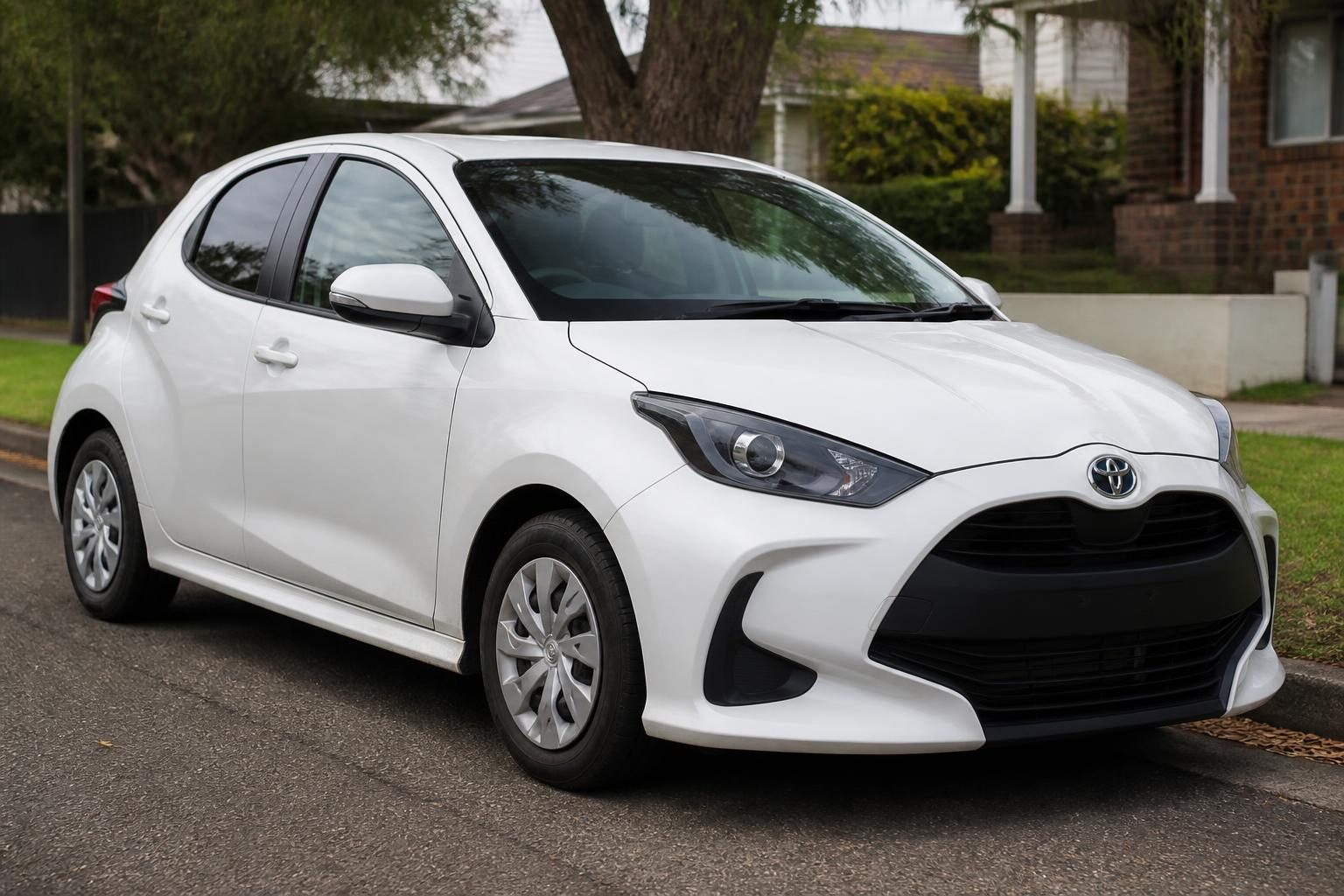 2022 Toyota Yaris
Toyota Corolla: the familiar all-rounder
The Toyota Corolla suits buyers who want a familiar small sedan with hybrid assistance. The selected 2023 ZWE215 has a sedan body, automatic transmission, five seats and 24,188km, with the live model page identifying an AWD WXB hybrid specification.
Toyota Australia lists the current Corolla Sedan with a 1.8L hybrid system, 103kW, 142Nm and 3.9L/100km combined. (Toyota Australia, “Corolla Sedan”, 2026) A sedan gives you a separate boot, but it is less flexible than a hatch or wagon for bulky cargo.
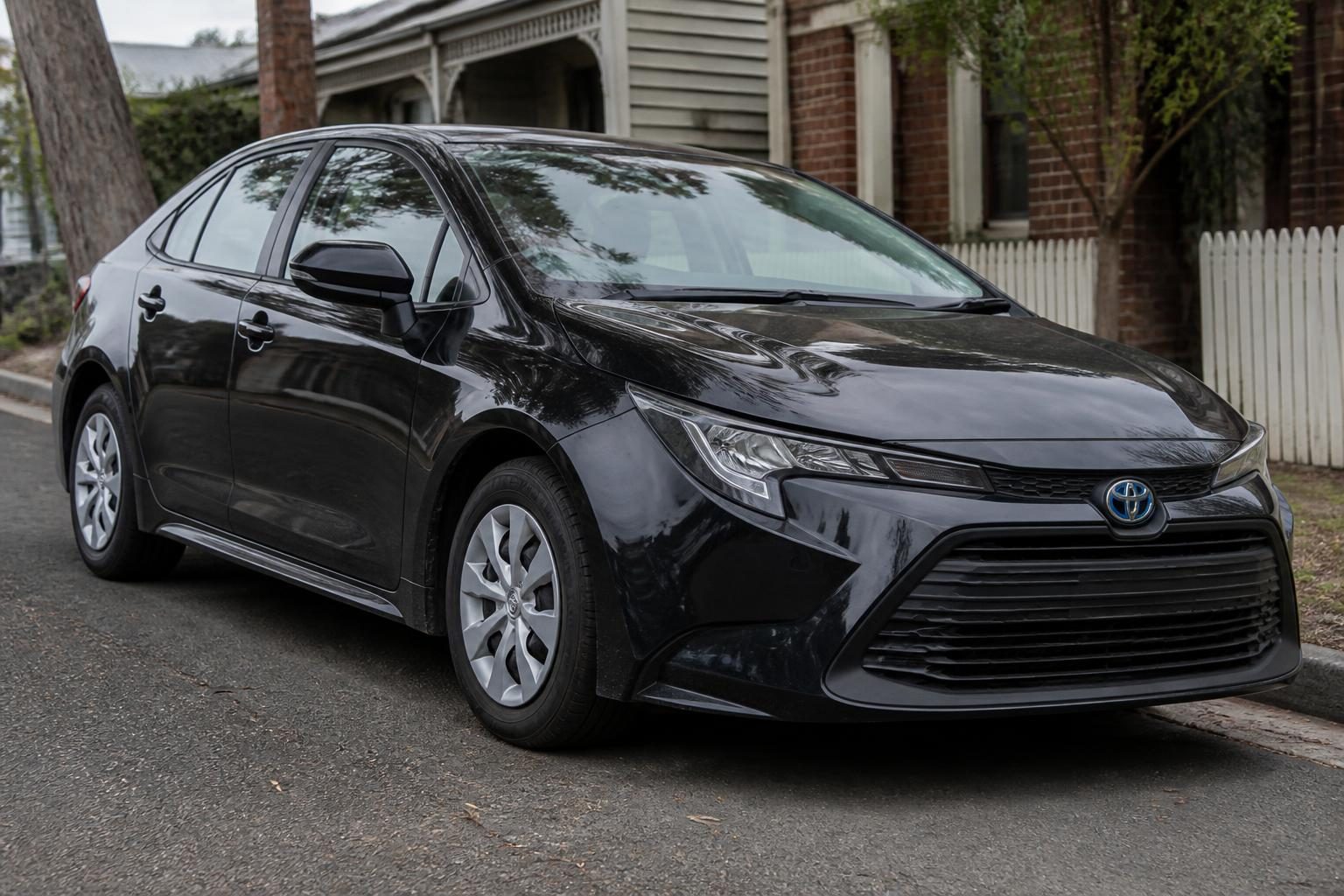 2023 Toyota Corolla
Toyota Prius: the efficiency-led choice
The Toyota Prius remains the clearest choice for buyers who put hybrid efficiency ahead of conventional styling. The selected 2024 MXWH60 is a five-door, five-seat hybrid hatchback with automatic transmission and 27,344km.
The hatchback shape gives useful access to the cargo area, but the low roofline and distinctive cabin layout won’t suit everyone. Check rear-seat access, visibility, infotainment language and boot flexibility during an inspection. The Prius makes sense for high-kilometre commuters, but less so for buyers who want SUV height.
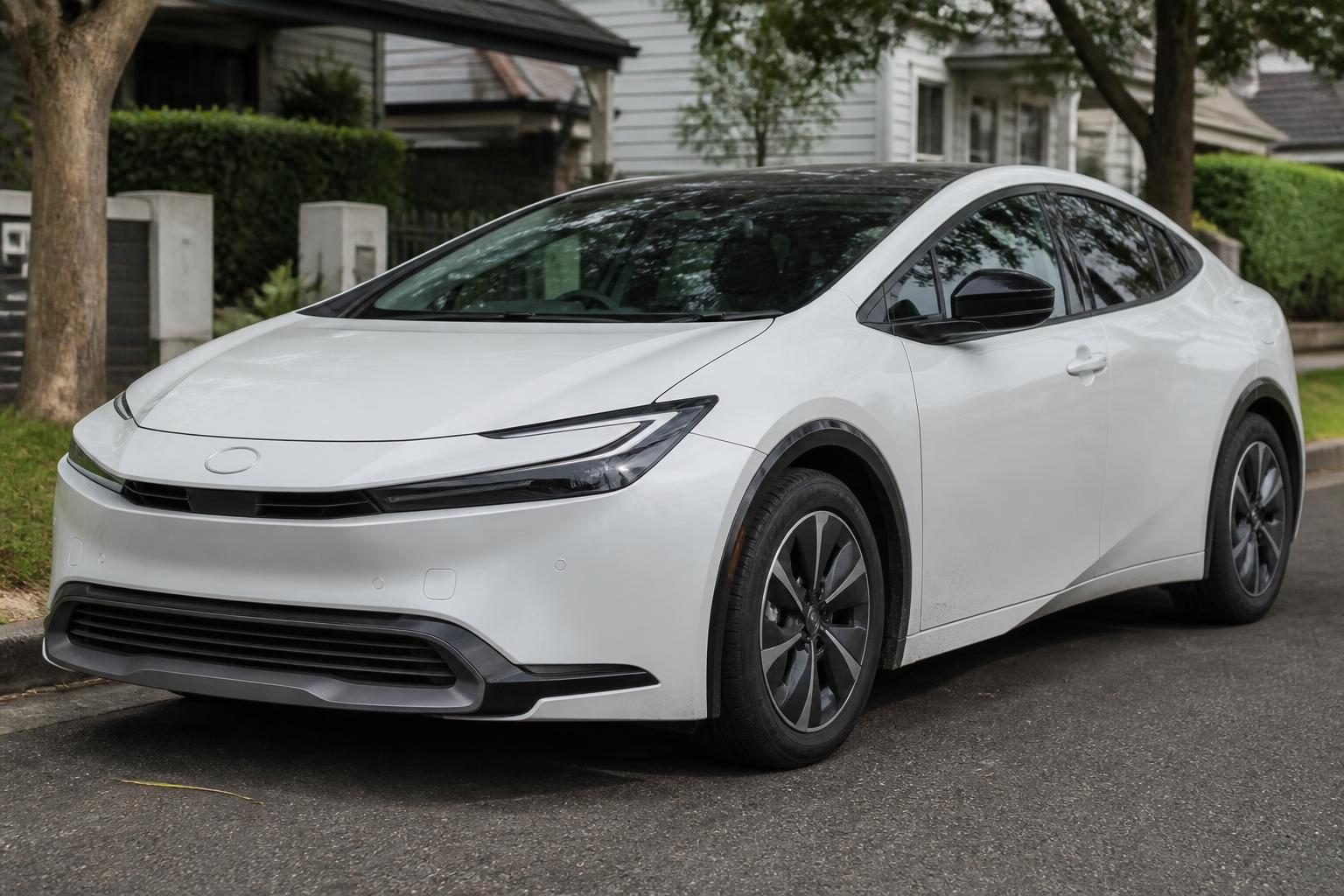 2024 Toyota Prius
Toyota Crown: the larger sedan option
The Toyota Crown broadens the shortlist for buyers seeking a larger Toyota hybrid sedan. The selected 2018 AZSH20 is a five-seat hybrid sedan with automatic transmission, model code AZSH20 and 59,000km.
The matching model page identifies the AZSH20 as a 2.5L A25A-FXS four-cylinder petrol hybrid with automatic transmission and 2WD. (Toyota Japan, “Crown specifications”, 2018) Confirm the exact drivetrain and equipment before purchase. Skip it if you want compact dimensions or the simplest local support pathway.
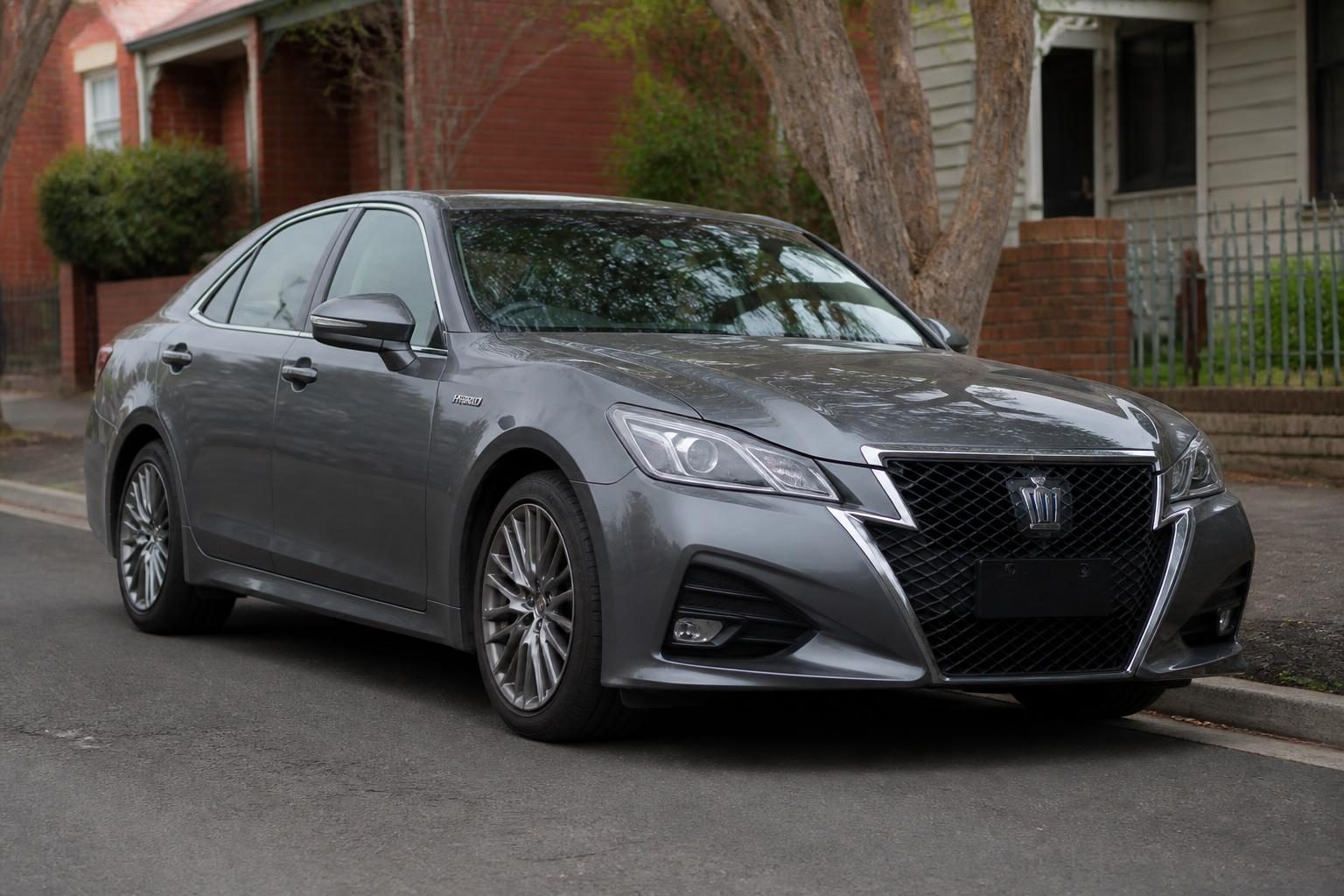 2018 Toyota Crown
Toyota Raize: the small-SUV alternative
The Toyota Raize suits buyers who want a raised driving position without stepping into a larger family SUV. The selected 2022 A202A is a five-door, five-seat hybrid SUV with automatic transmission and 48,741km.
The matching import page describes the A202A as a WA-VEX water-cooled inline three-cylinder petrol hybrid with a 2WD drivetrain. Because it is outside Toyota Australia’s current nine-model list, check compliance, translated documents, infotainment usability and parts support carefully.
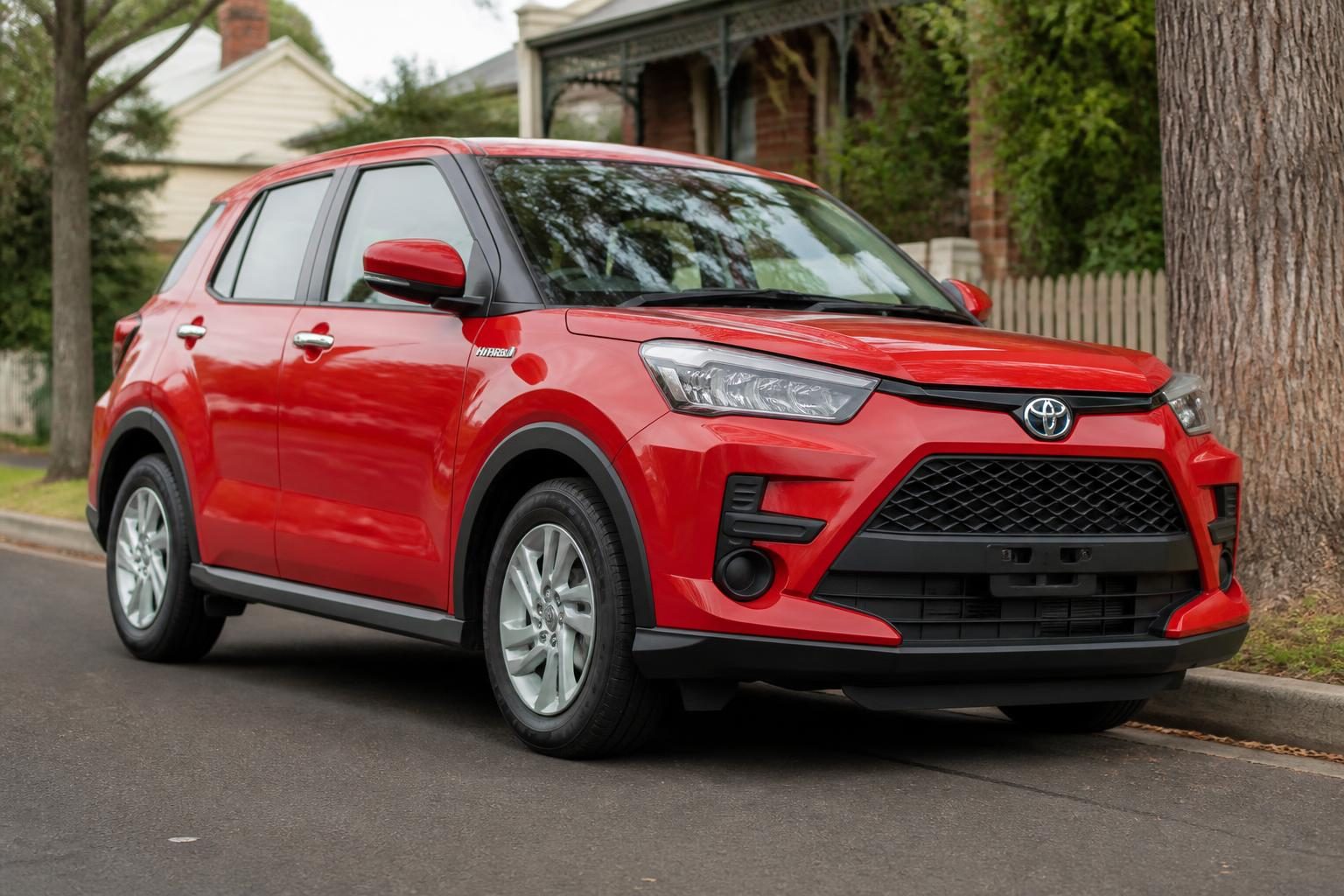 2022 Toyota Raize
| If you mainly need… | Start with… | Main compromise |
|---|---|---|
| Easy city driving | Yaris | Less space |
| Familiar everyday practicality | Corolla | Less flexible cargo access |
| Efficiency focus | Prius | Lower seating position |
| Larger sedan comfort | Crown | Closer provenance checks |
| Compact SUV height | Raize | Japan-market verification |
Used Toyota hybrid buying checks
A used Toyota hybrid deserves the same careful inspection as any other used car, with extra attention to battery records and system warnings. A traction battery is the high-voltage battery that stores and supplies electrical energy for the hybrid system. In 2026, Toyota says eligible coverage can extend to 10 years when annual health checks and servicing conditions are met. (Toyota Australia, “Toyota Warranty Advantage”, 2026)
Use this checklist before committing:
- Request a complete service history and compare dates with the odometer.
- Confirm the first-delivery date and remaining traction-battery coverage.
- Ask for a hybrid battery health check where relevant.
- Check dashboard warning lights before and during the test drive.
- Listen for unusual cooling-fan, brake or suspension noises.
- Check brake feel, tyre wear, steering and suspension movement.
- Watch for smooth transitions between petrol and electric operation.
- Confirm recalls, registration history, accident repairs and odometer consistency.
- Check infotainment language and translated documents on Japan-sourced vehicles.
Toyota’s coverage relates to eligible manufacturing defects and programme conditions. It should not be treated as a promise that a battery will retain its original capacity indefinitely.
Should you choose an Australian-market Toyota hybrid or source one from Japan?
Australian-market cars usually offer simpler local history and familiar specifications, while Japan sourcing can open access to models and grades not sold through Toyota Australia. For example, the Crown AZSH20 approval covers builds from June 2018 to July 2022, but eligibility remains tied to the exact model code, variant and build date.
Australian-market advantages include easier servicing conversations, clearer local equipment and a more straightforward vehicle history. This can matter if you want a conventional ownership experience and simpler resale.
Japan-sourced options can include selected Crown, Harrier, Raize, Alphard and other specialist Toyota hybrids. ROVER is the Australian Government’s online vehicle import and approval system. The Register of Approved Vehicles (RAV) is the national register showing vehicles approved for supply to the Australian market. Each vehicle needs an eligibility check through ROVER and against the RAV before purchase or shipping.
An Authorised Vehicle Verifier (AVV) is an approved inspector who verifies a vehicle for the relevant approval pathway. Import timing, compliance requirements and final costs depend on the specific vehicle.
How can Carbarn help with a Toyota hybrid search?
For eligible private-use vehicles delivered or first registered on or after 1 January 2019, Toyota provides five years of standard vehicle warranty coverage with unlimited kilometres. HEV traction-battery coverage can extend to 10 years under stated inspection and servicing conditions. Commercial-use exclusions and other conditions apply. (Toyota Australia, “Toyota Warranty Advantage”, 2026)
Carbarn is operated by AYANUK PTY LTD, a licensed NSW motor dealer with Motor Dealer Licence MD056471 in Lidcombe, NSW. Its services include inspected locally available vehicles, hybrid and mechanical checks, finance, warranty options, nationwide delivery, and a Sydney workshop. For Japan-sourced vehicles, the service can cover auction searches, pre-bid inspections where available, customer-approved bidding, eligibility checks, shipping, customs, biosecurity, compliance, AVV inspection, RAV entry and registration-ready handover.
What is the final verdict on Toyota hybrid cars in Australia?
The right Toyota hybrid depends on how you drive, how much space you need and whether local support matters most. The Yaris claims 3.5L/100km combined, while the seven-seat Kluger claims 5.6L/100km. That spread shows why the most efficient Toyota is not always the best choice for your household. (Toyota Australia, “Yaris Range”, 2026; Toyota Australia, “Kluger Range”, 2026)
- Best fit for city driving: Yaris, Yaris Cross or Corolla, depending on whether you prioritise compact dimensions, seating height or a separate boot.
- Best fit for family practicality: Corolla Cross for smaller families, RAV4 for broader everyday use, or Kluger if seven seats are essential.
- Best fit for Japan-sourced buyers: Crown, Raize, Prius or another specialist model, provided the exact vehicle passes eligibility and compliance checks.
Choose by body style first, then compare fuel use, space, condition and support. Check the individual vehicle’s records and battery information before worrying about small differences in laboratory figures.
Start with the Toyota hybrid listings if you want to compare locally available vehicles. If your preferred model is outside the Australian range, review the import pathway and eligibility requirements before considering a Japan-sourced example.