



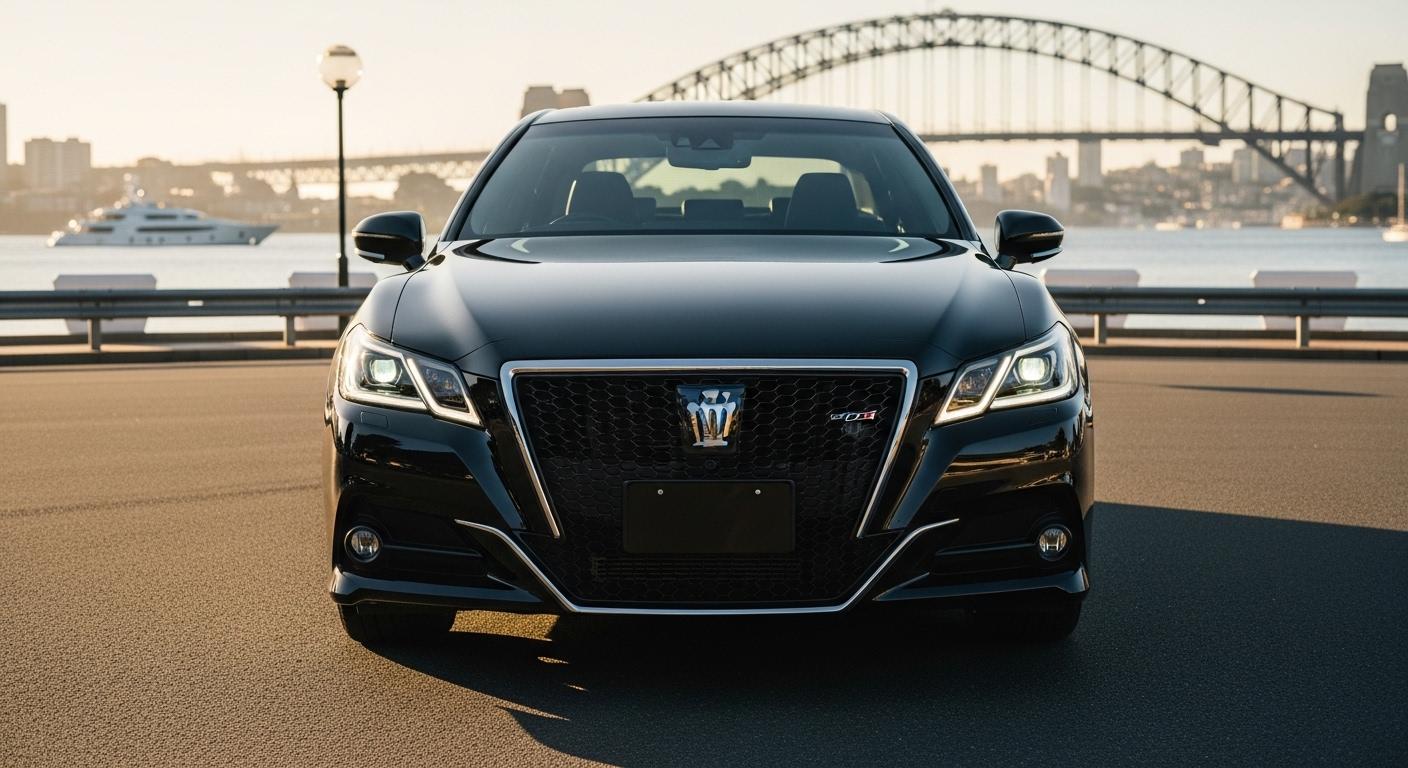
Ready to Hit the Road in Style?
Save money and reduce emissions with vehicles designed to deliver exceptional mileage. Visit our inventory and find a car that fits your lifestyle.
Ready to Hit the Road in Style?
Save money and reduce emissions with vehicles designed to deliver exceptional mileage. Visit our inventory and find a car that fits your lifestyle.
Finding a large, comfortable sedan that isn't European and doesn't cost European money has become genuinely hard. The Falcon and Commodore are gone. On top of that, new premium sedans start well above what most families want to spend, and their servicing bills climb fast.
That gap is exactly where the Toyota Crown GRS204 gets interesting. The Toyota Crown GRS204 is a rear-wheel-drive Japanese executive sedan built around a smooth 3.5-litre V6, made to a home-market luxury brief and never sold new in Australia. As a result, it slips under the radar for most local buyers.
This guide is about deciding whether the GRS204 suits you, not how to get one here. We'll walk through what makes it different, how it drives, what ownership actually costs, the reliability items worth checking, and who it genuinely fits. By the end, you should know if it belongs on your shortlist.
Quick Answer
- The GRS204 is a 4,870mm rear-wheel-drive Japanese executive sedan, sold in Japan from February 2008 to July 2013 (Carbarn).
- It runs the 2GR-FSE 3.5L V6, the same engine family as the Lexus IS350 and GS350, making 232kW and 377Nm (auto-data.net).
- Four flavours exist: base Athlete, G Package, the 2009 to 2010 Anniversary Edition, and the +M Supercharger.
- Expect around 12 L/100km in mixed driving — the upper end of the 7 to 12 L/100km band Be Forward reports for petrol Crowns (Be Forward).
- It competes on price with used European executive sedans while costing less to keep on the road.
What Sets the Toyota Crown GRS204 Apart
The GRS204 stands out because it pairs a genuine luxury brief with rear-wheel drive and a naturally aspirated V6, a combination that has almost vanished from the used market. Built from February 2008 to July 2013, it was never sold new here (Carbarn). That rarity is part of the appeal.
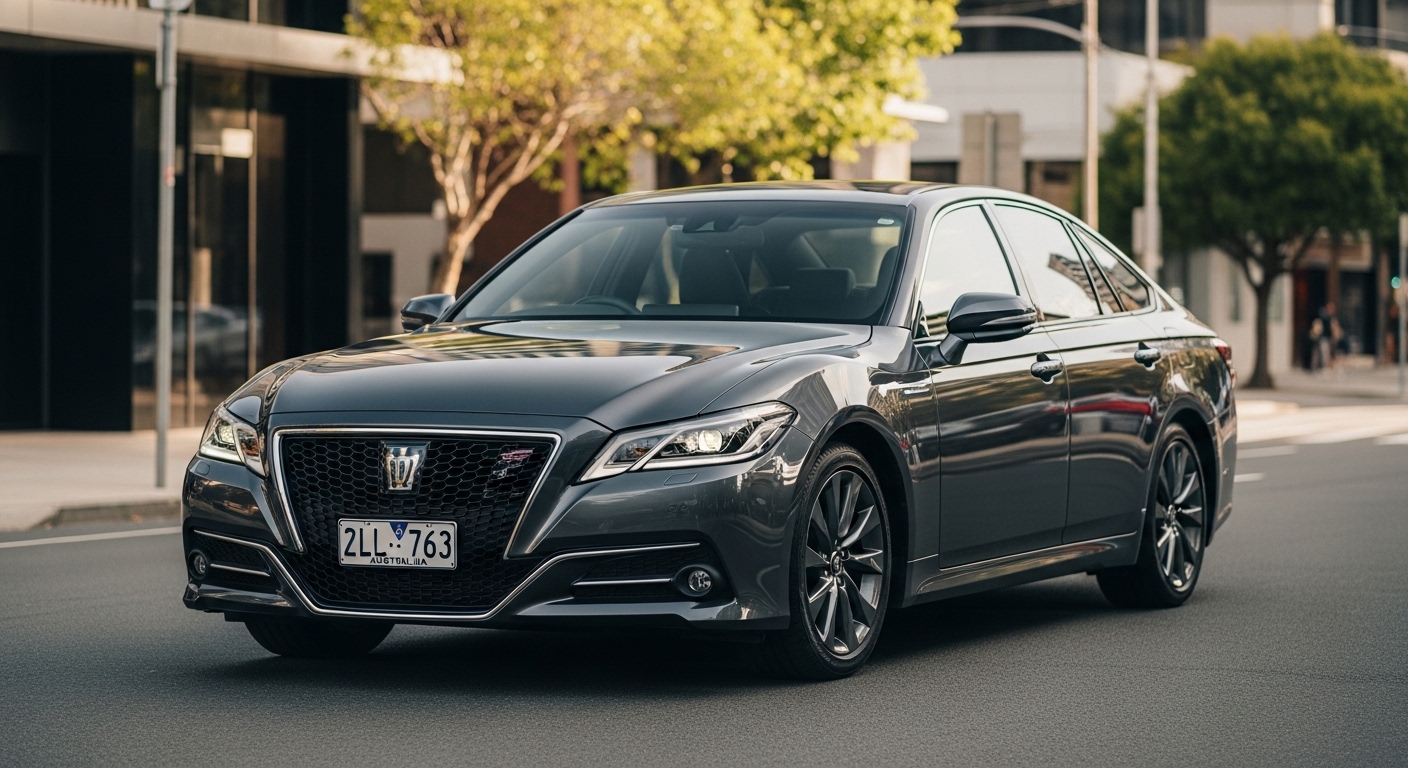 2012 Toyota Crown GRS204 Athlete
The Crown nameplate has run continuously since 1955, spanning fifteen chassis generations (JDMBUYSELL). By the S200 era it had settled into a clear role: a formal, quiet, well-equipped sedan aimed at the Japanese executive buyer. The Athlete trim added a sportier edge without losing that comfort focus.
For Australian buyers, the draw is a simple bundle. You get proper size, rear-wheel-drive balance, premium equipment, and a Toyota badge with a reputation for going the distance. The engine deserves a mention here too. Its D-4S system uses both port and direct injection, running port injection at low to medium loads to keep the intake valves cleaner than a direct-injection-only design (Tomorrow's Technician). In plain terms, that helps manage carbon build-up over the long haul.
If you've already decided to source one, importing a Toyota Crown GRS204 from Japan to Australia covers the full process, landed costs, and eligibility.
Design and Road Presence
The GRS204 reads as a wide, well-proportioned executive car rather than a flashy one. It measures 4,870mm long, 1,795mm wide, and 1,470mm tall, riding on a 2,850mm wheelbase (auto-data.net). Those numbers put it much closer to a European executive sedan than to a Camry.
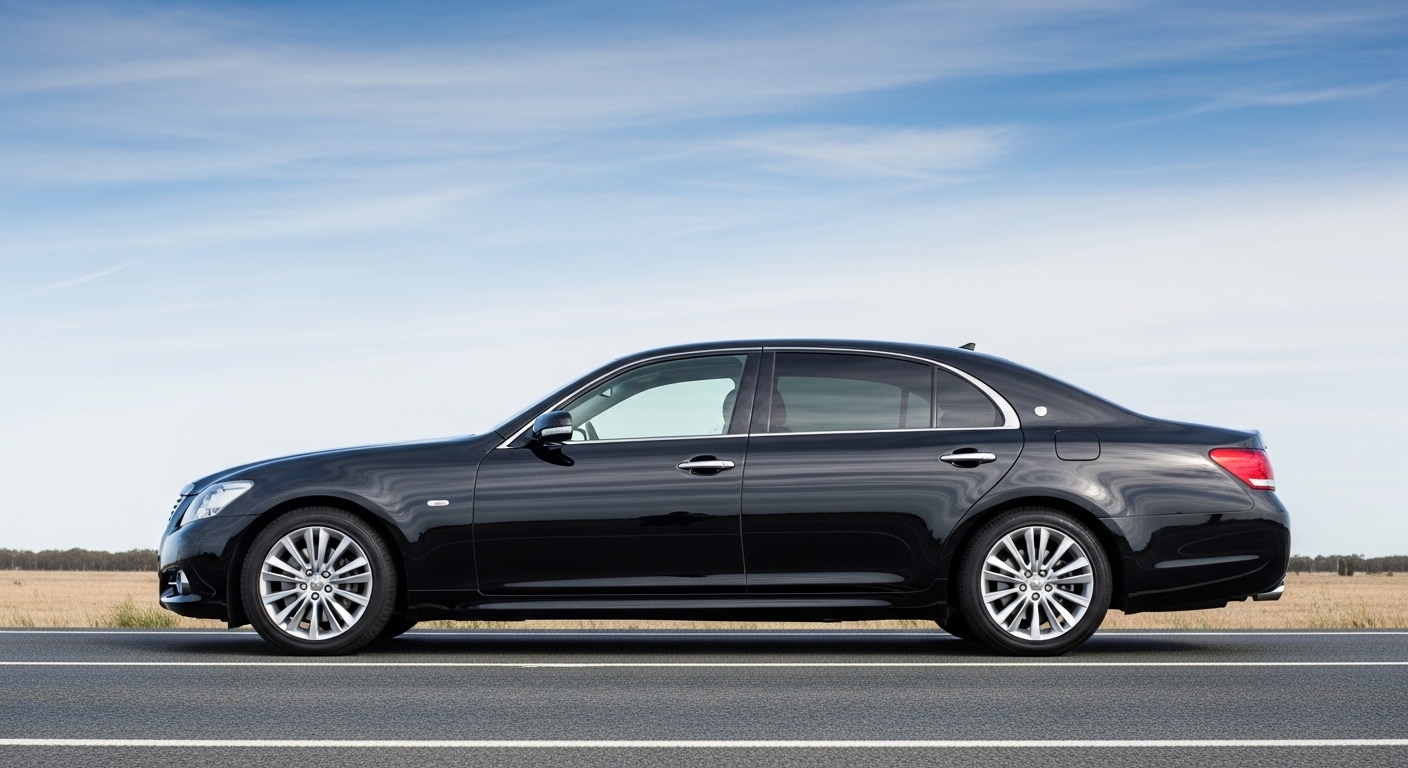 The GRS204 sits closer to a European executive sedan than a Camry on the road.
The styling is conservative and formal, in the way Japanese luxury cars of this period usually were. Clean lines, a long bonnet, and restrained chrome give it presence without shouting. The Athlete trim gets a sportier front treatment, which is the easiest way to tell it apart from the more traditional Royal line at a glance.
On the road, that length and width translate into a planted, grown-up feel. As a result, it looks like a car that costs more than it does, which is a fair part of why buyers keep circling back to it.
What Is the 3.5L V6 Like to Drive?
The 3.5L V6 is smooth, strong, and honest, making 232kW at 6,400rpm and 377Nm at 4,800rpm (auto-data.net). Because it's naturally aspirated, there's no turbo hesitation. Power builds cleanly as the revs climb, and the engine feels comfortable being worked.
The 2GR-FSE is the same engine family found in the Lexus IS350 and GS350, so it has a long, well-understood track record. Paired with a 6-speed automatic, it shifts smoothly and stays relaxed at highway speed. By contrast with a front-drive Camry, rear-wheel drive gives the Crown a composed, balanced feel on the open road, which is one of its quiet pleasures.
That said, keep expectations grounded. This is a comfortable, quick sedan, not a sports car. It rewards easy cruising more than hard cornering.
The +M Supercharger Variant
The rarest GRS204 is the +M Supercharger, fitted with a Modellista-developed supercharger that lifts output to roughly 263kW and 498Nm (Carbarn blog). That's a real step up in urgency over the standard car.
Two things matter if you're drawn to one. First, it requires 98 RON petrol exclusively, so factor that into running costs. Second, these cars are scarce at auction, so verify the supercharger's condition before committing. A whine from the supercharger bearing is your cue to inspect closely before any money changes hands.
How Good Is the Interior for Daily Comfort?
The cabin is where the Crown earns its keep, with leather seating across most variants and a generous rear compartment that suits taller passengers. In other words, it feels like a car built for long, quiet journeys. Materials are plush, road noise is well suppressed, and the driving position is relaxed.
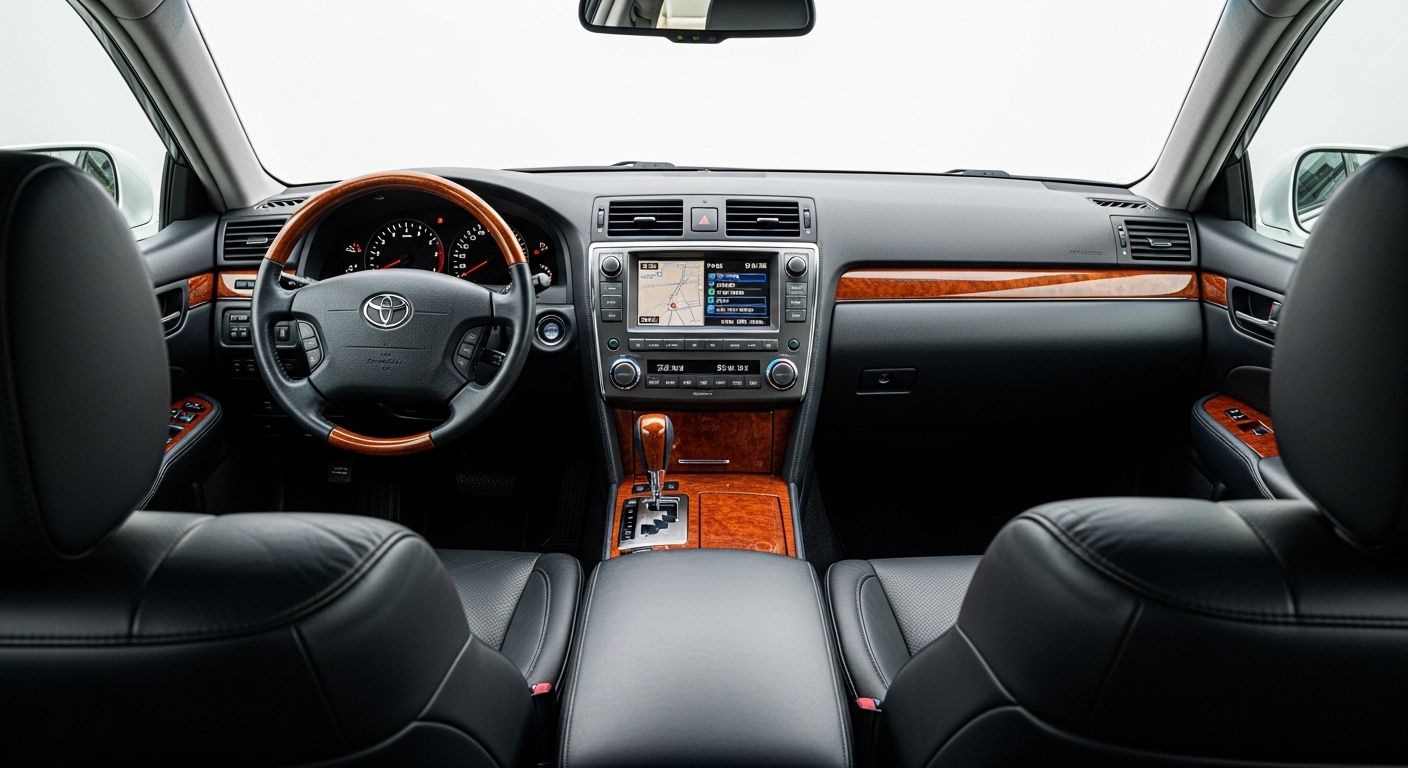 Black leather Toyota interior with wood trim and Japanese-market infotainment screen.
Step up to the G Package and the comfort story gets stronger. It adds standard leather, a powered rear passenger seat, and rear climate controls, which turn the back seat into a genuinely pleasant place to sit. So if rear-seat comfort is a priority for you, that trim is worth seeking out.
One honest catch applies to every example, however. The head unit is Japanese-market spec, so the menus, radio, and navigation are set up for Japan. That isn't a deal-breaker, but plan for it. Many owners either fit an aftermarket Australian head unit or budget for a translation and retune. Factor that small outlay into your buying maths rather than being surprised by it later.
Is the GRS204 Practical Day-to-Day?
For the right owner, the GRS204 is an easy daily car, with five seats, a conventional boot, and a manageable 5.2m turning radius from its 10.4m turning circle (auto-data.net). It swallows luggage, seats a family of four in comfort, and cruises effortlessly.
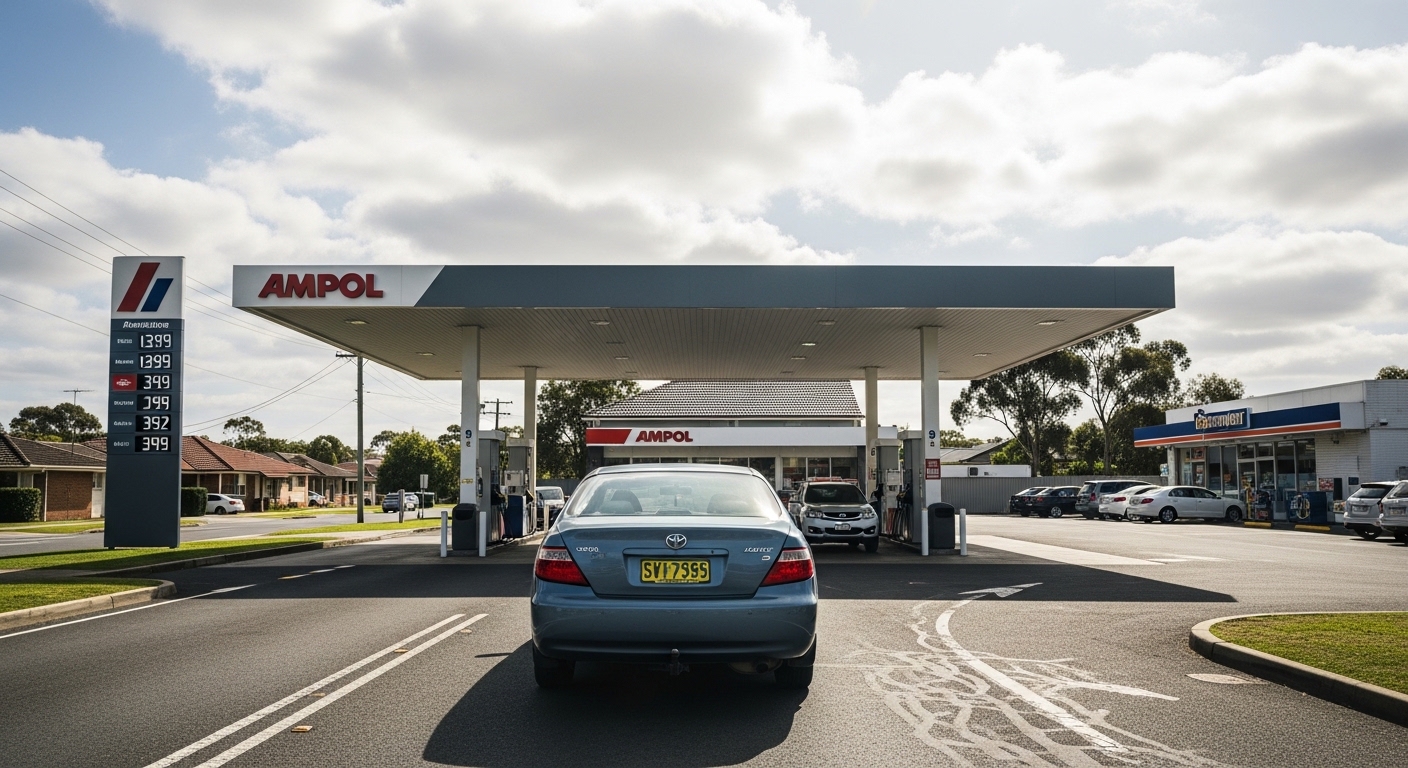 Budget for real-world use of around 12 L/100km in mixed driving.
The main thing to stay mindful of is width. At 1,795mm across, it needs a little attention in tight shopping-centre car parks and narrow older garages. Nothing unusual for a car this size, but worth a thought if your daily parking is cramped.
So who does it suit? Highway commuters and suburban drivers who value comfort and space will get on with it well. By contrast, buyers who need three rows of seats, maximum cargo volume, or serious towing capacity should look elsewhere. This is a comfortable sedan, and it's honest about being one.
How Reliable Is the Toyota Crown GRS204?
The Toyota Crown GRS204 is a dependable used sedan by the standards of its age, built around the 2GR-FSE V6, one of the better-documented engines Toyota has made and shared widely across Toyota and Lexus models (motorreviewer.com). That shared history means parts, knowledge, and service support are easy to find in Australia, so this isn't an exotic engine to keep running. That said, these cars are now more than a decade old, so age matters more than the badge. The 2GR-FSE does carry one known design weak point: the fifth cylinder can run hotter than the rest, which on neglected, high-mileage units can lead to oil consumption (motorreviewer.com). As a result, a documented service history and a healthy cooling system matter more, not less. Given that, buy on condition and paperwork rather than on the Toyota name alone.
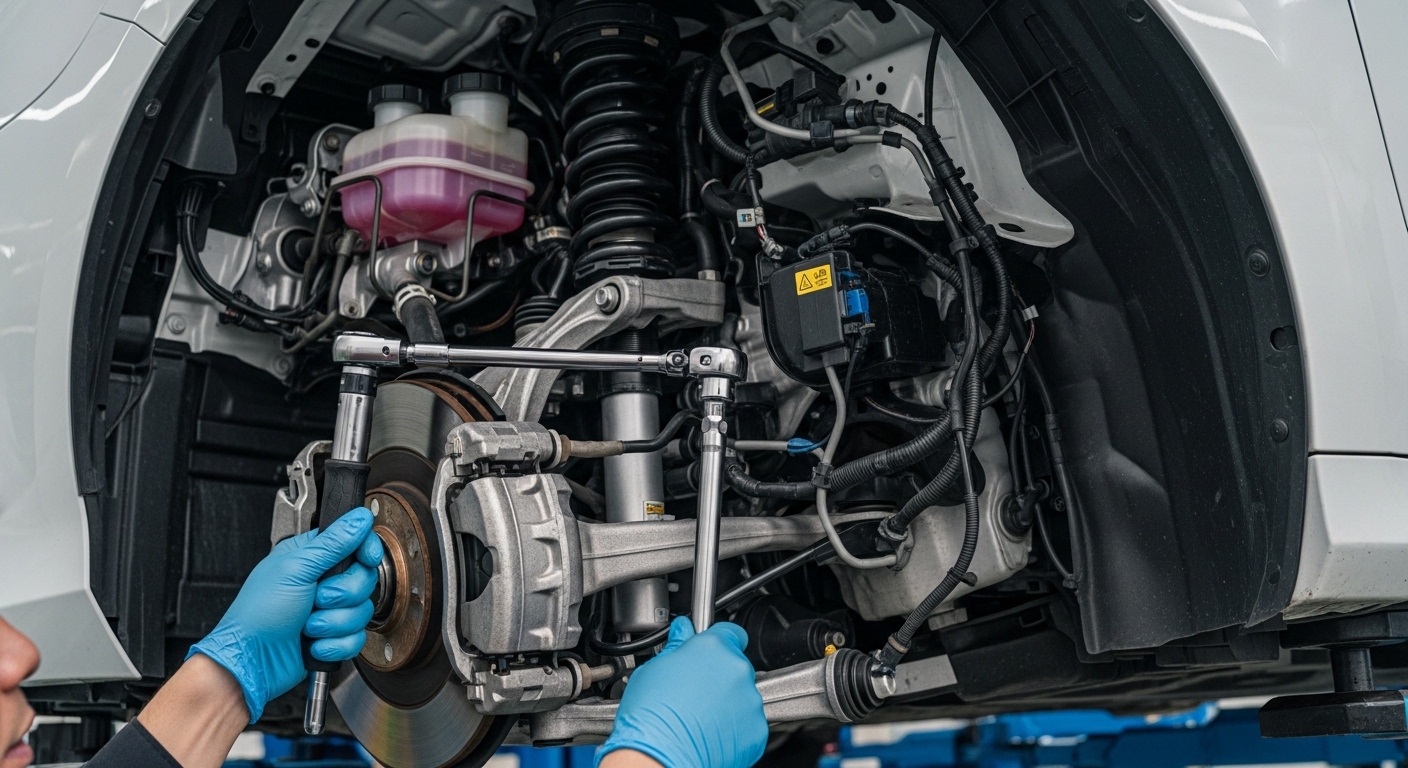 Mechanic works on a car's front suspension and brake components in a workshop.
Beyond that headline item, the usual consumables apply. Water pumps and ignition coils are normal wear items, typically due somewhere around 48,000 to 80,000km of service life (motorreviewer.com). Toyota also issued a recall covering a VVT-i lubrication hose on 2GR engines built up to 2010, so confirm it was addressed on earlier examples.
On any ageing GRS204, run through a short list before buying:
- Spark plugs and ignition coils, since misfires are the most common wear complaint
- D-4S injector condition, with a carbon clean sensible on higher-mileage cars
- Transmission fluid condition and a documented service history
- Cooling system: hoses, coolant, radiator, and water pump
- Suspension: shock absorbers, bushings, and control arms
- Electrical items: power windows, powered seats, and dashboard sensors
- On +M cars, any supercharger bearing noise
None of these are unusual for the age. Rather, they're the difference between a tidy example and a tired one.
Running Costs: What Should You Budget For?
Fuel is the honest headline here, and it's the number that shapes the ownership budget most. Be Forward reports petrol Crowns using roughly 7 to 12 L/100km across the range, and a big 3.5L V6 like this one sits at the upper end of that band, so plan on about 12 L/100km in mixed Australian driving (Be Forward). A big naturally aspirated V6 was never going to sip fuel, and the GRS204 doesn't pretend otherwise. Put that into real numbers. At around $1.55 a litre, roughly the current Sydney unleaded average, 15,000km a year at about 12 L/100km works out near $2,800 annually. That said, the figure moves with how you drive. If most of your kilometres are highway, you'll land lower, while heavy city use pushes you higher.
 A documented auction grade of 3.5 or above is a solid starting point for used condition.
By contrast, the Crown's own hybrid sibling puts that fuel figure in perspective. The GWS204 hybrid uses the same 3.5L V6 with electric assistance and returns far better economy, rated at about 7.1 L/100km on the JC08 cycle at launch (Toyota Global). Over 15,000km at the same fuel price, that's closer to $1,650 a year, roughly $1,100 less than the petrol V6. These figures aren't measured on the same test, so treat the gap as indicative rather than exact. Even so, if fuel bills are your main worry, that difference is worth weighing.
Servicing, on the other hand, is refreshingly ordinary. Parts are widely available through Toyota dealers and independent workshops, and there's nothing exotic under the bonnet to drive labour costs up.
GRS204 Variants: Which One Should You Choose?
Four variants cover the GRS204 range, and all share the same 232kW 2GR-FSE V6 except the supercharged car (auto-data.net). So choosing between them comes down to how much rear-seat comfort or performance you want.
| Variant | Power | Key additions | Best for |
|---|---|---|---|
| 3.5 Athlete (base) | 232kW / 377Nm | V6, 6-speed auto, RWD, factory alloys | Lowest entry; clean V6 spec |
| 3.5 Athlete G Package | 232kW / 377Nm | Standard leather, powered rear seat, comfort extras | Rear-seat comfort priority |
| Anniversary Edition (2009–2010) | 232kW / 377Nm | Special badging, trim upgrades | Rarer spec; collector appeal |
| Athlete +M Supercharger | ~263kW / ~498Nm | 98 RON required, Modellista body kit, quad exhaust | Performance focus; inspect carefully |
For most buyers, the base Athlete offers the cleanest way into the V6 experience. The G Package, by comparison, makes sense if you'll regularly carry rear passengers. The Anniversary Edition appeals to collectors, while the +M is a specialist choice that rewards careful inspection.
What Should You Check Before You Commit?
A short, disciplined checklist separates a good GRS204 from a risky one, and auction grade is your first filter, with grade 3.5 or above a solid marker of sound used condition. Whether you inspect in person or rely on an auction report, work through the same points.
 For highway commuters and suburban families, the Crown makes a lot of sense.
- Confirm the model code is GRS204, not GRS202, GRS210, or the GWS204 hybrid
- Check the Japanese auction grade documentation, aiming for 3.5 or higher
- Verify service history, or request a Japanese auction inspection report
- Test every electrical item: powered seats, windows, climate zones, and sunroof
- Note the head unit language and factor in replacement or translation cost
- Listen for supercharger bearing whine on +M variants
- Ask for transmission fluid service history and check shift quality warm and cold
- Inspect the underbody for compliance modifications if the car is already complied
In our experience helping buyers assess these cars, the auction sheet tells you more than the photos do. A clean grade with honest odometer notes is worth paying a little more for, because it lowers the odds of an expensive surprise after delivery.
Who Should Actually Buy a Crown GRS204?
The GRS204 makes sense for a specific buyer, and it's worth being clear about who that is. It isn't the right car for everyone, and saying so helps you decide faster.
 Sourcing one to Australian roads typically runs on a 6 to 10 week timeline.
- If you want a large rear-wheel-drive V6 sedan without European running costs, it's a strong option.
- If you drive plenty of highway kilometres and comfort matters more than fuel economy, it suits you well.
- If you need three rows of seats or maximum cargo space, it's probably not the right choice.
- If the lowest possible fuel bills from a large sedan matter most, compare the hybrid GWS204 sibling first.
Former Falcon and Commodore owners, in particular, tend to warm to it quickly. It offers the size and rear-drive character they miss, wrapped in Toyota reliability and a more premium cabin.
Sourcing a Toyota Crown GRS204 in Australia
Because the GRS204 was never sold new here, every example on Australian roads has been imported. Sourcing one typically runs on a 6 to 10 week timeline from search to delivery. Carbarn handles that end to end from its Lidcombe, Sydney base, as a licensed NSW motor dealer with an in-house RAW-certified compliance workshop.
That means a single point of contact for the parts that usually worry buyers: sourcing through approved Japanese auctions, pre-bid inspection where the auction allows, freight, customs, biosecurity, SEVS compliance, and the paperwork needed for state registration. On top of that, Carbarn offers finance, warranty options where eligible, and door delivery across Australia.
The full picture of eligibility, auction grade, and landed cost lives on the dedicated import page rather than here, so you can see accurate figures before deciding.
To get an accurate landed cost estimate and understand what sourcing one actually involves, Carbarn's Toyota Crown GRS204 import page covers everything in detail.