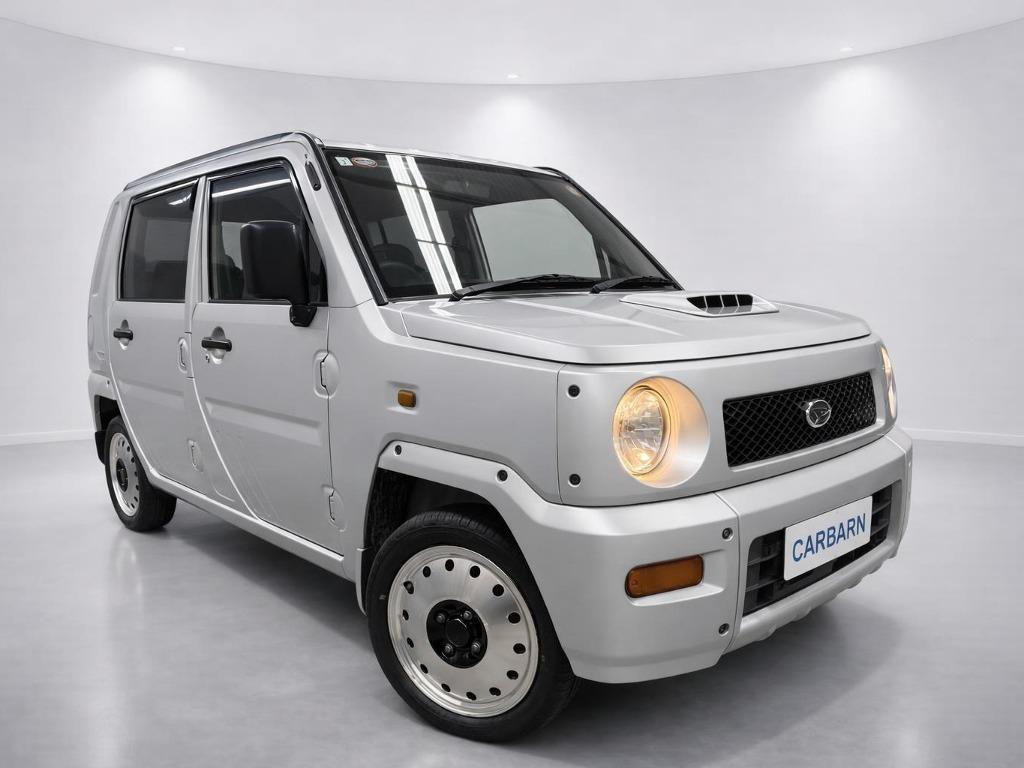


Is this Daihatsu Naked the right one?
One used Daihatsu Naked is in stock. Its year, odometer, drivetrain and documents are recorded on the listing, and those are the facts that apply to this car specifically. New vehicles are listed continuously, so a specific request is usually filled rather than waited out.
What is a Kei car, and what are the limits?
The Daihatsu Naked belongs to Japan's Kei class, defined by combined engine and dimensional limits rather than engine capacity alone. Class identity does not by itself prove economy, safety or highway suitability. The recorded fields on each vehicle carry the detail; the pattern across stock only sets expectations.
What the listing records
Every used Daihatsu Naked listing separates what is recorded from what is not. Reading the blank fields is as useful as reading the filled ones. Carbarn's Sydney team can walk through any of it on request, in person or over the phone.
Condition beats age
Two cars with the same badge and year can be completely different purchases, because how a vehicle was serviced and used matters more than when it was built. A well-serviced higher-kilometre example is often a better buy than a neglected low-kilometre one — the service history is what separates the two. Read the recorded details on each listing rather than judging by the year: they carry what was actually observed on the vehicle, from odometer and drivetrain to the model code that identifies the exact build. Deciding what the car needs to do first, then checking what each listing actually records, is a shorter path than comparing badges.
How to read a listing here
The listing is the source of truth here. Each one records the specific vehicle — its model code, engine, drivetrain and configuration — rather than the brochure version of its name, and the stock data always reflects what is listed right now. Shortlist by those recorded details: the code separates lookalike listings, the drivetrain field settles what a badge merely implies, and the vehicle page carries any service and preparation records that exist.
Why small hatchbacks make sense used
Small hatchbacks fit the life most cars actually lead — city streets, short trips, tight parking — and they carry the lowest running costs of any body style at the same age. Used, they are also the easiest purchase to judge: simple mechanicals, wide servicing familiarity, and recorded details that tell the story quickly. Weight the service history over the equipment list; a modest, well-kept hatch outlasts a better-specified one that missed its servicing.
The case for petrol
Petrol keeps a used purchase simple: familiar servicing, no plug, and typically a lower price than the equivalent hybrid or diesel at the same age. It suits lighter and shorter driving, where a diesel never warms to its work and a hybrid's advantage shrinks. The check that matters is the engine code on the listing — many ranges sold several petrol setups under one name — and a service history that shows the basics were done on time.