



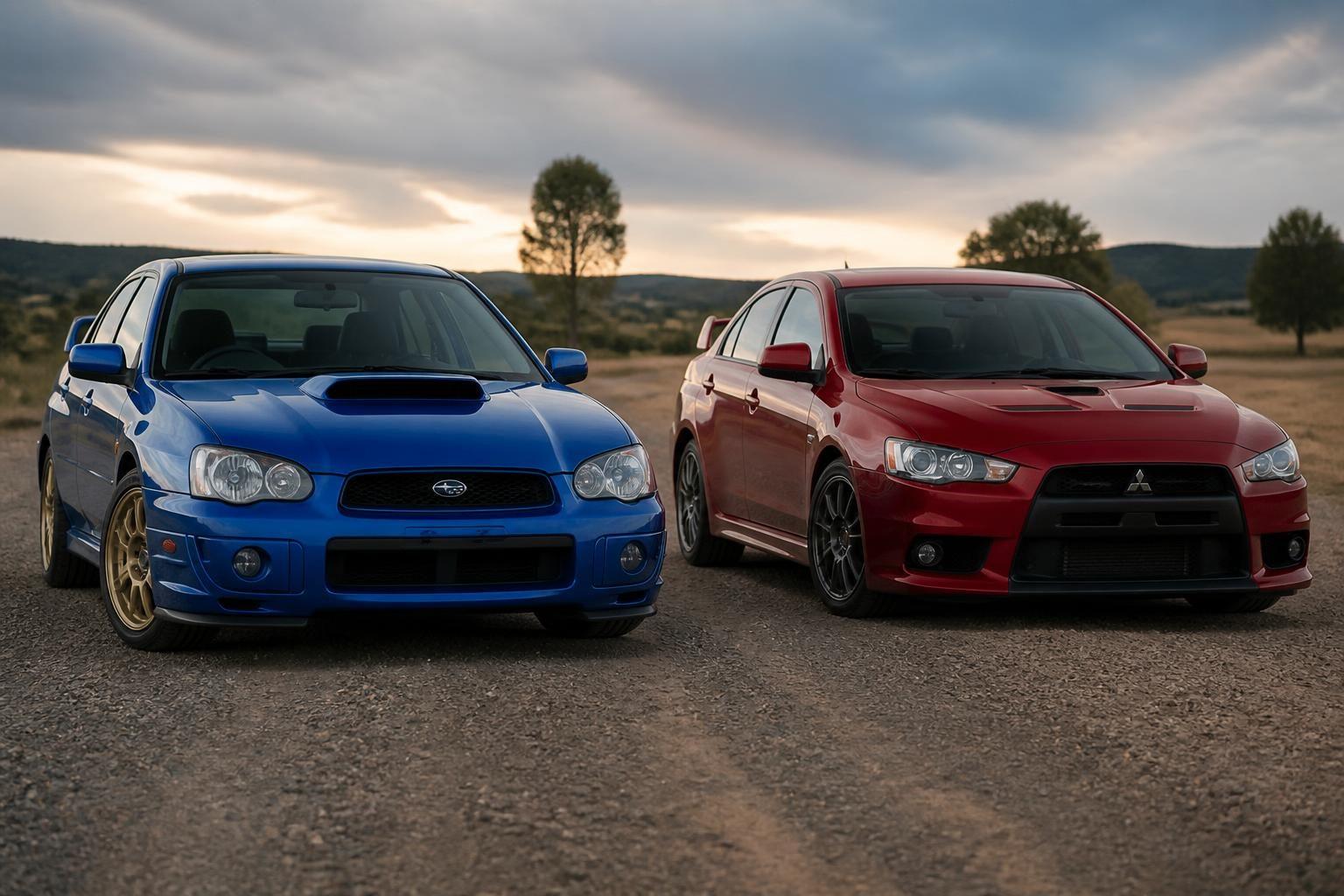
Ready to Hit the Road in Style?
Save money and reduce emissions with vehicles designed to deliver exceptional mileage. Visit our inventory and find a car that fits your lifestyle.
Ready to Hit the Road in Style?
Save money and reduce emissions with vehicles designed to deliver exceptional mileage. Visit our inventory and find a car that fits your lifestyle.
Both of these cars are finished in the sense that production of these generations has ended. Subaru stopped building the STI badge on this body, and Mitsubishi walked away from the Evolution name altogether. If you want one in Australia, the local used market is thin, so the Japanese auction market is another place to search.
That's where it gets messy. Most information about importing an Evo X or a WRX STI is either American, out of date, or unclear about which build years are legal. This guide explains what you can bring in, how the process runs, and the ownership trade-offs to consider.
Quick Answer
- Both cars import under the SEVS Performance Criterion, but their eligible windows are nothing alike.
- WRX STI VAB: July 2014 to December 2021 builds, under 80,000 kilometres. GVB: October 2007 to August 2014.
- Evo X CZ4A: September 2007 to July 2008 only, a ten month slice of a production run that lasted until 2016 (SEV-000898, SEV-000324, Australian Government Rover register).
- The Evo X Final Edition (1,000 numbered Japan cars, production ending in 2016) is not importable under current approvals.
- End to end, the process runs about 6 to 10 weeks.
What Actually Separated the WRX STI and the Evo X?
The WRX STI is the more mechanical choice, while the Evo X relies more heavily on electronic control. The STI used a 2.0 litre turbocharged EJ20 boxer with a driver-adjustable centre differential. The Evo X used a 2.0 litre 4B11 turbo making 280 PS at 6,500 rpm in Japanese spec (JDMBUYSELL CZ4A buyer's guide, May 2026), paired to Mitsubishi's S-AWC electronic torque vectoring.
In practice, the Subaru asks more of you and gives more back. You set the centre diff, you manage the boxer's lazier low-rpm response, and the reward is a car that feels like it's being steered on the throttle.
The Evo X is the more clinical thing. S-AWC does a lot of the work, so an average driver is usually quicker in one, sooner. The twin-clutch TC-SST gearbox on the MR divides people, though. If you want the mechanical feel of a proper manual, the five-speed GSR is the one to chase.
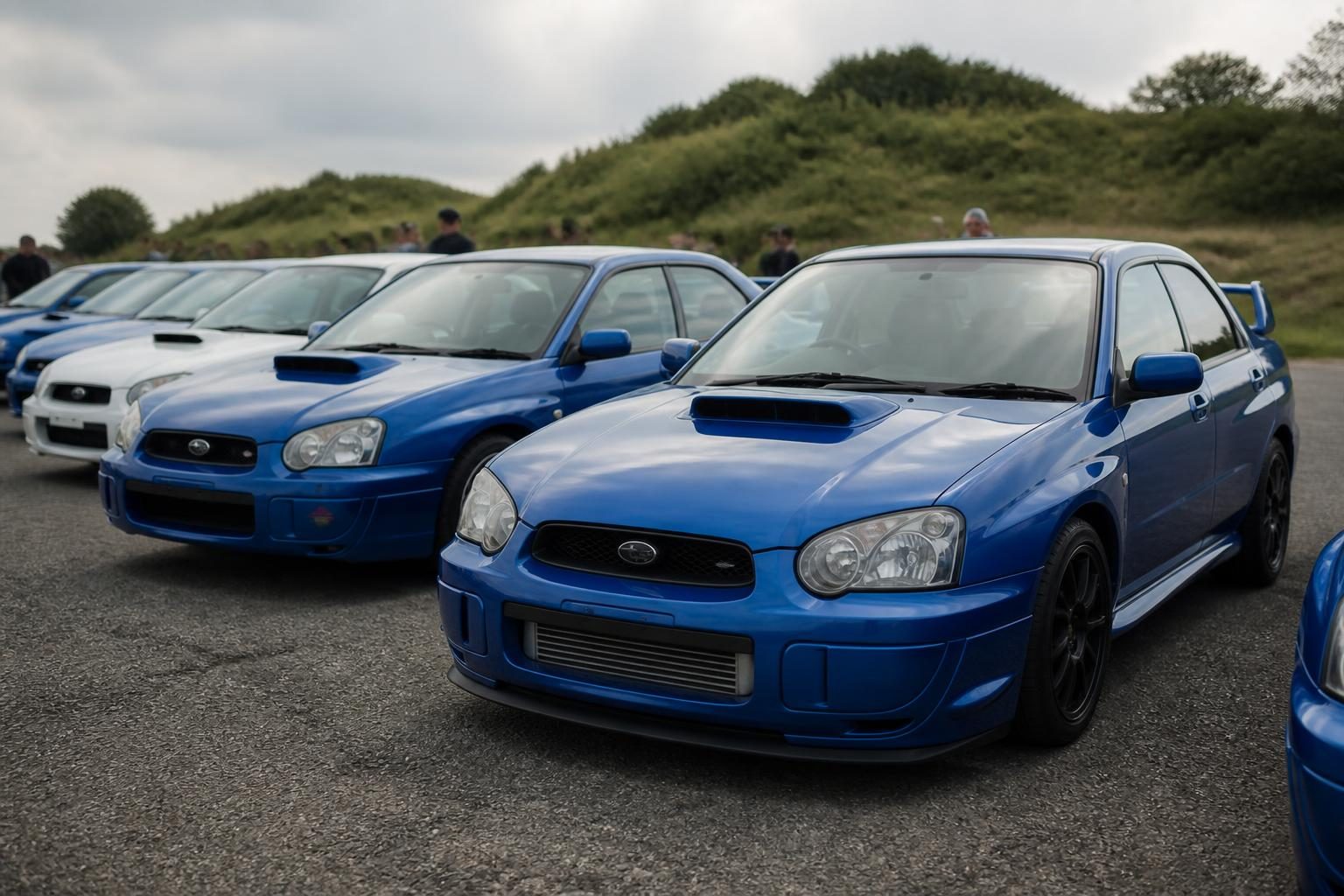 Subaru WRX STI sedans lined up at a performance car gathering.
What Years Can You Actually Import to Australia?
You can currently import WRX STI GVB builds from October 2007 to August 2014 and VAB builds from July 2014 to December 2021, subject to their approval conditions. The Evo X CZ4A window is much narrower, covering September 2007 to July 2008 only. SEVS, the Specialist and Enthusiast Vehicle Scheme, approves eligible vehicles through specific build dates, variants and model codes. The approval details are published on the Australian Government Rover register and are build-date specific, not model-year specific.
| WRX STI GVB | WRX STI VAB | Evo X CZ4A | |
|---|---|---|---|
| SEVS approvals | SEV-000954, SEV-000363 | SEV-001017, SEV-000360 | SEV-000898, SEV-000324 |
| Eligible builds | Oct 2007 to Aug 2014 | Jul 2014 to Dec 2021 | Sept 2007 to July 2008 |
| Odometer limit | None stated | Under 80,000 km | None stated |
| Engine | EJ20 or EJ207 turbo | EJ20 turbo | 4B11 turbo |
| Body | Sedan or hatchback | Sedan | Sedan |
Source: Carbarn import pages, verified against the Australian Government Rover register, August 2026.
The SEVS Performance Criterion is the approval pathway used here for specialist and enthusiast vehicles. A car qualifies when it shows substantially superior performance, on a measurable metric like power-to-weight, against what was sold here in volume. The published approval is the binding document. It names exact build years, variants and model codes, which is why a 2009 Evo X sits outside the pathway even though it looks identical to a 2008 car.
Subaru Impreza WRX STI: Two Generations, Two Very Different Searches
The Subaru Impreza WRX STI is generally easier to source than the Evo X because its approvals cover more production. The VAB approval covers July 2014 to December 2021 builds. It applies to STI variants with the 2.0 litre turbocharged EJ20 and six-speed manual. The car must be all-wheel drive, five-seat and sedan-bodied. The GVB approval covers October 2007 to August 2014, with sedan and hatchback variants and no stated odometer limit.
The approval checks the build date and exact variant. For a VAB, the odometer must be under 80,000 kilometres. Check the reading against the auction sheet, not just the seller's description. That condition can remove many otherwise suitable cars from consideration.
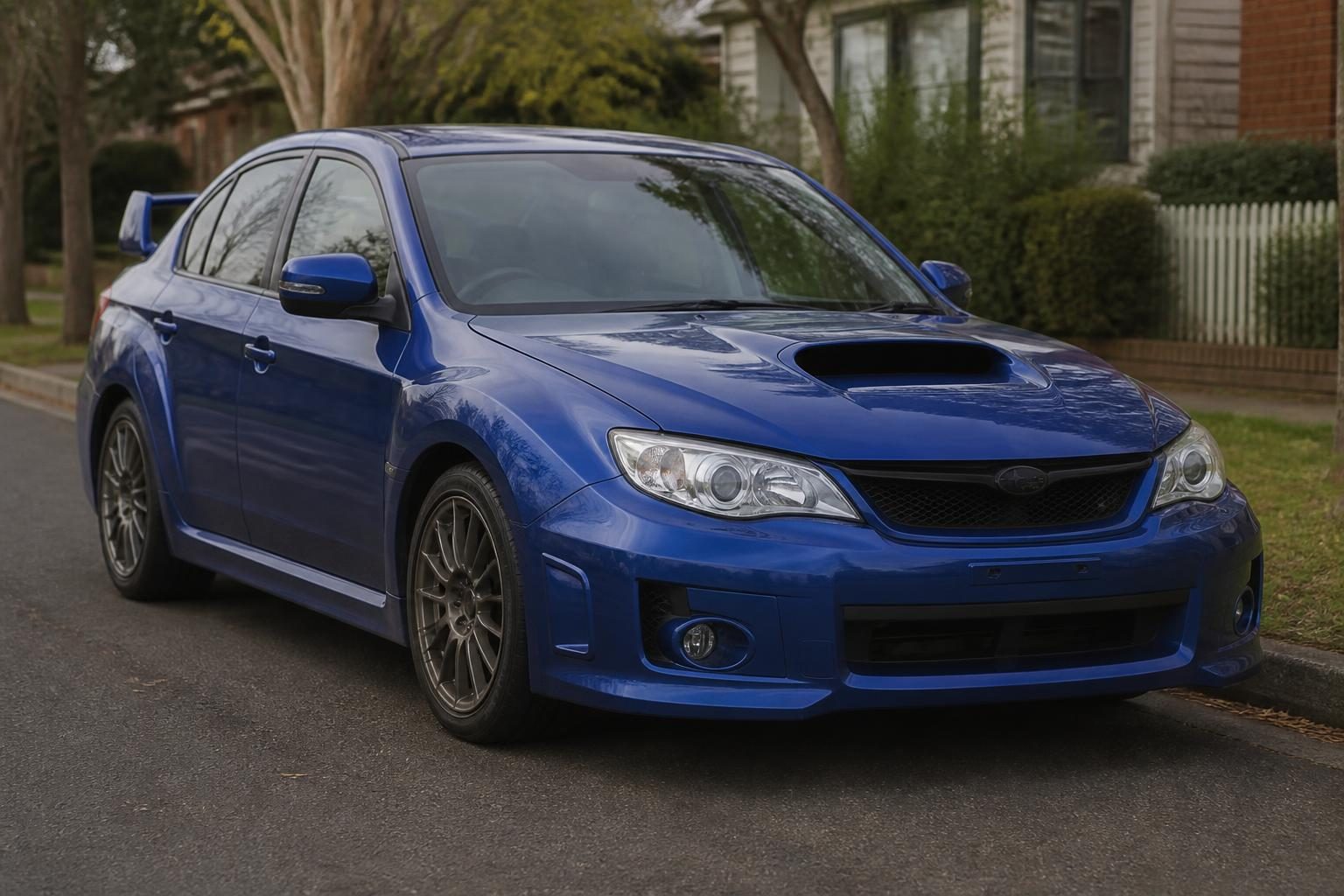 2014 Subaru Impreza WRX STI
The Subaru Impreza WRX STI GVB is the wider net: October 2007 to August 2014 builds, either sedan or hatchback, running the 2.0 litre turbocharged EJ20 or the closed-deck EJ207. There's no stated odometer cap, and GVB cars at auction generally carry far more kilometres than eligible VABs, which is why they sit in a different part of the market. Worth knowing: the 555-unit EJ20 Final Edition of 2019 marked the end of that engine in Japan, not the end of VAB production.
Mitsubishi Lancer Evolution X: A Ten Month Window
You can currently import only September 2007 to July 2008 CZ4A builds under the SEVS approvals cited here. Later Evo X vehicles do not qualify through that pathway. The Mitsubishi Lancer Evolution X is approved under SEV-000898 and SEV-000324. The CZ4A remained in production until 2016, so the current approval covers roughly ten months of an eight-and-a-half-year production run.
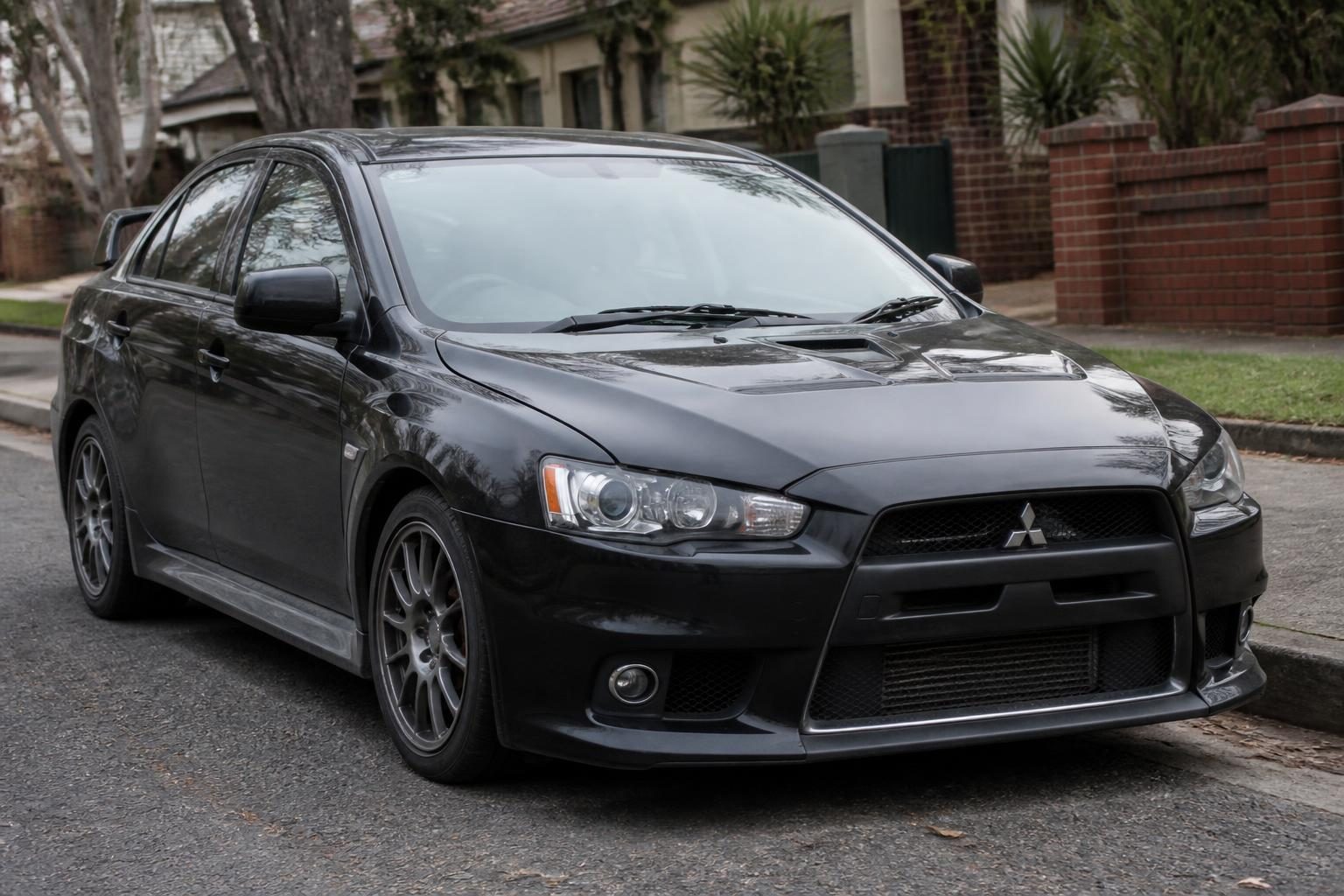 4200 Mitsubishi Lancer Evolution X
Full CZ4A production:   |=========================================| Sept 2007 to 2016
SEVS-eligible builds:   |====|                                      Sept 2007 to July 2008
The CZ4A approval covers the petrol 4B11 turbo, five seats, all-wheel drive and sedan body. In Japanese trim the 4B11T made 280 PS at 6,500 rpm, sent through S-AWC with Active Yaw Control on the rear diff. Brembo brakes were standard across both GSR and MR; BBS forged wheels were reserved for the MR. The GSR ran the five-speed manual, while the MR used the six-speed TC-SST twin-clutch.
The 25-year rule does not create automatic approval. Eligibility depends on the vehicle's build date and the applicable import pathway. It would open Evo X builds from 2008 progressively from 2033 onwards, while the Final Edition, built in April 2015, would not be eligible until around 2040. A car advertised as a 2008 Evo X could have been built in September 2008 and be ineligible. Check the build plate before you bid.
What Does Importing One of These Actually Involve?
Importing either car involves sourcing and approval in Japan, shipping, then compliance and delivery in Australia. The usual end-to-end guide is about 6 to 10 weeks, but the stages can overlap. Sourcing and approval may continue while shipping arrangements are prepared, while compliance starts only after the vehicle arrives. Auction availability, shipping schedules and inspection findings can extend the timeline.
| Phase | Activity | Duration |
|---|---|---|
| 1 | Source and approve, in Japan | 1 to 6 weeks |
| 2 | Ship, Japan to Sydney | 4 to 6 weeks |
| 3 | Comply and deliver, Lidcombe | 2 to 3 weeks |
| Total | End to end | ~6 to 10 weeks |
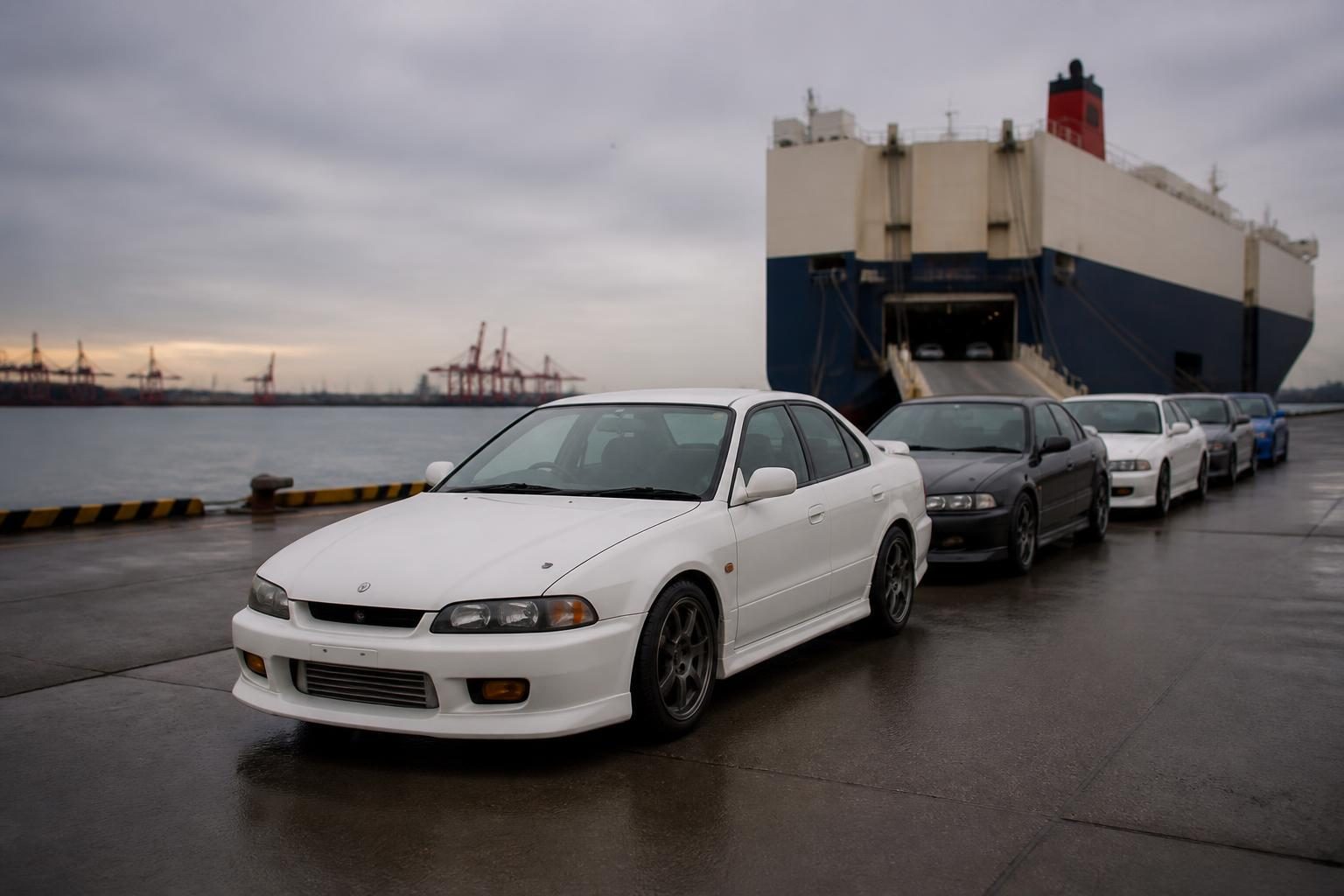 Sedans wait on a rain-wet RoRo dock beside a car carrier and harbor cranes.
Auction cars can't be test driven, so the pre-bid inspection report, auction sheet and inspector photos matter. They help you assess condition before bidding, but they don't remove the need to verify eligibility and paperwork.
Import taxes and compliance are separate parts of the process. Customs duty on a Japanese-origin car is 0% under the Japan-Australia Economic Partnership Agreement instead of the standard 5%, provided proof of origin is supplied (JDMBUYSELL Australia import guide, 2026). GST applies at 10% of the landed value. Luxury Car Tax only applies above the ATO's threshold for the financial year, so check the current figure with the ATO. Compliance work, the AVV inspection and RAV entry are separate charges. AVV means Approved Vehicle Verifier, the inspection process used to check that an imported vehicle meets its approval conditions. RAV is the Register of Approved Vehicles, where an approved vehicle must be recorded before registration.
Bidding starts with a refundable deposit, scaled to the auction value of the car you're targeting:
| Refundable deposit by auction-value band (JPY) | Deposit required |
|---|---|
| Up to ¥1,500,000 | ¥150,000 |
| ¥1,500,001 to ¥3,000,000 | ¥300,000 |
| ¥3,000,001 to ¥5,000,000 | ¥500,000 |
| ¥5,000,001 to ¥8,000,000 | 15% of auction value |
| Above ¥8,000,000 | 20% of auction value |
The deposit is fully refunded if no car is secured, or it rolls over to another search. Once a bid goes in on your instruction, it can't be pulled.
Which One Is Holding Its Value Better?
The Evo X has the narrower supply pathway, while the VAB STI offers a broader approved build window with a strict odometer limit. That makes the Evo X the scarcity-led choice and the VAB STI the condition-led choice. Neither car is a guaranteed investment, so treat market discussion as context rather than financial advice.
For the Evo X, the maths is simple. A ten month eligibility window means a very small number of cars can legally enter Australia each year, and that supply constraint doesn't reverse. Overseas markets have already shown movement on early Evo X examples (CarBuzz's 2026 used Evo X market read, April 2026), though that's American data and directional only. What's specific to Australia is that a launch-spec 2007 or 2008 CZ4A is the only current SEVS route into Evo X ownership at all.
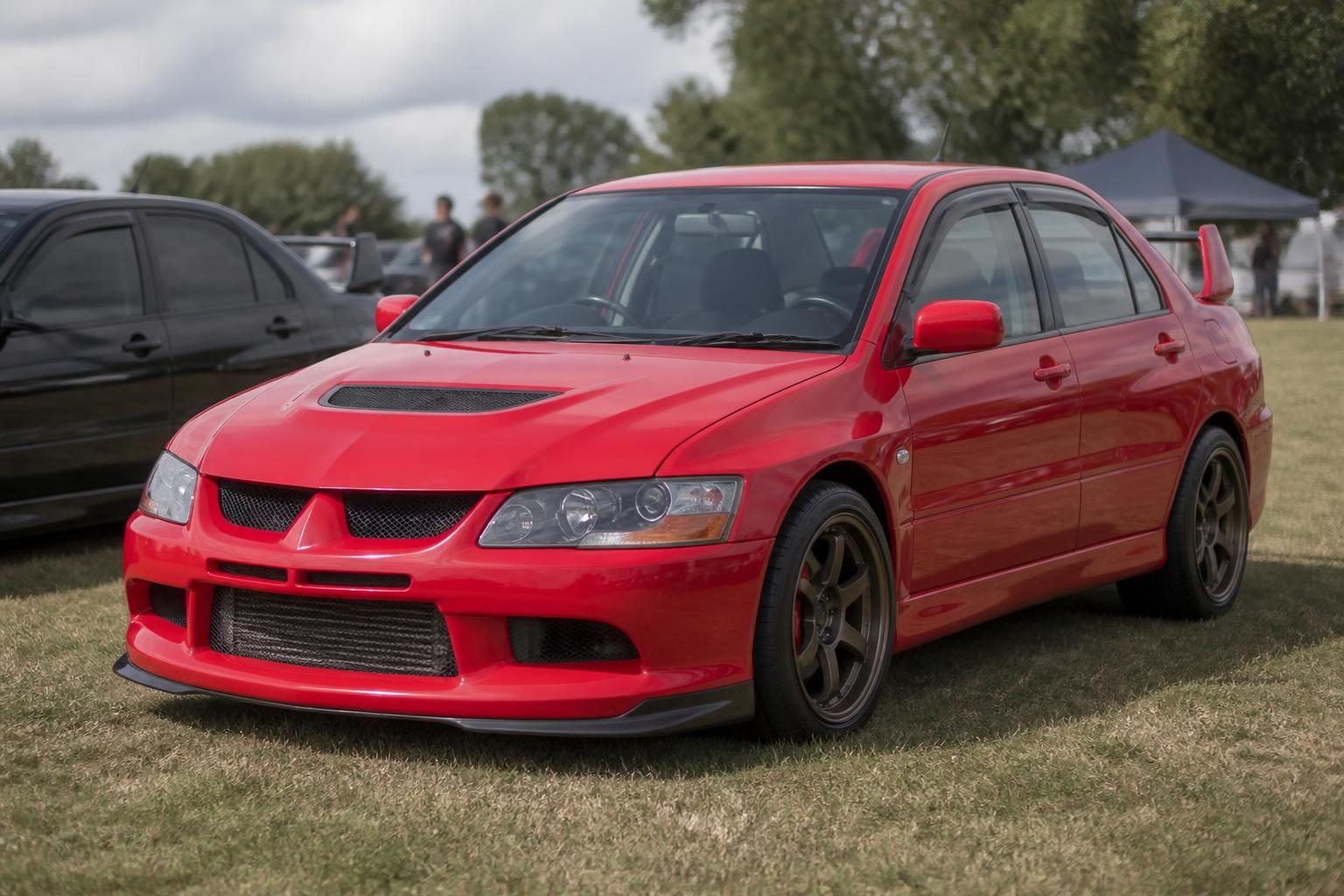 A red Mitsubishi Lancer Evolution on display outdoors.
The VAB is the opposite shape. A seven-year approved window means more cars to choose from, but the 80,000 kilometre cap removes higher-kilometre examples. Genuinely low-kilometre cars can therefore be difficult to find.
For both, the pattern is the same and it's worth taking seriously: unmodified, original-spec cars are the ones drawing the clearest premiums. Modified cars are harder to get through compliance and harder to sell on later. Buy the one you actually want to drive on a Sunday, and the value question mostly looks after itself.
Which Car Suits You?
Choose the WRX STI if you want a larger pool of eligible vehicles and a manual-only experience. The GVB gives you more flexibility on body style and kilometres, while the VAB gives you newer eligible builds but keeps the under-80,000-kilometre limit.
Choose the Evo X if scarcity and Mitsubishi's S-AWC system matter more than easy sourcing. You'll need to find an eligible early build and confirm the build date carefully.
Skip both if you need low running costs, easy parts access or a simple family daily driver. These are specialist performance cars, so inspection, maintenance and compliance deserve more attention than the badge alone.
How Does Carbarn Handle a WRX STI or Evo X Import?
Carbarn can manage the import pathway from its Lidcombe workshop in Sydney. That includes auction sourcing through approved Japanese houses, pre-bid physical inspection, bidding on your approval and within your cap, VIA application, international freight, customs and biosecurity clearance, SEVS compliance, AVV inspection and RAV entry. Eligibility is cross-checked against the published approval before any bid is placed, which matters most on the Evo X.
Cars are handed over with paperwork ready for state registration. Finance, extended warranty, Blue Slip and Australia-wide door delivery can be arranged alongside.
| What you're after | Where to look |
|---|---|
| Subaru WRX STI VAB (2014–2021) | /importing/subaru-impreza-wrx-sti-vab |
| Subaru WRX STI GVB (2007–2014) | /importing/subaru-impreza-wrx-sti-gvb |
| Mitsubishi Lancer Evolution X (CZ4A) | /importing/mitsubishi-lancer-evolution-x-cz4a |
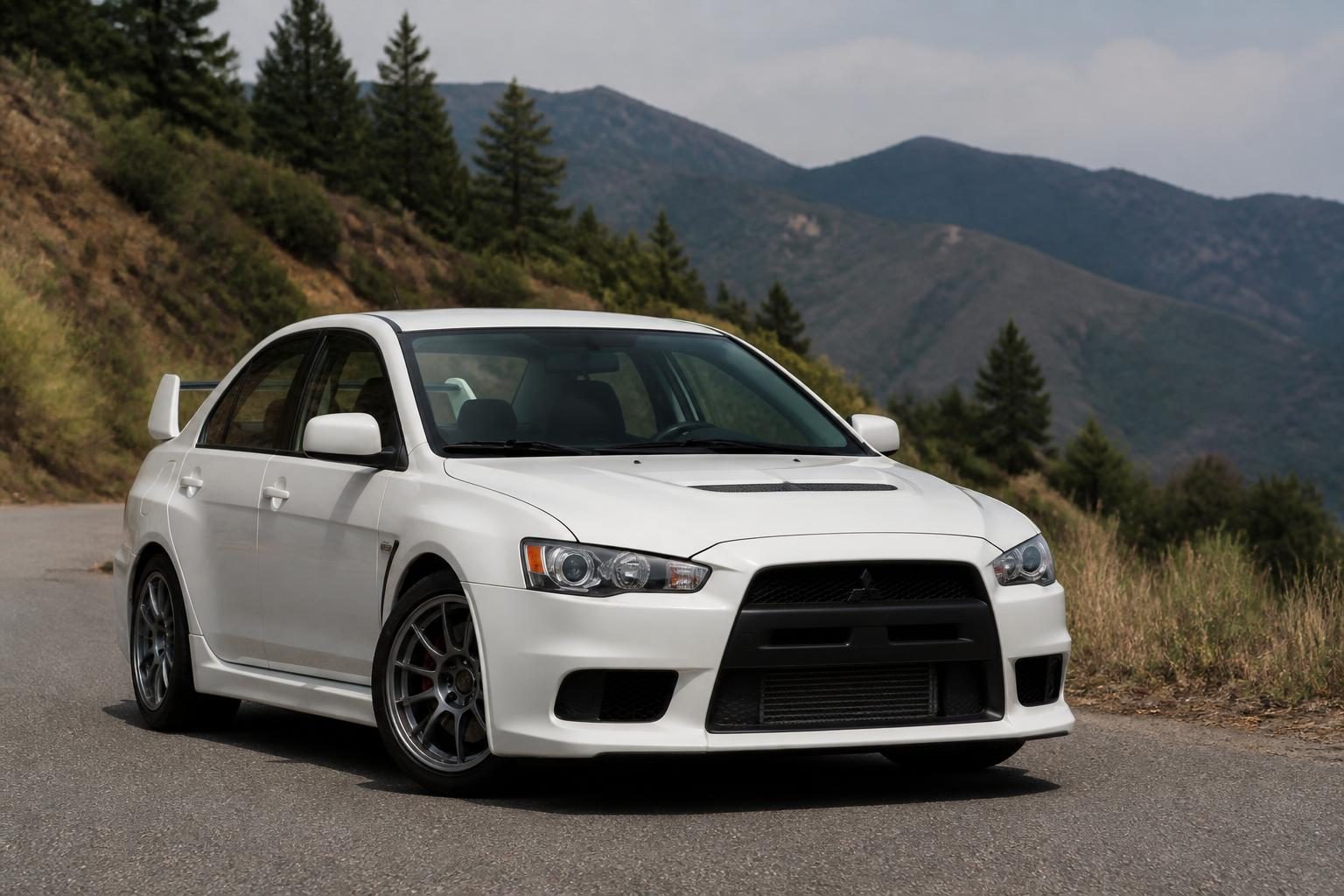 White Mitsubishi Lancer Evolution on a hillside road with a mountain backdrop.