



Ready to Hit the Road in Style?
Save money and reduce emissions with vehicles designed to deliver exceptional mileage. Visit our inventory and find a car that fits your lifestyle.
Ready to Hit the Road in Style?
Save money and reduce emissions with vehicles designed to deliver exceptional mileage. Visit our inventory and find a car that fits your lifestyle.
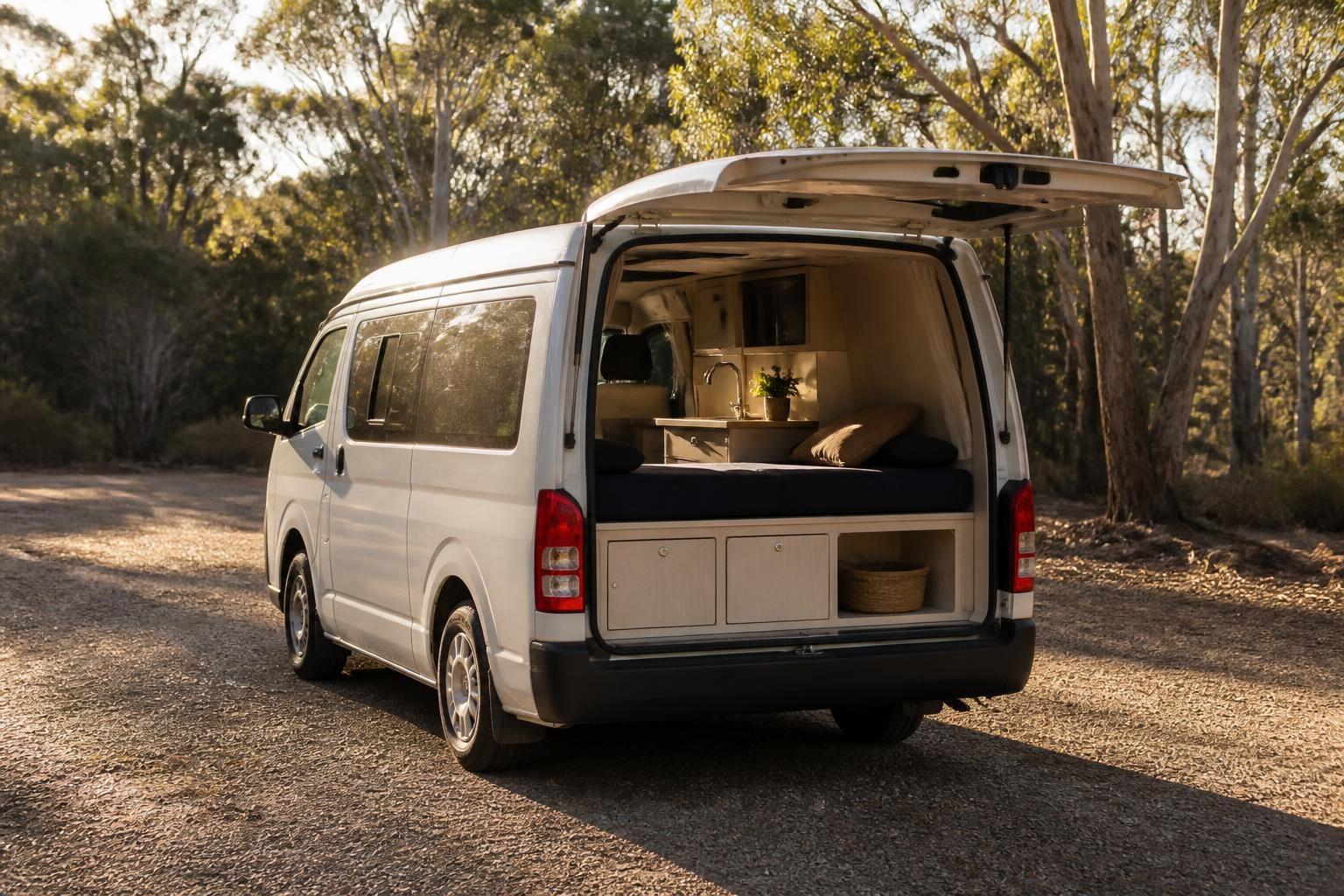
Search "HiAce campervan" and you'll get a wall of content that treats every van the same. It isn't. There are two genuinely different buying decisions hiding behind that one phrase, and they share almost nothing: converting a standard van yourself, or importing a factory-built Toyota Camroad from Japan. Different money, different compliance, different result. The HiAce delivered 11,073 units in Australia during 2025, more than three times the next-best medium van (CarExpert, VFACTS 2025 full year, January 2026). That dominance makes the market deep, and noisy. Here's how to tell the two paths apart.
Quick answer
- Two real options: convert a standard HiAce van, or import a factory-built Toyota Camroad from Japan.
- One converter's estimates, excluding the van, run from $3,000 to $8,000 for a basic DIY fit-out up to $25,000 to $60,000+ for a full professional build (Rising Rides, June 2026).
- The Camroad is import-eligible under SEVS approval SEV-000785, valid to 25 February 2028.
- Stated import cost components on the KDY280 model line: $13,617 freight, port and customs, $1,980 compliance package, $1,500 agent fee. These are components, not a total.
- Neither path wins outright. It comes down to budget, layout needs, and how soon you want to be on the road.
Why Does the HiAce Work So Well as a Campervan Base?
Space and payload are the two things that decide whether a van can become a liveable camper, and the HiAce has both. The LWB Van offers 6.2 m³ of cargo volume from a 2,530 mm × 1,760 mm × 1,340 mm load bay, with the SLWB stretching that to 9.3 m³ (Toyota Australia HiAce specification sheet, August 2025). Payload depends on the model year, transmission and rear-door configuration; Toyota's current automatic four-door LWB specification lists 1,115 kg.
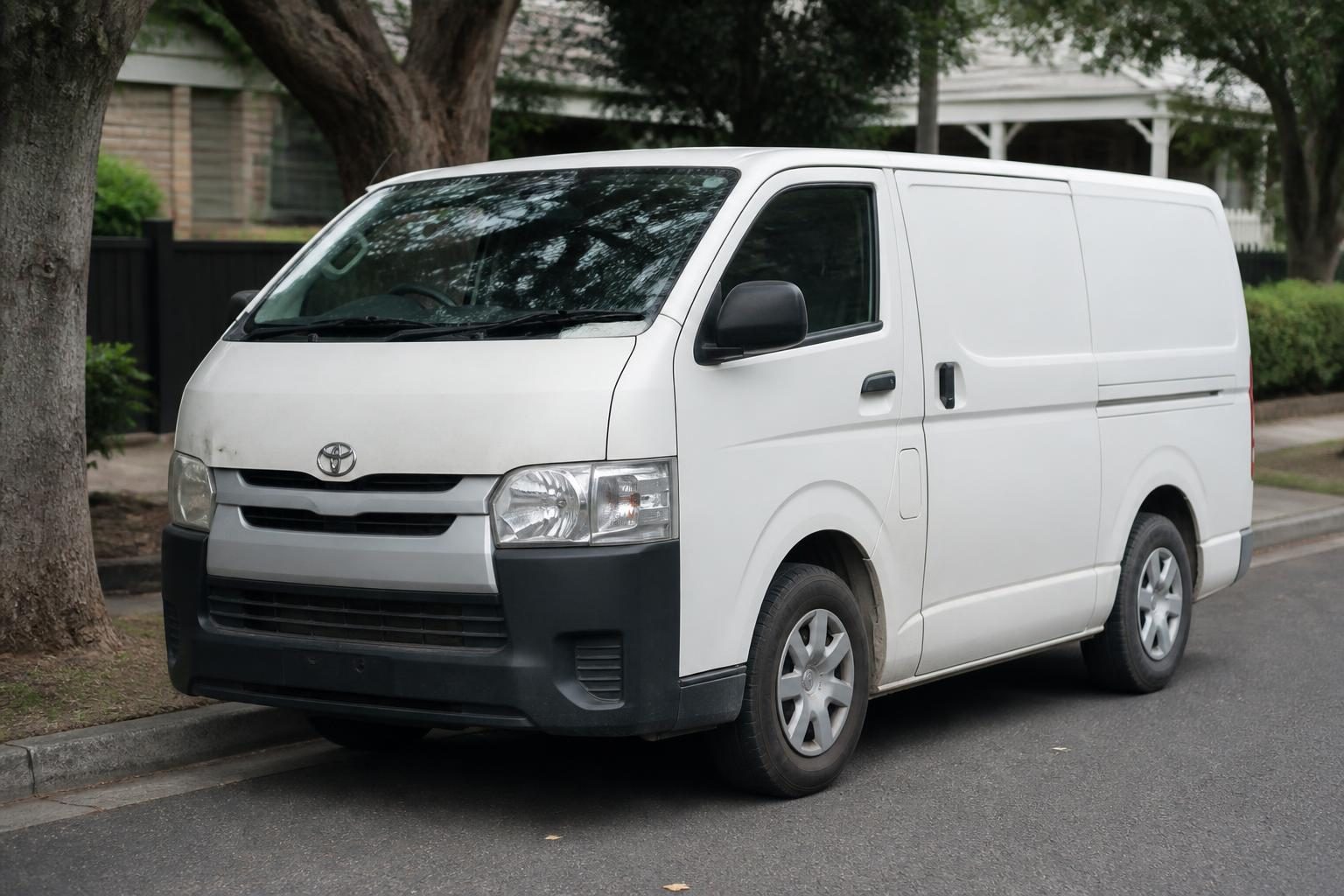 2024 Toyota HiAce
The current-generation Toyota HiAce runs Toyota's 2.8-litre 1GD-FTV four-cylinder turbo diesel, making 130 kW at 3,400 rpm and 450 Nm in automatic form (CarExpert 2026 review, December 2025). That torque figure is the one that matters for a camper. A finished fit-out with water, batteries and gear can add several hundred kilos, and low-rev pulling power is what keeps a loaded van relaxed on a long highway run rather than working hard in every hill.
Fuel economy holds up well for a vehicle this size. On the Australian combined test cycle, the LWB manual returns 7.4 L/100km, the LWB auto 7.8 L/100km, and the SLWB auto 8.1 L/100km (Toyota Australia HiAce specification sheet, August 2025). Roof height is the other number worth writing down: Toyota lists a 1,340 mm load-bay height for the LWB and 1,615 mm for the taller SLWB. Check the exact variant before planning a standing-height fit-out.
| HiAce variant | Fuel economy (combined) |
|---|---|
| LWB Van Manual | 7.4 L/100km |
| LWB Van Auto | 7.8 L/100km |
| SLWB Van Auto | 8.1 L/100km |
Source: Toyota Australia HiAce specification sheet, August 2025.
The Two Paths: Which One Are You Actually On?
Every HiAce campervan buyer is choosing between two different projects, whether they've framed it that way or not. Path one starts with an empty van and adds a fit-out. Path two starts with a vehicle that left the factory in Japan already built as a campervan. They diverge sharply on cost structure, timeline, flexibility and compliance.
| Path 1: Aftermarket conversion | Path 2: Factory Toyota Camroad | |
|---|---|---|
| Starting point | Standard HiAce van sourced in Australia | Truck-based cab-chassis motorhome built in Japan |
| Fit-out | Built to your spec | Pre-built, varies by unit and year |
| Conversion cost | $3,000 to $60,000+, excluding the van | Built into the vehicle |
| Import requirements | State and territory conversion requirements vary | SEVS eligibility, Vehicle Import Approval and RAW/AVV compliance required |
| Timeline | Weeks to months of build time | 6 to 10 weeks import |
| Flexibility | High | Low, you take what's built |
| Best suited to | Buyers with a specific layout in mind | Buyers who want it road-ready |
Should You Convert a Standard HiAce?
Conversion cost splits into three fairly clean tiers, and knowing which one you're aiming at saves a lot of wasted quoting. One converter, Rising Rides, estimates HiAce campervan builds at $3,000 to $8,000 for basic DIY, $10,000 to $25,000 for mid-range, and $25,000 to $60,000 or more for a full professional build (June 2026). These are provider estimates, not an Australian market-wide benchmark, and all exclude the van itself.
Before starting, check the conversion rules in your state or territory. Permanent equipment needs secure mounting, engineering or signatory approval may apply, and the finished van must remain within its GVM and load limits. Fixed gas work has separate legal requirements and must comply with the applicable rules, including AS 5601 where required; Victoria's motorhome guidance is a useful example (Transport Victoria).
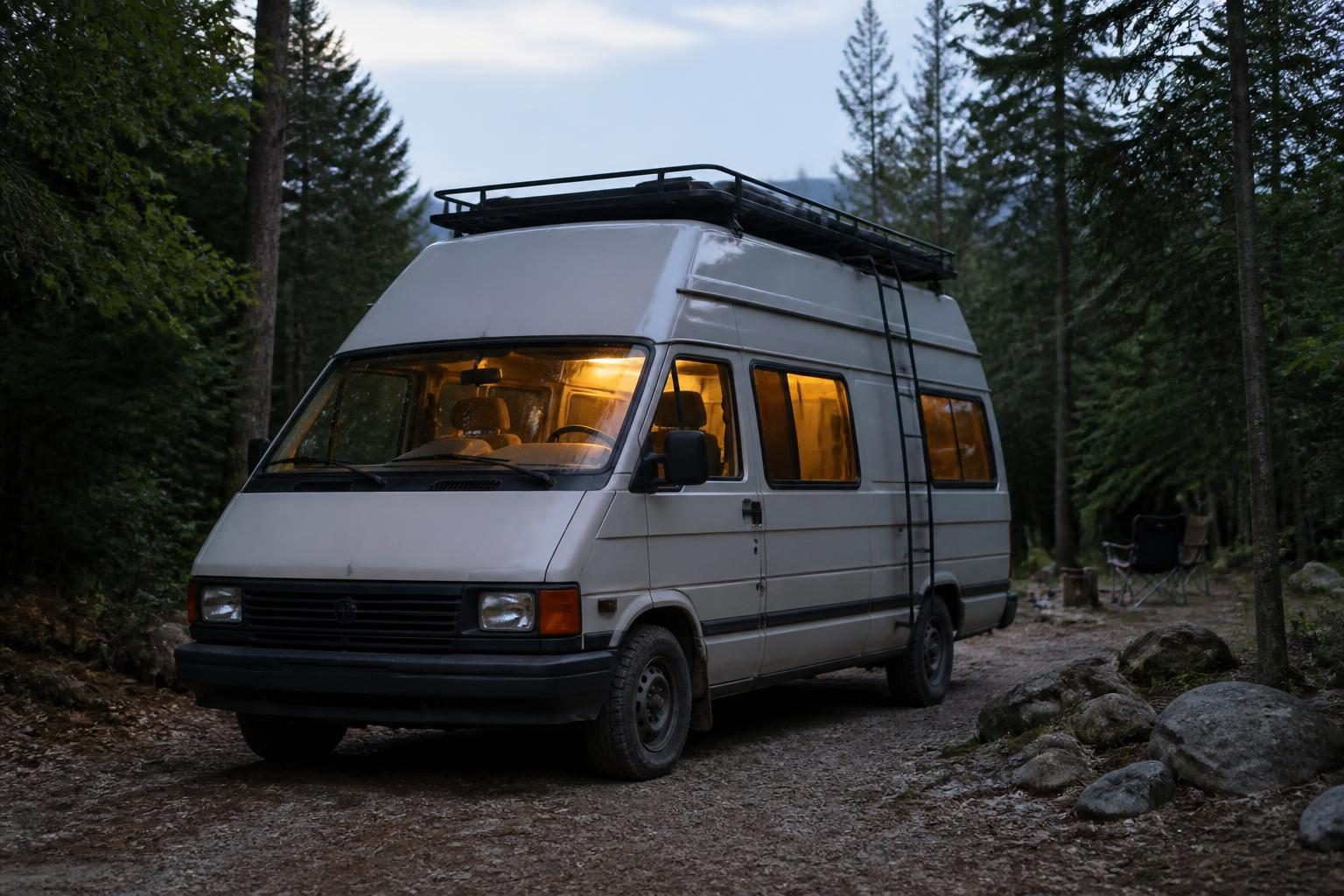 A DIY conversion lets you build the layout around how you actually camp.
Basic DIY Setup
At $3,000 to $8,000 you're looking at insulation, a ply bed platform, simple 12V electrics, LED lighting and a portable LPG stove (Rising Rides, June 2026). It suits weekenders who cook outside and want somewhere dry and comfortable to sleep. It's honest, cheap and reversible. It's not a setup for extended touring or full-time living, and pretending otherwise leads to an expensive second build.
Mid-Range Build
The $10,000 to $25,000 tier is where most buyers land. That gets you a fixed bed, a 12V compressor fridge, 200 to 400W of solar, a lithium battery bank and a kitchen with running water (Rising Rides, June 2026). It's enough to disappear off-grid for several days without hunting for powered sites. Most people at this level use a professional converter for at least the electrical and gas work, and timelines vary a lot by workshop backlog.
Full Professional Build
At $25,000 to $60,000 and up, a professional build may include diesel heating, an internal bathroom, custom joinery and a larger solar and lithium system (Rising Rides, June 2026). Ask the converter to specify any grey-water equipment rather than assuming it is included. This is genuine touring spec. It's also the point where the honest advice is to stop and compare against a factory-built import, because you're now spending campervan money to create a campervan from something that wasn't one.
On the base van: Rising Rides lists its own June 2026 examples of used diesel-auto LWB high-roof KDH206K HiAces from $29,900 to $35,900; treat those as examples rather than a market-wide price band. These older KDH206K vans use the 3.0-litre 1KD-FTV diesel, not the newer 2.8-litre 1GD-FTV fitted to current Australian H300 HiAces. Read the auction sheet, condition diagram and photos, then arrange an inspection where possible; an auction grade alone is not a condition guarantee.
Should You Import a Factory-Built Toyota Camroad?
The Camroad is not a converted HiAce, and this is the single most misunderstood point in the category. It is a truck-based cab-chassis motorhome platform with a coachbuilt living module, rather than a fit-out squeezed into a monocoque panel van. Structurally, it's a different animal.
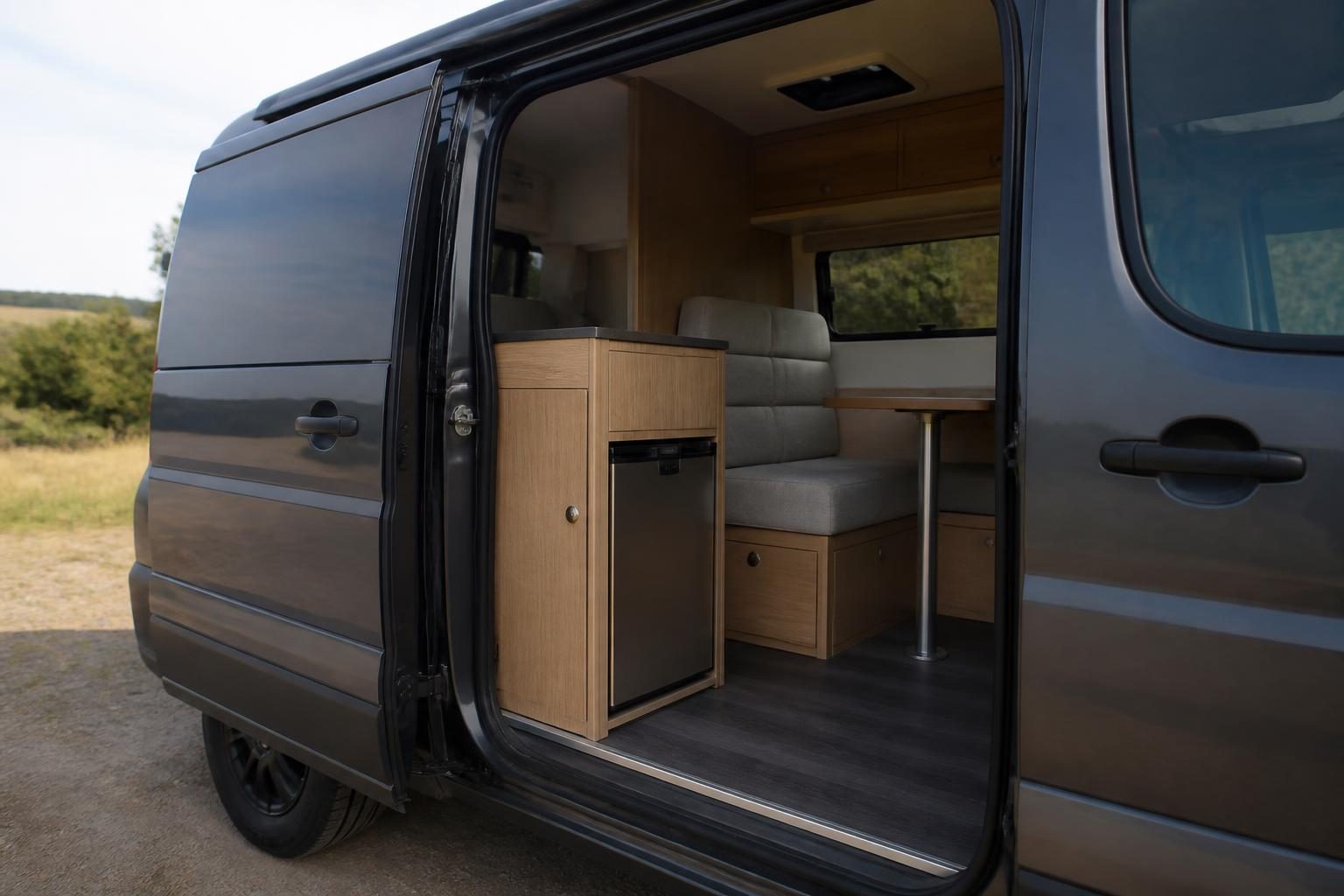 Factory-built campervans arrive with the living module already engineered and installed.
What Comes Standard on a Camroad
Fit-out varies by unit and year, so contact the importer for a full specification of the specific vehicle being sourced. Some model lines carry named Japanese body builders, and the GDY231 line is bodied by Nuts RV. A particular unit may include a sleeping area, kitchenette and 12V electrics, but confirm those items, water capacity, heating, awnings and seating layouts against its auction sheet, body-builder specification and photos. Judge each vehicle on its own documentation.
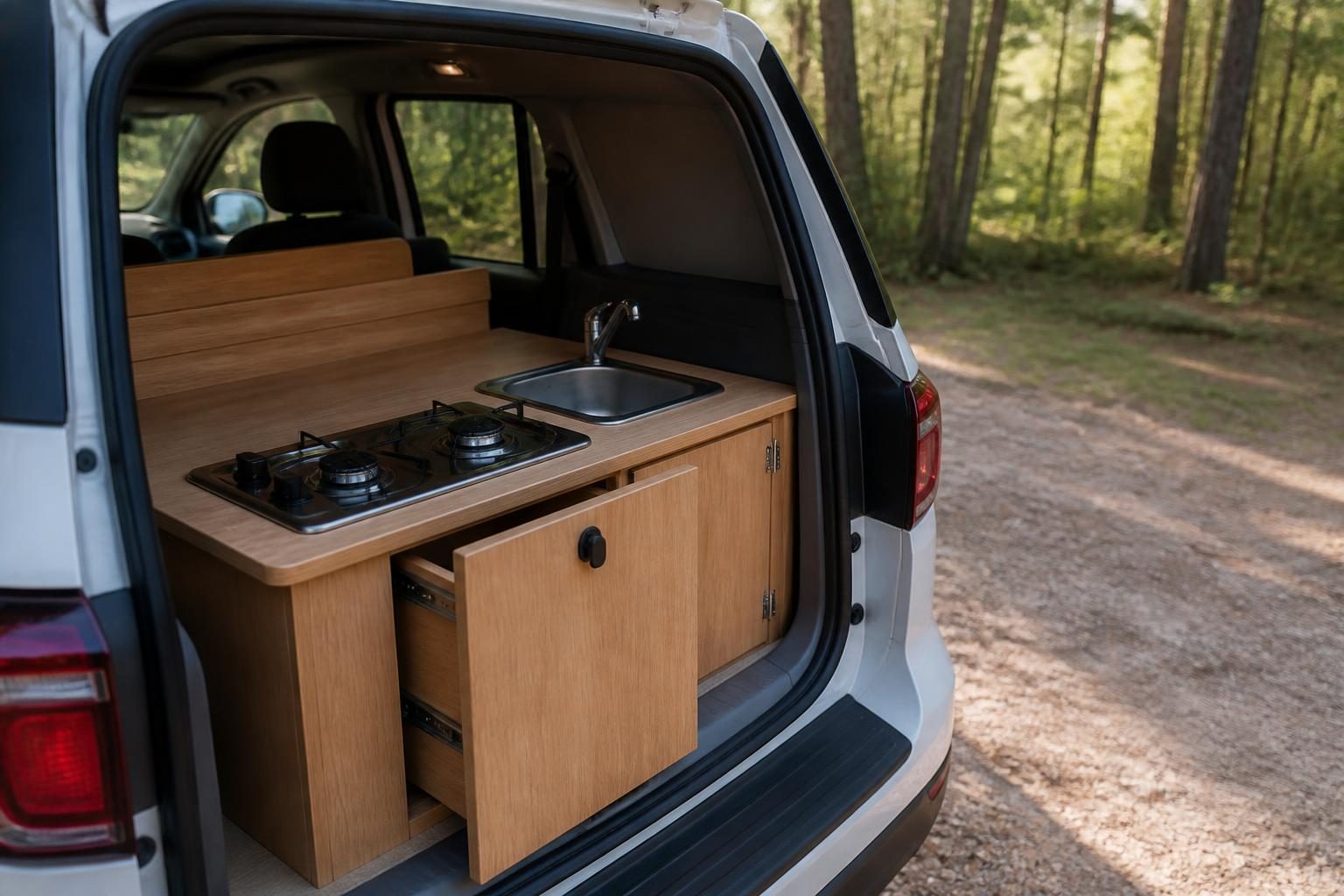 Kitchenette layouts vary widely between Japanese body builders and build years.
SEVS Eligibility and Import Costs
The Toyota Camroad is listed under SEVS eligibility SEV-000785 on the Campervans and Motorhomes criterion until 25 February 2028, linked to MRE-000916 for Nuts RV Toyota fully built campervans. Eligibility depends on the exact build date, variant and approval scope. The KDY280 line covers 2010 to 2024 builds. Import runs roughly 6 to 10 weeks across three phases: sourcing and approval in Japan, roll-on/roll-off shipping, then compliance and delivery in Australia.
On cost, the KDY280 model line has three stated components: freight, port and customs at $13,617, a compliance package at $1,980, and an agent fee at $1,500 (Carbarn importing page, August 2026). Those are components, not an all-up figure. The vehicle price itself is quoted per unit against auction results, and freight components differ across other variants such as the TRY281, KDY231, GDY281 and GDY231. Eligibility is always determined by the published Rover register approval matched against the exact build date, variant and model code.
| Component (KDY280 line) | Amount |
|---|---|
| Freight, port and customs | $13,617 |
| Compliance package | $1,980 |
| Agent fee | $1,500 |
| Vehicle price | Quoted per unit |
These are stated cost components, not an all-up total. Source: Carbarn KDY280 importing page, August 2026.
What Should You Check Before You Buy?
Campervans hide their problems better than ordinary cars, because a fit-out physically covers the areas most likely to fail. Water ingress and dodgy 12V wiring are the two faults that turn a good buy into a rebuild, and neither is visible in a listing photo.
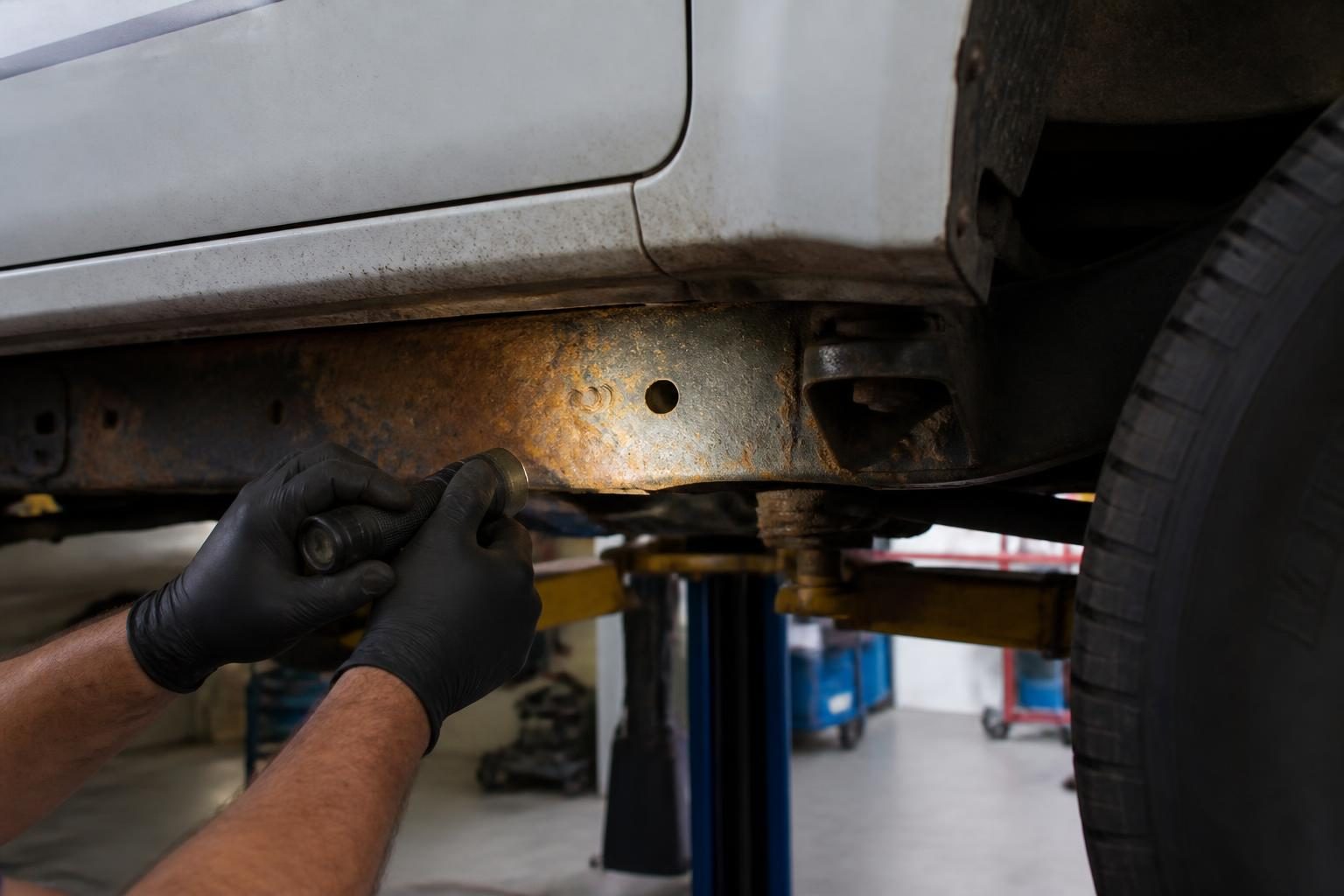 Chassis rails and roof penetrations are the two checks most campervan buyers skip.
On a Converted Van
Get underneath and look along the chassis rails for surface rust, particularly on older high-kilometre vans. Trace the 12V wiring where you can: poorly installed or unfused wiring can create a fire risk. Check every roof penetration around vents and hatches for water staining. Push and pull on the bed frame and cabinetry to make sure permanent furniture is securely mounted, not just wedged in place. Ask what insulation was used, since sprayed foam and proper batts behave very differently on condensation through a cold winter.
On an Imported Camroad
Use the auction grade as one input, not a rule: read the auction sheet, condition diagram and photos, and seek an inspection where possible. Confirm the engine fitted to the exact Camroad and ask for service-history evidence rather than assuming its condition. Fit-out condition can vary greatly between these vehicles, so look closely at upholstery, gas fittings and appliance age. Finally, confirm the compliance certificate covers the specific vehicle you're buying, not just the model's general approval.
Which Path Makes More Sense for You?
Conversion makes a lot of sense if you have a specific layout in mind, want to spread the cost across a few years, or already own a suitable van. It's the flexible option, and it's the only way to get exactly what you pictured. It's probably not right if you need to be travelling within weeks, or if project-managing a build sounds like a chore rather than part of the fun.
A factory Camroad makes sense if you want a vehicle that already works as a campervan and you're comfortable waiting 6 to 10 weeks for it to land. There's no build to supervise and no workshop queue. It's probably not right if you have a fixed layout in mind, need a particular modern drivetrain, or your budget is tight enough that the import components push past what a local conversion would cost you.
One more thing worth weighing: workshop familiarity. With 11,073 HiAce sales in 2025 against 3,447 for the Ford Transit Custom and 2,917 for the Hyundai Staria Load (CarExpert, VFACTS 2025, January 2026), Toyota's diesel vans will be familiar to many Australian workshops. Confirm parts and service support for the exact engine and camper equipment before you commit.
Where Carbarn Fits In
 Both paths end in the same place, the difference is how you get there.
Carbarn works across both paths from a Sydney base at Lidcombe, and that's the last time this guide talks about us. If you're starting with a van to convert, the Toyota HiAce range and the HiAce 4WD listings are both worth a browse, with live prices on each vehicle. If the factory Camroad path suits you better, Carbarn holds importing pages for the KDY280, KDY231, TRY281, GDY281 and GDY231 variants, all under SEVS approval SEV-000785, and can confirm what's sourceable through Japanese auctions. The service covers auction sourcing with pre-bid physical inspection where the auction format allows, build-sheet and auction-grade verification before bidding, VIA application, roll-on/roll-off freight and customs clearance, in-house compliance and AVV inspection with RAV entry at the RAW-certified Sydney workshop, extended warranty options, finance, and nationwide delivery from Sydney to Perth. Compliance-only work on a vehicle you've already sourced is available too.
Wrapping Up
The HiAce platform is well proven for campervan use in Australia, and both routes to one are legitimate. The real decision isn't which van, it's which project. Build the layout you want and accept the timeline, or take a factory-built Camroad as it comes and be travelling sooner. Work out which of those describes you, then go and look at some vehicles.