


Ready to Hit the Road in Style?
Save money and reduce emissions with vehicles designed to deliver exceptional mileage. Visit our inventory and find a car that fits your lifestyle.
Ready to Hit the Road in Style?
Save money and reduce emissions with vehicles designed to deliver exceptional mileage. Visit our inventory and find a car that fits your lifestyle.
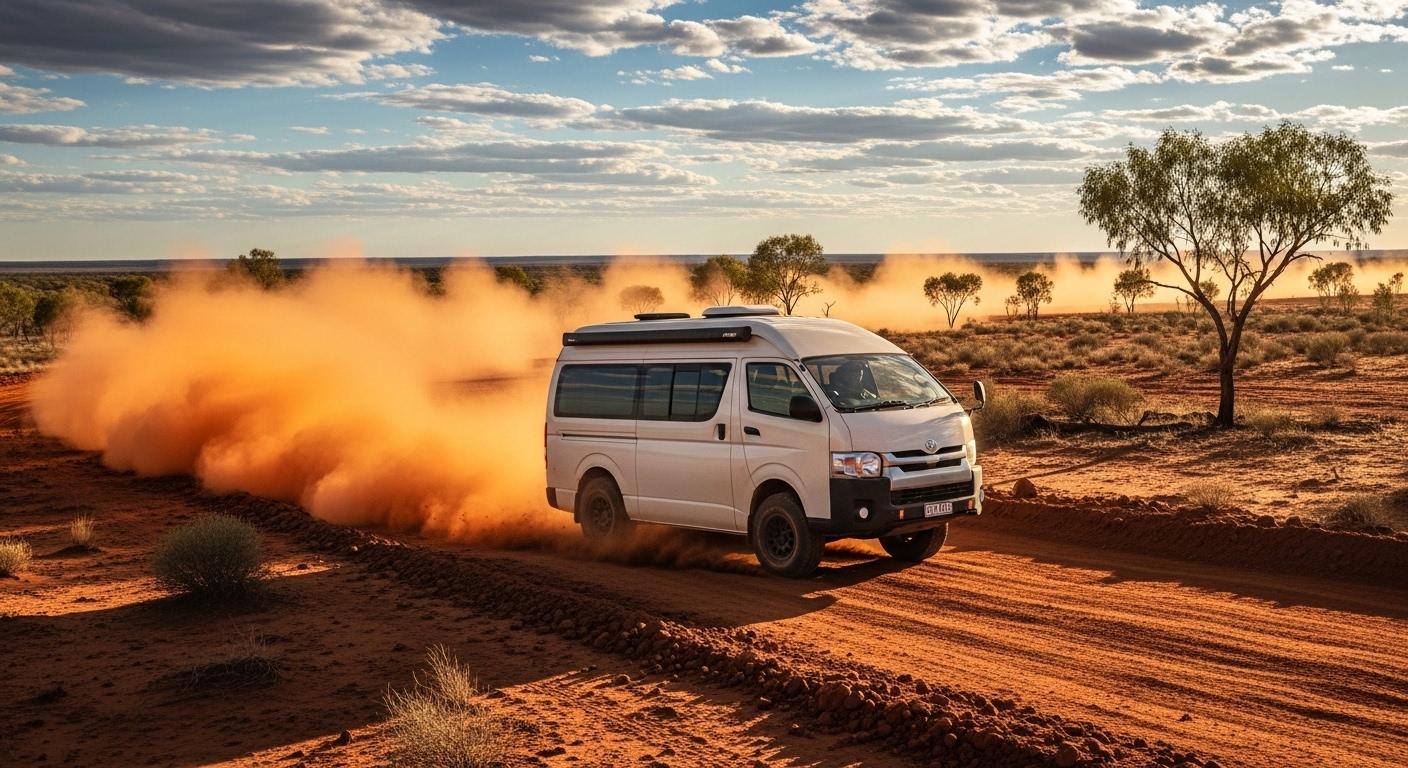
Most Australians know the HiAce as the tradie's workhorse or the airport shuttle. What far fewer people know is that Toyota built a genuine factory 4WD version, and it's one of the most capable, practical, and underrated off-road vans you can put on an Australian dirt road.
It isn't in any Australian Toyota dealer catalogue. The HiAce sold new here is rear-wheel drive only. The 4WD variant was built for the Japanese domestic market, where vans have to deal with snow, mountain passes, and remote rural terrain that RWD can't manage. That's what makes it a real best-kept secret: most buyers shopping for an off-road van or a campervan base have no idea it exists.
If you've been pricing up a Prado, a Patrol, a Sprinter 4x4, or a purpose-built 4WD camper for serious touring, it's worth reading this first.
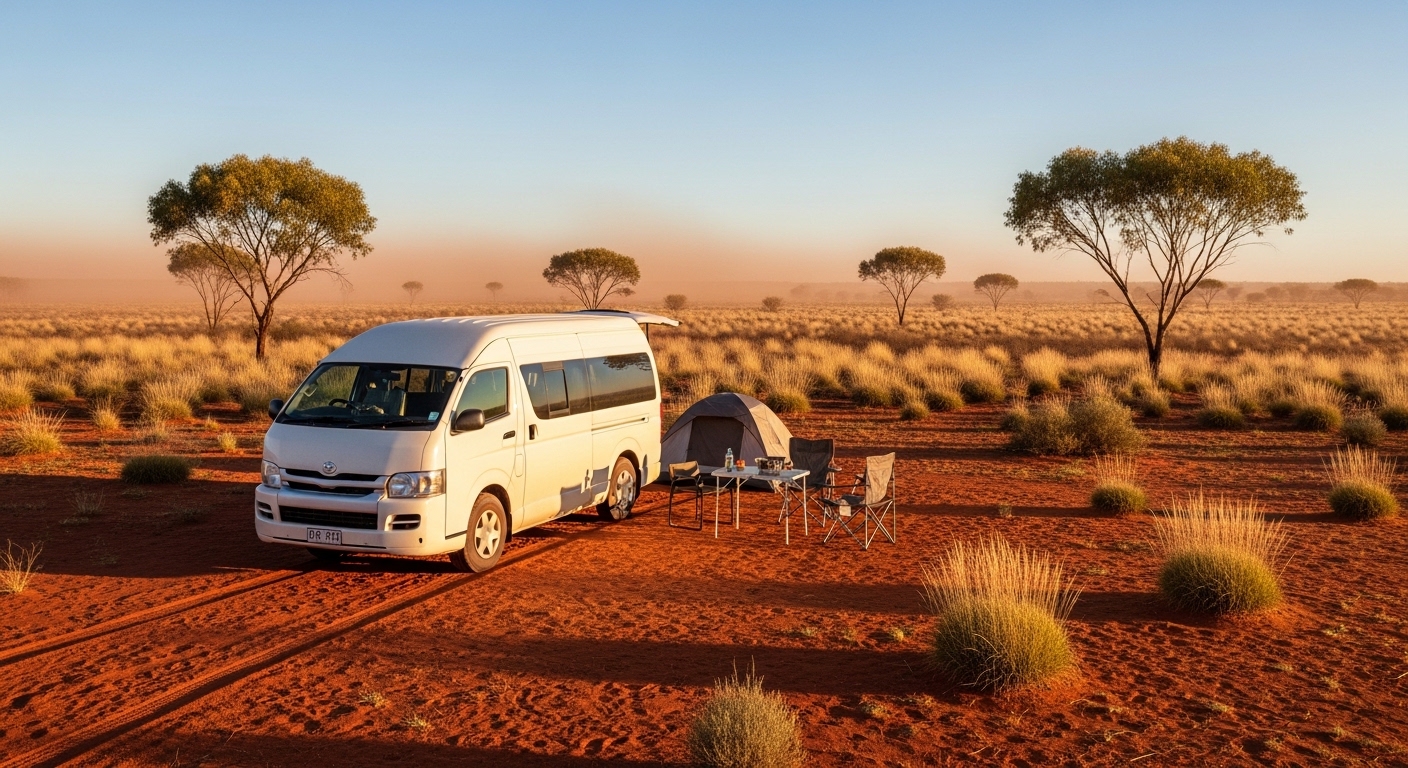 White camper van and chairs at a remote red-dirt outback campsite in warm evening light
Quick Answer
- The Toyota HiAce 4WD is a factory-built 4WD van from the Japanese domestic market, not an aftermarket conversion.
- Key variants are the KDH206 series (3.0L diesel) and the newer GDH206 series (2.8L 1GD-FTV diesel), an engine family shared with the HiLux and Prado.
- In the HiAce, the 1GD-FTV is tuned to about 110kW and 300Nm (Wikipedia, Toyota GD engine, 2026), lower than the HiLux tune of the same engine.
- Payload sits around 1,000kg with ground clearance near 185mm; for cargo space, the current Australian HiAce body is Toyota-rated up to 6.2m³ as a class reference.
- These vans aren't sold new through Australian dealers; they're sourced from Japan or bought already complied through import specialists.
What Makes the HiAce 4WD Different From the Standard Van?
The single biggest difference is the drivetrain. The HiAce sold new in Australia is rear-wheel drive only, while the factory 4WD version was a Japan-market build with a proper transfer case and matched axles. Toyota's own van still leads the local medium-van segment, with 12,082 units sold in 2024 (CarExpert / VFACTS, 2025). Even so, none of those were 4WD.
It's worth being honest about what this vehicle is and isn't before the list starts.
The 4WD HiAce covered here is not an aftermarket conversion, though those exist too. Several Australian companies offer HiAce 4x4 conversion kits, and some are very good. That said, they add real cost and carry their own engineering trade-offs.
The vehicles in this article are genuine factory 4WD models, built that way by Toyota in Japan. The main variants are the KDH206K and KDH206V (3.0L diesel) and the newer GDH206K and GDH206V (2.8L diesel). They left the factory with a transfer case, factory-matched axles, and suspension geometry designed around 4WD from the start. Because local dealers only stock the RWD van, the 4WD version flies under the radar here. That's the opportunity.
HiAce 4WD Specs at a Glance
Here's the short version before the detail. One number to watch: the GDH206 makes about 110kW in HiAce tune (Wikipedia, Toyota GD engine, 2026). That's noticeably less than the up-to-150kW the same 1GD-FTV produces in current HiLux tune. Plenty of online spec tables copy the HiLux figure by mistake, so it's worth getting right.
| Spec | Detail |
|---|---|
| Engine (KDH series) | 3.0L 1KD-FTV turbo diesel |
| Engine (GDH series) | 2.8L 1GD-FTV turbo diesel |
| Power (GDH, HiAce tune) | ~110kW @ 3,600rpm |
| Torque (GDH, HiAce tune) | ~300Nm @ 1,000–3,400rpm |
| Drivetrain | Factory 4WD |
| Ground clearance | ~185mm |
| Cargo volume | ~6.2m³ (current Australian H300 body, for reference) |
| Payload | ~1,000kg |
| Fuel type | Diesel |
| Transmission | Automatic |
Figures are indicative of the GDH206K LWB variant. Always verify against the specific vehicle's compliance paperwork before you buy.
A few of the terms in that table are worth defining plainly:
- Transfer case is the gearbox-mounted unit that splits engine drive between the front and rear axles. It's the part a factory 4WD has that the standard RWD van does not.
- 1GD-FTV is Toyota's 2.8-litre four-cylinder turbo-diesel, the same engine family fitted to the HiLux and Prado.
- Payload is the combined weight of passengers, fuel, fitout, and cargo a vehicle is rated to carry.
- Ground clearance is the distance between the lowest point of the chassis and the road surface.
- Cargo volume is the total load space inside the van, measured in cubic metres.
10 Reasons the HiAce 4WD Is Worth a Serious Look
Across factory engineering, payload, cargo space, and running costs, the case for the HiAce 4WD is consistent. Ground clearance of around 185mm (carused.jp spec sheet) won't crawl rocks. Paired with a Toyota diesel and a genuine 4WD system, though, it covers the touring most Australians actually do. Here's the breakdown.
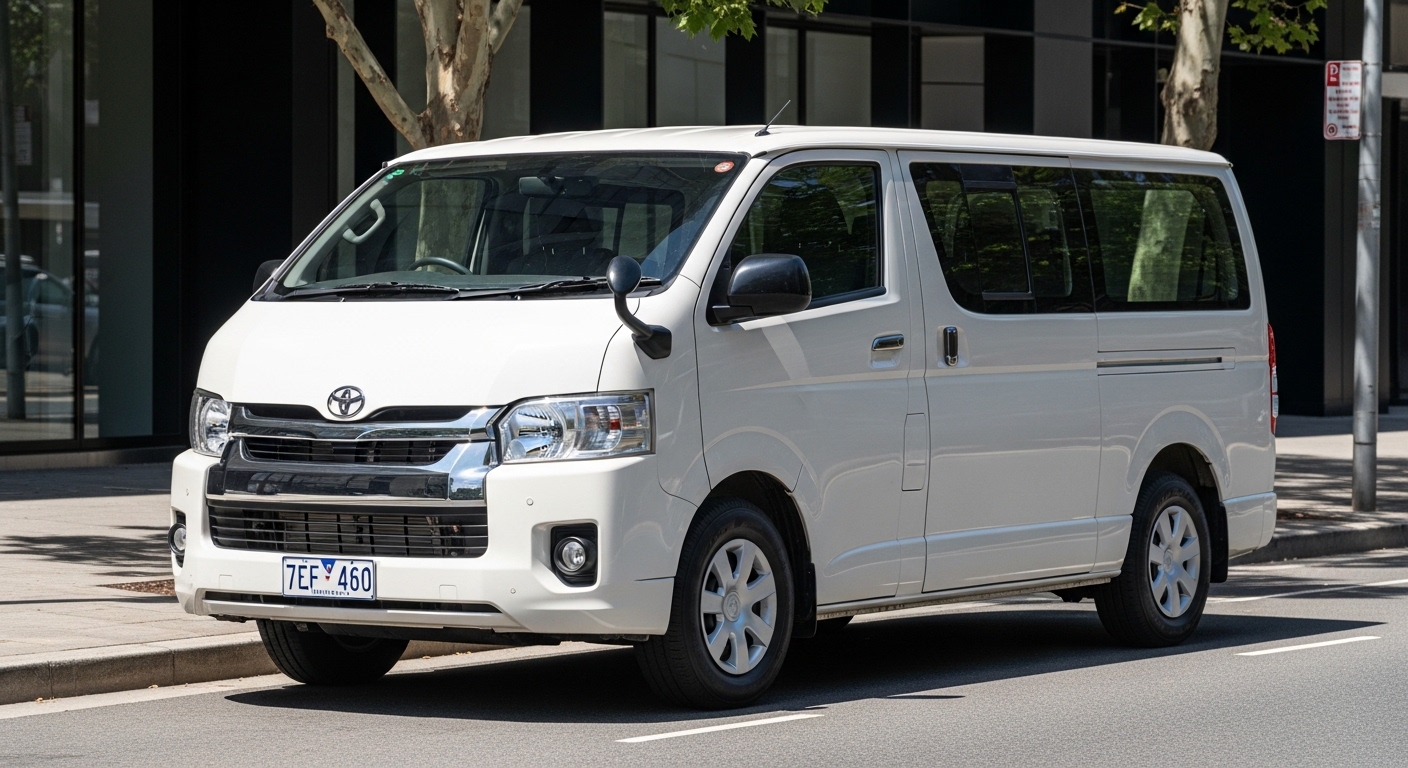 2020 Toyota HiAce 4WD
1. It's Factory 4WD, Engineered as One System
The Toyota HiAce 4WD earns its place first because Toyota engineered the whole system, not a workshop after the fact. Aftermarket conversions cut into and re-engineer a van that wasn't built for it. They can be done well. Even so, they add variables, and more variables means more things that can fail when you're 300 kilometres from the nearest town.
With the factory build, the suspension geometry, transfer case, drivetrain mounts, and axles were designed together as one balanced package. As a result, the load paths are sorted from the outset. For long-term reliability and predictable behaviour under load, that's a meaningful head start.
2. The Diesel Engine Has a Decades-Long Track Record
The 3.0L 1KD-FTV and 2.8L 1GD-FTV belong to the same engine families used in the HiLux, Prado, and Land Cruiser 70 Series. They aren't exotic or complicated. Because of that, Toyota dealers and independent workshops right across the country know them well. Parts are common and reasonably priced.
In the GDH206 variants, the 1GD-FTV produces about 110kW and 300Nm in HiAce tune (Wikipedia, Toyota GD engine, 2026). Those aren't sports-car numbers. That said, the torque arrives low, from around 1,000rpm. In practice, that's exactly what you want for hauling a loaded van at highway speed or pushing through soft sand without drama.
3. Payload That Makes Tradies and Overlanders Happy
Plenty of full-size 4WD wagons carry less than buyers expect once passengers and a fitout are accounted for. Often that's only a few hundred kilograms of usable load. By contrast, the HiAce 4WD sits closer to 1,000kg (carused.jp spec sheet). That gap is the difference between loading two people, a week of camping gear, water, and a toolbox, or leaving things on the driveway.
For tradies, that's a full working load in a vehicle that can actually reach the job site. For overlanders and van builders, it's the weight budget to fit a proper interior and still carry real provisions. Payload is the number most touring buyers underestimate until they're over it.
4. Cargo Volume That Changes What a Build Can Be
Cargo space is genuinely generous. For reference, the current Australian-market HiAce (the later H300 body) carries a Toyota-stated 6.2m³ in long-wheelbase form. That stretches to 9.3m³ in the super-long-wheelbase (Toyota Australia, 2025). The imported H200-based 4WD is a slightly shorter generation, so treat those as a guide to what the class holds rather than exact figures for every van. Either way, it's serious volume in a vehicle that also runs a factory diesel 4WD system.
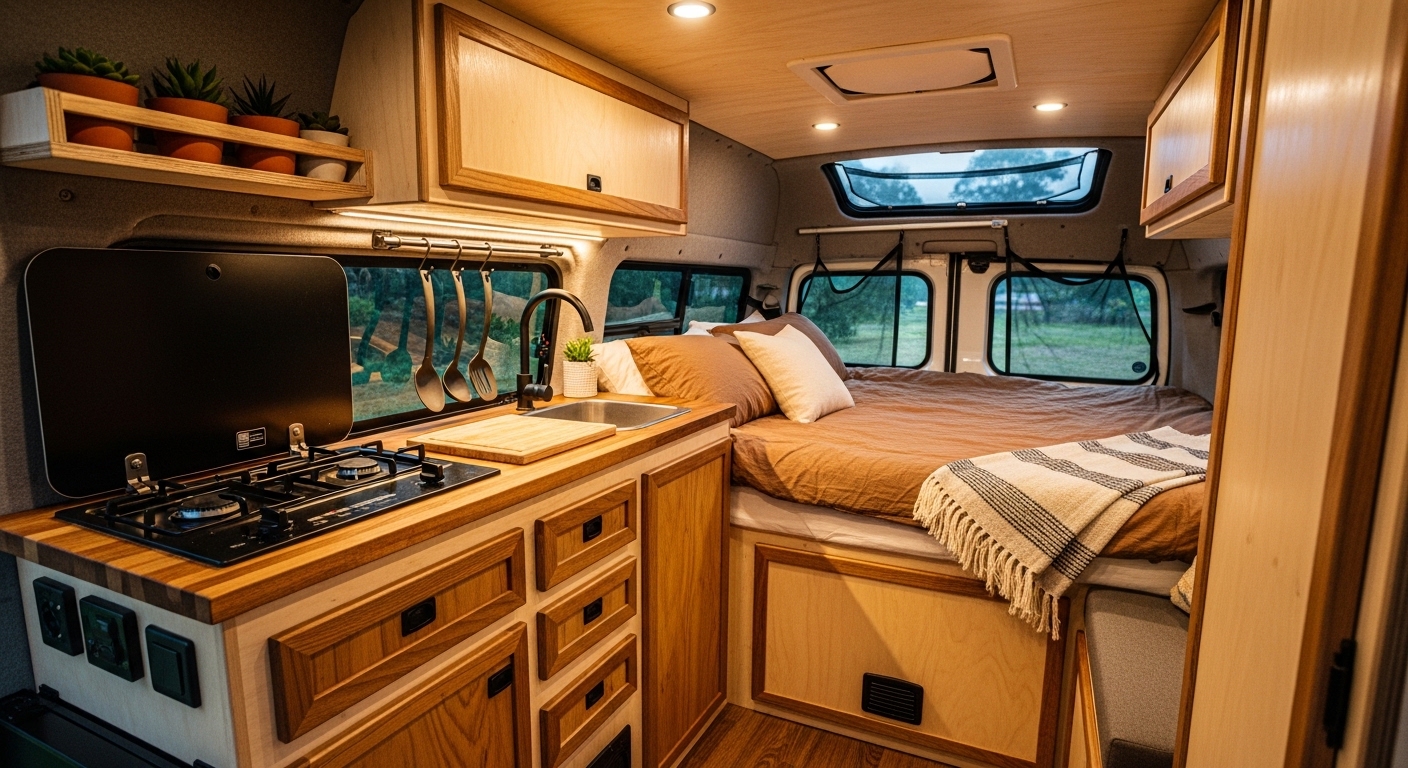 Timber-lined campervan interior with a compact kitchen and fixed rear bed
If a campervan build is the goal, those dimensions suit a fixed bed, a kitchen bench, standing headroom in the high-roof body, and real storage. Better still, you're not stuck with the compromised layout that smaller platforms force on you.
5. Ground Clearance That Handles Real Australian Tracks
At around 185mm, the HiAce 4WD isn't a rock crawler. It won't climb a Kimberley gorge trail or ford a river crossing above the axles. Even so, that's not what most buyers actually need from a touring van.
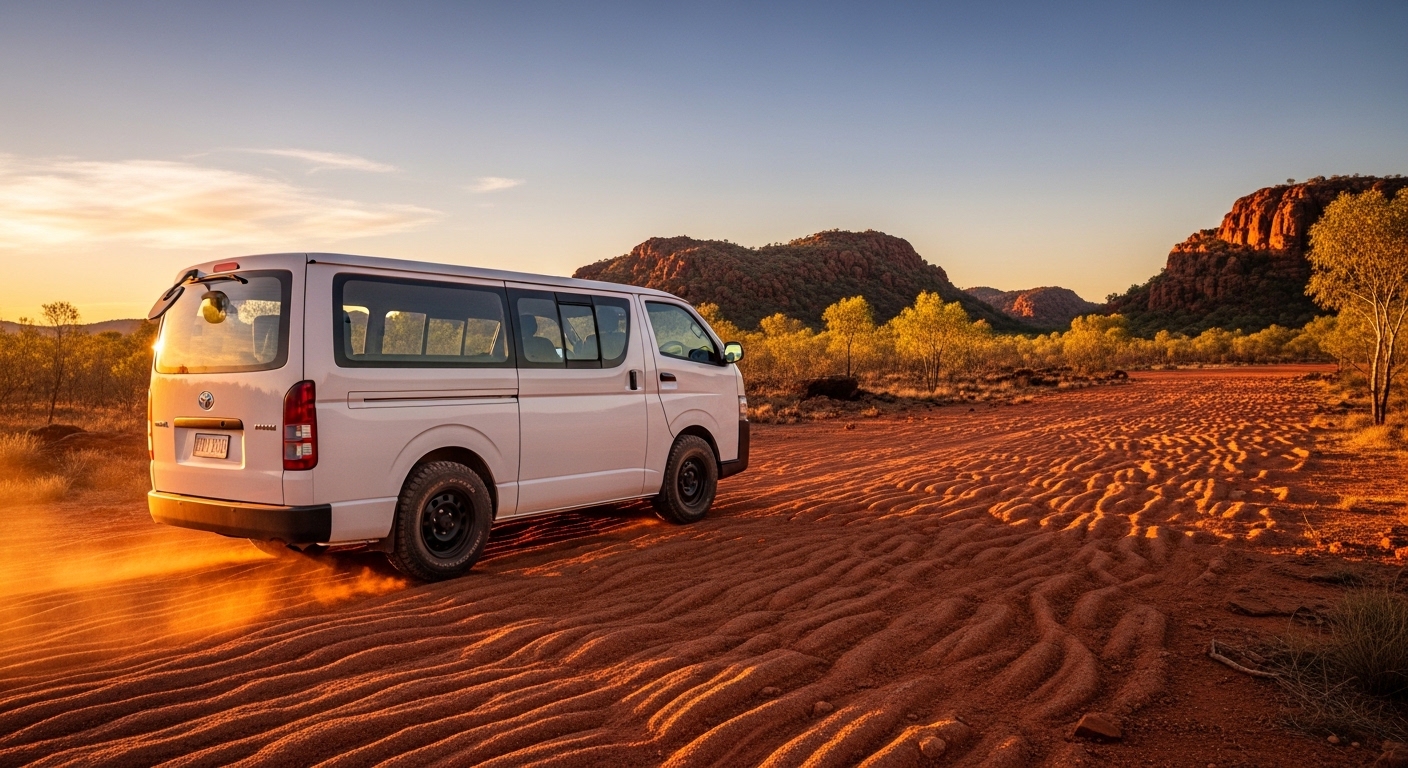 White van on a corrugated red outback road at sunset with rocky hills behind
For corrugated station roads, soft sand, gravel highways, and remote campsite access tracks, 185mm is entirely workable. Fit all-terrain tyres, manage your pressures sensibly, and it copes with the conditions most Australian adventurers really encounter. The long wheelbase helps on washboard too. Where shorter 4WDs bounce, a loaded HiAce settles into corrugations instead of being thrown around by them.
6. Parts and Workshop Support Reach Every Corner of the Country
Toyota runs the deepest service network in Australia. The HiAce has long led the mid-sized van segment by a clear margin, with 12,082 units sold in 2024 (CarExpert / VFACTS, 2025). That density matters. If a HiAce diesel plays up on a remote trip, you're almost always within reach of a mechanic who knows the engine and can get parts in a day or two.
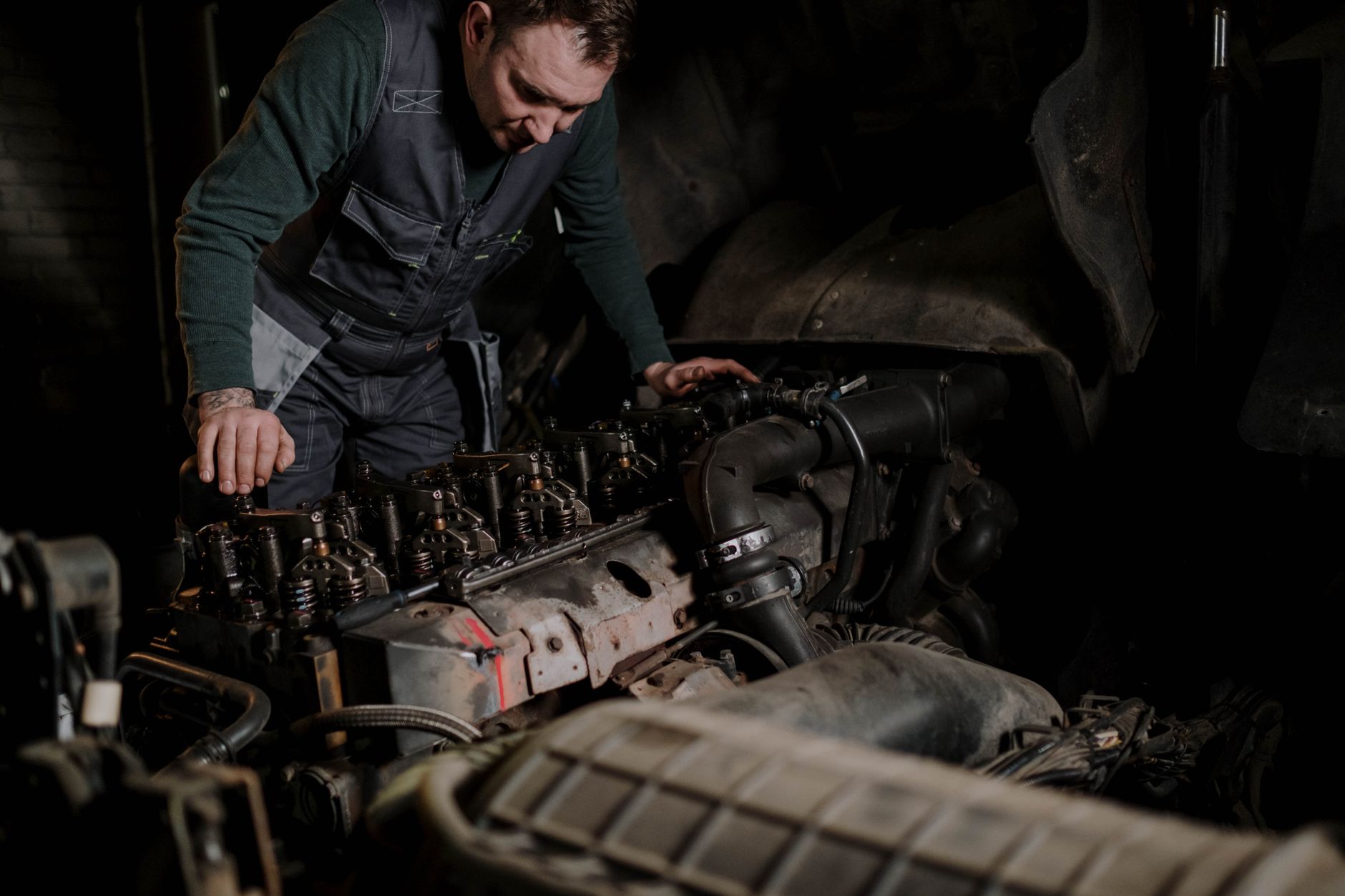 A mechanic inspects a large exposed engine in a dark auto workshop
By contrast, some European 4WD camper options leave you waiting a week for a specialist part to arrive from the eastern states, or longer from overseas. For anyone planning extended touring in regional Australia, this counts for more than most people realise before their first breakdown.
7. It's More Comfortable Than the Reputation Suggests
A lot of buyers assume vans are loud, rough, and tiring on the highway. The HiAce 4WD, especially the newer GDH variants, tells a different story. It's genuinely comfortable over distance. The cab-over layout gives an elevated, commanding view of the road, road noise stays acceptable at highway speeds, and higher-grade seats hold up over a full day of driving.
If you're planning long trips where driver fatigue is a safety issue, comfort isn't a luxury. The HiAce is no limousine. Even so, it's far more liveable than its commercial origins suggest.
8. Resale Values Hold Up Well
Toyota vans hold their value strongly in the used market. The HiAce name carries weight, buyers know exactly what the diesel is, and genuine factory 4WD variants are rare enough that demand stays firm.
Condition and mileage still matter enormously, as they always do. That said, if you're weighing the purchase as an asset rather than a pure expense, the HiAce 4WD compares well against European alternatives that tend to depreciate faster and cost more to keep on the road.
9. The Conversion Community Already Knows the Platform Well
The HiAce van body is one of the most-built touring platforms in Australia. As a result, there's a deep well of public content to learn from. Some of the best-known builds are aftermarket 4WD conversions rather than factory JDM vans, so it's worth reading them with that distinction in mind. The popular 4xoverland HiAce 4x4 tourer series, for example, gathered 1.64 million views across 18 episodes (4xoverland.com, 2025). That van, though, is a Bus4x4 second-stage conversion running a Land Cruiser 200 drivetrain, not the factory 4WD system covered here.
That kind of content is still useful. The body, interior layouts, storage solutions, and touring fitouts carry straight across to a factory 4WD van. Just keep the drivetrain difference clear when you're judging off-road behaviour, because a Bus4x4 conversion and a factory KDH or GDH 4WD don't share running gear. The upside is that proven cabinetry and layout designs already exist, so a first-time converter isn't starting from a blank sheet.
10. It Costs a Fraction of a Purpose-Built 4WD Camper
A new Land Cruiser 79 Series is a big outlay, and a purpose-built 4WD campervan from a specialist manufacturer is bigger still. By contrast, a factory HiAce 4WD sits in a far more accessible used-market price band. That's especially true in the mid-model-year range, where most of the depreciation is already done. For the touring most people actually do, it delivers comparable capability.
That's the genuine best-kept secret here: a practical, reliable, factory 4WD van with serious cargo capacity for less than most buyers assume is possible.
Who Does the HiAce 4WD Actually Suit?
This van suits a specific buyer, and being clear about that saves disappointment. It earns its keep most for people who need genuine off-road access in a high-payload, high-volume body, which roughly 1,000kg of payload (carused.jp spec sheet) and a full van-class cargo hold make possible. By contrast, it's a weaker pick for hardcore rock work or tight-city-only use.
It makes a lot of sense if you:
- Want one vehicle that works as a commercial van and a long-distance touring 4WD
- Are planning a campervan conversion and want genuine off-road capability under it
- Regularly drive unsealed rural and remote roads where RWD just isn't practical
- Value simple Toyota diesel reliability you can service almost anywhere
- Are comfortable buying an imported or already-complied JDM model
It's probably not the right fit if you:
- Need extreme technical capability, where a Land Cruiser 70 Series or Patrol GU is better suited
- Want something compact and easy to park in tight urban streets
- Expect the latest driver-assistance tech and modern infotainment
How Do You Get a 4WD HiAce in Australia?
Since the factory 4WD HiAce was never sold new here, you have two realistic paths: convert an existing RWD van through a specialist, or buy a factory 4WD model imported from Japan. Of the two, importing is the more popular route. It typically runs around 6 to 10 weeks from auction sourcing to delivery once compliance is factored in.
This is where Carbarn fits in. Carbarn is a Sydney-based used-car business in Lidcombe that specialises in Japanese-market vehicles for Australian buyers. We source these vans directly from Japanese auctions and comply them in our own Lidcombe workshop, so we see the variation between variants first-hand. In our experience, the GDH206 is consistently the model buyers settle on once they've compared the older and newer diesels side by side.
If you want to order a specific factory 4WD HiAce, we can source it from Japan through our import service, handling the auction bidding, freight, compliance, and registration paperwork end to end through that in-house workshop. If you'd rather skip the wait, we also carry locally available 4WD HiAce vans that are already imported, complied, and ready to inspect in Sydney. For the full picture, the how importing works and how compliance works pages lay out each step, the timeframes, and what's included. That way you can compare a custom import against buying off the floor and decide which suits your timing and budget.