


Ready to Hit the Road in Style?
Save money and reduce emissions with vehicles designed to deliver exceptional mileage. Visit our inventory and find a car that fits your lifestyle.
Ready to Hit the Road in Style?
Save money and reduce emissions with vehicles designed to deliver exceptional mileage. Visit our inventory and find a car that fits your lifestyle.
You've read the spec sheet. Six hundred kilometres. Four hundred and fifty kilometres. Numbers that look big enough to drive from Sydney to Melbourne without stopping.
Then you're on the freeway at 110km/h, in summer, aircon going flat out, and that figure starts shrinking in a hurry.
Australian Automobile Association testing found real-world EV range runs 3% to 31% below official figures. In fact, not one car they tested matched its laboratory claim on actual Australian roads (The Driven, December 2025). So range still matters, but it's only one part of the ownership picture. Charging speed, battery warranty, and real-world fit all decide whether a car actually works for your week.
This guide covers the electric cars worth knowing about in 2026, from budget city runabouts to long-distance sedans. Throughout, we've kept the focus on honest buyer fit, charging realities, and where the headline number can mislead.
Quick Answer
- AAA real-world testing (December 2025) found EVs delivering 3%–31% below their official range claims on Australian roads. None matched its WLTP figure. (The Driven)
- Best overall: Tesla Model Y, with a 450km real-world AAA result, the strongest of any model tested.
- Best budget pick: MG4, with up to a 10-year / 250,000km battery warranty, well ahead of the class.
- Best seven seats: Kia EV9, up to 512km WLTP, with genuine adult third-row access.
- Used-EV priority: battery warranty status, charging access, and service history matter more than the headline range figure.
What the Range Numbers Actually Mean
WLTP (Worldwide Harmonised Light Vehicle Test Procedure) is a standardised laboratory measure of range, not a real-world promise. It's genuinely useful for comparing one model against another. The catch is that the figures are recorded under controlled conditions at set temperatures, using driving profiles that don't always match how we actually drive here.
To close that gap, AAA testing runs each car through a 93-kilometre loop of real urban, rural, and highway roads around Geelong, Victoria, as part of a $14 million Commonwealth-funded program (AAA, 2025). The Tesla Model Y 2025 came closest, delivering 450km against a 466km claim, roughly 3% short. At the other end, the 2023 MG4 Standard Range showed the widest gap, hitting 281km against its 405km figure, a 31% shortfall (AfMA, 2025).
Here's how the tested models stacked up.
| Model | WLTP (km) | Real-world (km) | Shortfall |
|---|---|---|---|
| Tesla Model Y 2025 | 466 | 450 | 3% |
| Smart #3 2024 | 453 | 432 | 5% |
| Kia EV6 2022 | ~520 | ~478 | 8% |
| Kia EV3 2025 | 604 | 537 | 11% |
| Smart #1 2024 | 420 | 367 | 13% |
| Tesla Model 3 2024 | 513 | 441 | 14% |
| BYD Atto 3 2023 | 480 | 369 | 23% |
| MG4 Standard Range 2023 | 405 | 281 | 31% |
Source: AAA Real-World Testing Program, August and December 2025. Figures rounded.
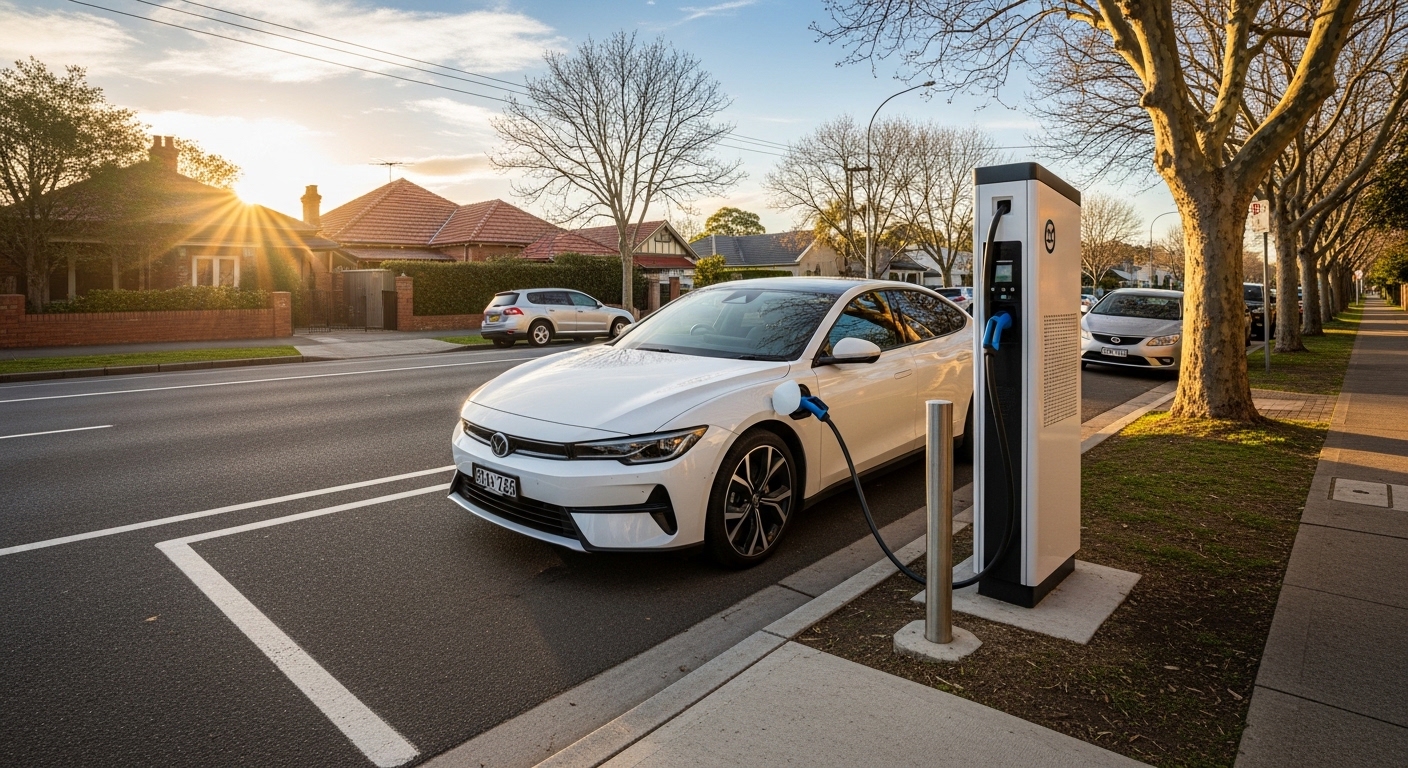 Real-world range depends on far more than the spec sheet, including how and where you charge.
Taken together, the eight models in that table average a real-world shortfall of around 13%, which is a useful rule of thumb when you're reading any spec sheet. The reasons are consistent: heat, freeway speed, and heavy aircon use all cut range further than the lab accounts for. That's not a reason to avoid EVs, though. Rather, it's a reason to buy with enough buffer for your actual driving. Range anxiety still weighs on buyers, too: 23% of NRMA members named it a top reason not to switch in 2025, up from 18% a year earlier (NRMA, April 2026).
So when you compare EVs, these four factors matter as much as range:
- DC fast-charging speed — how quickly you can add range when you need to
- Battery warranty — protection against capacity loss over time
- Charging network compatibility — not every public charger suits every car
- Real-world buffer — estimate usable range at 15–20% below the WLTP number
2026 EV Comparison: At a Glance
Australia's EV market keeps growing, with BEVs hitting a record 20% of new sales in May 2026 (Carsales VFACTS, June 2026). That means more choice than ever. Here's the shortlist at a glance, with no prices, since live pricing changes week to week.
| Model | WLTP Range | DC Charging (10–80%) | Battery Warranty | Best For |
|---|---|---|---|---|
| Nissan LEAF ZE1 | 270–450km | 60–90 min | Check remaining | Urban commuting |
| Nissan Ariya FE0 | up to ~500km | ~30 min | Check remaining | Mid-size family EV |
| Tesla Model Y | up to ~533km | ~30 min | 5yr / unltd km | Family all-rounder |
| MG4 | up to 452km | ~30 min | 10yr / 250,000km | Budget buyers |
| BYD Seal | up to 570km | variant dep. | 6–8yr battery | Value sedan |
| Kia EV9 | 443–512km | ~24 min | 7 years | Seven-seat families |
| BMW iX xDrive45 | up to 602km | ~34 min | Verify current | Luxury SUV buyers |
| Hyundai IONIQ 5 N | performance | ~18 min | 7 years | Driving enthusiasts |
| Polestar 2 LR Single | 659km | ~28 min | 5yr / 8yr battery | Long-distance commuters |
| Tesla Model 3 Highland | up to 750km | ~25 min | 5yr / unltd km | Business commuters |
| Volvo EX30 | up to 462km | ~28 min | Verify current | Compact city buyers |
WLTP from manufacturer data, June 2026. Real-world results vary. See AAA testing for model-specific comparisons.
Best Used City EV: Nissan LEAF ZE1
For a first EV on a modest budget, the Nissan LEAF ZE1 is one of the most straightforward ways in, with a WLTP figure that runs from around 270km to roughly 450km depending on variant. It's familiar, uncomplicated, and well understood by Australian mechanics. That counts for a lot when it's your first EV.
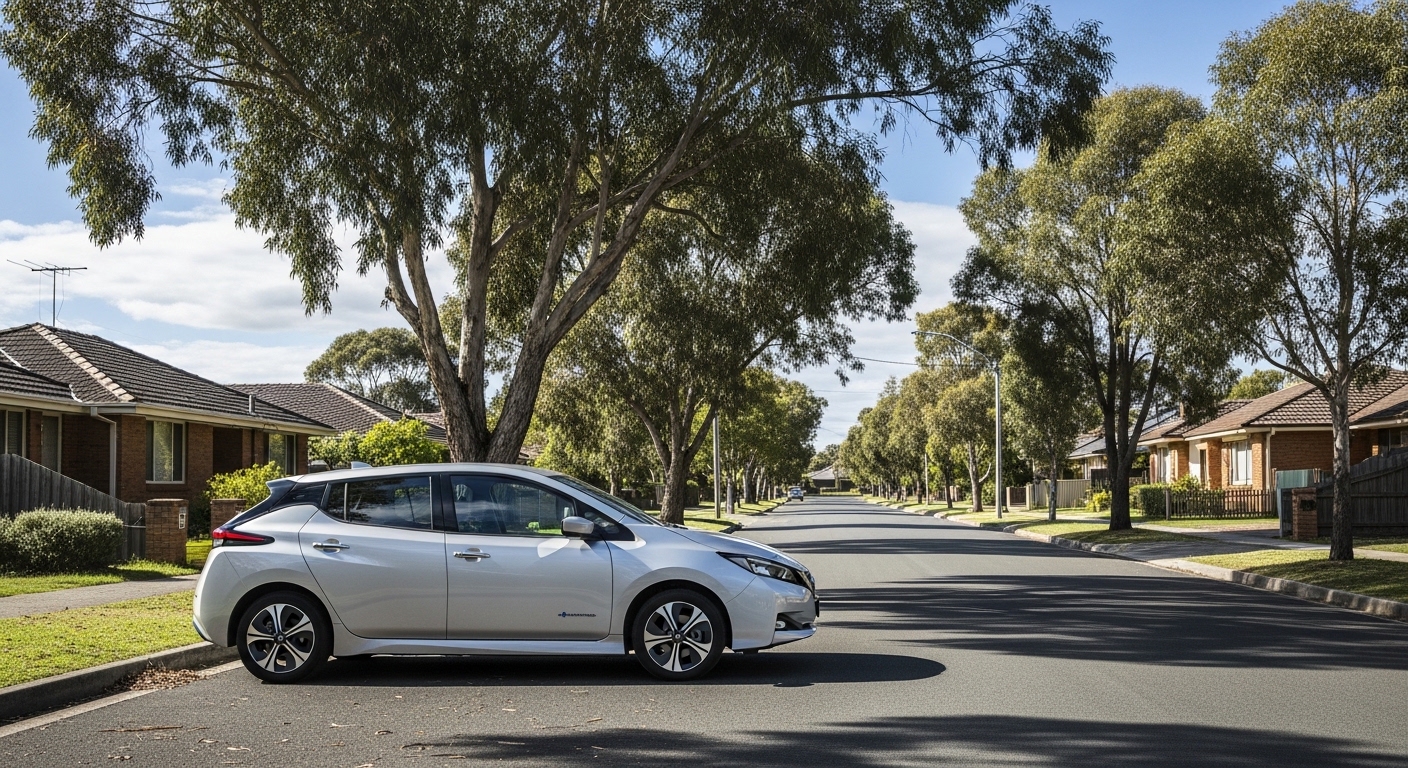 The Nissan LEAF suits short suburban loops and overnight home charging.
The ZE1 generation covers two clear options. The standard LEAF runs a 110kW / 320Nm motor with a 40kWh battery and a WLTP figure around 270km, which suits inner-city and suburban use. By comparison, the LEAF e+ steps up to 160kW / 340Nm and a 62kWh battery, lifting WLTP to roughly 450km for more everyday flexibility. Both are front-wheel drive, five-seat hatchbacks.
So if your daily radius is under 40km and you can charge overnight at home, the standard variant does the job without overpaying. The e+ makes more sense if you travel further now and then, or simply want a comfortable buffer. There's one detail to check first, though. The LEAF uses CHAdeMO, a DC fast-charging standard developed in Japan that is becoming less common at Australian public sites as CCS2 (Combined Charging System 2), now the dominant local plug, takes over. In our experience, the CHAdeMO question is the one that catches first-time LEAF buyers out most often, so map your regular routes against the current network before you commit.
Good for: urban commuters, first-time EV buyers, and households wanting low running costs on a modest budget.
Not ideal for: regular highway runs, or buyers who'll lean heavily on public rapid charging.
Best Mid-Size Family EV: Nissan Ariya FE0
For small families wanting more space and easier charging than an older import, the Nissan Ariya FE0 is the sensible mid-size pick, with a WLTP figure that reaches around 500km. It reads as the bridge between a small first EV and a large, pricey family SUV.
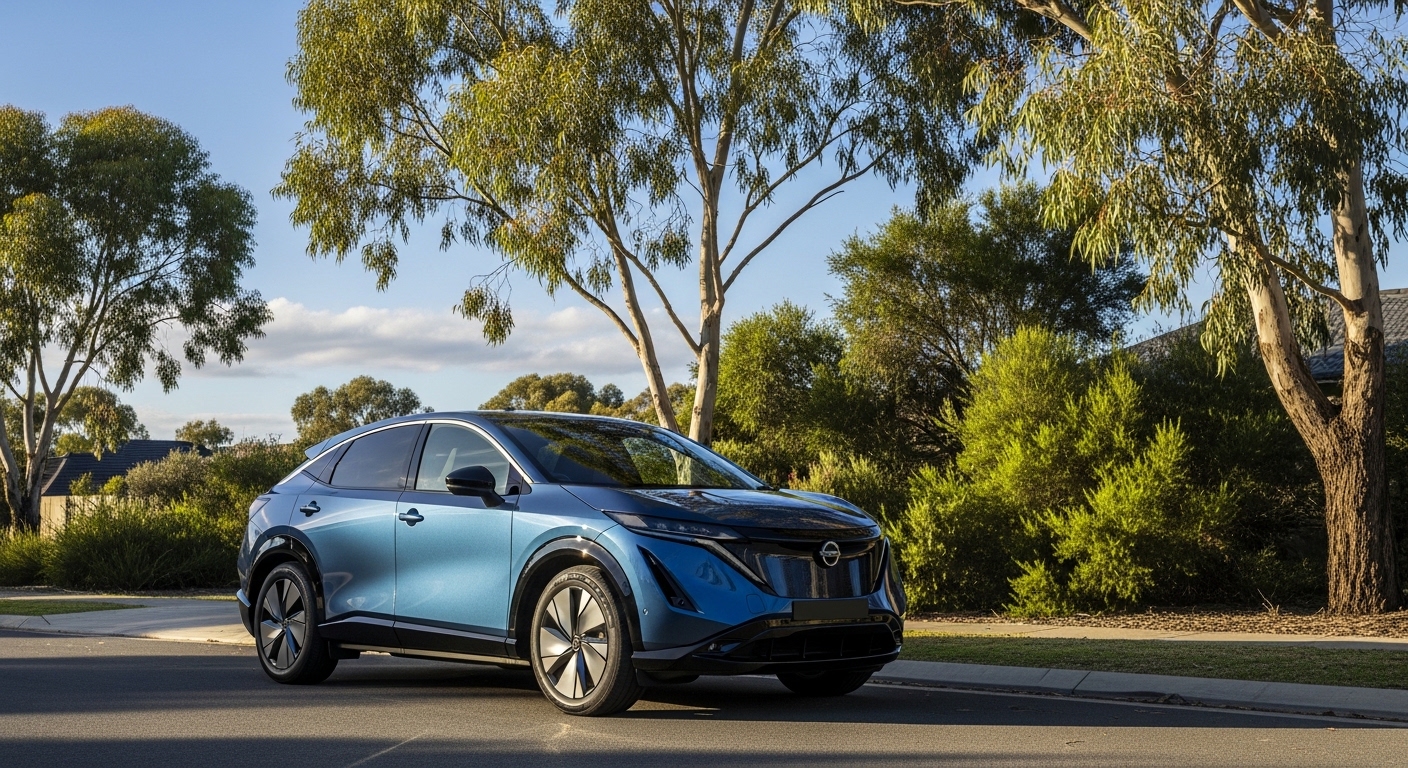 The Nissan Ariya FE0 steps up from the LEAF with more space and CCS2 charging.
The Ariya is an all-electric, five-seat crossover, front-wheel drive in the most common imported grades, drawing that ~500km figure from a 91kWh battery. Real-world range will sit under that, as with every EV here, so plan around a usable figure rather than the headline. The bigger practical win over the older LEAF is charging: the Ariya uses CCS2, the standard now dominating Australia's public network, so you skip the CHAdeMO compatibility worry entirely.
Inside, it's quiet and well finished, with a flat floor and genuinely usable rear space for kids and gear. Highway manners are smoother than the LEAF too, which matters if your week mixes school runs with the occasional longer trip. That said, where a build year or battery option can't be confirmed, check the exact variant before buying rather than assuming.
Good for: small families, and buyers wanting a modern interior with easier public charging than older imports.
Not ideal for: seven-seat needs, or buyers chasing maximum range for the money.
Best Overall: Tesla Model Y
For buyers who want a single car to handle commuting, school runs, and weekend trips without much planning, the Tesla Model Y stays the clearest pick. It backed that up in May 2026, landing as the single best-selling vehicle in Australia that month, ahead of every petrol model (Carsales VFACTS, June 2026).
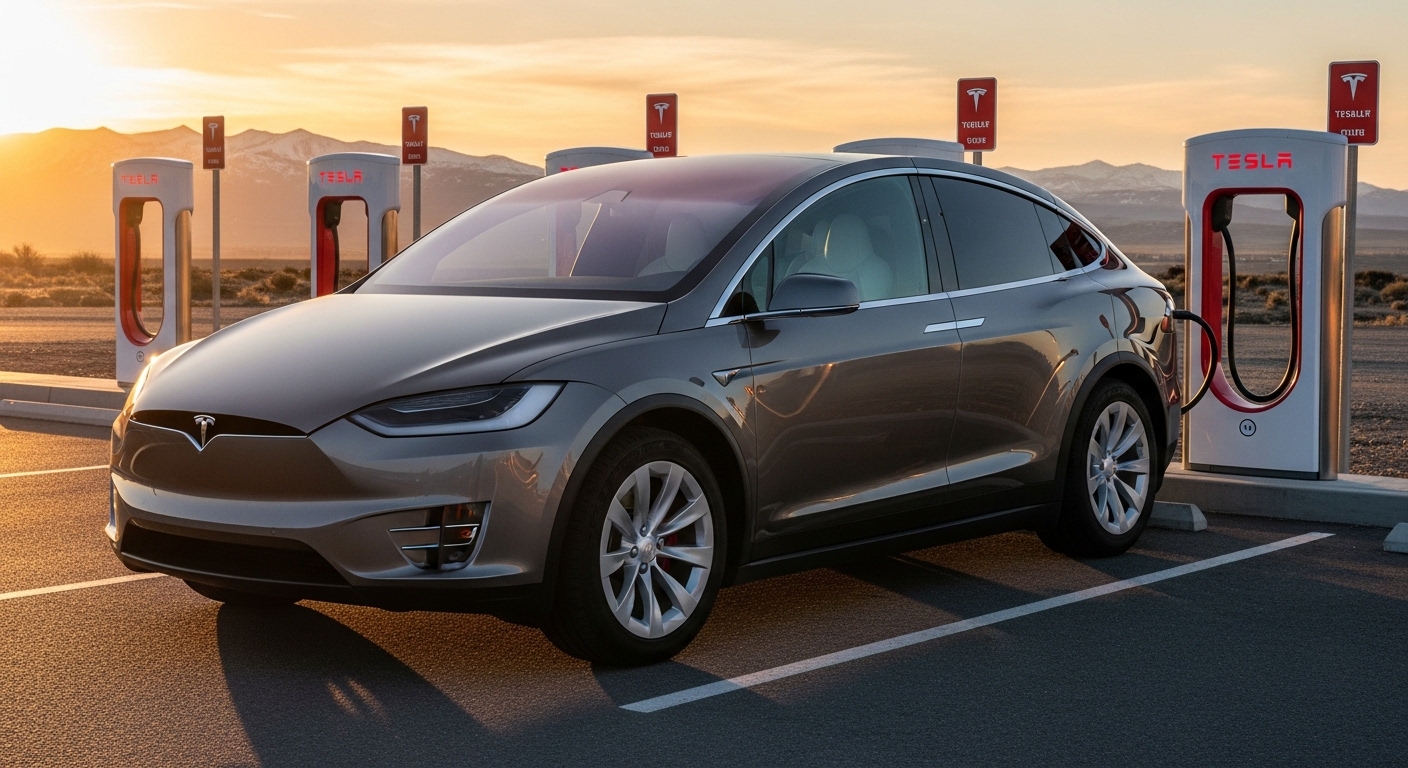 The Tesla Model Y came closest to its official range figure in AAA testing.
The figures hold up. WLTP range reaches up to around 533km depending on variant, and the tested 2025 car returned 450km in AAA's real-world loop, the smallest shortfall of any model on test at roughly 3%. Cargo runs to about 2,138 litres with the seats folded, and the battery carries a 5-year, unlimited-kilometre warranty. The real practical edge, though, is the Supercharger network. Coverage across major highway corridors means long trips work without detailed route planning, and the charging interface is simpler than most.
It isn't the cheapest way in, and the minimalist, screen-led interior suits some buyers more than others. Even so, we've seen plenty of buyers land here after over-thinking the decision, simply because it moves from school pickups to a Sydney–Canberra run with minimum fuss.
Good for: families juggling mixed daily and weekend driving, and buyers who want straightforward charging.
Not ideal for: budget-first buyers, or anyone who finds a screen-heavy cabin uncomfortable.
Best Budget: MG4
For first-time buyers on a firm budget, the MG4 leads the affordable end, and not only on price. Its warranty terms are genuinely strong in a class where most rivals offer far less cover, which buys real peace of mind.
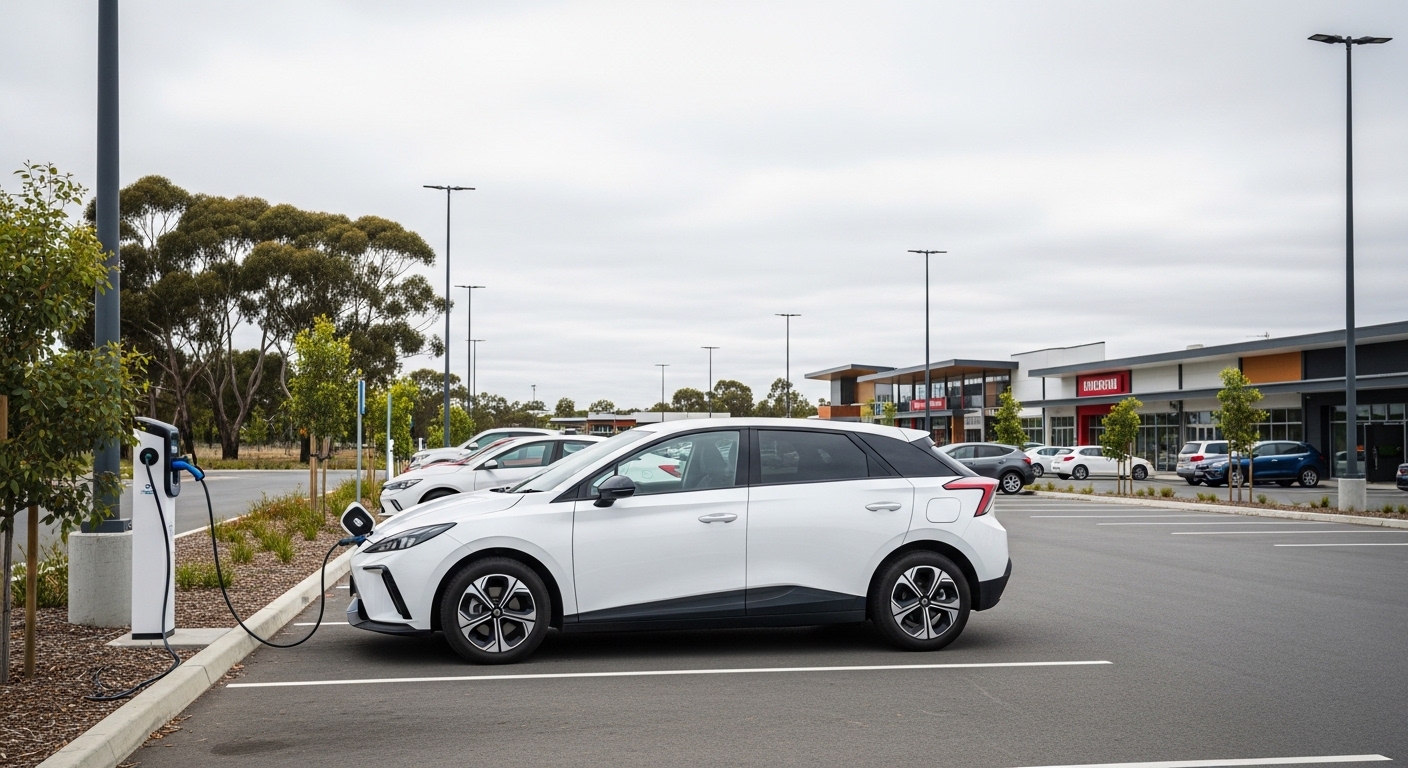 The MG4 pairs an accessible entry price with a class-leading battery warranty.
WLTP range reaches up to 452km on the Extended Range variant, with a 10–80% DC charge in around 30 minutes. The headline draw, though, is the warranty: up to 10 years or 250,000km when the car is serviced at authorised facilities, well beyond the class norm. The honest caveat sits in the testing data, where AAA's 2023 Standard Range MG4 came in 31% short, at 281km against its 405km claim. The Extended Range does better, but real-world range still lands meaningfully below the sticker, as with most EVs tested.
So if range is your priority within the lineup, the Extended Range is the smarter buy. For a first EV where long-term confidence matters and the budget is firm, the MG4 makes a lot of sense.
Good for: budget-conscious and first-time buyers, plus singles and couples with moderate daily range needs.
Not ideal for: buyers needing a large cabin, or anyone prioritising a premium interior.
Best Value Sedan: BYD Seal
For sedan buyers chasing strong range without premium money, the BYD Seal is the standout value pick, reaching up to 570km WLTP in the Premium trim. BYD's momentum is hard to ignore too: the brand sold 8,211 vehicles in May 2026, up 154.6% year-on-year (Carsales VFACTS, June 2026).
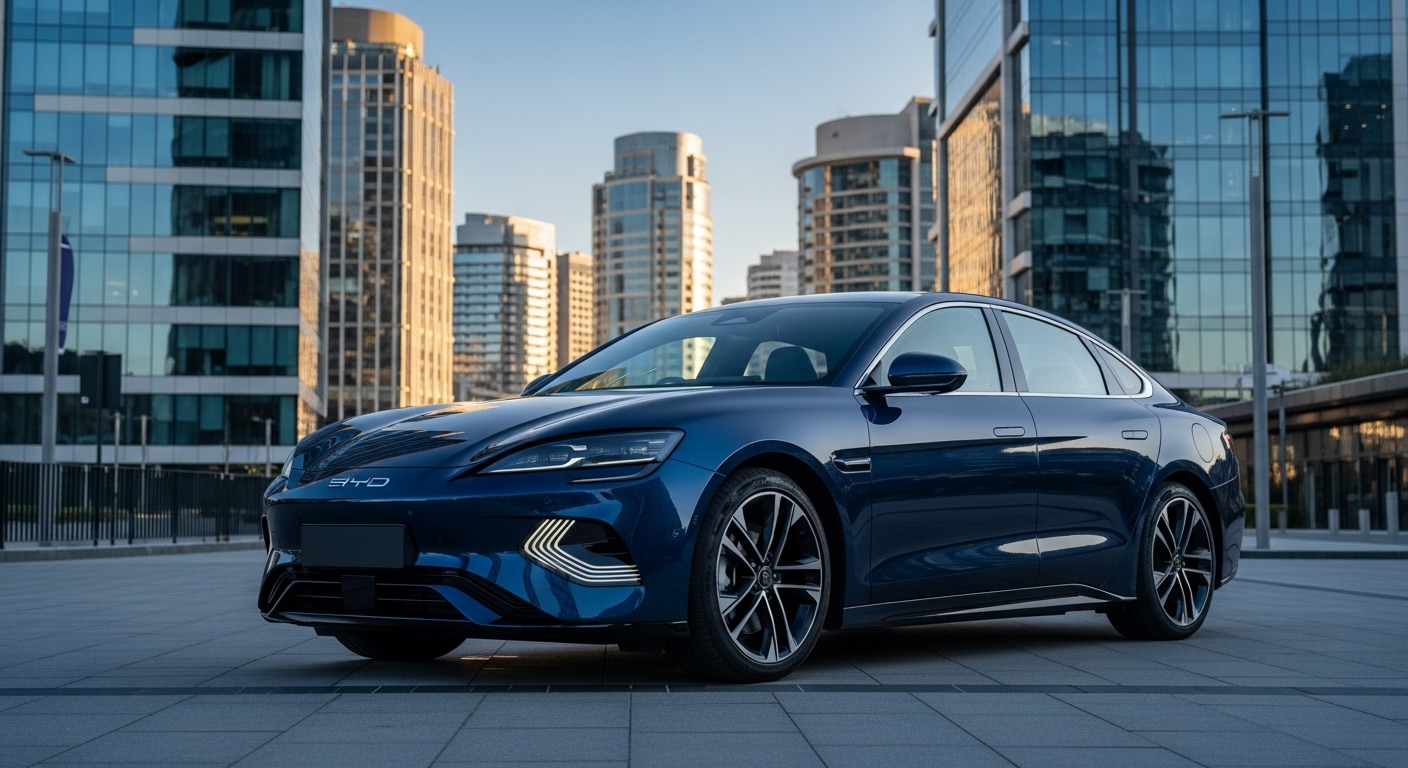 The BYD Seal covers the value sedan category with strong range and Blade Battery tech.
Power spans 230kW / 360Nm in the Premium through to 390kW / 670Nm in the all-wheel-drive Performance. Underneath sits an LFP (lithium iron phosphate) Blade Battery, which BYD positions as more thermally stable than conventional lithium-ion cells, using cell-to-body integration that helps both rigidity and packaging. Three variants serve different priorities: the Dynamic sits at the lower price point, the Premium targets the long-range sweet spot, and the Performance chases acceleration over economy.
For that reason, most buyers should start their comparison from the Premium, since the Dynamic's range is noticeably shorter. And if you're cross-shopping a hybrid on total running cost, the Seal is a fair benchmark to weigh against.
Good for: sedan buyers wanting strong range at a competitive price, and anyone comparing EVs against hybrids on running cost.
Not ideal for: families needing SUV access or seven seats.
Best Seven-Seat Family EV: Kia EV9
For households that genuinely need seven seats, the Kia EV9 is the most practical electric option on sale in Australia, with up to 512km WLTP range. The third row is usable by adults, not just a line on the spec sheet, which is rare at this end of the market.
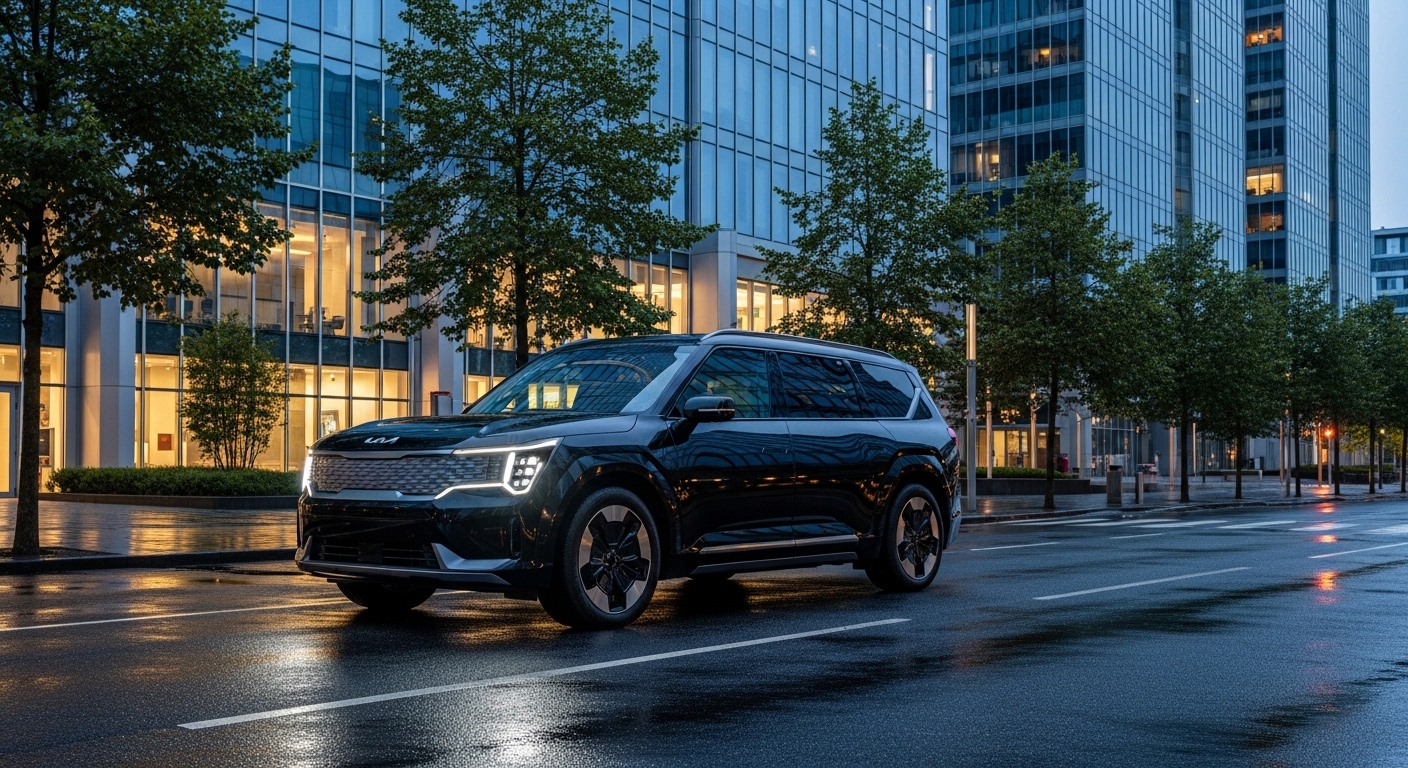 The Kia EV9 offers genuine adult-usable third-row seating, rare in the EV market.
WLTP range runs 443km in the Air, 512km in the Earth, and 505km in the GT-Line. On a suitable 800V charger, a 10–80% top-up takes around 24 minutes for the rear-drive Earth and GT-Line, helped by the EV9's 800V architecture. Cargo reaches up to 2,318 litres with all seats folded. Select grades also add V2L (vehicle-to-load) power output, which lets the car run external devices, plus walk-in third-row access and both 400V and 800V charging compatibility.
In practice, the Earth's 512km gives a real buffer for longer family trips, and the fast 800V charging means shorter stops than many rivals at this price. So if you're moving out of a large petrol seven-seater, it's an easy one to shortlist.
Good for: families of five to seven, and buyers switching out of large petrol seven-seat SUVs.
Not ideal for: budget-first buyers, or those who rarely need the third row.
Best Luxury SUV: BMW iX xDrive45
For luxury buyers who want long-distance touring comfort without trading away range, the BMW iX is the pick, with up to 602km WLTP. It's a calm, quiet way to cover big distances.
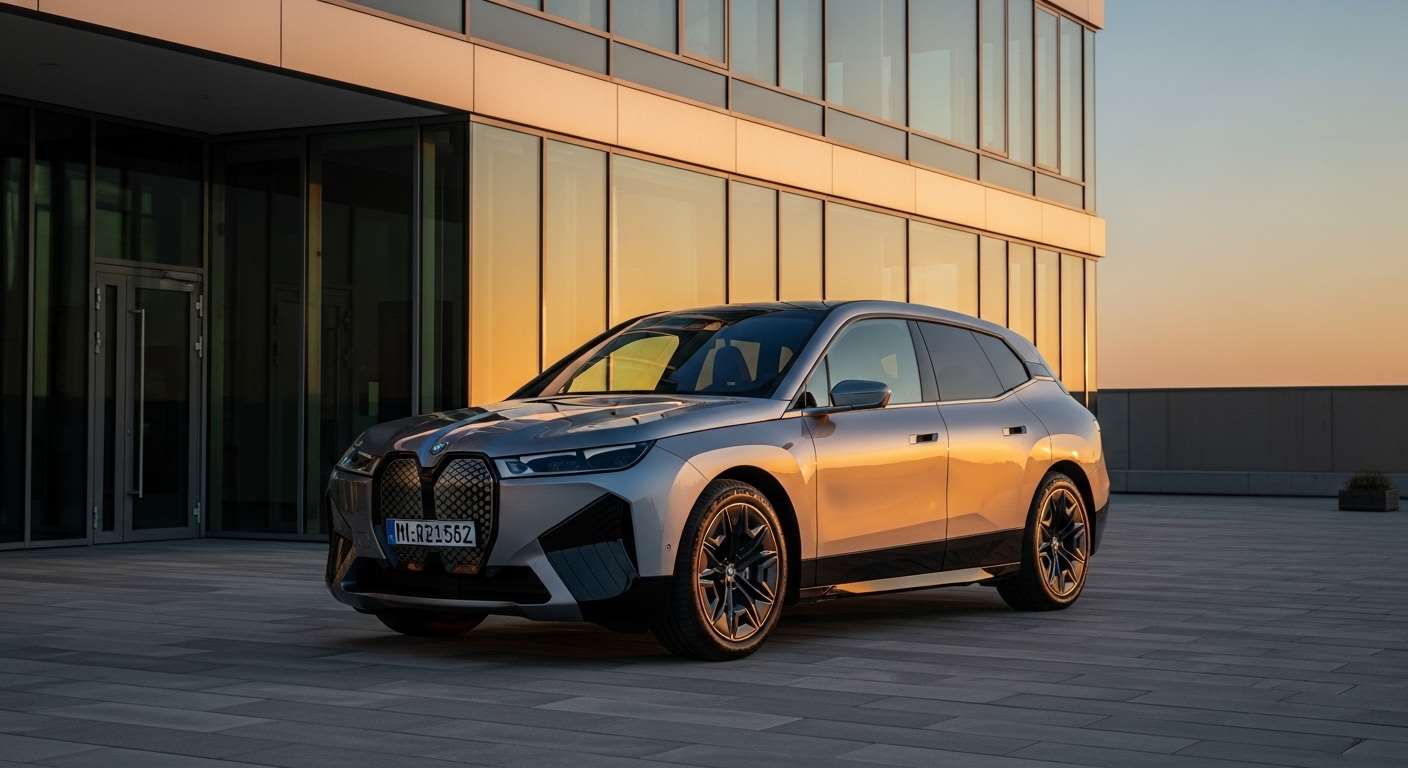 The BMW iX makes most sense as a long-distance touring vehicle.
Alongside that 602km figure, a 10–80% DC charge takes around 34 minutes at up to 175kW. The xDrive45 produces 300kW, and luggage space runs to about 1,750 litres. None of those numbers are class-leading on their own, but together they make a convincing touring package. The cabin quality, meanwhile, is where the premium entry price earns its keep.
As a result, the iX makes most sense as a distance machine rather than a city car. Buyers chasing value-per-dollar will find stronger options lower in this list, yet few of them feel this special on a long drive.
Good for: premium buyers wanting comfort and range for extended trips, and people moving up from large luxury SUVs.
Not ideal for: value-focused buyers, or urban-only use.
Best Performance EV: Hyundai IONIQ 5 N
For drivers who want genuine performance without losing daily usability, the Hyundai IONIQ 5 N is the pick, producing up to 478kW and running 0–100km/h in 3.4 seconds. It's a real performance car built on an EV platform, and the numbers back the billing up rather than just dressing it up.
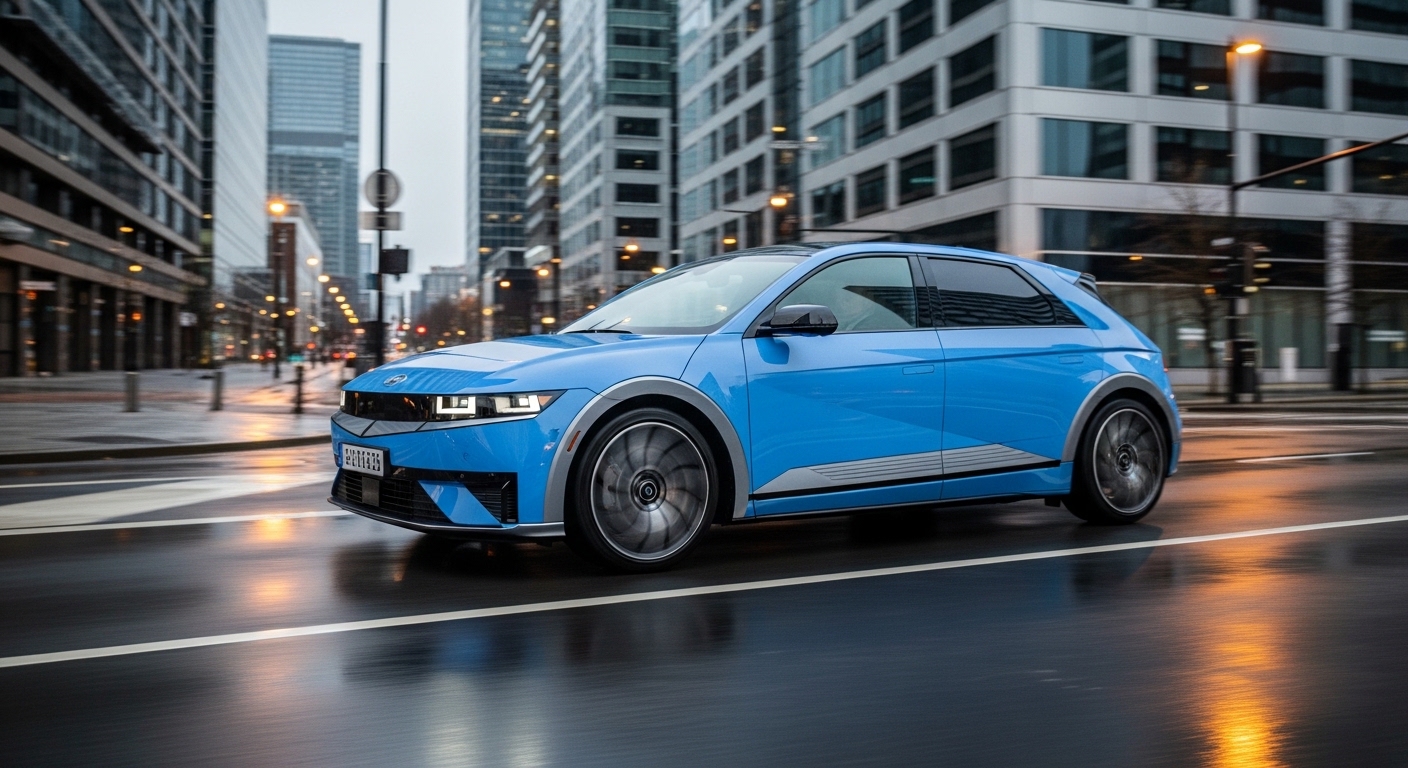 The IONIQ 5 N is a genuine performance car built on an EV platform.
Standard output is 448kW, rising to 478kW with N Grin Boost active. On top of the 3.4-second sprint, it tops out at 260km/h and still manages a 10–80% DC charge in about 18 minutes on suitable 800V ultra-rapid infrastructure. That charge time is quick by any standard, and it keeps the car usable day to day rather than leaving it stranded between track sessions.
This isn't a running-cost buy, and it's not pretending to be. Instead, it's for drivers who want real performance and can carry the premium entry price, while keeping a car they can still use for the school run.
Good for: driving enthusiasts who want EV performance without losing daily practicality.
Not ideal for: families, economy-focused buyers, or anyone whose main concern is running cost.
Best Long-Range Sedan: Polestar 2 Long Range Single Motor
For buyers who want maximum range in a sedan and would rather not buy a Tesla, the Polestar 2 Long Range Single Motor is the standout, with a 659km WLTP figure. It's understated, well built, and quietly capable of big distances.
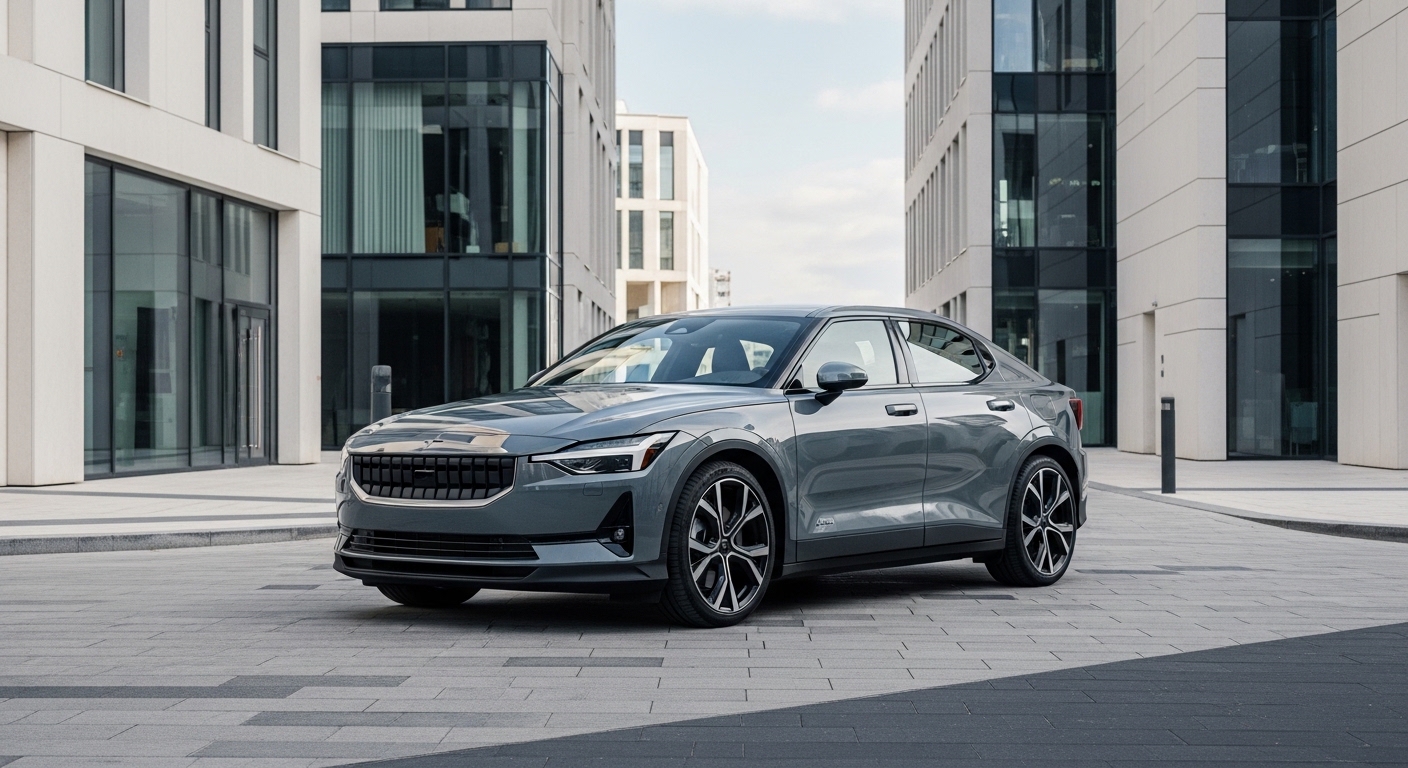 The Polestar 2 Long Range Single Motor claims the longest range of any non-Tesla here.
That 659km is the highest of any non-Tesla car on this list. It charges at up to 205kW, with a 10–80% top-up in roughly 28 minutes. The single rear motor delivers 220kW / 490Nm, good for 0–100km/h in 6.2 seconds, and the boot holds 407 litres. Real-world range will be lower, in line with the consistent WLTP shortfall pattern, but even discounting 15–20% leaves a genuinely long usable figure for a sedan.
So for buyers who want long legs and a calmer, more design-led alternative to the obvious choice, it's an easy recommendation.
Good for: long-distance commuters, business users, and sedan buyers who don't want an SUV body.
Not ideal for: families needing more boot or back-seat space.
Best Premium Sedan: Tesla Model 3 Highland
For business users and long-distance commuters who want a refined sedan, the Tesla Model 3 Highland is the premium pick, and its 750km WLTP figure is the highest of anything on this list. The Highland refresh sharpened the car enough to push it firmly into premium territory.
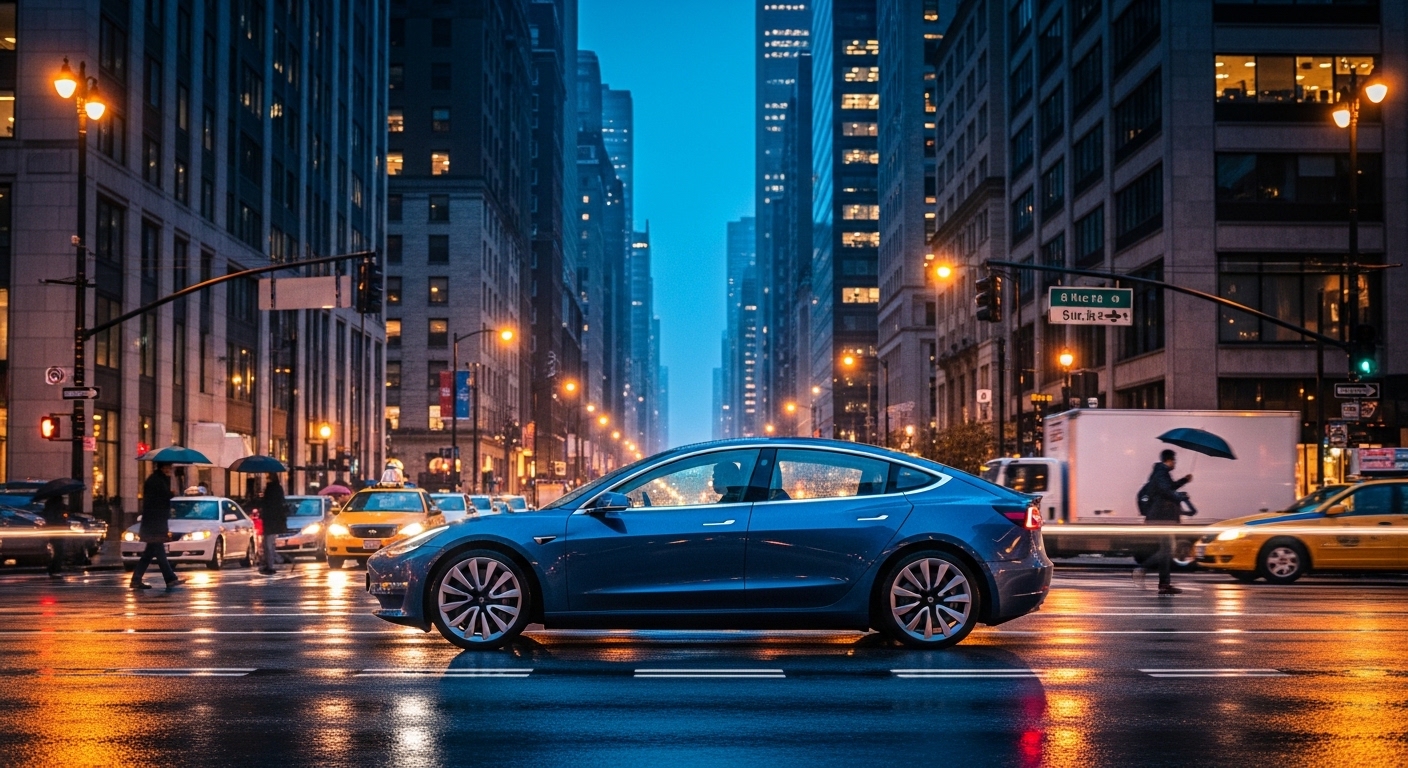 The Model 3 Highland pairs long range with fast Supercharger access.
Beyond that 750km figure, Supercharger access adds up to 311km in 15 minutes when you do need to stop. The battery carries Tesla's 5-year, unlimited-kilometre warranty. The Highland update also brought acoustic glass, ventilated front seats, and a rear touchscreen that lift the cabin noticeably. For business users and long-distance commuters, that mix of exceptional range and fast charging means day-to-day ownership asks for very little adjustment.
It's a sedan, though, so families needing SUV-style access or volume will be better served elsewhere on this list.
Good for: business commuters, long-distance users, and buyers who value a quiet, refined cabin.
Not ideal for: families needing SUV access or cargo volume.
Best Compact Premium SUV: Volvo EX30
For urban buyers who want a premium badge without a big car, the Volvo EX30 is the compact pick, with up to 462km WLTP range. It's an easy thing to live with around town.
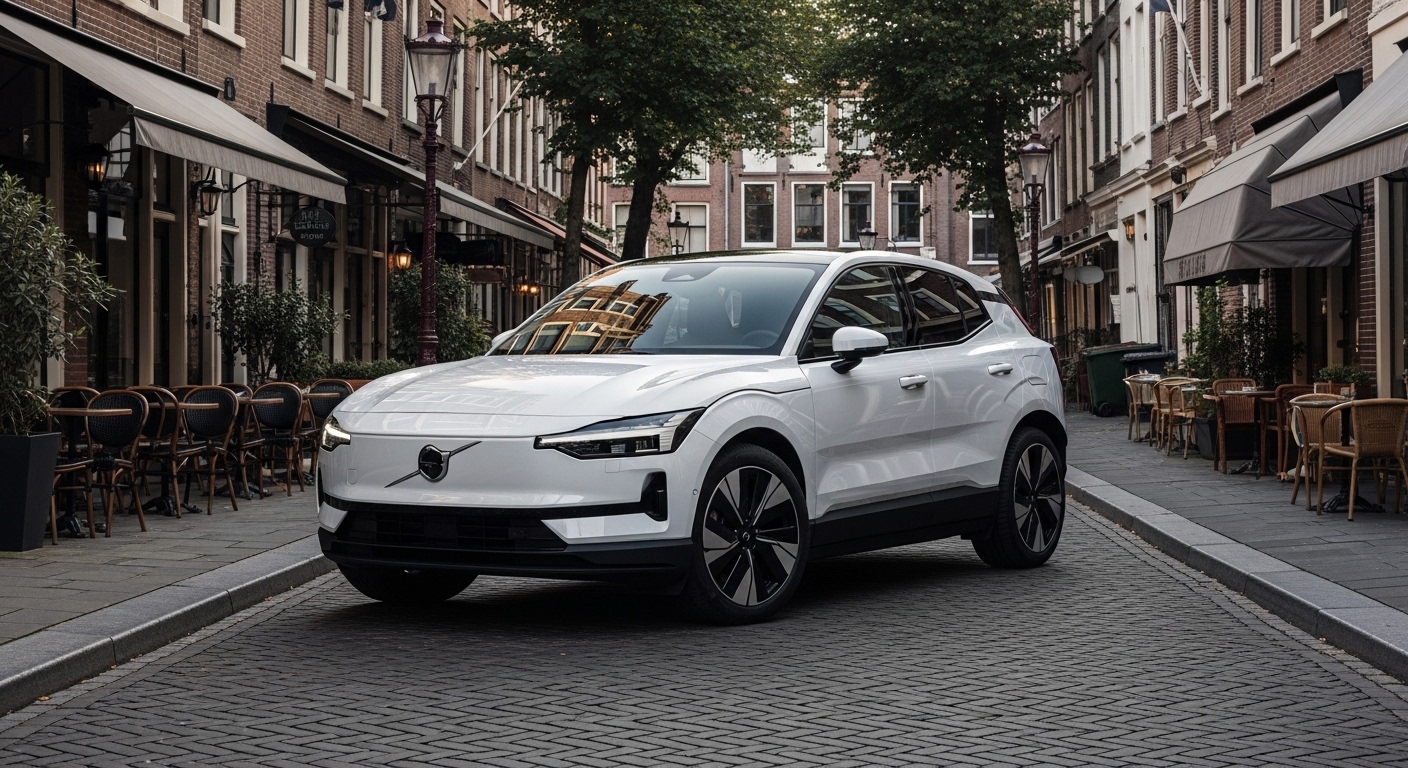 The Volvo EX30 fits the compact premium niche for urban singles and couples.
That 462km figure comes from the Single Motor Extended Range, which produces 200kW / 343Nm, and a 10–80% DC charge takes around 28 minutes. The honest limitation, however, is space. The main boot holds 318 litres, roughly hatchback-sized, expanding to about 1,000 litres with the rear seats down. Small by SUV standards, in other words.
As a result, singles, couples, and small urban households with good charging access get the most out of it. Larger families will run out of room fairly quickly, so be realistic about how much you carry.
Good for: urban singles and couples wanting compact premium styling, and downsizers.
Not ideal for: families, or buyers who regularly carry bulky loads.
Electrified Ute: BYD Shark 6 Is a PHEV, Not a Full EV
The BYD Shark 6 turns up on most 2026 EV lists, so it's worth being clear: it's a plug-in hybrid ute, not a battery-electric vehicle. In practice, that means it pairs a petrol engine with a battery pack, with combined range claims of up to 800km on certain grades.
For buyers who need real ute capability and want to cut fuel use, the Shark 6 is worth a look. But for anyone specifically after zero-tailpipe-emission transport, it doesn't fit that brief. Full battery-electric utes remain thin on the ground for Australian buyers in 2026, so for now the PHEV is often the practical middle ground.
Which One Makes Sense for You?
Here are a few honest buyer-fit calls to cut through the list.
If you mostly drive around the suburbs and want to keep it simple: the MG4 or a used Nissan LEAF covers the job. Both work best charging overnight at home on a 40–80km daily loop.
If you need one car for everything, commuting, kids, weekend trips: the Tesla Model Y is the safest pick. Its real-world range holds up better than most in AAA testing, and the Supercharger network takes the planning anxiety out of longer drives.
If you need seven seats: the Kia EV9 is the clear answer. Nothing else on sale offers genuine adult third-row access alongside competitive range.
If you want a sedan and maximum range: the Tesla Model 3 Highland for buyers happy in Tesla's ecosystem, or the Polestar 2 Long Range for those who want something different.
If budget is the priority: the MG4 leads on warranty terms and accessible entry price.
If performance is the priority: the IONIQ 5 N has no real EV equivalent at this level while staying usable every day.
Buying Used: What to Check Before You Commit
The used EV market is now deep enough that pre-owned is a realistic path for buyers who don't want new-car money. Before you start, the NSW Government advises confirming charging access, insurance costs, and any apartment or strata parking permissions. Get those sorted first.
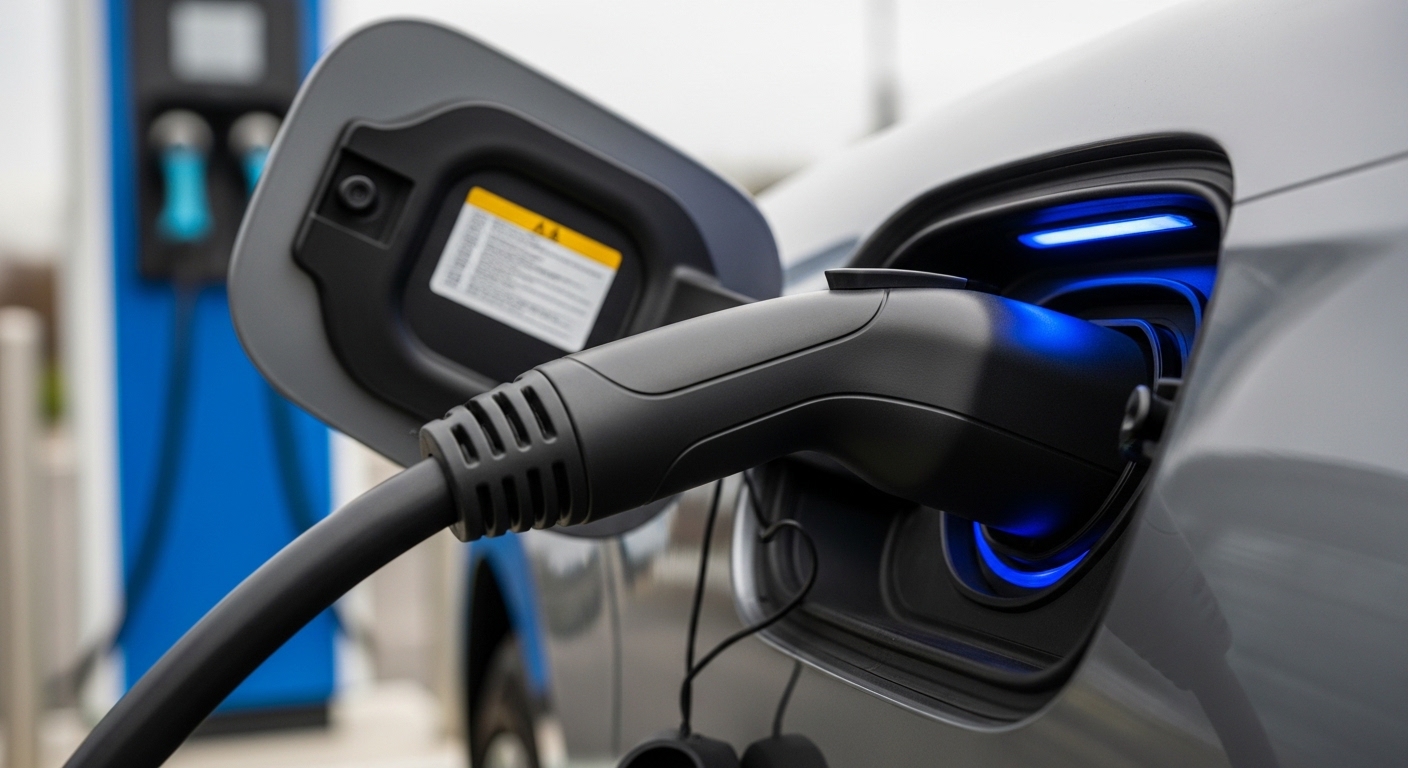 Battery condition and charging access matter more than the headline range figure when buying used.
With that in mind, work through this before committing to any used EV:
- Charging access — where will you charge regularly? Apartment residents need strata permission for a charger installation before buying.
- Battery warranty status — check how much original warranty remains and what it covers. Battery health drives both usable range and resale value.
- CHAdeMO vs CCS2 — older models like the Nissan LEAF use CHAdeMO DC charging, which is getting harder to use on Australia's CCS2-dominant public network.
- Service records — full history from authorised facilities, especially where warranty cover depends on it, as the MG4's 10-year term does.
- Insurance quote — get one before you sign. EV premiums can run higher than comparable petrol cars.
- Real-world range check — ask for actual daily consumption figures, or take a long test drive that reflects how you really drive.
Of all of these, battery condition is the single factor that separates easy used-EV ownership from a frustrating one. In our experience, a car with solid remaining warranty cover and a documented service history is worth more than a cheaper one with uncertain battery health. It's also worth knowing your local network: in Western Australia, around 68% of public chargers are AC-only, which limits fast-charging outside the metro (The Driven, June 2026).
Charging, Running Costs, and Incentives in 2026
Running Costs: The Honest Version
Home charging usually offers the best economics. To put a number on it, the ATO's home-charging reference rate rose to 5.47 cents per kilometre, applying from 1 April 2026 for FBT and 1 July 2026 for income tax (Paris Financial, May 2026). Your actual cost depends on your electricity tariff and daily use.
Public rapid charging, by contrast, costs more per kilometre than charging at home. So if your week leans on public DC sessions rather than overnight top-ups, the running-cost advantage over a petrol or hybrid car narrows a fair bit.
Servicing is generally cheaper: no oil changes, less brake wear thanks to regenerative braking, and longer intervals. On the other hand, tyre wear can run faster than on a comparable petrol car because of the extra weight, and insurance, depreciation, and charging all feed into the real total. In fact, a well-priced hybrid can sometimes work out cheaper to own overall than a budget EV that relies heavily on public charging. So run the numbers for your own situation rather than assuming electric always wins.
FBT and Novated Lease Changes
The FBT exemption for plug-in hybrids ended on 1 April 2025. Battery-electric vehicles still qualify, however, with the full exemption continuing to 31 March 2027 (PwC Australia, 2026).
Looking further ahead, from 1 April 2027 a 25% FBT discount applies to eligible EVs priced above $75,000. Then, from 1 April 2029, that discount extends to other new eligible EV arrangements. Existing arrangements keep their prior treatment, so speak with a lease specialist about what applies to you before changing anything in place.
Charging Infrastructure
Australia's public charging network keeps expanding, though coverage maps vary by how you count. One detailed June 2026 analysis mapped more than 1,200 operational public chargers nationally, with both the count and the quality of coverage uneven across states (The Driven, June 2026). Home charging stays the most convenient and cheapest option for most buyers, but the public network has grown enough that long-distance travel is now manageable with a bit of planning.
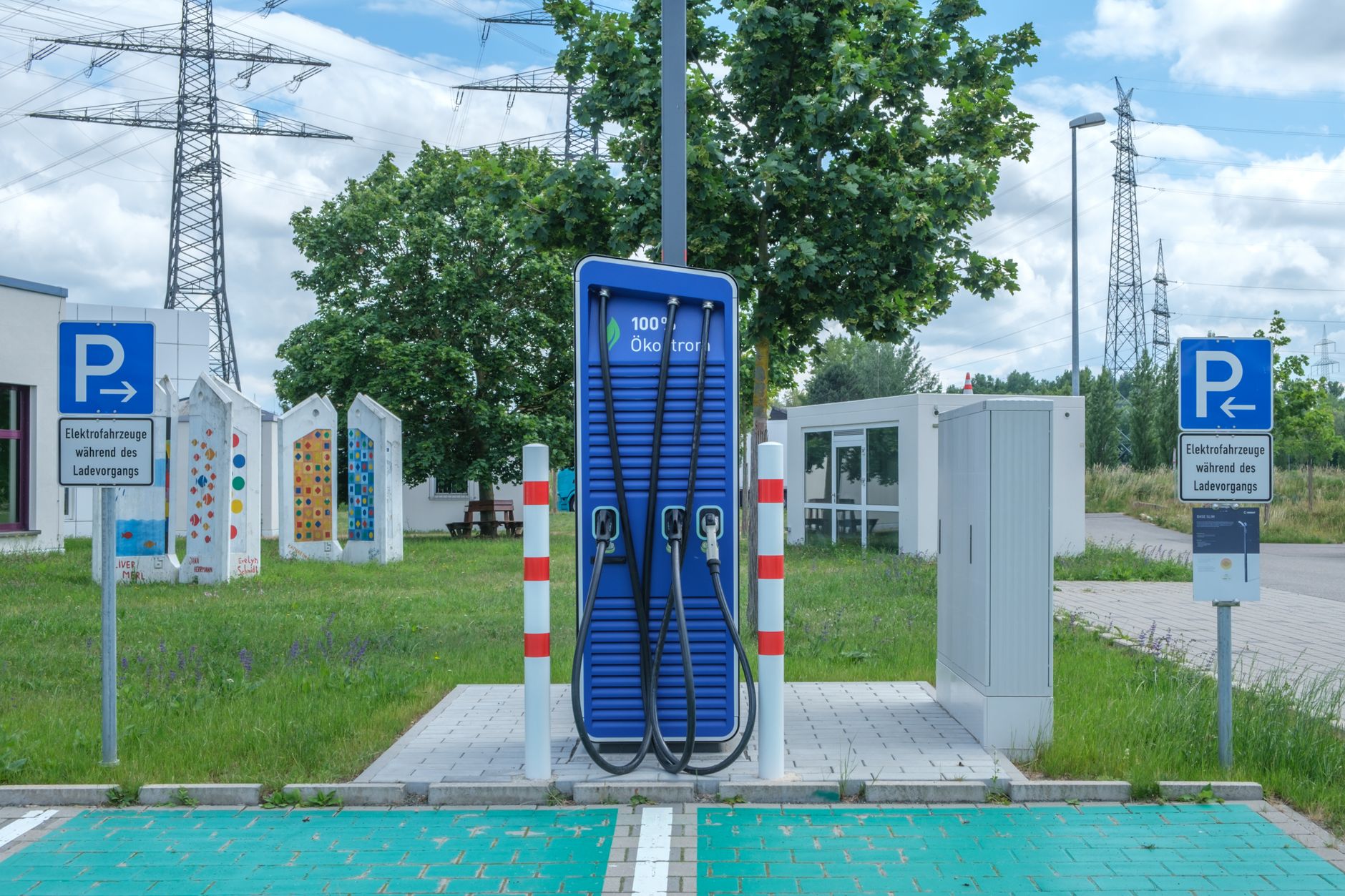 Australia's public charging network keeps growing, though gaps remain on remote corridors.
Gaps still exist on remote corridors, though. The longest is a 625km stretch of the Stuart Highway in the Northern Territory with no public fast charger, so plan carefully if your travels take you well off the main metro routes.
How Carbarn Can Help
Carbarn sources Japanese-market vehicles for Australian buyers, with a Sydney warehouse and in-house compliance workshop in Lidcombe, NSW. If a Japan-sourced EV suits you, both the imported Nissan LEAF ZE1 and the imported Nissan Ariya FE0 can be ordered through Carbarn's step-by-step import process. The team handles auction sourcing with pre-bid inspection where possible, VIA approval, shipping, RAW-certified compliance work, AVV inspection, and RAV entry, with finance and nationwide delivery on top.
Prefer something already in Australia? You can browse the locally available Nissan range, and if you're still weighing electric against petrol-electric, the used hybrid range is a practical place to compare running costs before you decide. Every car is inspected, with warranty options and registration support available.