



Ready to Hit the Road in Style?
Save money and reduce emissions with vehicles designed to deliver exceptional mileage. Visit our inventory and find a car that fits your lifestyle.
Ready to Hit the Road in Style?
Save money and reduce emissions with vehicles designed to deliver exceptional mileage. Visit our inventory and find a car that fits your lifestyle.
You've priced a Jimny Sierra at a Suzuki dealer, seen the wait, and started wondering what else is out there. Or you want something small and genuinely cheap to run, and nothing in the local showrooms quite fits. Both of those roads tend to end in the same place: a car built for the Japanese market.
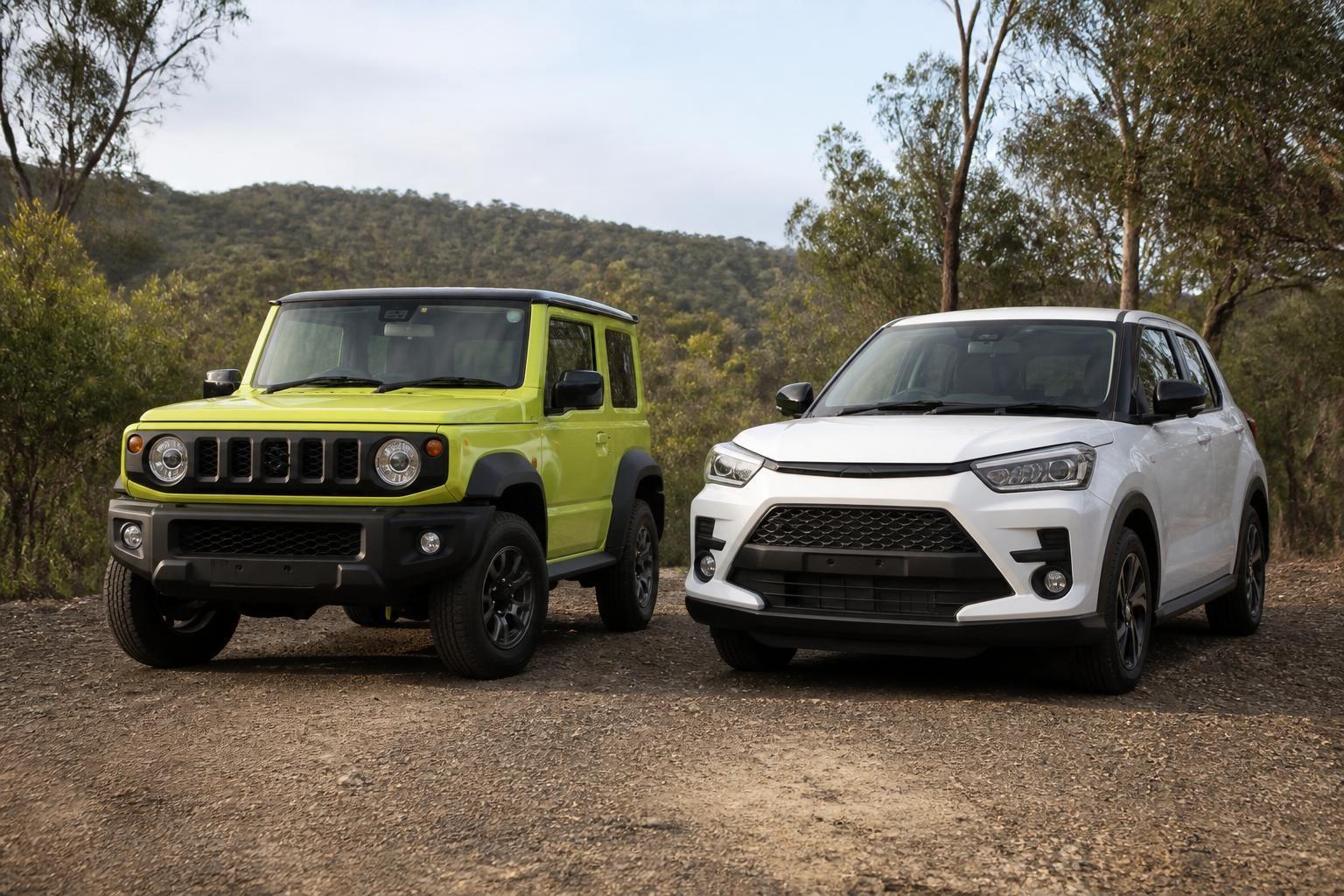
The Suzuki Jimny JB64W and the Toyota Raize Hybrid A202A are two of the most asked-about small SUVs coming out of Japan. Sharing an import pathway is the only thing they have in common. This guide won't crown a winner. It'll help you work out which one is yours.
The Bottom Line
- The Jimny JB64W is a proper kei 4WD: ladder frame, part-time 4WD with a mechanical low-range transfer case, and 205 mm of ground clearance (Suzuki Japan).
- The Raize Hybrid A202A is a series hybrid built for city work, with a generator-only petrol engine Toyota rates at up to 40% thermal efficiency.
- The Raize Hybrid is front-wheel drive only. No four-wheel-drive hybrid version exists.
- Both are approved under the SEVS Environmental Criterion and take roughly 6 to 10 weeks to land.
What Do These Two Imports Actually Have in Common?
Almost nothing beyond the paperwork. Both models clear Australian import rules under the same SEVS Environmental Criterion, and both sit outside what Suzuki and Toyota sell new here. Demand is the reason people look: Jimny sales in Australia climbed more than 50% during 2024, making it one of Suzuki's top-selling models (CarsGuide, 2025).
The Jimny you can buy new here is the JB74W Sierra, from $31,990 for the three-door Lite manual (Carsales new-car pricing, 2026). The JB64W is the narrower kei-spec car Japan keeps for itself. The Raize has no Australian equivalent at all. Different problems, same shipping container.
How Do the Jimny JB64W and Raize Hybrid Compare on Paper?
Side by side, the split is obvious before you read a single review. One car is engineered around traction and clearance, the other around burning as little fuel as possible in traffic. Toyota rated the Raize Hybrid at 28.0 km/L on the WLTC cycle at its November 2021 Japan launch, roughly double anything the Jimny publishes.
| Suzuki Jimny JB64W | Toyota Raize Hybrid A202A | |
|---|---|---|
| Engine | R06A 658cc turbo, inline 3 | WA-VEX 1.2L inline 3, generator only |
| Output | 47 kW (64 PS) @ 6,000 rpm | Driven by electric motor |
| Torque | 96 Nm @ 3,500 rpm | 170 Nm (electric motor) |
| Drivetrain | Part-time 4WD, low range | Front-wheel drive only |
| Transmission | 5MT or 4AT | Single-speed, motor-driven |
| WLTC (city/suburban/highway) | MT 15.1 / 17.6 / 16.7 km/L; AT 12.2 / 15.1 / 14.9 km/L | 28.0 km/L combined |
| Ground clearance | 205 mm | Not published |
| Seats | 4 | 5 |
| SEVS approval | SEV-000654 | SEV-000961, SEV-000370 |
| Eligible builds | May 2018 to Feb 2025 | Nov 2021 to Feb 2025 |
Jimny figures are from Suzuki Japan's official performance page; Suzuki publishes the three WLTC modes rather than a single combined number, so we haven't invented one.
Suzuki Jimny JB64W: The Kei 4WD Built Around Low Range
The Suzuki Jimny JB64W is the kei-class version of the Jimny, and the hardware underneath is the reason people go looking for it. Suzuki keeps the traditional ladder frame with an added X-member, three-link rigid axles front and rear, and a front-engine rear-drive layout chosen specifically to protect the approach angle. Ground clearance is 205 mm and the turning circle is a 4.8 m radius, which is why it threads through tracks and multi-storey car parks alike.
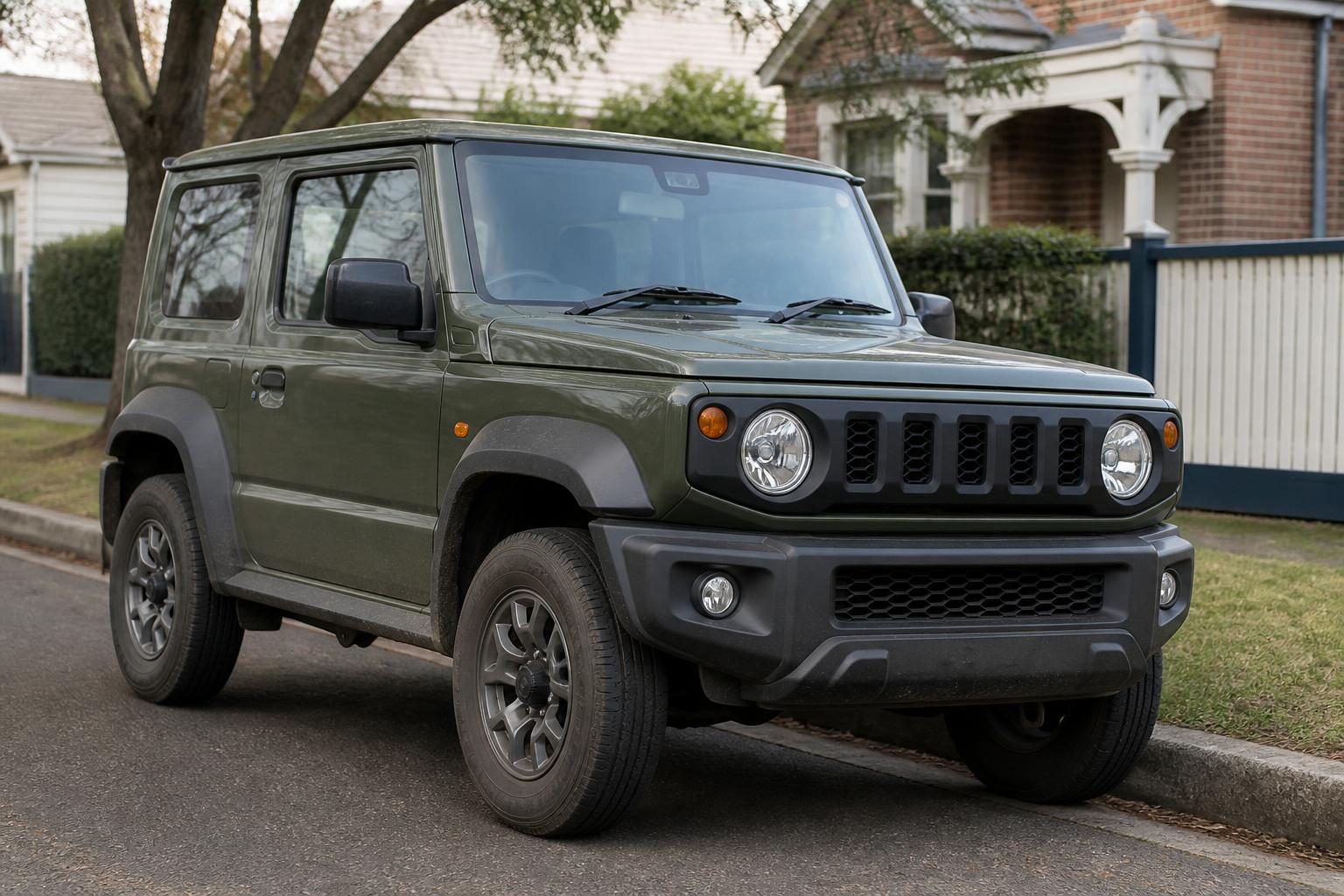 2025 Suzuki Jimny
The engine is the R06A: a water-cooled, intercooled, turbocharged 658cc inline three producing 47 kW (64 PS) at 6,000 rpm and 96 Nm at 3,500 rpm, per Suzuki's own engine data. It's worth stating plainly, because at least one widely read buyer's guide describes this engine as naturally aspirated. It isn't. Drive goes through a mechanical transfer lever offering 2H, 4H and 4L, and selecting 4L roughly doubles available drive force. Brake LSD traction control, hill hold and hill descent control are standard. Kerb weight sits under 1,100 kg (Suzuki Japan spec sheet), which does a lot of the off-road work for it.
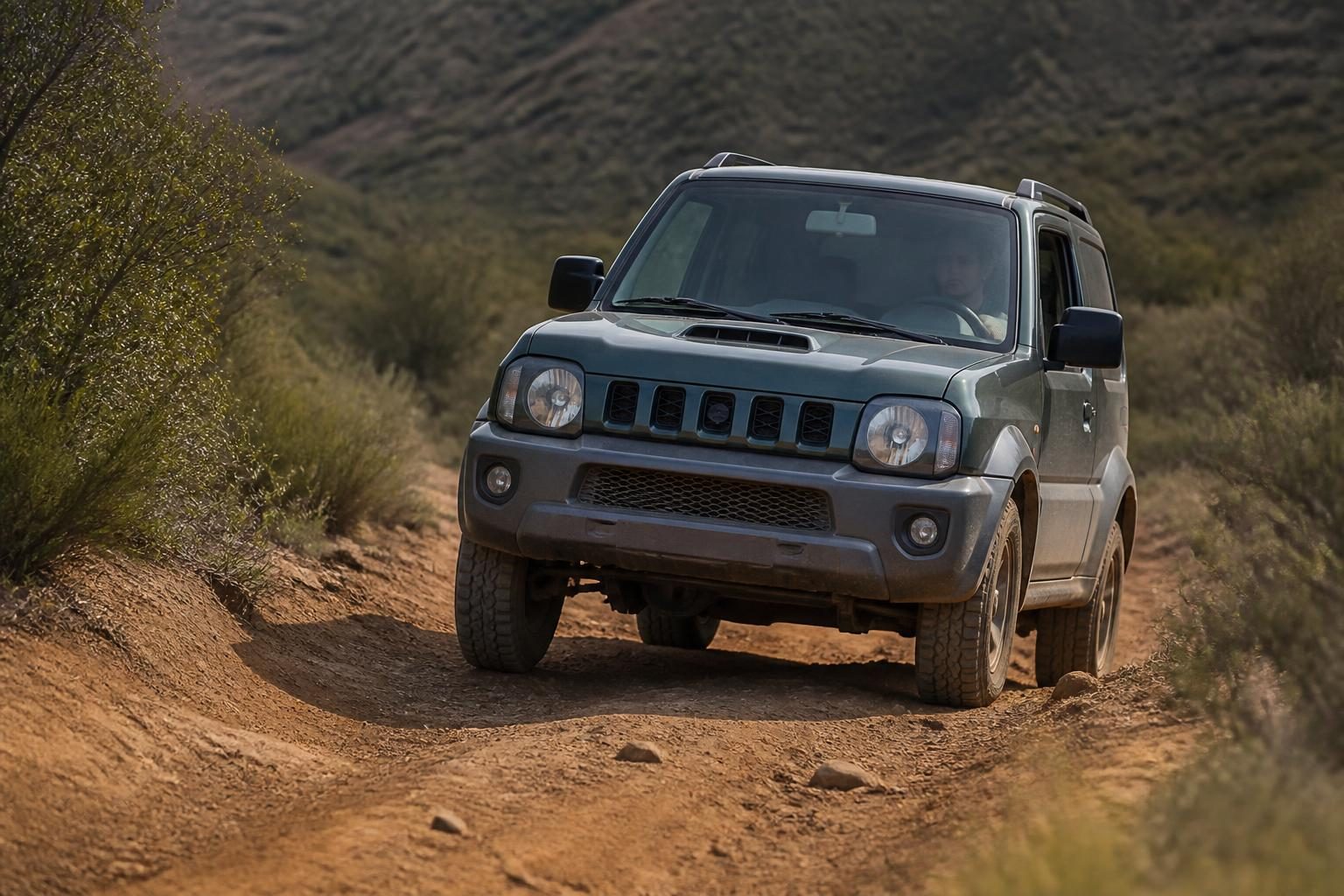 A silver Suzuki Jimny climbs a rough dirt track in open bush.
How the JB64W Differs From the Sierra Sold Here
| JB64W (import) | JB74W Sierra (sold new here) | |
|---|---|---|
| Engine | 658cc turbo triple | 1.5L naturally aspirated four |
| Body width | Kei-narrow | Wider global spec |
| Fuel use | WLTC modes 12.2 to 17.6 km/L | 6.4 L/100km MT, 6.9 L/100km AT |
| Entry price | Import enquiry | From $31,990 |
| SEVS needed | Yes (SEV-000654) | No |
The JB64W suits weekend off-roaders, tight-property owners and anyone who wants low range in the smallest package on sale. It's a poor choice if you need five seats, do long highway stints, or care mainly about fuel bills.
Toyota Raize Hybrid A202A: The Urban SUV With No Australian Equivalent
The Toyota Raize Hybrid A202A works the opposite way. Toyota's e-SMART Hybrid is a series hybrid, which means the 1.2-litre WA-VEX three-cylinder never drives the wheels. It exists purely to generate electricity, and an electric motor does all the driving. Because the engine only ever runs in its efficient band, Toyota Japan quotes a maximum thermal efficiency of 40%, helped by a high-tumble straight-port combustion design.
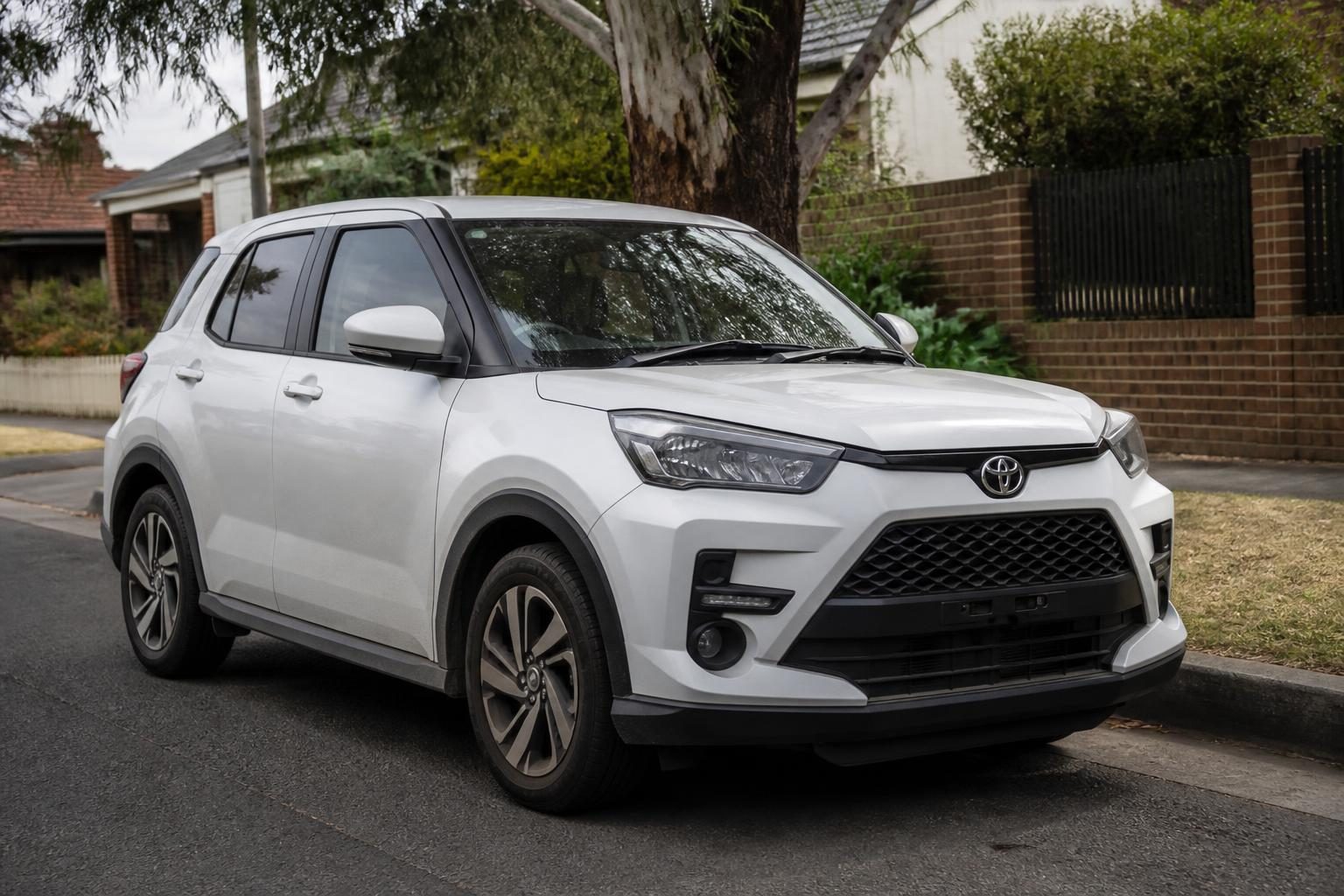 2022 Toyota Raize
For a driver, that setup feels like an EV around town: instant response off the line, no gear hunting, and no conventional multi-ratio gearbox to shuffle. Toyota rated it at 28.0 km/L on the WLTC combined cycle. There's an S-Pedal mode that strengthens regenerative braking for stop-start running. The body is under four metres long and fits Japan's 5-number size class, so it parks like a hatch while seating five.
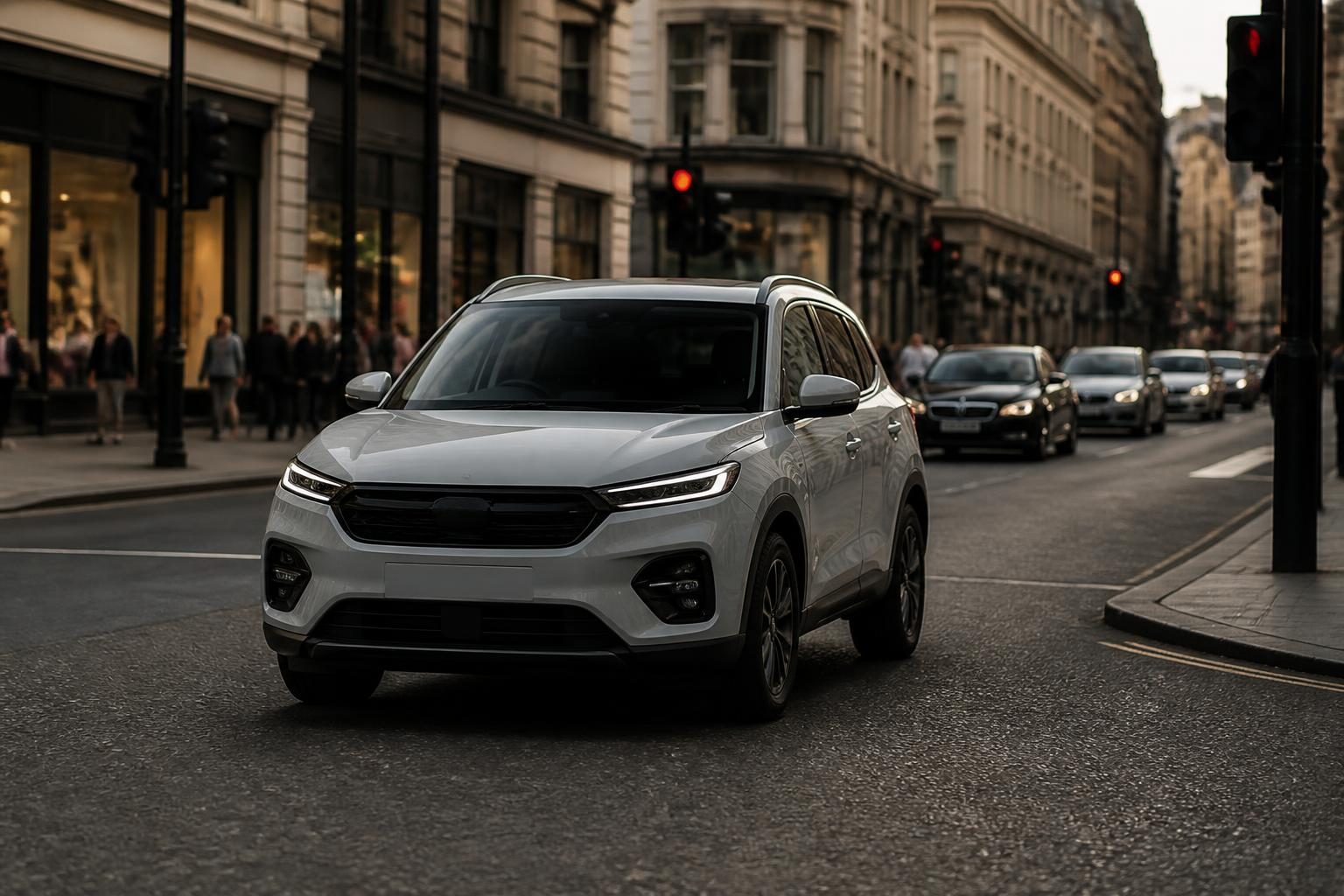 A compact SUV waits at red lights on a busy shop-lined city street.
One point trips up almost every buyer. Toyota does offer Dynamic Torque Control 4WD on the Raize, but only on the petrol versions. The hybrid is front-wheel drive, full stop. If you spend your week in Sydney traffic and on school runs, that's irrelevant. If you were hoping for an efficient all-wheel-drive crossover, this isn't it, and neither is towing or seating six.
Which Four Questions Should Settle It?
Skip the spec sheet for a moment. Four honest answers will usually decide this faster than any comparison table, because these cars barely overlap. Only one of them has a low-range transfer case, and only one returns a WLTC figure near 28.0 km/L.
| Question | Points to Jimny JB64W | Points to Raize Hybrid |
|---|---|---|
| Do you need genuine low-range 4WD? | Yes | No |
| Is most of your driving urban? | No | Yes |
| Do you need five seats? | No | Yes |
| Is fuel cost a primary concern? | Secondary | Primary |
If your answers stack up in one column, you already have your answer. If they're split, and especially if you said yes to both low range and low fuel bills, no single small import will do both. Something has to give, and it's usually worth talking it through with someone who has driven both.
Which One Makes More Sense for Your Situation?
If you want to get properly off the bitumen and the narrow kei body suits your driveway, the JB64W is a strong option. Go in clear-eyed: four seats, a small boot, and fuel use that no hybrid comparison will flatter. What you're buying is capability per millimetre, and nothing else in the class touches it.
If your week is commuting, car parks and errands, the Raize Hybrid A202A is probably the better fit. You get five seats, a sub-four-metre footprint and running costs that are hard to argue with. You give up any pretence of off-road ability. For most Australian buyers looking at this pair, that's a trade worth making.
How Does Importing Either One Actually Work?
Both models can be sourced from Japan through Carbarn, and the process runs about 6 to 10 weeks: 1 to 6 weeks to source and win a car at auction, 4 to 6 weeks of roll-on/roll-off shipping, then 2 to 3 weeks for compliance and delivery. Vehicles are inspected before any bid, and bids are only placed with your approval and inside your budget cap.
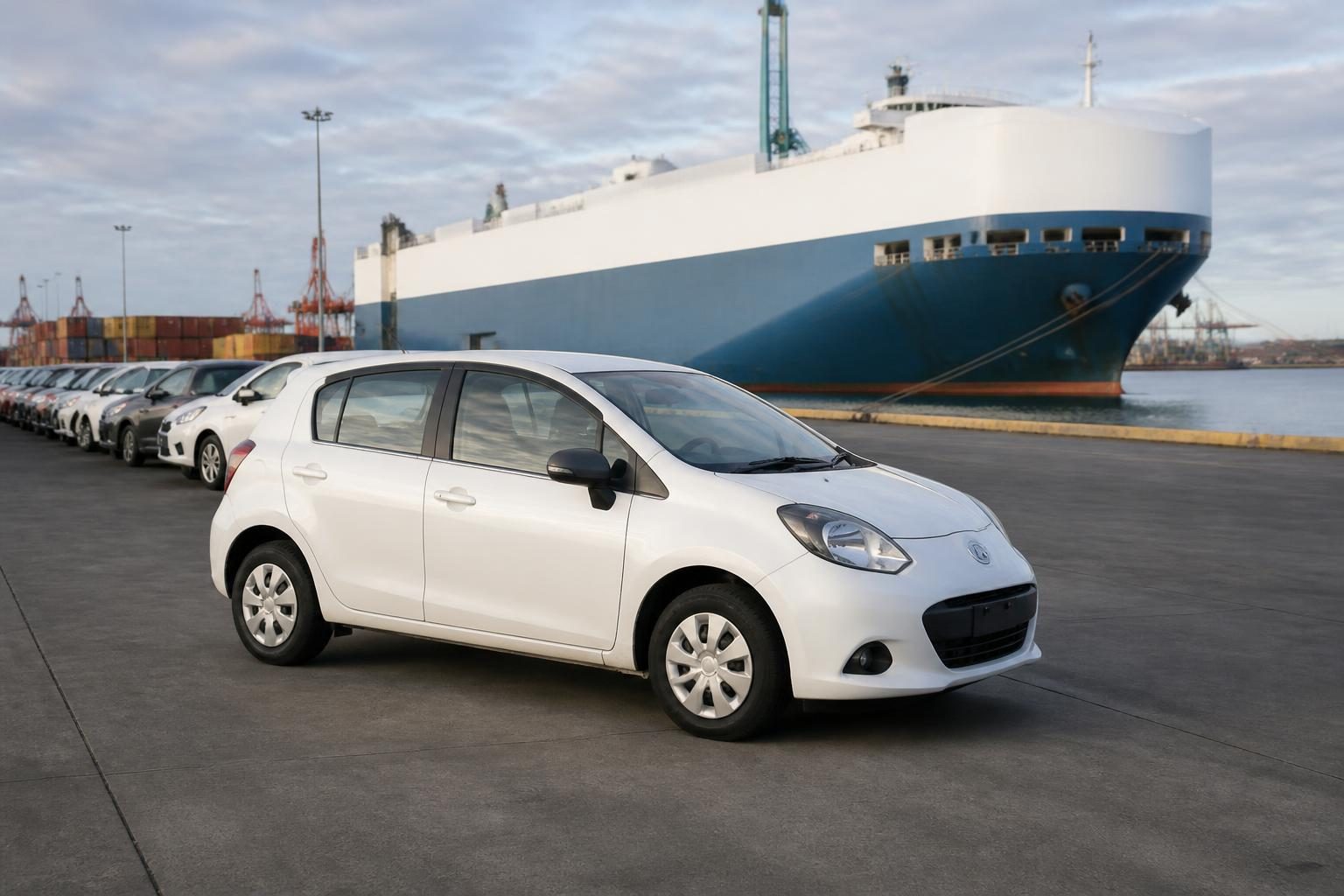 Imported cars lined up beside a berthed vehicle carrier at a container port.
Compliance happens in-house at the RAW-certified Lidcombe workshop in Sydney, including Approved Vehicle Verifier inspection and entry into the Register of Approved Vehicles, so the car arrives with paperwork ready for state registration. The published compliance package is $1,540 for both models, and the auction deposit of $2,631 is refundable. Finance, warranty and Australia-wide delivery are handled under the same roof. The Raize also appears on the local used market from time to time, generally in the mid-$20K range, which skips the sourcing step entirely.