




Ready to Hit the Road in Style?
Save money and reduce emissions with vehicles designed to deliver exceptional mileage. Visit our inventory and find a car that fits your lifestyle.
Ready to Hit the Road in Style?
Save money and reduce emissions with vehicles designed to deliver exceptional mileage. Visit our inventory and find a car that fits your lifestyle.
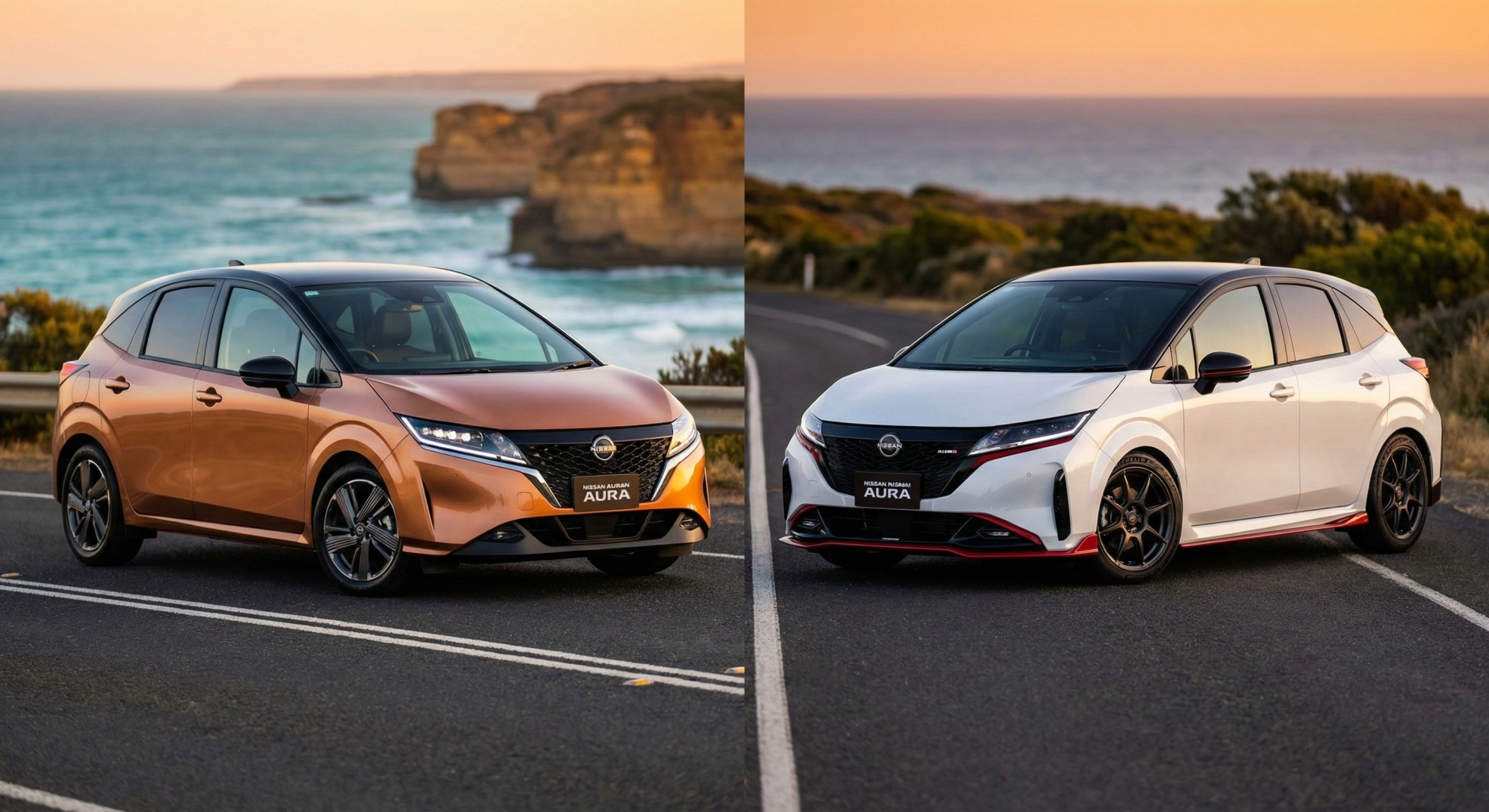
The Nissan Aura FE13 is the premium, wide-body evolution of the Note (E13), positioned as a more refined compact hatch with Nissan’s e-POWER electric-drive hybrid system at its core. Unlike a conventional hybrid, the electric motor drives the wheels full-time, while the petrol engine operates primarily as a generator, delivering a smooth, EV-like response in daily driving without the need to plug in.
For Australian buyers, the Nissan Aura FE13 occupies a niche that local showrooms don’t fill. It combines compact dimensions with a high-quality interior and strong urban efficiency, yet it has never been officially sold here. Every example on Australian roads arrives via the grey-import pathway, which makes understanding model codes, grades, and build timing especially important. Get those details right, and the Aura FE13 offers a distinctive alternative to mainstream light hatches, quiet, responsive, and genuinely premium for its size.
Answer Box
Nissan Aura (FE13) is the more premium, up-spec take on the Note E13 platform, running Nissan’s e-POWER setup where the electric motor drives the wheels, and the petrol engine mainly generates electricity.
FE13 usually indicates Aura 2WD on Japanese paperwork (often written as 6AA-FE13). 4WD commonly appears as 6AA-FSNE13 (and some listings/catalogues may show FNE13, treat that as a prompt to re-check the export docs).
Big takeaways: NISMO tends to mean sharper feel and unique parts, while 4WD tends to mean extra hardware/complexity and cost, but better traction.
What FE13 Means in Nissan Aura Listings
In Japanese auction sheets and export paperwork, the Nissan Aura is typically identified by a full type code such as 6AA-FE13. In most cases, FE13 refers to the front-wheel-drive Aura, while e-POWER 4WD versions are commonly listed as 6AA-FSNE13 in Nissan’s own specification and emissions documentation.
For Australian buyers, the key point is straightforward: FE13 is a model code, not an approval status. It helps identify the drivetrain and generation, but it does not confirm SEVS eligibility or guarantee compliance. Final approval is always VIN- and build-date specific.
Listings often blur the line between platform and trim, so it’s worth separating the two. Nissan Note E13 is the base generation of Nissan’s e-POWER hatch. Nissan Aura (FE13) is the wider, more premium derivative of that same platform, with upgraded styling, interior materials, and technology.
Nissan Aura NISMO sits at the top of the Aura range, adding factory NISMO tuning and visual upgrades while retaining the same e-POWER electric-drive concept. It isn’t a separate model family, which is why drivetrain type and specification should always be verified on paperwork and photos rather than assumed from the badge alone.
Variant History Explained: How The Aura Range Evolved
Nissan’s Aura sits within the third-generation Nissan Note (E13) family, and its development has followed a steady, clearly staged rollout rather than dramatic generational shifts. That makes the build period more important than appearance when you’re assessing a specific car.
The foundation was laid in late 2020, when Nissan launched the Note E13 in Japan as an e-POWER-only model. This generation abandoned conventional petrol drivetrains in favour of an electric-drive layout, with the engine acting primarily as a generator, a defining trait that carries through every Aura variant.
In mid-2021, Nissan expanded the range with the Aura, positioned as a more premium take on the Note. It gained wider bodywork, a more refined interior, and a calmer on-road character, effectively creating an upmarket compact hatch rather than a simple trim upgrade.
The performance-styled Nissan Aura NISMO followed later in 2021, bringing sharper suspension tuning and distinctive NISMO detailing. Early examples were front-wheel drive only, which shaped the early perception that NISMO automatically meant 2WD in the Aura line-up.
A minor update arrived in June 2024 for the Aura range, focused on subtle design tweaks and grade-dependent equipment changes rather than a full facelift. More importantly, in mid-2024, Nissan refreshed the Aura NISMO line-up and introduced a 4WD-oriented NISMO variant. From this point on, NISMO branding no longer guarantees a 2WD configuration.
The range: trims and what’s actually different
Nissan Aura G
The Nissan Aura G sits at the entry point of the Aura line-up, but it already delivers the fundamentals that make the model appealing to Australian import buyers. It pairs the Aura’s wider body and more premium interior treatment with Nissan’s second-generation e-POWER system, giving it an EV-like driving feel in daily use without the need for charging. Most examples are front-wheel drive, though a smaller number were offered with e-POWER all-wheel drive, adding traction rather than outright performance.
Chassis code: FE13 (2WD) / FSNE13 (4WD)
Role: Entry grade, focused on daily usability, refinement, and efficiency while retaining the Aura’s premium positioning.
Mechanical & technical specifications
Powertrain: Second-generation e-POWER (series hybrid)
Generator engine: 1.2-litre three-cylinder HR12DE (generator only)
Front motor (EM47): 100kW / 300Nm
Rear motor (4WD only): MM48 producing 50kW / 100Nm
Dimensions: 4045mm (L) × 1735mm (W) × 1525mm (H)
Suspension: MacPherson strut (front); torsion beam (rear, 2WD) or multi-link (rear, 4WD)
Drive modes: Normal, Eco, and Sport
Exterior features
Wheels: 17-inch lightweight alloy wheels with gunmetal spokes and black resin aero inserts
Lighting: Adaptive LED headlights (matrix-type) with V-Motion LED daytime running lights
Glass: IR/UV-cut laminated windscreen and front door glass for improved insulation
Exterior trim: Matte-black B-pillars
Mirrors: Power-folding mirrors with integrated indicators
Interior & standard equipment
Seats: Tweed-style woven fabric with synthetic leather bolsters (heather grey/black)
Dashboard: Tweed fabric insert on passenger side
Driver display: 12.3-inch fully digital TFT instrument cluster
Steering wheel: Urethane
Gear selector: Electronic shift-by-wire toggle with LED illumination
Climate control: Single-zone automatic system with digital display
Convenience: Intelligent Key with push-button start
Nissan Aura G “Leather Edition”
The Nissan Aura G Leather Edition builds directly on the standard G, but its focus is squarely on cabin presentation and comfort rather than mechanical changes. The drivetrain remains unchanged, yet Nissan adds extra sound insulation and noticeably upgrades materials throughout the interior, giving the Leather Edition a more luxury-leaning character.
Chassis code: FE13 (2WD) / FSNE13 (4WD)
Role: Premium comfort variant, prioritising interior materials and convenience.
Mechanical & technical specifications
Powertrain: Identical to Aura G (100kW front motor)
NVH improvements: Additional sound insulation in the roof lining and door trims
Exterior features
Wheels: 17-inch aero alloys (same design as Aura G)
Exterior trim: Gloss-black B-pillars
Garnishes: Chrome bumper garnishes on selected special editions (e.g., 90th Anniversary)
Interior & standard equipment
Seats: Genuine leather Zero Gravity seats with diamond-quilted upper backrest
Seat colours: Black or Airy Grey
Steering wheel: Leather-wrapped
Dashboard: Wood-grain film inserts replace tweed trim
Rear seating: Centre armrest with integrated cupholders
Door trims: Soft-touch synthetic leather padding
Post-mid-2024 update: Power-adjustable driver’s seat became standard
Available option packages
Bose Personal Plus audio: Eight-speaker system with UltraNearfield™ headrest speakers
ProPILOT Assist: Adaptive cruise control with steering assist and lane centring
Cold Weather Package: Heated steering wheel, heated front seats, and PTC electric heater
Nissan Aura NISMO (FE13, 2WD)
The Nissan Aura NISMO (2WD) is not a styling exercise; it’s a factory-engineered performance variant developed by NISMO to sharpen how the Aura behaves on real roads. While it retains the same e-POWER series-hybrid layout as the standard Aura, NISMO’s focus is on response, body control, and consistency when driven harder than a normal hybrid hatch.
Chassis code: FE13
Role: Performance-focused front-wheel-drive Aura with chassis, suspension, and software revisions.
Mechanical & structural engineering
VCM tuning: Dedicated NISMO drive mode delivering more linear torque response and increased regenerative braking (up to 0.2G) to stabilise the car on corner entry
Suspension:
High-pressure monotube rear dampers (NISMO yellow/black) for faster response
Springs lowered by 20mm with spring rates increased by approximately 36 per cent
Chassis reinforcement: Factory-welded tunnel stays and rear bumper reinforcement bars to increase torsional rigidity
Aerodynamics: Functional layered front splitter, side skirts, and rear diffuser developed to achieve neutral lift at highway speeds
Exterior features
NISMO-specific bumpers with matte red accents and gloss-black detailing
Centre-mounted 7-dot LED rear fog light (F1-style) integrated into the diffuser
17×7J Enkei alloy wheels manufactured using Enkei’s MAT flow-forming process
Michelin Pilot Sport 4 tyres (205/50R17) fitted from the factory
Interior & standard equipment
Alcantara and leather steering wheel with red top-dead-centre marker
Red seatbelt webbing
Red carbon-look dashboard inserts and black headlining
NISMO-branded fabric and synthetic suede sports seats
Factory NISMO options
Recaro bucket seats: Rigid-shell construction for increased lateral support
Manual adjustment on earlier cars
Power adjustment on later builds
Matte black bonnet decal (optional)
Nissan Aura NISMO tuned e-POWER 4WD (FSNE13)
Introduced as part of the mid-cycle update in mid-2024, the Aura NISMO-tuned e-POWER 4WD takes the NISMO concept further by pairing its chassis revisions with a higher-output electric all-wheel-drive system. It remains e-POWER throughout, but adds meaningful rear-drive capability to improve traction and balance rather than outright acceleration.
Chassis code: FSNE13 (NISMO specification)
Role: Flagship NISMO Aura combining chassis tuning with upgraded electric AWD hardware.
Mechanical & technical specifications
Rear motor upgrade:
60kW / 150Nm rear motor (standard Aura 4WD uses 50kW / 100Nm)
Torque distribution: Increased rear output enables more rear-biased torque delivery during cornering, reducing understeer
Suspension: NISMO-tuned multi-link rear suspension calibrated for the higher vehicle mass (approximately 1,390kg)
Exterior identifiers
Unique alloy wheel design specific to the 4WD NISMO, engineered to support the higher gross vehicle mass
“e-POWER 4WD” badging on the tailgate
Interior & practicality
Rear motor hardware removes the deep underfloor boot storage found in 2WD models
Flat boot floor retained despite reduced underfloor volume
Available with the same Recaro seat options as the 2WD NISMO, including power-adjustable versions on later cars
Variant Breakdown: Which One is For Whom?
Navigating the Aura lineup can be confusing for Australian buyers faced with auction sheets. The following breakdown clarifies the hierarchy.
Powertrain Deep Dive: How E-Power Actually Works
At the heart of the Nissan Aura (including NISMO) is Nissan’s e-POWER system, which behaves very differently from the parallel hybrids Australians may be used to. In simple terms, the electric motor always drives the wheels, while the petrol engine’s primary job is to generate electricity. There’s no conventional mechanical drive from engine to wheels in normal operation, which is why the Aura often feels more like an EV than a traditional hybrid around town.
That distinction matters in Australia. In stop-start urban driving, throttle response is immediate and smooth, with none of the lag or gearshifts associated with conventional automatics. On long, steady highway runs, however, the petrol engine can run more consistently as a generator, so buyers should expect refinement rather than silent EV cruising in those conditions.
Generator engine: what matters
Across the Aura and Aura NISMO range, you’ll commonly see the HR12DE listed on paperwork. This 1.2-litre three-cylinder is not there for performance feel; its role is efficiency, reliability, and stable power generation. What matters more for buyers is service history, oil changes, cooling-system upkeep, and documented maintenance, rather than headline engine outputs.
Electric drive output: Aura vs Note context
The Nissan Aura sits above the standard Note in Nissan’s hierarchy, and that’s reflected in its e-POWER calibration. Aura and Aura NISMO models are typically tuned with stronger electric motor outputs than base Note variants, though figures vary by year and grade. As always, Australian buyers should verify outputs using year-specific Nissan documentation or auction sheets rather than relying on generic listings.
Typical example (Aura NISMO 2WD – verify per year/grade):
Generator engine: HR12DE (around 60kW / 103Nm quoted in listings)
Drive motor: EM47 (around 100kW / 300Nm quoted)
What NISMO actually changes
NISMO doesn’t reinvent the e-POWER hardware. Instead, it focuses on calibration and response shaping. That means sharper drive-mode behaviour, altered regenerative braking feel, and revised steering and ride tuning to support enthusiastic driving better. Wheel and tyre choices also play a significant role in how different NISMO cars feel, so those details are worth checking closely in photos and option lists.
2WD vs 4WD e-POWER: the key decision
Choosing between 2WD and e-POWER 4WD is one of the most important calls for Aura buyers. The 4WD system adds a dedicated rear electric motor, creating electric all-wheel drive without a mechanical propshaft.
Later NISMO documentation commonly shows:
Front motor: 100kW / 300Nm
Rear motor: 60kW / 150Nm (often referenced as MM48; confirm per car)
For Australian use, the trade-off is clear. The 4WD brings genuine traction benefits on wet roads, gravel driveways, steep inclines, and regional travel. In return, it adds hardware complexity and typically posts slightly lower official efficiency figures than 2WD models. As with any manufacturer's data, those numbers are best used for comparison rather than as guarantees of real-world performance.
Overall, e-POWER is less about chasing peak outputs and more about consistent response, traction confidence, and everyday refinement, and understanding that philosophy is key to buying the right Aura variant.
Interior, Tech, and Safety: Check The Spec, Not The Badge
One of the easiest traps for Australian buyers is assuming Japanese-market tech works the same way it does locally. Most Aura imports run JDM-first infotainment, which means menus are often Japanese by default, even on later cars. Built-in navigation and connected services are designed for Japan and may have limited or no functionality here, so it’s best to treat them as a bonus rather than a selling point.
In practice, owners tend to go one of two ways: Bluetooth-only use for calls and audio, or budgeting for an aftermarket head unit to add Apple CarPlay or Android Auto. Either approach works, but it’s worth factoring the cost and effort into your buying decision up front.
When it comes to driver assistance and safety, specification varies more than many listings suggest. Rather than relying on what a grade “should” include, buyers should verify what’s actually fitted. ProPILOT Assist, for example, needs to be clearly referenced on auction sheets or visible through steering-wheel controls and instrument-cluster menus. The same applies to Around View Monitor systems, check for camera lenses on the mirrors and bumpers, plus the correct console buttons and parking sensors, which can usually be confirmed by bumper sensors and listing notes.
Comfort features that swing the price
These are frequent value levers, but only count them if you can confirm:
Leather/“Leather Edition” trim confirmation
Bose branding (if applicable)
Heated seats, digital mirror, wireless charging, etc. (photos + option codes)
Australian import eligibility: what to know before you buy
For Australians looking at importing a Nissan Aura from Japan, eligibility is determined by the specific car, not the badge or the way it’s described in a listing. While the Aura is recognised under Australia’s specialist import framework via the Environmental criterion, that listing is only a gateway, not an automatic green light. Final approval depends on the exact variant specification, drivetrain (2WD vs 4WD), and build date, all of which must align with the approval pathway and the Model Report used by the compliance workshop.
In practice, this means verification needs to happen early. The VIN and build month must be checked against the applicable approval, the Japanese-market specification needs to match what’s covered, and the compliance path must be confirmed before money changes hands. Model codes like FE13 help identify the platform, but they are not proof of eligibility on their own.
This is where Carbarn adds value. Carbarn can handle the entire process end-to-end: confirming the correct Nissan Aura variant in Japan, checking live import eligibility, and securing the Vehicle Import Approval. The aim is simple: a correctly approved import with the pathway locked in before the vehicle arrives in Australia, avoiding surprises later.