



Ready to Hit the Road in Style?
Save money and reduce emissions with vehicles designed to deliver exceptional mileage. Visit our inventory and find a car that fits your lifestyle.
Ready to Hit the Road in Style?
Save money and reduce emissions with vehicles designed to deliver exceptional mileage. Visit our inventory and find a car that fits your lifestyle.
If you've ever looked at a Delica and thought "I'd love one, but importing sounds terrifying," you're not alone. Most first-time buyers hit the same wall. The auction is in Japanese, the fees are a mystery, and nobody tells you the real order things happen in. It feels like a black box with your money inside.
So we opened the box. This is one Mitsubishi Delica followed from a Japanese auction bay all the way to an Australian driveway, stage by stage and dollar by dollar. The vehicle here is representative, built from our real averages rather than one invented customer, but every figure is verifiable. By the end you'll know the timeline, where each dollar goes, what can trip you up, and whether this is a journey you'd want to start yourself.
Key Takeaways
- A used Delica import runs roughly 6 to 10 weeks end to end, split across sourcing in Japan, shipping, and Australian compliance (Carbarn, 2026).
- Our representative Delica PD8W lands at a verified $23,371 total, from a ¥1,400,000 auction average through freight, GST, and compliance.
- Japan exported a record 1,573,479 used cars in 2024, so auction supply is deep (JapanStat / Japan Ministry of Finance, 2025).
- Vehicle Import Approval must be granted before the car is shipped, not after it arrives.
- The PD8W's SEVS approval (SEV-000819) is valid to 11 March 2028, so the eligibility window is finite.
How Long Does It Take, and What Does It Cost?
Plan for six to ten weeks and a landed figure in the mid-$20K range for a clean Space Gear. The process breaks into three phases: source and approve in Japan (one to six weeks), ship across (four to six weeks), then comply and deliver in Australia (two to three weeks) (Carbarn, 2026). Nothing here is instant, but none of it is guesswork either.
The cost splits into six honest buckets: the winning bid, Japan-side fees, shipping, customs and GST, compliance, and optional registration. We'll add each one as it lands in the story, so the total builds in front of you instead of arriving as a shock at the end. Every figure below is an estimate drawn from real auction data, not a fixed quote, and it moves with the exchange rate and the market.
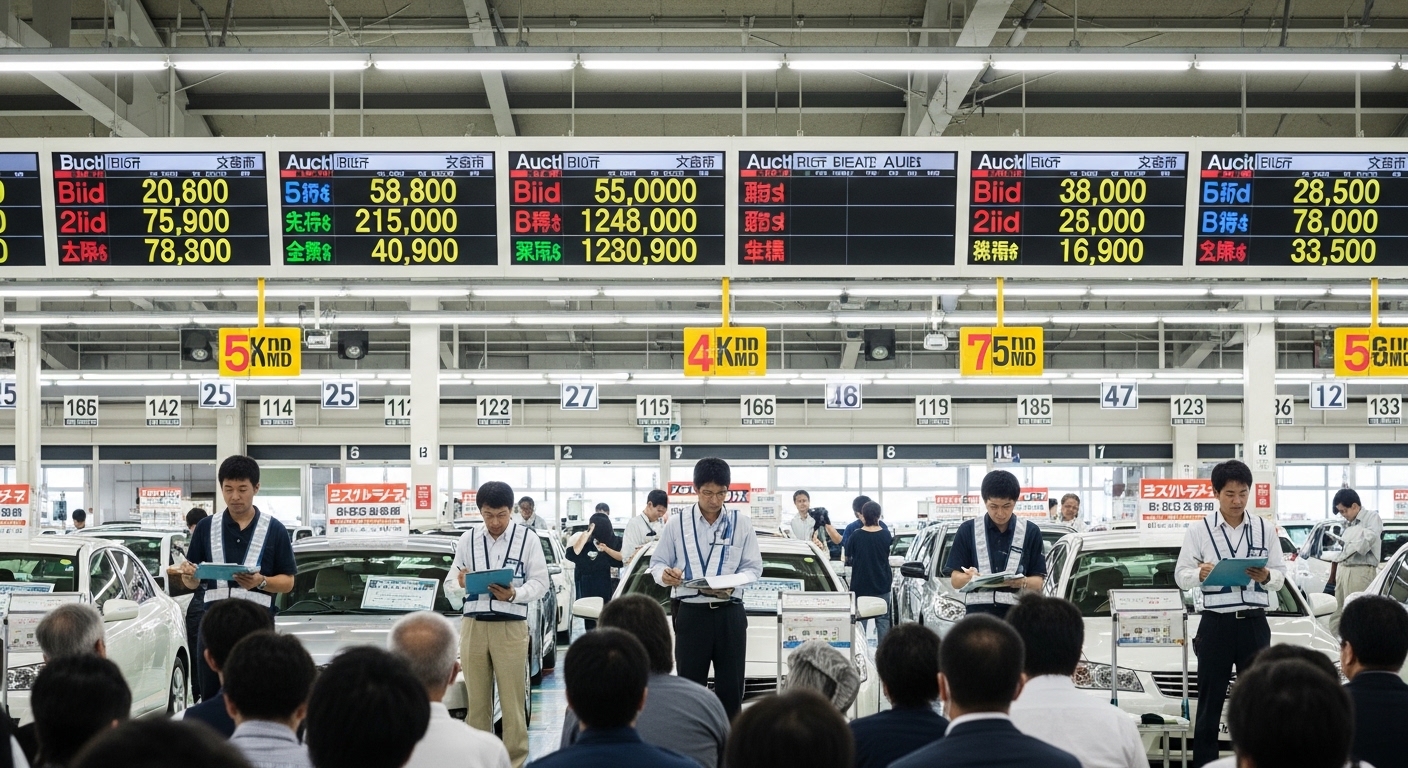 Inspectors present cars beneath electronic bidding boards in a Japanese auction hall.
What Makes the Delica Space Gear Worth Importing?
The Mitsubishi Delica Space Gear (PD8W) is a genuine four-wheel-drive people mover, which is a rare combination. It seats eight, sits high, and carries a proper low-range transfer case, so it handles a beach track and a school run with equal ease. That mix of van practicality and 4WD ability is exactly why the Space Gear has such a loyal following on both sides of the water.
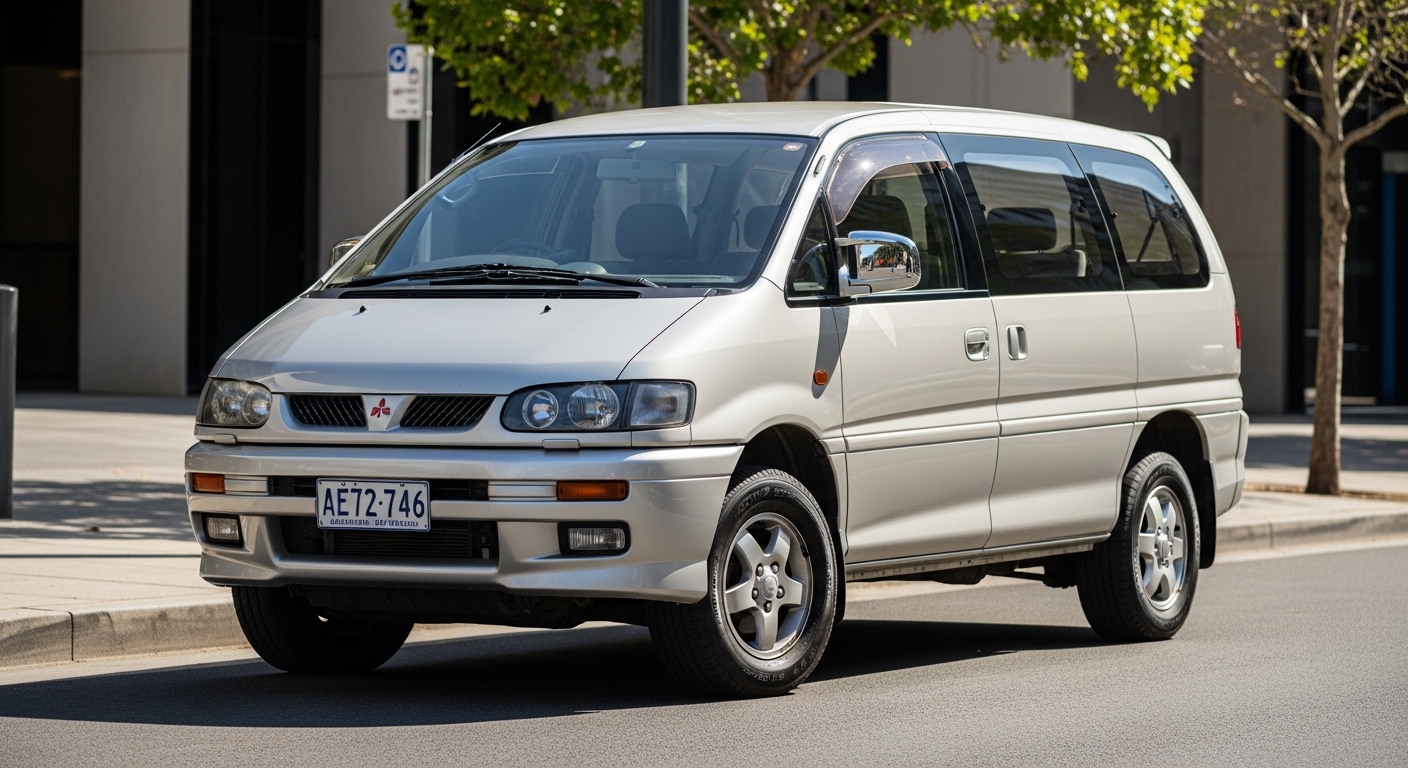 1993 Mitsubishi Delica Space Gear
On the mechanical side, the PD8W runs a 6G72 3.0-litre V6 petrol engine, paired with a four-speed automatic and Super Select four-wheel drive. Diesel buyers can look for the 4M40 2.8-litre turbo instead, prized for torque and touring range. The approved build window covers September 1993 to December 2006, and every example is an eight-seater. Fuel use is honest rather than frugal, sitting around 8–9 km/L on the official test cycle with real-world figures typically lower for the petrol V6, so this is a car you buy for space and capability, not for sipping unleaded.
Eligibility is the part that surprises people. This model is approved for Australia under SEVS approval SEV-000819, granted on the Campervans and Motorhomes Criterion and valid until 11 March 2028. That date matters. The approval is finite, so the window to bring one in the easy way will not stay open forever.
Stage 1: How Does the Shortlist and Deposit Work?
The journey starts with a shortlist, not a bid. We agree a target model, year range, budget, grade, and maximum mileage, then watch the auctions for cars that fit. A refundable deposit is required before any bidding begins, and for a Delica in this range that deposit is around $2,639, held and fully refundable if no car is secured (Carbarn, 2026).
It helps to know how much stock flows through these sales. Japan exported a record 1,573,479 used cars in 2024 (JapanStat / Japan Ministry of Finance, 2025), and more than 100,000 vehicles pass through Japanese auction houses every single week (TokyoCarZ, 2026). Supply is deep, so patience pays. There's almost always another good Delica next week.
The deposit is where nerves usually kick in. It's worth repeating that it's refundable right up until a bid is placed on your instruction. You're reserving a seat at the table, not committing to a purchase.
What could have gone wrong here: Rushing the shortlist. Buyers who fixate on the first cheap listing often overpay or land a rough car. With this much weekly supply, discipline on grade and mileage beats speed every time.
Stage 2: What Does the Pre-Bid Inspection in Japan Cover?
Auction cars can't be test driven, so the inspection is your eyes on the ground. Where possible we arrange a physical pre-bid inspection and read the auction sheet, the standardised condition report every Japanese auction attaches to a lot. Grade 3.5 is the most common grade in the market (JDMBUYSELL, 2025), and for a Delica we target 3.5 or better with the odometer inside the 0 to 80,000 km band.
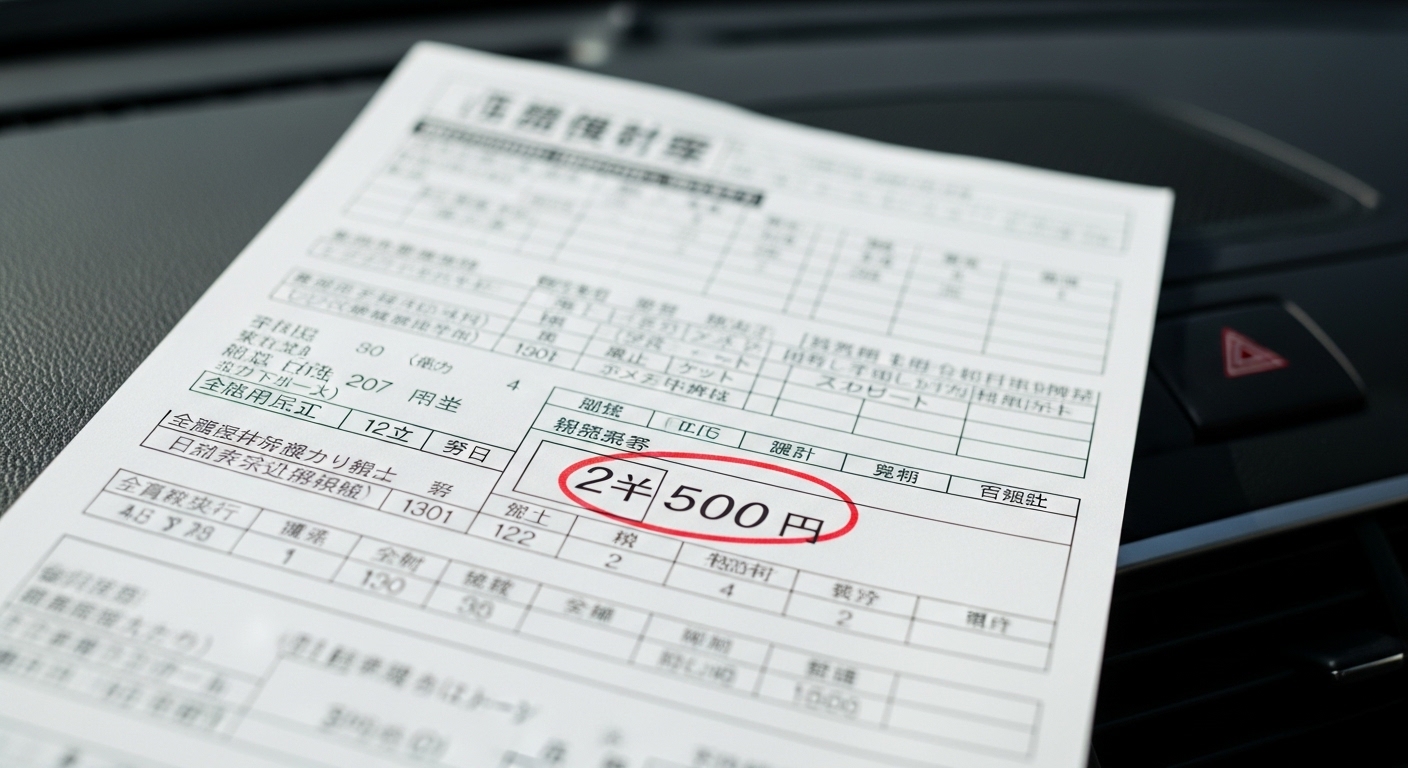 Close-up of a Japanese vehicle form on a dashboard with a red-circled value
What does the inspector actually check? Rust in the rear wheel arches and floor, oil leaks around the timing cover, the condition of the transfer case, and whether the interior matches the odometer story. Photos, sheet notes, and any concerns go to you before a bid is placed, usually over WhatsApp. If something looks off, we flag it and you decide.
This stage costs nothing extra on our representative ledger. It's built into how we bid. But it's the single biggest lever on whether the car that lands is the car you hoped for.
What could have gone wrong here: Trusting auction photos alone. A glossy front-three-quarter shot hides sill rust and a tired auto. A grade number without a human reading the sheet is a gamble, not a decision.
Stage 3: How Does Auction Day Actually Work?
Auction day is fast and unemotional. USS, Japan's largest auction group, runs each sale at a rapid pace across its 19 venues — buyers set a cap and bidding resolves in seconds (ProvideCars, 2024). You don't sit there clicking. You set a maximum bid in advance, we bid to that cap, and if the lot runs past it, we let it go.
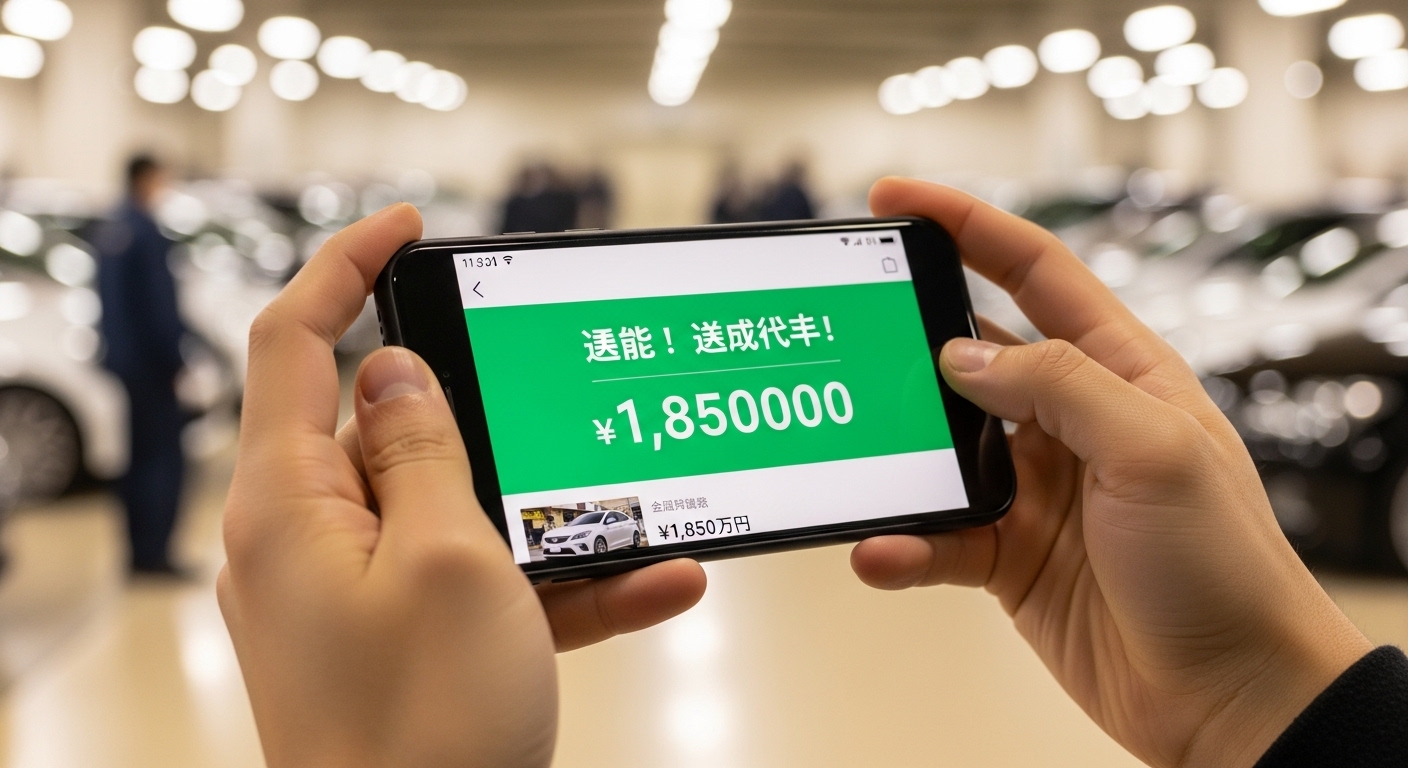 A smartphone shows a yen bid screen while cars blur in the background.
Prices move with the market, so a budget cap protects you. USS's average winning bid was about ¥1,050,000 in 2024 (approximate annual average, per USS archived data) and had climbed to ¥1,279,000 by the April to June 2026 quarter (USS Investor Relations, 2026). For our representative Delica, the winning bid lands at ¥1,400,000, which converts to roughly $12,317 at the exchange rate on the day.
That's the first real line on the ledger. Everything else builds on top of it.
Running total: $12,317 (winning bid)
What could have gone wrong here: Bidding without a hard cap. In a 20-second sale it's easy to get swept up. A pre-agreed maximum is the one thing that stops auction-day adrenaline from wrecking your budget.
Stage 4: What Happens With Payment After You Win?
Win a lot and the clock starts. The vehicle price, the Japan agent fee, and the service fee are payable within 48 hours of a successful bid (Carbarn, 2026). This is not the stage to be arranging finance from scratch, so we confirm your funding path before we ever bid.
On our representative Delica, the Japan agent fee is about $967 and the service fee is $1,500. Both are flat, disclosed up front, and cover the on-the-ground work of securing the car, handling the Japanese paperwork, and coordinating what comes next. Payments are converted at the Wise rate on the day, so there are no hidden margins baked into the exchange.
Add those two lines and the picture firms up quickly. You've now paid for the car and the people who secured it.
Running total: $14,784 (winning bid + Japan agent fee + service fee)
What could have gone wrong here: Missing the 48-hour window. Late payment can forfeit the car and the deposit. Sorting funds before auction day, not after, is what keeps a win from turning into a loss.
Stage 5: Why Must Import Approval Come Before Shipping?
Here's the correction almost every DIY guide gets wrong. Vehicle Import Approval (VIA) must be granted before the car is shipped, not after it arrives. The application is lodged with the Department of Infrastructure once the car is secured, and it typically takes one to four weeks (Carbarn, 2026). The decision is legislated at 30 working days from a complete submission (Department of Infrastructure, 2025).
Get this order wrong and the consequences are expensive. Ship a car without approval and it can be held at the port, racking up daily storage while you scramble. The approval is linked to the vehicle, not to you, and it needs the auction sheet, the invoice, and clear vehicle details to be assessed cleanly.
No money changes hands at this stage on our ledger. But it's the hinge the whole timeline turns on, which is exactly why it belongs here in the sequence and not later.
Running total: $14,784 (no payment this stage)
What could have gone wrong here: Booking a vessel before approval lands. It's the classic first-timer mistake. Ship first, approve later, and you can end up paying port storage on a car you're not yet allowed to import.
Stage 6: What Happens Before the Car Reaches the Port?
With approval underway, the car moves toward the port. This stage covers domestic transport to the departure port, export deregistration, and a clean-down. Export deregistration cancels the Japanese registration and produces the export certificate, one of the documents Australian compliance will later need.
The clean-down matters more than it sounds. Australia's biosecurity rules are strict, and a car carrying soil, seeds, or insect matter in the wheel arches or underbody can be turned back for treatment on arrival. A thorough wash in Japan reduces that risk before the car ever gets on the boat.
These costs are bundled into the freight and port line that appears at the next stage, so the ledger holds steady here. Think of this as the quiet, unglamorous admin that keeps the arrival smooth.
Running total: $14,784 (bundled into shipping)
What could have gone wrong here: A rushed clean-down. Dirt in the chassis rails is a leading cause of biosecurity holds. Ten extra minutes with a pressure washer in Japan saves days of delay and a treatment bill in Sydney.
Stage 7: How Does the Car Ship From Japan to Sydney?
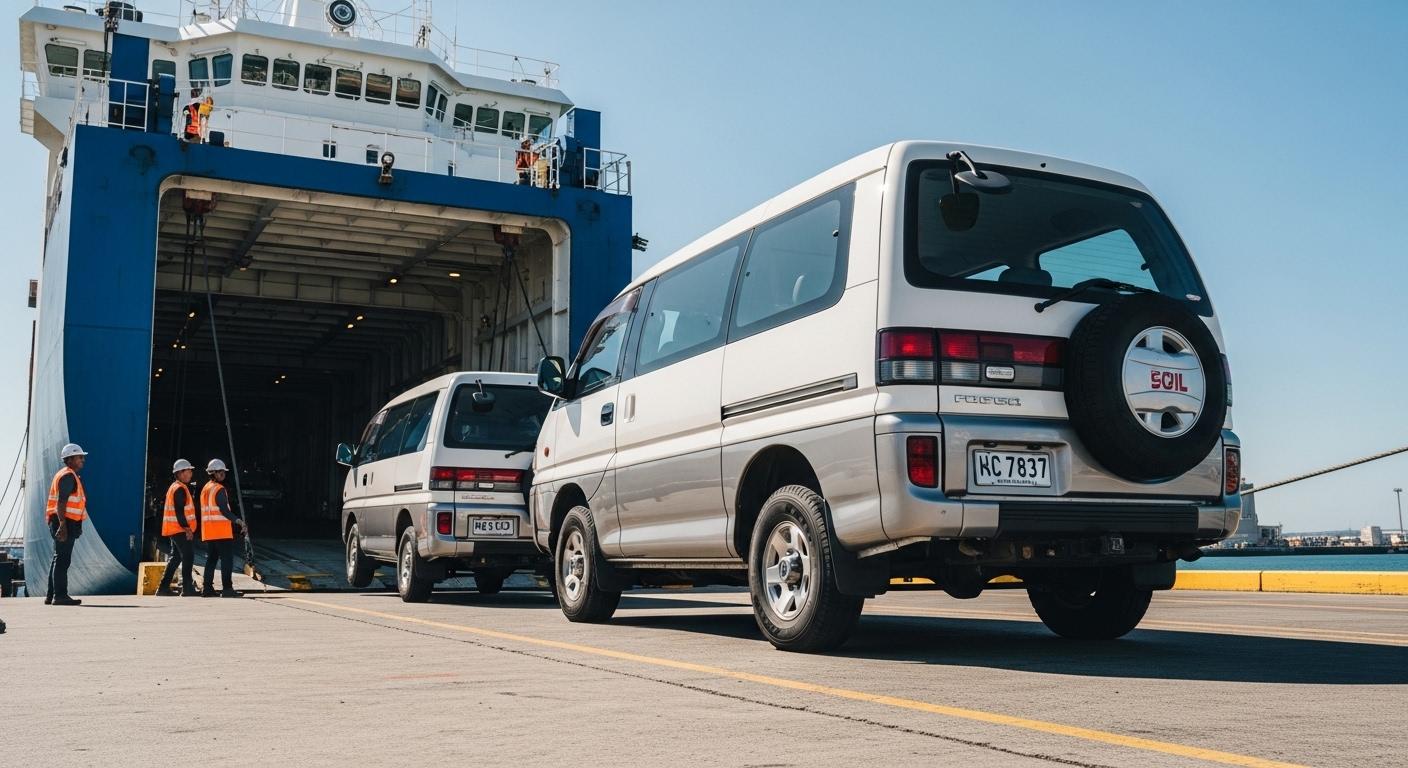
The Delica crosses on a roll-on/roll-off (RoRo) carrier, driven up the ramp and secured on a deck rather than sealed in a container. RoRo is the standard, cost-effective way to move a single vehicle, and the ocean leg to Sydney runs about four to six weeks (Carbarn, 2026).
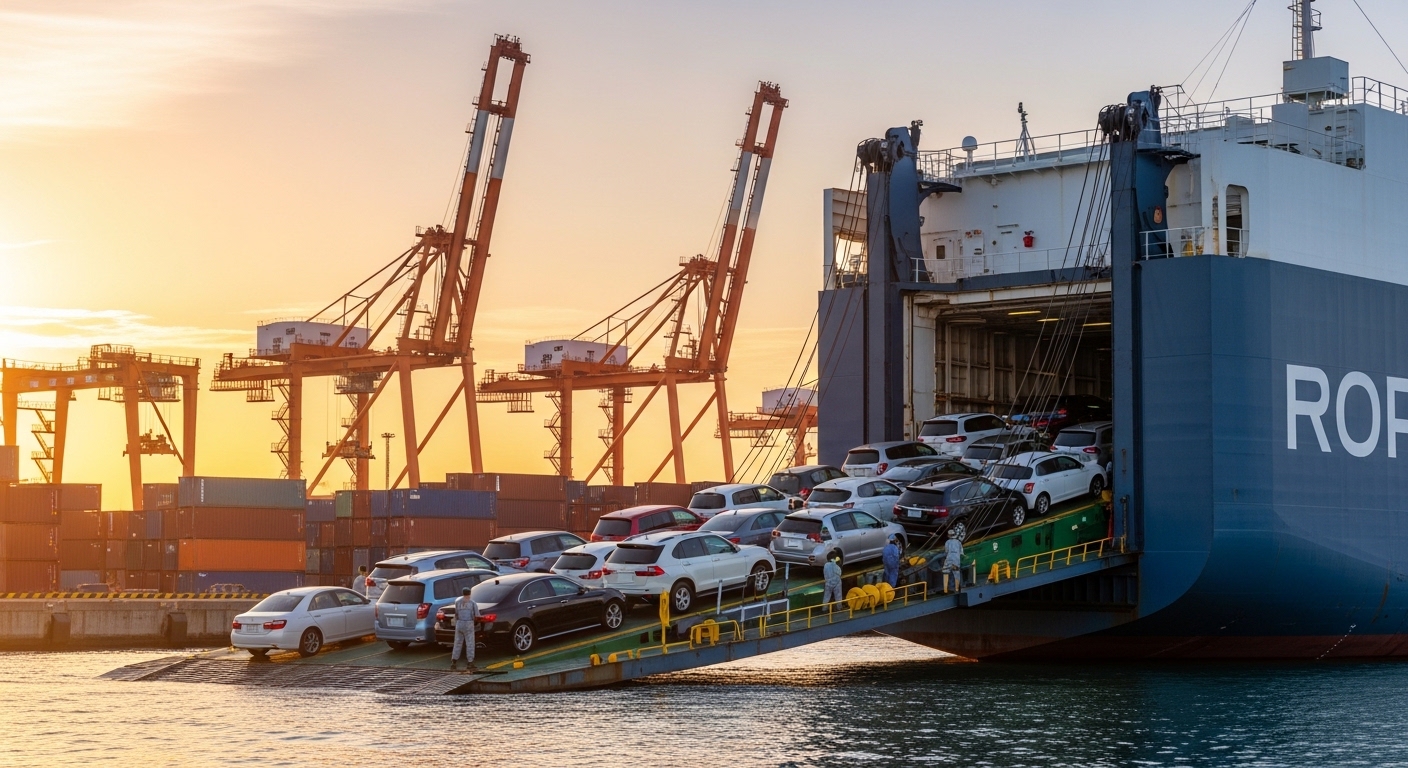 Vehicles board a Ro-Ro carrier beside cranes and containers at sunset.
This is where the freight, port, and customs handling costs land. On our representative Delica, that combined line is about $4,498, covering the ocean freight, port fees at both ends, and the customs brokerage that clears the car into Australia. It's the second-largest single cost after the car itself.
 A large car carrier crosses calm ocean water beneath a broad clear sky.
Once the car is on the water, the timeline is largely out of anyone's hands. Vessel schedules and port congestion can shift arrival by a week or so either way.
Running total: $19,282 (add freight, port and customs)
What could have gone wrong here: Assuming a fixed arrival date. Ships slip. Building a week of slack into your plans, rather than booking a road trip for the day it's "due," saves a lot of frustration.
Stage 8: What Happens When the Car Arrives in Australia?
Landing in Sydney triggers three checks at once: customs valuation, tax, and biosecurity. GST is charged at 10% of the customs value, which is the cost of the car plus insurance and freight (Australian Border Force, 2026). On our Delica that GST line is about $2,108.
Customs duty is the pleasant surprise. Because the Delica is Japanese-built, it clears at 0% duty under the Japan-Australia Economic Partnership Agreement, rather than the 5% general rate, provided proof of Japanese origin is supplied (DFAT, 2025). That saves several hundred dollars outright.
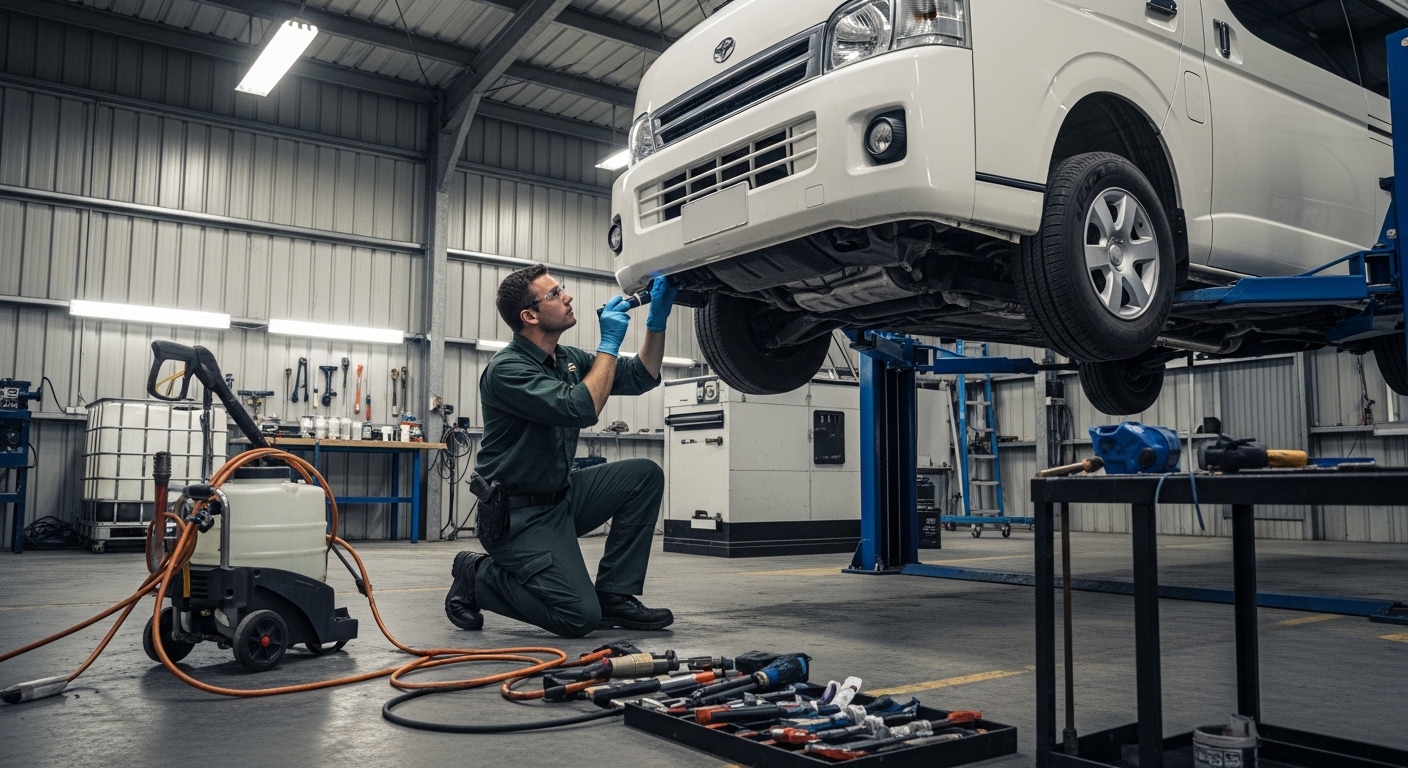 Inspector checks the undercarriage of a white van in a brightly lit workshop.
Then comes biosecurity. Every sea consignment carries a cost-recovery charge (Department of Agriculture, 2025), and the officer inspects the underbody for soil and organic matter. Older vehicles like the Space Gear also need an asbestos assurance, since asbestos was still used in some gaskets and brake components of that era and is banned in Australia.
Running total: $21,390 (add GST; duty $0 under JAEPA)
What could have gone wrong here: No proof of origin, or an undeclared asbestos risk. Missing origin paperwork forfeits the 0% duty. An unaddressed asbestos question can stop the car cold until parts are tested or replaced.
Stage 9: Compliance at the Lidcombe Workshop
Passing customs doesn't make a car road-legal. It has to be brought up to Australian Design Rule (ADR) standards first. Compliance work is done in-house at the Lidcombe workshop and usually takes two to twelve working days depending on condition (Carbarn, 2026). Typical compliance benchmarks across the industry sit around the $2,000 mark (Carsales, 2026).
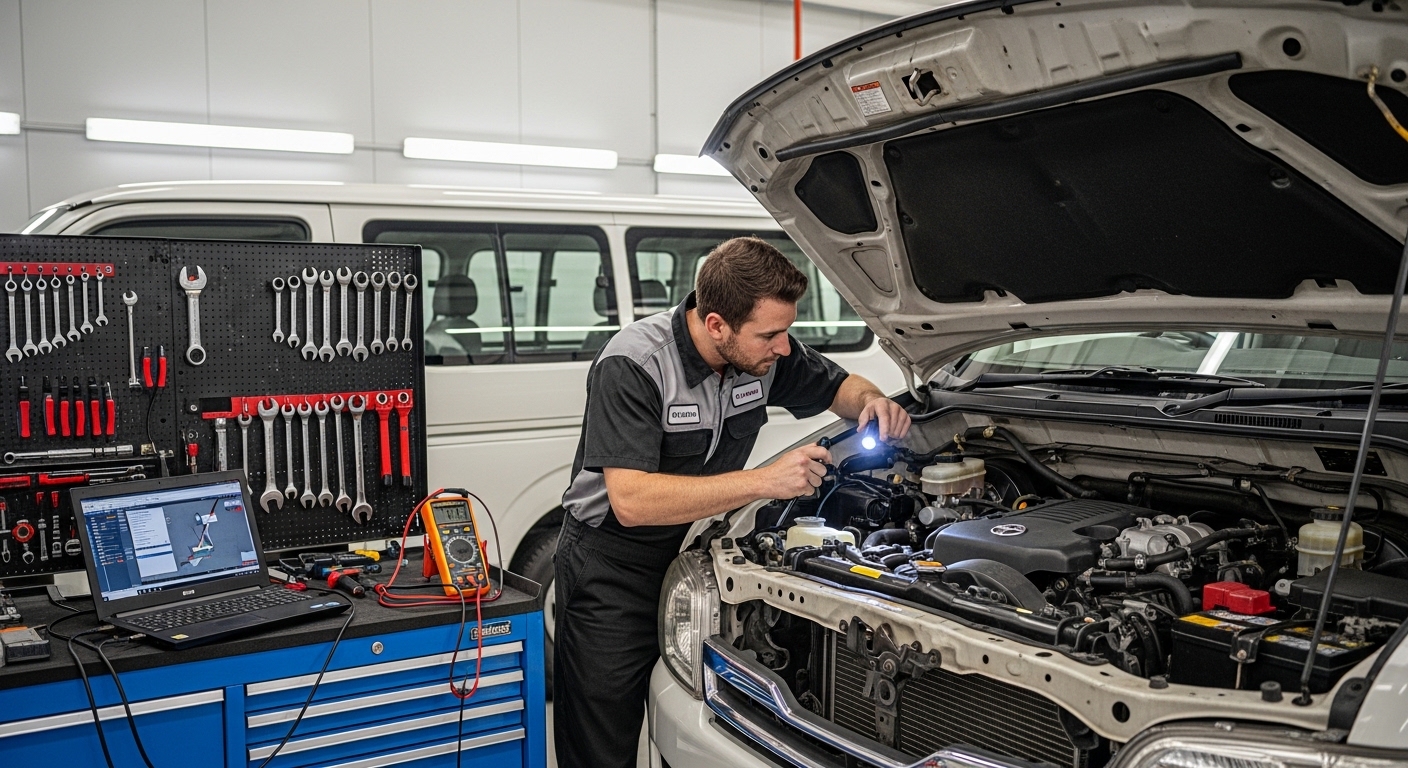 A mechanic checks an open engine bay beside a tool wall, laptop, and diagnostic meter.
On our representative Delica, the compliance package is $1,980, and that covers the standard work needed to meet ADR requirements, plus documentation. Where a car needs extra items such as tyres with the right load and speed rating, repairs, or additional modifications, those are quoted separately before any work begins. There are no surprise line items.
This is the stage where the value of a careful auction inspection pays off. A clean, honest car flies through compliance. A rough one generates rectification quotes.
Running total: $23,370 (add compliance package; totals to a verified $23,371 landed cost)
What could have gone wrong here: Buying on price and paying in compliance. A cheap auction win with hidden rust or worn tyres can eat the saving twice over once the workshop quote arrives.
Stage 10: AVV Inspection and RAV Entry
Compliance work isn't self-certified. An independent Approved Vehicle Verifier (AVV) inspects the finished car and issues the compliance certificate, then the vehicle is entered on the Register of Approved Vehicles (RAV) (Carbarn, 2026). RAV entry is the legal gateway. Until a car is on the register, it cannot move toward registration.
For our Delica, the AVV inspection and RAV entry are already covered inside the compliance package, so nothing new hits the ledger here. What matters is the sequence: workshop work first, independent verification second, register entry third. Skip a step and the car stalls.
This is also where the paperwork trail comes together. The export certificate, the VIA, the compliance certificate, and the RAV listing all need to line up for the next stage to happen.
Running total: $23,371 (AVV and RAV included in compliance package)
What could have gone wrong here: Incomplete documentation. A single missing certificate can hold up RAV entry. Keeping the full document set together from day one is what keeps the final stages moving.
Stage 11: NSW Registration
Once a car is on the RAV, it can be registered. In NSW that means a Blue Slip inspection, then registration in your name. We can arrange Blue Slip and six-month NSW registration on request before delivery, and offer registration-ready handover elsewhere (Carbarn, 2026).
Registration is deliberately kept off the landed total. State fees, stamp duty, and CTP insurance vary by state, by the car's value, and by how long you register for, so bundling them into a single national figure would be misleading. That's why our $23,371 total is the landed, compliance-complete cost, with registration treated as a clear optional add-on.
Budget for it separately and you won't be caught out. For most owners it's a few hundred dollars plus CTP, but always check your own state's schedule.
Running total: $23,371 landed (registration quoted separately by state)
What could have gone wrong here: Treating registration as an afterthought. Owners who forget to budget CTP and stamp duty can find the "final" number creeping up. Knowing it's separate from the start keeps expectations honest.
Stage 12: Handover Day
Handover is the quiet payoff. The same van that sat in an auction bay in Japan is now sitting, road-ready, in an Australian driveway. Six to ten weeks after the first shortlist, the black box has become a set of keys and a full folder of paperwork.
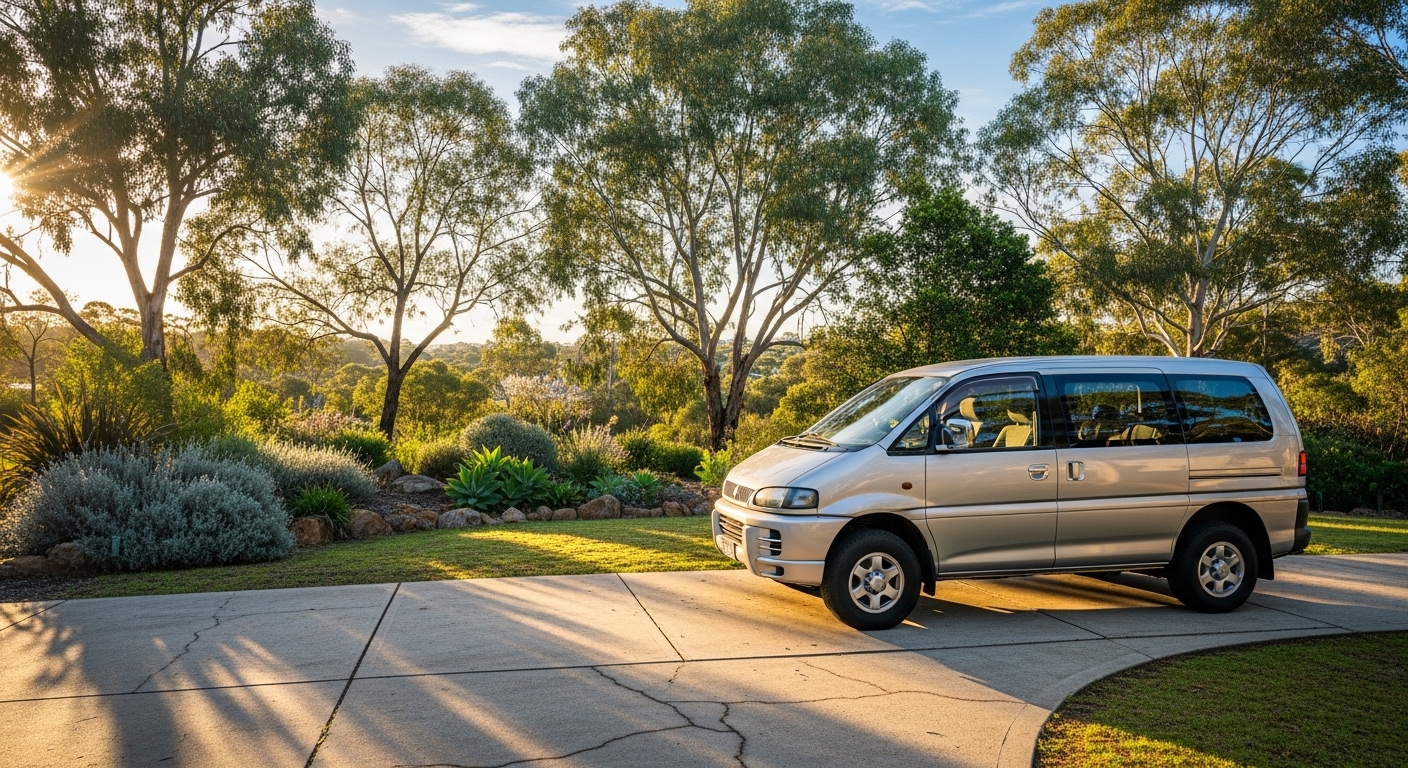 Silver Delica van in morning sun on an Australian-style driveway
Here's the full ledger in one place, so nothing hides. Every figure is a representative estimate built from the last 90 days of real auction data, and each moves with the exchange rate and the market.
| Line item | Amount (AUD) | Share |
|---|---|---|
| Winning bid (¥1,400,000 average) | $12,317 | 52.7% |
| Freight, port and customs (estimate) | $4,498 | 19.2% |
| GST (10% of customs value) | $2,108 | 9.0% |
| Compliance package (estimate) | $1,980 | 8.5% |
| Service fee | $1,500 | 6.4% |
| Japan agent fee | $967 | 4.1% |
| Customs duty (JAEPA) | $0 | 0% |
| Total landed | $23,371 | 100% |
 Import receipts and a currency exchange sheet arranged with a calculator and pen on a desk.
The car itself is just over half the cost. The rest is the machinery of getting it here legally and safely, which is exactly the part that feels invisible until you see it itemised.
What About the Newer Delica D:5?
If the boxy Space Gear isn't your look, the newer Delica D:5 is the modern alternative, and it's eligible too. The D:5 diesel (CV1W) runs a 4N14 2.2-litre turbo-diesel, while the D:5 petrol (CV5W) uses a 4B12 2.4-litre with a CVT. Both are seven-seat, four-wheel-drive, and approved under the same Campervans and Motorhomes Criterion, covering builds from December 2006 to February 2025.
There's one rule worth stating plainly. Eligible D:5 examples are sourced with the odometer inside the 0 to 80,000 km band, so a well-travelled D:5 may fall outside the practical import pathway. Because the D:5 is a newer, higher-value vehicle, its landed cost sits well above the Space Gear. The CV5W petrol typically lands in the $30K–$40K range, while the CV1W diesel usually comes in above $40K depending on grade. It's a more refined, more expensive proposition for buyers who want a modern diesel tourer rather than a 1990s icon.
How Carbarn Runs the Whole Journey End to End
Everything in this diary, the sourcing, bidding, shipping, and compliance, is the service Carbarn provides from a single point of contact. From the Lidcombe workshop in Sydney, the team shortlists auction cars, arranges pre-bid inspection in Japan, and bids only with your written approval and within your cap. Carbarn is a licensed NSW motor dealer (MD056471) with an in-house, RAW-certified compliance facility.
The full service covers auction sourcing and physical inspection, VIA lodgement before shipping, RoRo freight, customs and biosecurity clearance, in-house ADR compliance work, AVV inspection, RAV entry, and registration-ready handover. Optional extras include Blue Slip and six-month NSW registration, a five-year extended warranty on eligible vehicles, pre-delivery servicing, and door-to-door delivery Australia-wide. You can browse the full range of eligible import models, read how importing works step by step, or explore people movers and vans already in Australia if you'd rather skip the wait entirely.